KARNAK TEMPLE
The Avenue of Sphinxes The Karnak Temple near Luxor city is not a single temple but a vast religious complex,
made of temples, pylons, courts, chapels, obelisks, sacred lakes, and shrines, built over nearly two millennia—from the Middle Kingdom reign of Senusret I (1971–1926 BCE)
through the Ptolemaic period (305-30 BCE). Situated on the
east bank of the Nile at ancient Thebes (today Luxor city). Karnak and Luxor Temples stand about a mile and a half apart and are linked by the Avenue of Sphinxes,
a processional route long forgotten until excavations from 1949 to 2000 discovered hundreds of Spinxes under 30 feet or more of sand, near Karnak temple.
Today, extensive restoration efforts by archaeologists have uncovered, preserved, and re-erected approximately 1,057 statues along the modern path reconnecting Karnak and Luxor temples.
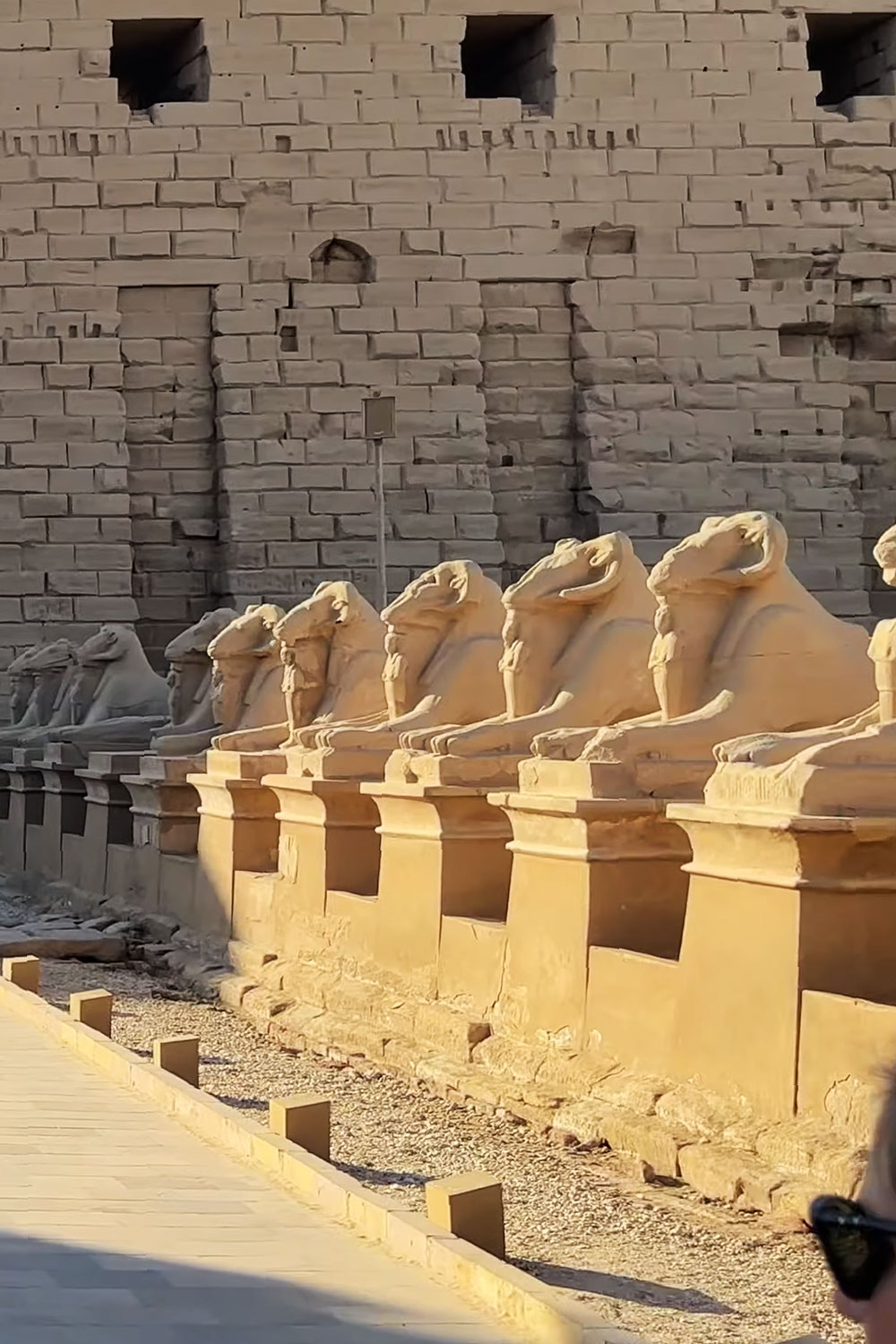
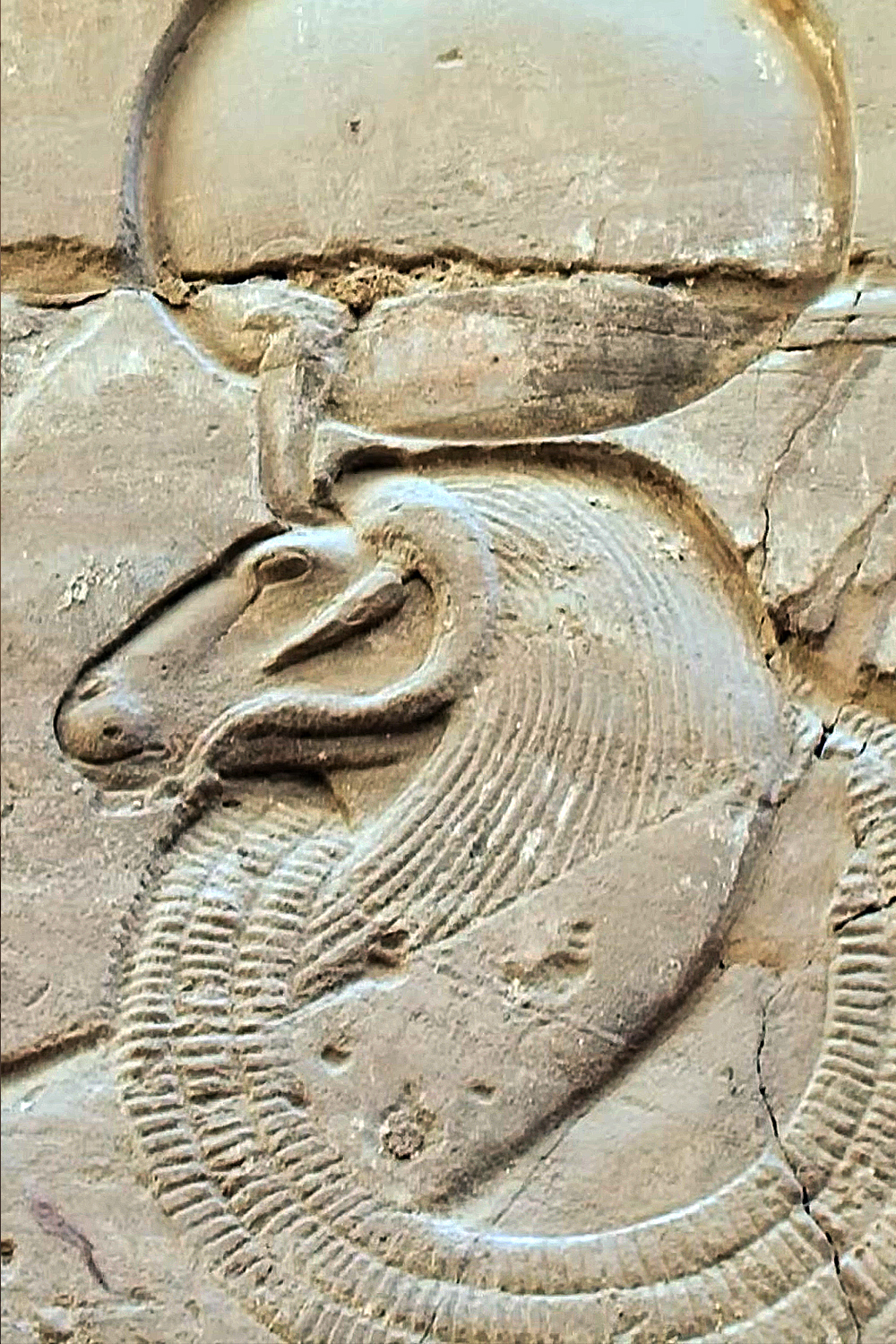
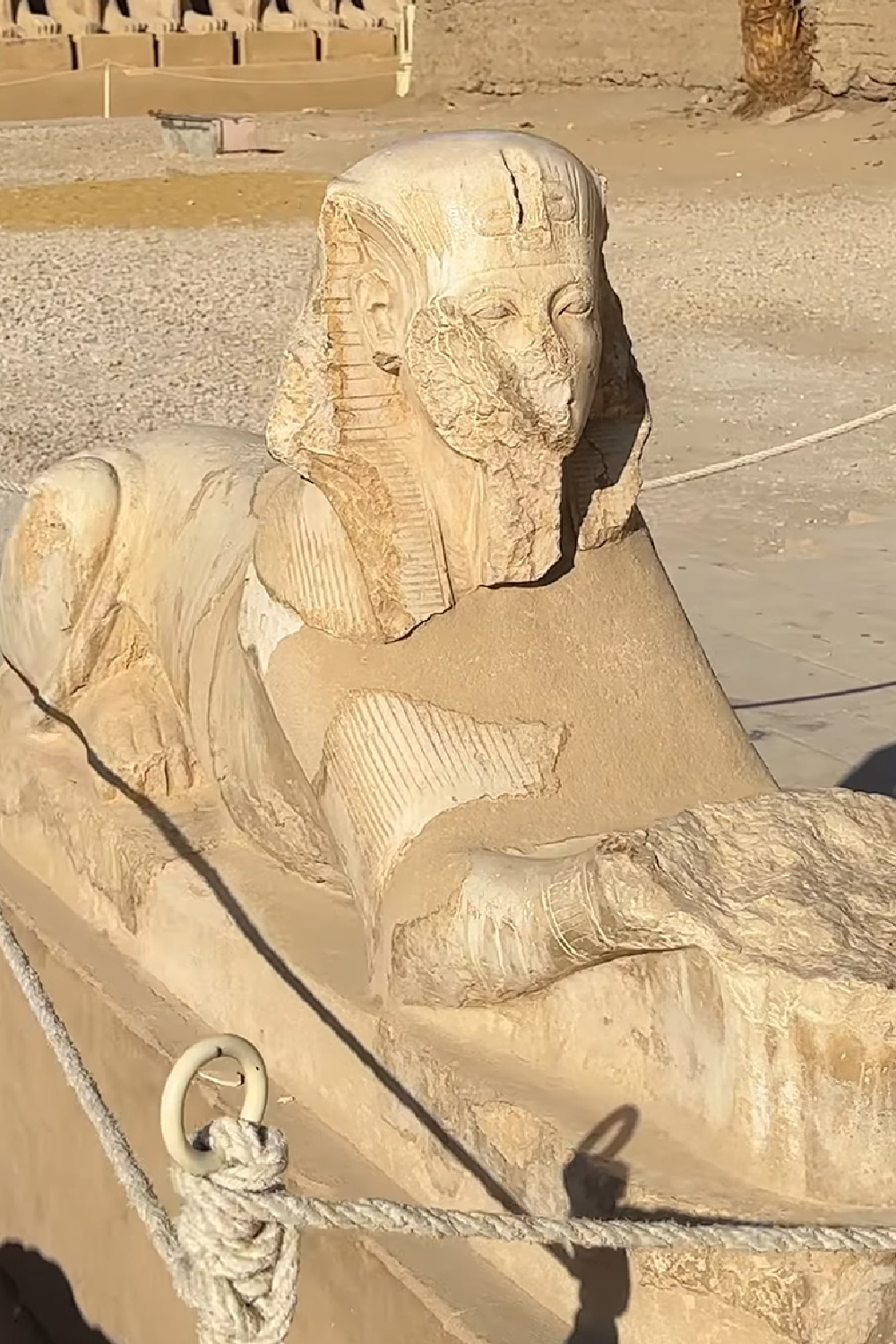
At Karnak, the ram‑headed sphinxes represent Amun, the chief deity of the temple. Their lion bodies and curved‑horned ram heads symbolize his strength and
protective power. Each sphinx shelters a small standing figure of Ramesses II (1279–1213 BCE) between its forelegs, reinforcing both divine authority and
the royal presence within this monumental sacred landscape.
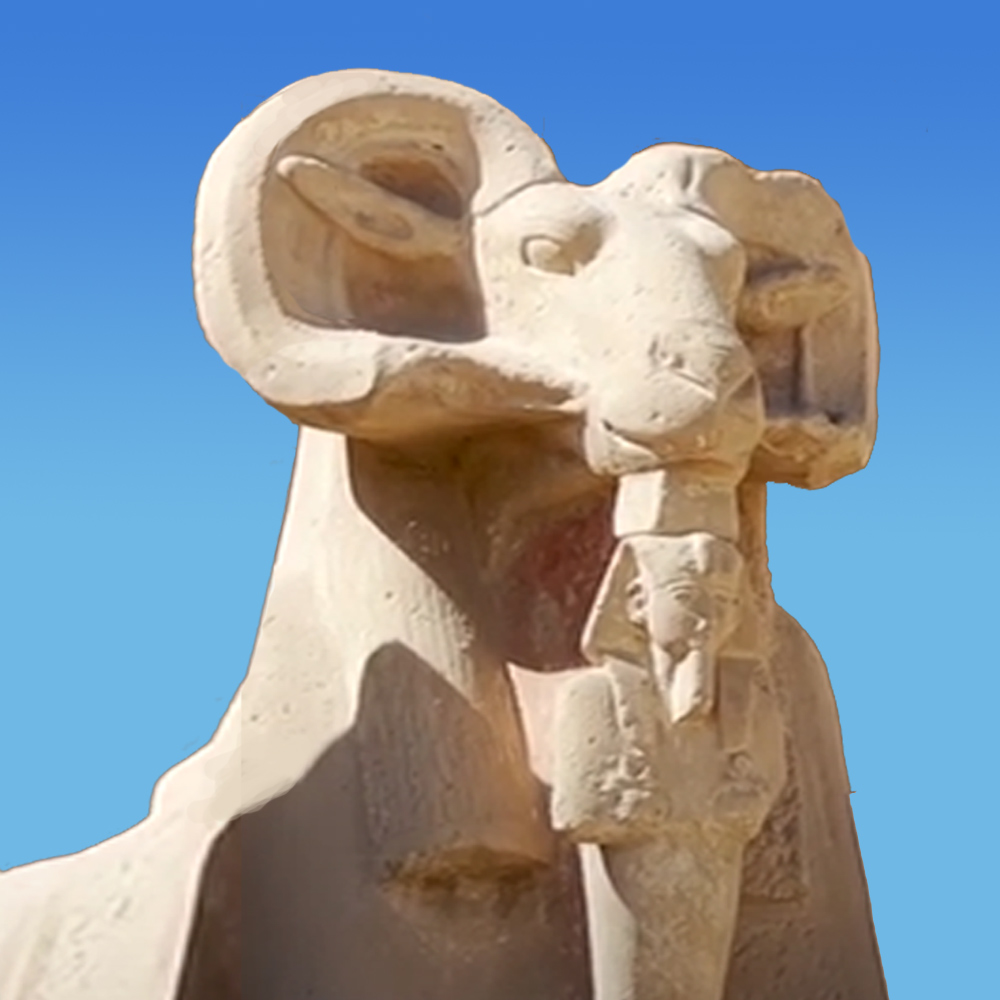 Ram-headed sphinxes, are believed to represent the
god Amun, the chief deity worshipped at the Temple of Karnak
Ram-headed sphinxes, are believed to represent the
god Amun, the chief deity worshipped at the Temple of Karnak
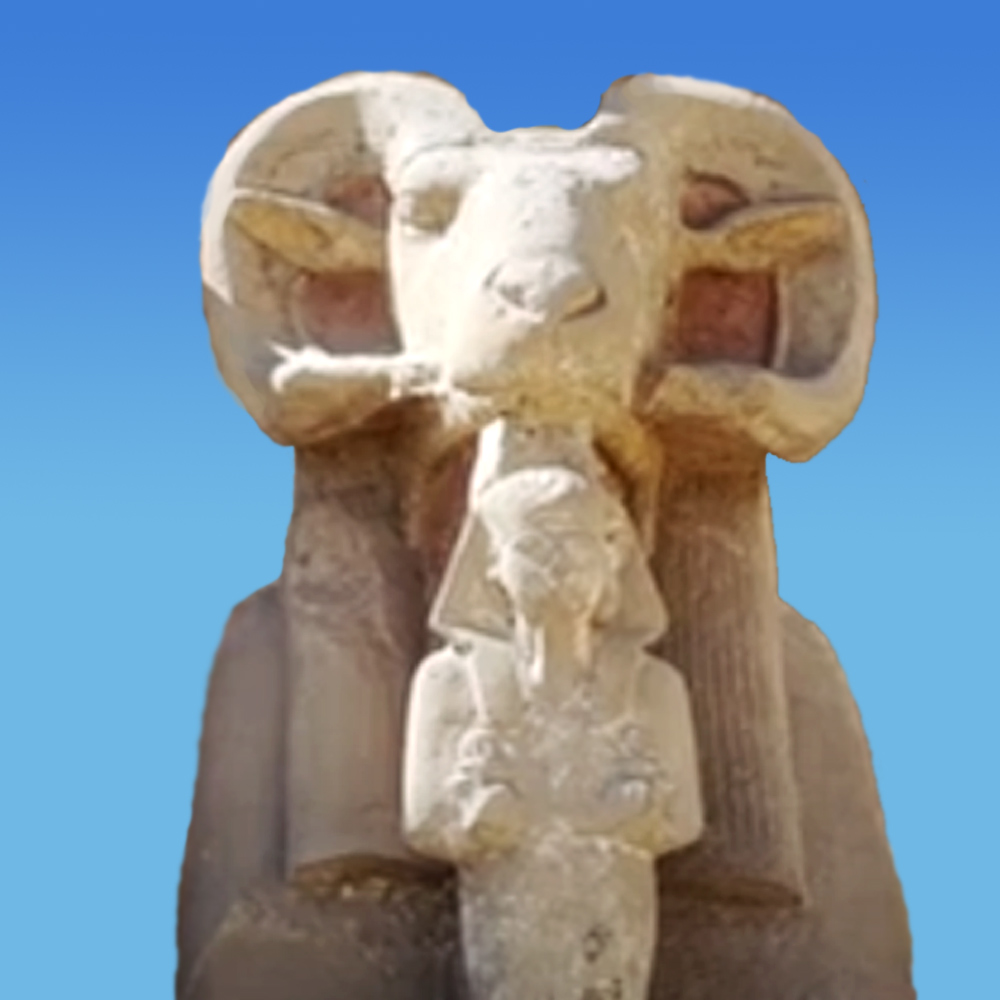 The Avenue of Sphinxes was buried under layers of
sand over the centuries, the first trace of the avenue was found by Archaeologists in 1949
The Avenue of Sphinxes was buried under layers of
sand over the centuries, the first trace of the avenue was found by Archaeologists in 1949
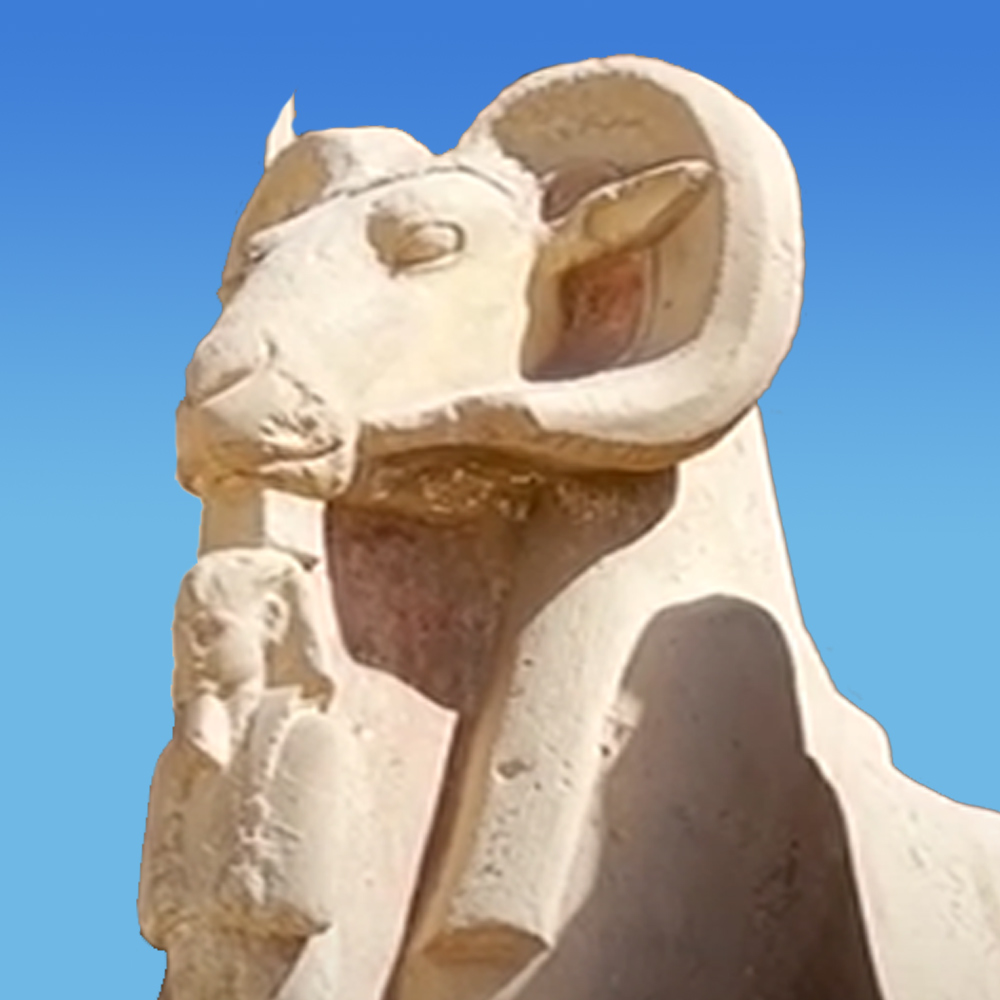 Since then hundreds of Spinxes have been found
under 30 feet or more of sand near Temple of Karnak
Since then hundreds of Spinxes have been found
under 30 feet or more of sand near Temple of Karnak
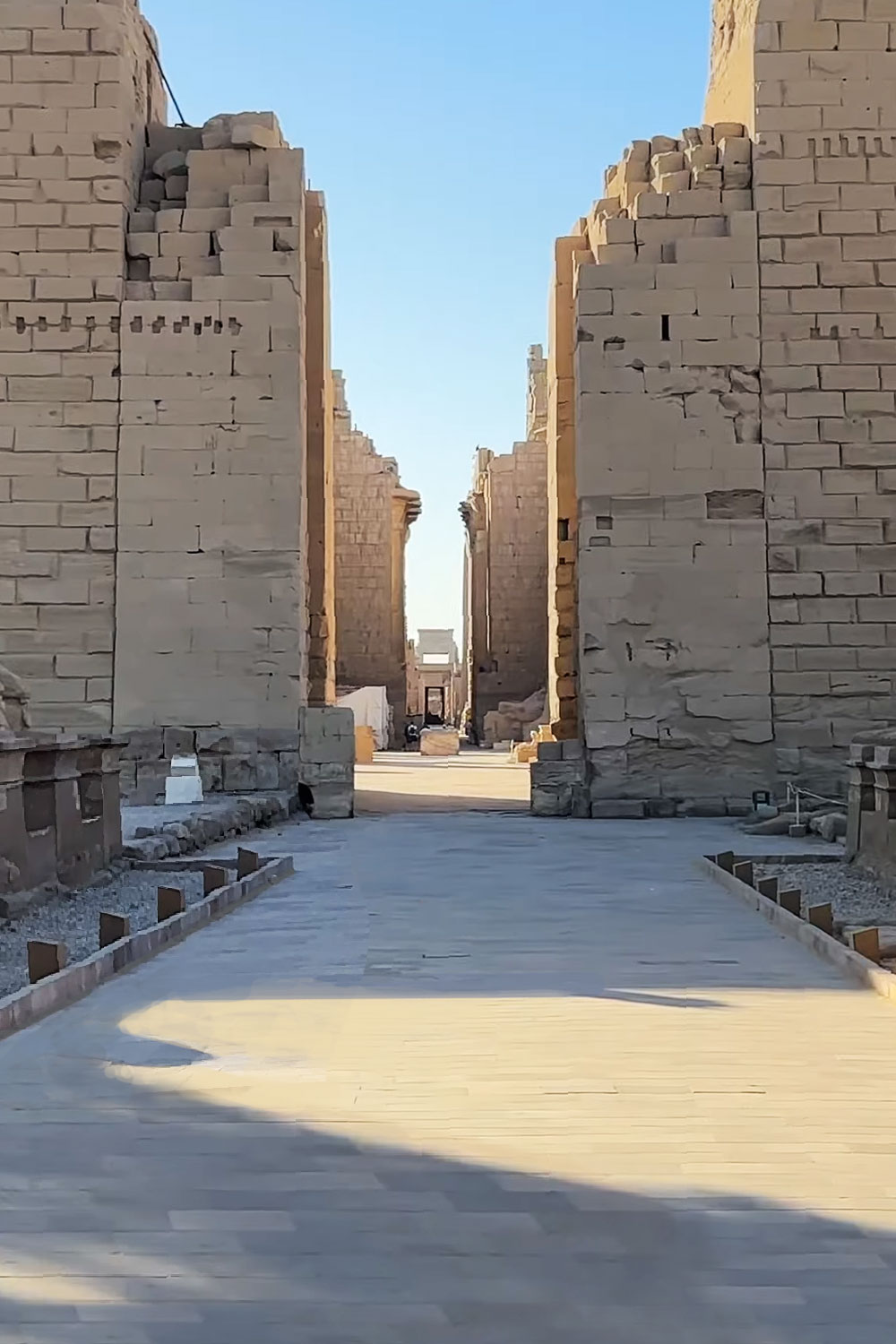
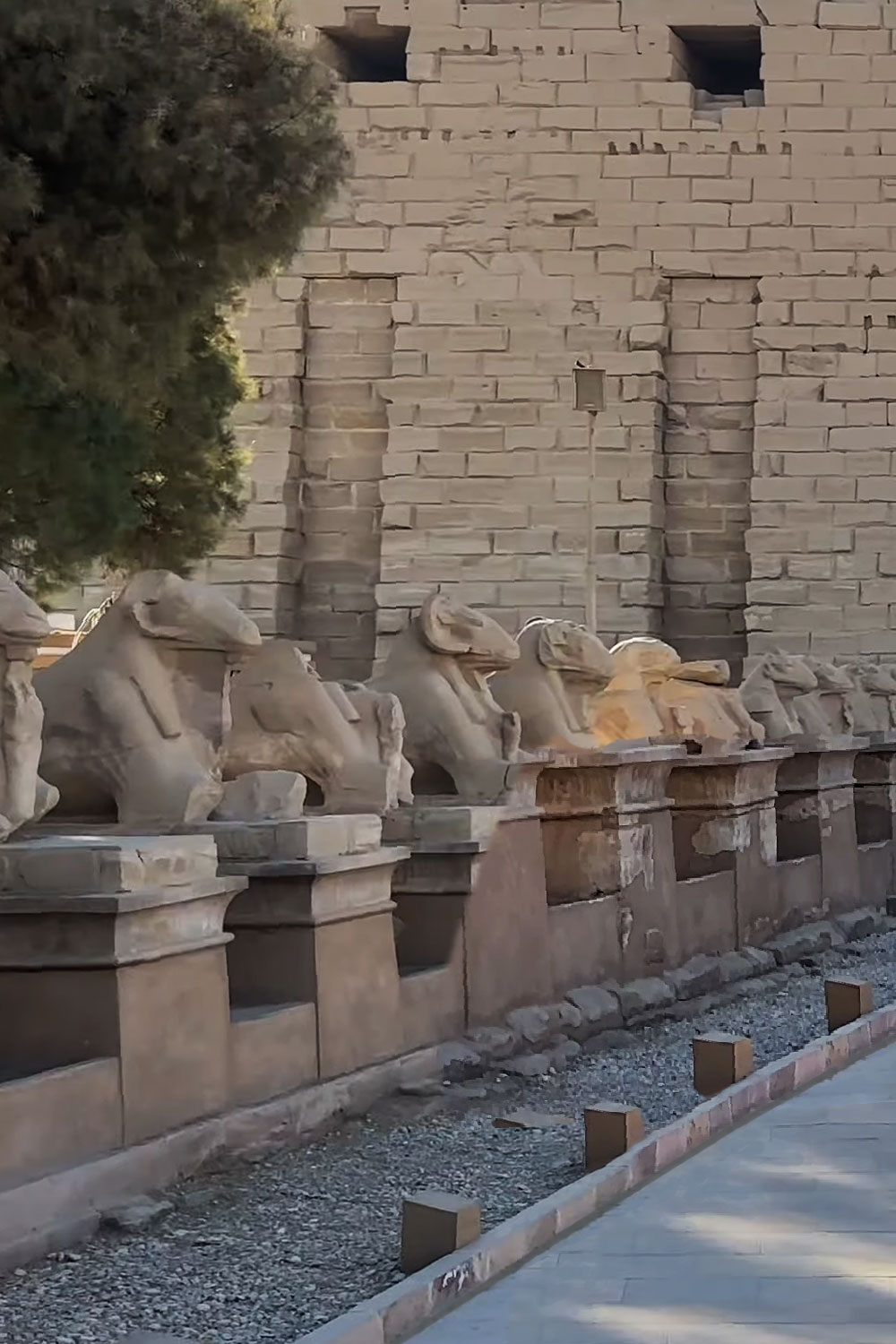 1.) The Avenue of Sphinxes in front of the first pylon entrance of Karnak Temple, also known as Rams Road, it connects Karnak Temple with Luxor Temple to the south about 1.6 miles (2.7 kilometers) away
 2.) Construction of the Avenue of Sphinxes began during the New Kingdom and completed during the reign of the 30th Dynasty ruler Nectanebo I, 380–362 BCE
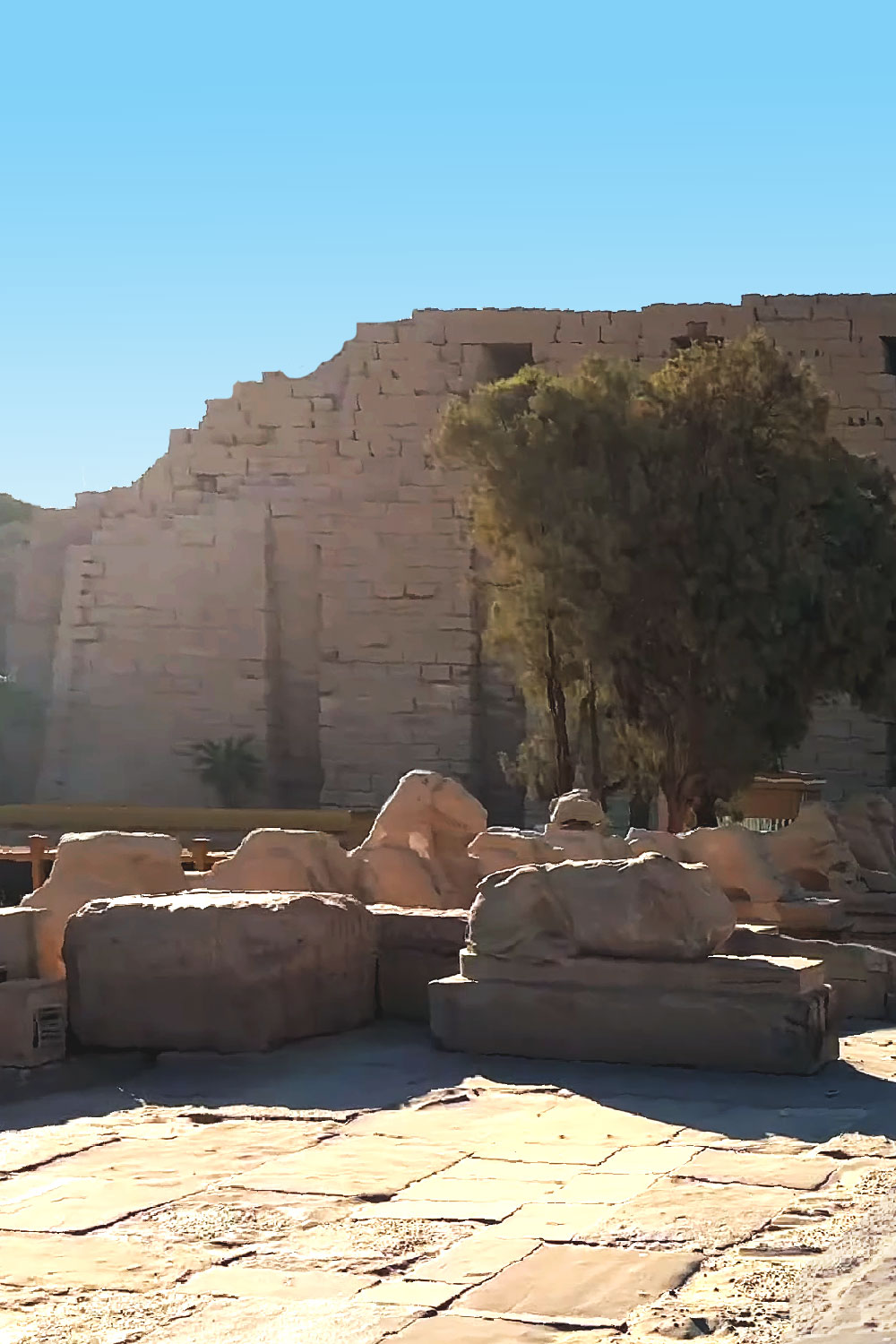
 3.) The Avenue of Sphinxes was buried under 30 feet (9 meters) of sand, for two thousand years, the first trace of the avenue was found in 1949 when Egyptian archaeologists discovered eight statues near Karnak Temple
 4.) Massive sandstone pylon blocks and ancient criosphinxes (ram-headed statues symbolizing the god Amun-Ra), this monumental site is dedicated to the Theban Triad, Karnak
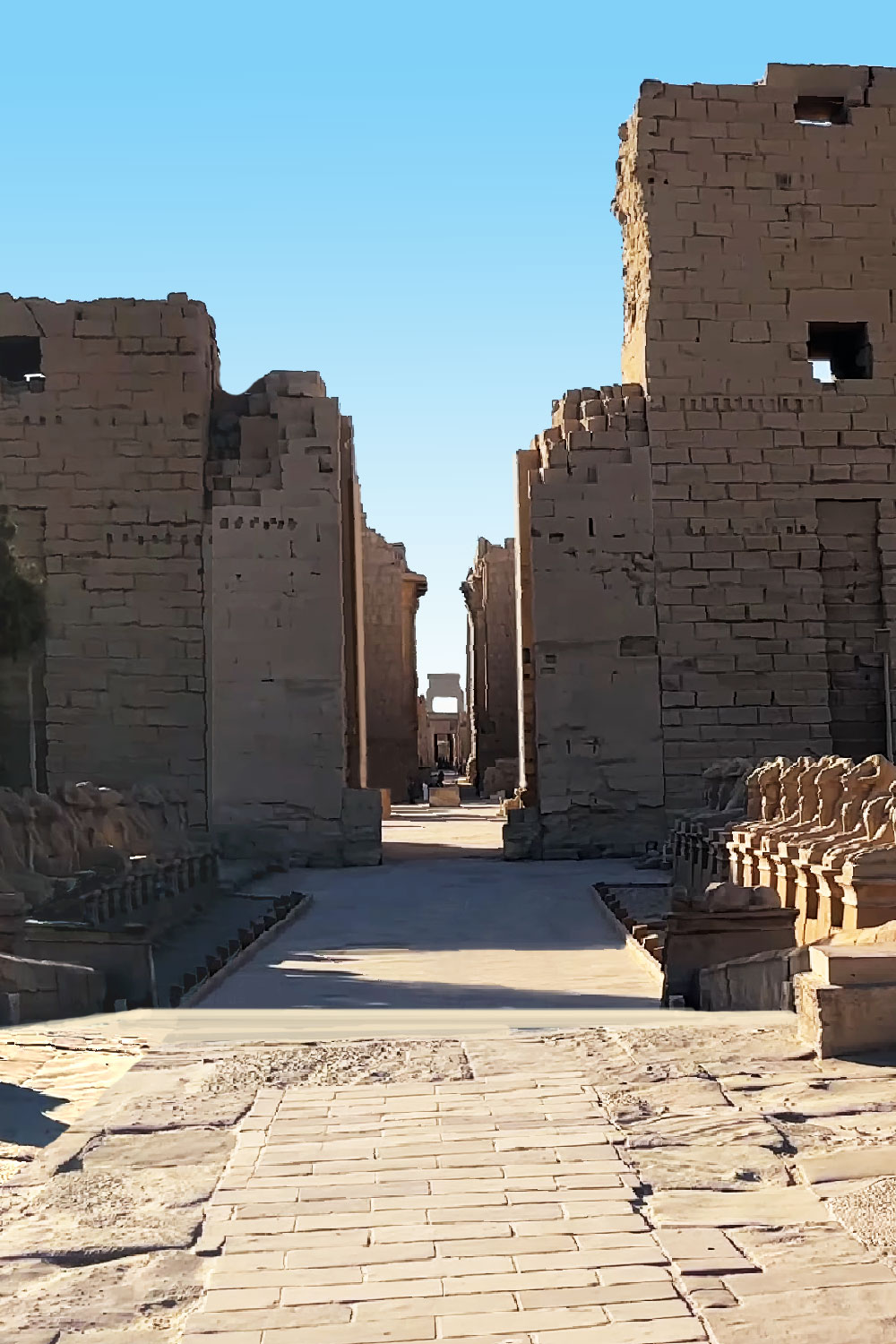 5.) First Pylon at the Karnak Temple Complex in Luxor, viewed from the main entrance approach along the stone pathway.
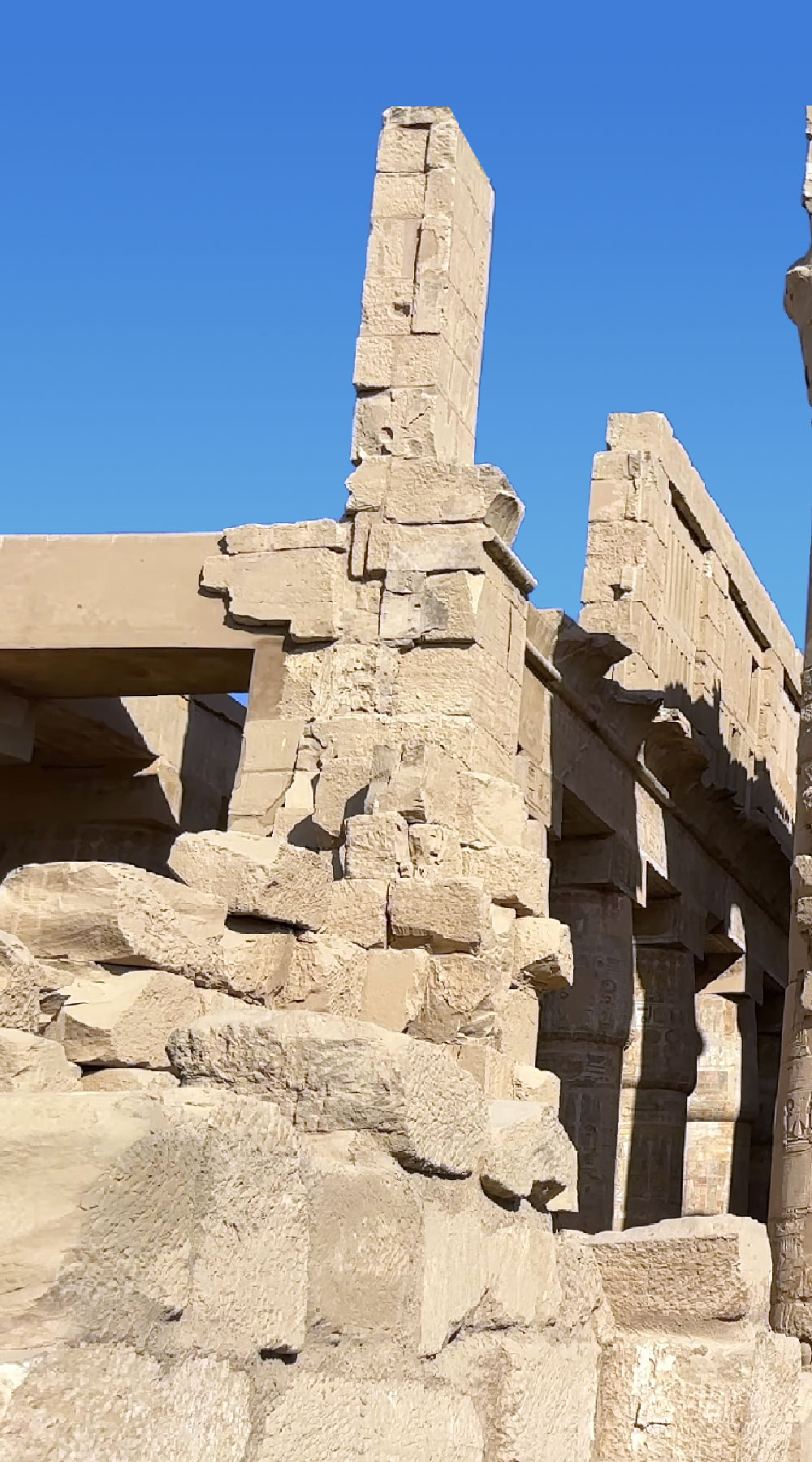
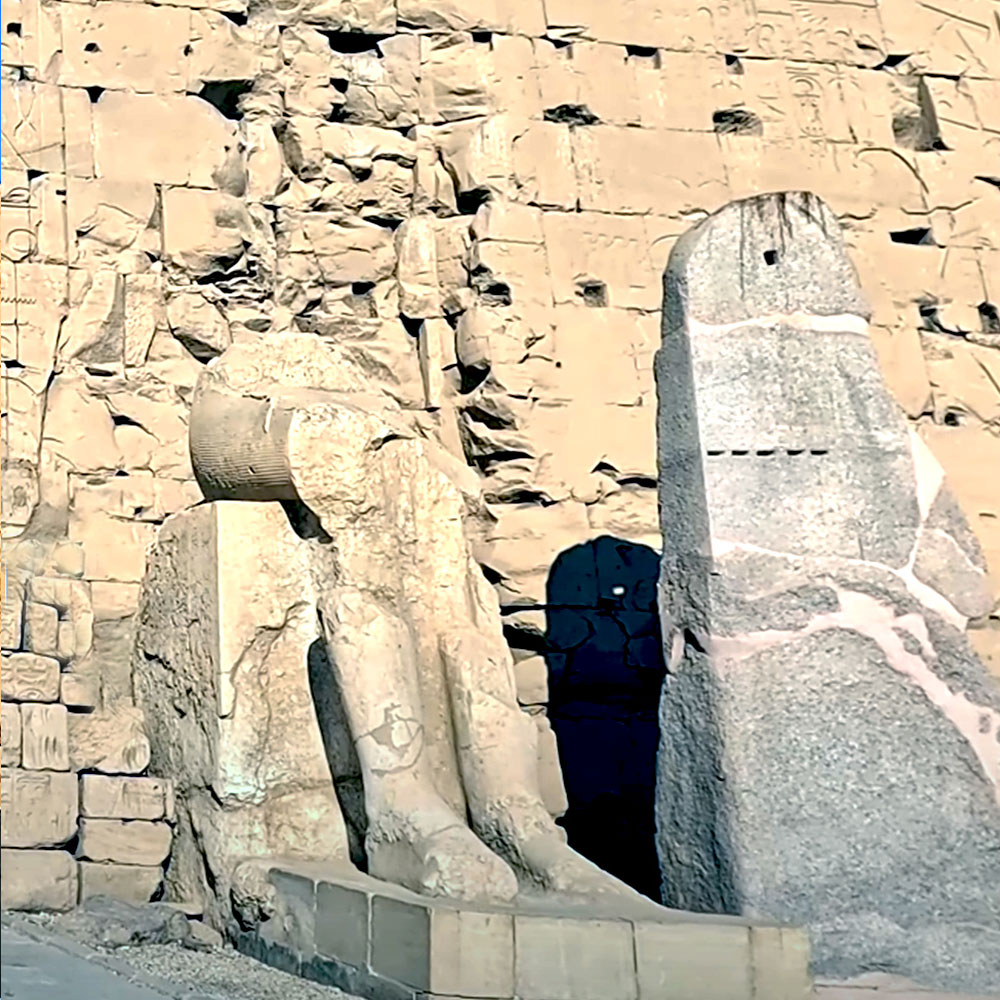
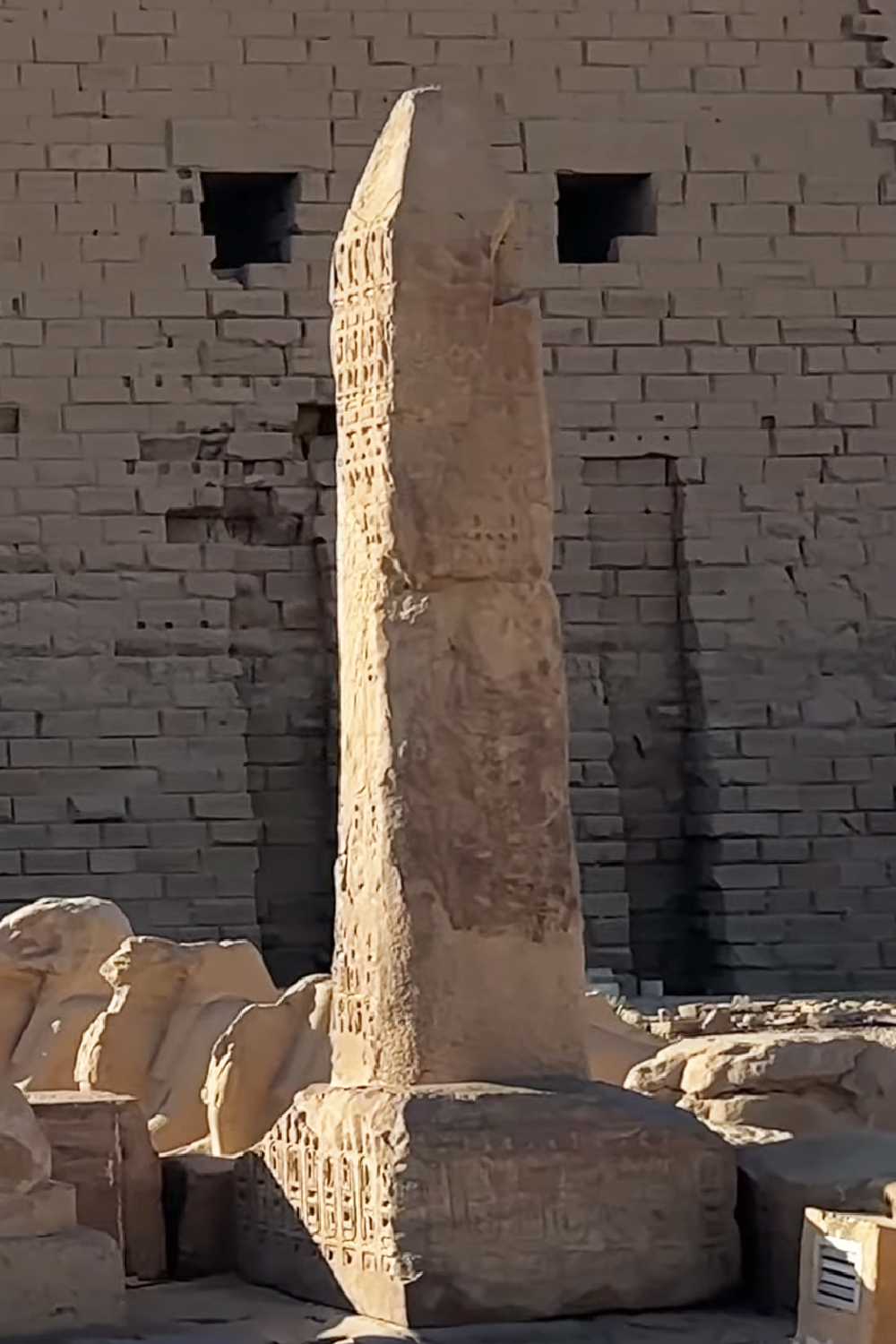
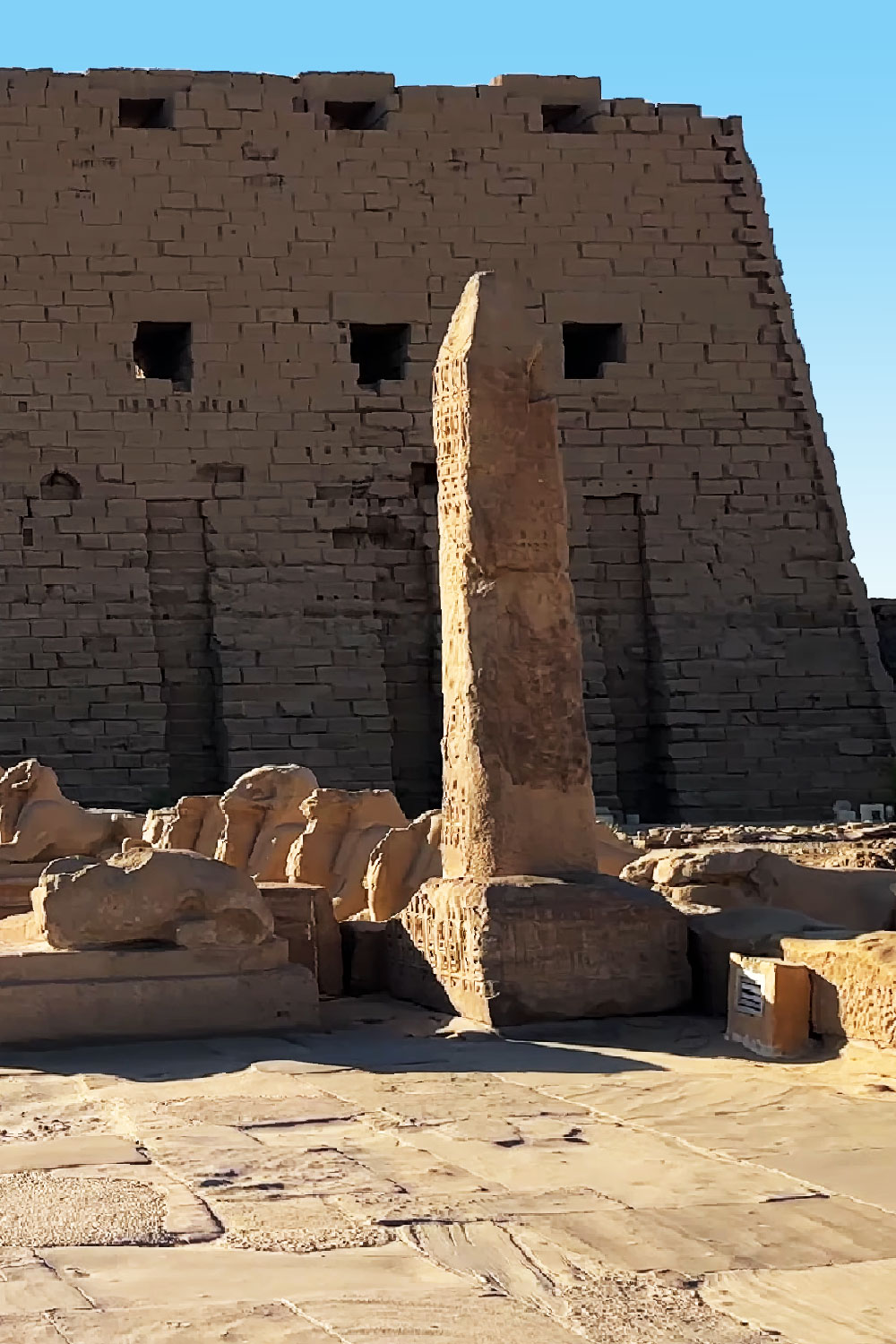 6.) The massive stone wall of the First Pylon and an ancient obelisk fragment inside the Precinct of Amun-Re at the Karnak Temple
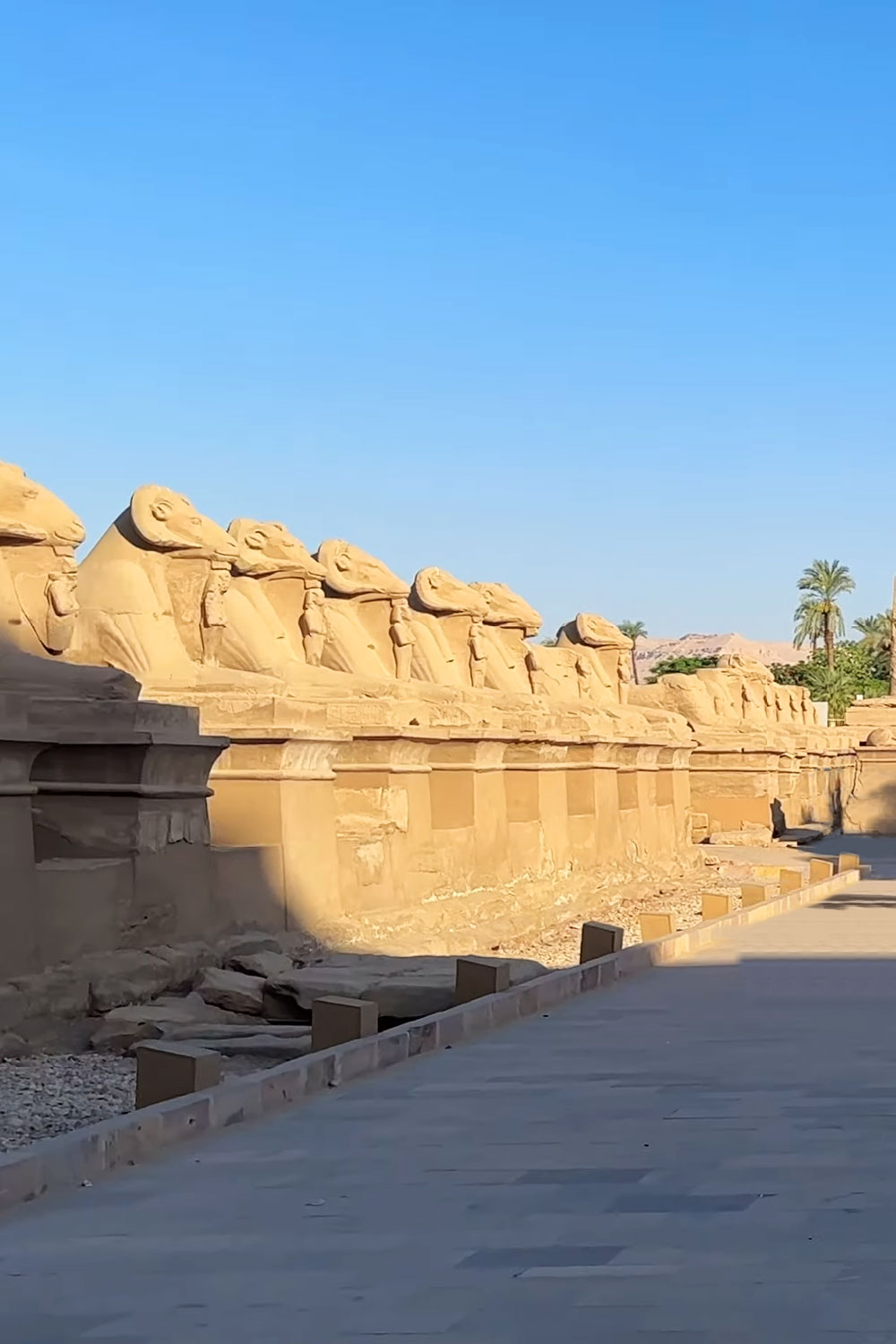 7.) The majestic Avenue of Sphinxes leading toward the Karnak Temple, featuring rows of Ram-Headed Sphinxes (Criosphinxes, the body of a lion and the head of a ram), Mostly concentrated at the northern end near Karnak Temple,
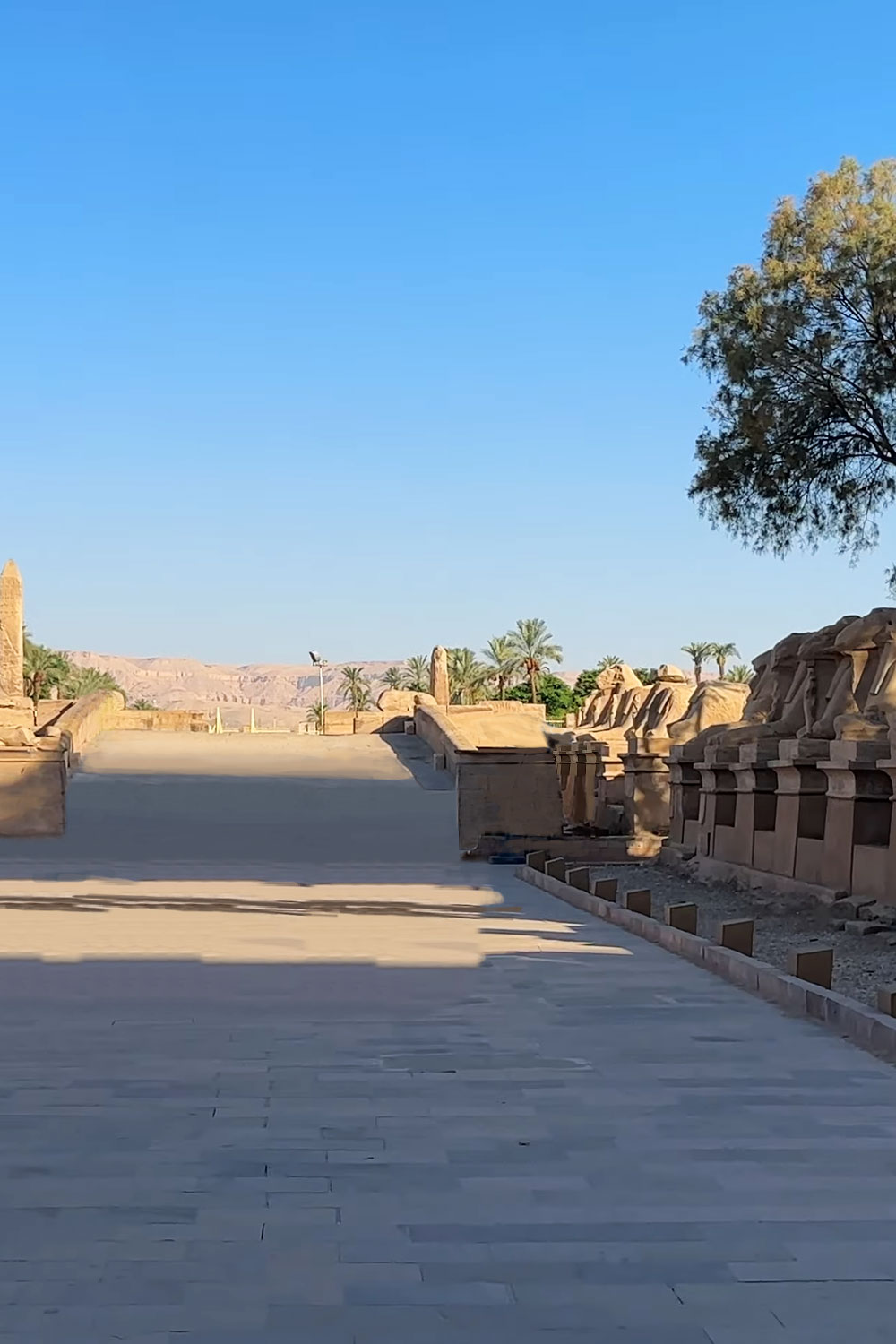 8.) Human-Headed Sphinxes are predominantly located closer to Luxor Temple, featuring human faces believed to represent Pharaoh Nectanebo I
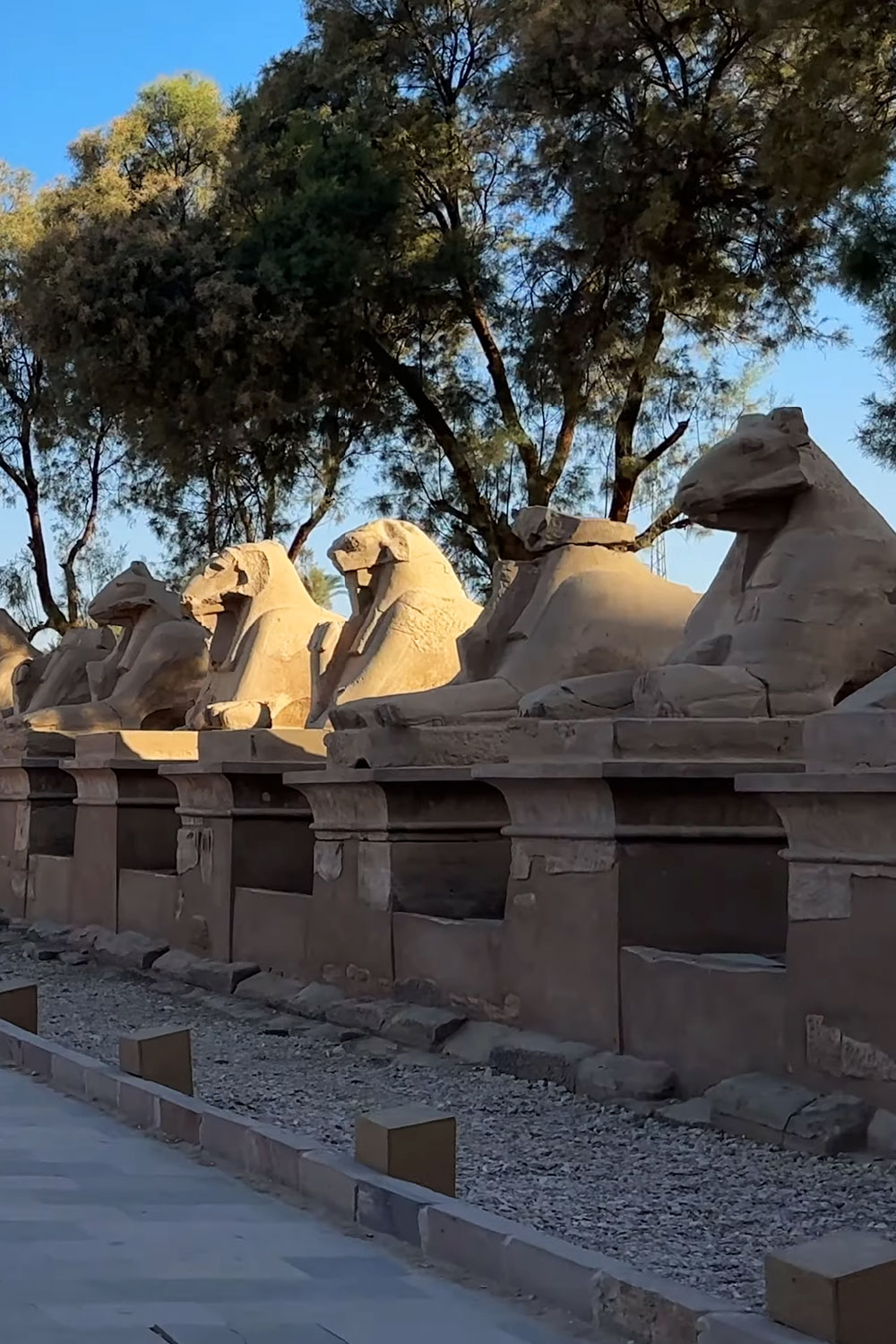 9.) extensive restoration efforts by archaeologists have uncovered, preserved, and re-erected approximately 1,057 statues along the modern path connecting Karnak and Luxor temples
THE GREAT HYPOSTYLE HALL
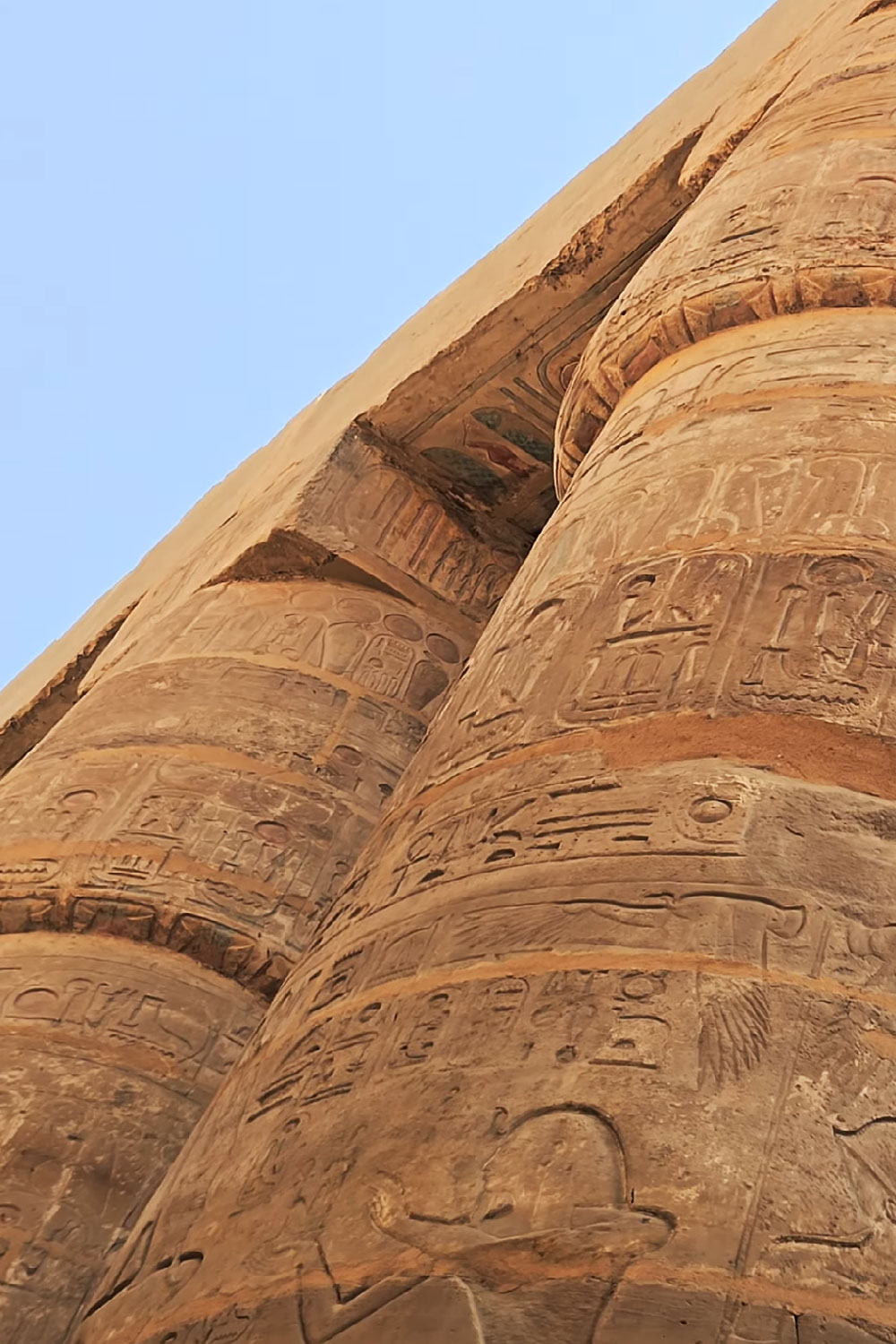
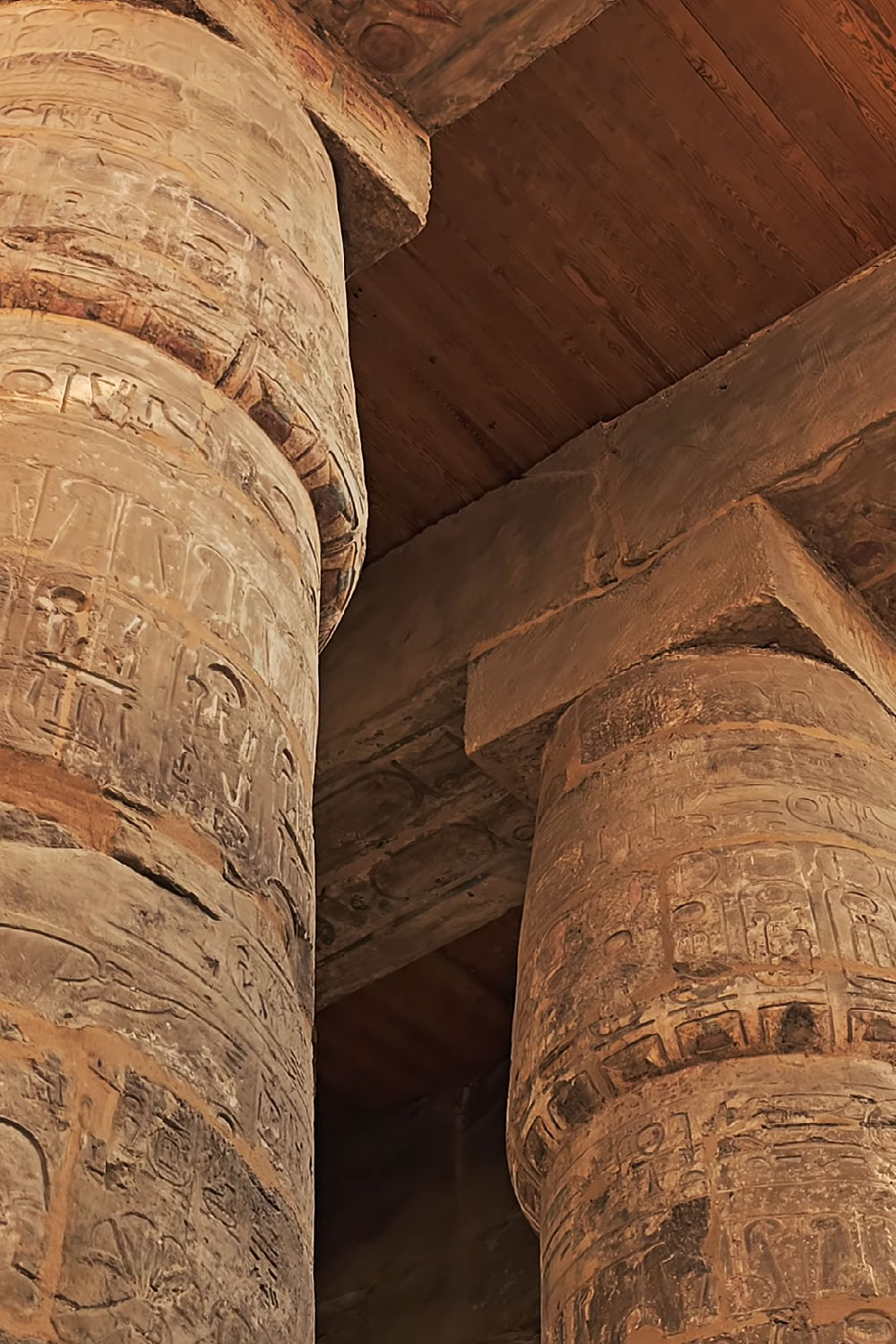
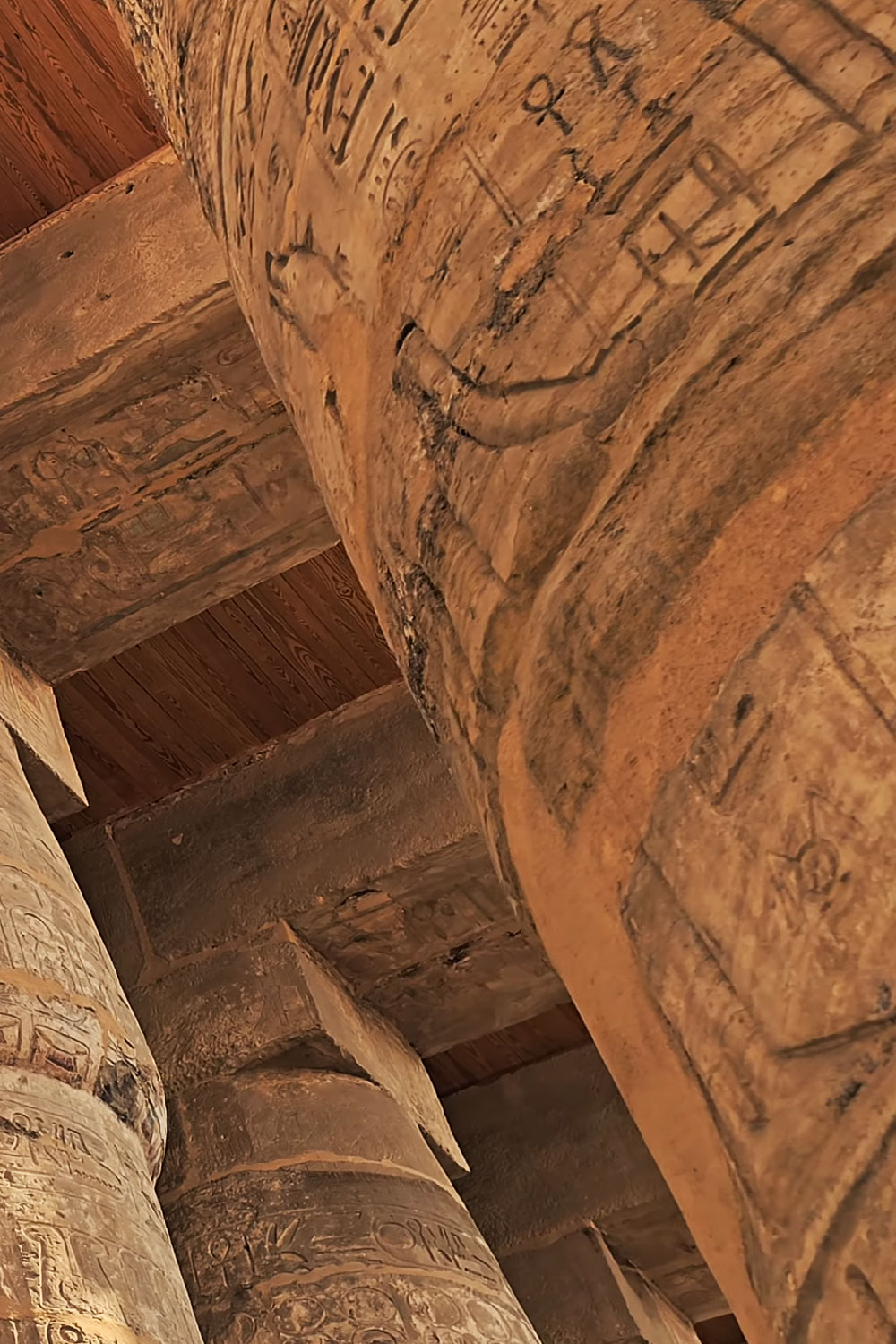
The Great Hypostyle Hall in Karnak Temple is one of the most extraordinary achievements of Egyptian architecture,
The complex remains one of the largest religious complexes in the world. Construction on this monumental
structure began during the New Kingdom period, primarily under Pharaohs Seti I and Ramesses II. during the 19th Dynasty in
the 13th century BCE, building continued into the Ramesside period (named for the eleven pharaohs who adopted the royal name Ramesses, beginning with Ramesses I, the dynasty spanned 1292–1069 BCE)—The Great Hypostyle Hall occupies the Precinct of Amun‑Re and is among Egypt’s most visited monument after the Pyramids of Giza.
Amun merged with Ra, the ancient sun god, to become Amun-Ra — king of the gods, creator of the universe, and the divine force behind the pharaoh's authority. Thebes (modern-day Luxor city)
became the religious capital of the empire. Karnak became Amun-Ra's residence on earth. Covering 5,000 square meters (about 54,000 square feet), the hall
was originally roofed and supported by 134 massive columns arranged in 16 distinct rows to resemble a sacred papyrus marsh. The shorter columns number 122
out of 134 total sandstone columns. These 122 shorter columns stand about 13 to 15 meters (43 to 49 feet) tall in 16 rows, with closed bud capitals.
The two central rows are especially striking: each column measures 10 meters
(33 feet) in circumference and rises to 24 meters (80 feet) with open papyrus blossom capitals. The hall’s design features a raised central aisle
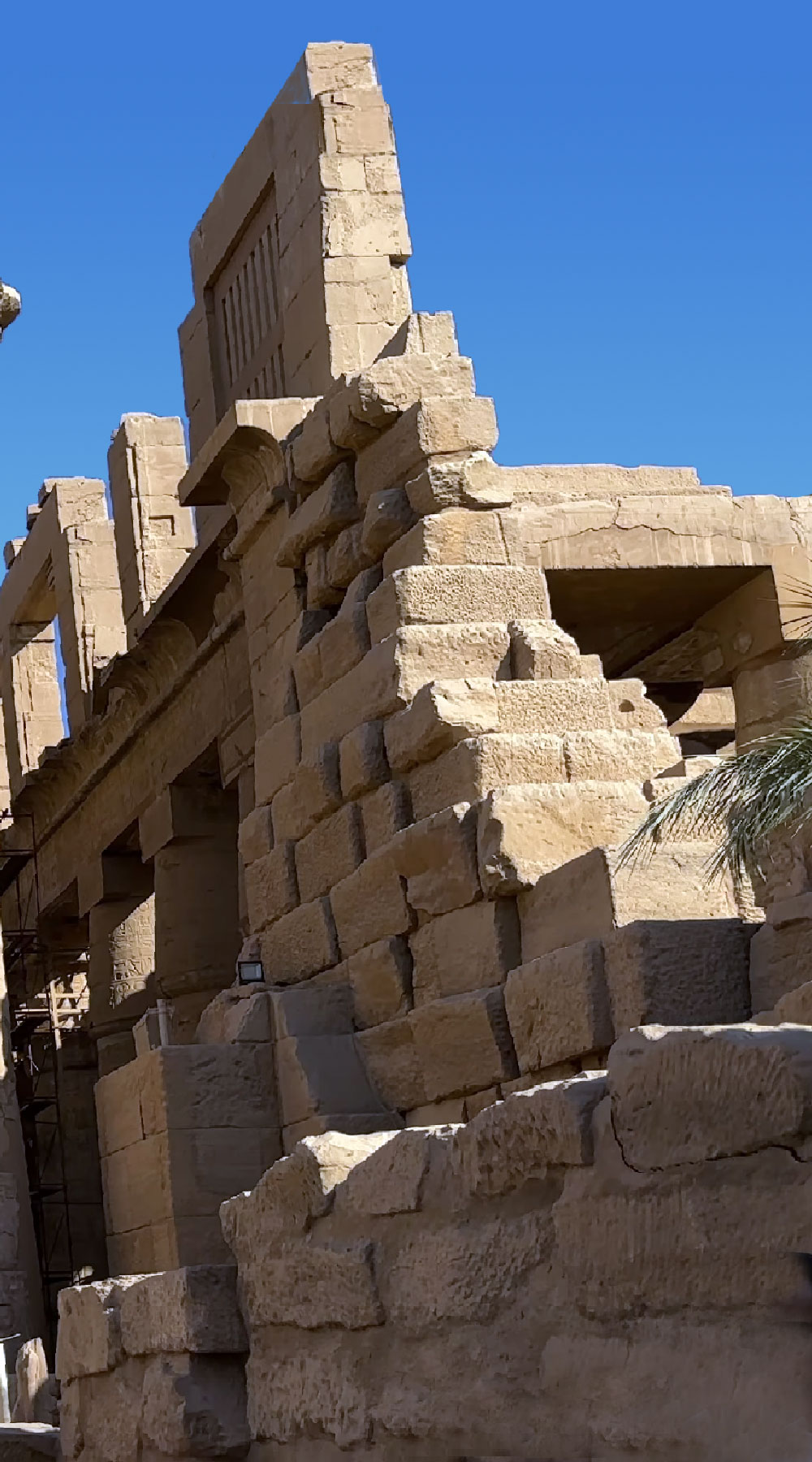
flanked by lower side aisles, allowing for clerestory lighting—windows set high in the walls to admit light and air. The earliest known use of this architectural
innovation appears here, illuminating the forest of columns that once supported the vast stone roof.
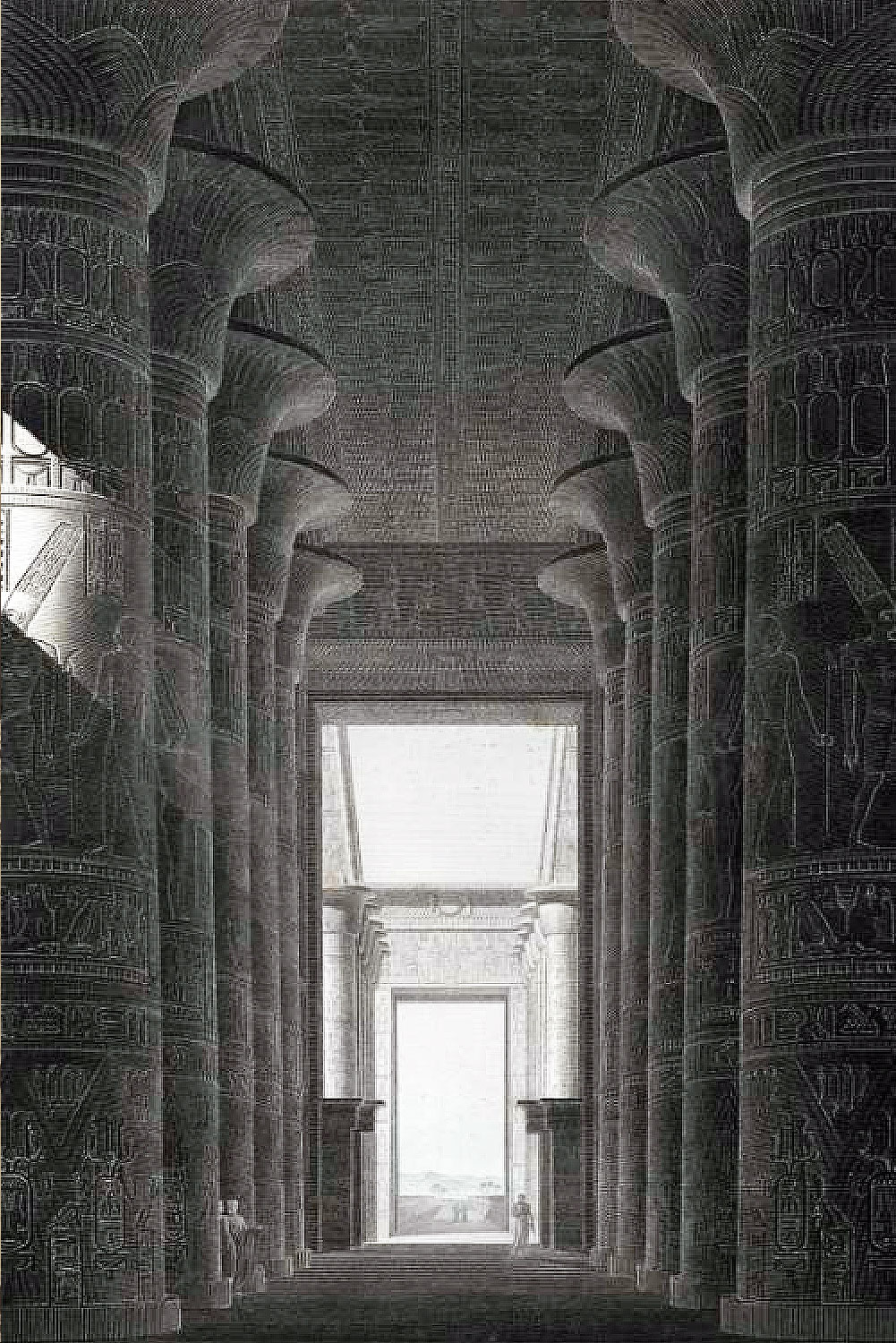
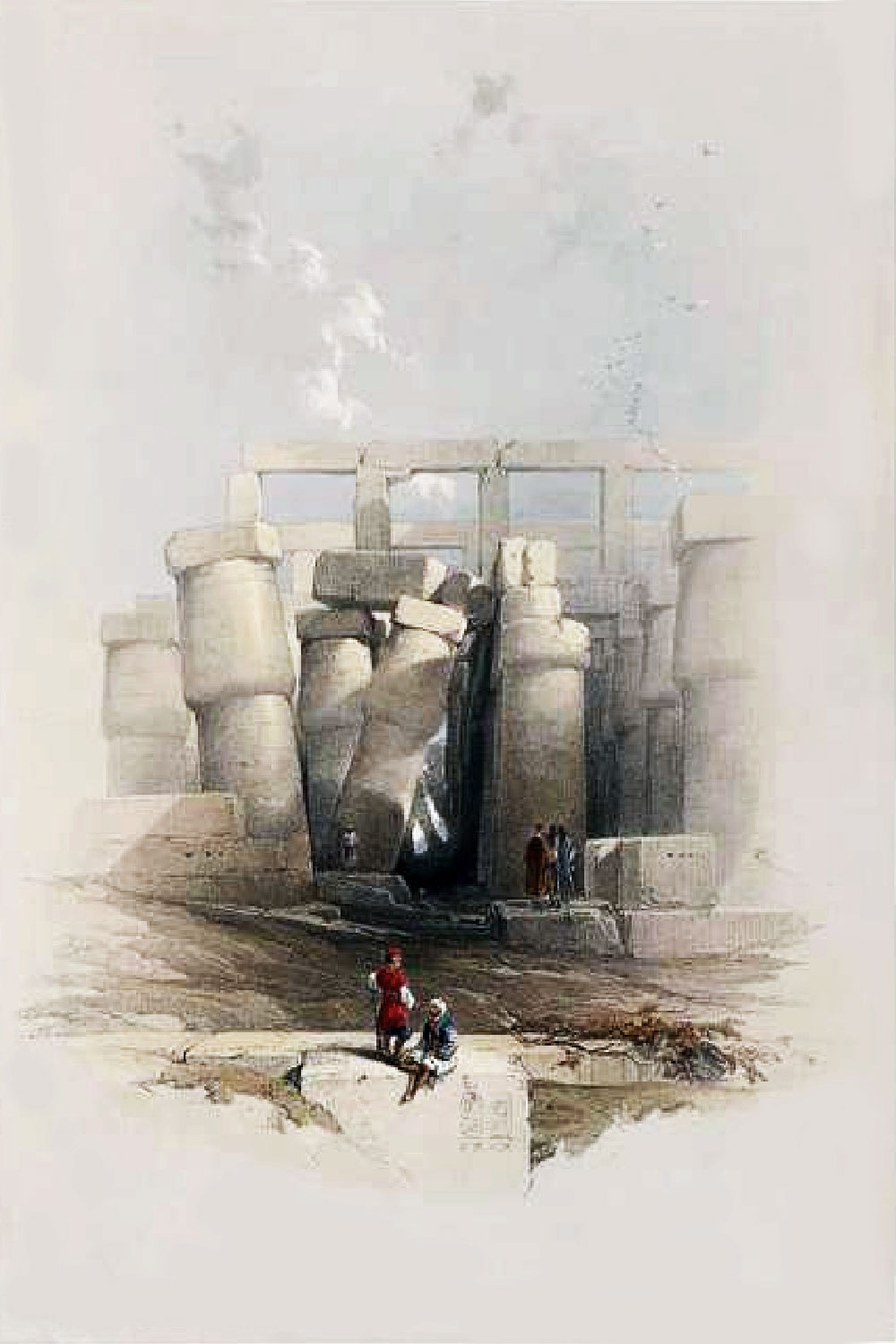
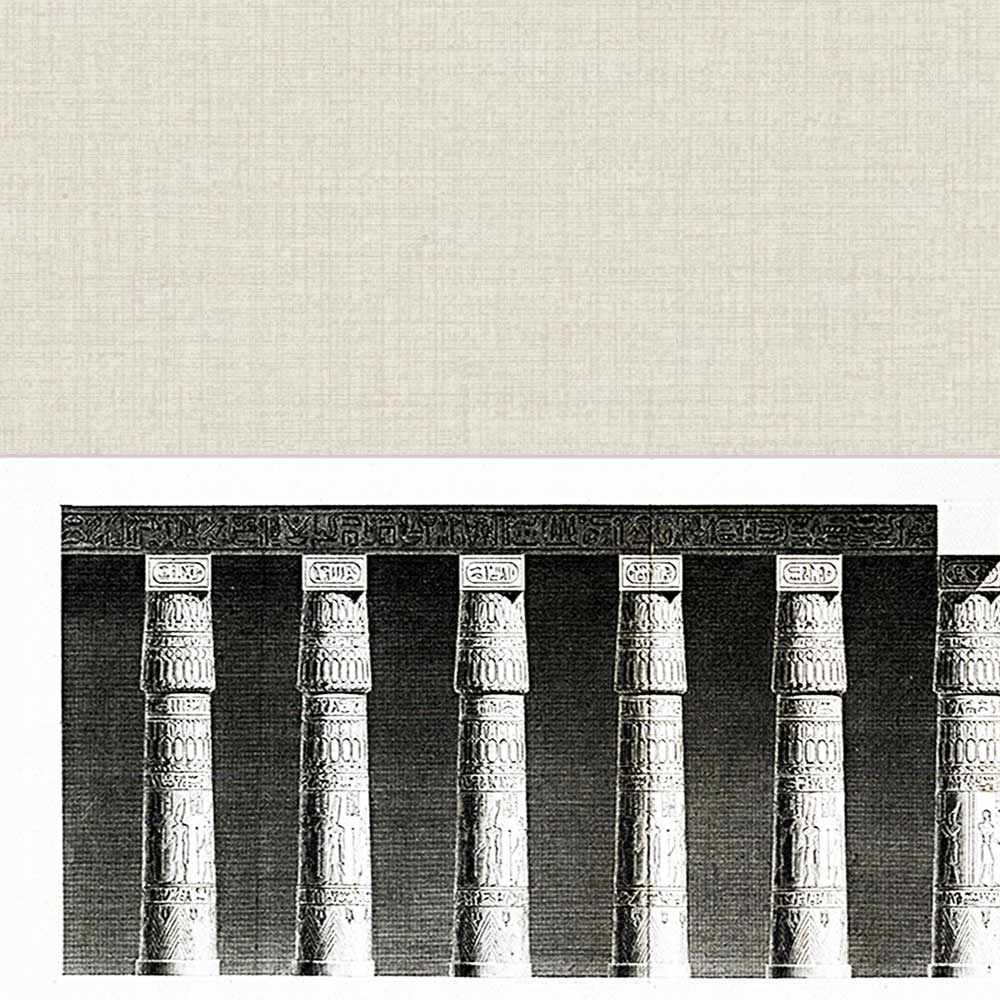 1.) This is the first architectural rendering of the
Hypostyle Hall
1.) This is the first architectural rendering of the
Hypostyle Hall
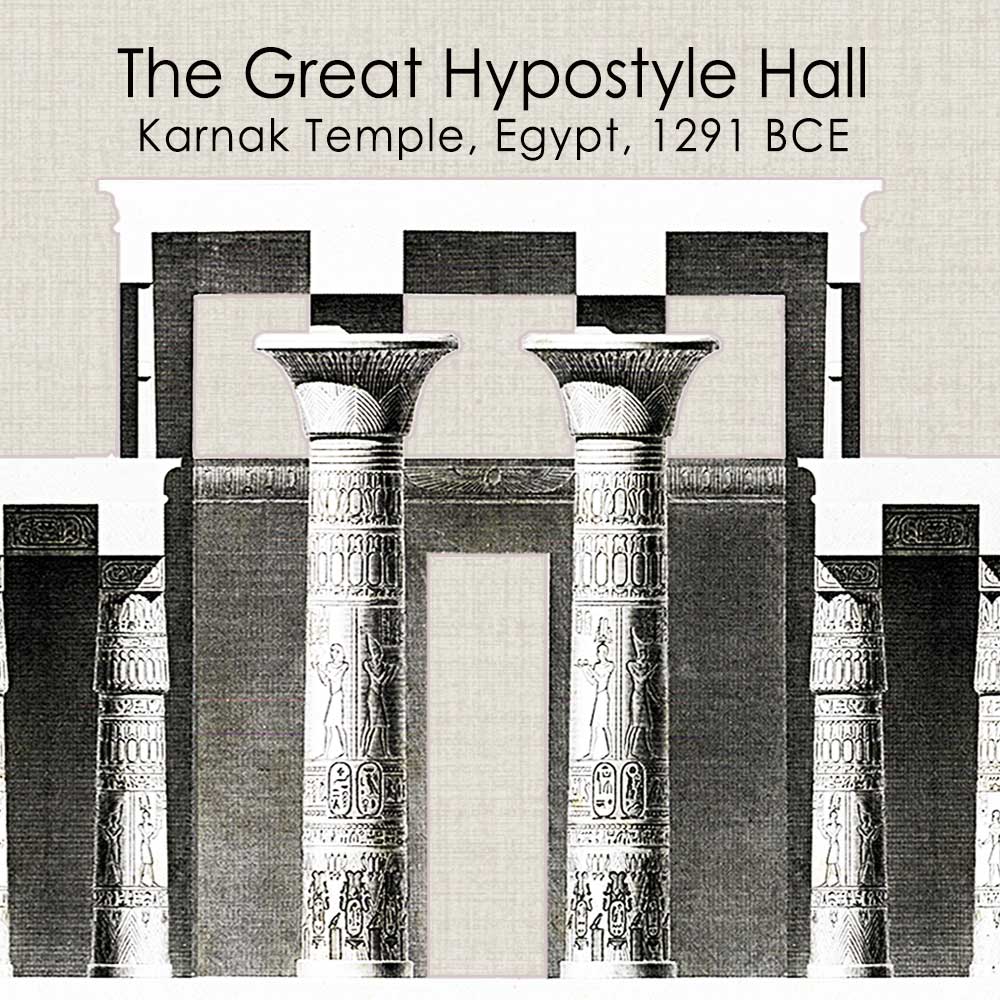 2.) compiled by scholars of Napoleon's expedition to
Egypt, 1798-1801
2.) compiled by scholars of Napoleon's expedition to
Egypt, 1798-1801
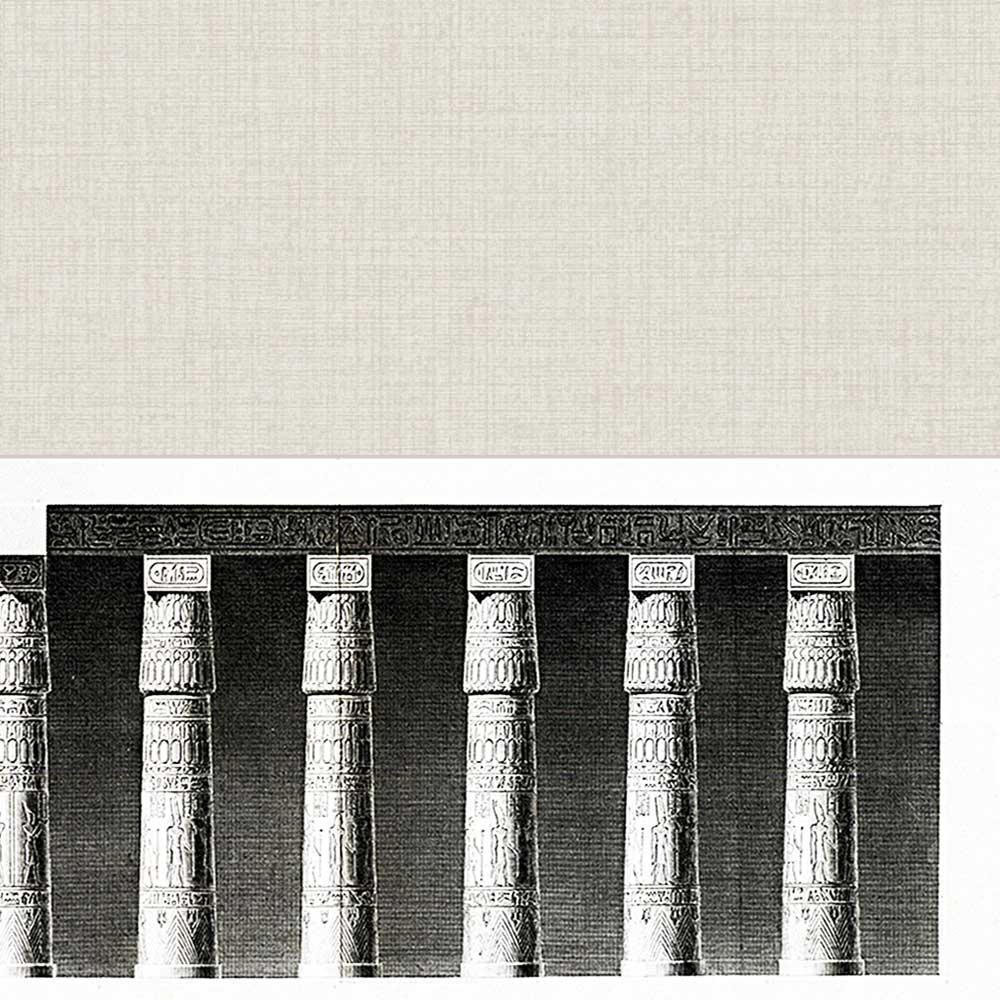 3.) Built by Pharaoh Seti I and Ramesses II, 13th century BCE,
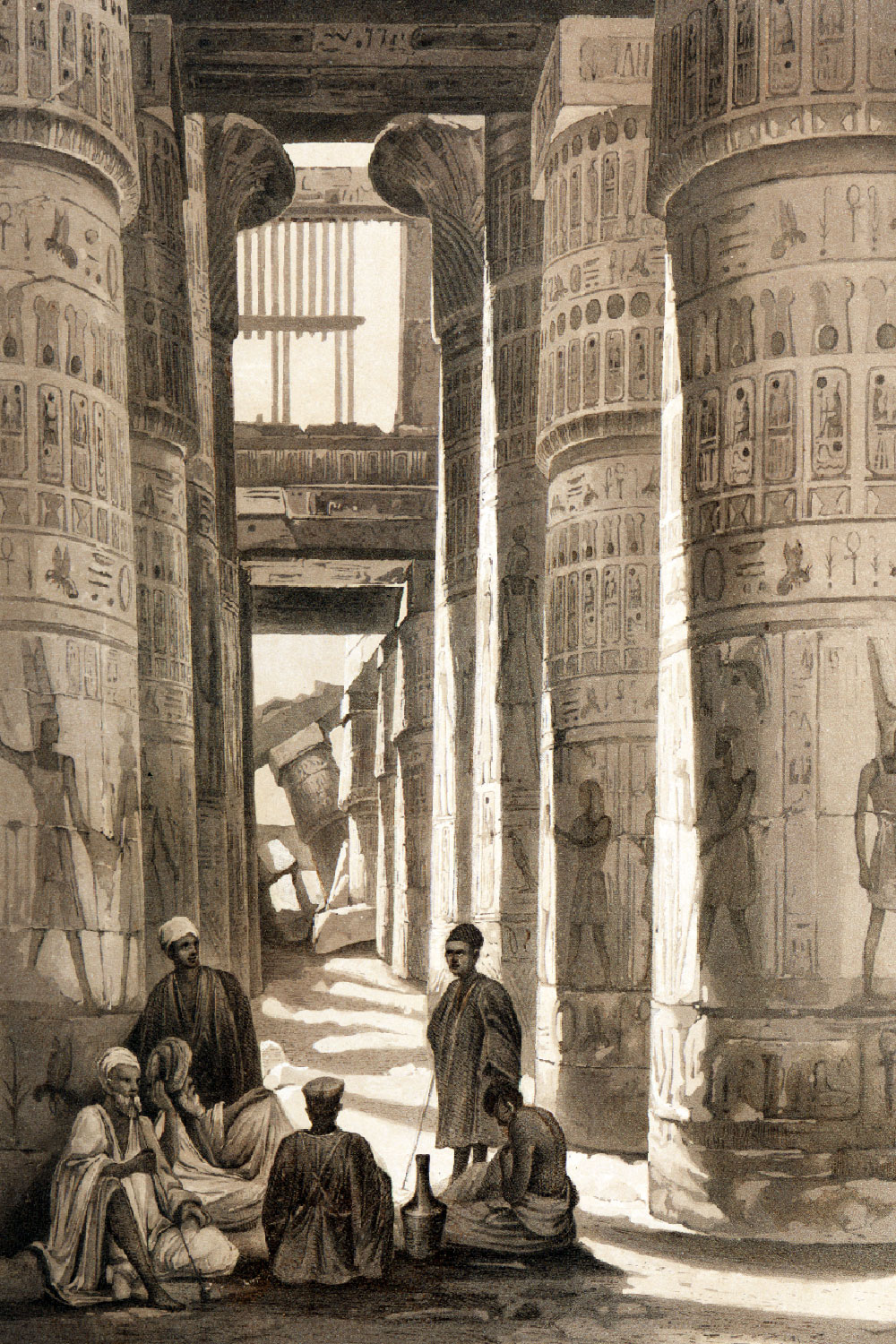
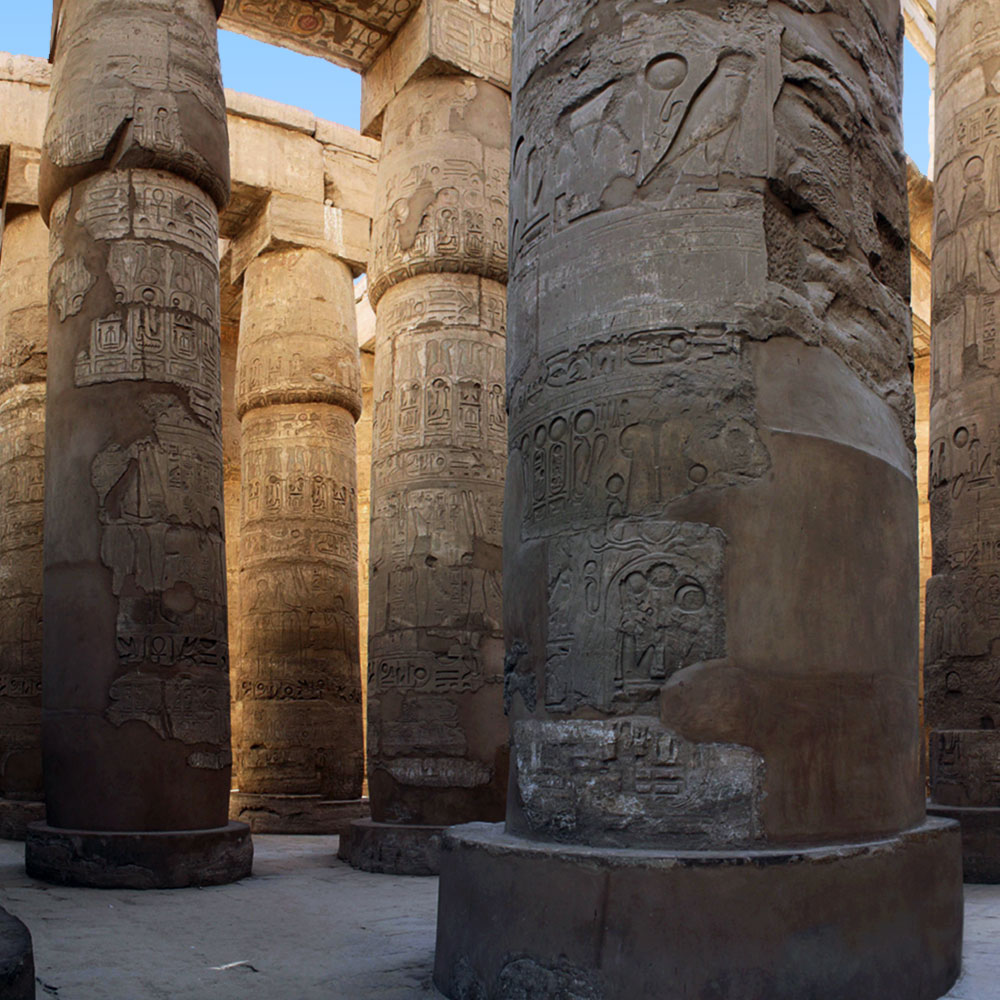 Karnak Hypostyle Hall, inside panarama, showing the central nave, twelve towering columns reach nearly 80 feet (25 meters) high with open blossom capitals,
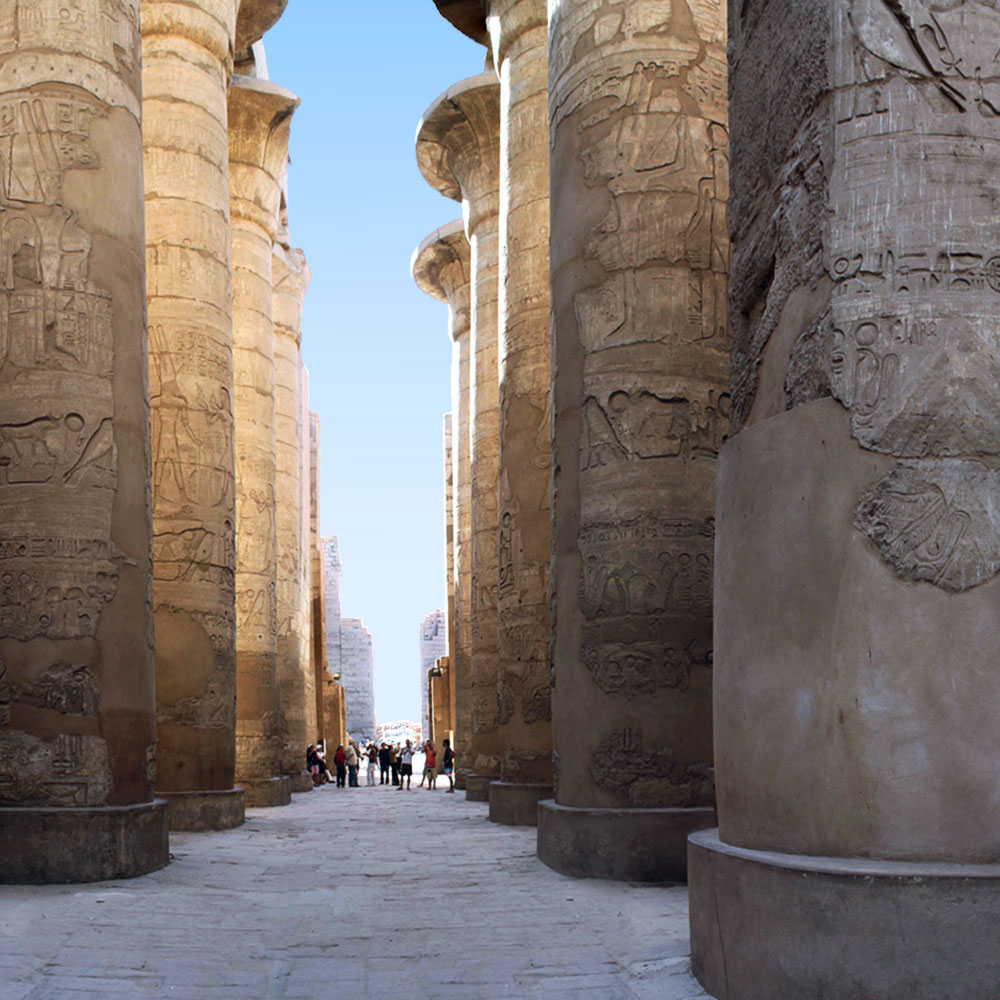 on the sides closed-bud papyrus columns standing 49 feet (15 meters) tall, in distinct rows to resemble a sacred papyrus marsh,
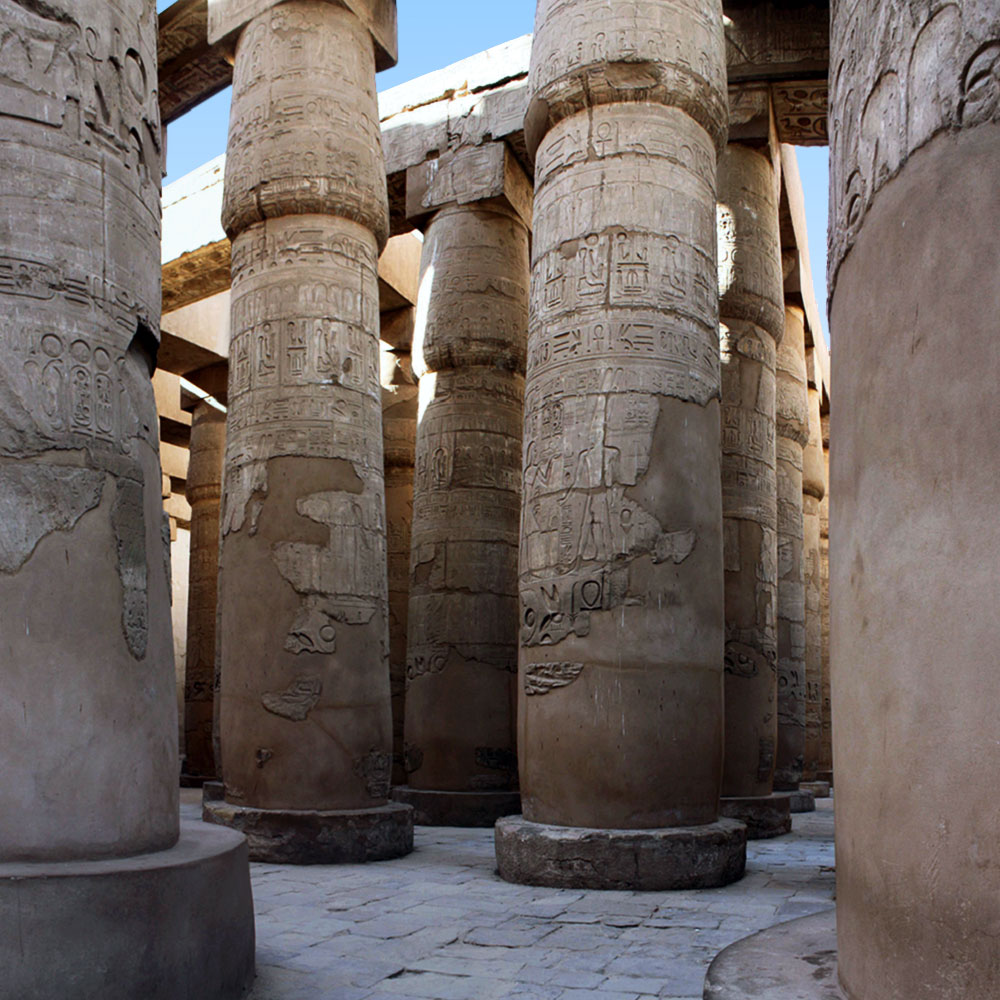 covered in ancient hieroglyphs and royal names, 1250 BCE., 18th and 19th Dynasties, New Kingdom, made of sandstone and mud brick
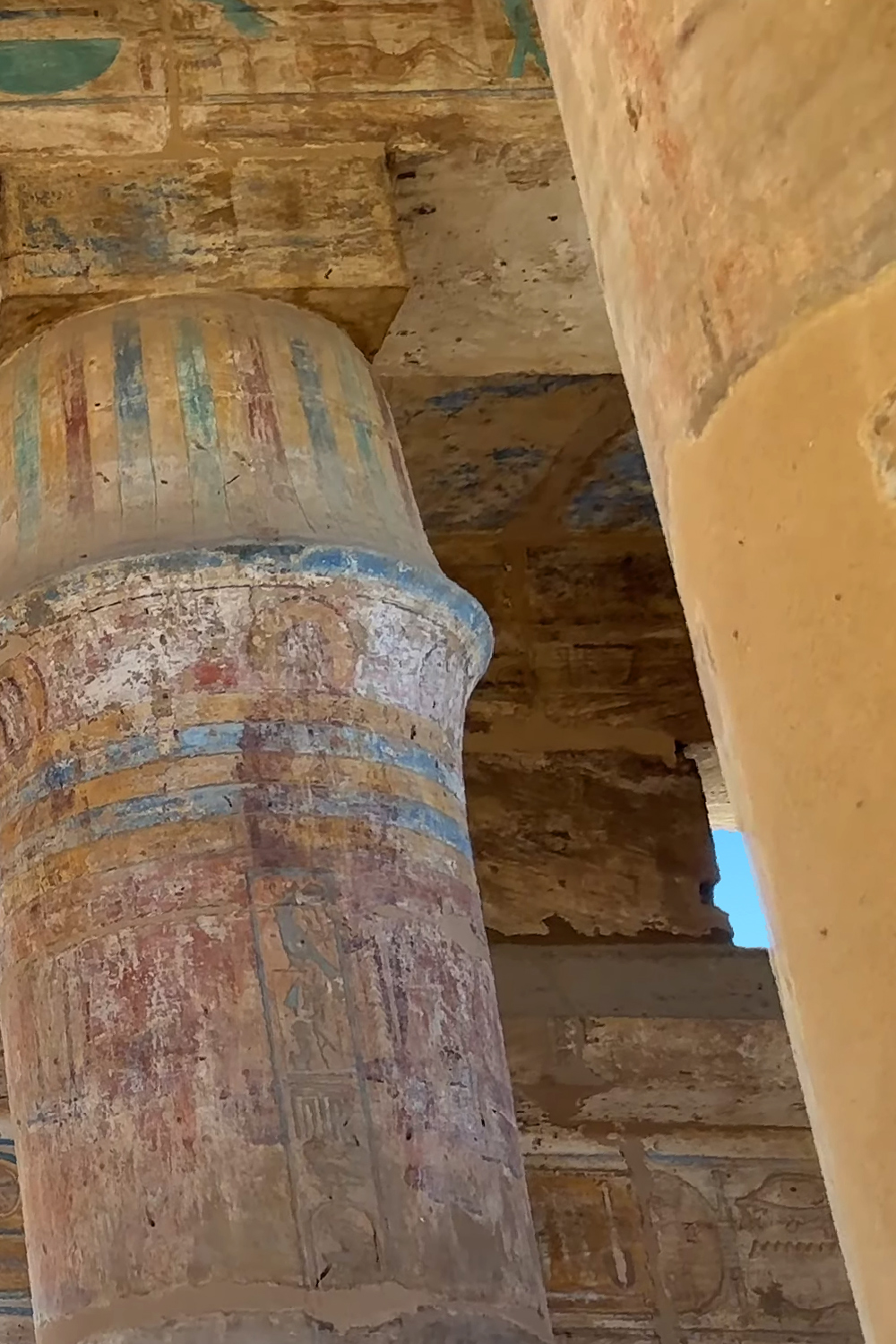
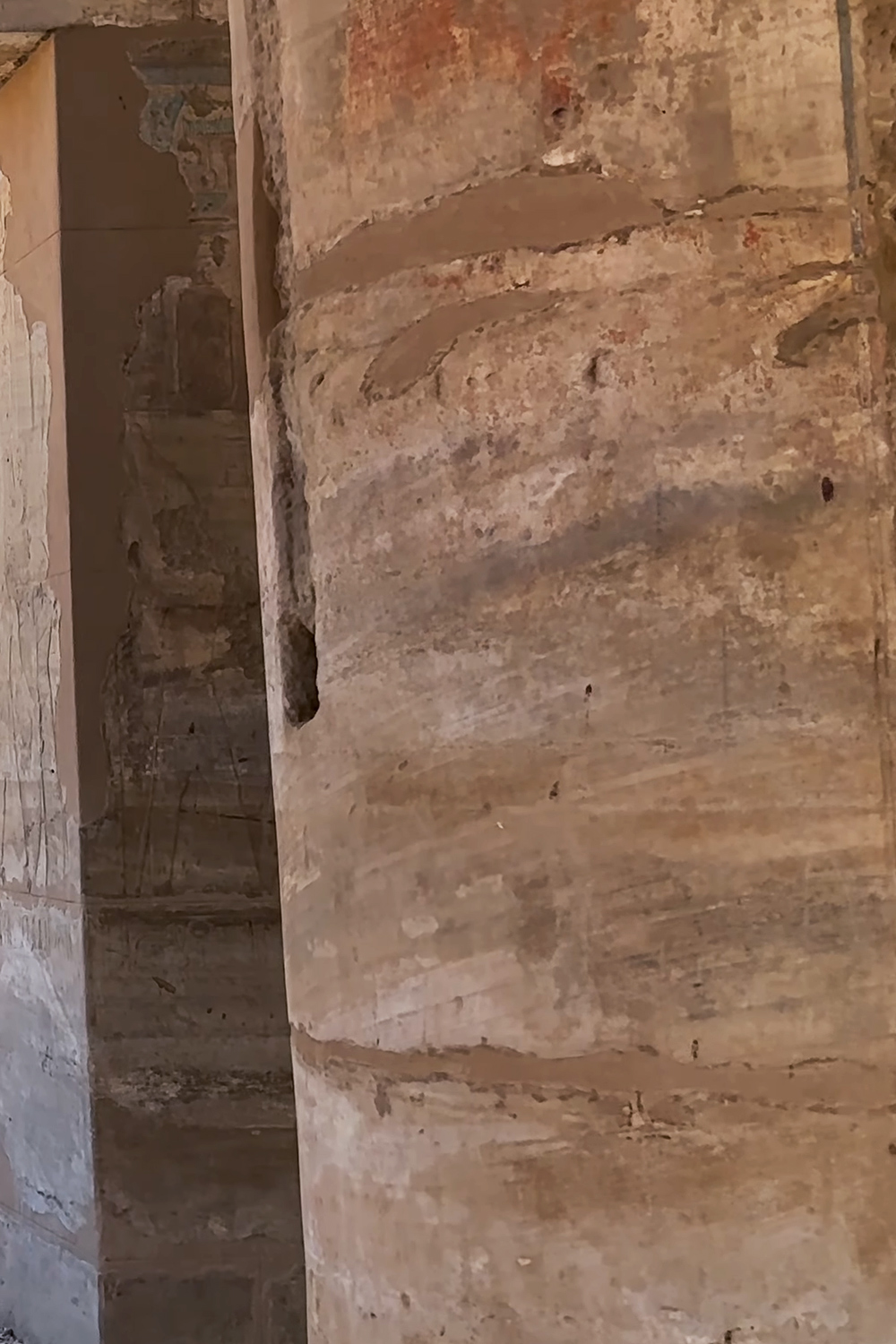
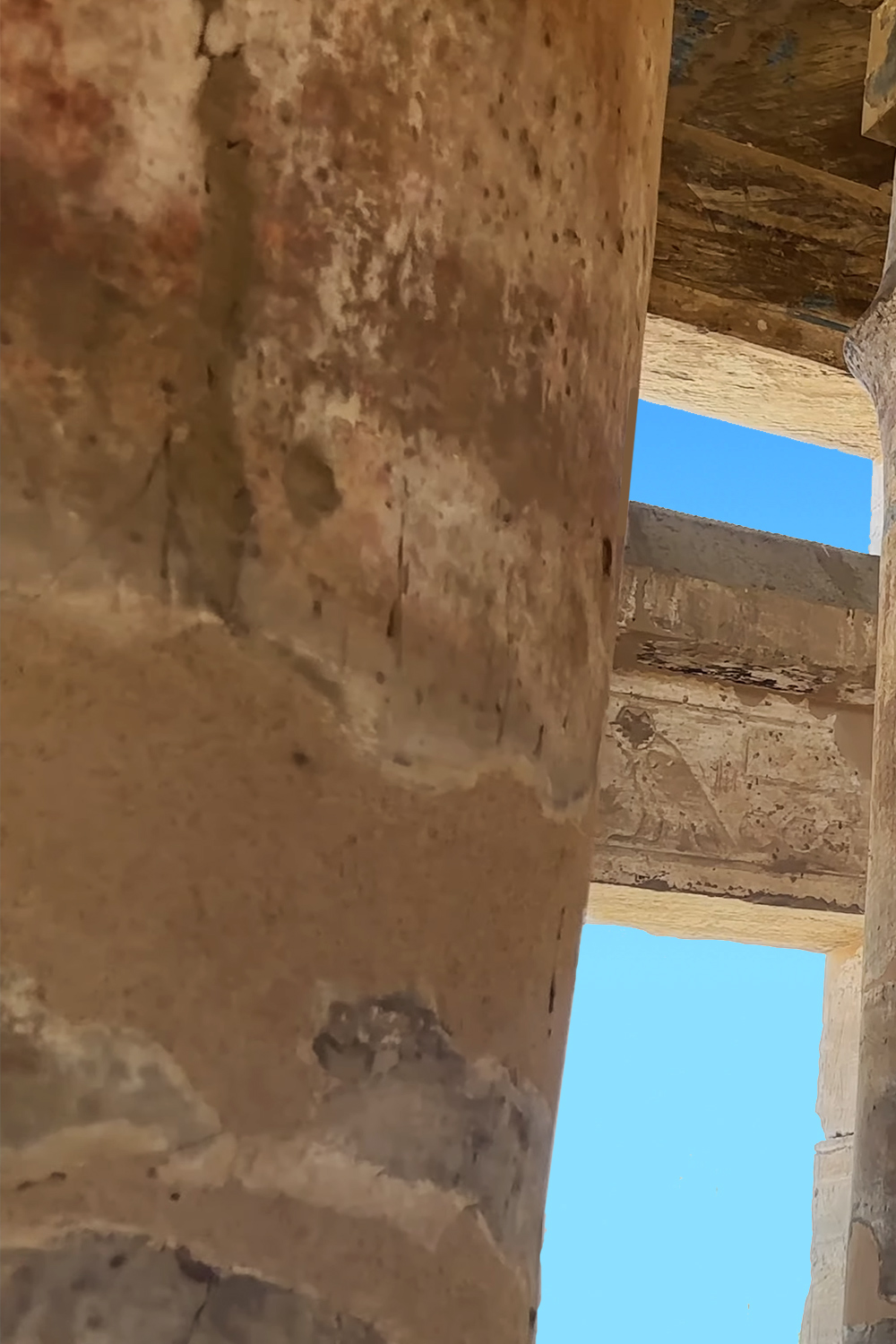
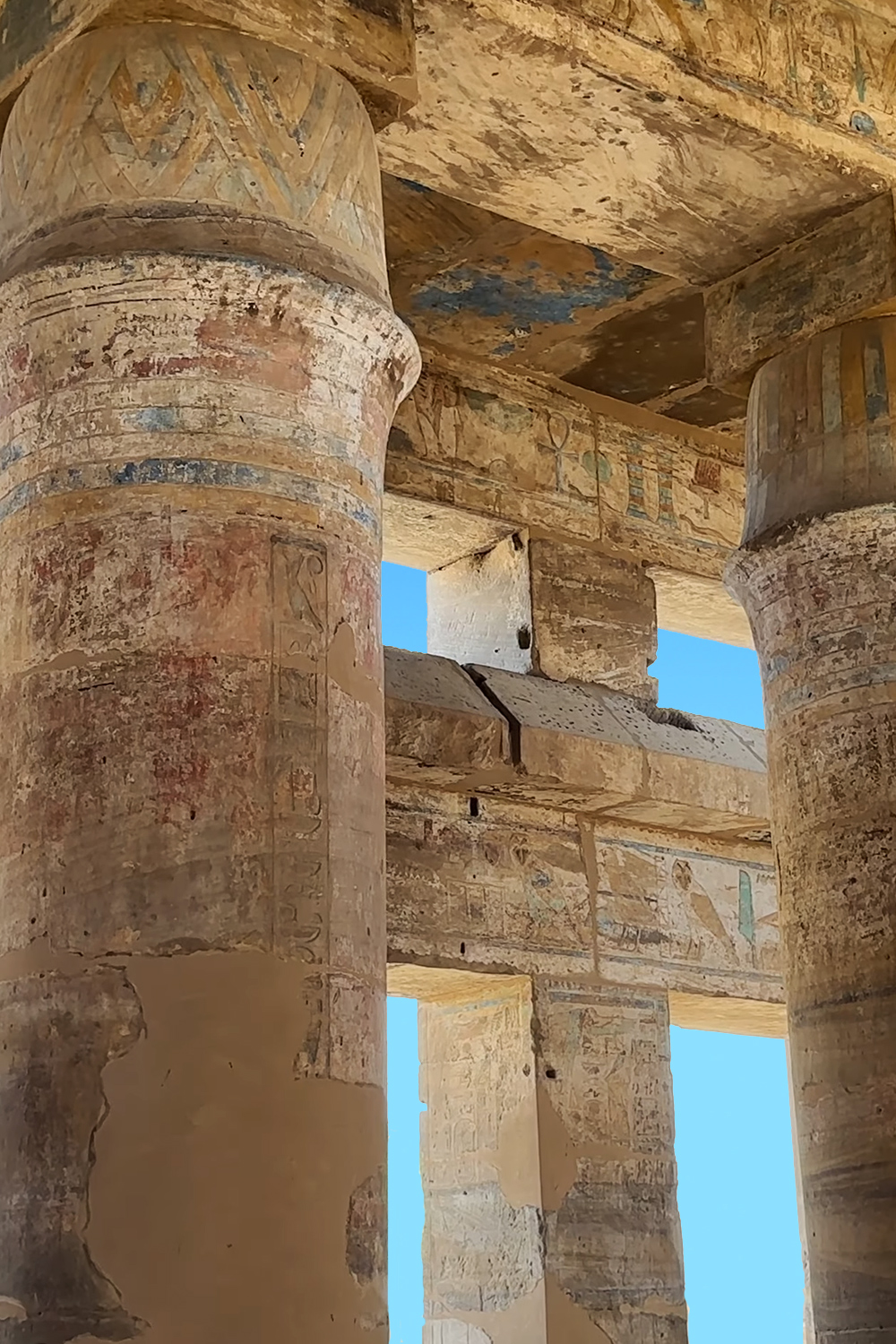
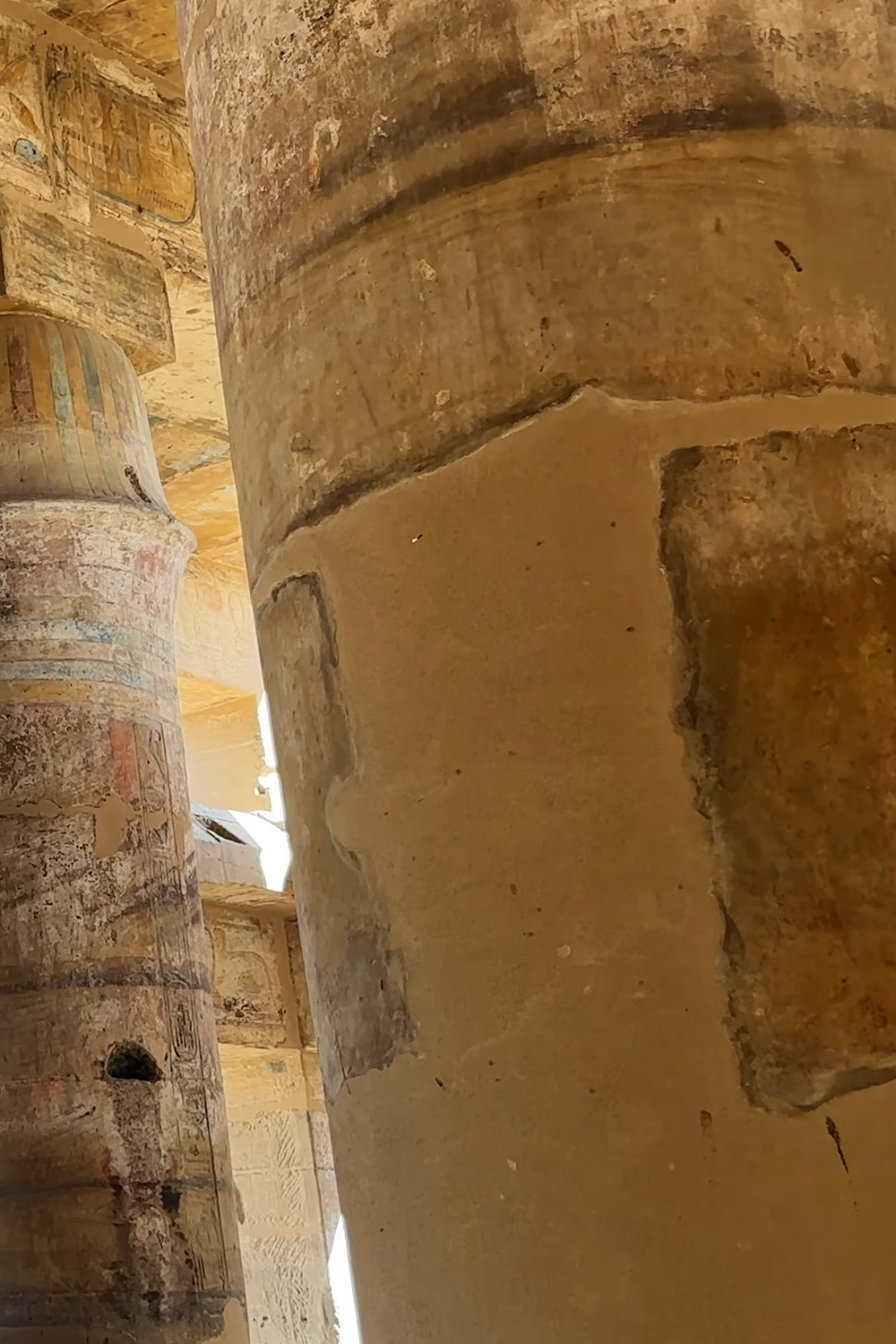
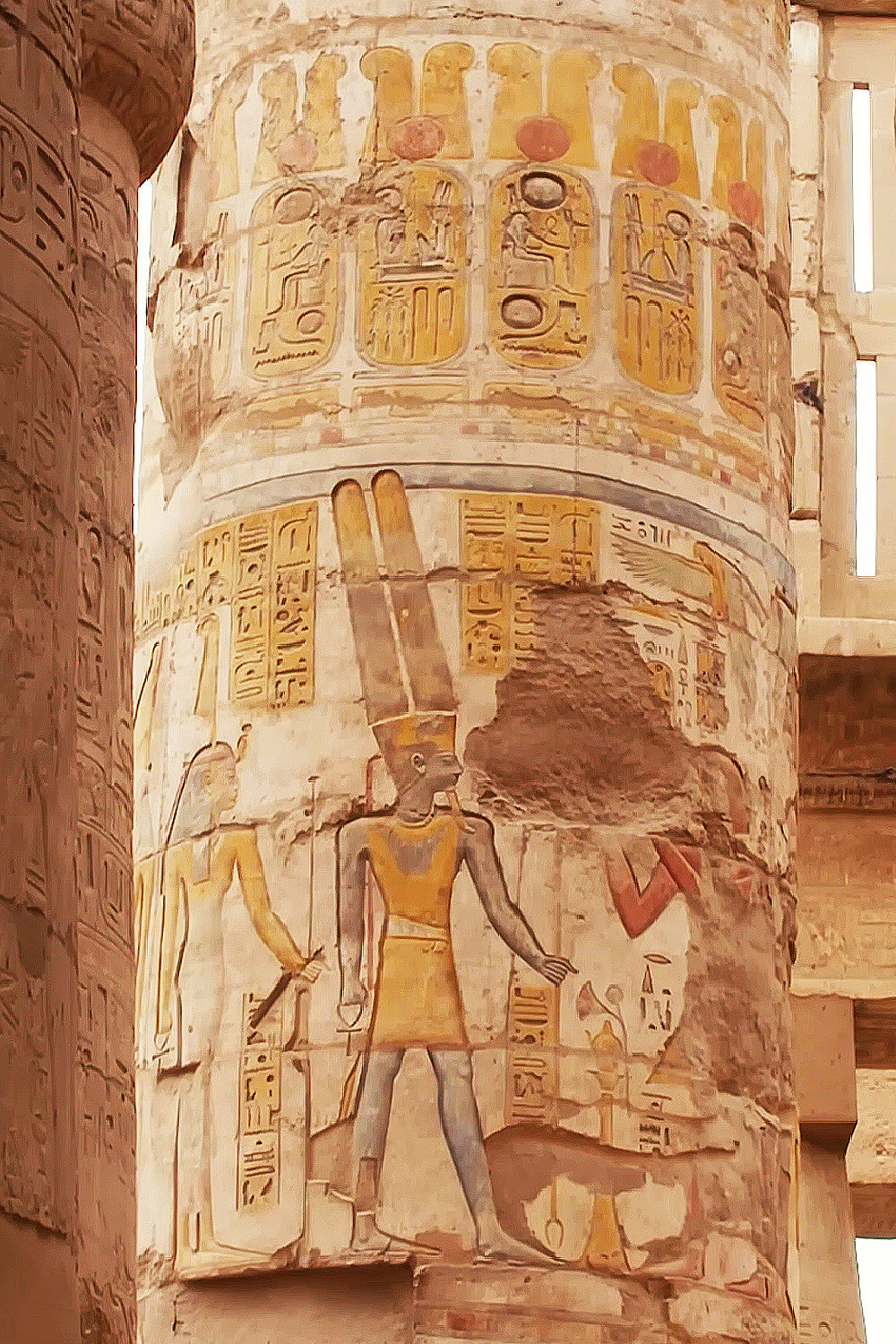
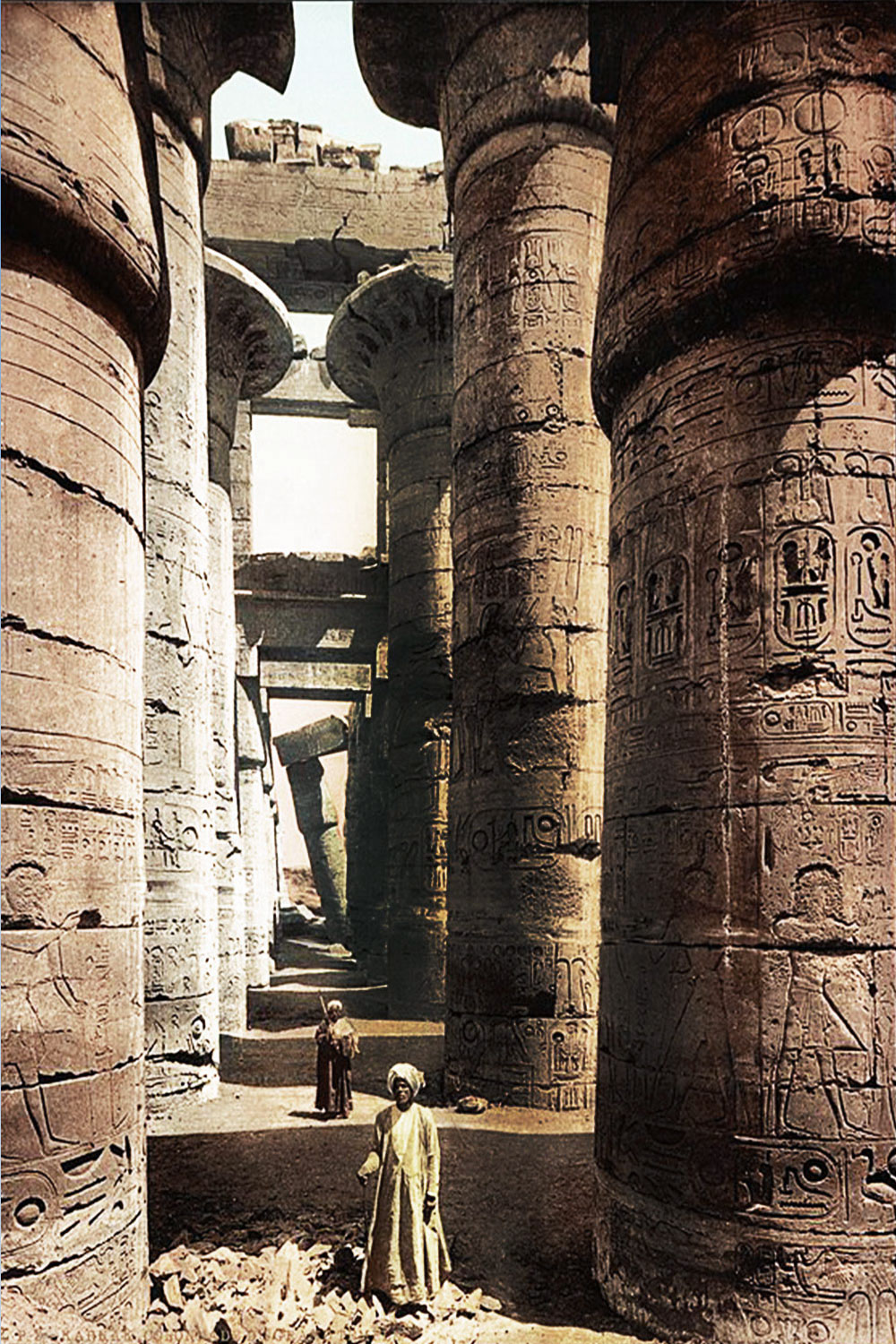
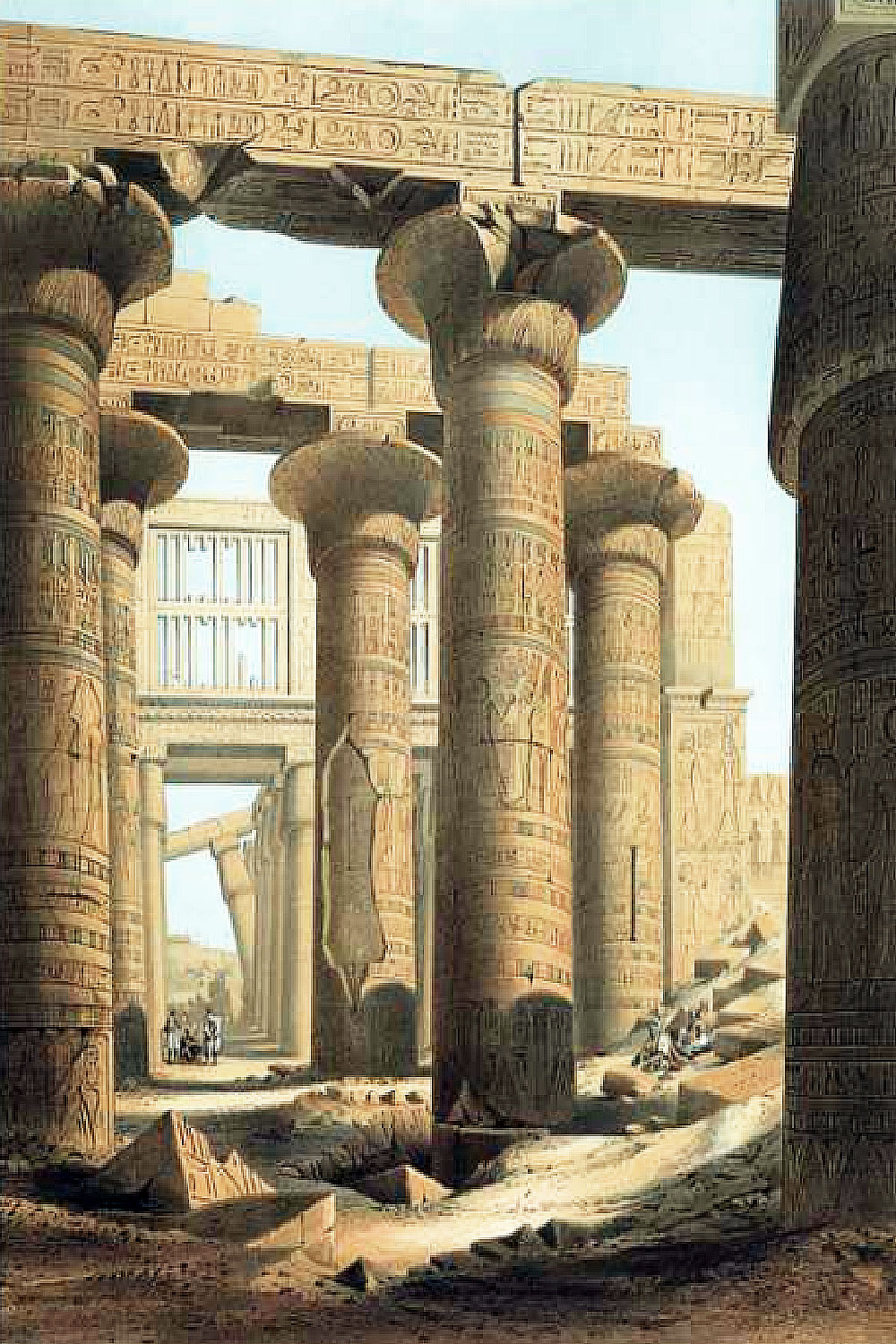
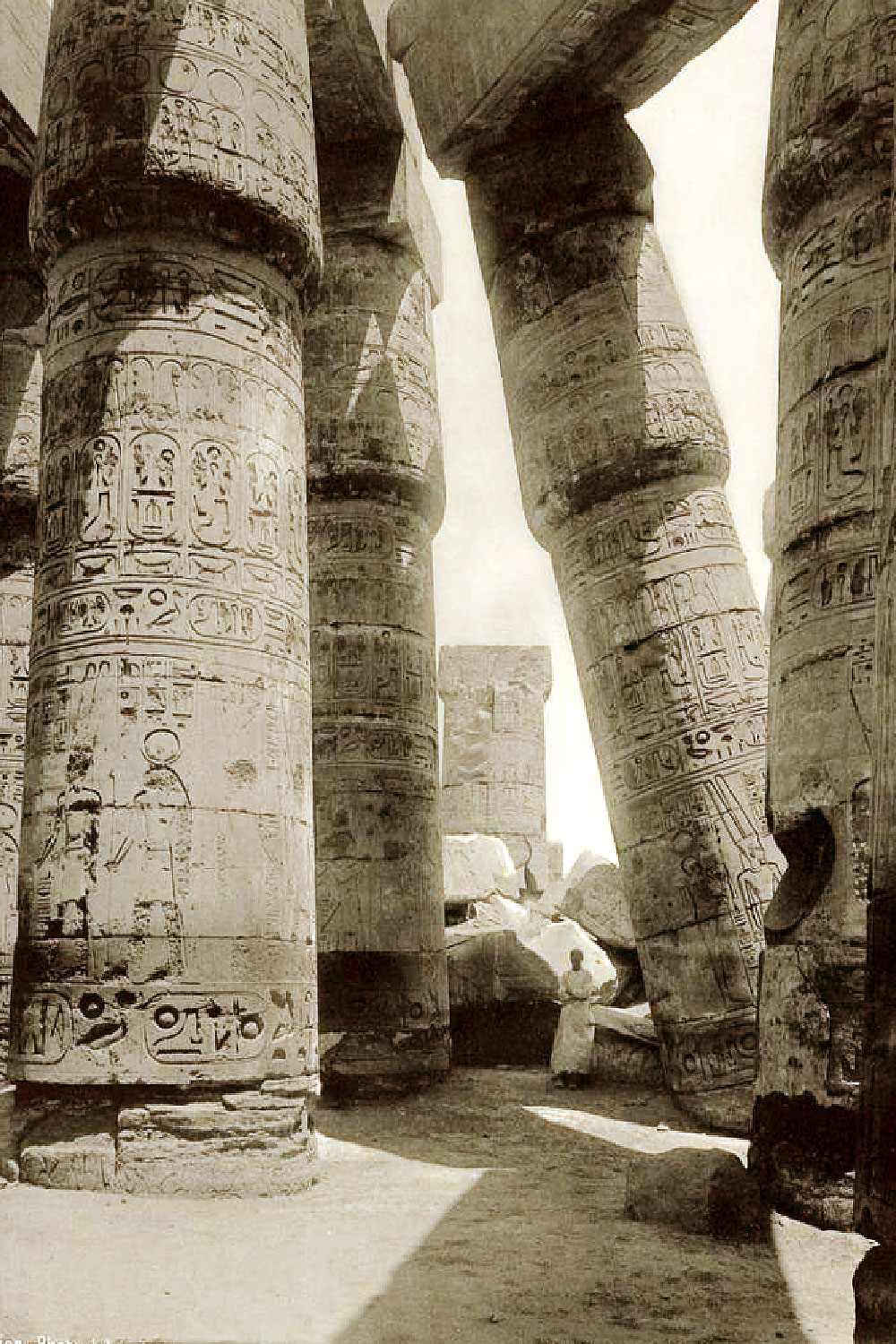
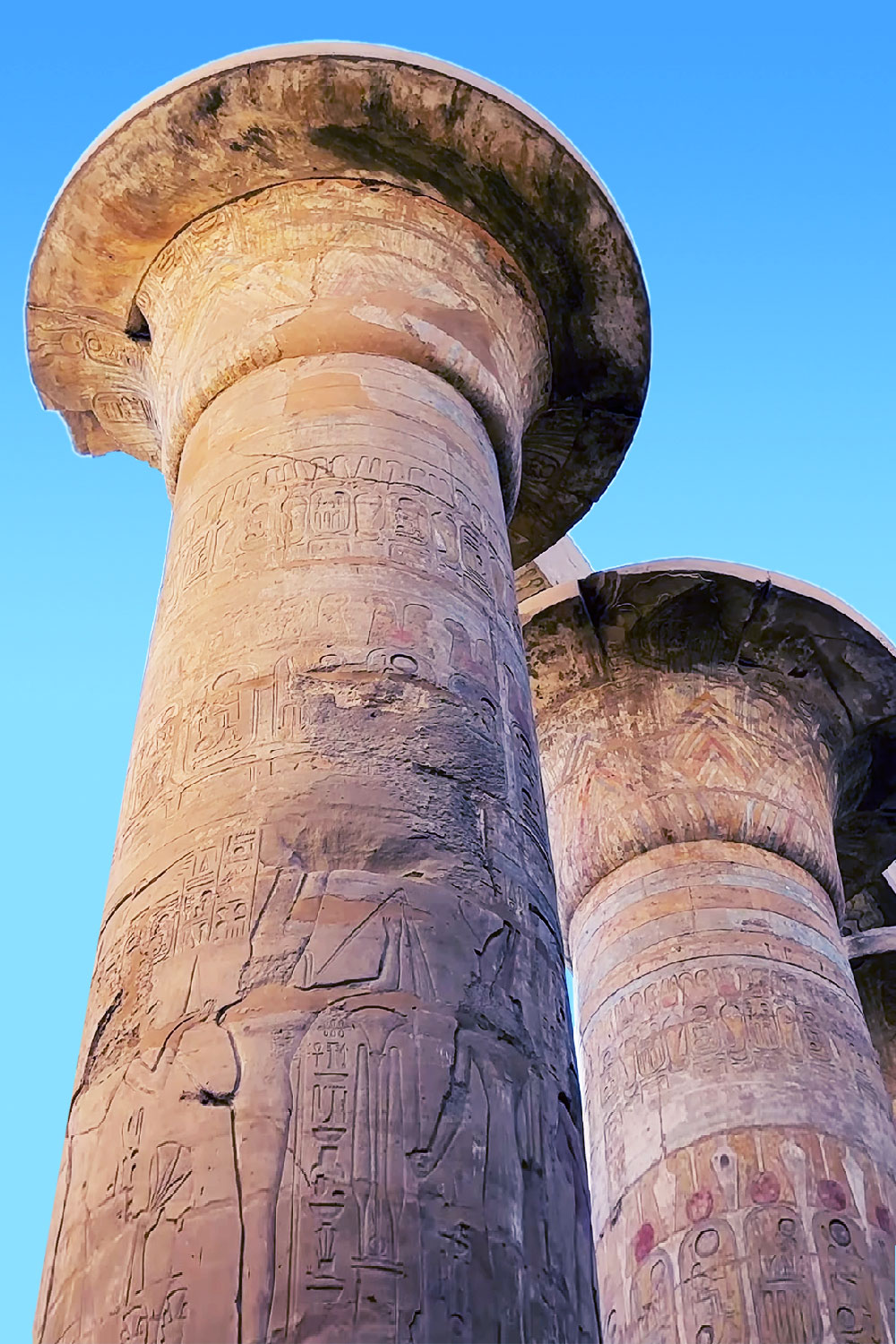 Karnak Hypostyle Hall, inside showing the central nave, one of twelve towering columns reach nearly 80 feet (25 meters) high with a open bell shaped papyrus blossom capital, covered with sunken relief hieroglyphs with faint traces of ancient red, blue, and yellow pigments.
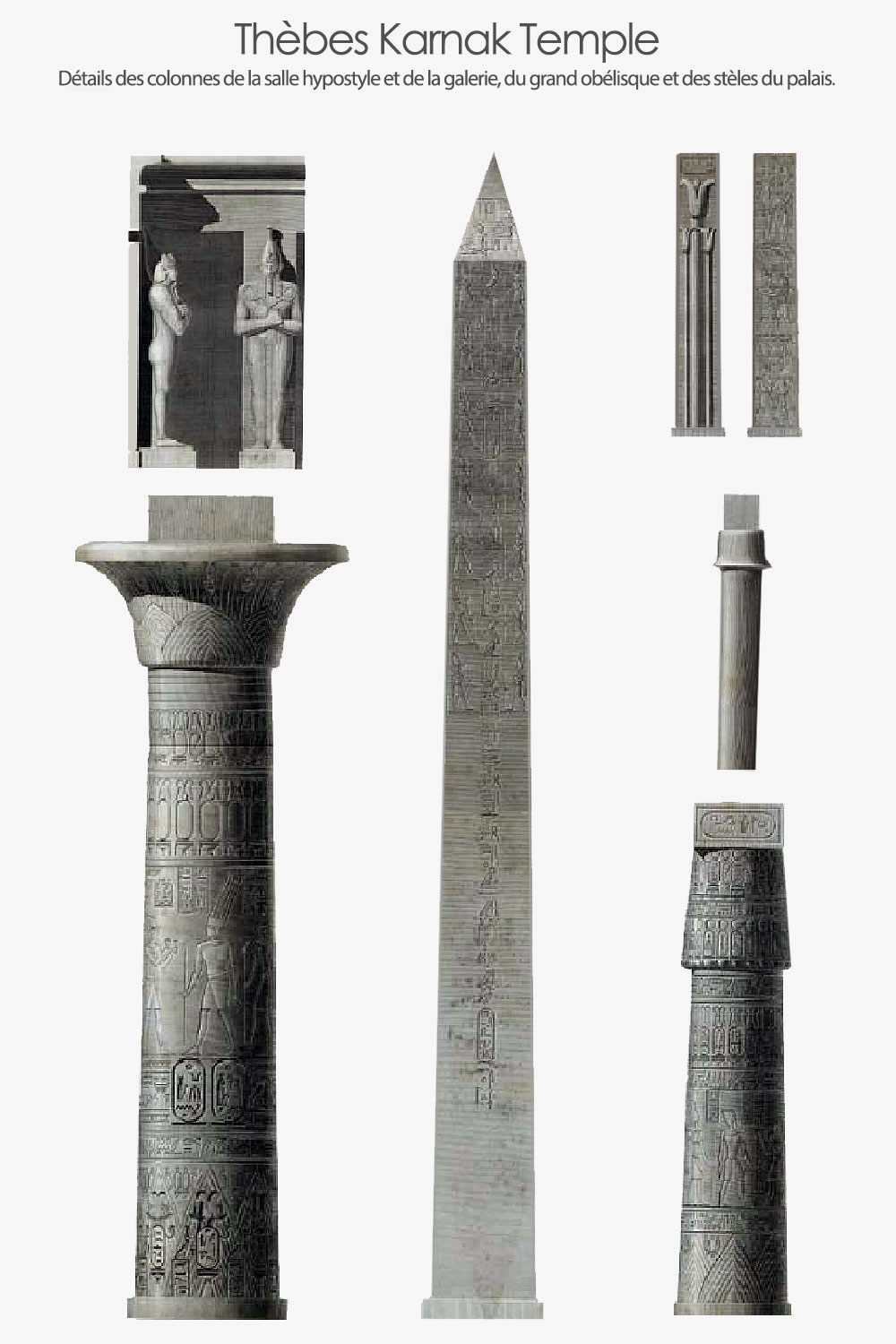
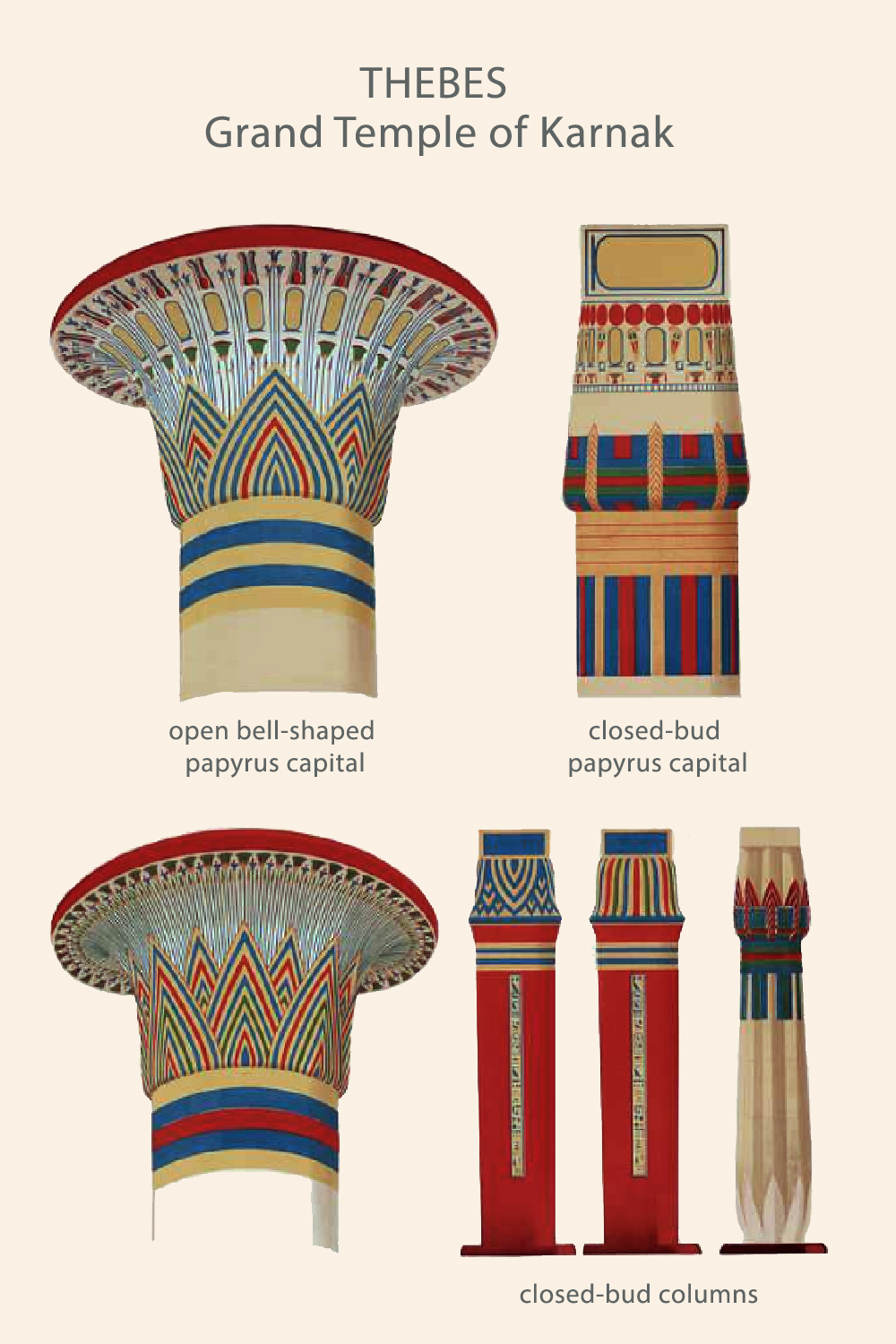 Theben Grosser Tempel von Karnak, Column capital rendering, Date: 1849, Author: Lepsius, Richard (1810-1884), Surveyor: Erbkam, Georg Gustav (1811-1876), Lithographer, Loeillot, W., Source: NYC Public Library, 🅮Public Domain
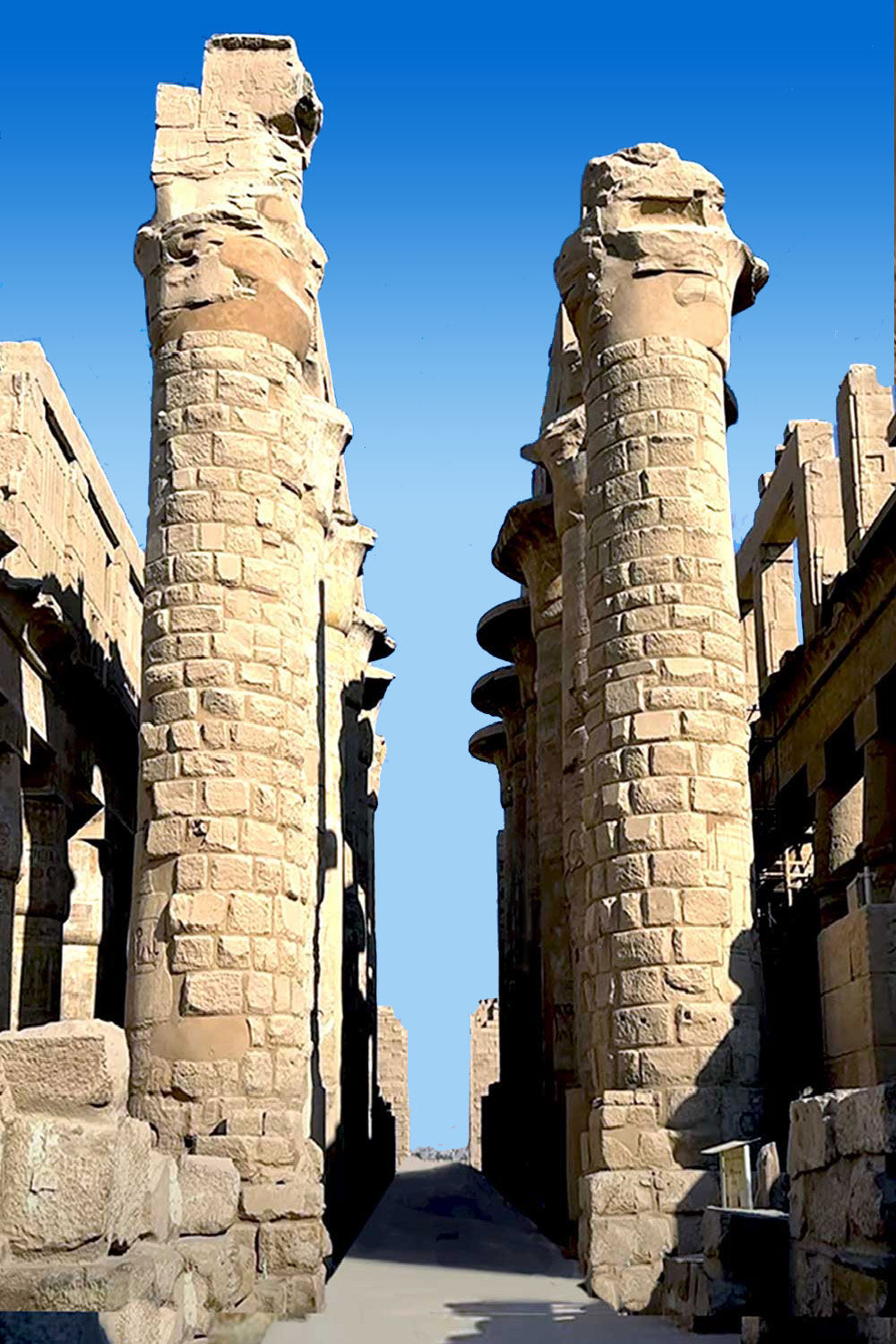
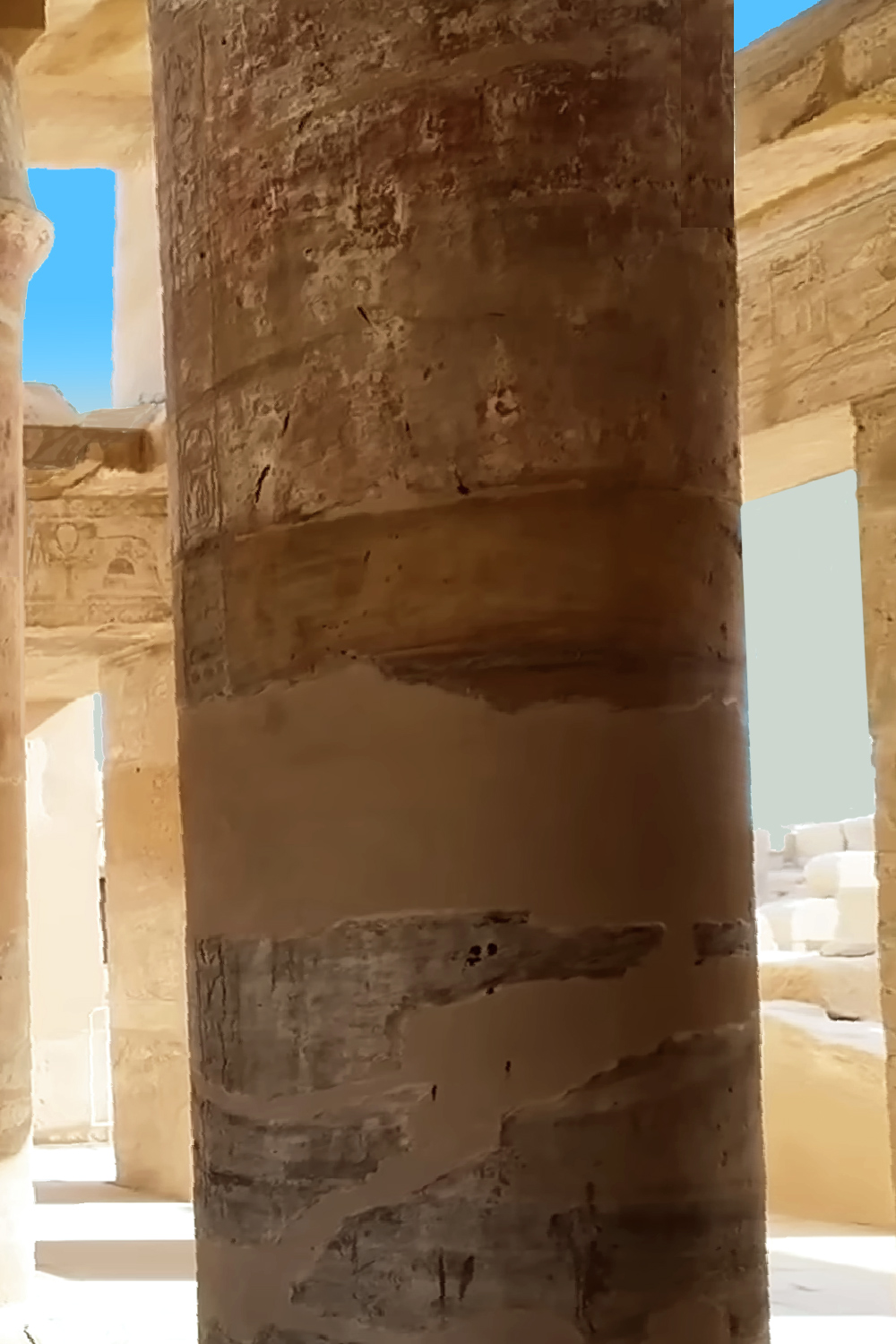
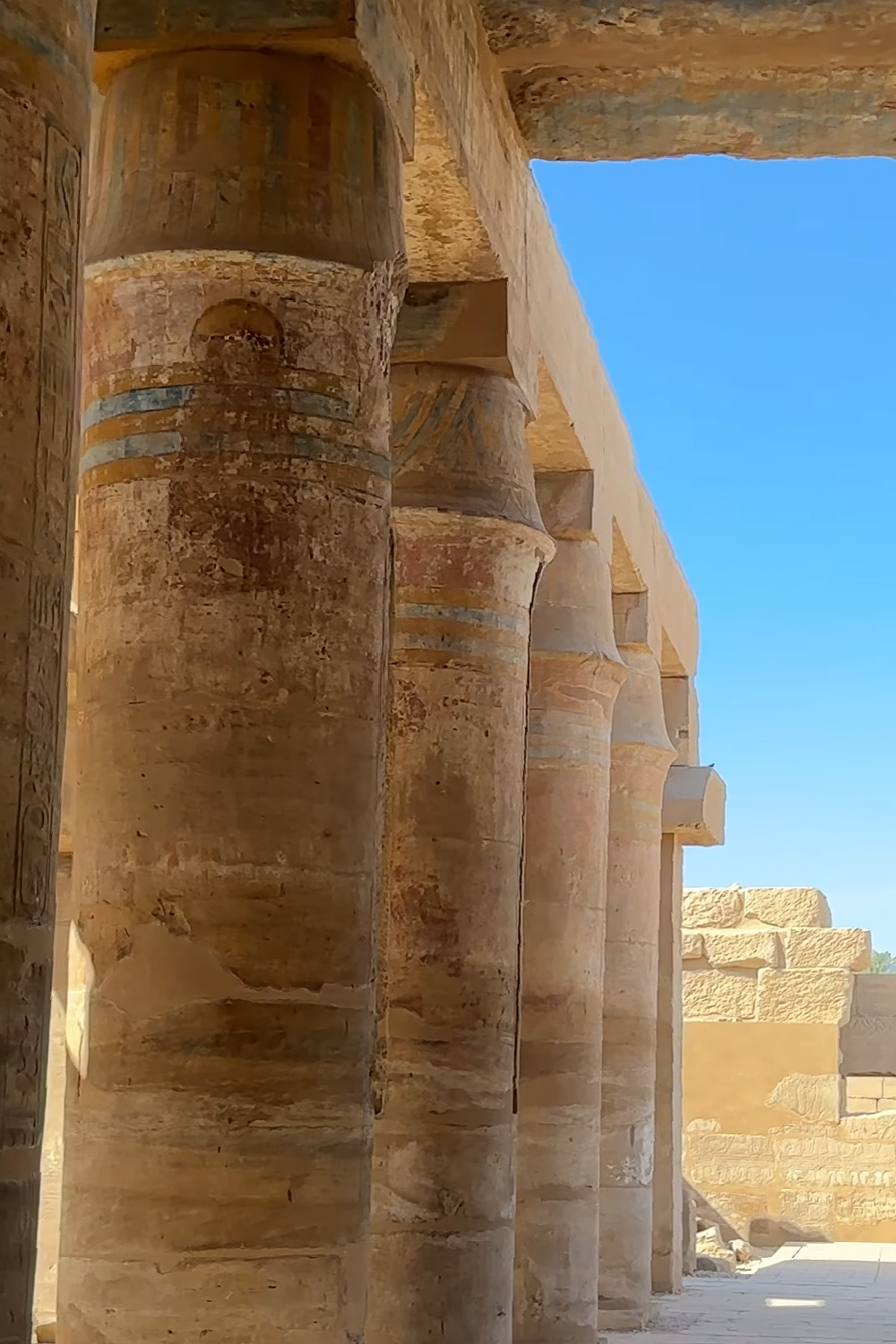
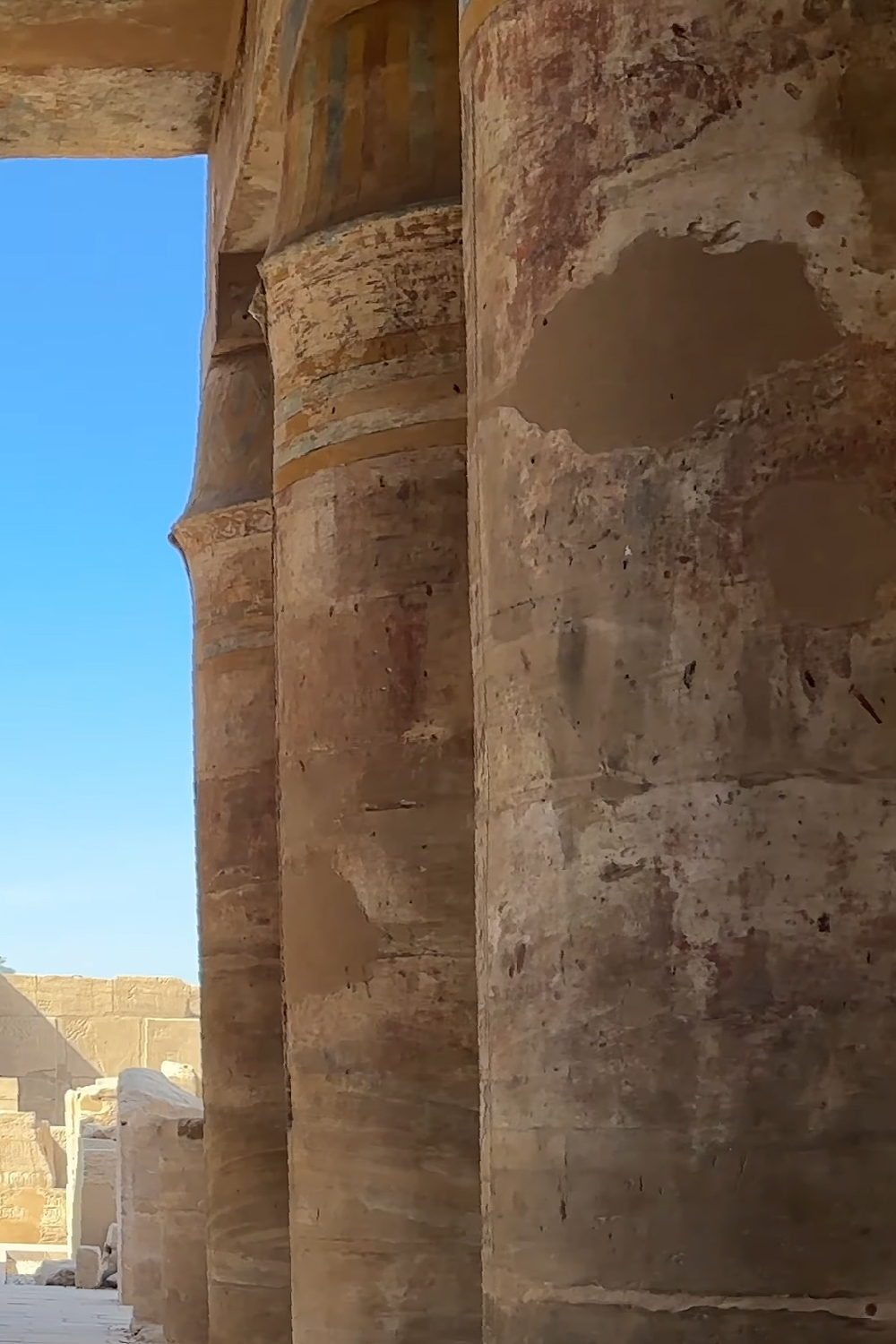
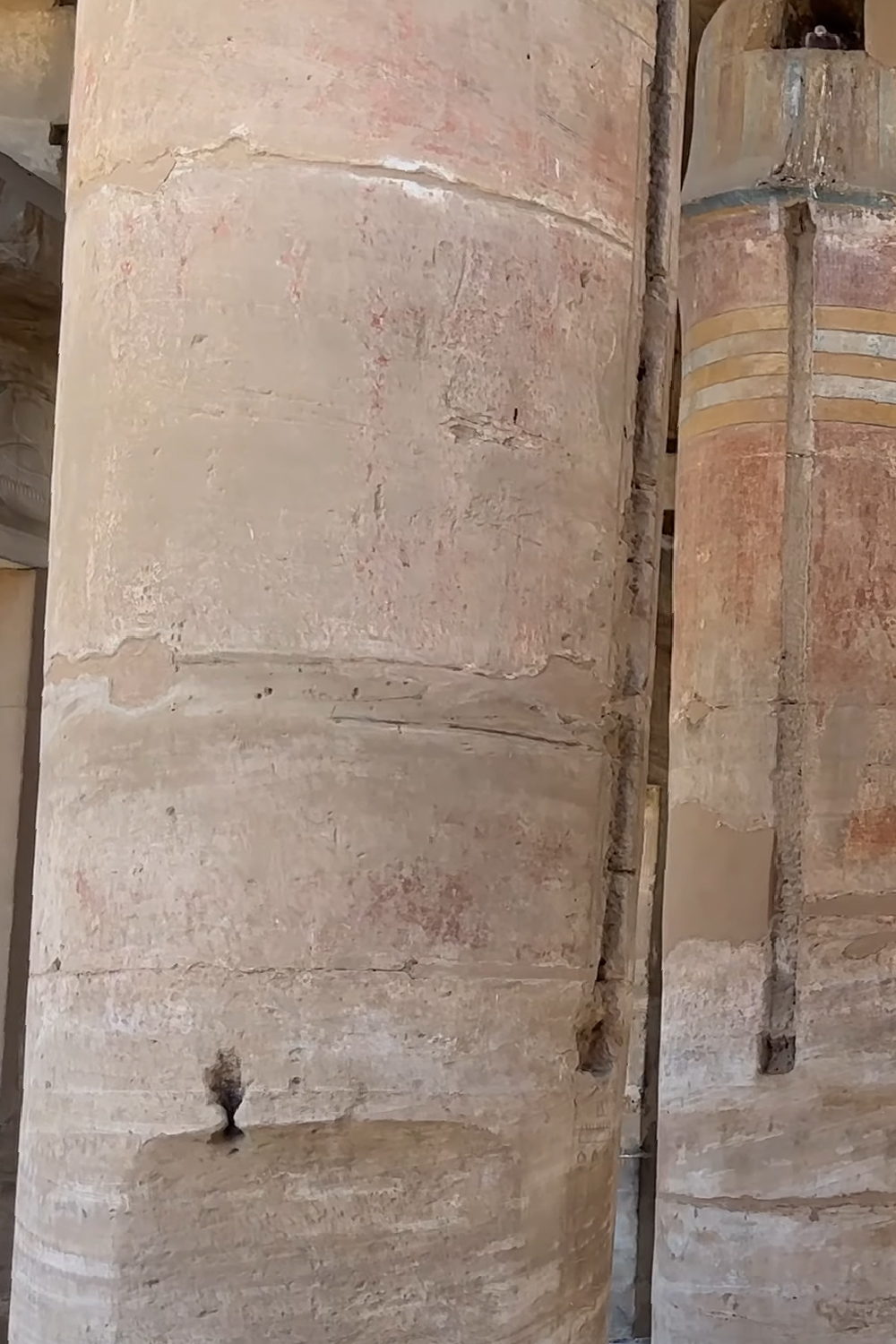
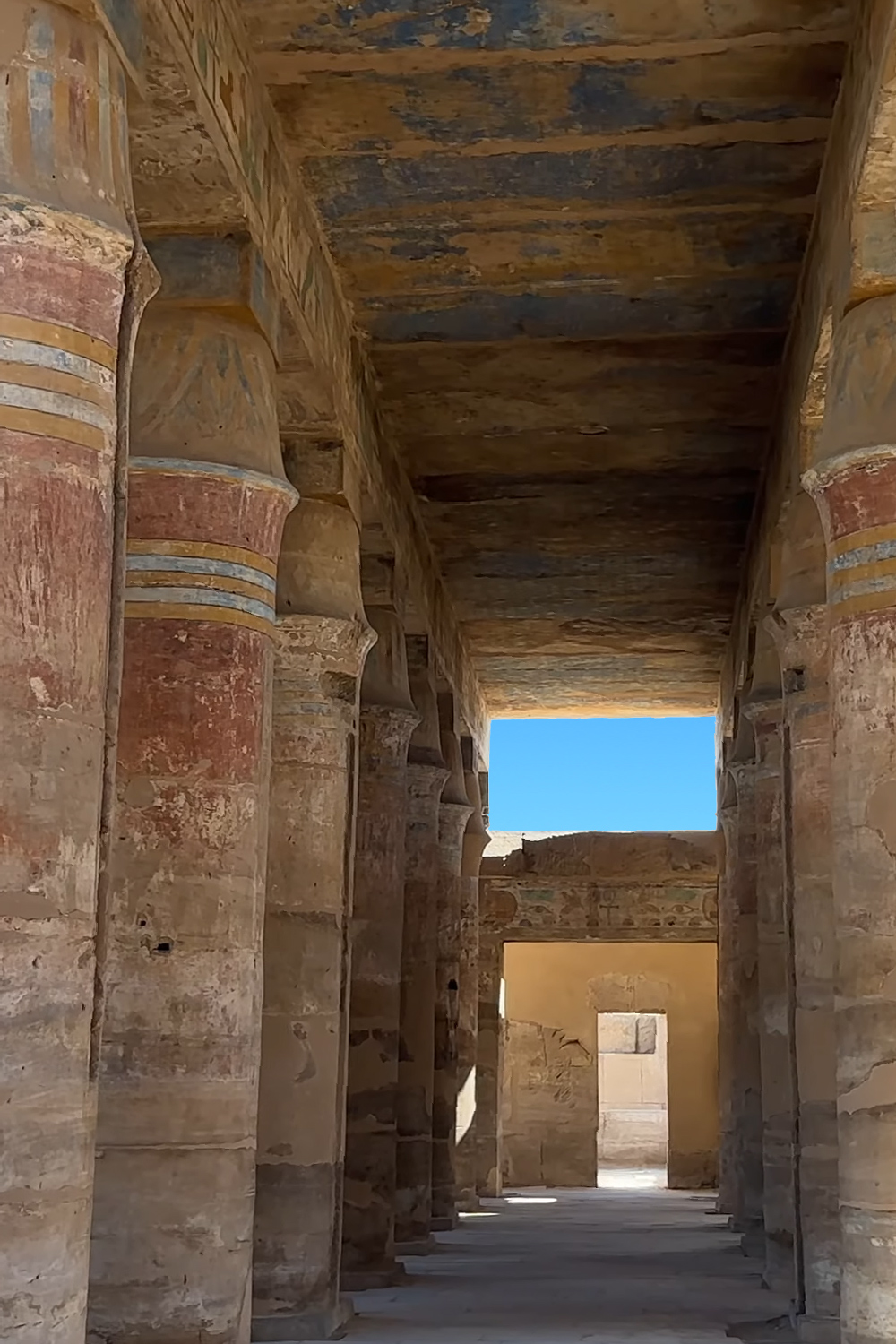
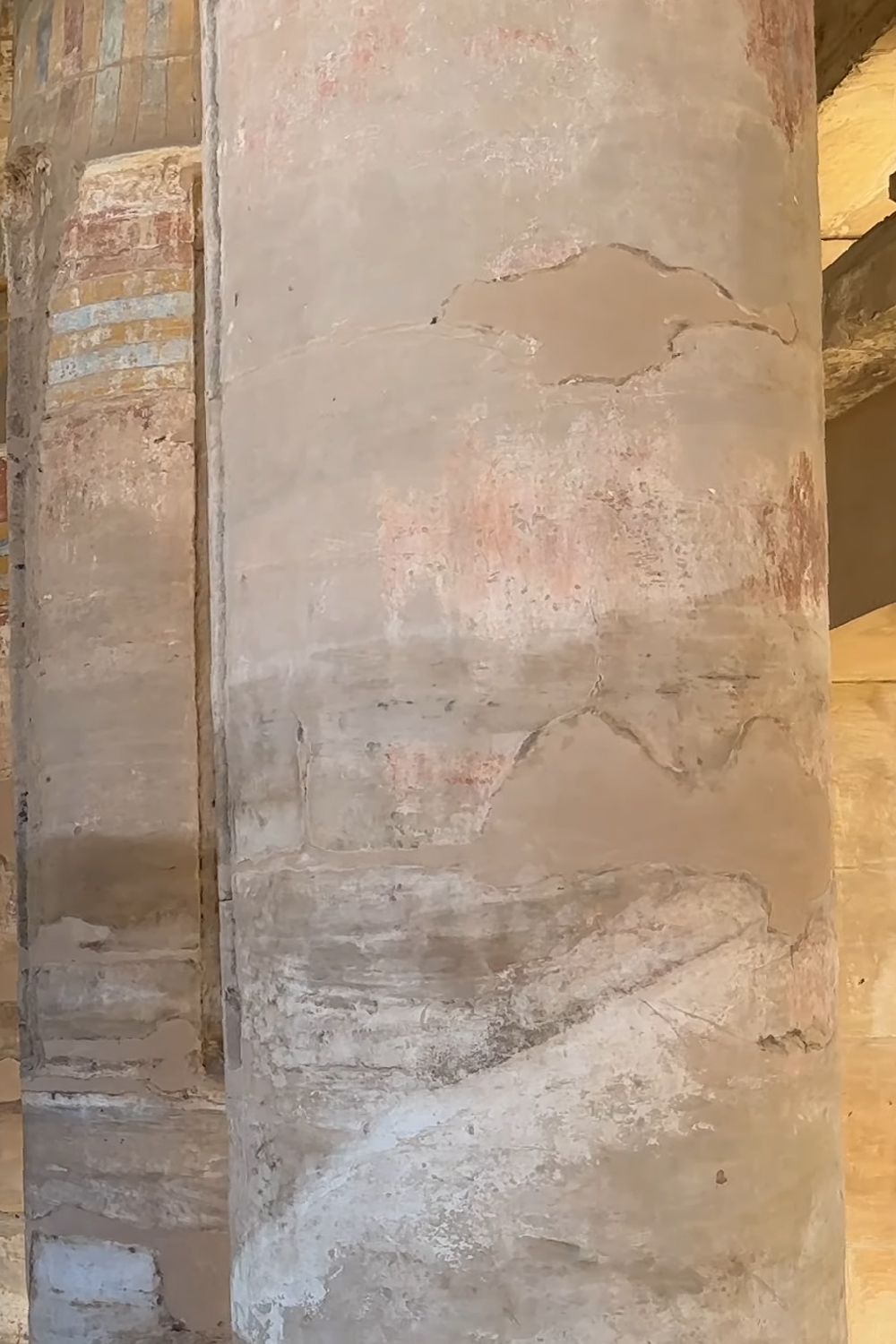
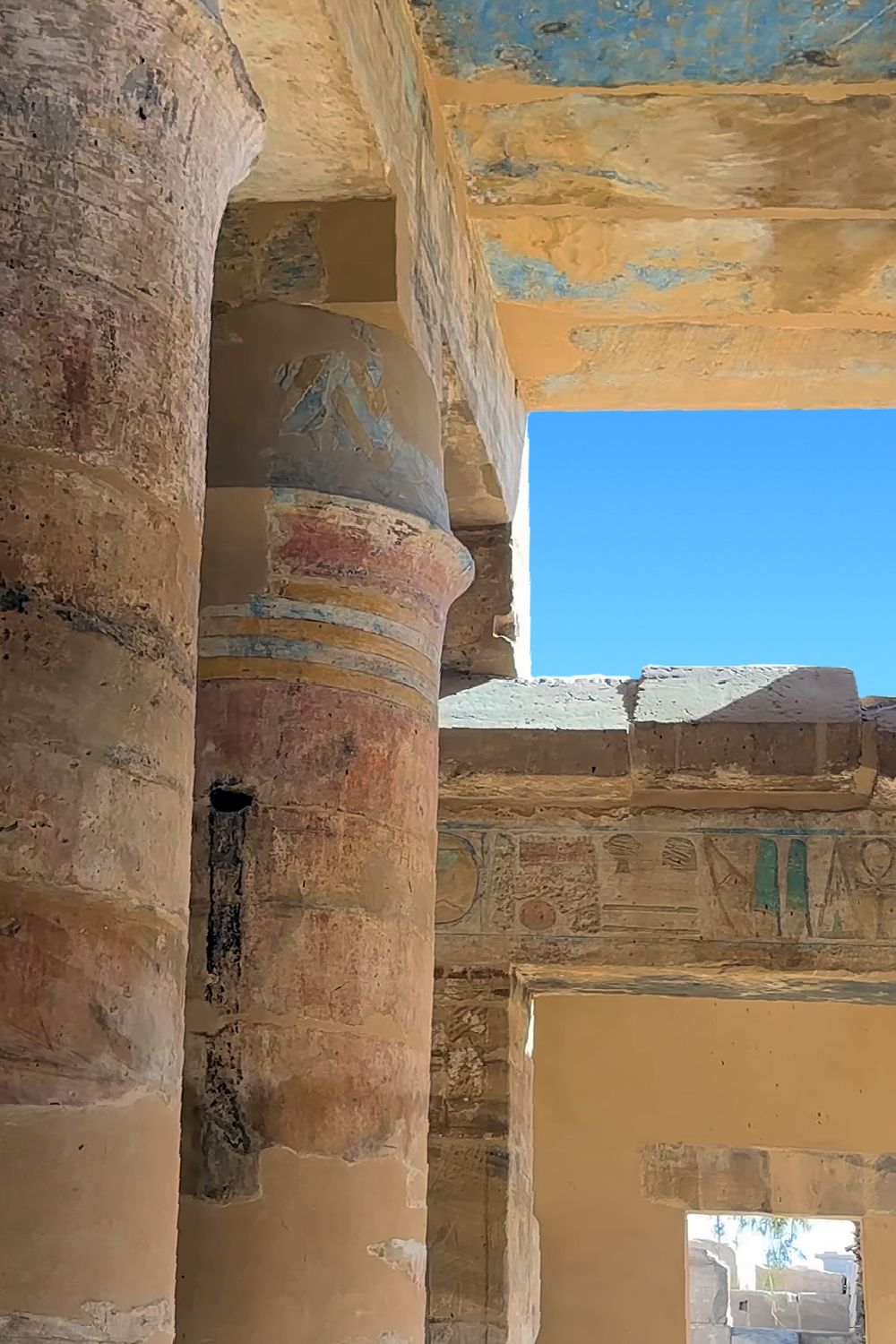
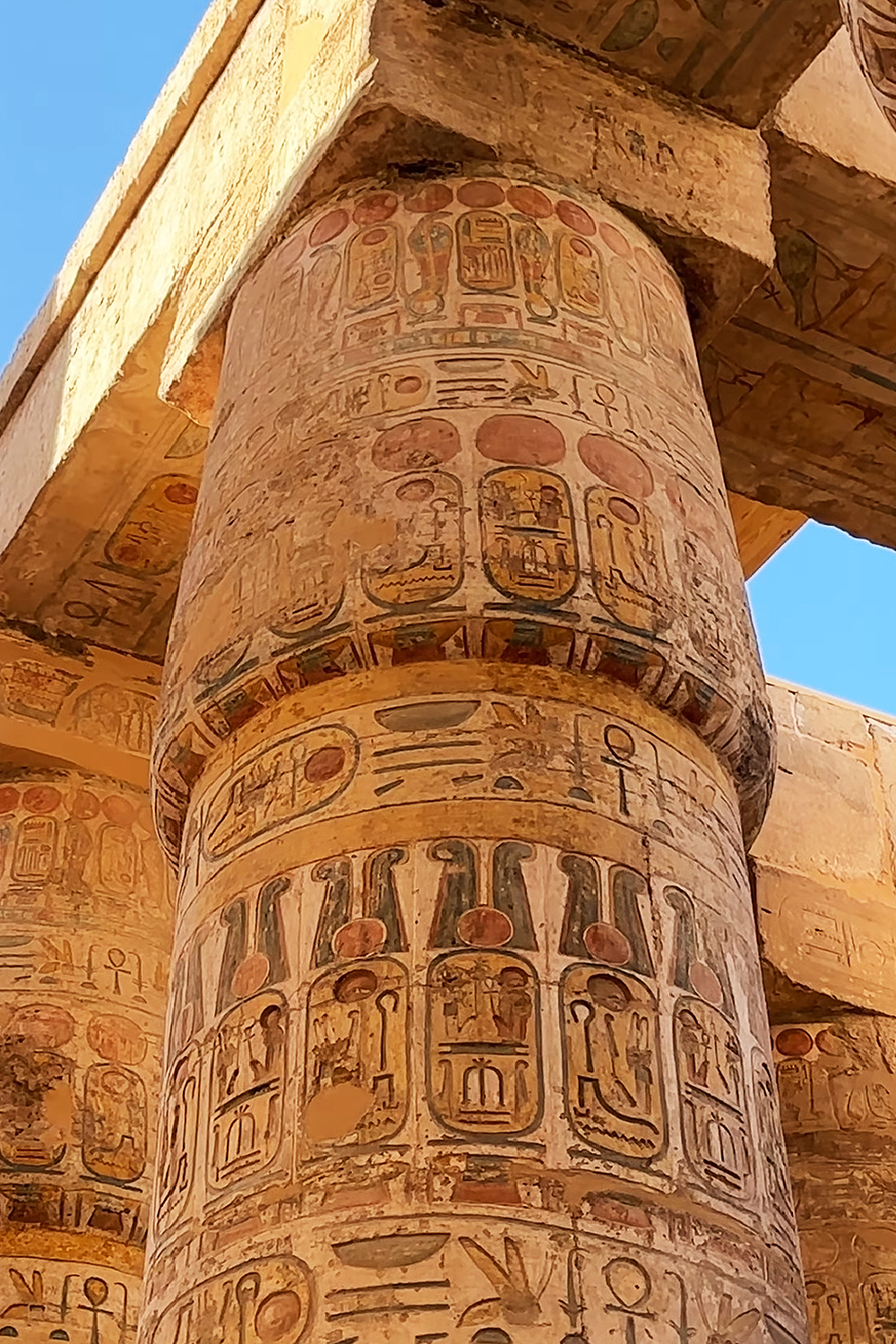
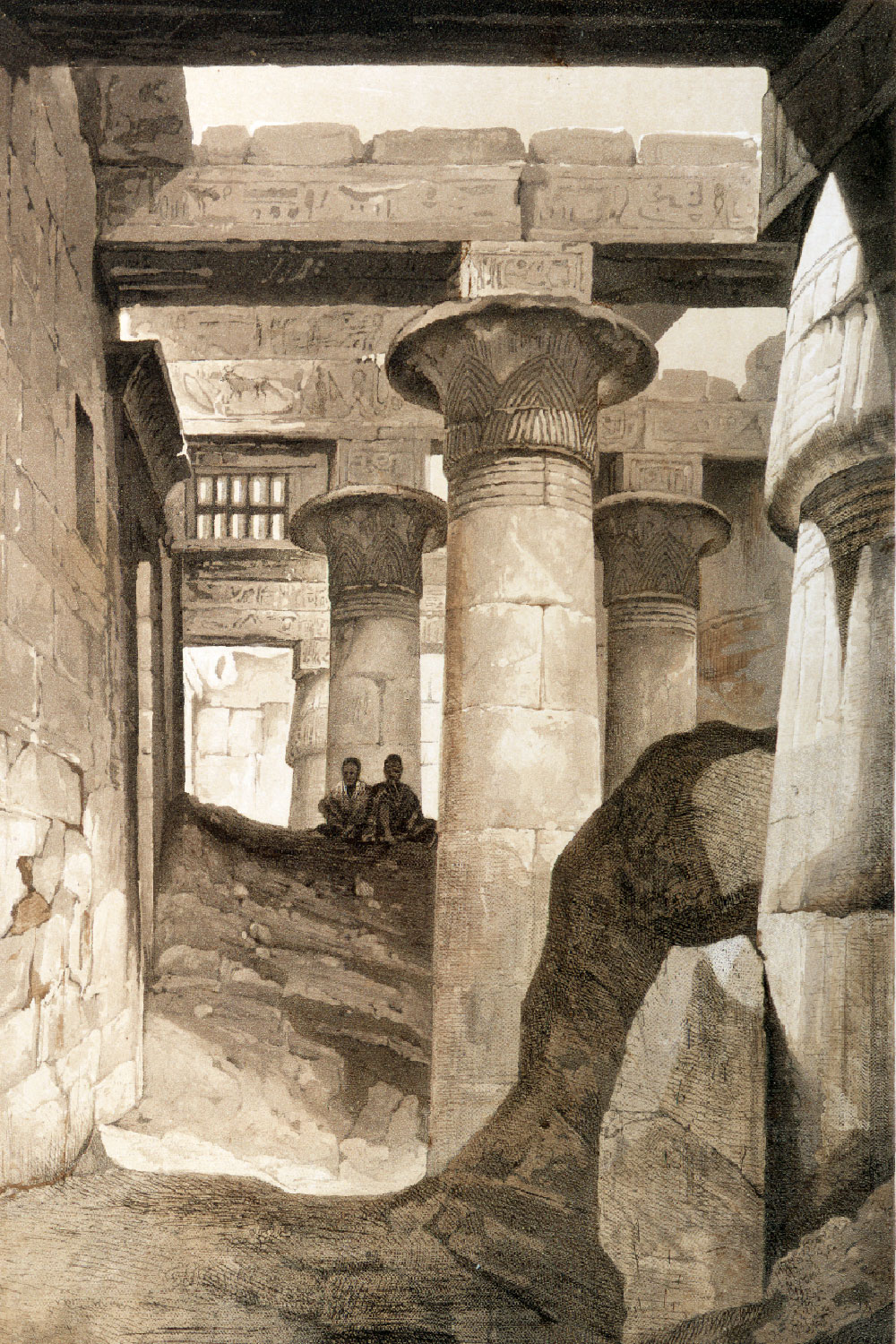
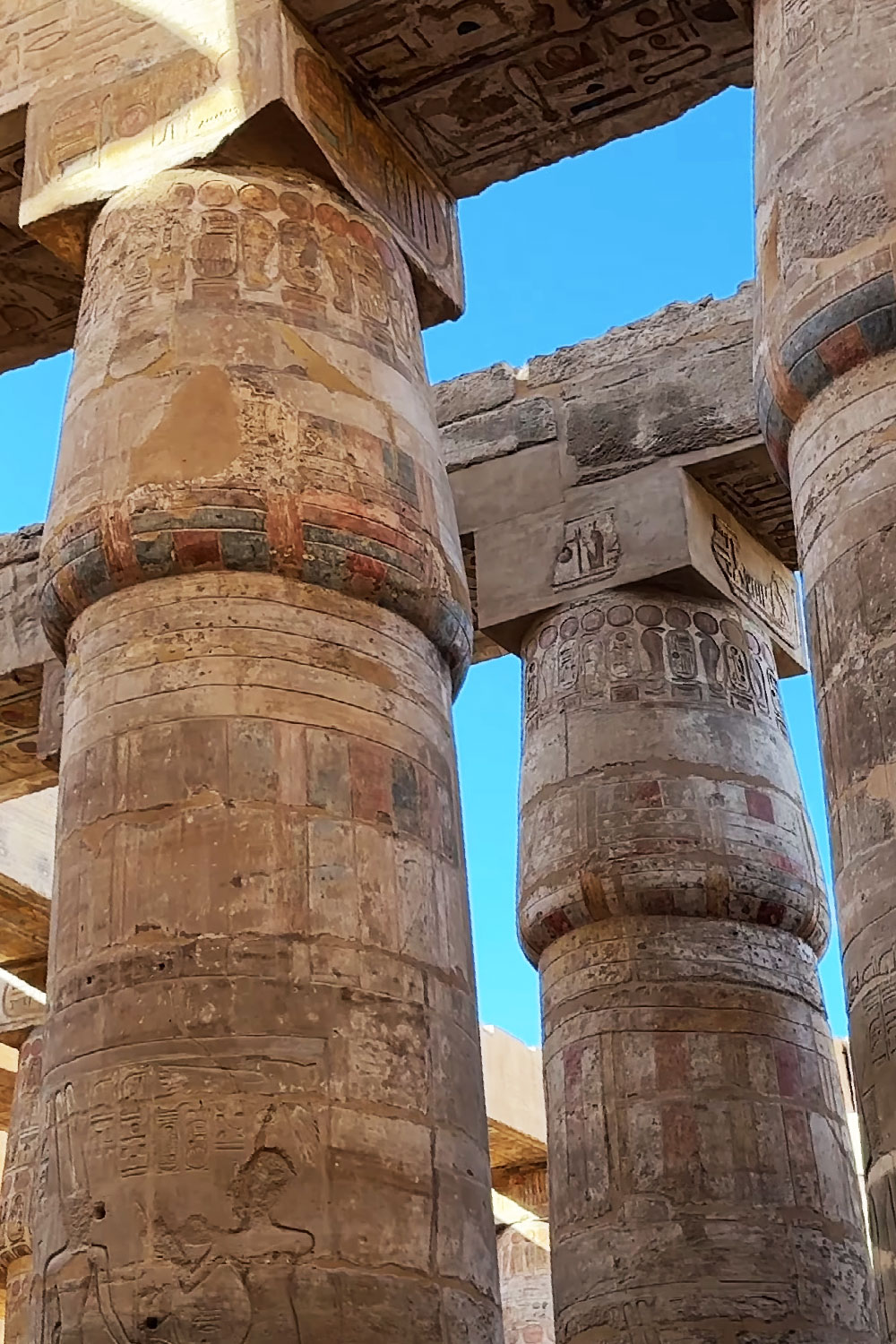 The shorter sandstone columns standing 49 feet (15 meters) tall, of the Great Hypostyle Hall covered in ancient hieroglyphs and royal names, with closed-bud papyus capitals.
 1.) Entrance to the Karnak Hypostyle Hall, showing the central nave,
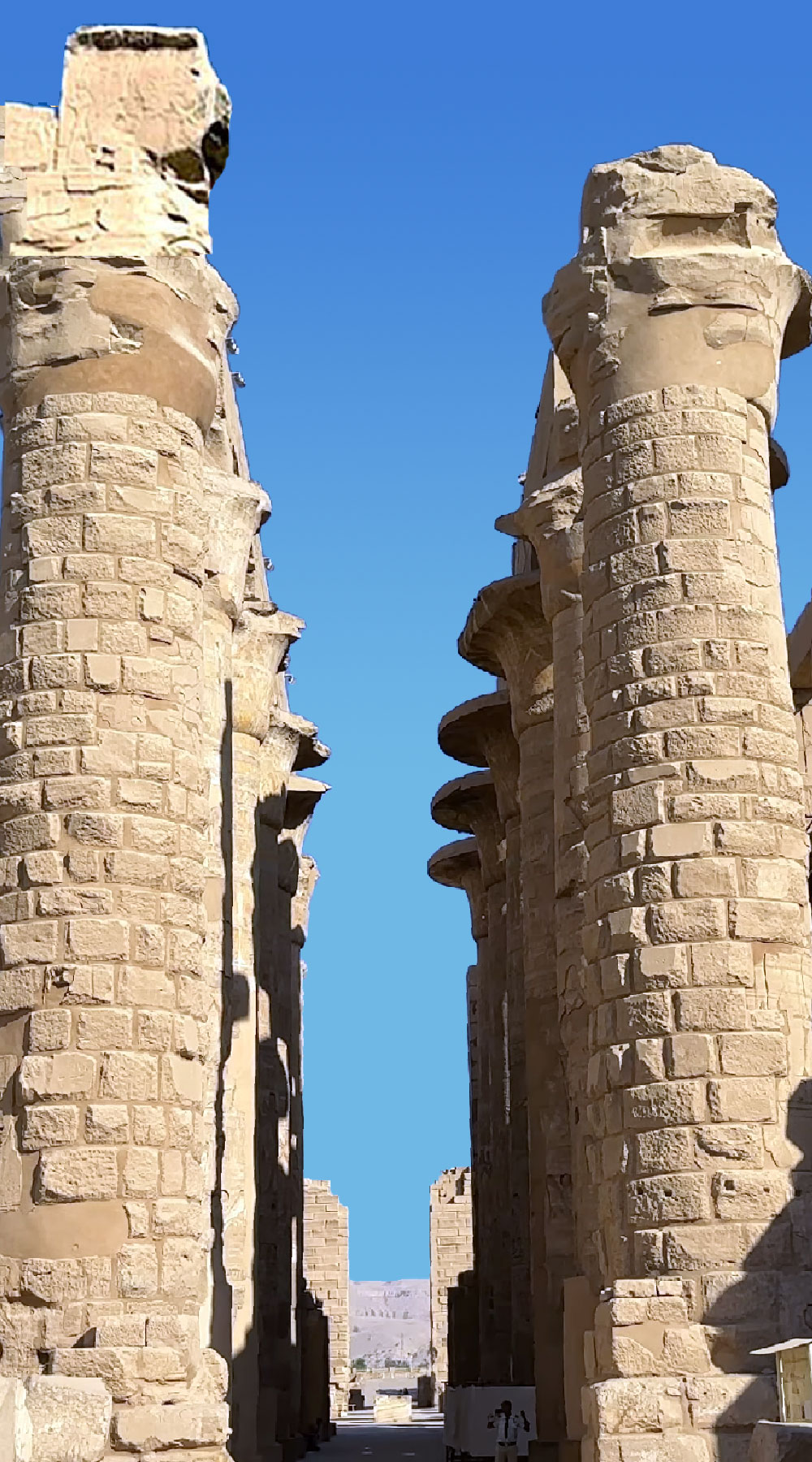 2.) twelve towering columns reaching nearly 80 feet (25 meters) high,
 3.) with open blossom capitals, made of sandstone and mud brick
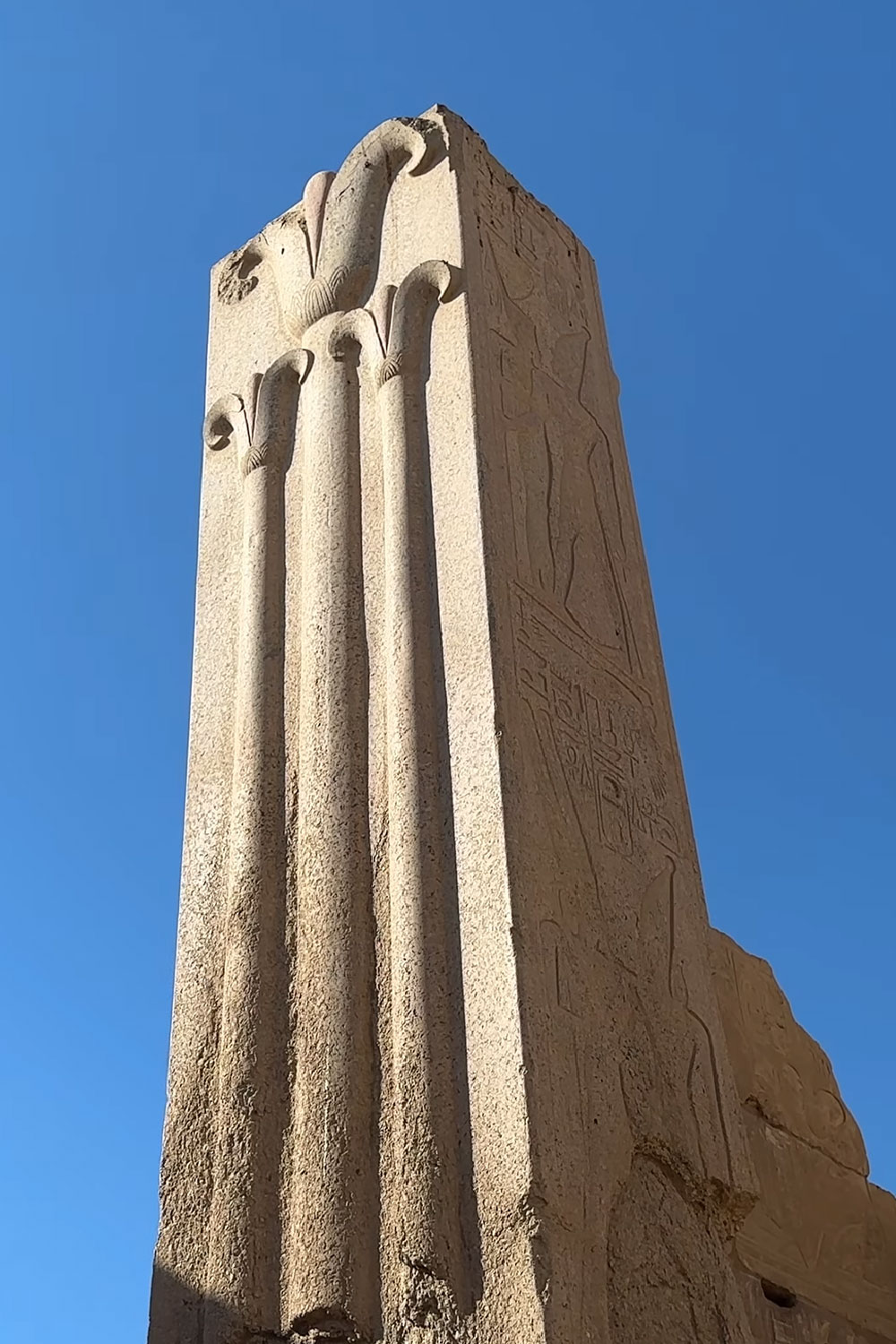
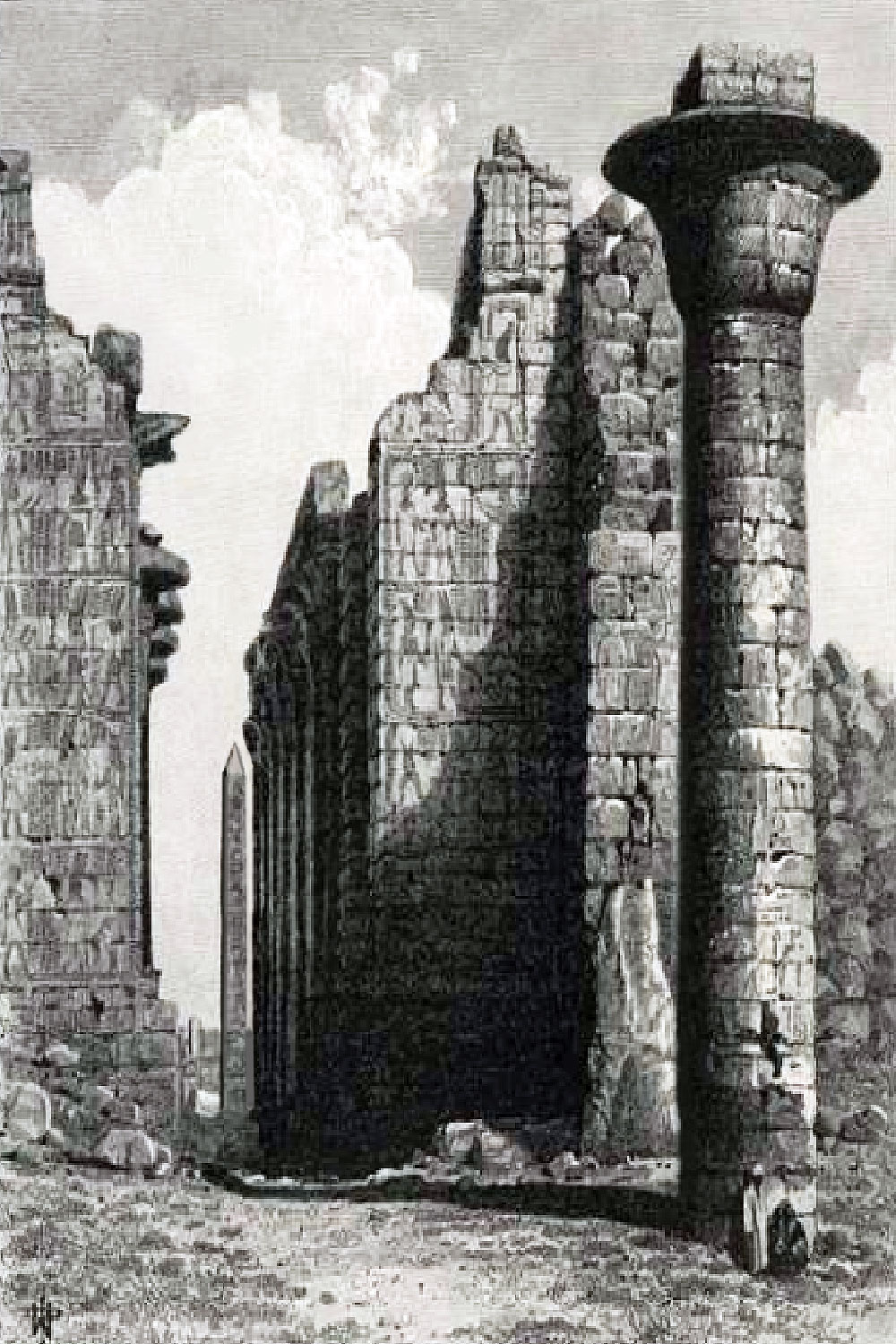
 The towering granite Obelisk of Thutmose I standing outside the Hypostyle hall, erected 1500 BCE.
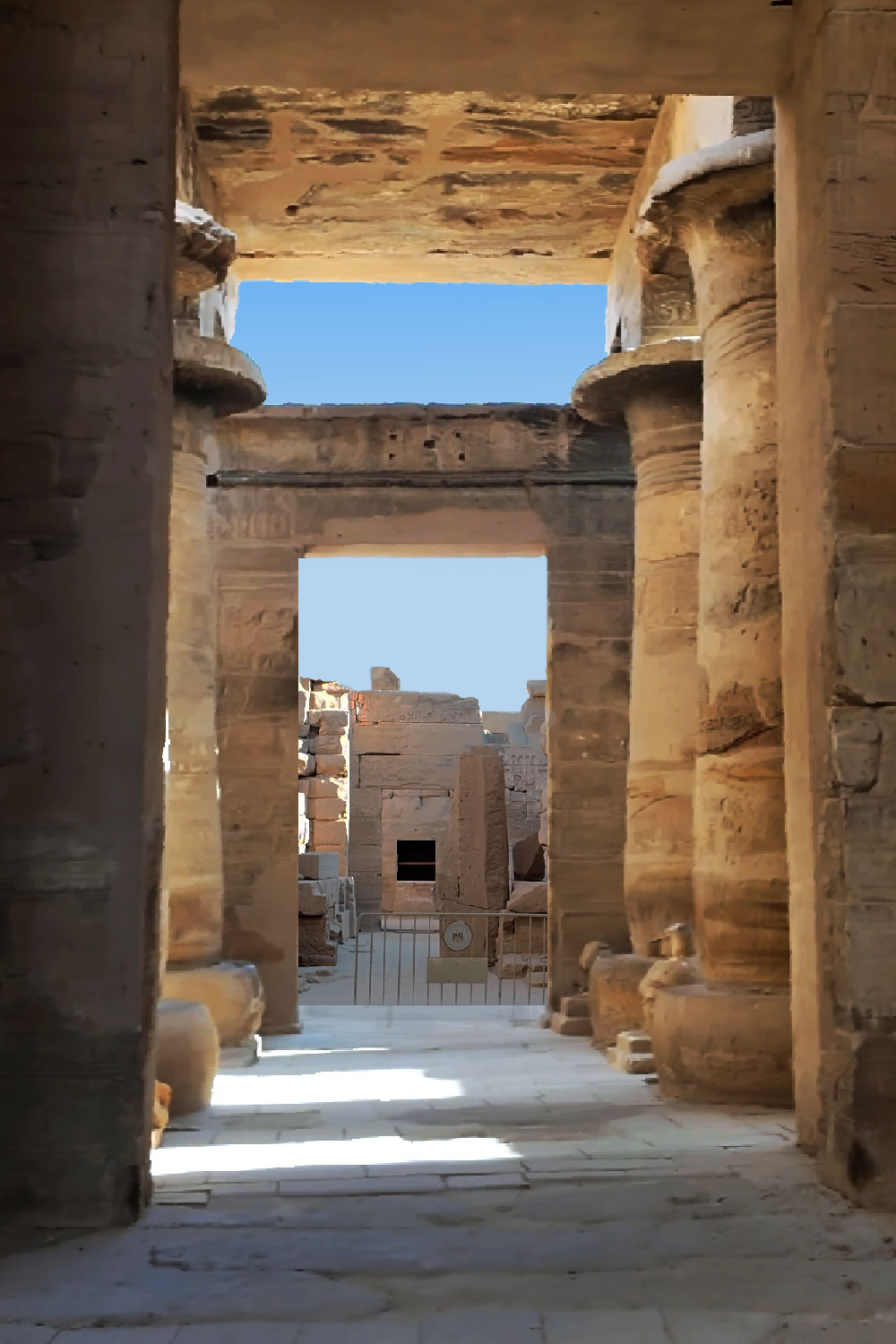
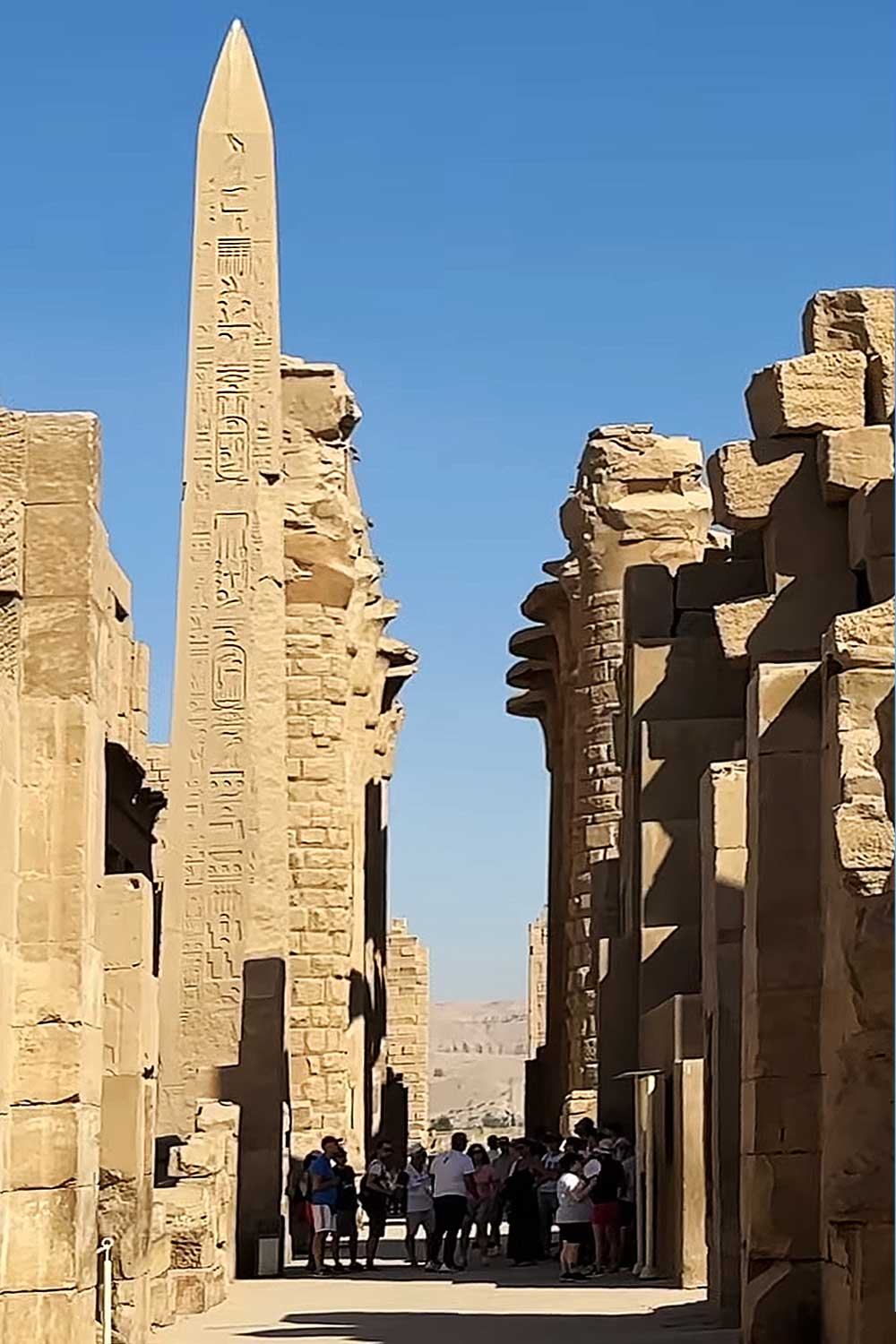 The Hypostyle hall, with towering stone pylon walls covered in sunken relief carvings of pharaohs and deities, with Thutmose I obelisk visible through the corridor
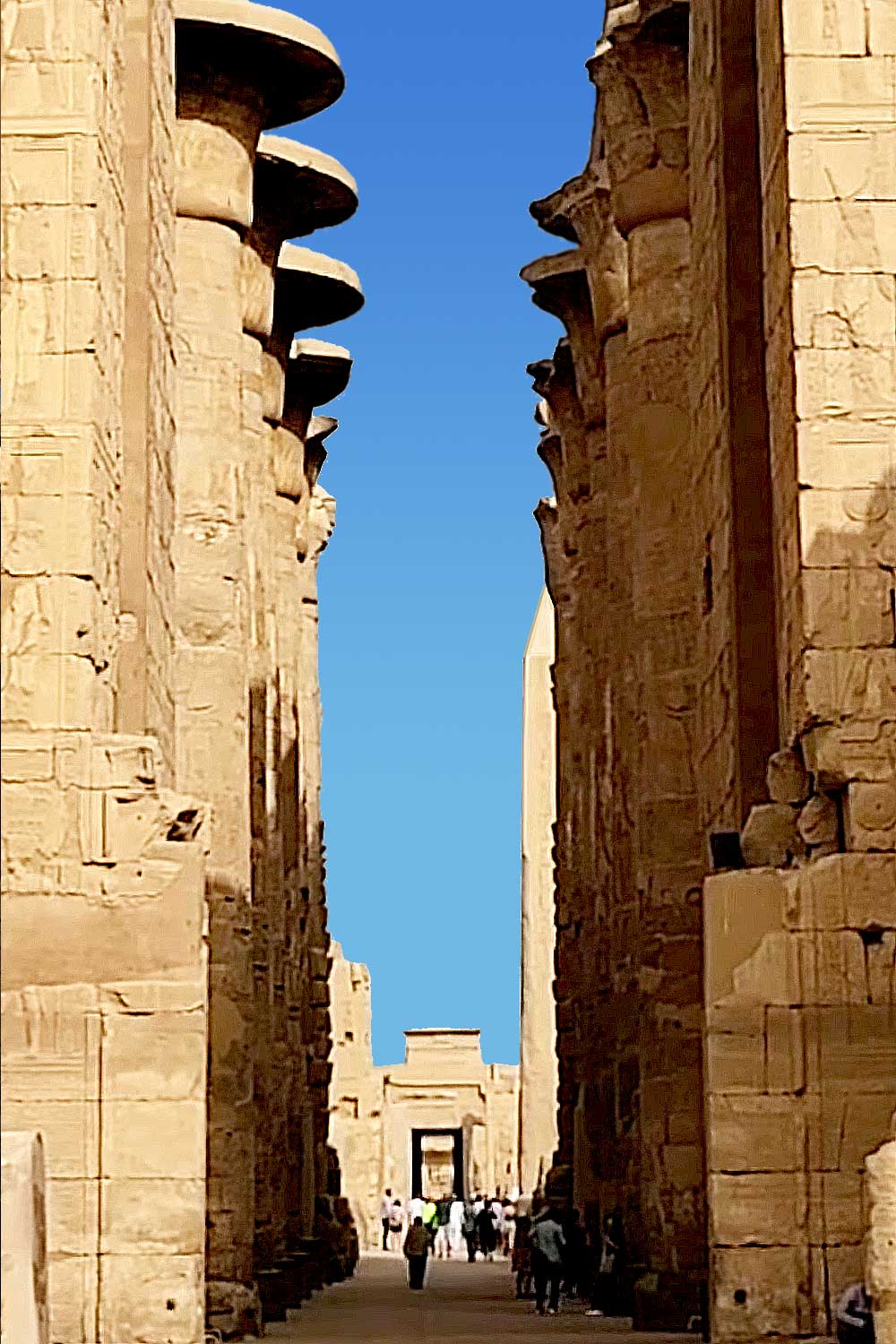 Entrance to Karnak Temple shows the massive sandstone columns of the Great Hypostyle Hall inside the Precinct of Amun-Re, with Thutmose I obelisk visible through the corridor
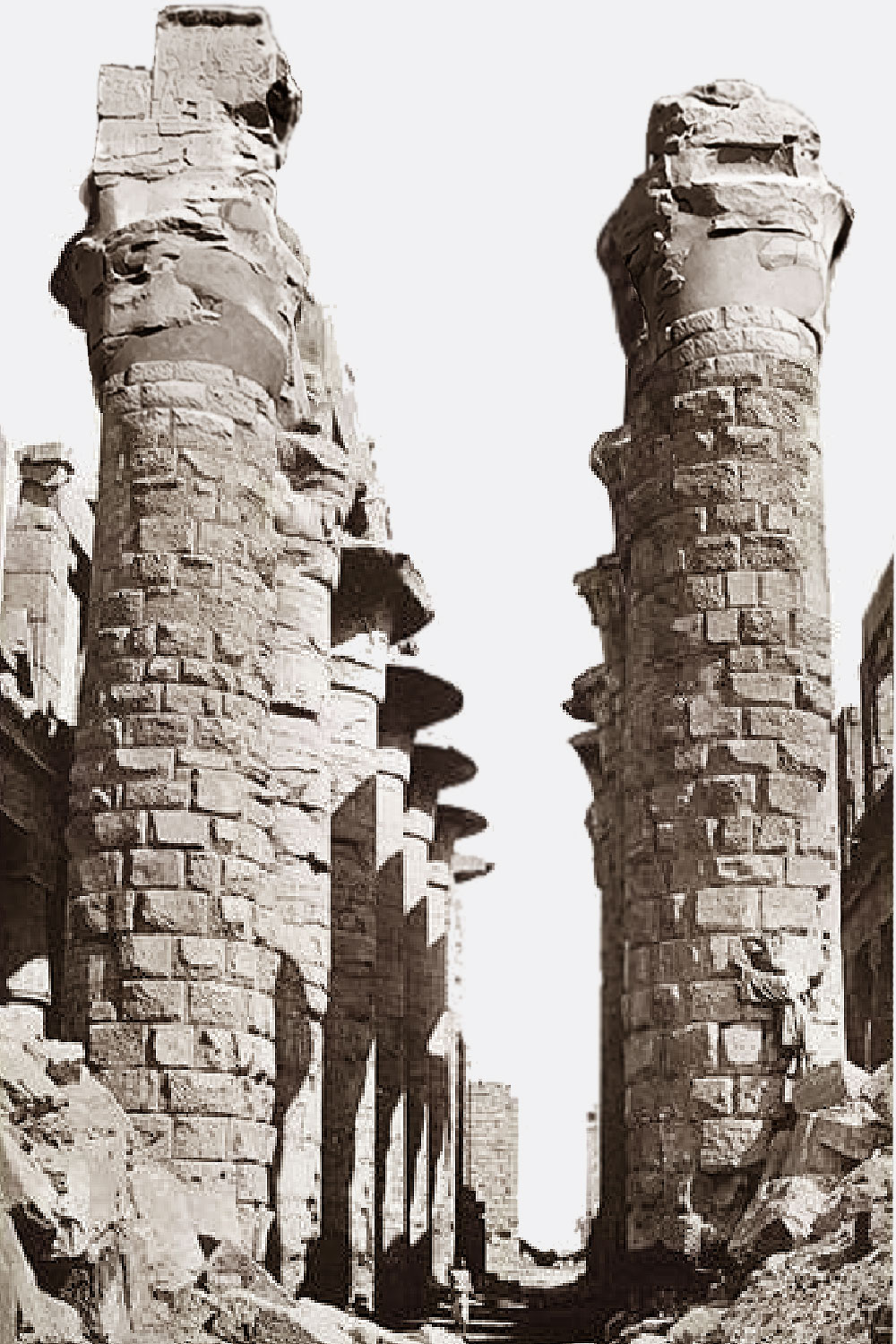
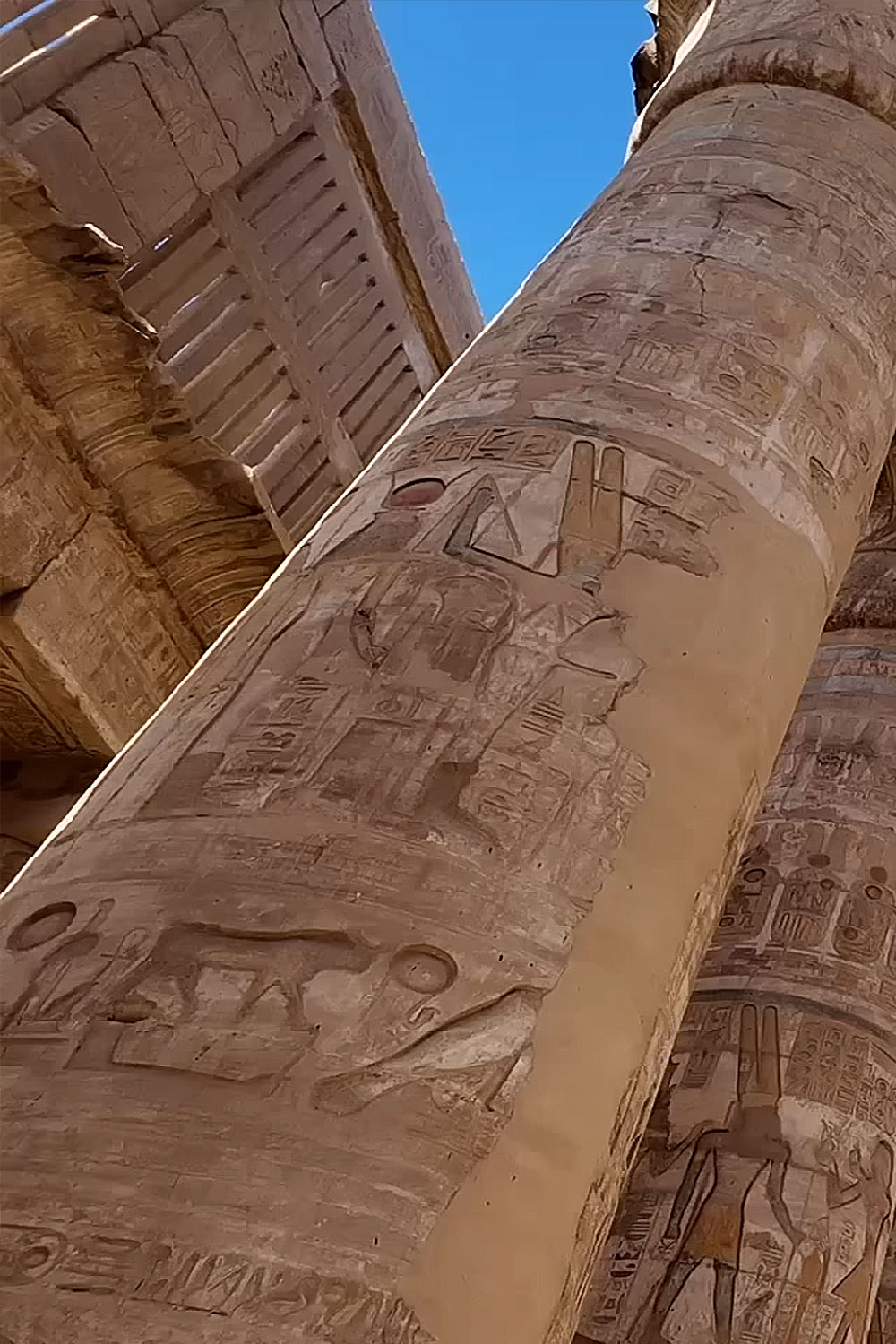 1.) The Hypostyle hall central columns with bell-shaped papyrus capitals, 80 feet (25 meters) tall,
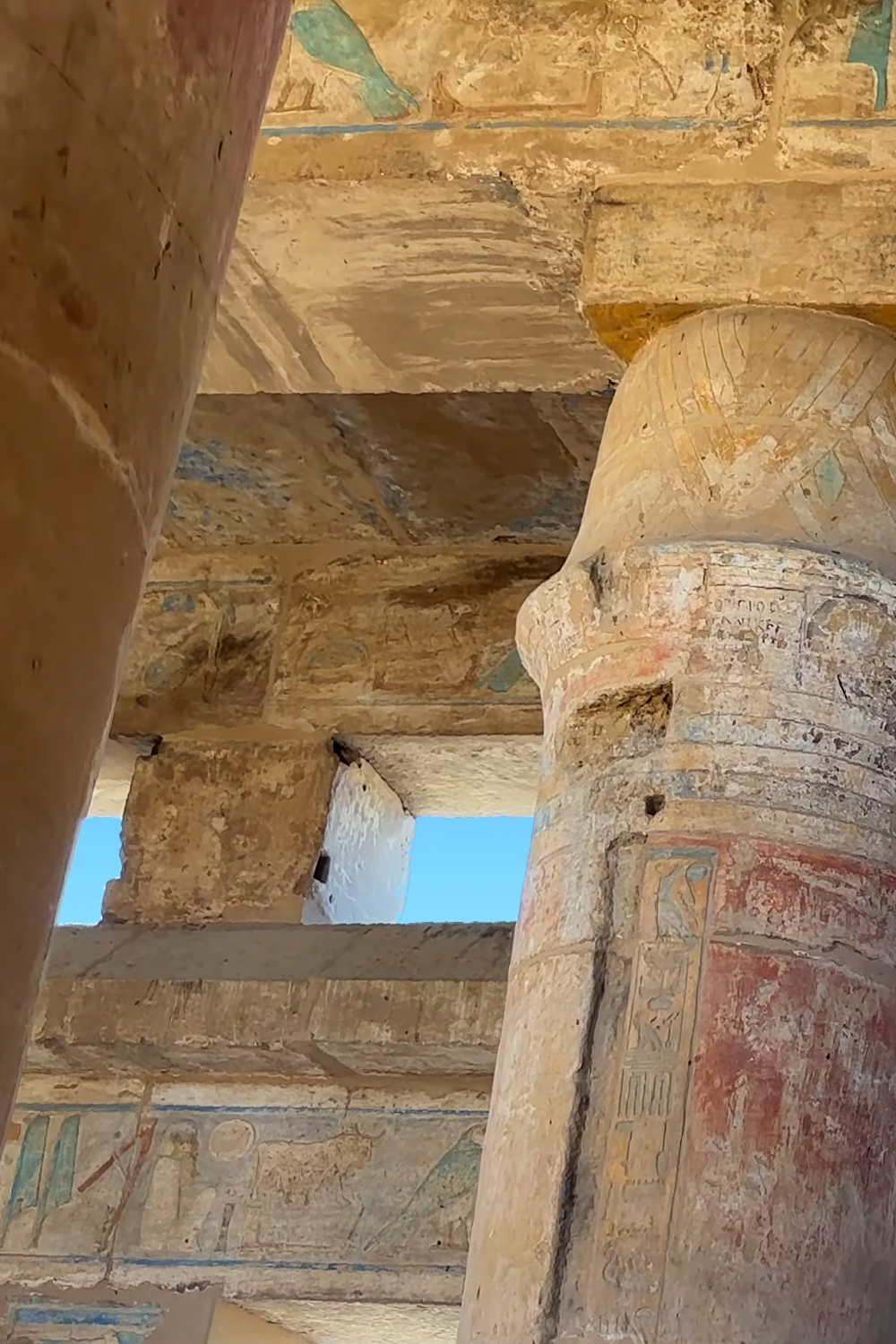
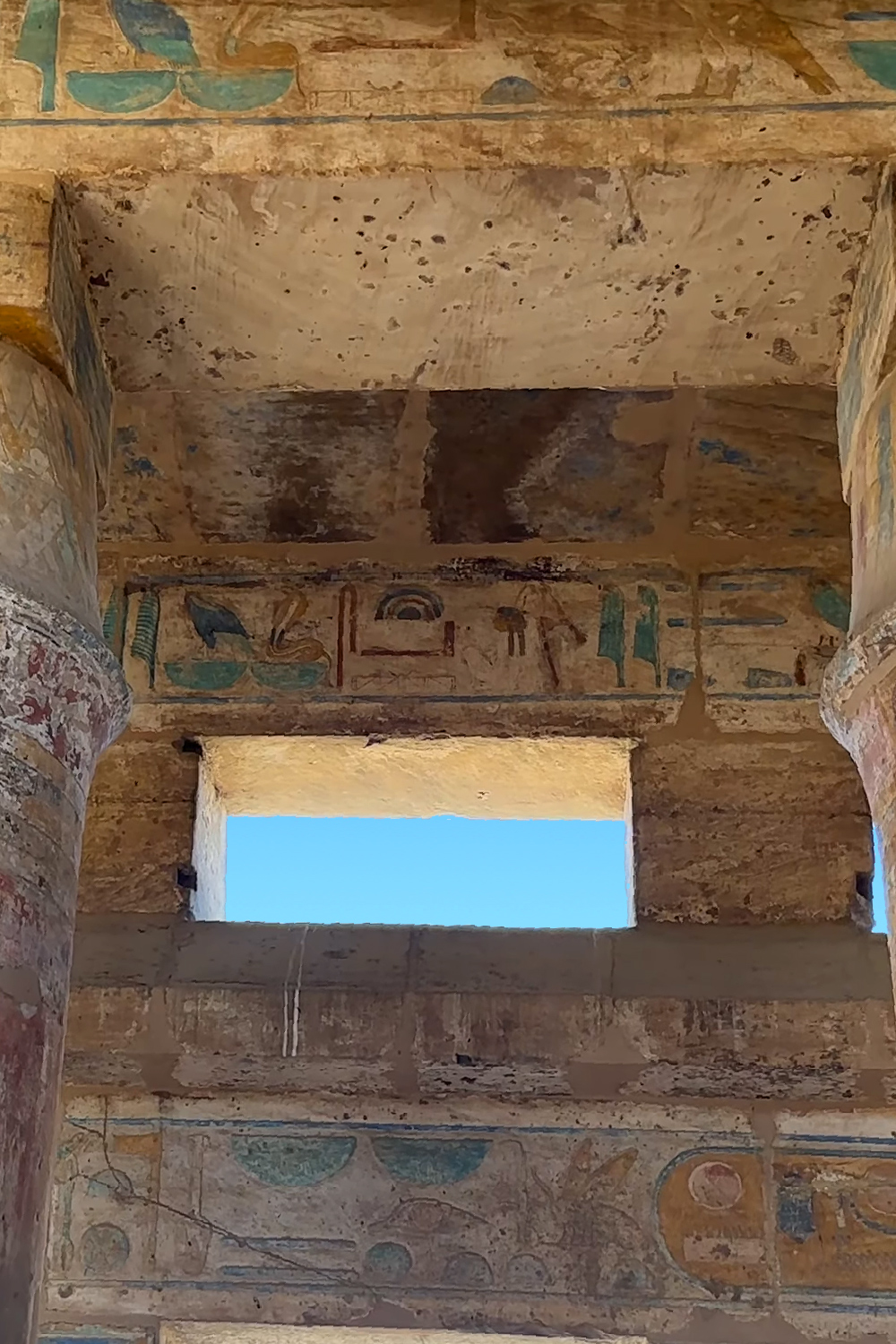
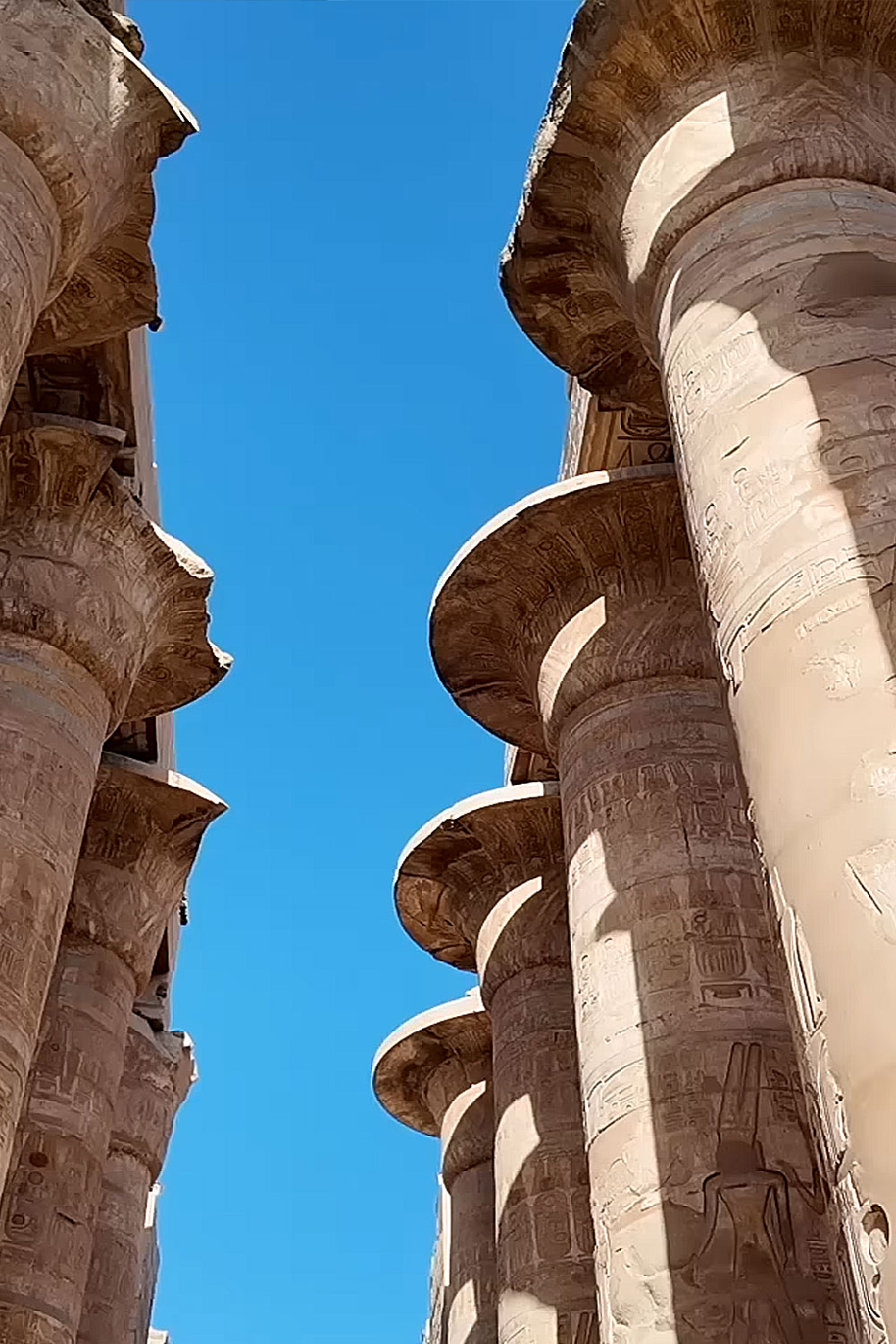 2.) the earliest evidence in history for clerestory stone window grilles to let in light and air into the dark space below,
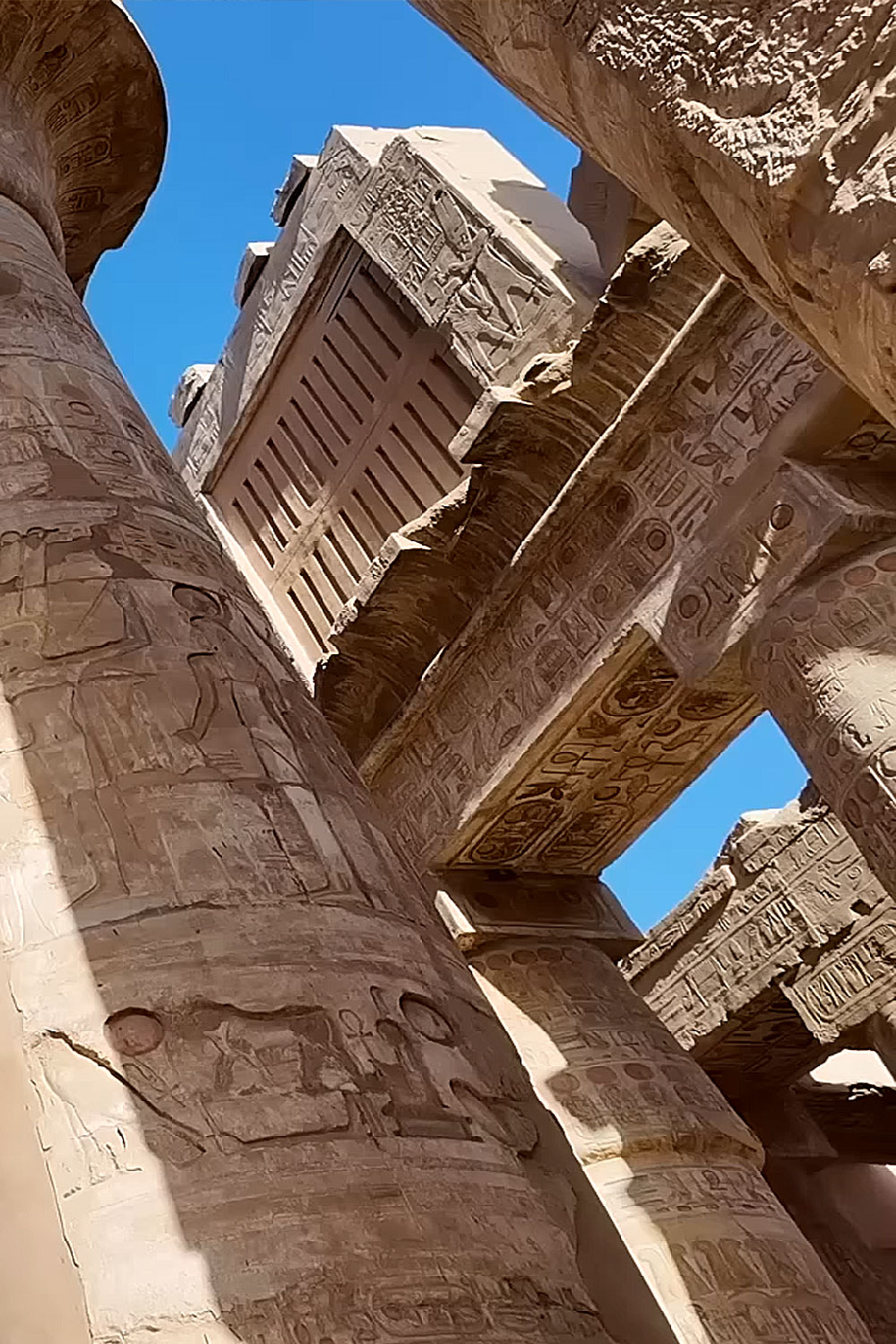 3.) Karnak, 19th Dynasty 1290–1224 BCE
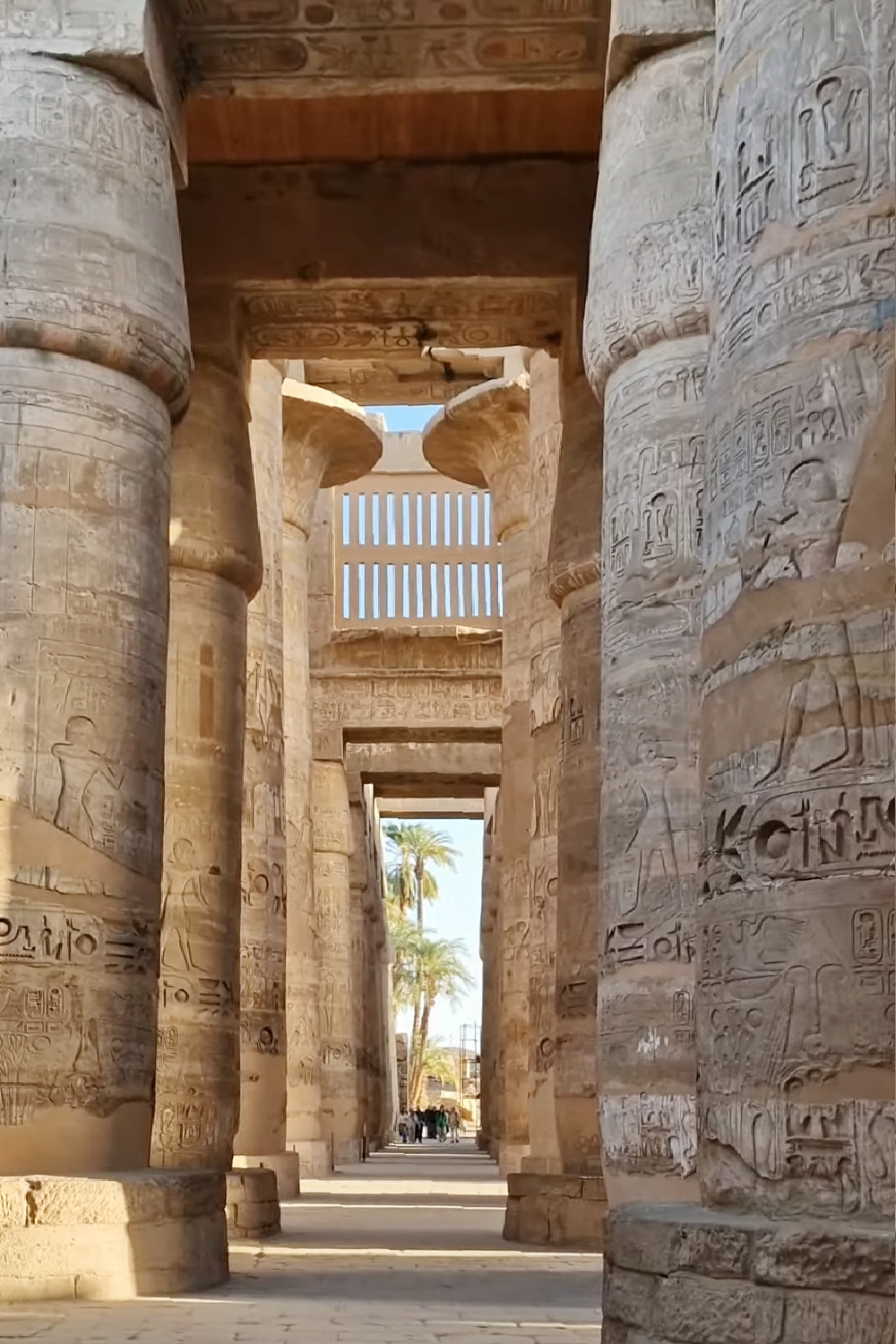 1.) The Hypostyle hall clerestory lighting from higher central,
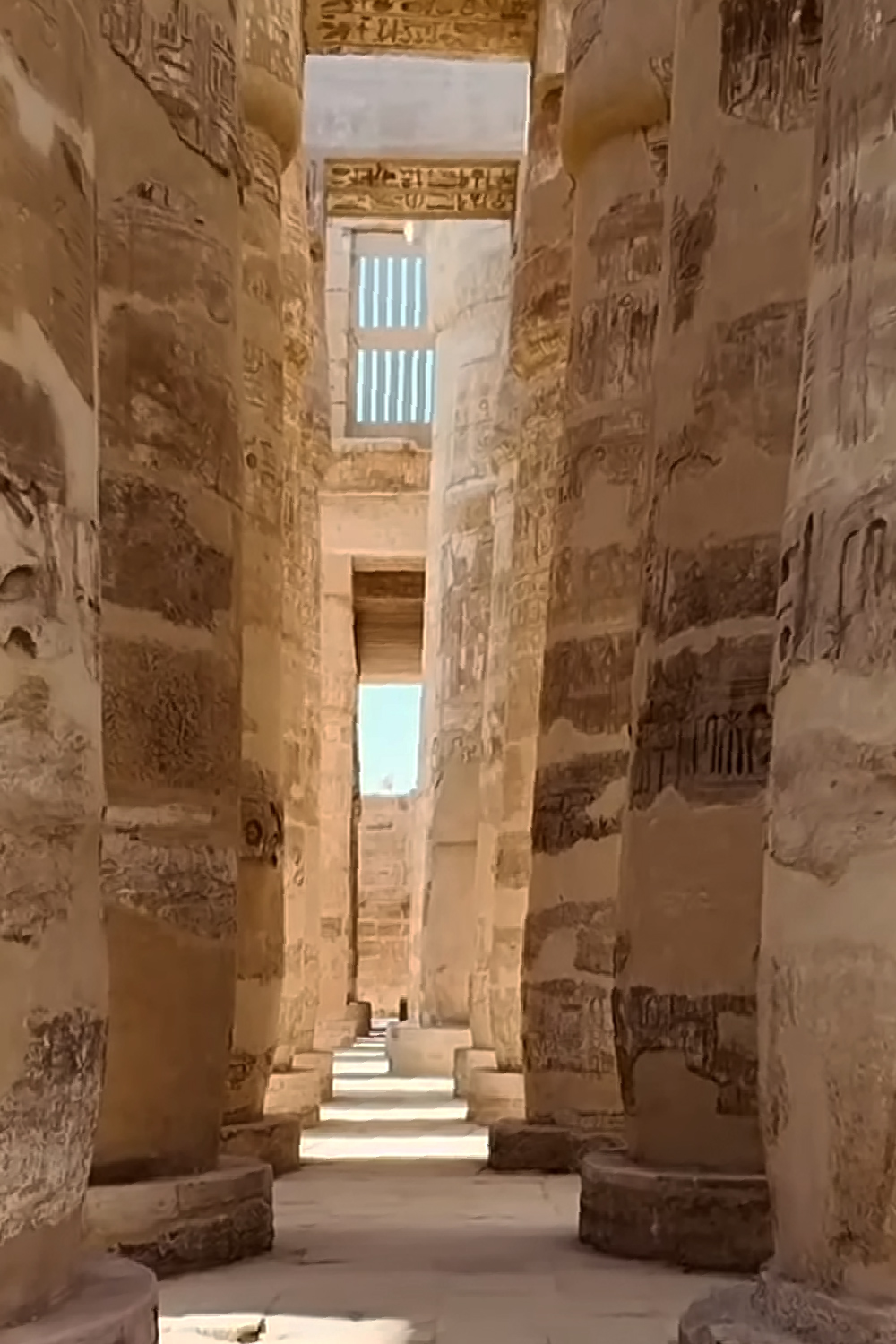 2.) rows allowed sunlight and air into the massive interior space,
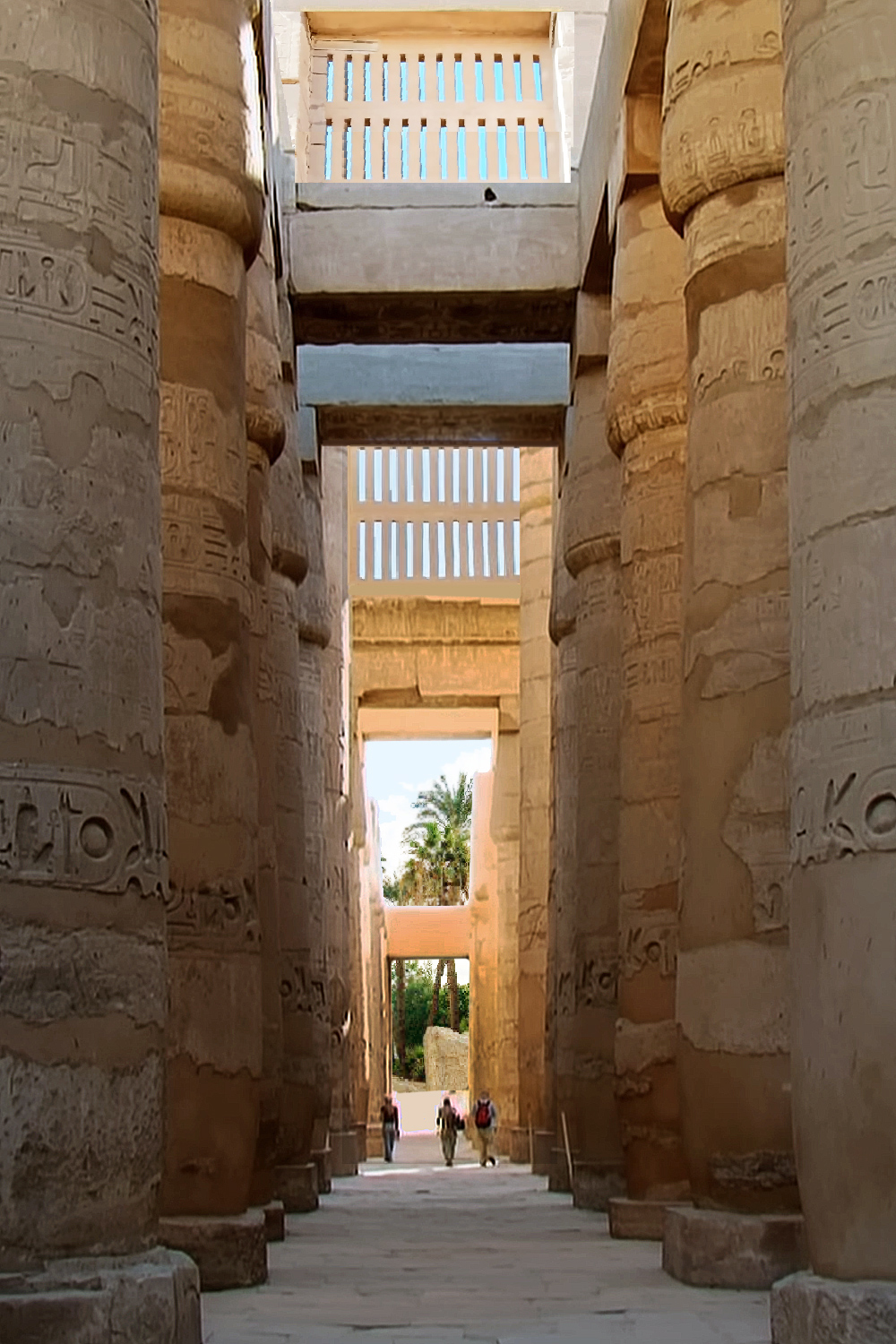 3.) Karnak, 19th Dynasty 1290–1224 BCE
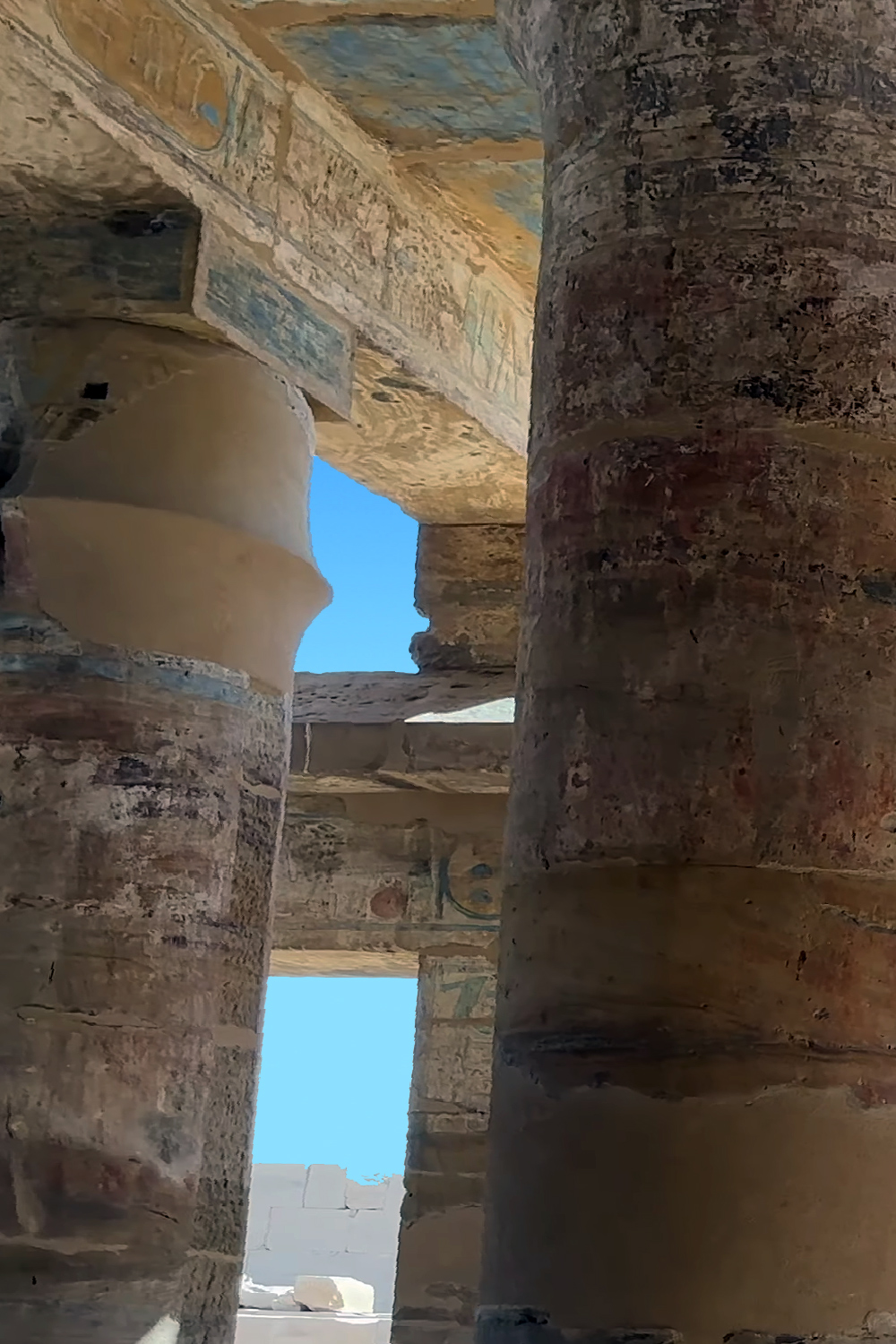
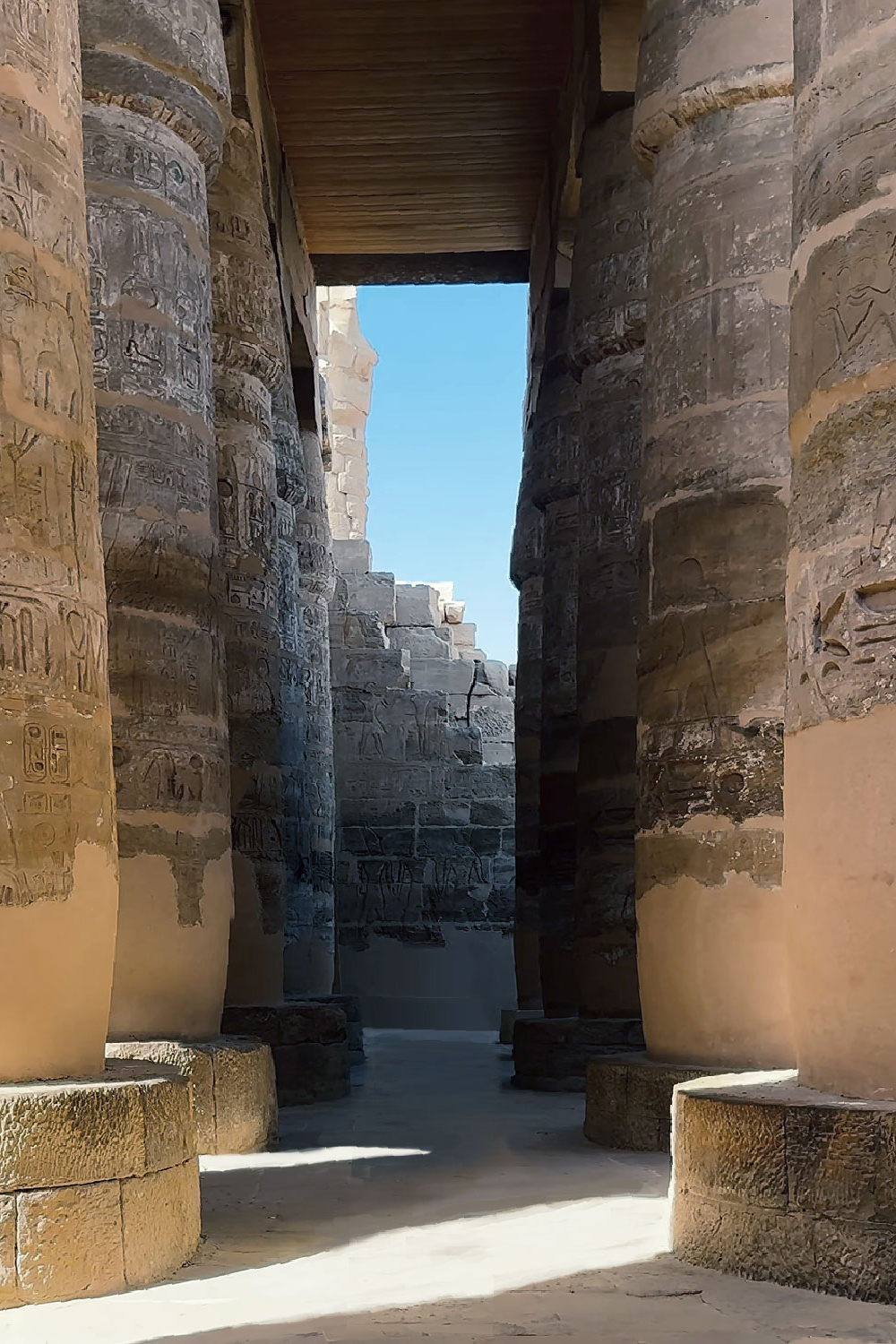 The forest of closed-bud papyrus columns area in the Hypostyle hall features 134 massive sandstone columns arranged in 16 rows,
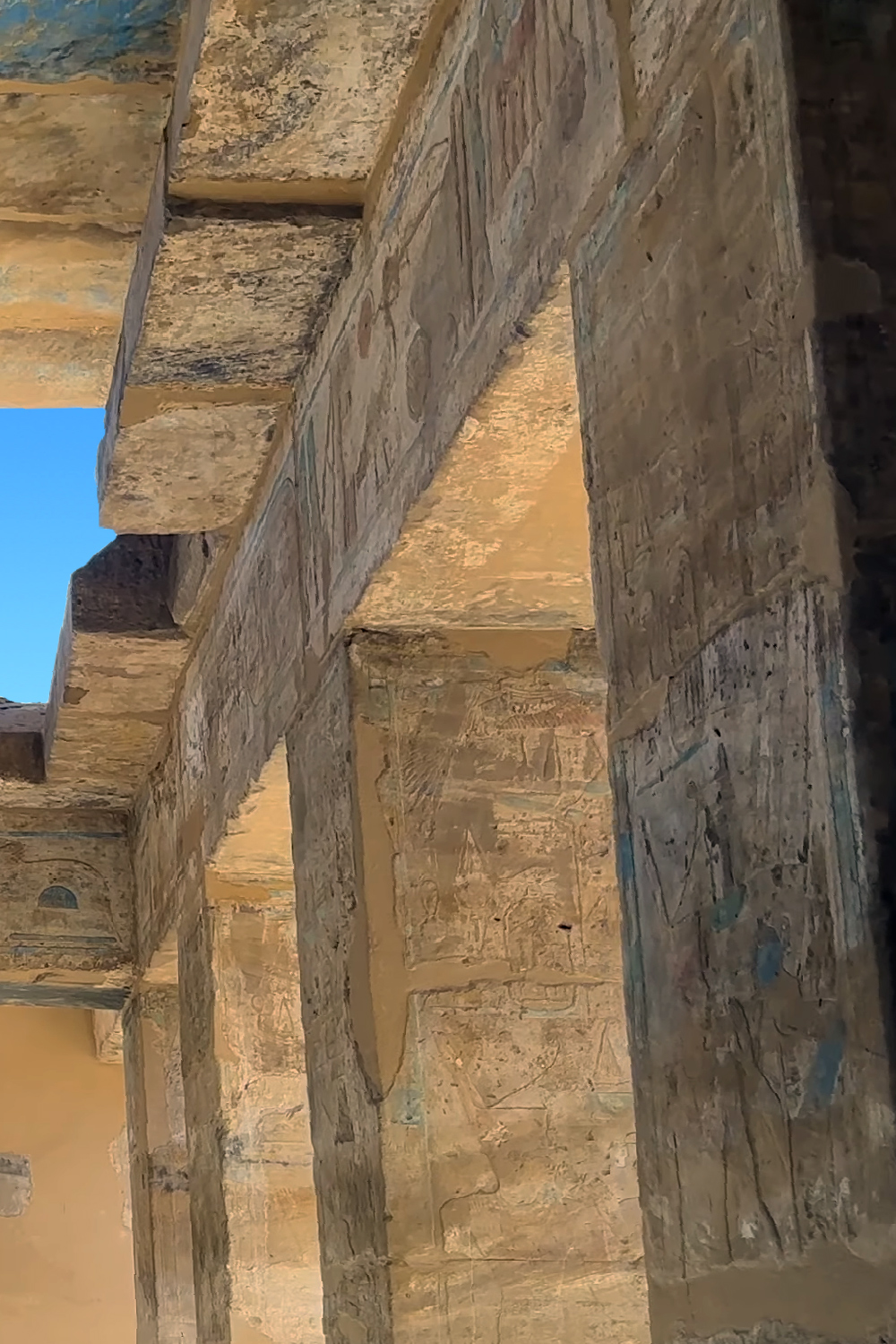
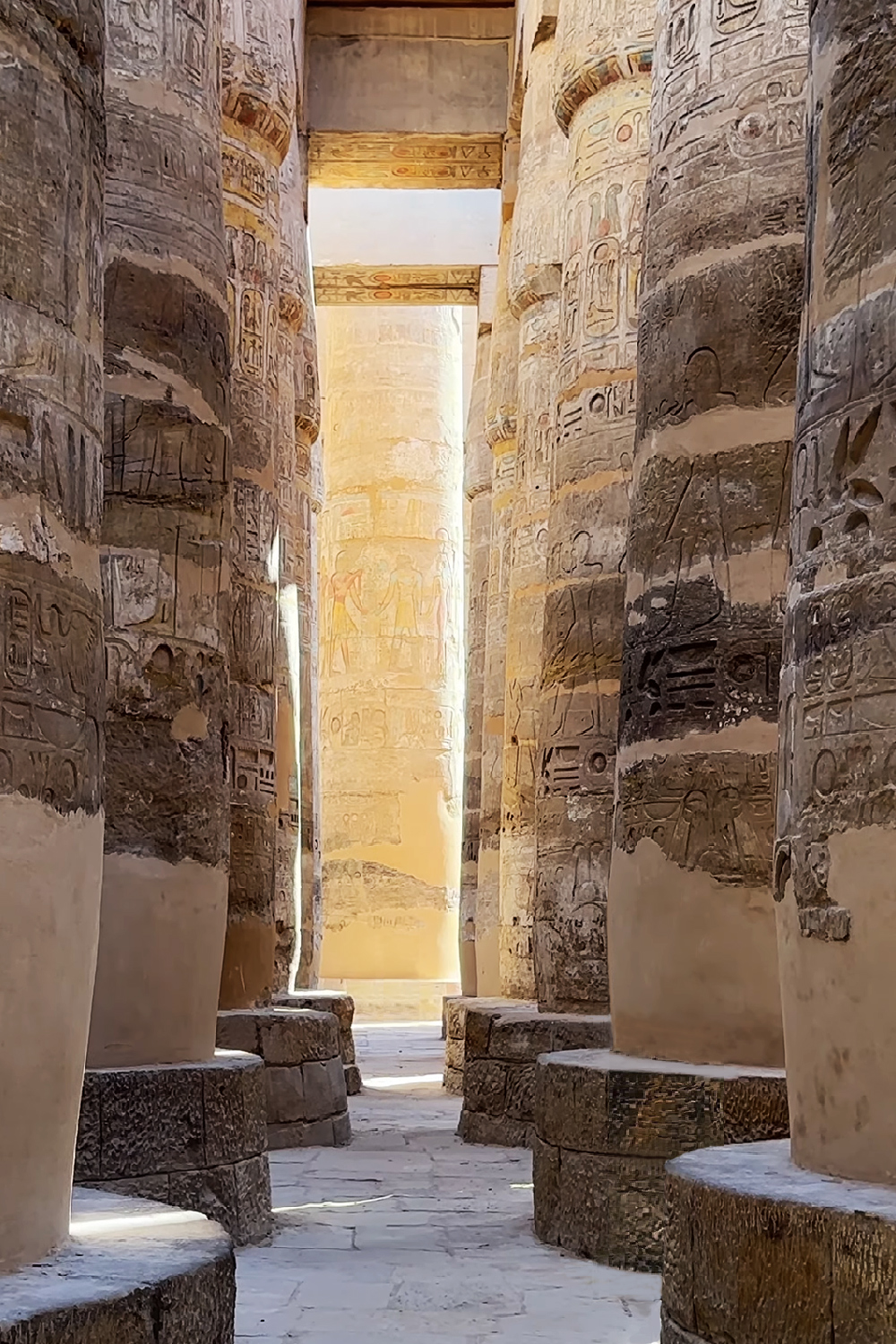 relief carvings of detailed hieroglyphs and ritual scenes cover every column and wall surface
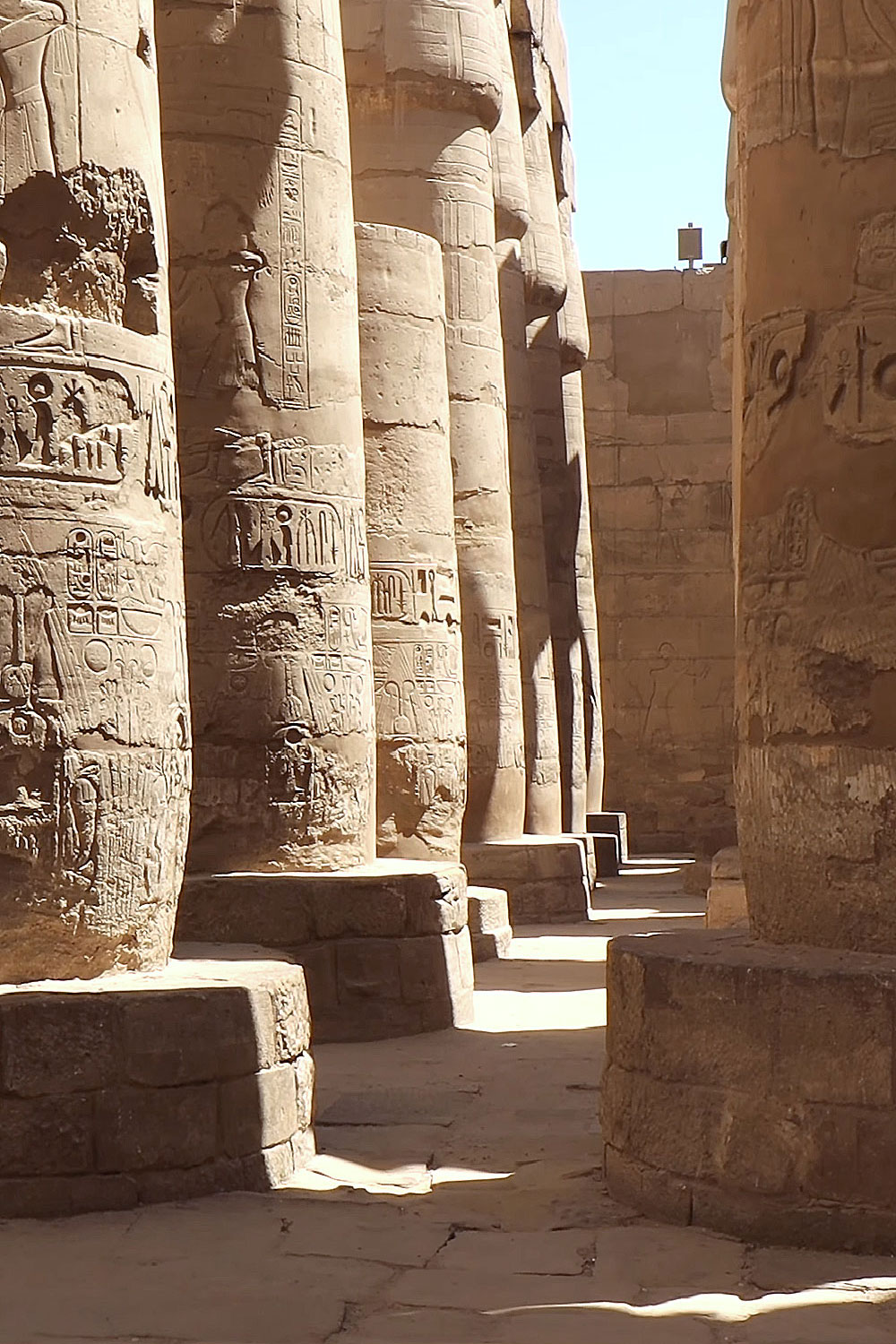 the columns are arranged closely in 16 distinct rows to resemble a sacred papyrus marsh, Karnak Temple
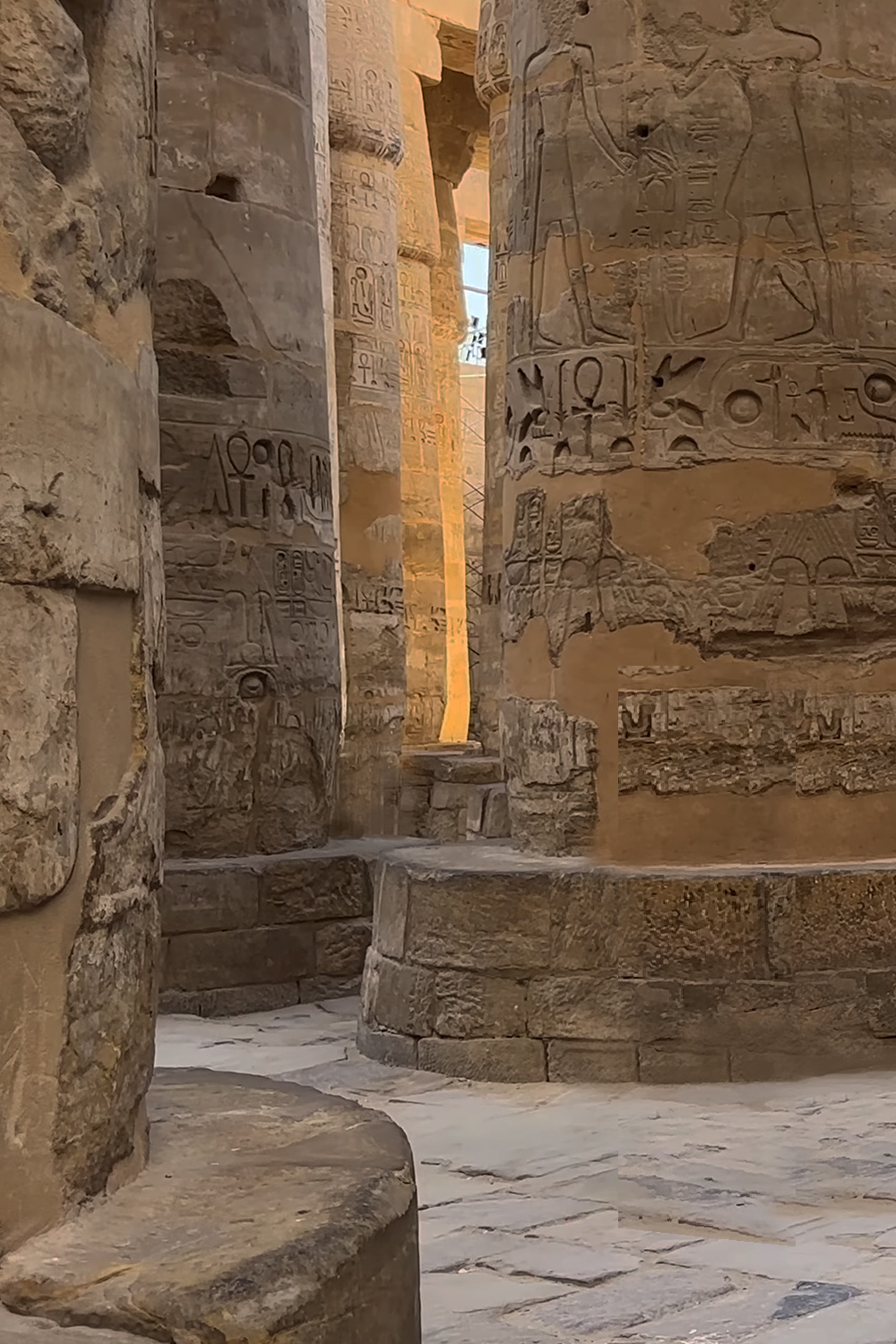 The forest of closed-bud papyrus columns area in the Hypostyle hall features 134 massive sandstone columns arranged in 16 rows,
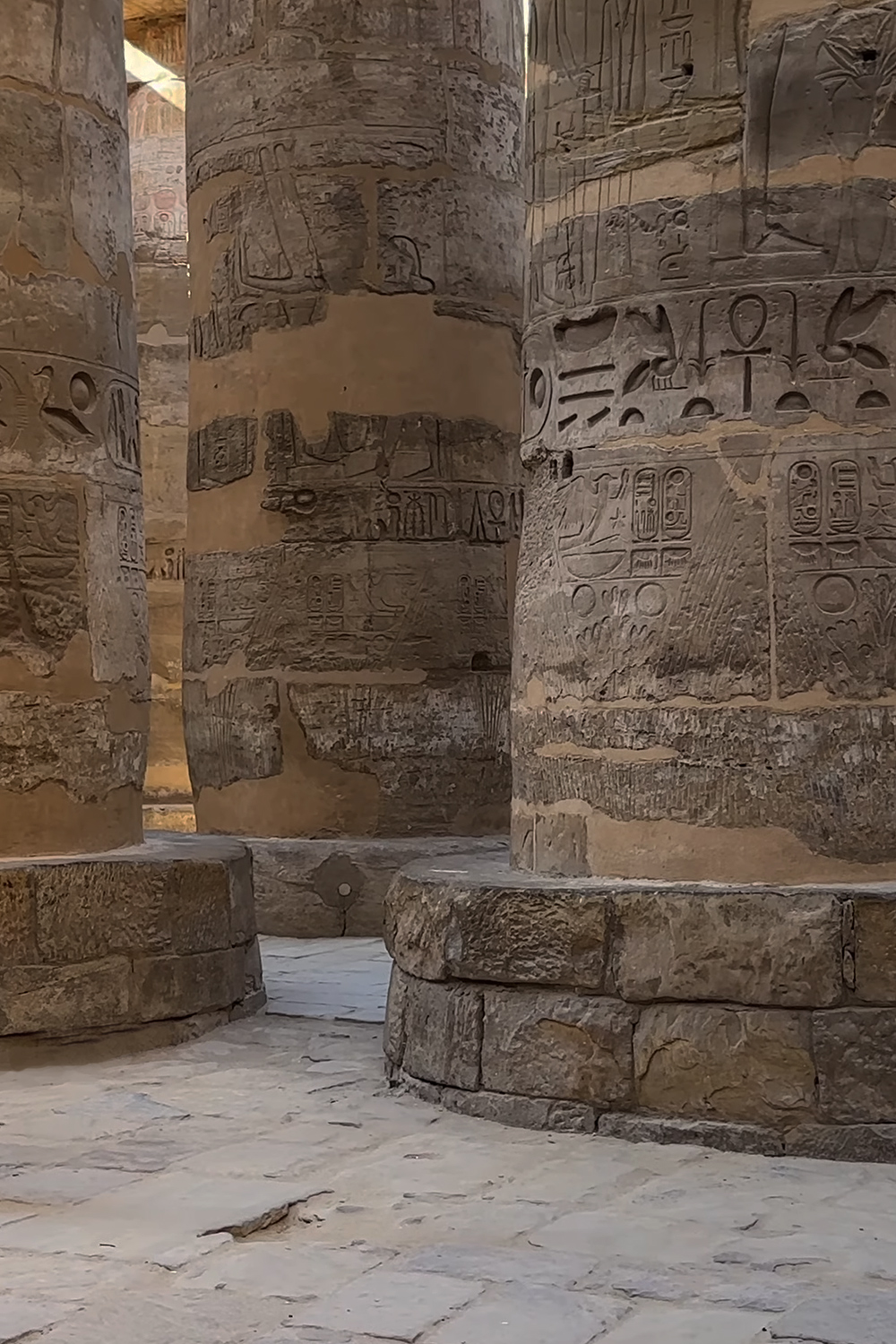 relief carvings of detailed hieroglyphs and ritual scenes cover every column and wall surface
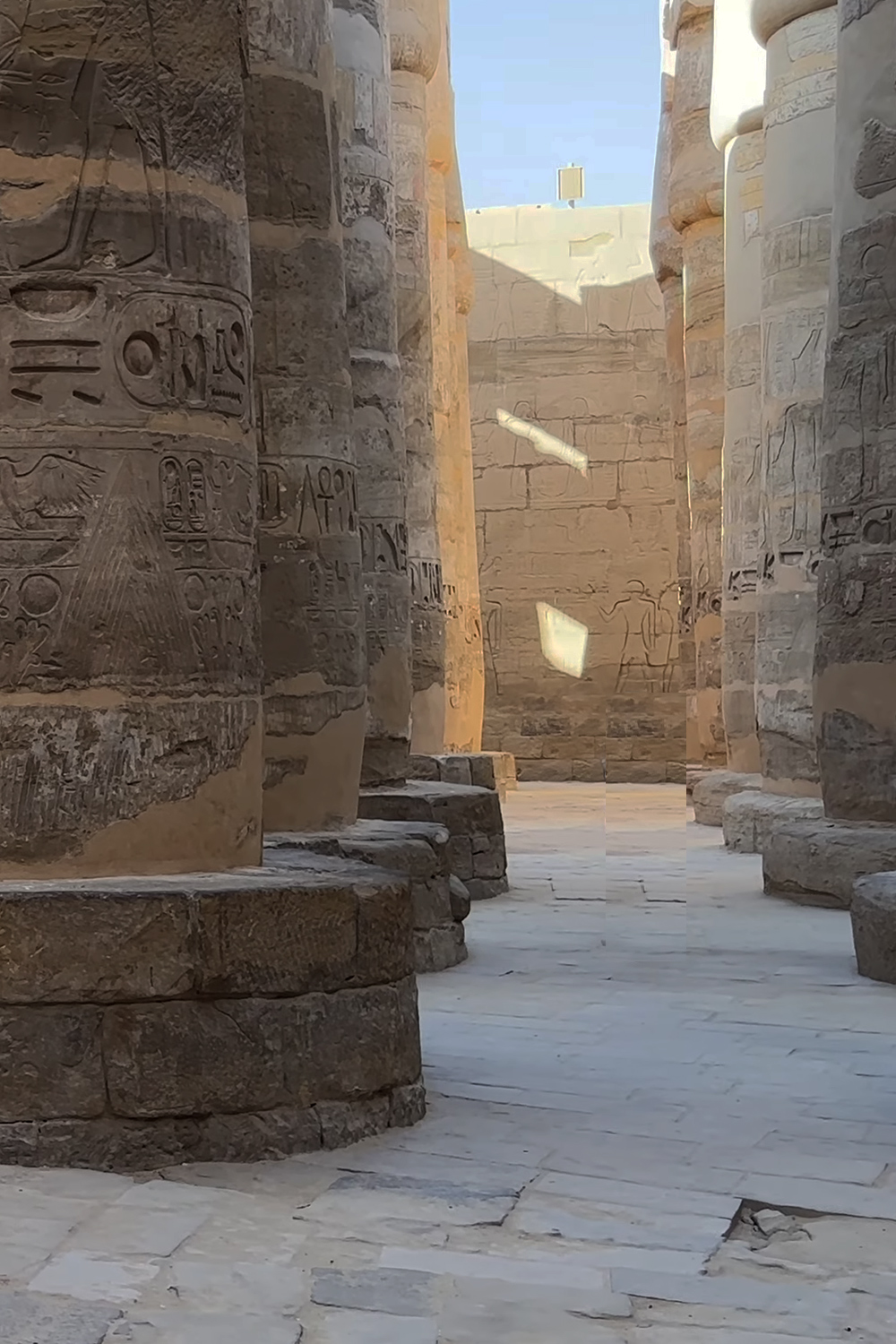 the columns are arranged closely in 16 distinct rows to resemble a sacred papyrus marsh, Karnak Temple
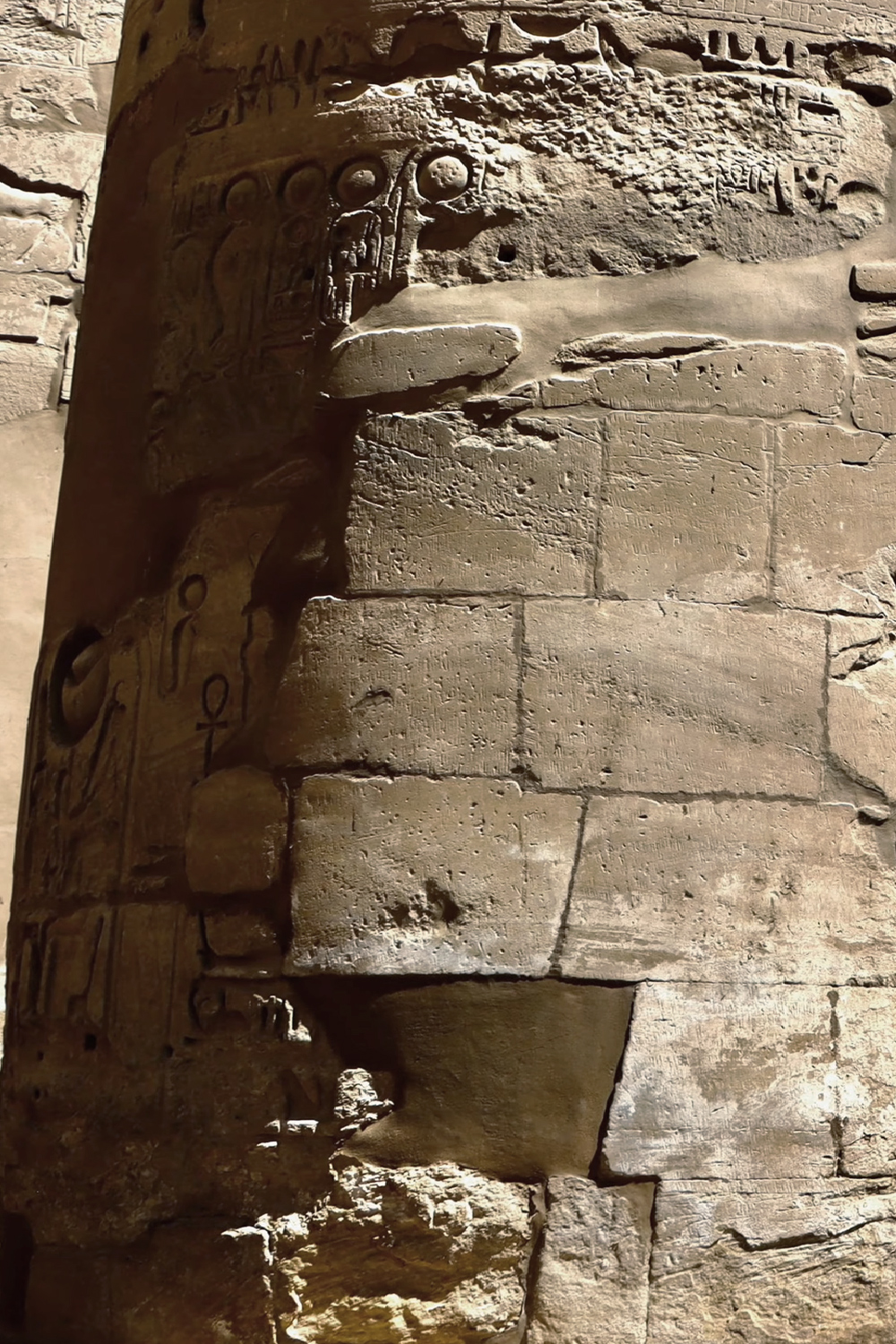 The forest of closed-bud papyrus columns area in the Hypostyle hall features 134 massive sandstone columns arranged in 16 rows,
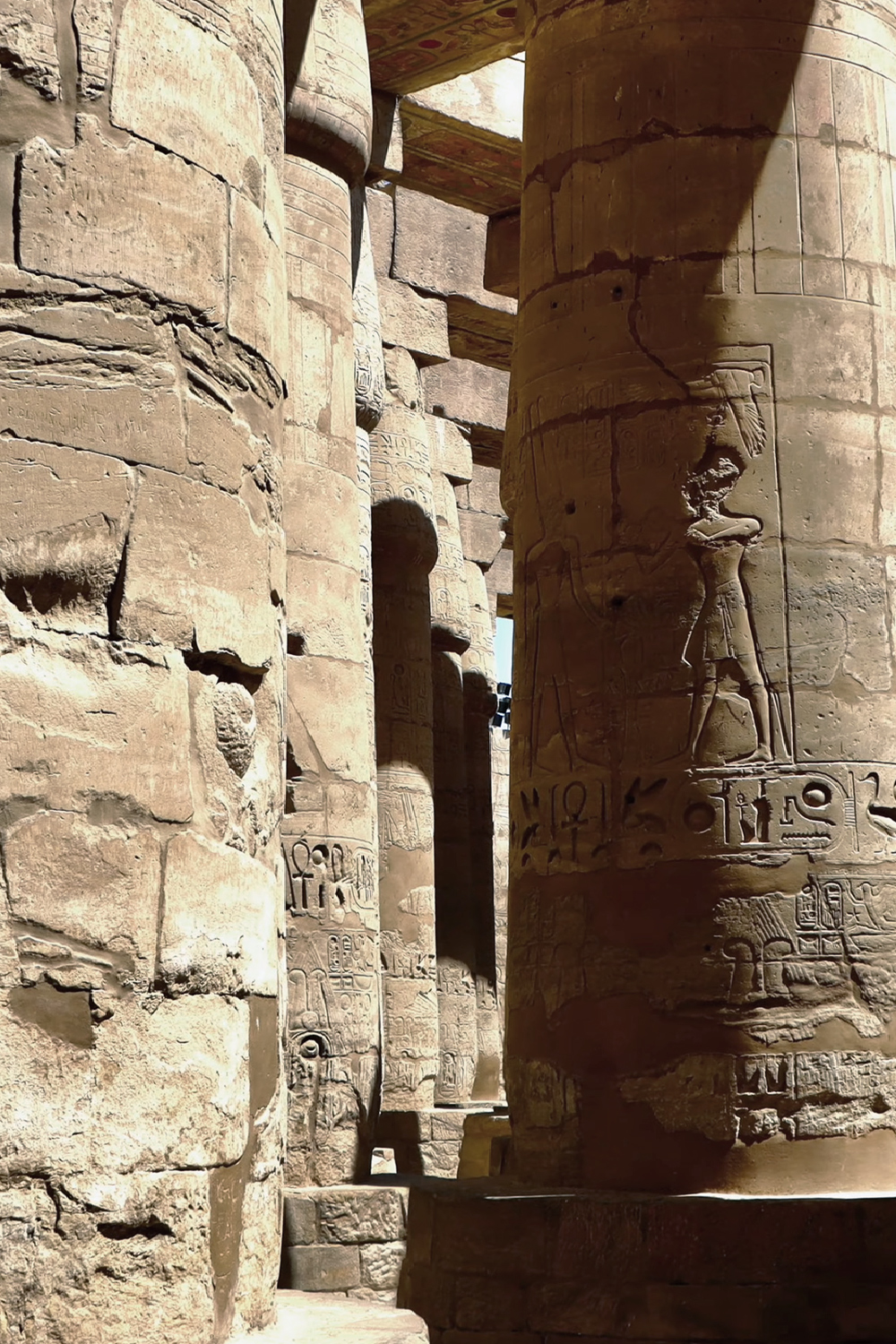 relief carvings of detailed hieroglyphs and ritual scenes cover every column and wall surface
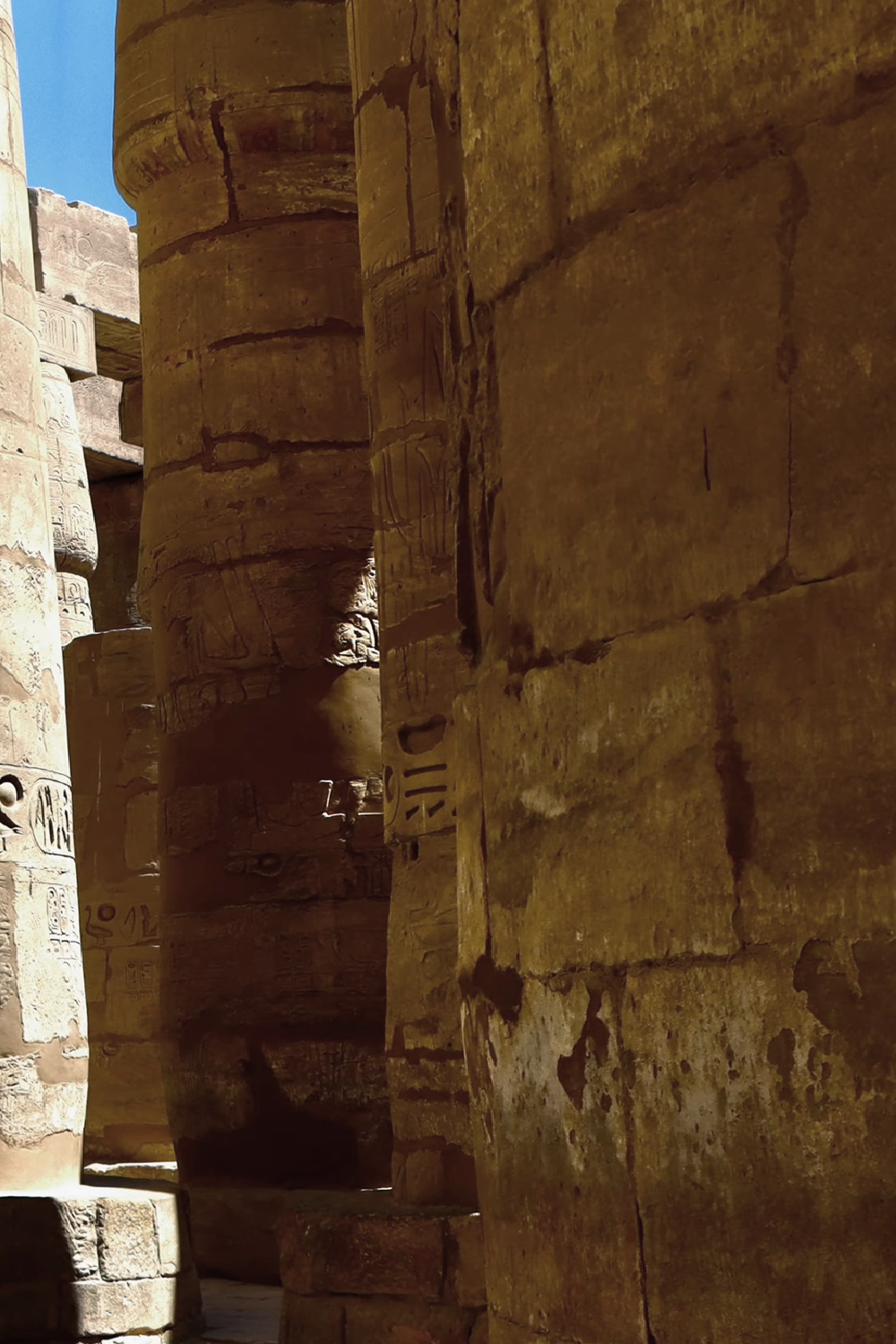 the columns are arranged closely in 16 distinct rows to resemble a sacred papyrus marsh, Karnak Temple
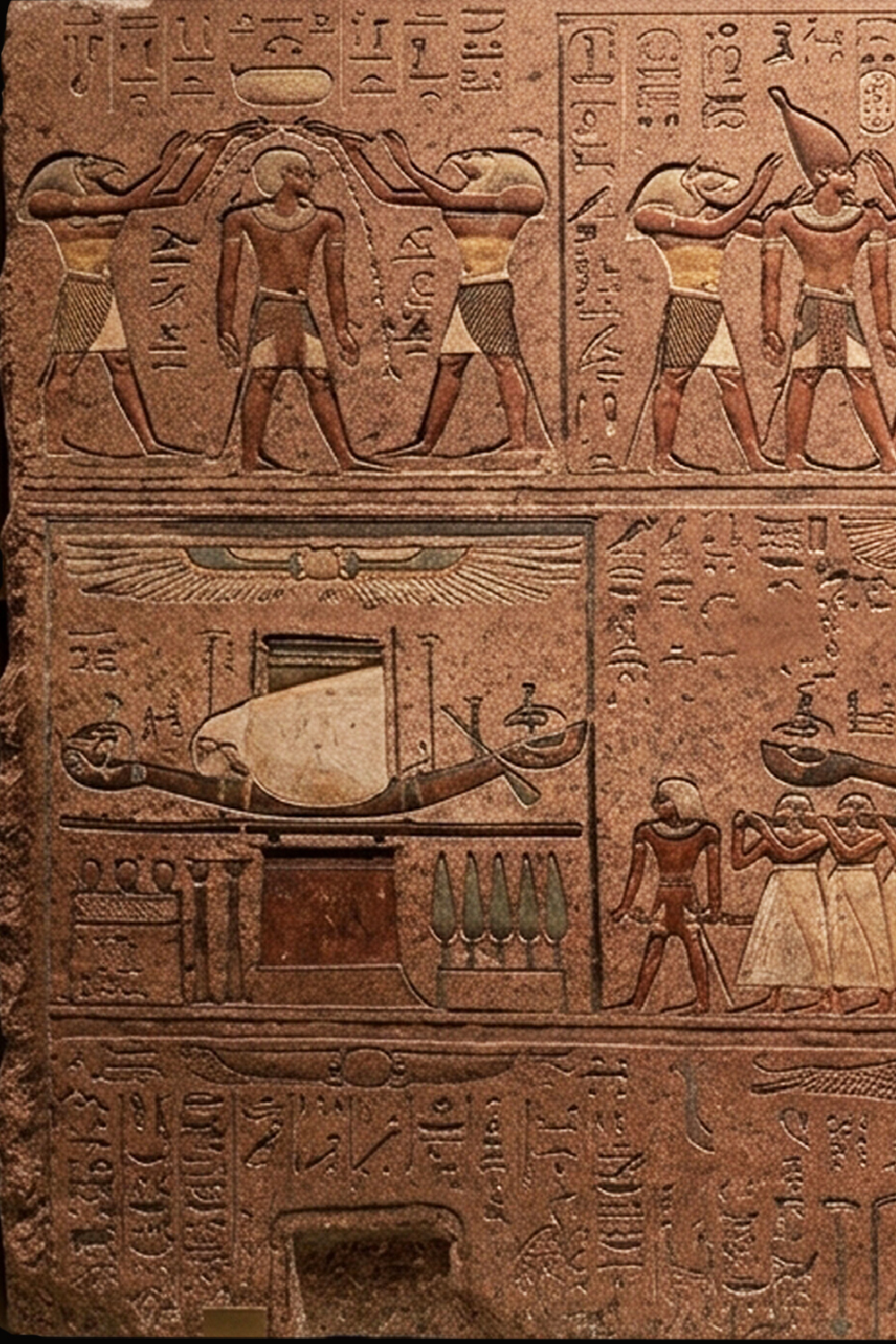
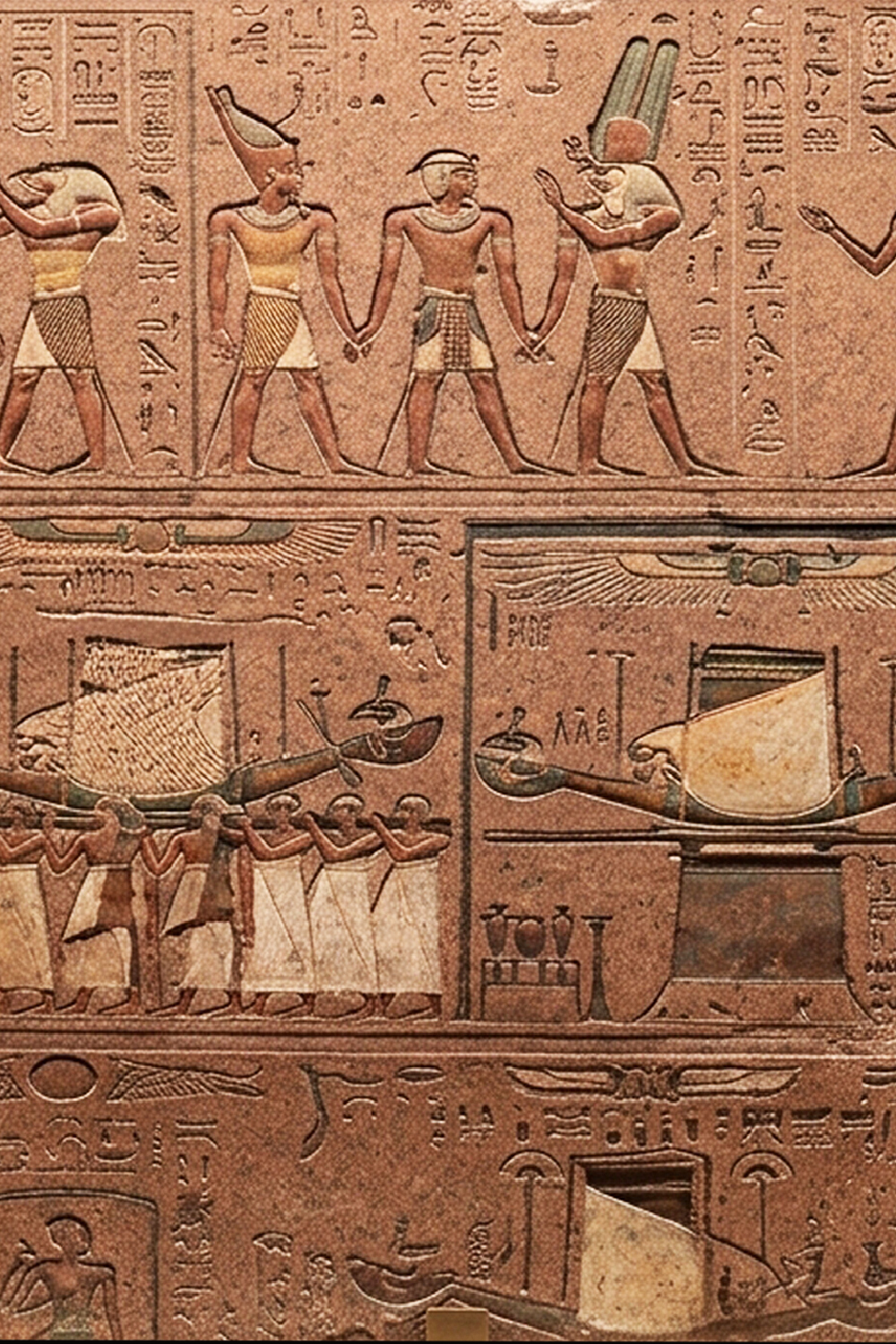
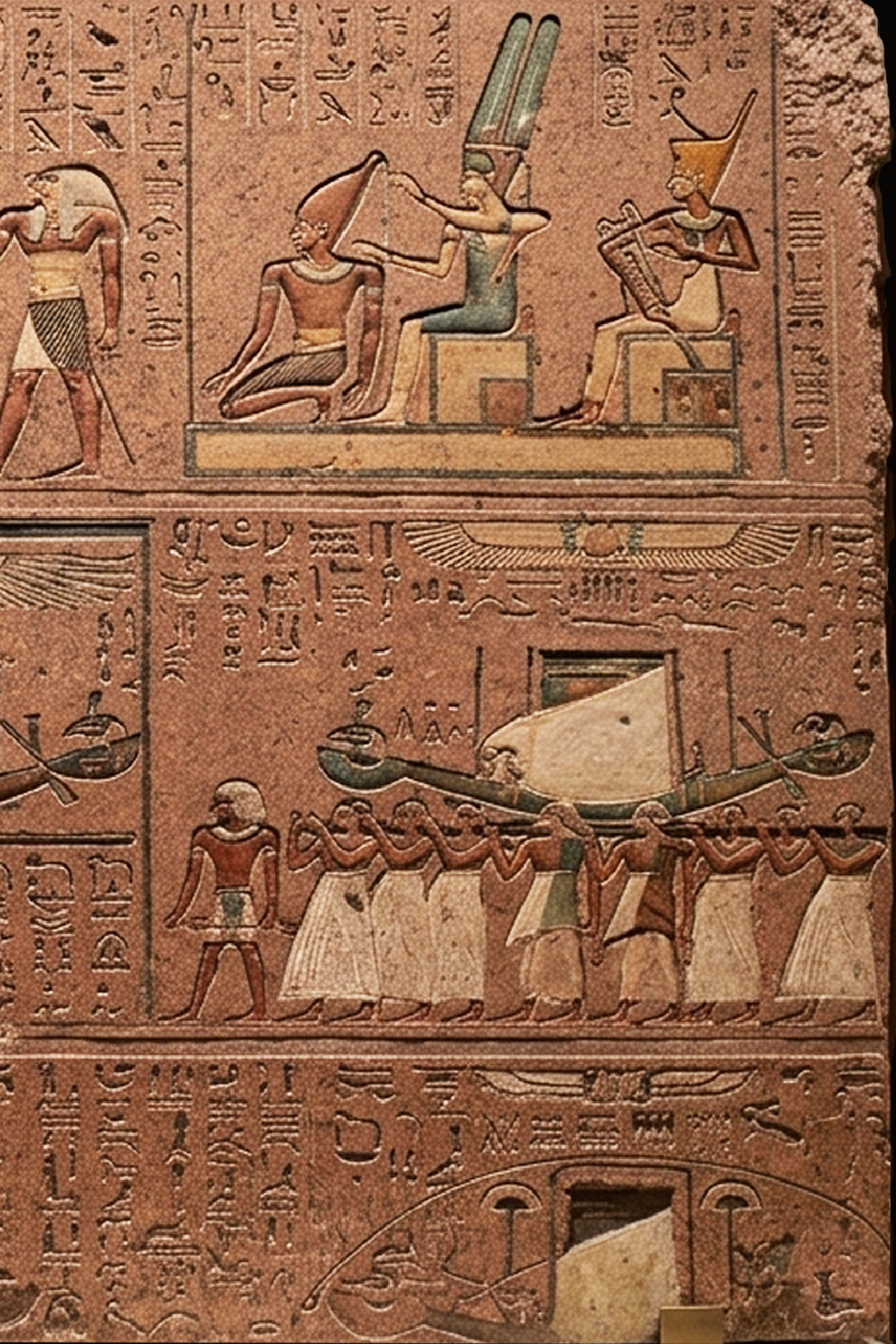
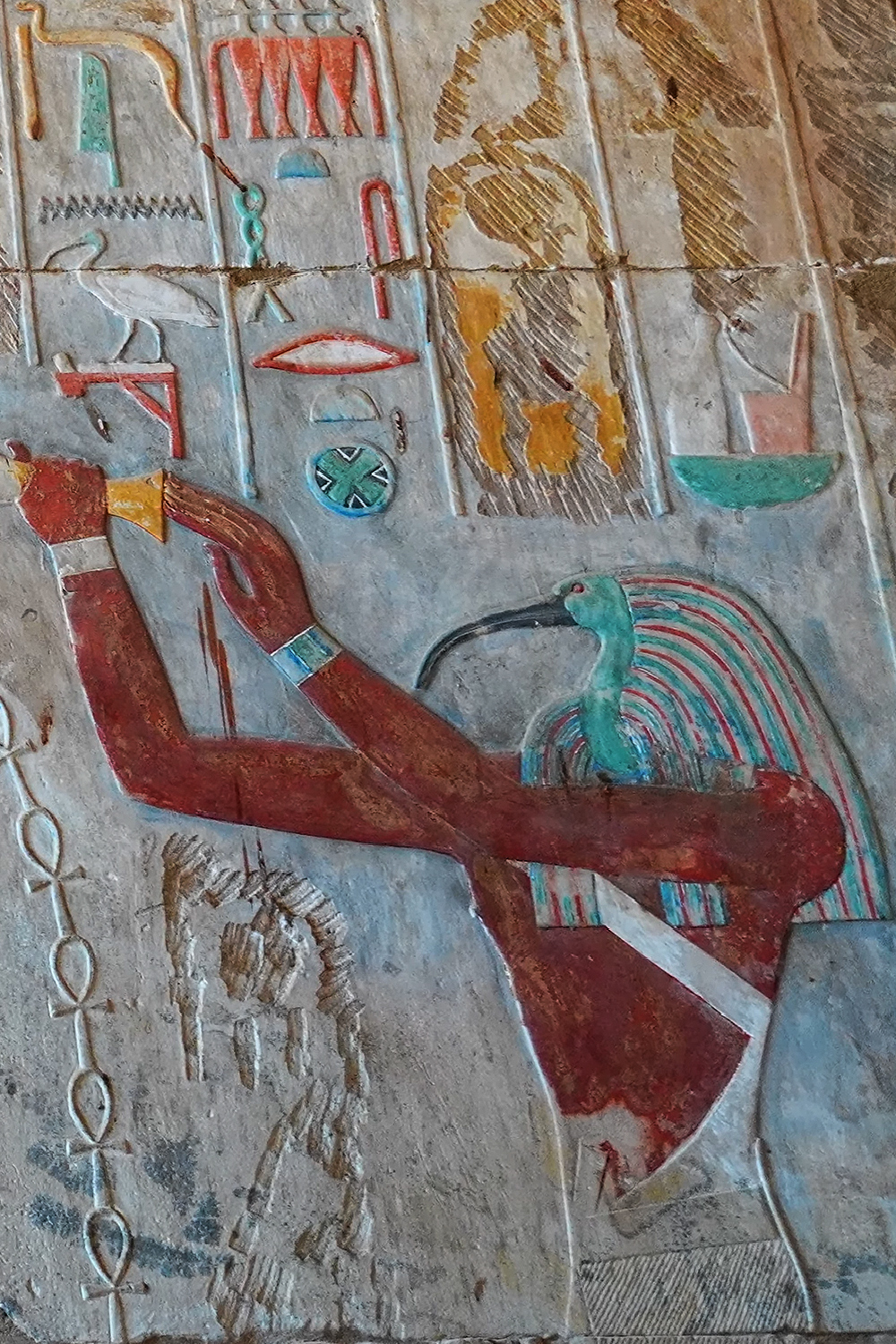
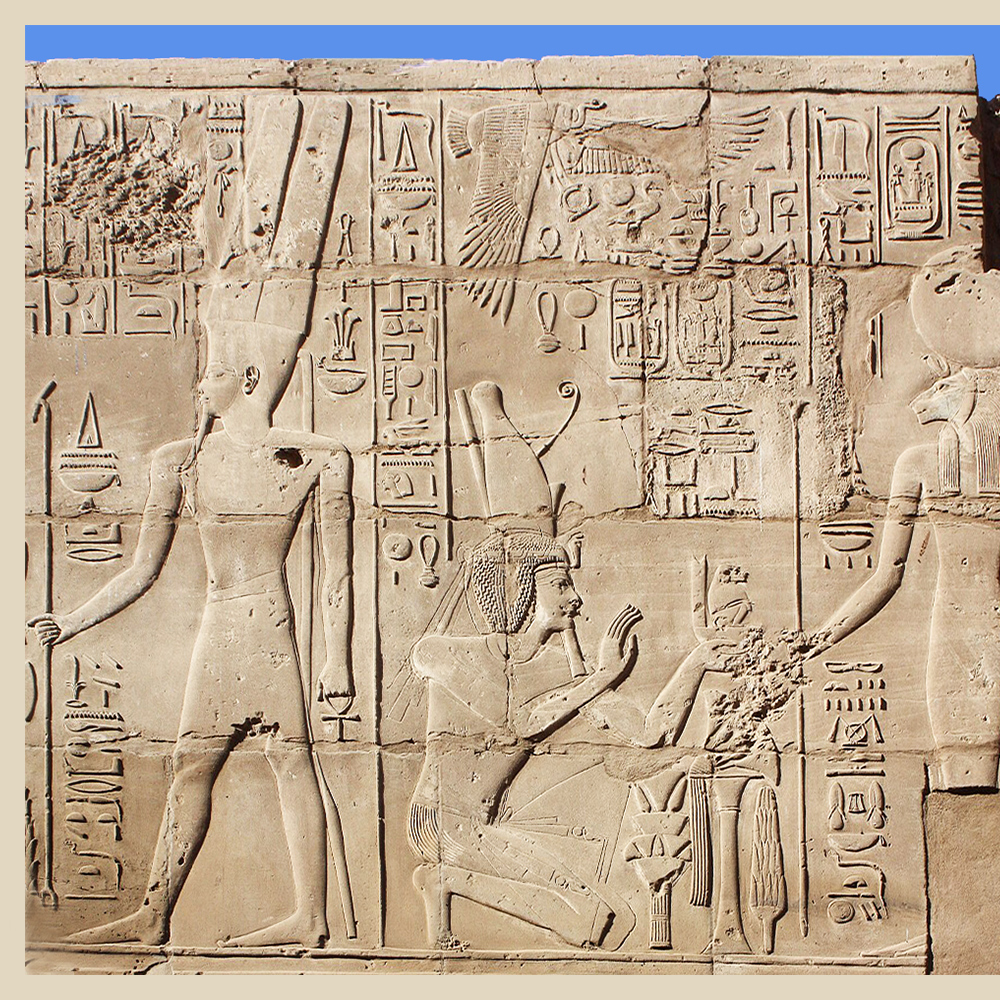 A 13th century BCE relief located on the north wall of the Great Hypostyle Hall, (built by Seti I), the main scene is the Ished (Persea) Tree standing at the center, symbolizing the “Tree of Life.”
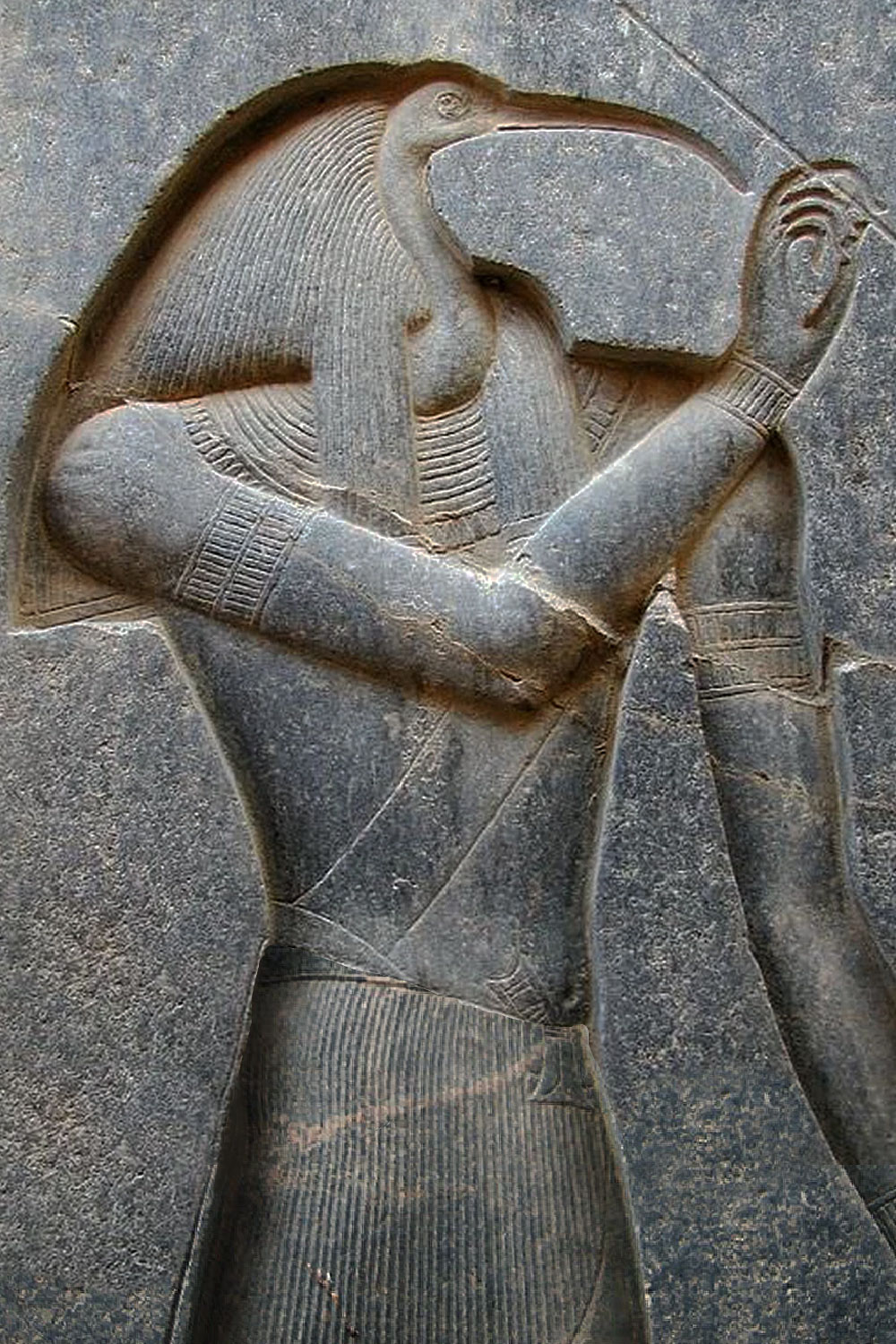
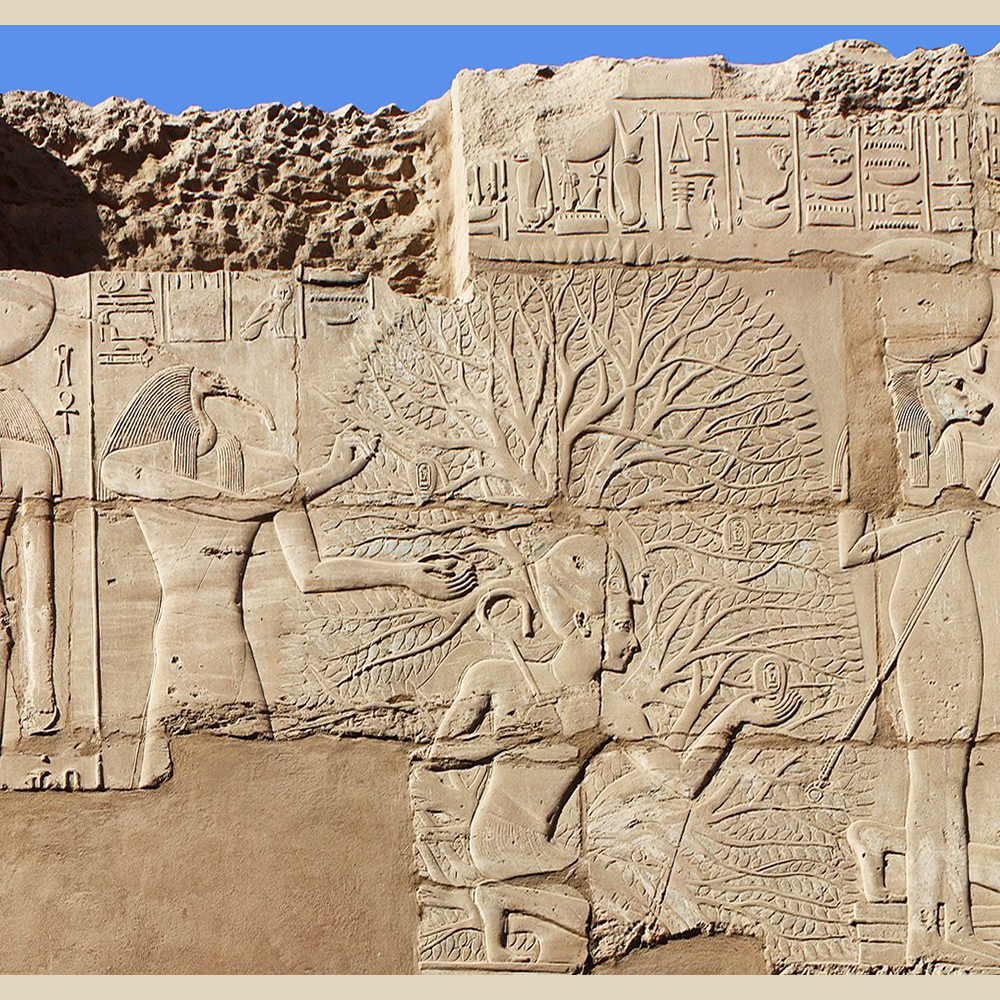 the ibis-headed Thoth, the god of wisdom and writing, inscribes Pharaoh Seti I's royal name onto the leaves to grant him eternal life and a lasting rule, while Seti I kneels with a sacred fruit from the tree, in his hand,
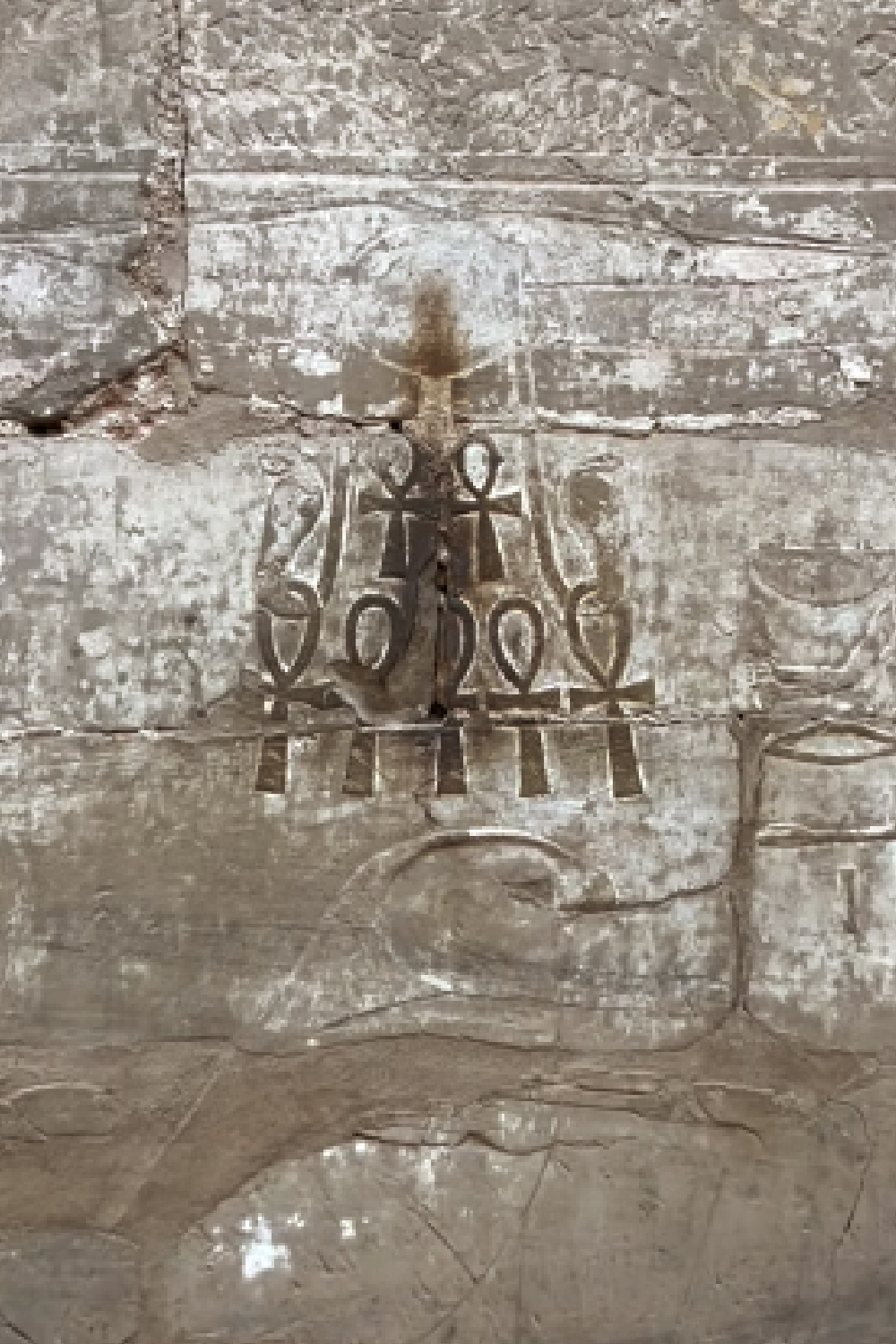
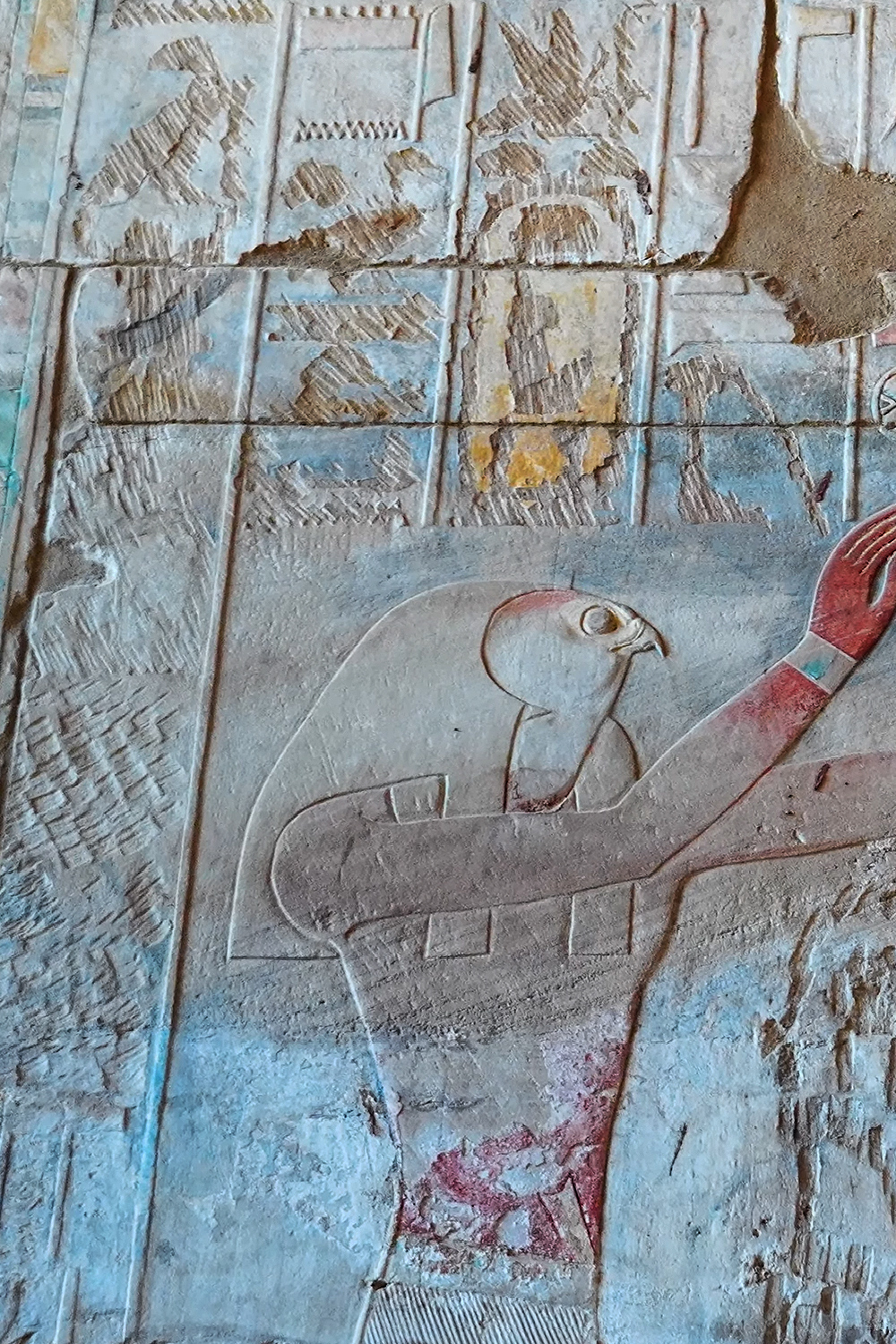
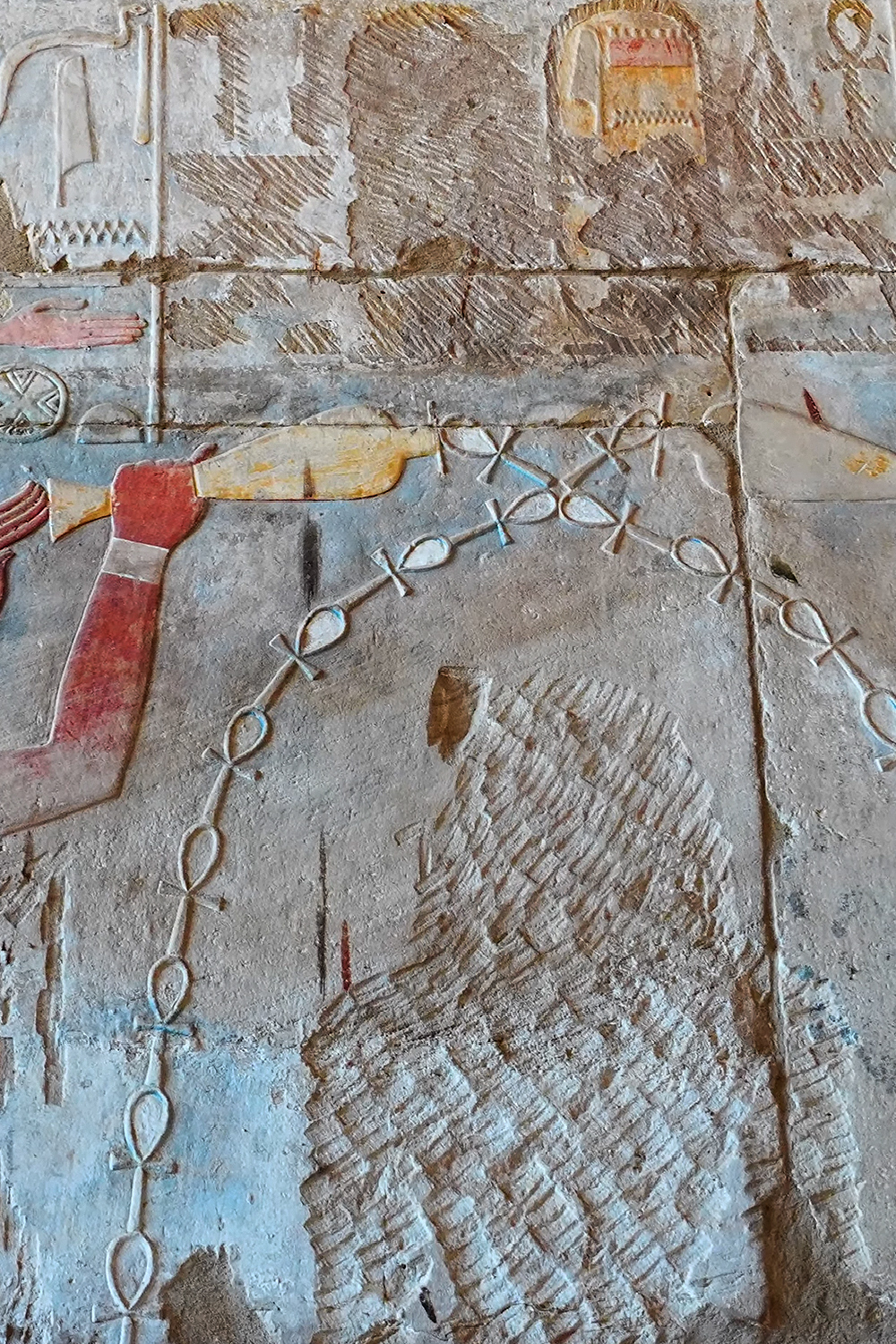
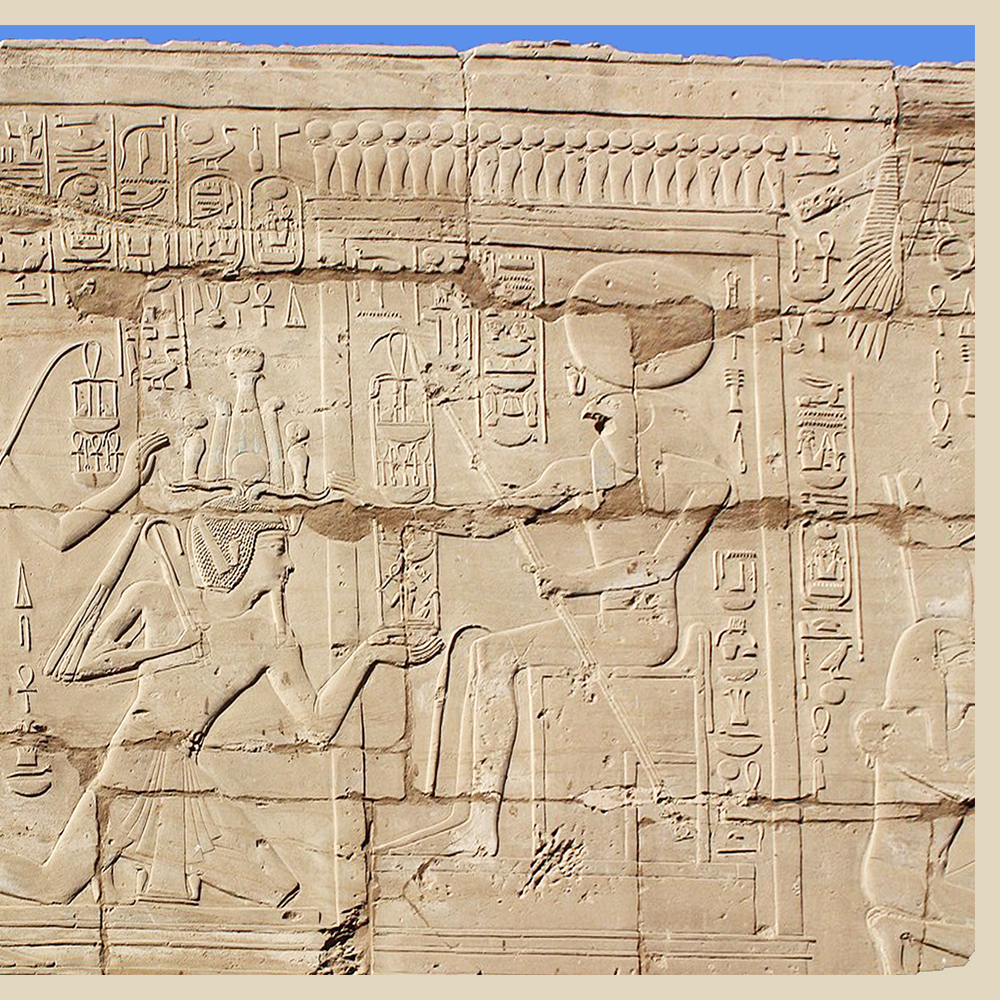 kneeling to the right is Seti I again receiving a blessing from the lioness goddess Sekhmet with three ankhs the symbol of life and Horus the falcon god of divine kingship.
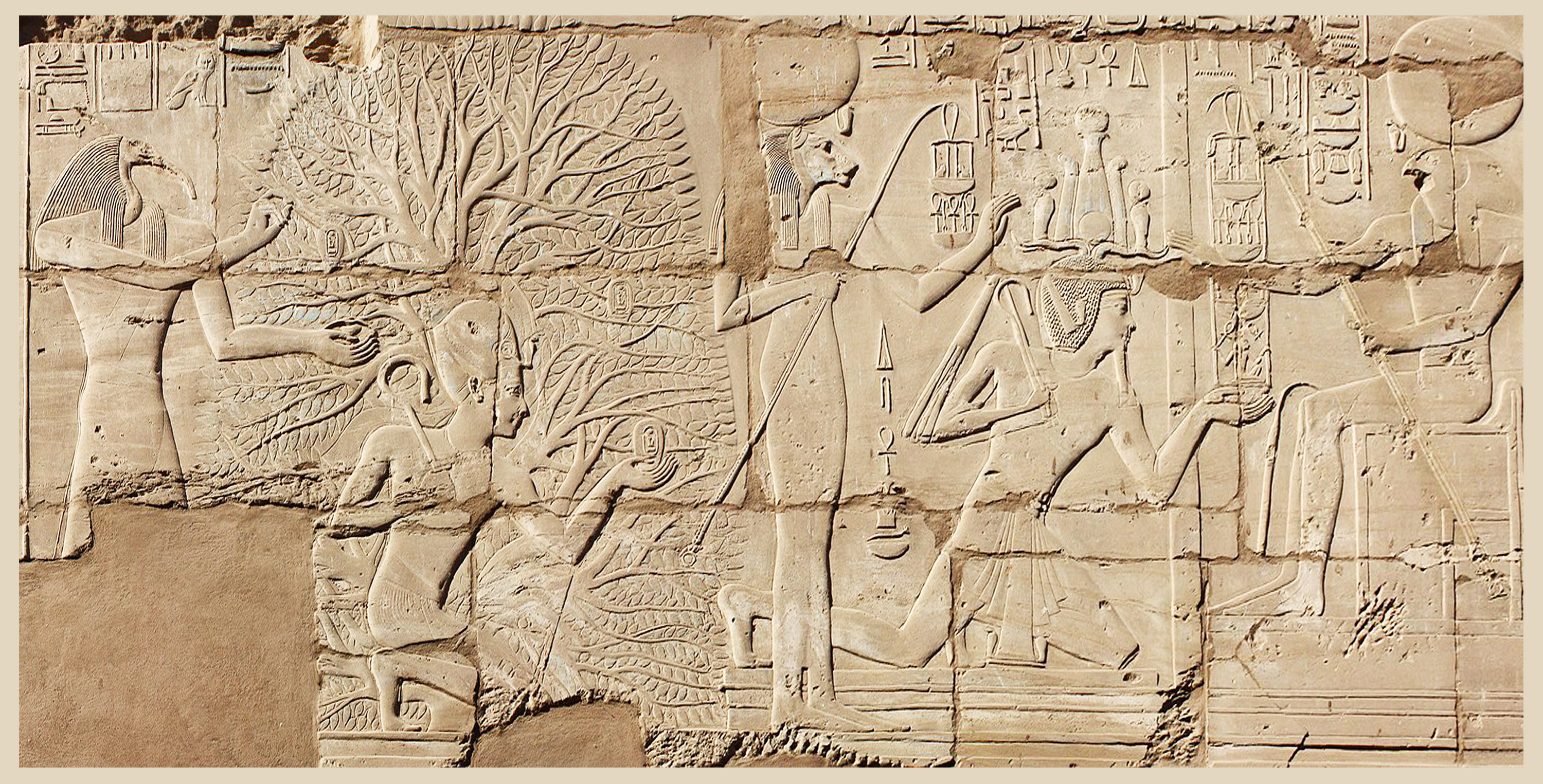 (detailed view) The Ished (Persea) Tree stands at the left, symbolizing the “Tree of Life.” At the center,
Sekhmet—lioness‑headed and crowned with a solar disk and uraeus—raises her hand toward Seti I’s crown while holding a staff with three ankhs, affirming his divine authority and eternal legacy.
Seti I kneels in reverence, receiving blessings for a long and prosperous reign. To the right, Horus sits enthroned with a scepter, confirming the king’s divine right to rule. The scene proclaims
that Seti I’s power was fully sanctioned and protected by the gods. Carved during Seti I’s reign c. (1290–1279 BCE), 19th Dynasty, New Kingdom
(detailed view) The Ished (Persea) Tree stands at the left, symbolizing the “Tree of Life.” At the center,
Sekhmet—lioness‑headed and crowned with a solar disk and uraeus—raises her hand toward Seti I’s crown while holding a staff with three ankhs, affirming his divine authority and eternal legacy.
Seti I kneels in reverence, receiving blessings for a long and prosperous reign. To the right, Horus sits enthroned with a scepter, confirming the king’s divine right to rule. The scene proclaims
that Seti I’s power was fully sanctioned and protected by the gods. Carved during Seti I’s reign c. (1290–1279 BCE), 19th Dynasty, New Kingdom
Barque Chapel of Ramesses III
The First Barque Chapel of Ramses III (1184–1153 BCE) features Osiride statues of the king wrapped in mummy‑like garments, emphasizing his
connection to the afterlife. The first court is lined with eight such figures: those on the west wear the red crown of Upper Egypt, while those on the east wear the
white crown of Lower Egypt. Beyond the court lies a vestibule supported by additional Osiride pillars, leading into a small hypostyle hall and finally into three
chapels designed to house the sacred barques of Karnak.
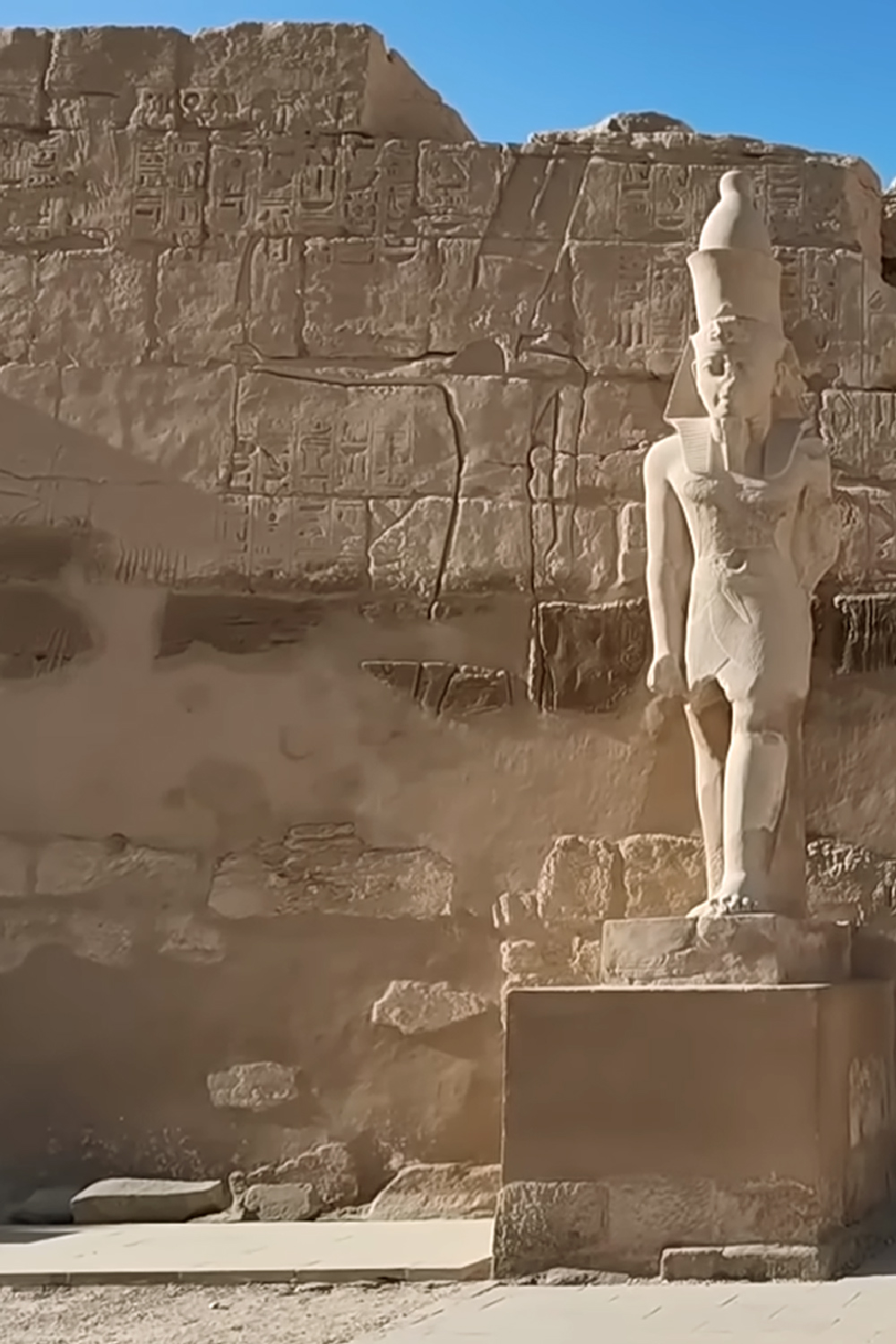 1.) Pylon, entrance to the Barque Temple of
Ramesses III, this area was enclosed by the court yard constructed by Shoshenq I (943-922 BCE),
1.) Pylon, entrance to the Barque Temple of
Ramesses III, this area was enclosed by the court yard constructed by Shoshenq I (943-922 BCE),
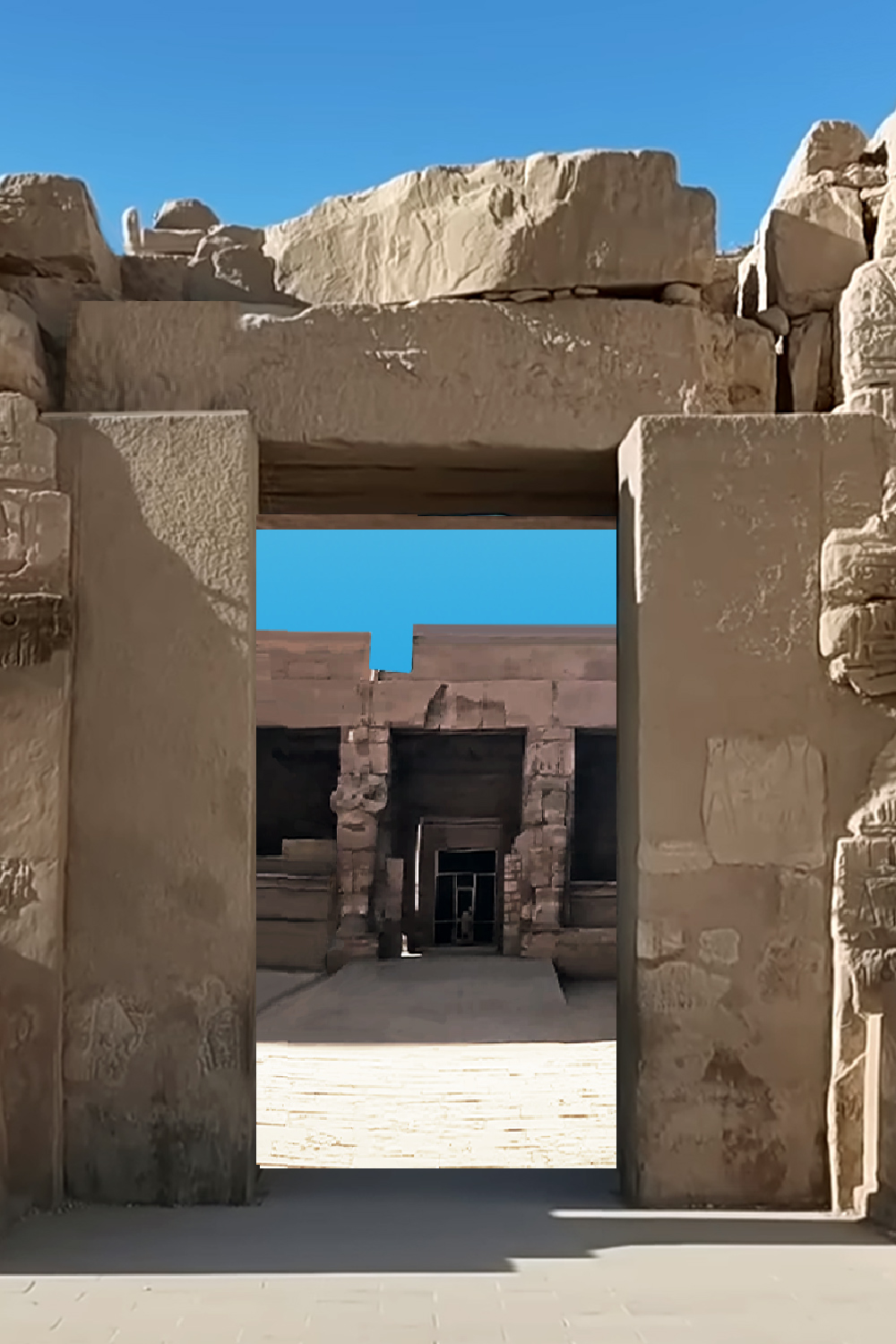 2.) The shrine’s entrance is fronted by a small
pylon adorned with scenes of the king smiting his enemies and flanked by two 20 foot (6 meter) statues carved from red sandstone of Ramses III,
2.) The shrine’s entrance is fronted by a small
pylon adorned with scenes of the king smiting his enemies and flanked by two 20 foot (6 meter) statues carved from red sandstone of Ramses III,
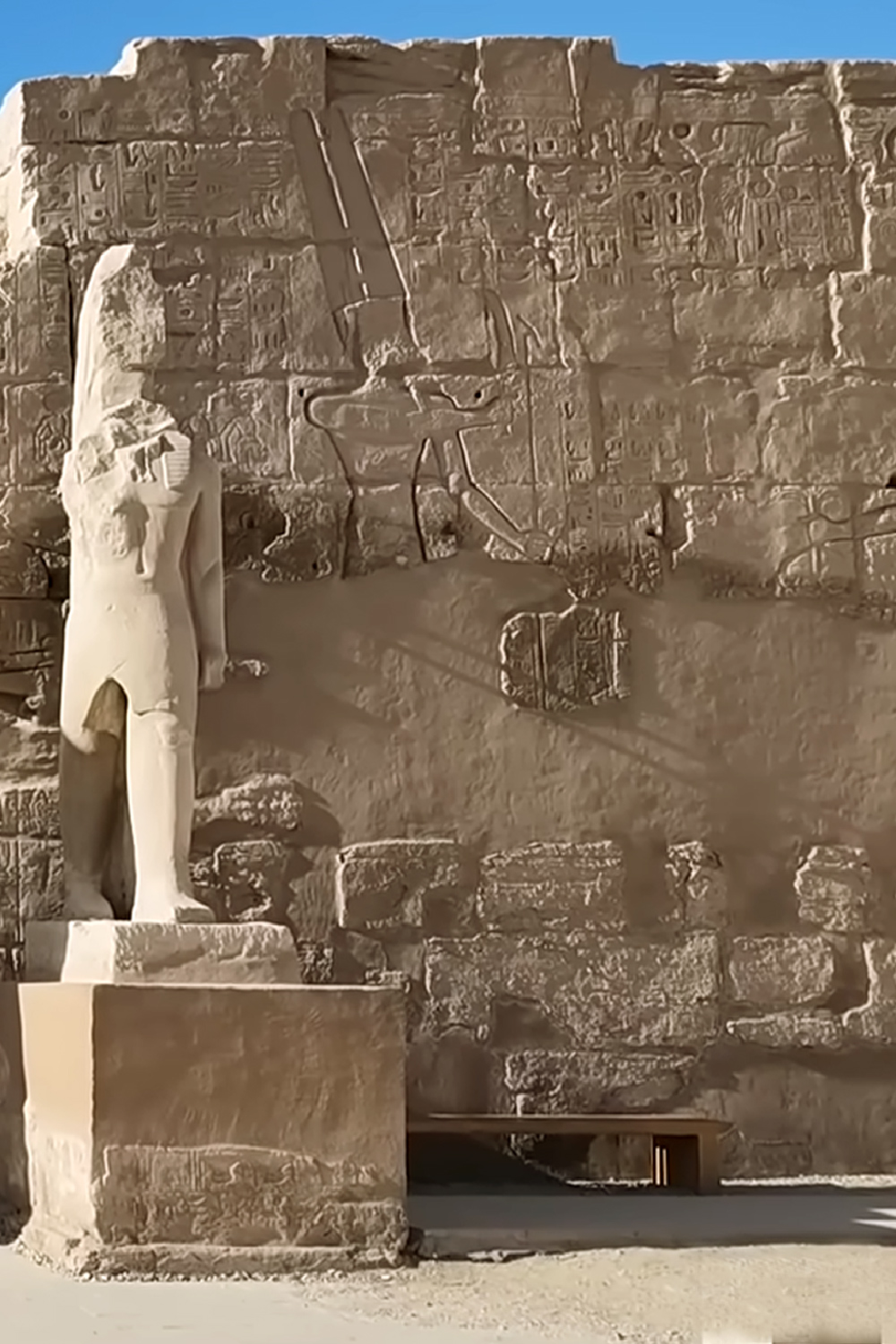 3.) This 200-foot-long temple features three bark
chapels, a hypostyle hall of eight columns, a vestibule with four columns, and an open court,
3.) This 200-foot-long temple features three bark
chapels, a hypostyle hall of eight columns, a vestibule with four columns, and an open court,
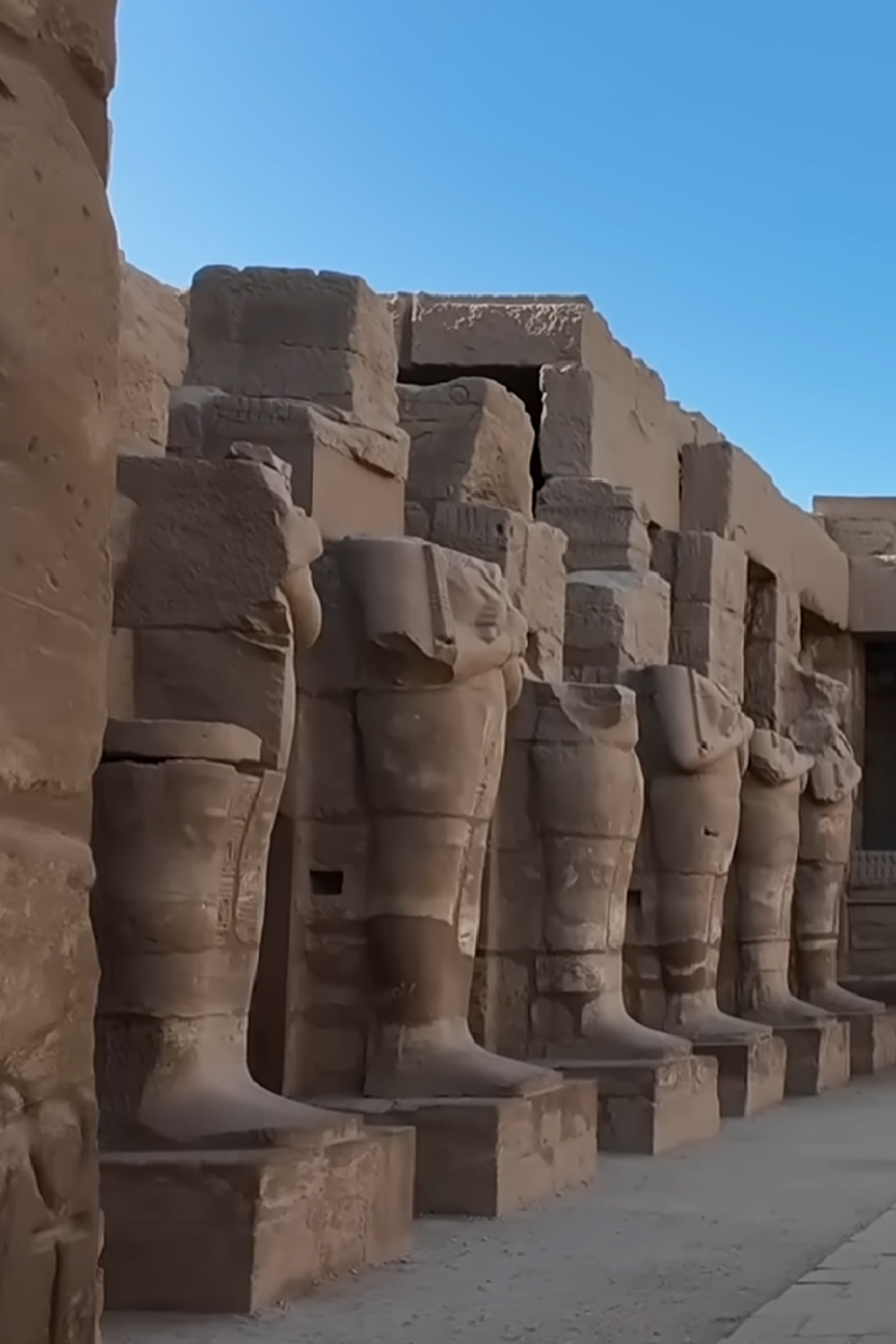 4.) Temple of Ramses III, The first court is lined
with eight Osride statues of the king; the west side wear the red crown of the south,
4.) Temple of Ramses III, The first court is lined
with eight Osride statues of the king; the west side wear the red crown of the south,
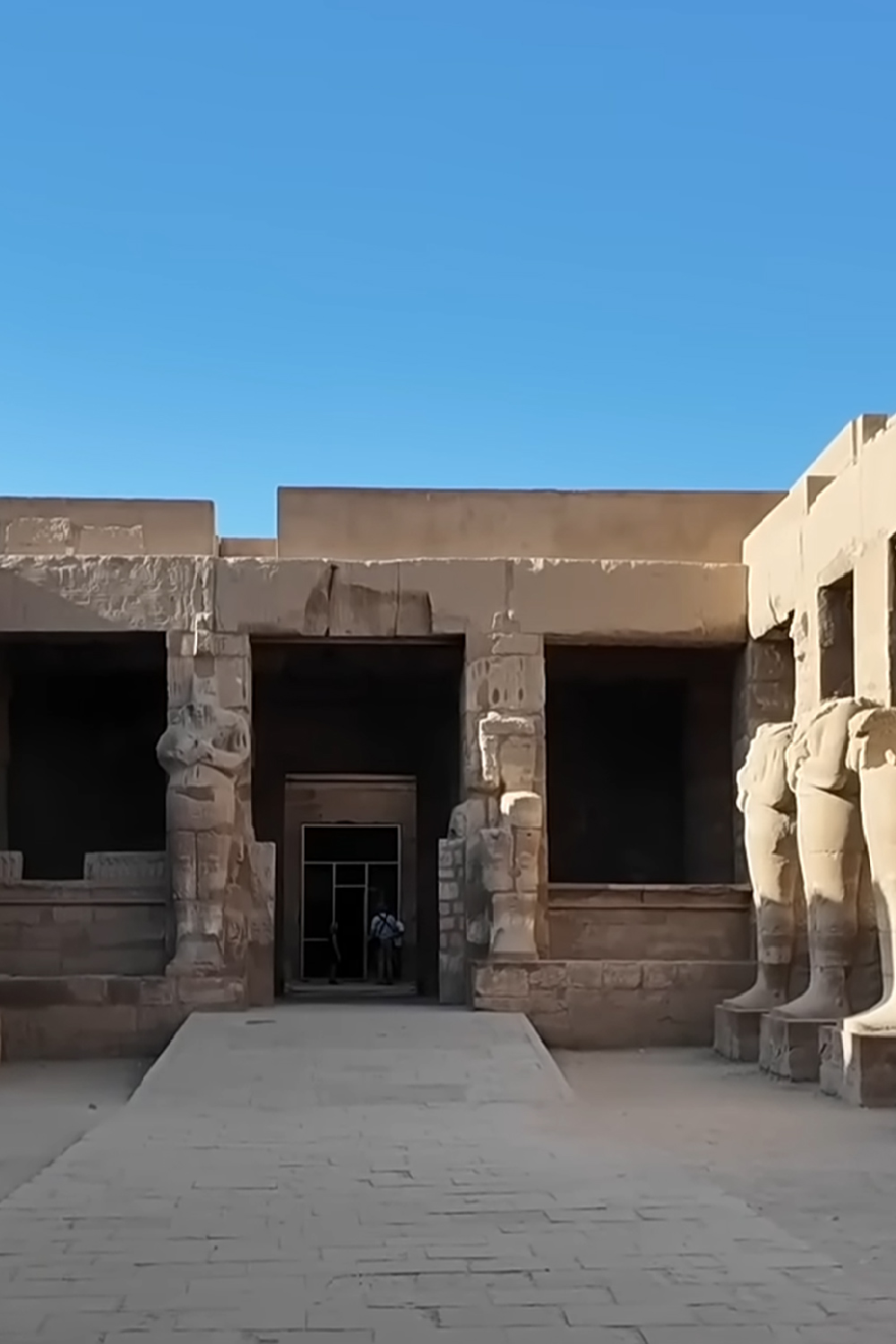 5.) while those on the east side wear the white
crown of the north.
5.) while those on the east side wear the white
crown of the north.
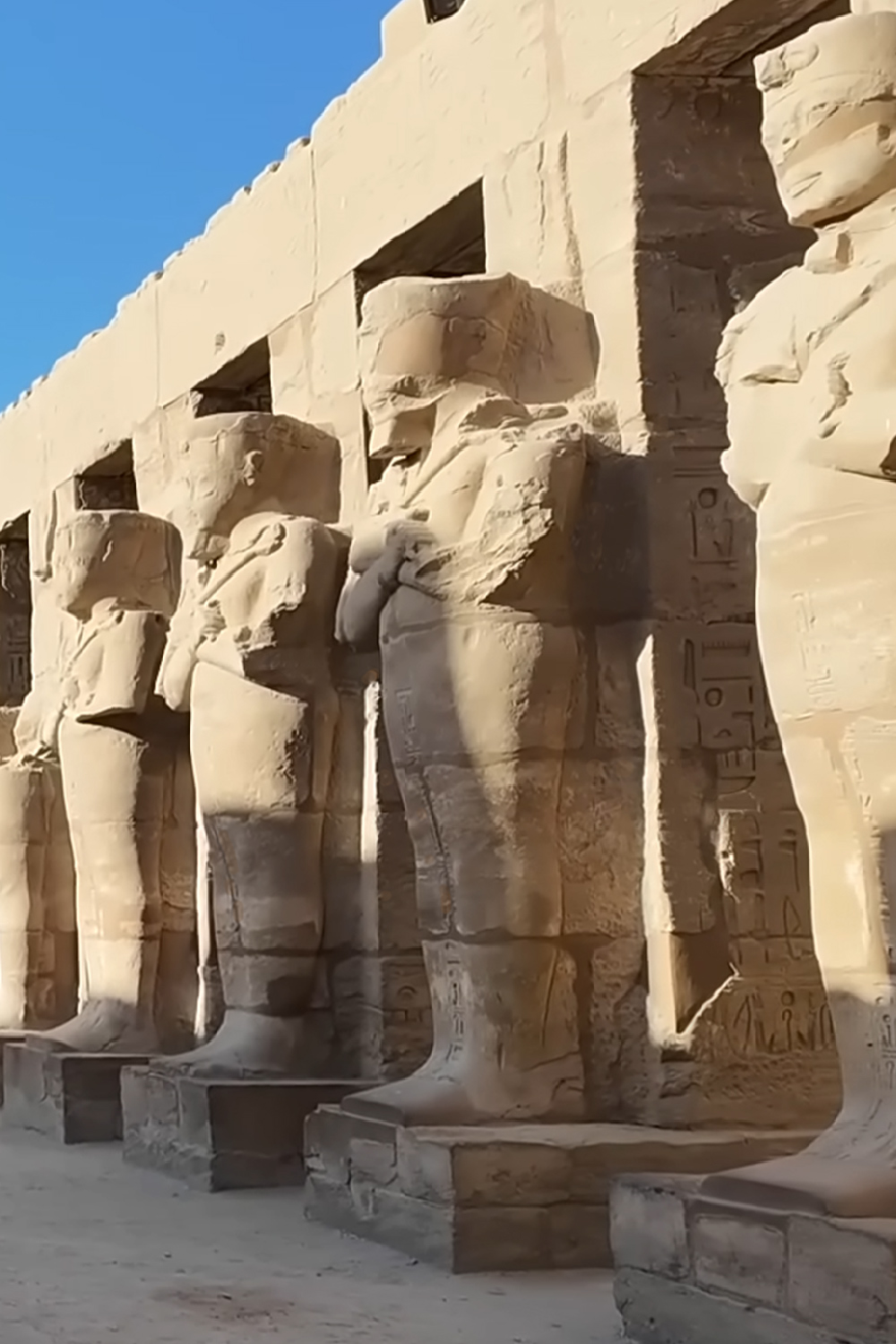 6.) The Osiride statues on the west hold the hek
scepter in the left and and the nekhakha scepter in their right,
6.) The Osiride statues on the west hold the hek
scepter in the left and and the nekhakha scepter in their right,
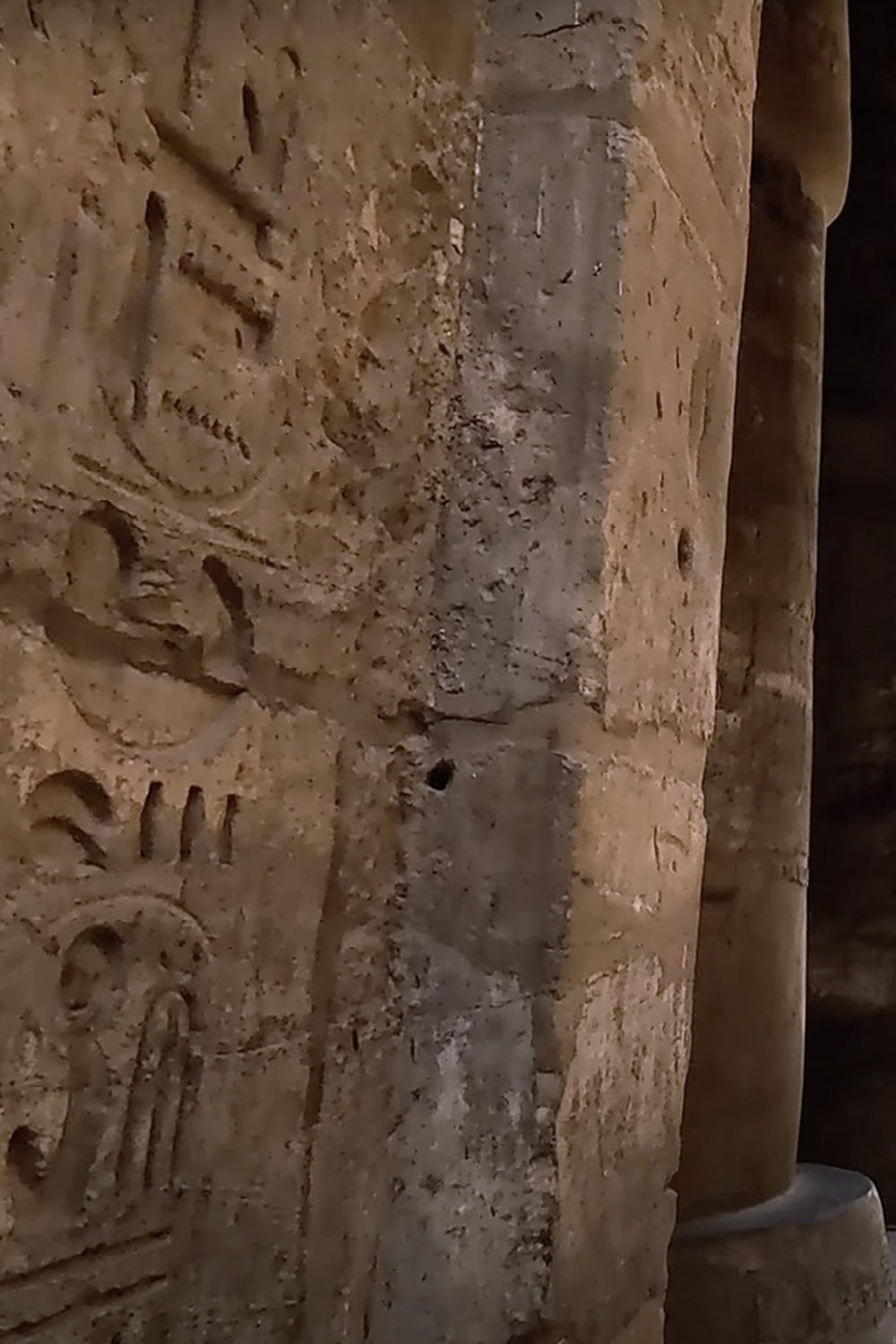 7.) Temple of Ramses III, Inside the one of three
Barque Chapels, looking into the court-yard,
7.) Temple of Ramses III, Inside the one of three
Barque Chapels, looking into the court-yard,
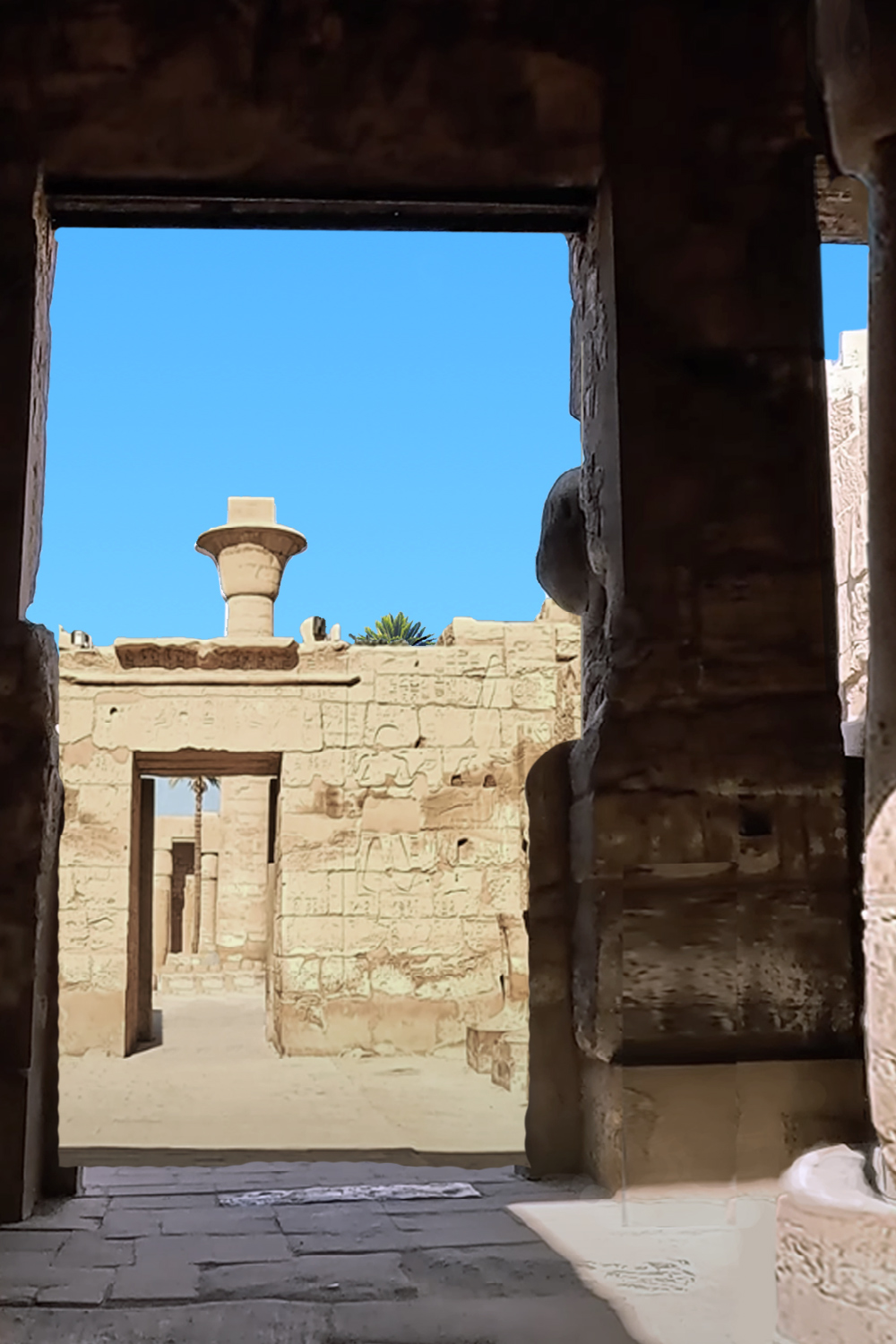 8.) Inside the Barque Chapel looking out past the
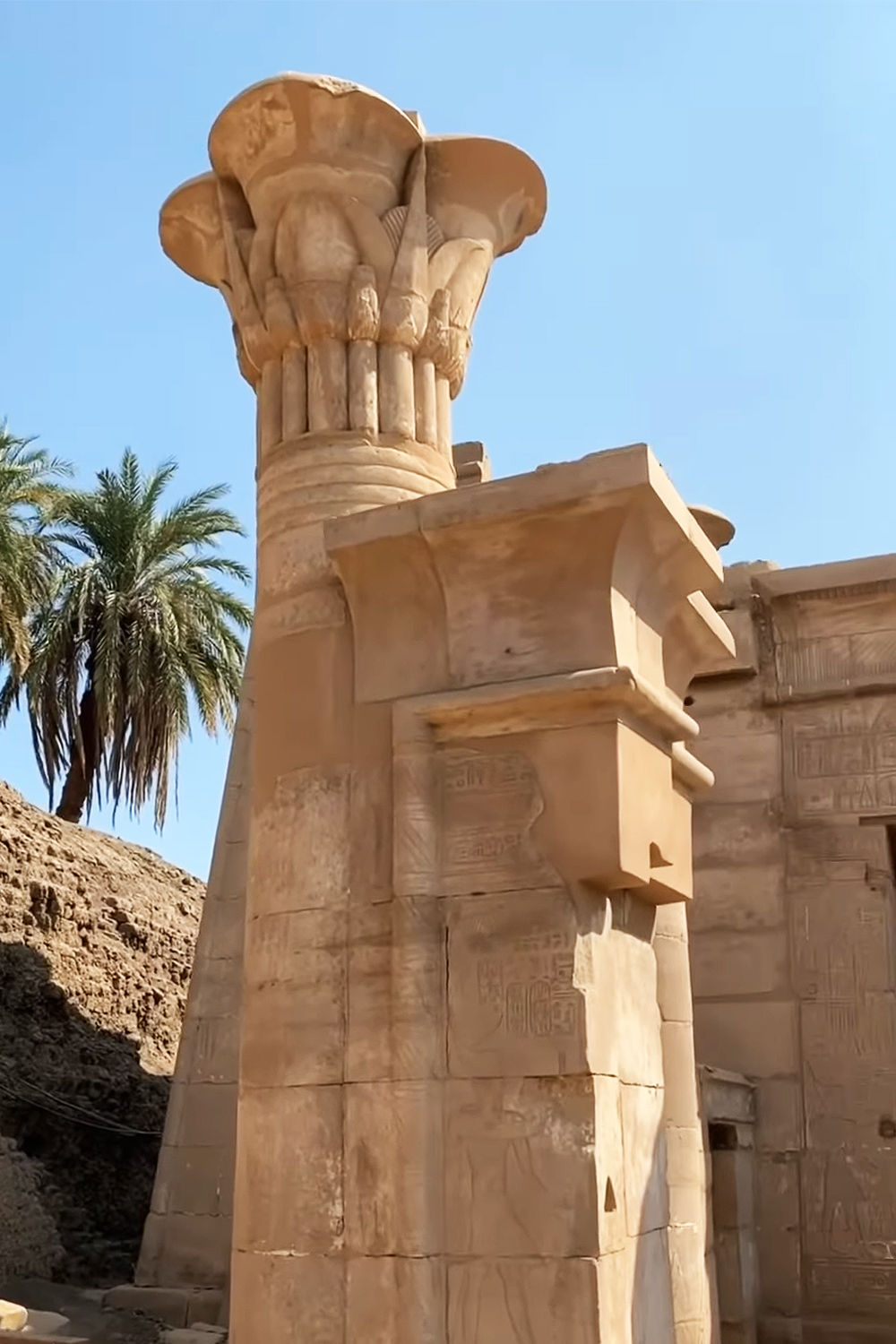
small courtyard of the Temple of Ramesses III towards the far gate to the Forecourt with the colossal column of the Kiosk of Taharqa,
8.) Inside the Barque Chapel looking out past the
small courtyard of the Temple of Ramesses III towards the far gate to the Forecourt with the colossal column of the Kiosk of Taharqa,
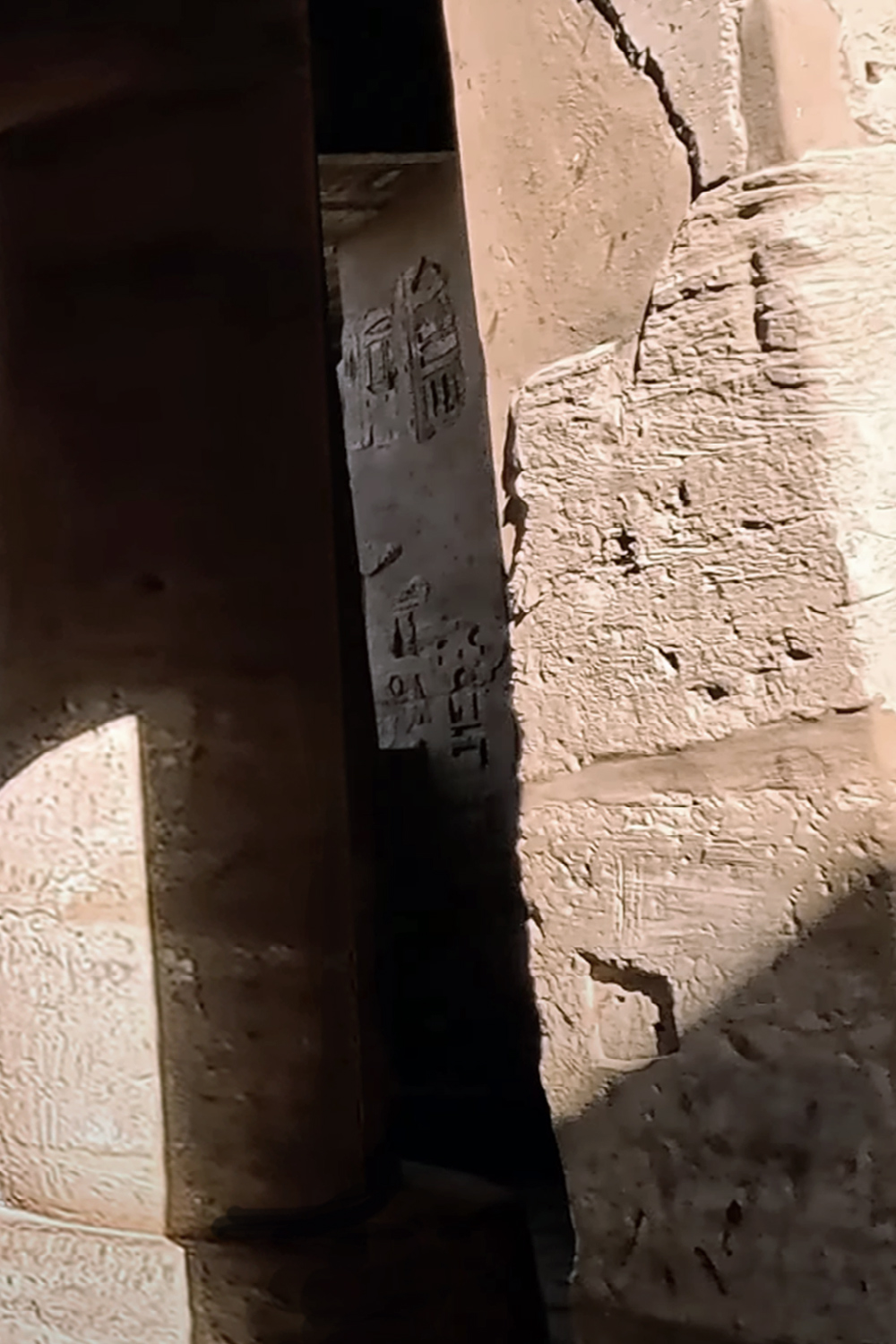 9.) Temple of Ramses III, Inside the one of three
Barque Chapels, looking into the court-yard,
9.) Temple of Ramses III, Inside the one of three
Barque Chapels, looking into the court-yard,
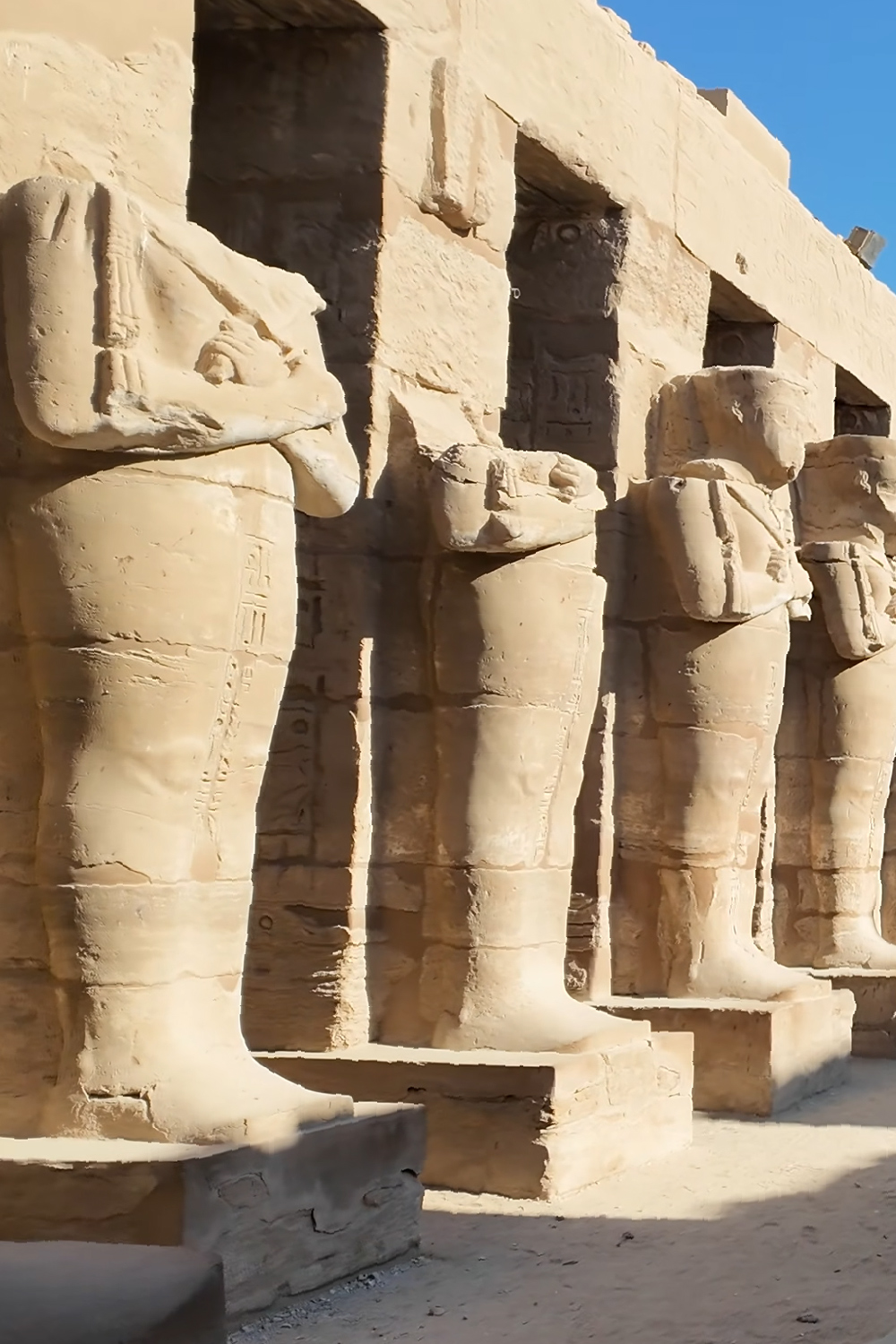 10.) Temple of Ramses III, The Osiride statues
inside the Barque Chapel courtyard,
10.) Temple of Ramses III, The Osiride statues
inside the Barque Chapel courtyard,
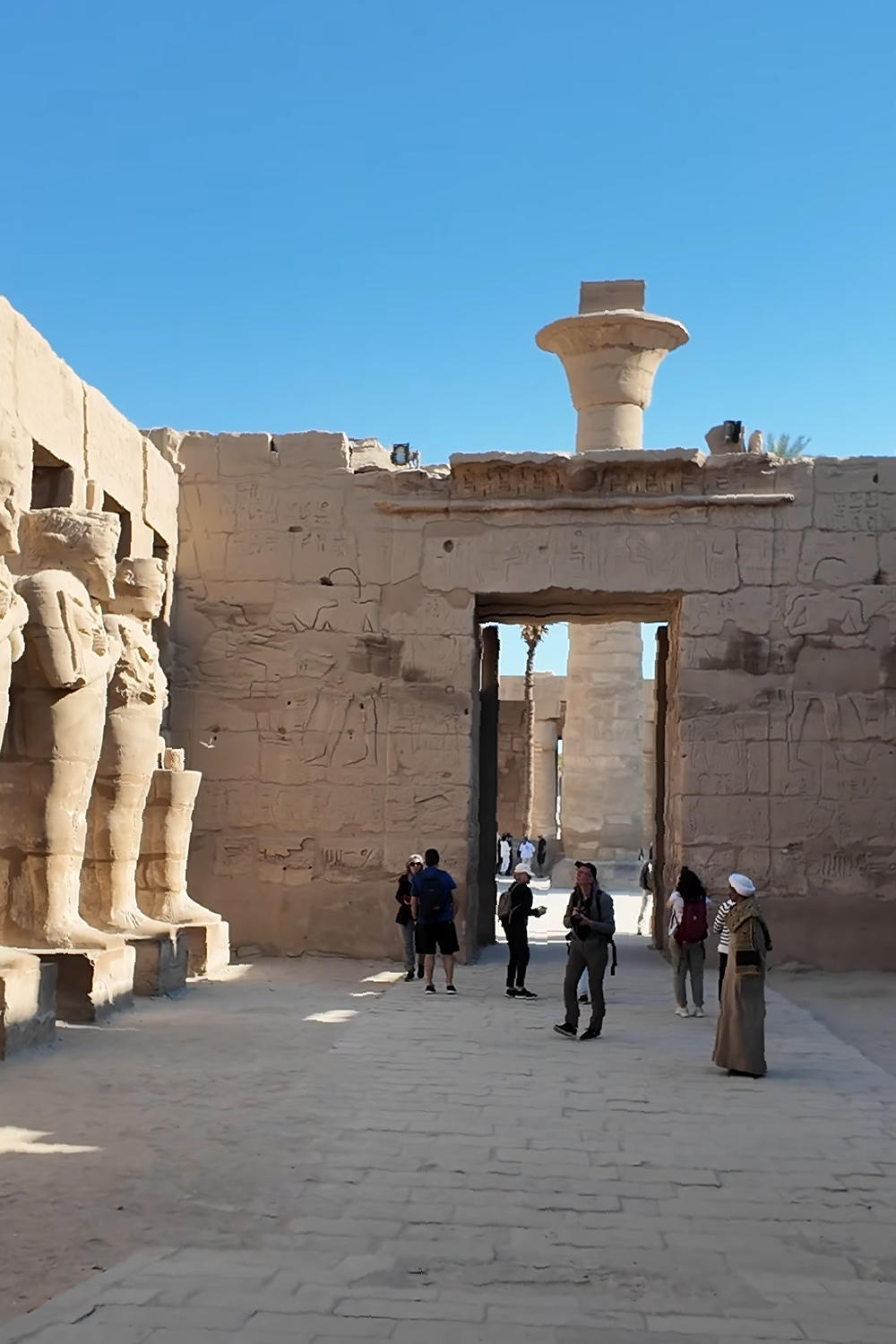 11.) Inside the Barque Chapel small courtyard of
the Temple of Ramesses III looking out to the Forecourt of Karnak Temple
11.) Inside the Barque Chapel small courtyard of
the Temple of Ramesses III looking out to the Forecourt of Karnak Temple
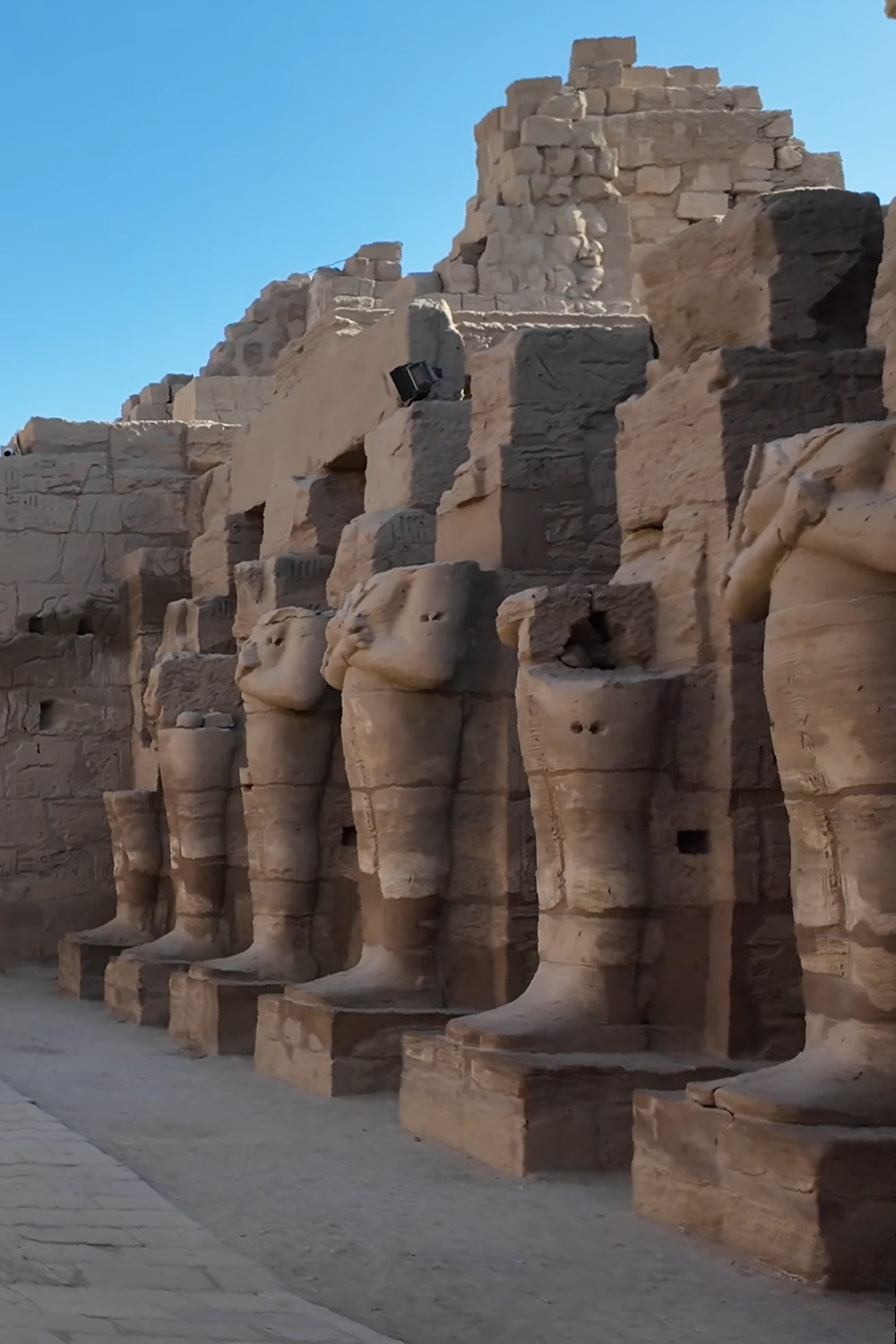 12.) Temple of Ramses III, The Osiride statues
inside the Barque Chapel courtyard,
12.) Temple of Ramses III, The Osiride statues
inside the Barque Chapel courtyard,
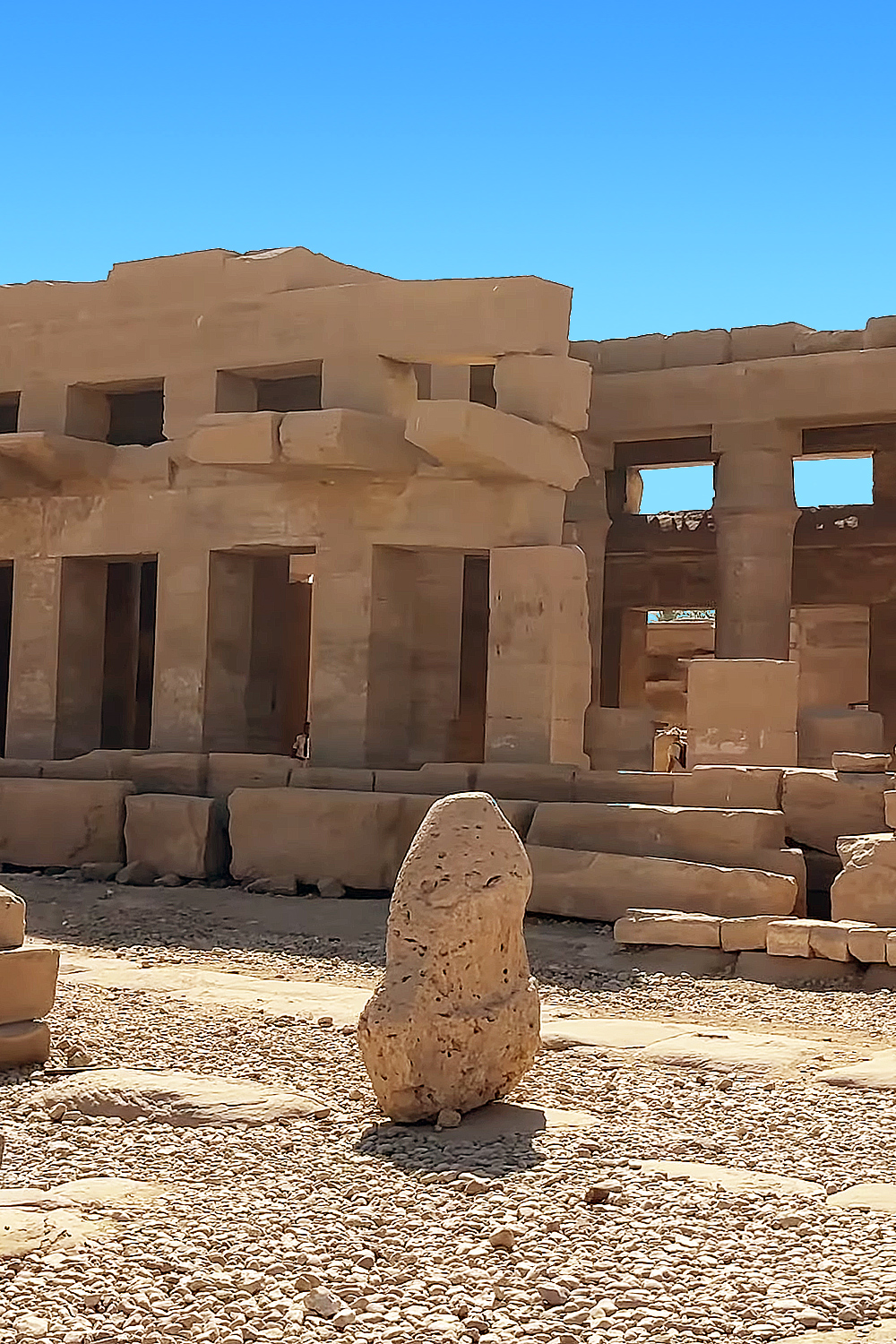
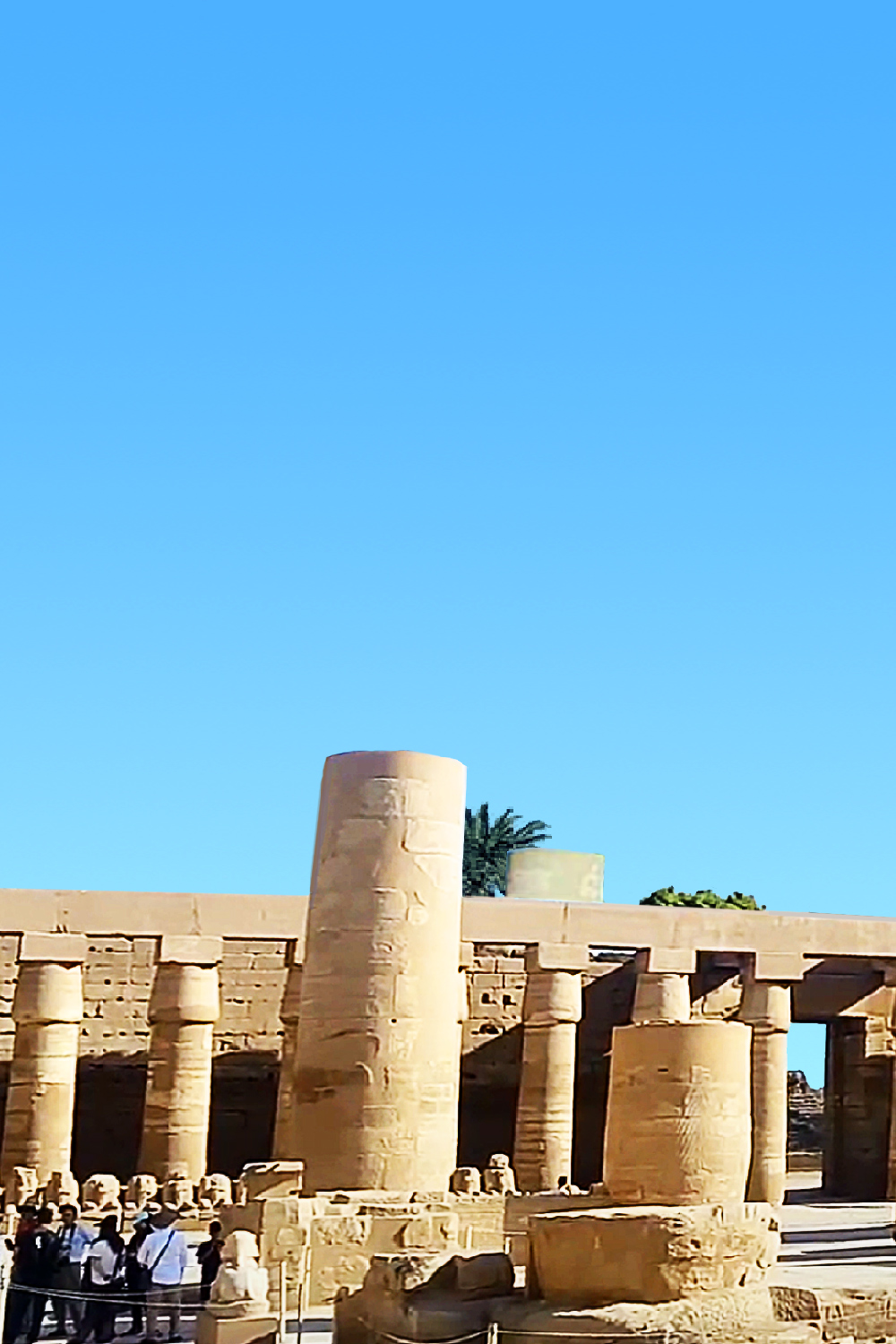 13.) Great Temple of Karnak forecourt the main entrance into the temple but it was never completed
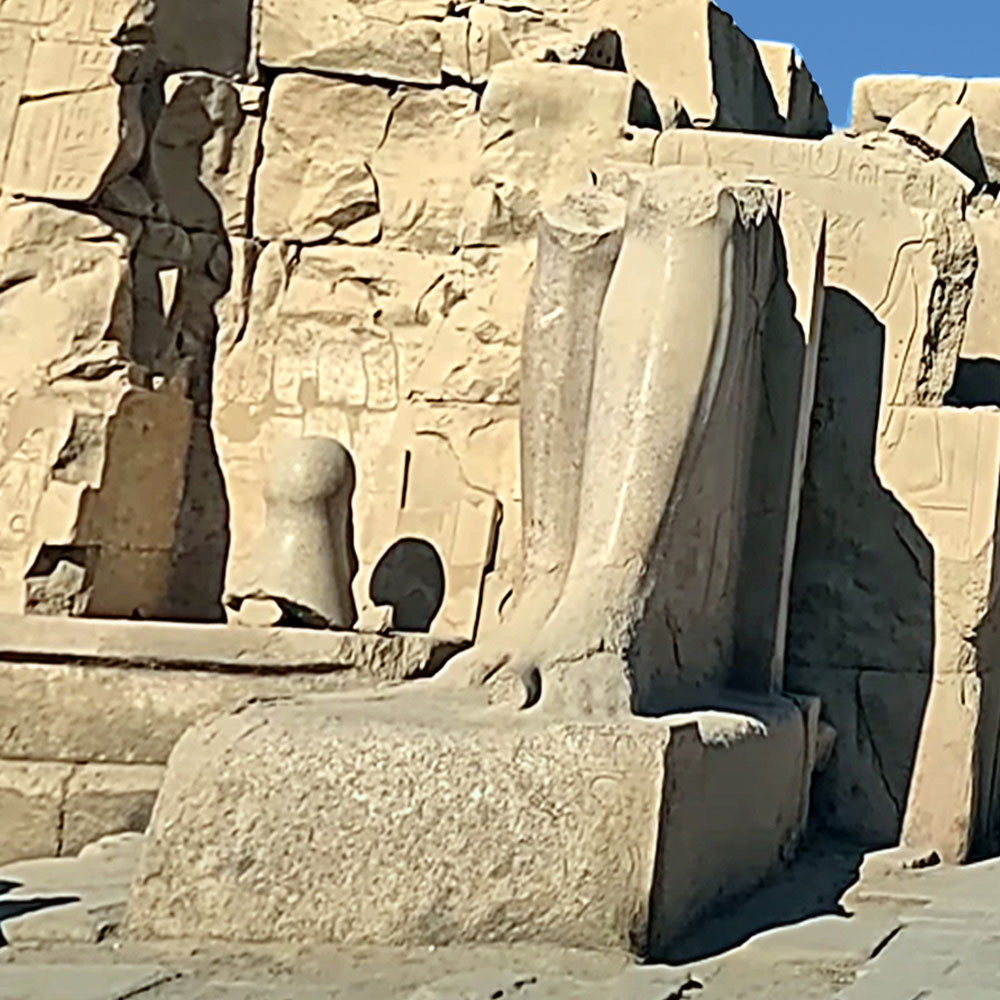
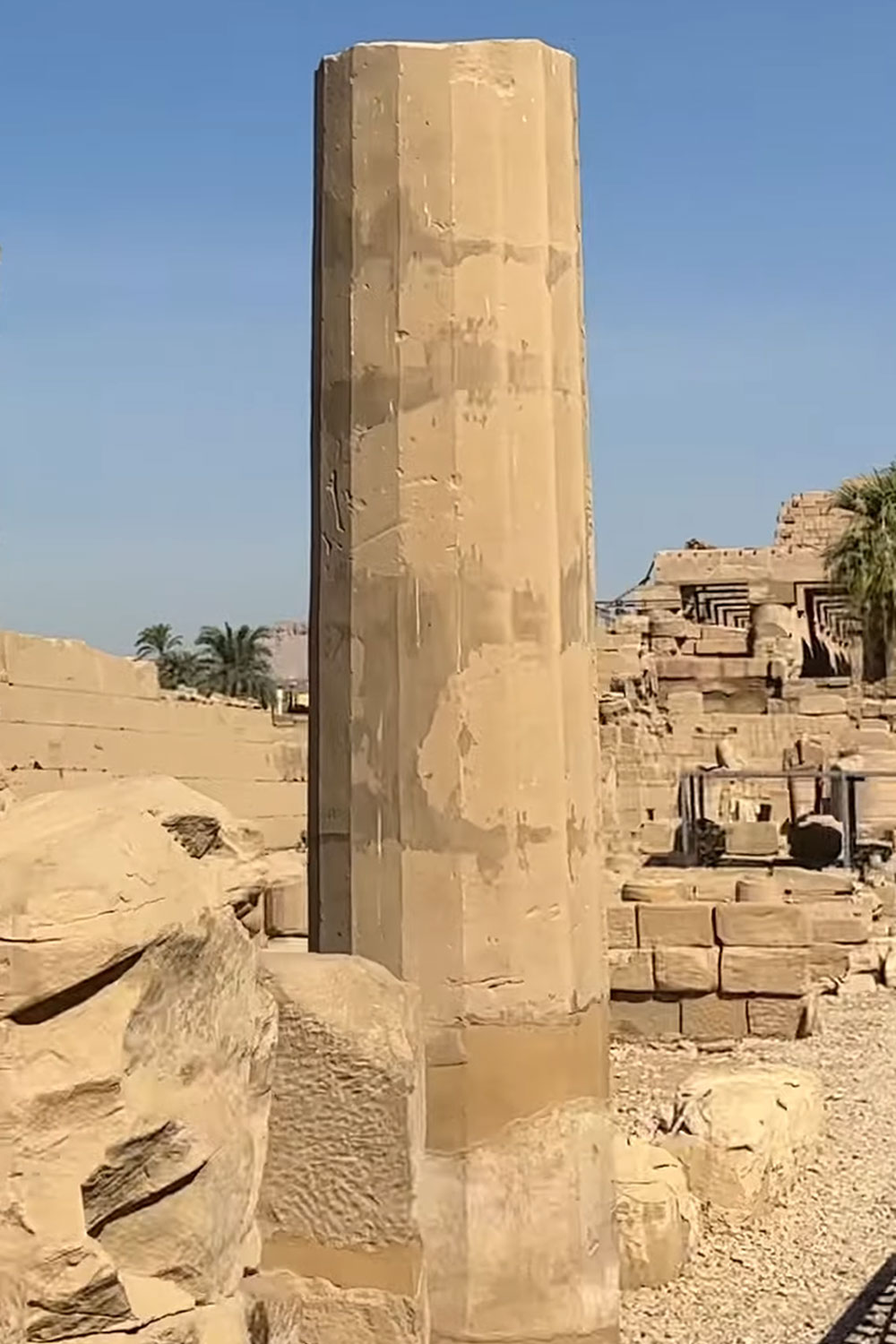
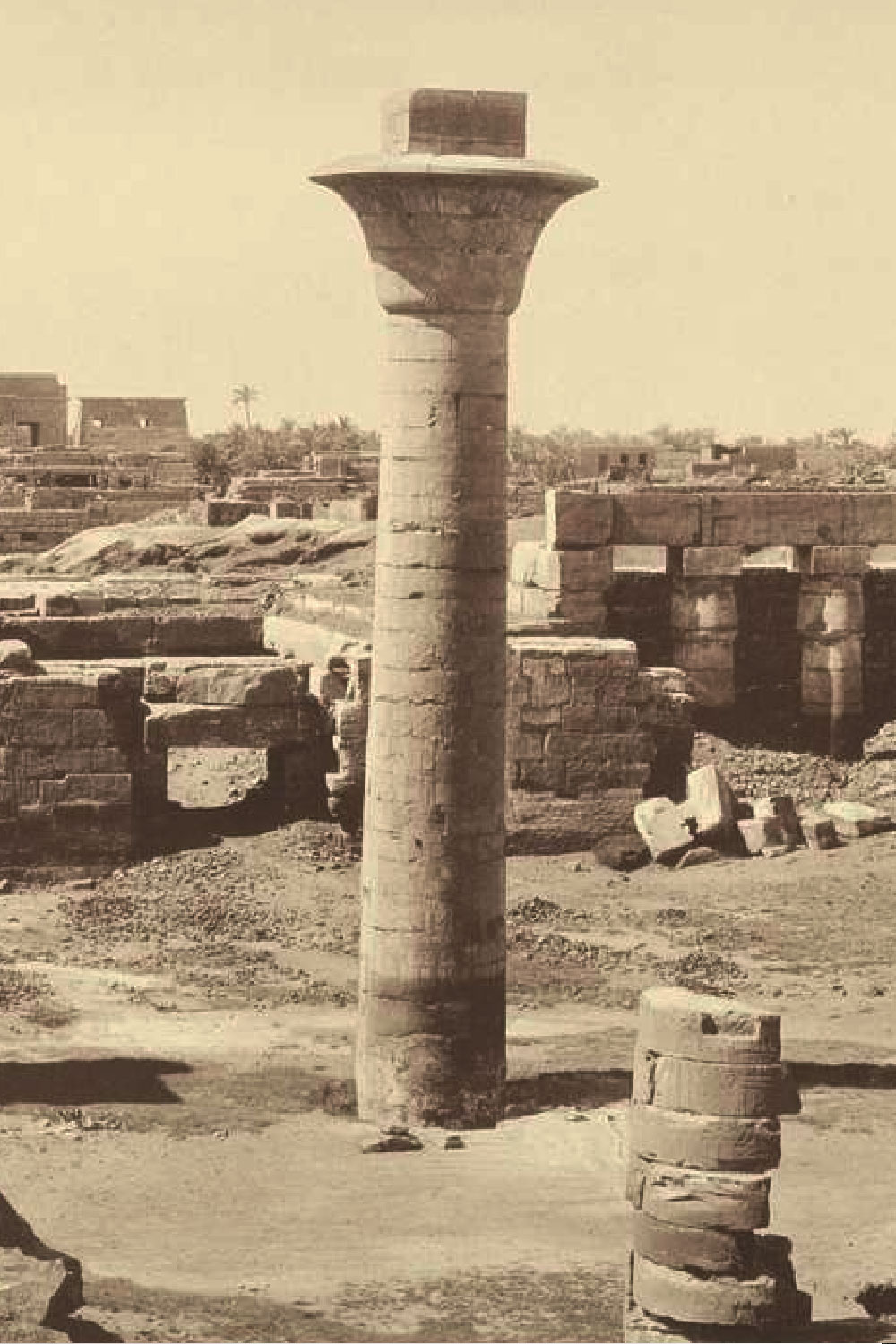
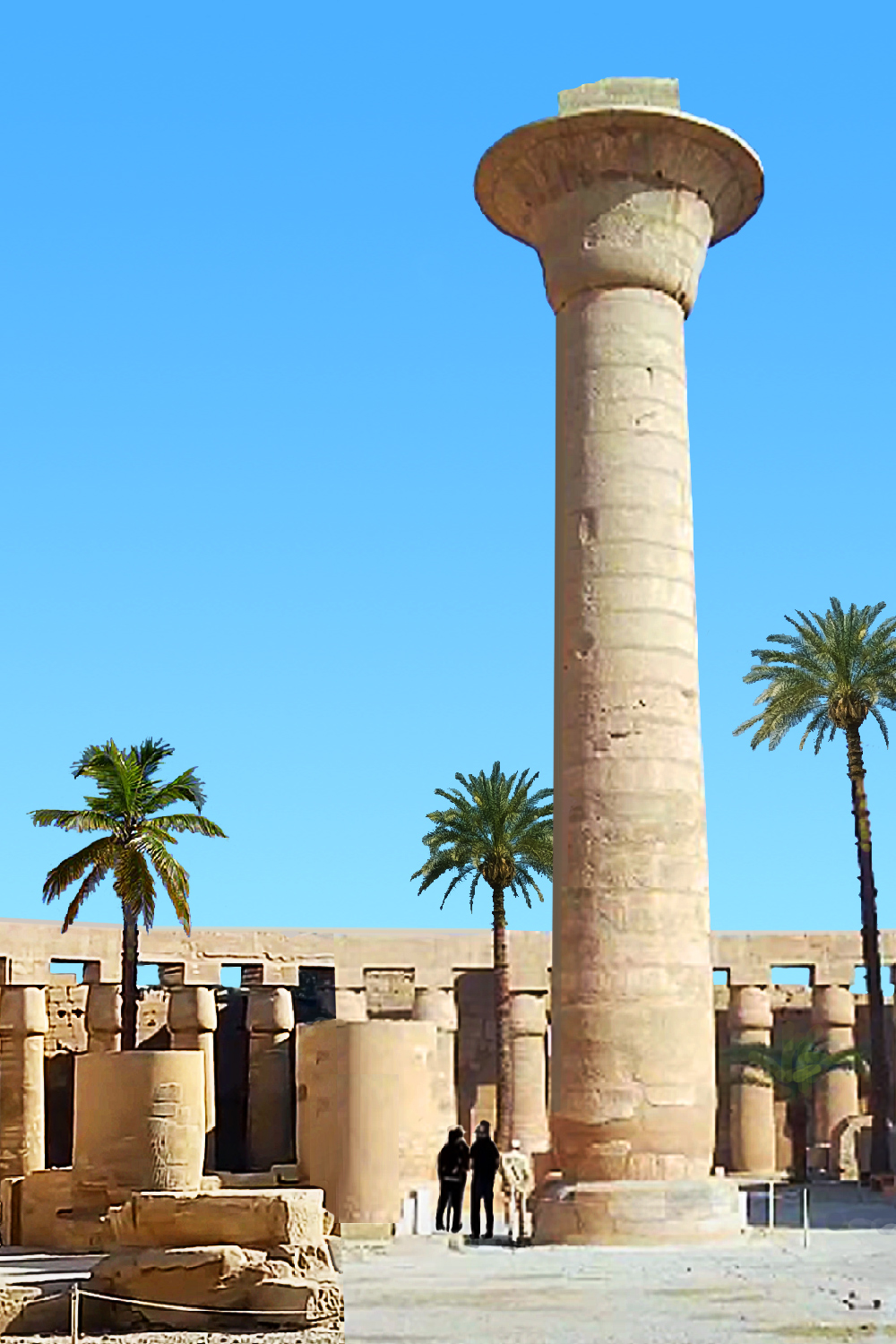 14.) The remaining colossal column of the Kiosk of Taharqa, built by the 25th Dynasty pharaoh Taharqa (690-664 B.C.)
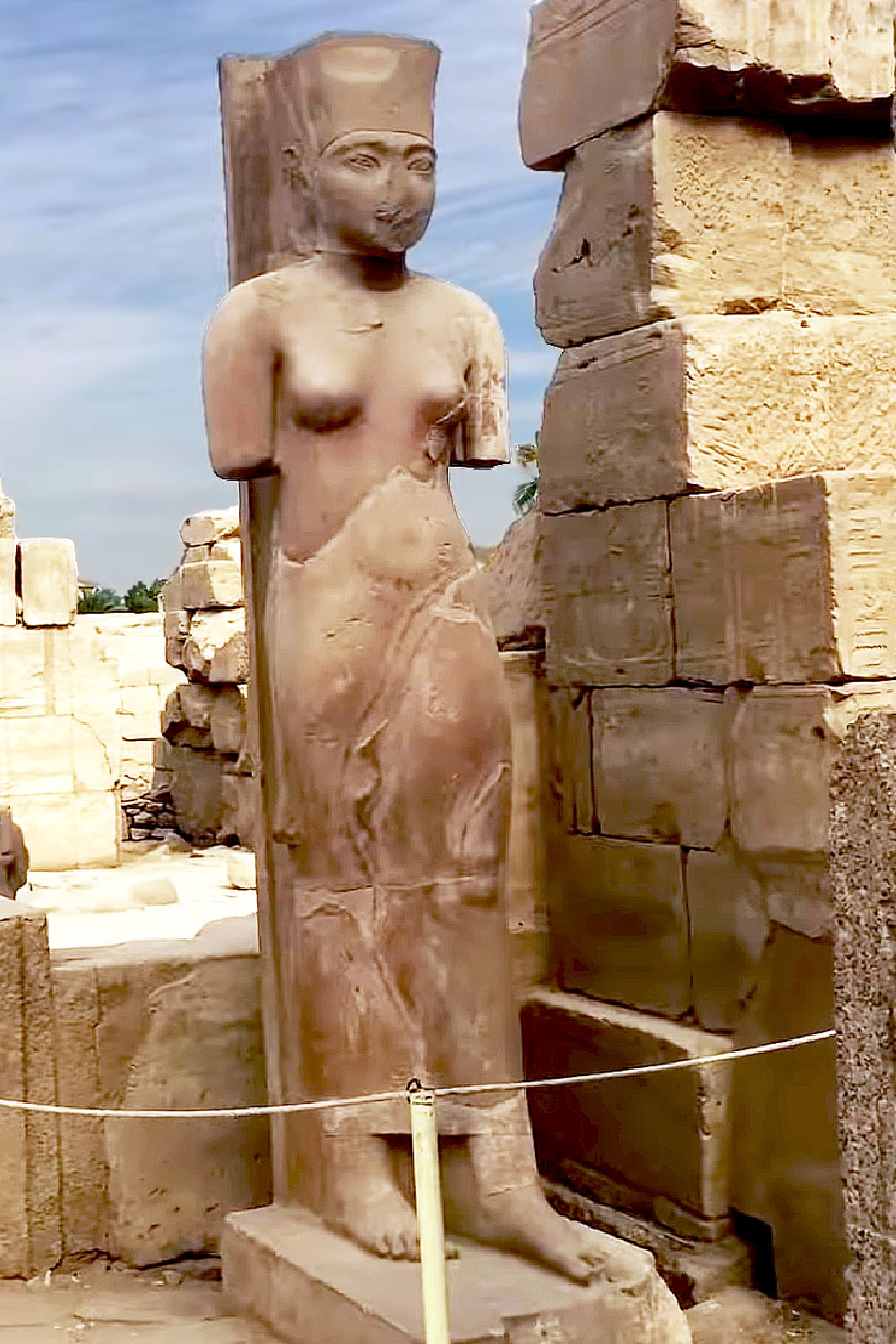
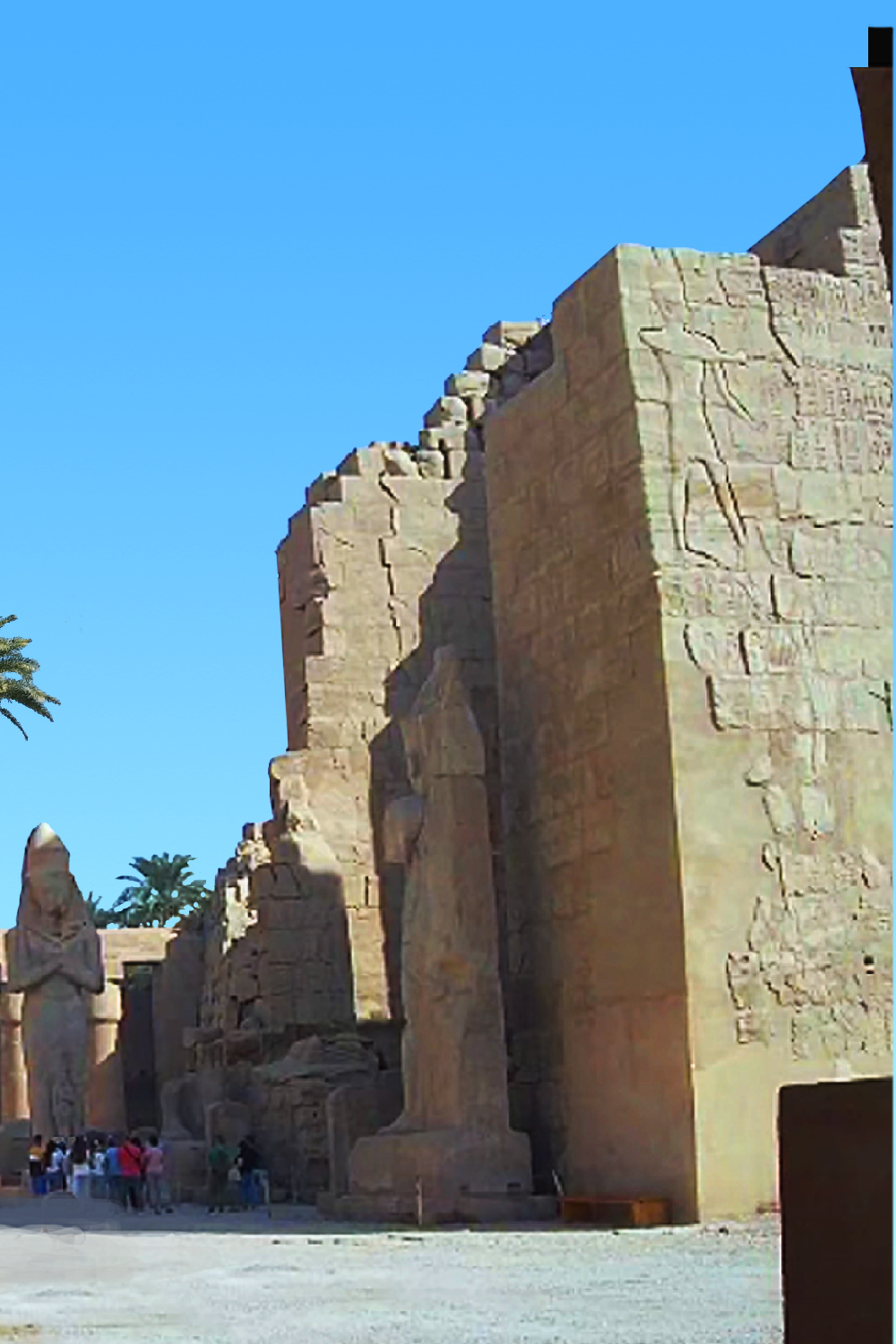 15.) Colossal statue of Ramses II with his daughter, Princess Bintanath, Red Granite
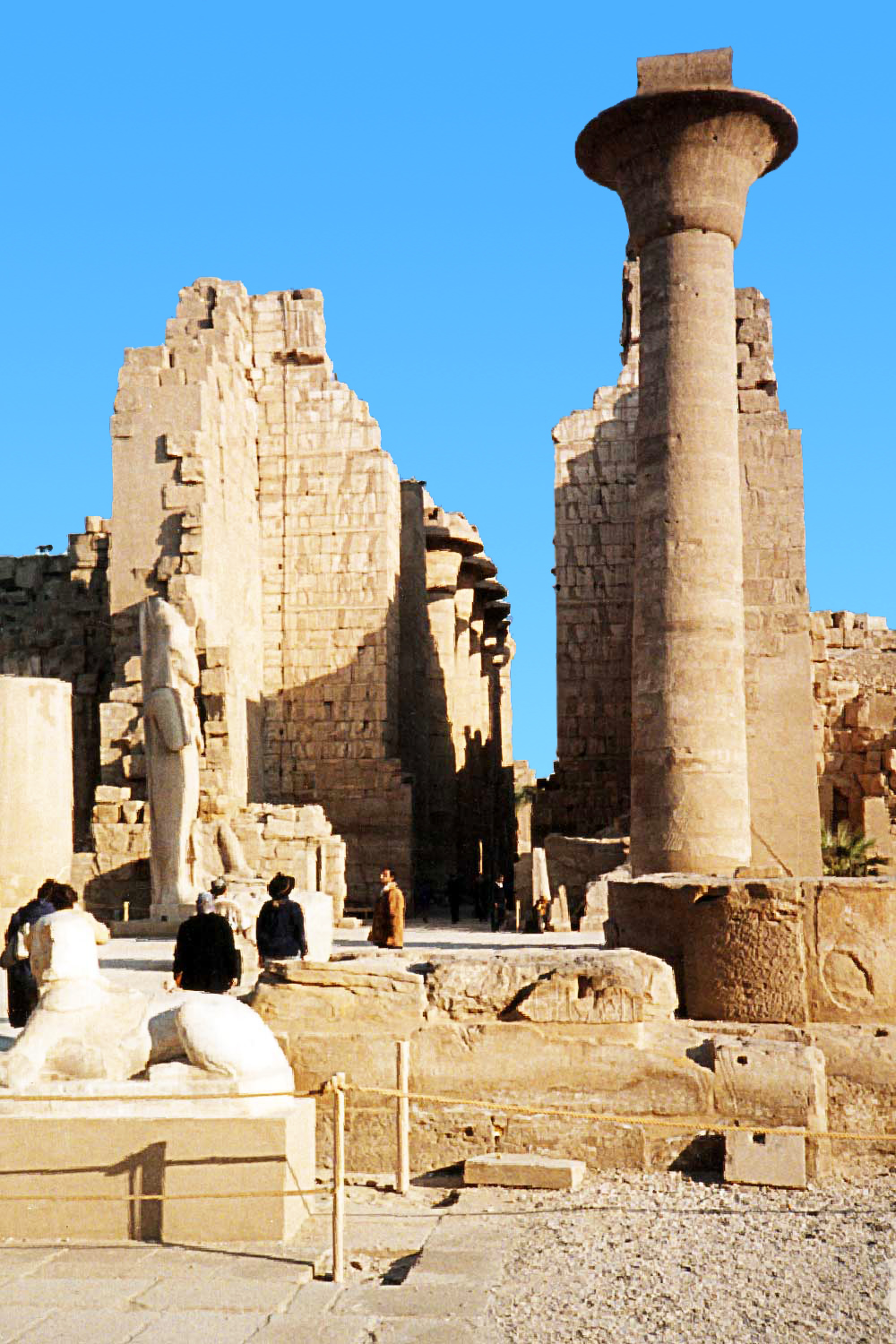 Great Temple of Karnak forecourt the main entrance into the temple, a direct view of colossal column of the Kiosk of Taharqa
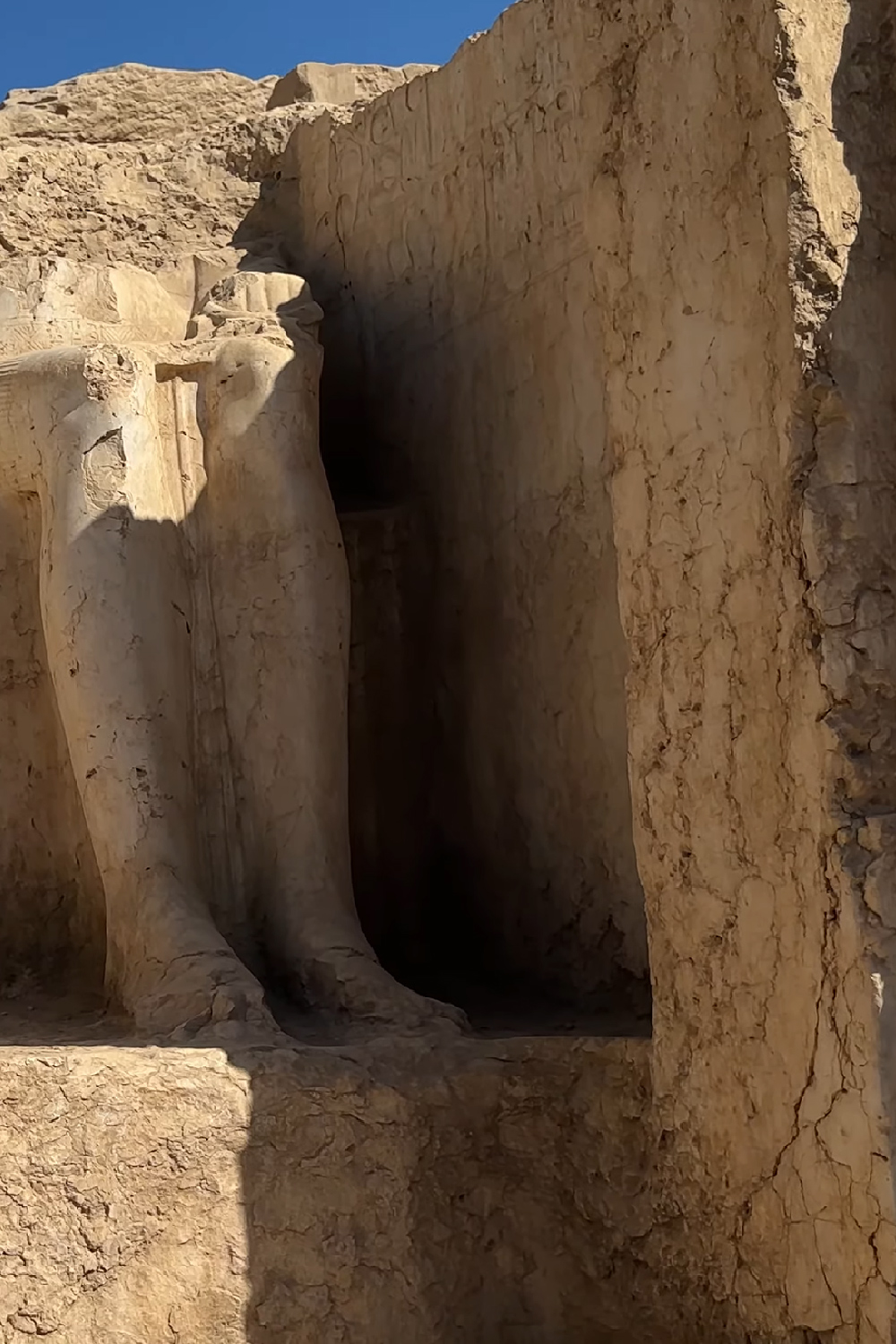
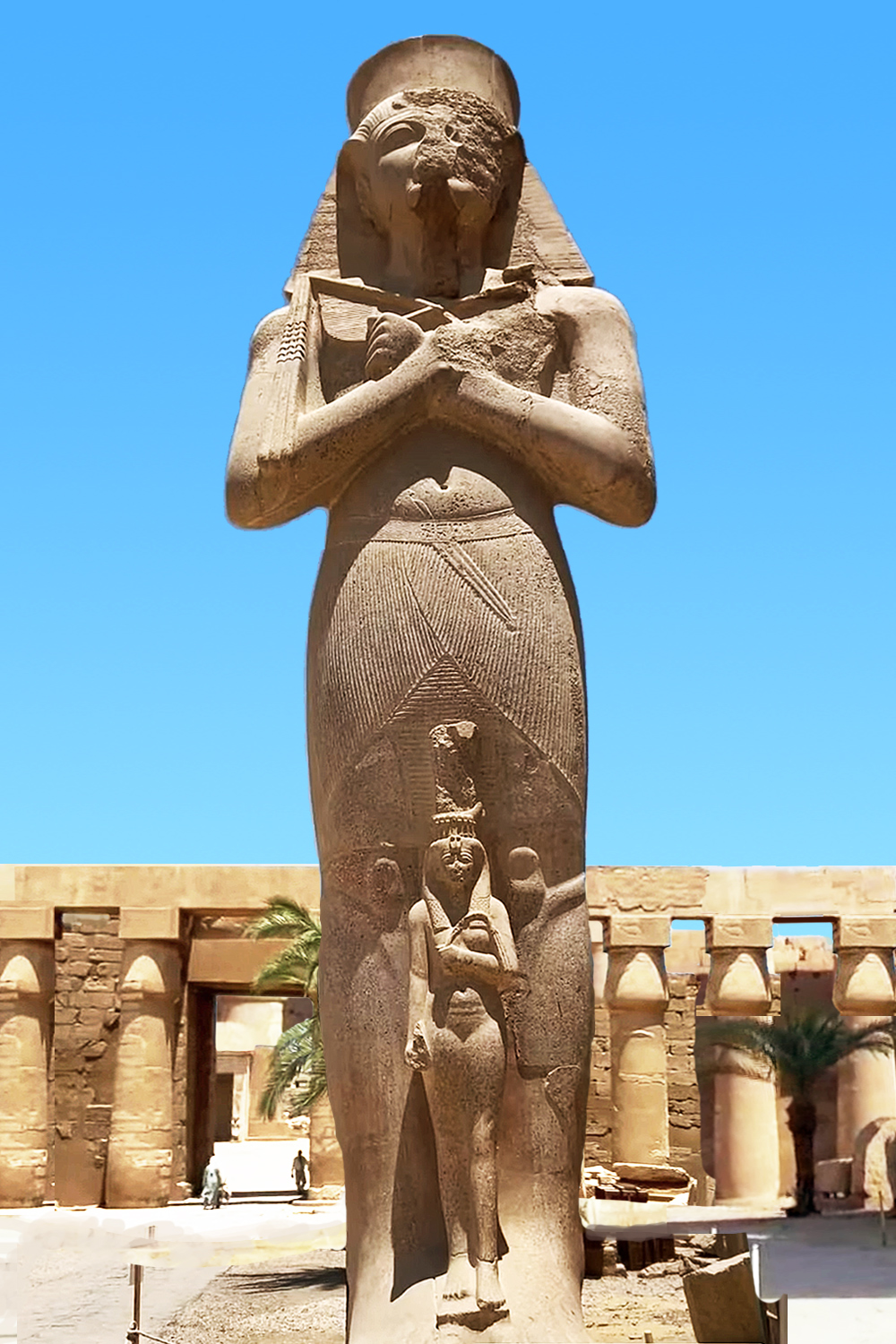 Close-up view of colossal statue (red granite) of Ramses II with his daughter, Princess Bintanath on the left side entrance of Karnak Temple,
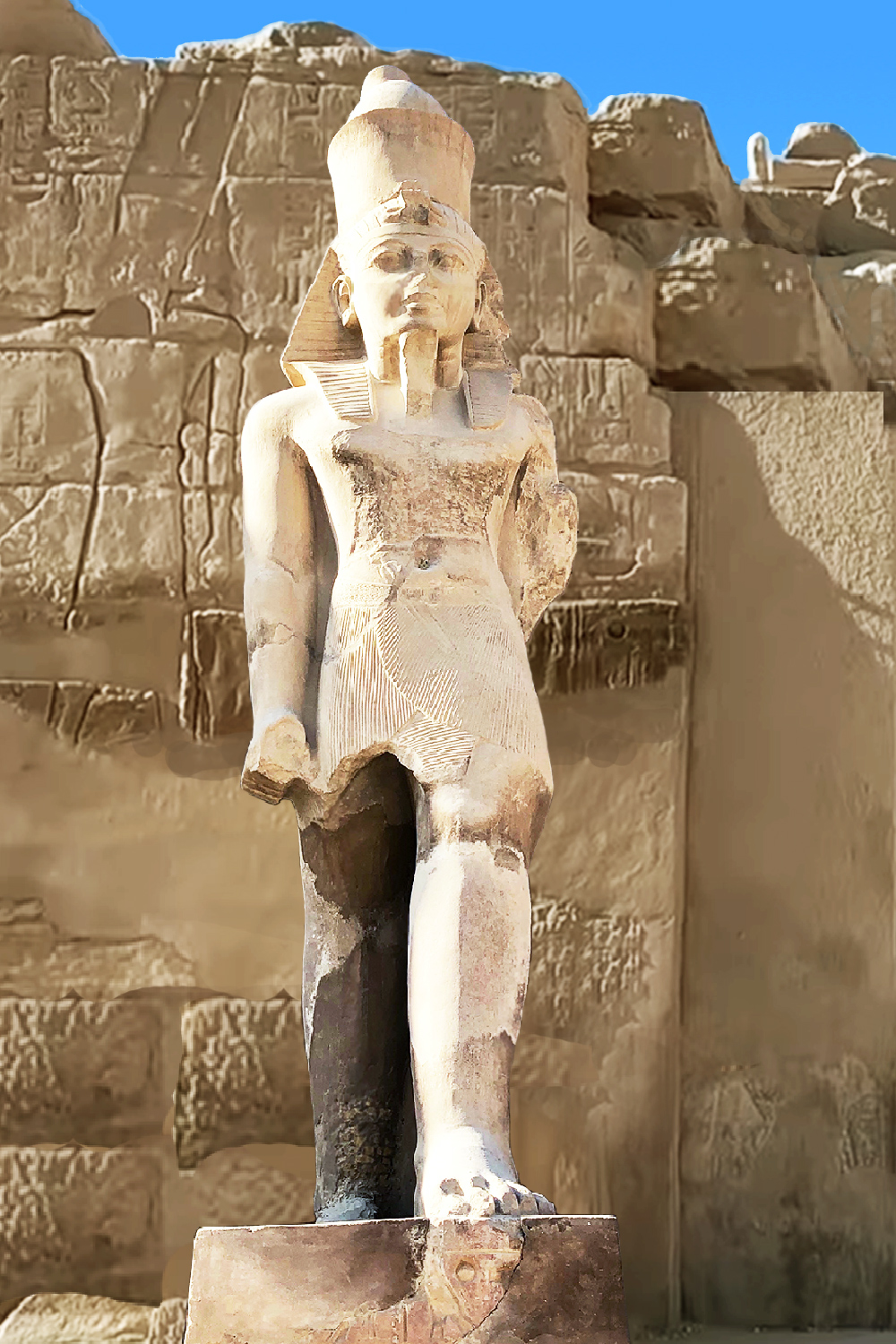
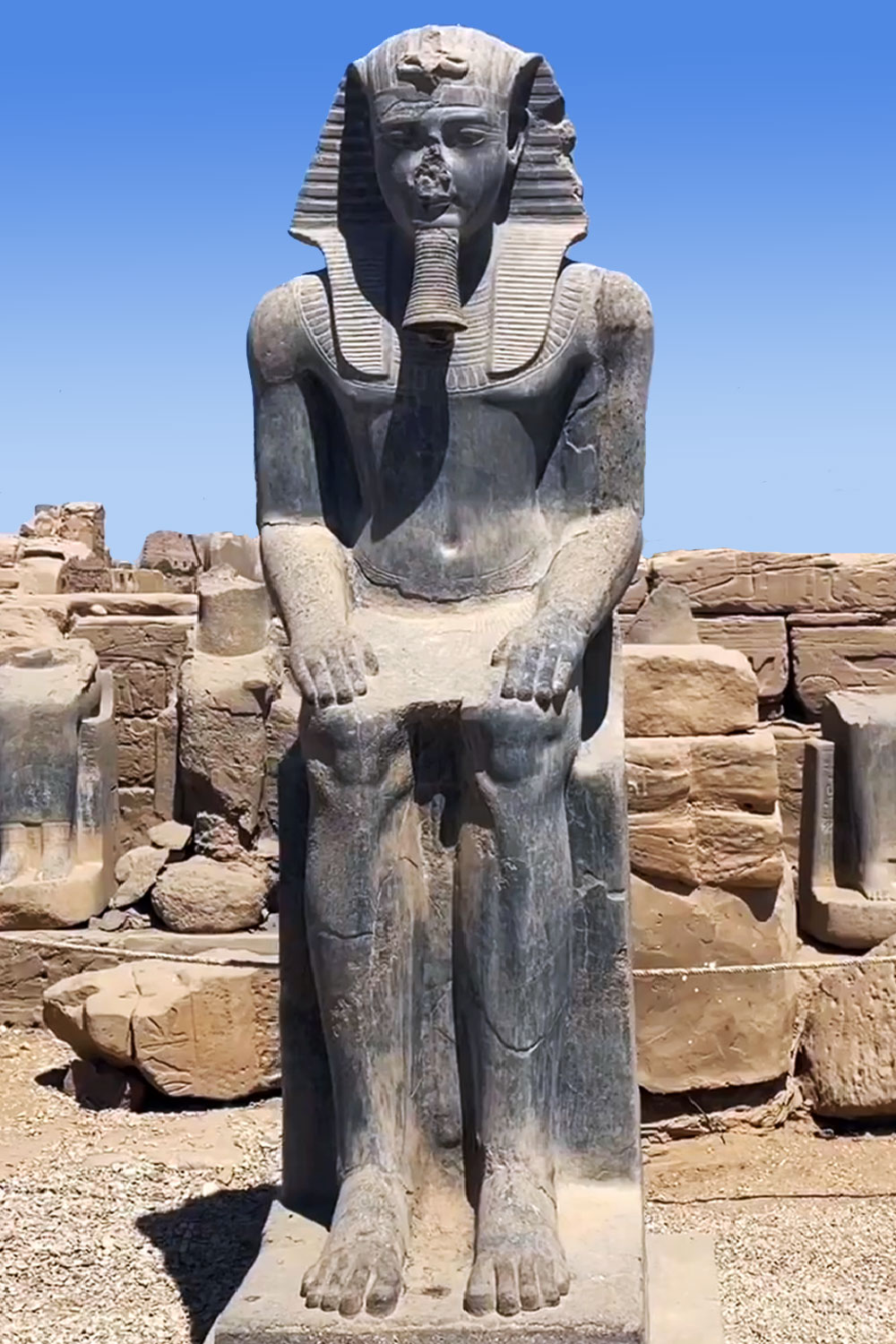
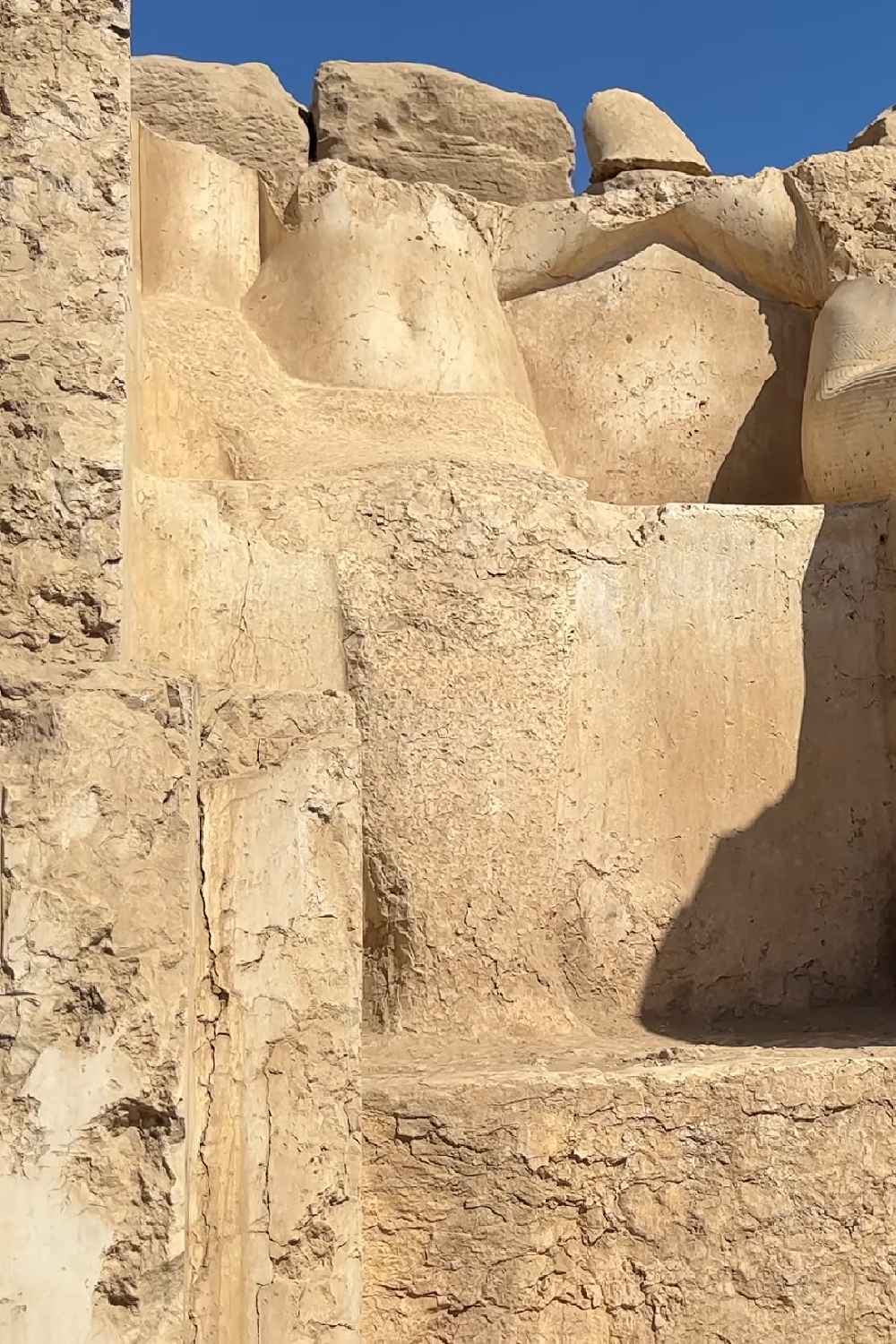
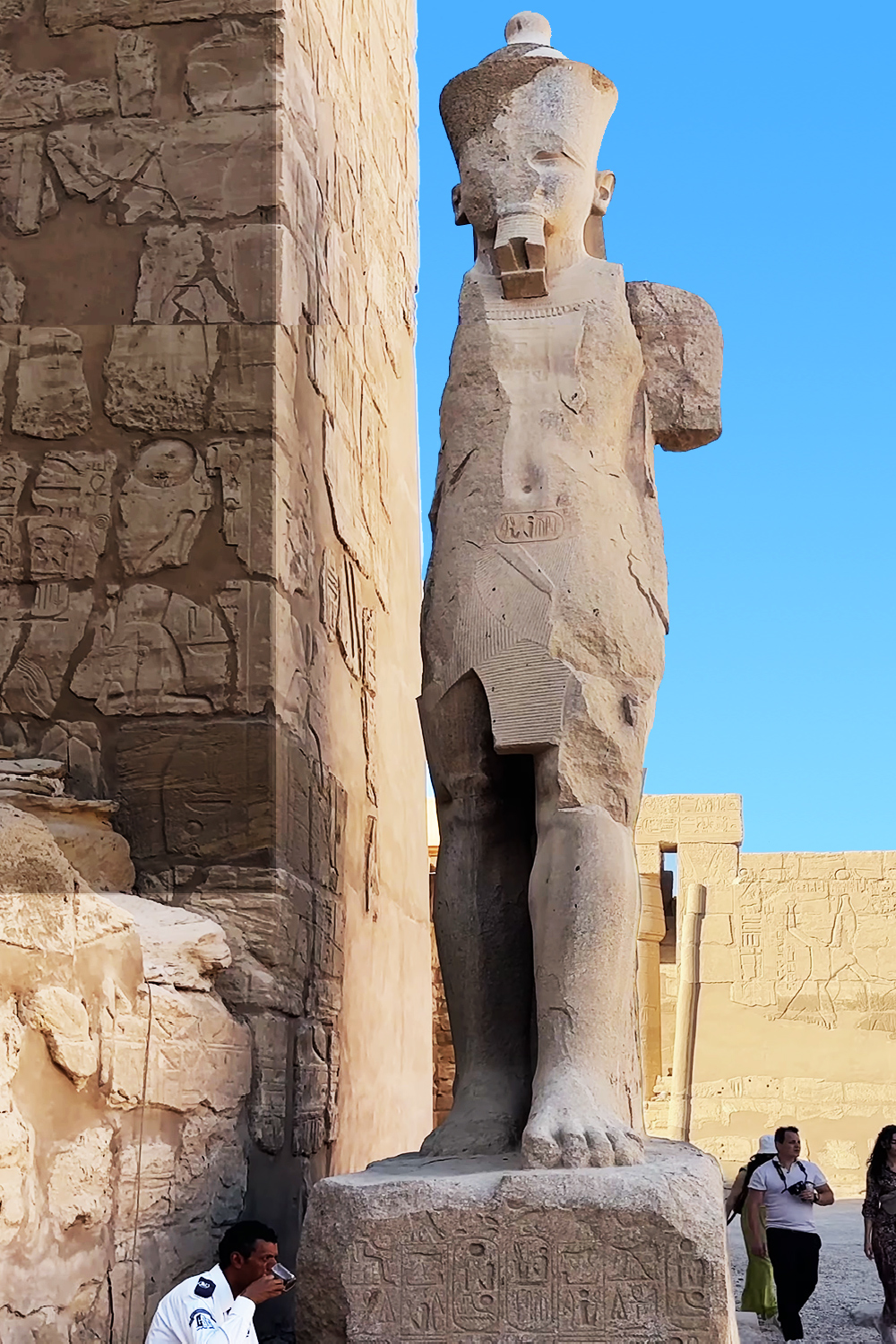 Colossal standing statue of Ramesses II, on the right side entrance of Karnak Temple, carved quartzite
The Wadjet Hall
Commissioned by Thutmose I in the early New Kingdom, the Wadjet Hall is a narrow, 75‑meter‑wide ceremonial space designed for royal coronations and Heb‑Sed jubilees—rituals
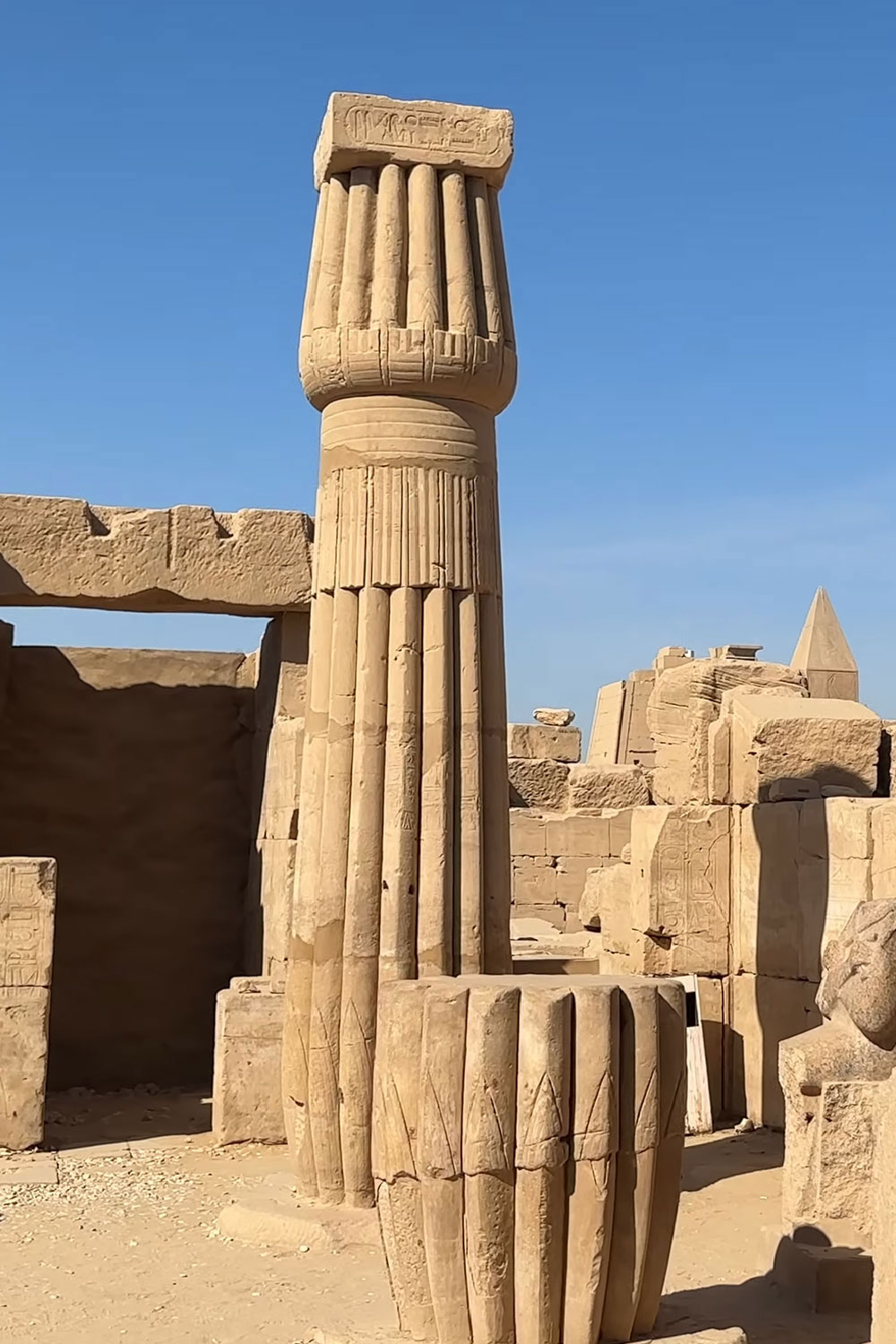
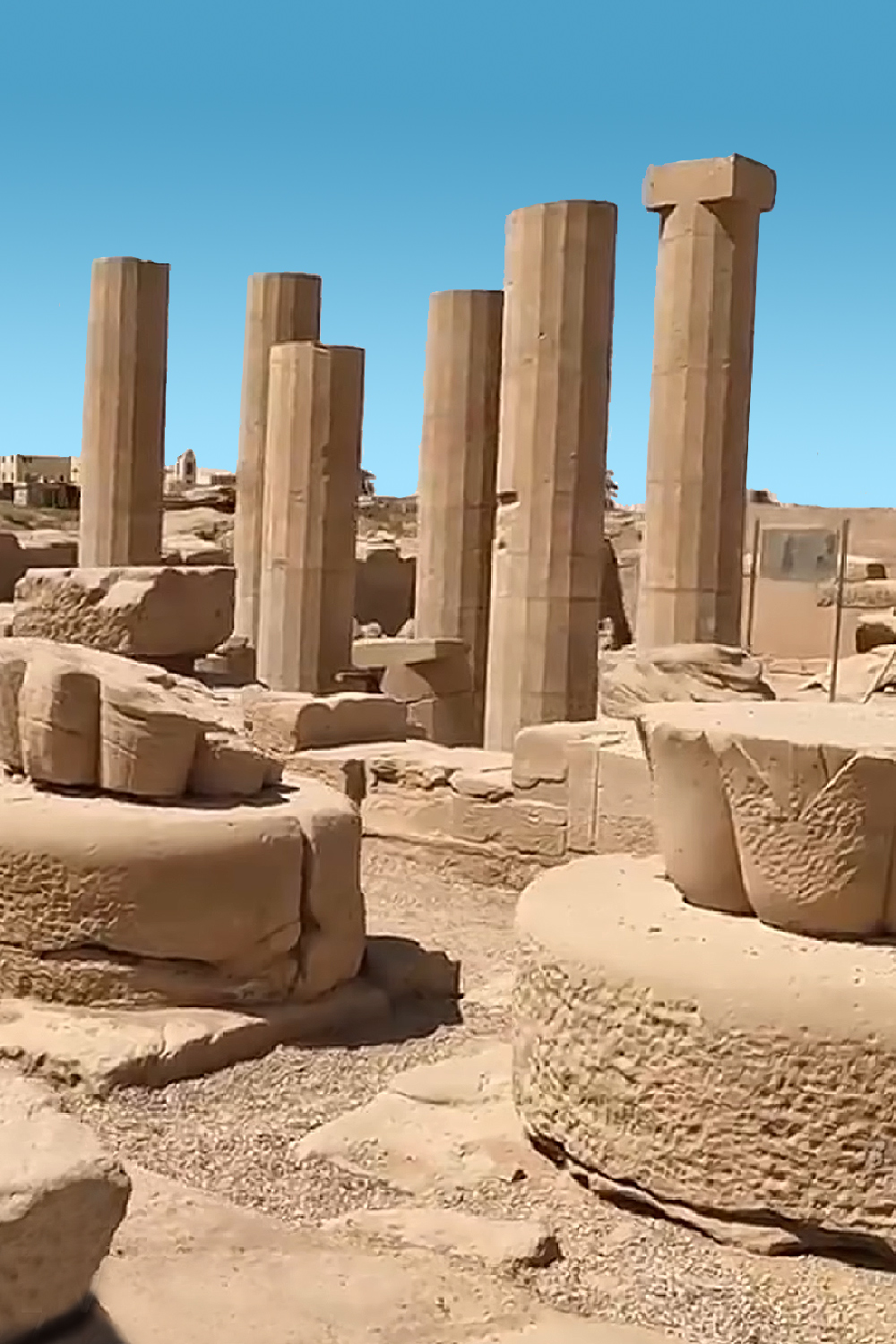
that renewed a pharaoh’s divine authority. Its Osirid statues present the king in the guise of Osiris, signaling eternal kingship, while the scattered papyrus‑column drums
recall Wadjet, the serpent goddess of Lower Egypt. Though later overshadowed by the vast Great Hypostyle Hall, the Wadjet Hall remains a key monument of early New Kingdom
statecraft, engineering, and royal ideology.
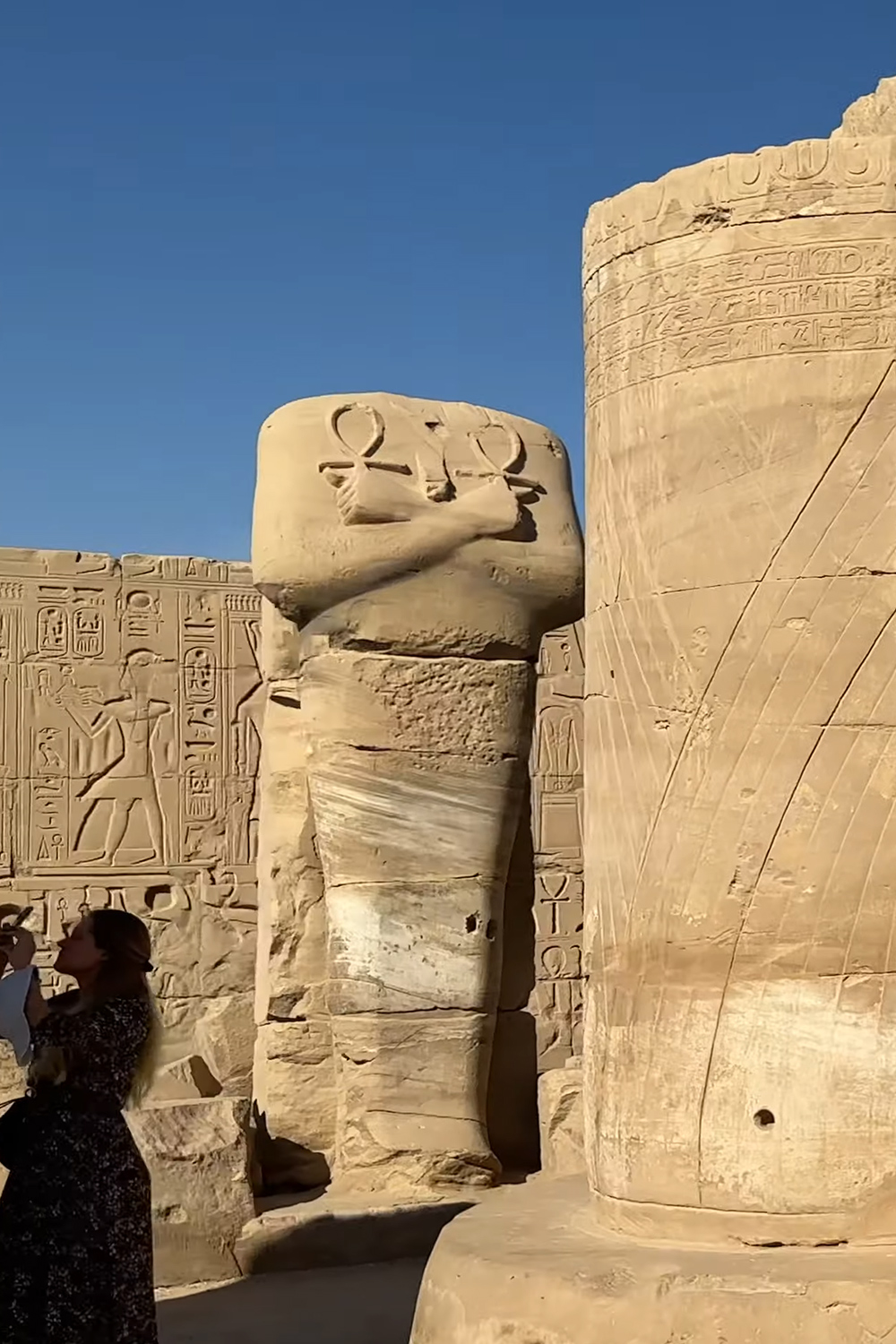
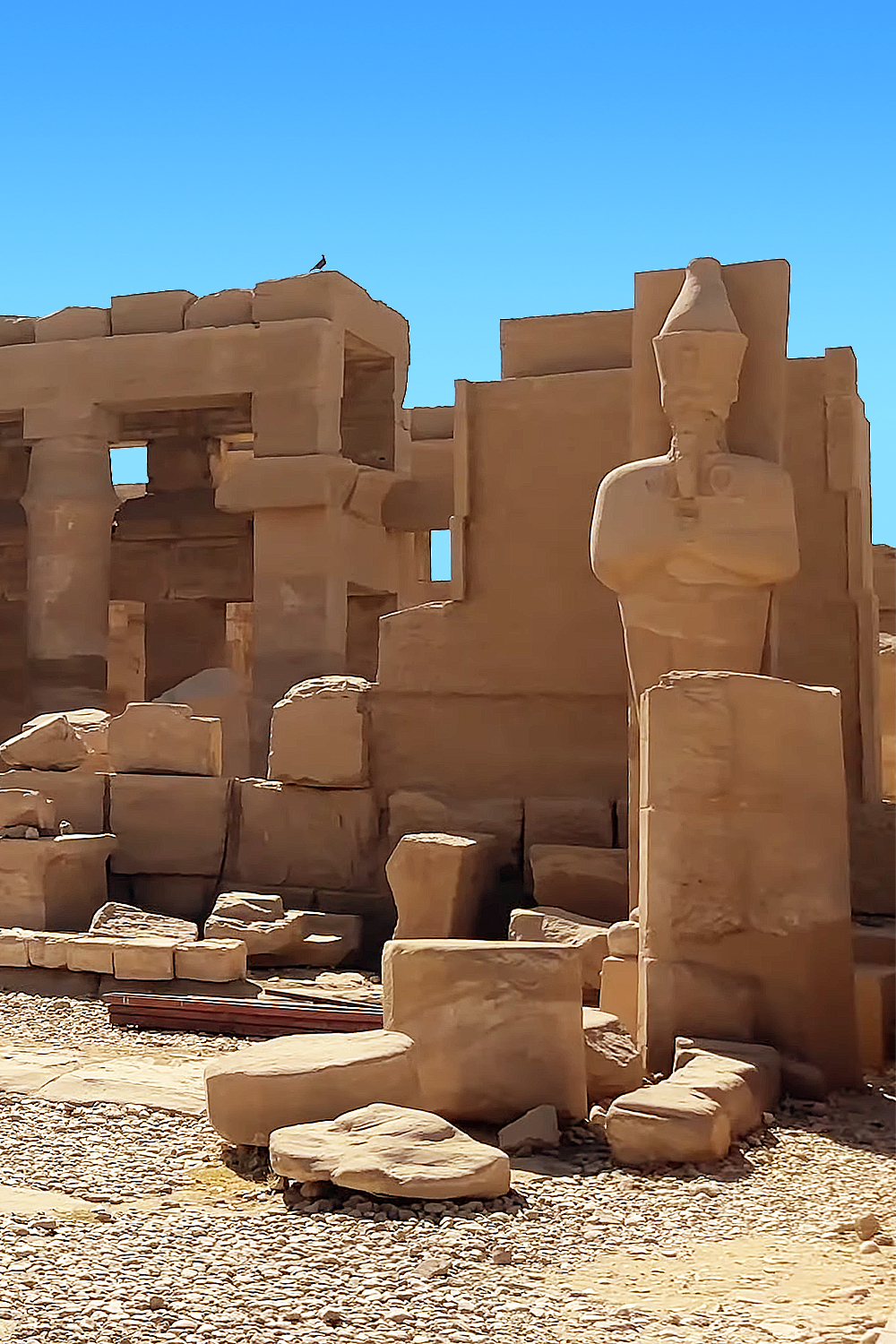
 A row of weathered sandstone Osirian statues with crossed arms and the ankh symbol of life, inside the vast Karnak Temple Complex carved sandstone, 1500 BCE, Wadjet Hall
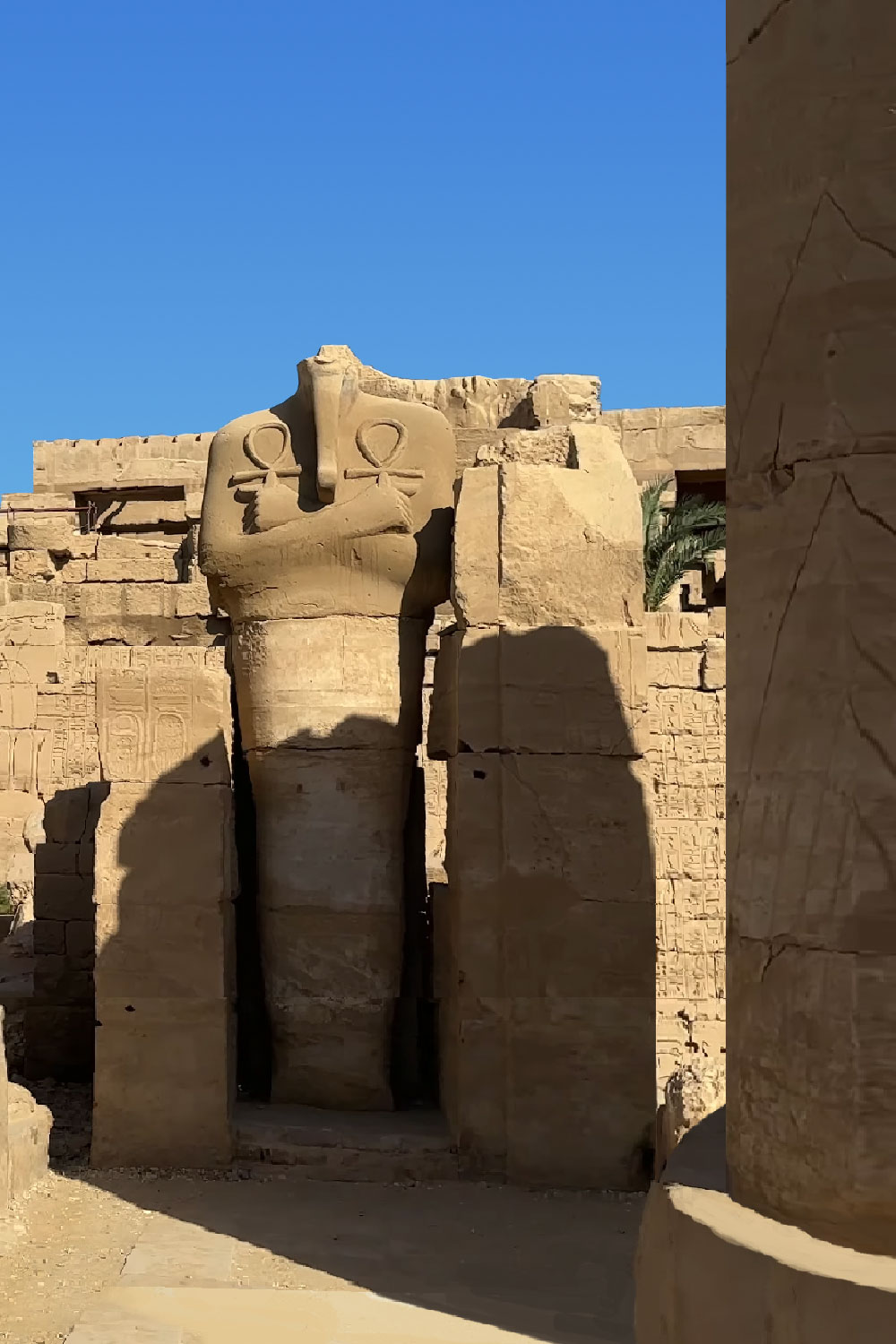
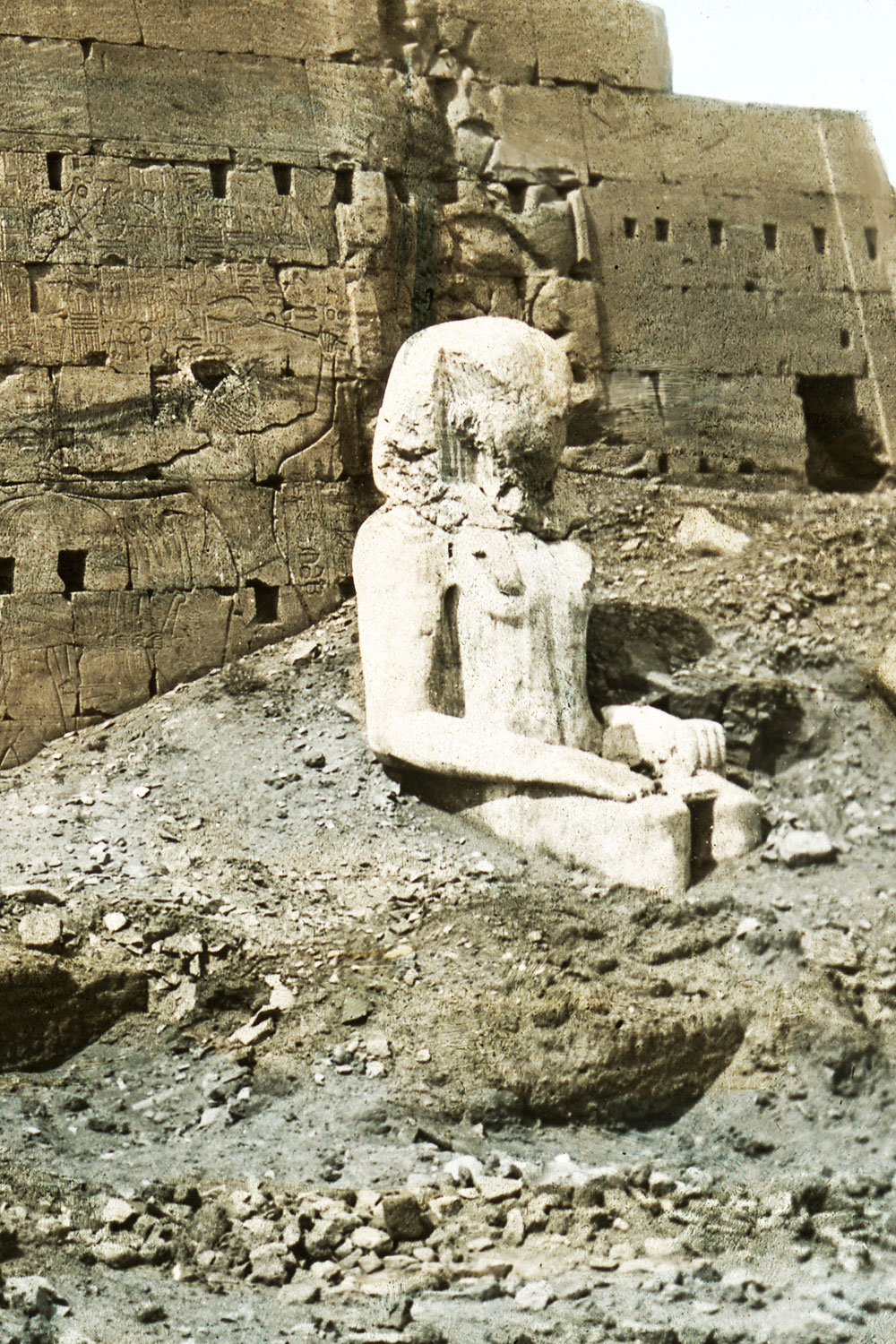
 Carved sandstone Osirian statues depicting the pharaoh Thutmose I in the guise of the god Osiris, with a mummy-wrapped body and arms crossed over the chest holding an ankh—the symbol for "life"—in each hand, in the precinct dedicated to Amun-Ra, Wadjet Hall
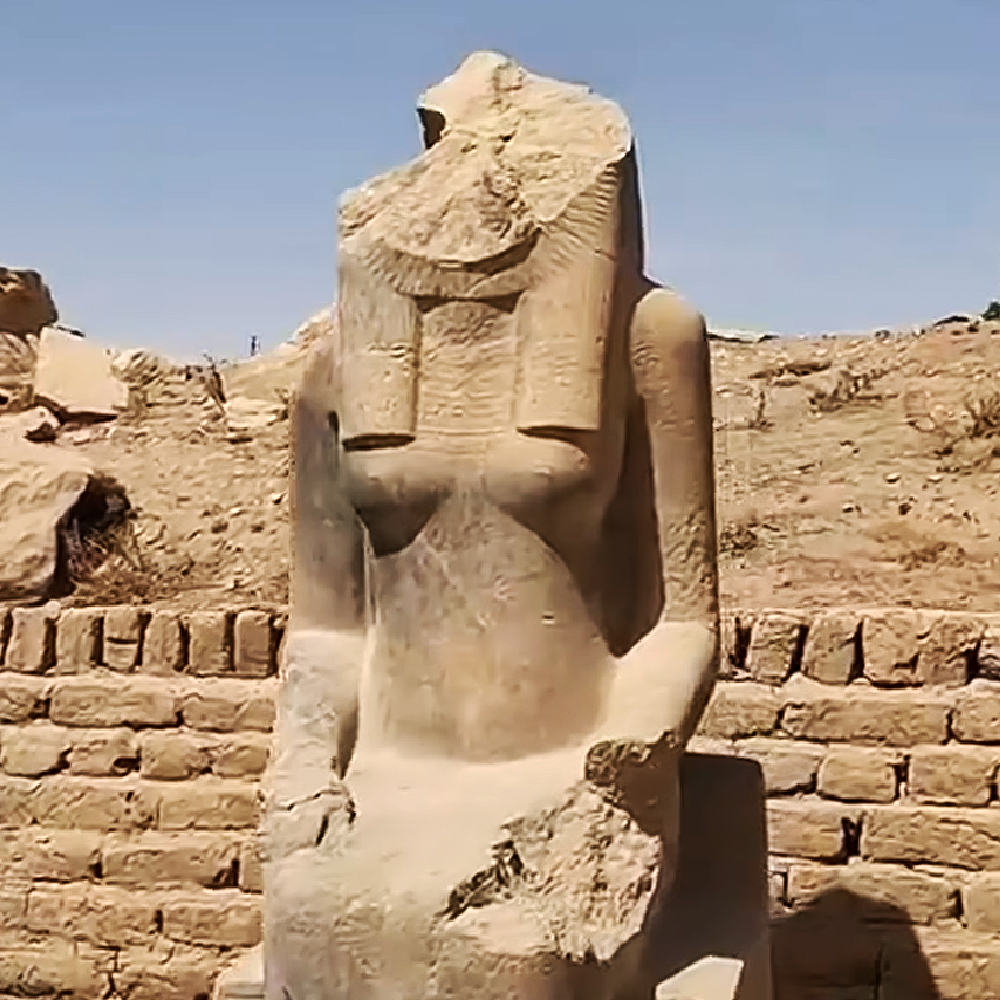
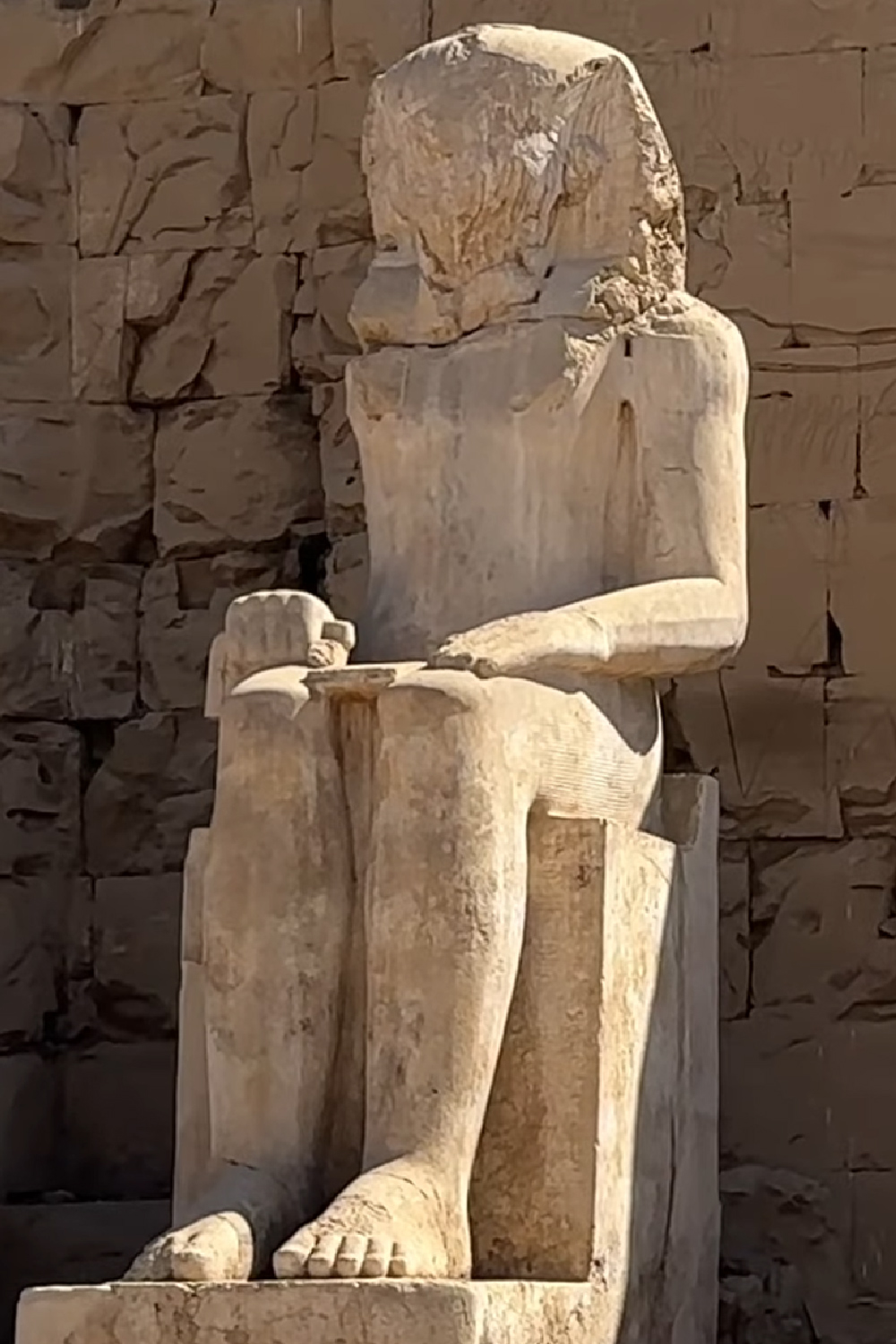
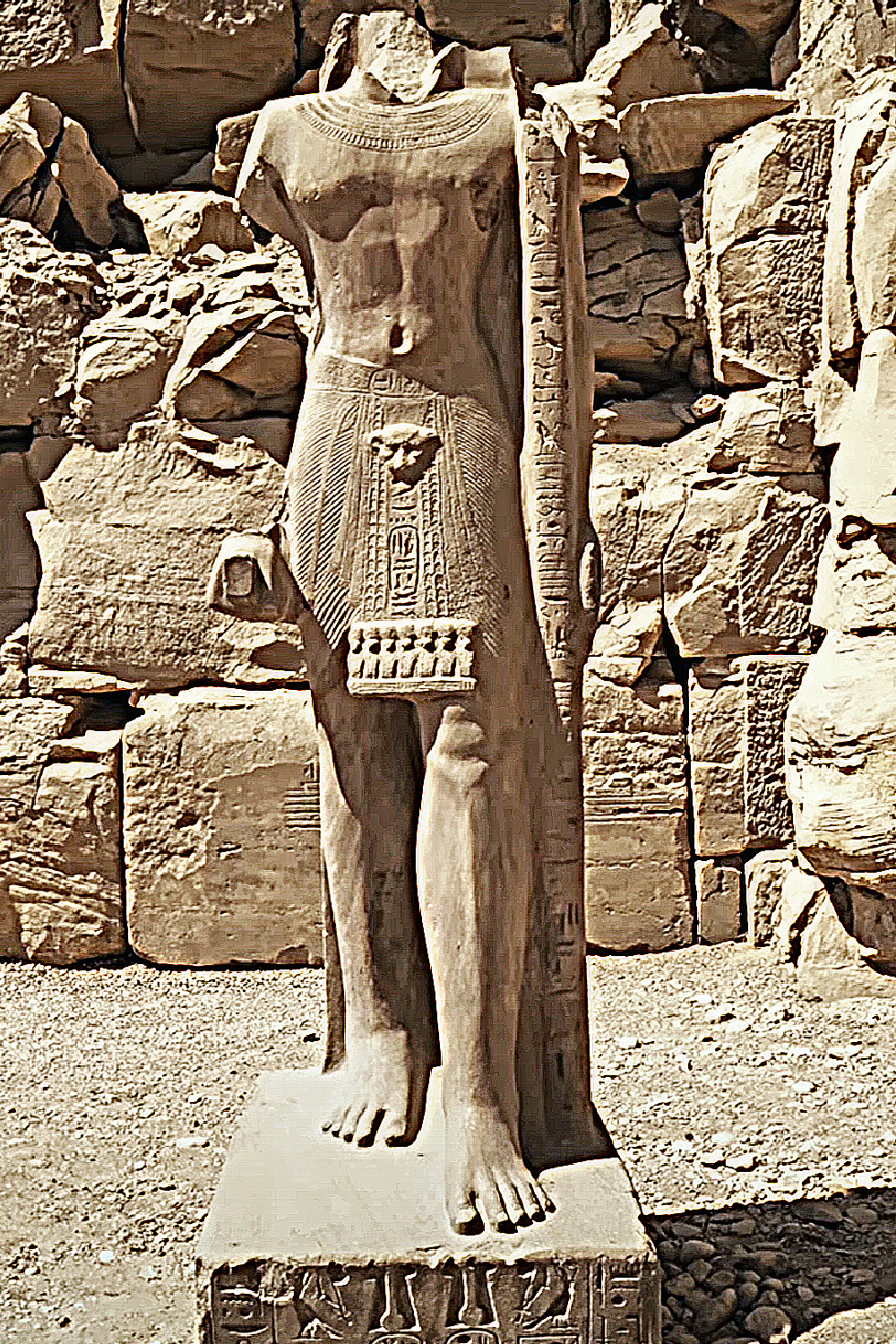
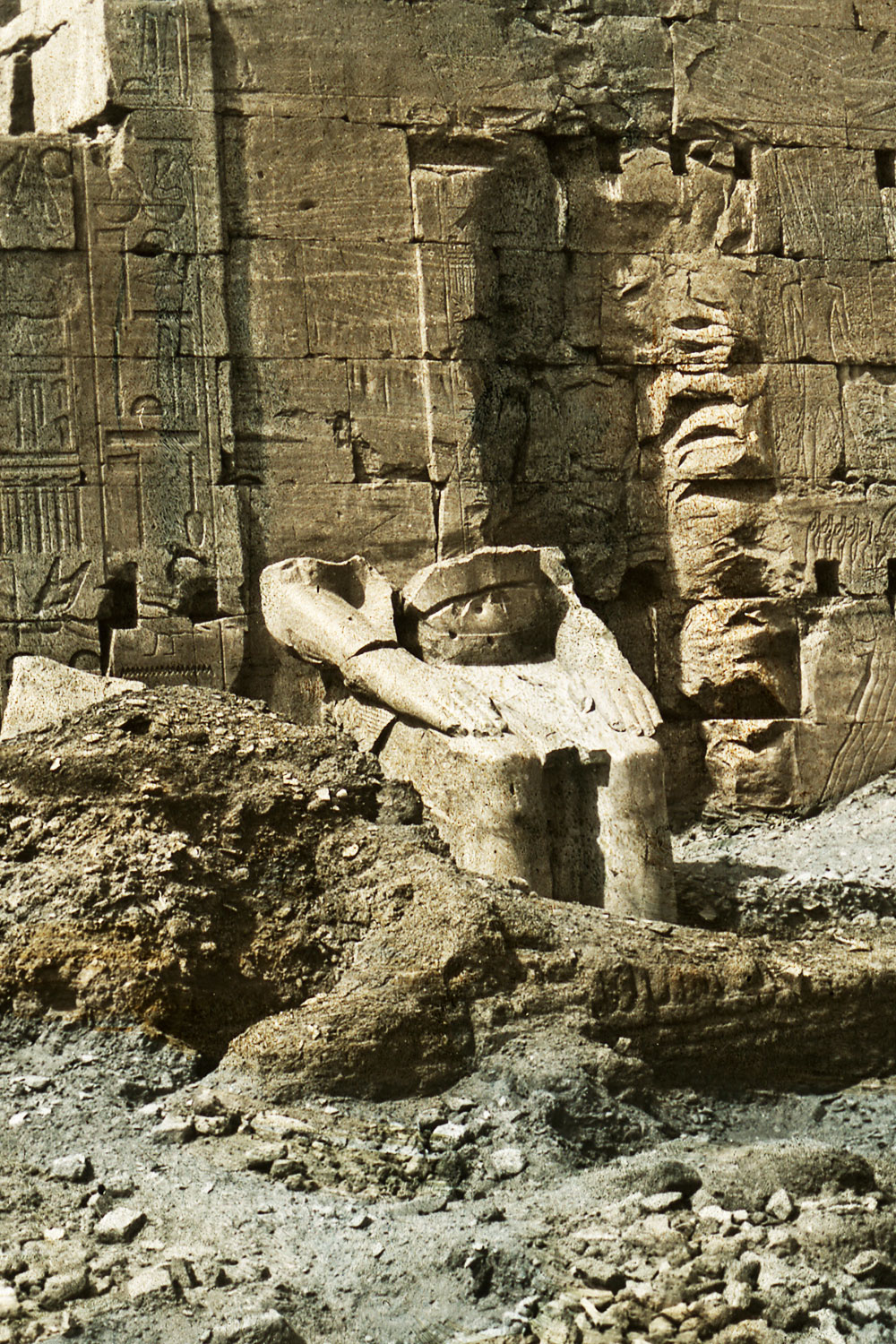
 Headless Osiride identified as pharaoh Thutmose I with a mummy-wrapped body and arms crossed over the chest holding an ankh—the symbol for "life"—in each hand, carved sandstone, Wadjet Hall, 15th century BCE.
 A row of weathered sandstone Osirian statues with crossed arms and the ankh symbol of life, inside the vast Karnak Temple Complex carved sandstone, 1500 BCE, Wadjet Hall
 Carved sandstone Osirian statues depicting the pharaoh Thutmose I in the guise of the god Osiris, with a mummy-wrapped body and arms crossed over the chest holding an ankh—the symbol for "life"—in each hand, in the precinct dedicated to Amun-Ra, Wadjet Hall
 Headless Osiride identified as pharaoh Thutmose I with a mummy-wrapped body and arms crossed over the chest holding an ankh—the symbol for "life"—in each hand, carved sandstone, Wadjet Hall, 15th century BCE.
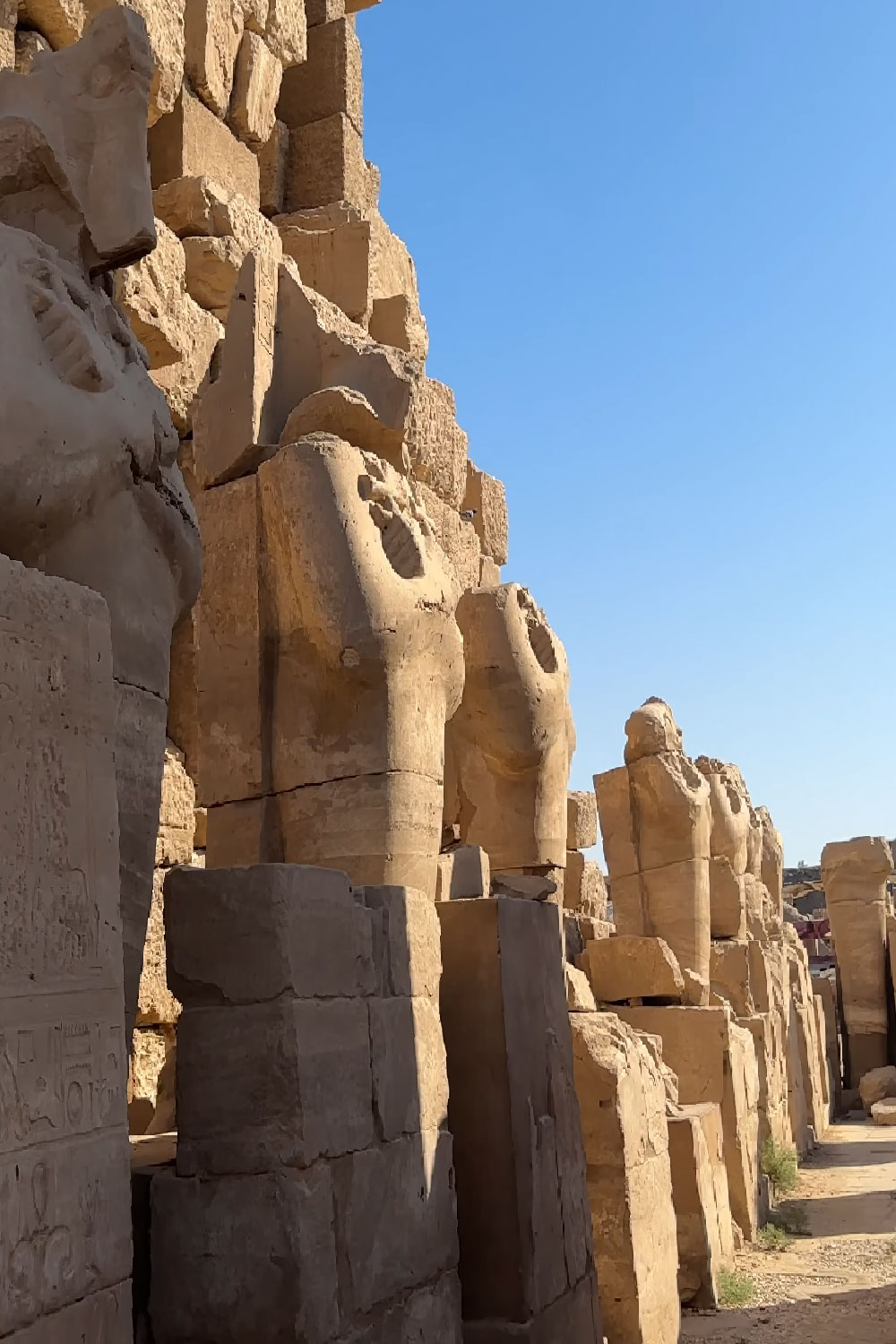 A row of weathered sandstone Osirian statues with crossed arms and the ankh symbol of life, inside the vast Karnak Temple Complex carved sandstone, 1500 BCE, Wadjet Hall
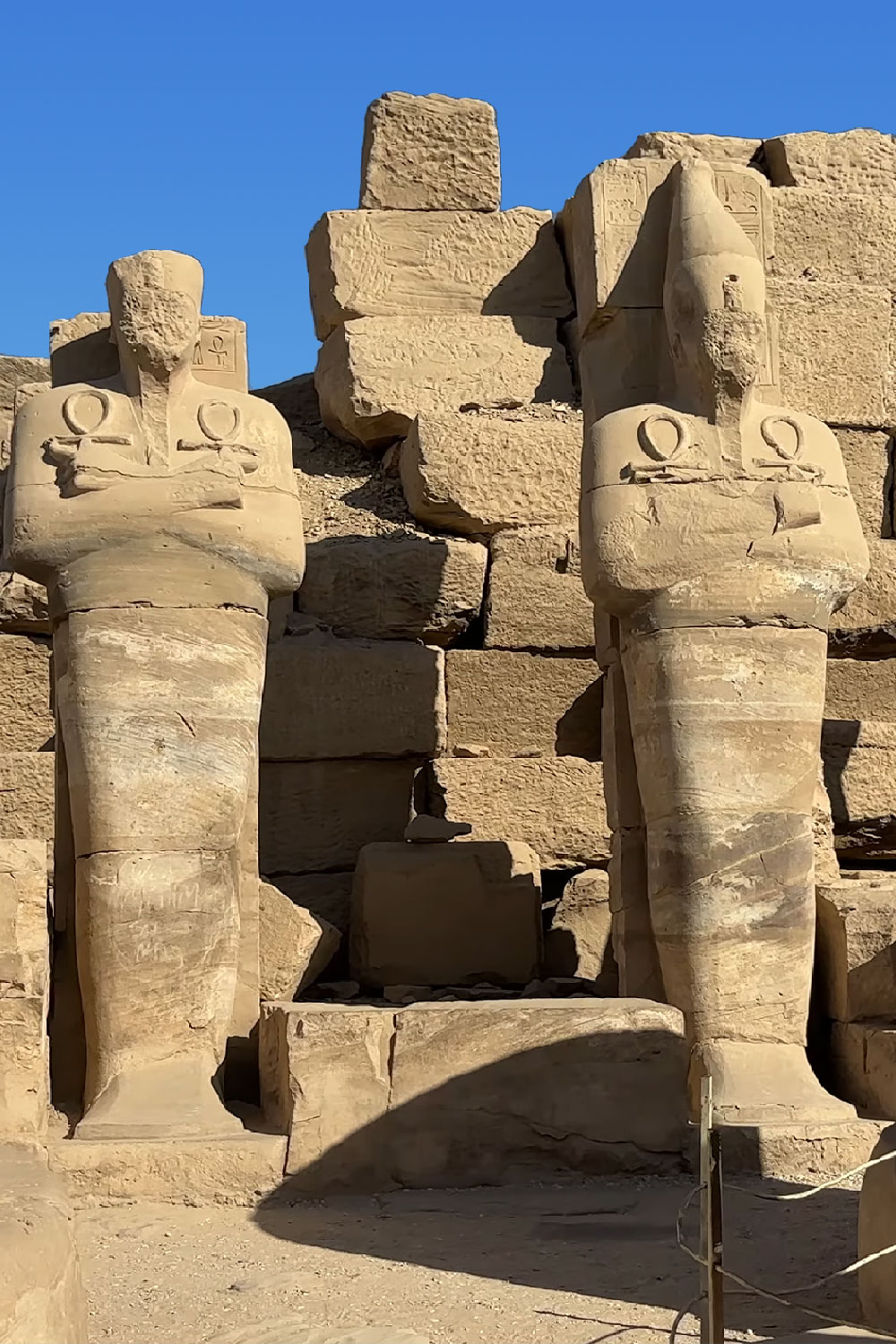 Carved sandstone Osirian statues depicting the pharaoh Thutmose I in the guise of the god Osiris, with a mummy-wrapped body and arms crossed over the chest holding an ankh—the symbol for "life"—in each hand, in the precinct dedicated to Amun-Ra, Wadjet Hall
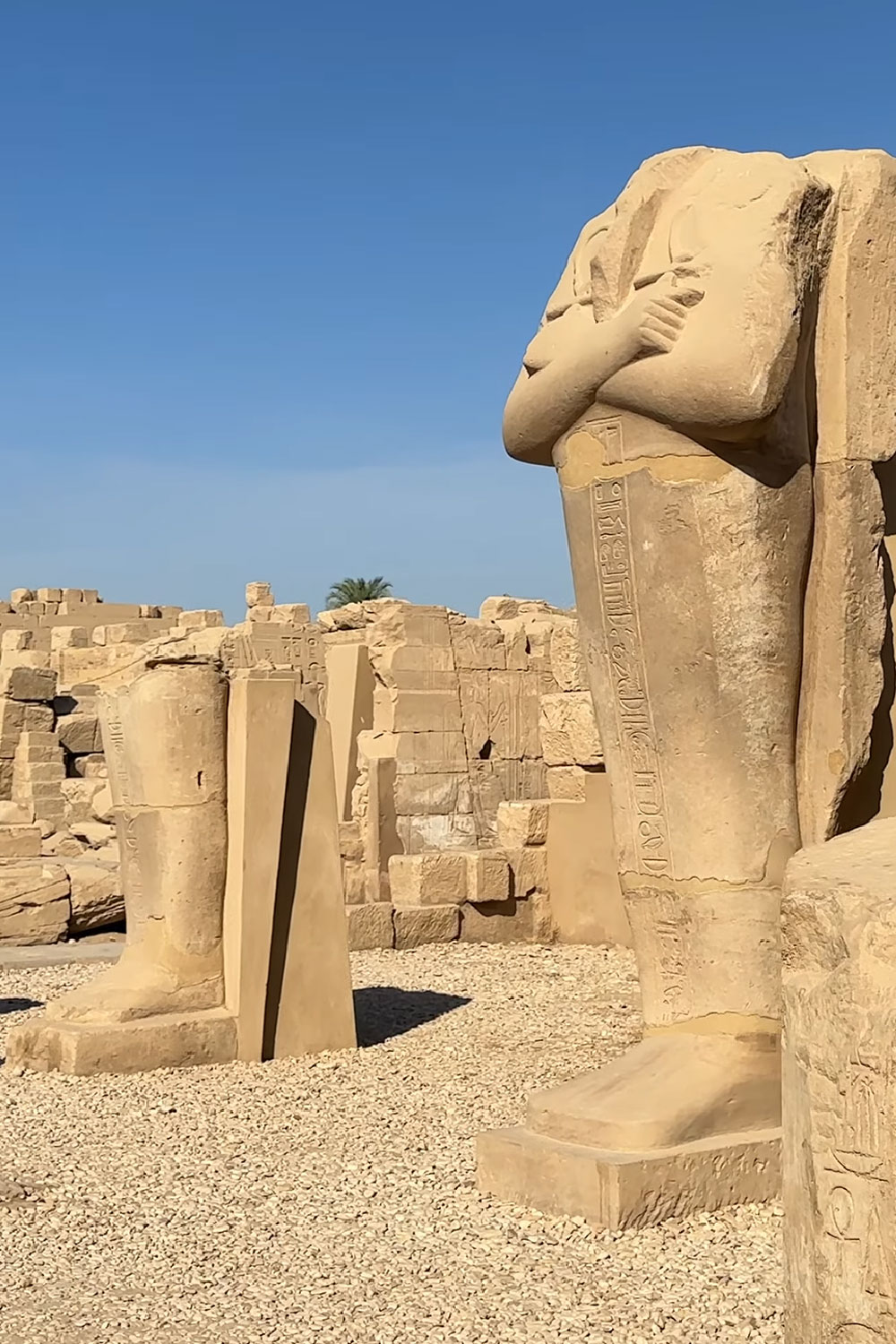 Headless Osiride identified as pharaoh Thutmose I with a mummy-wrapped body and arms crossed over the chest holding an ankh—the symbol for "life"—in each hand, carved sandstone, Wadjet Hall, 15th century BCE.
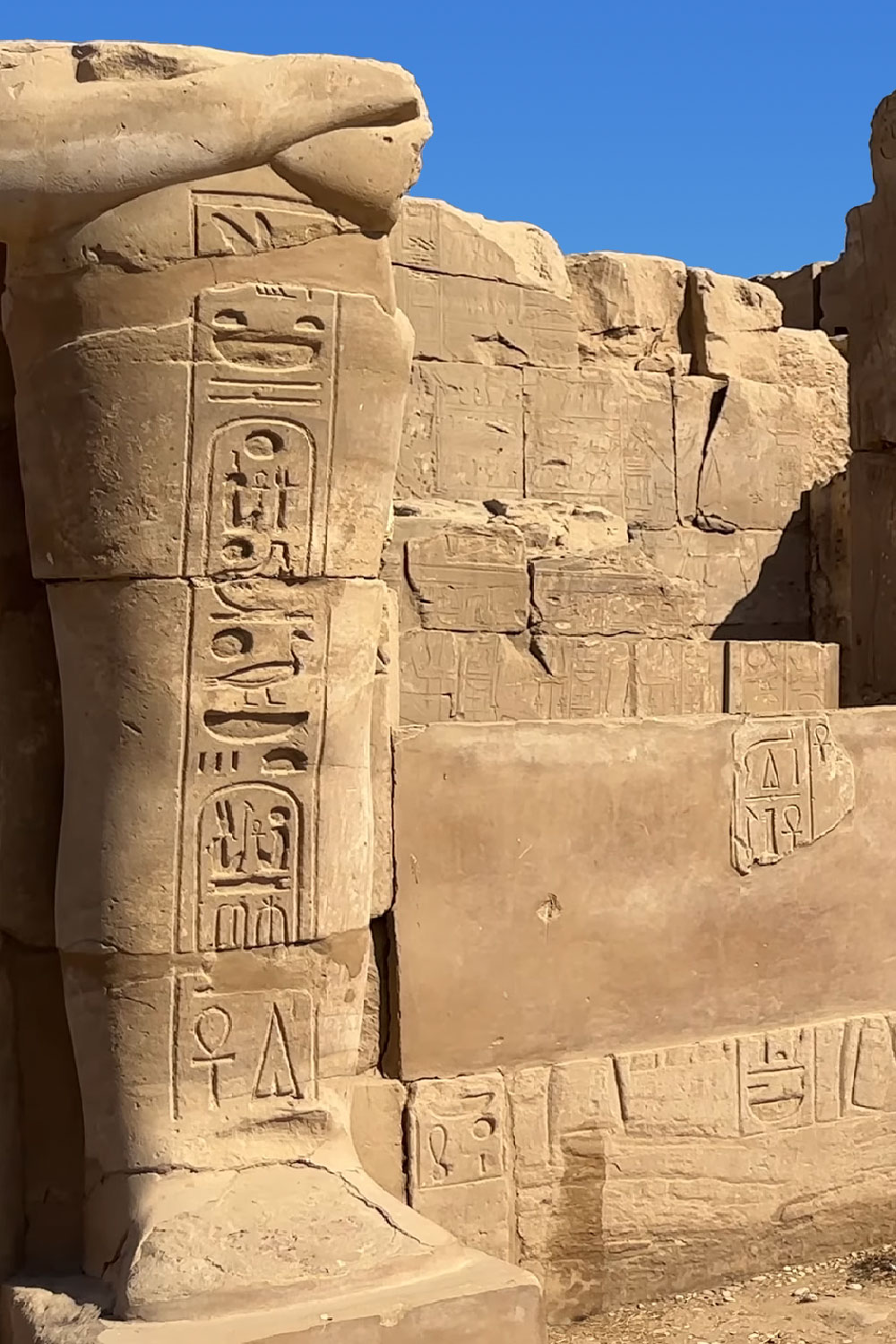 1.) A row of headless osiride colossi statues identified as pharaoh Thutmose I, with mummy-wrapped bodies and arms crossed over the chest
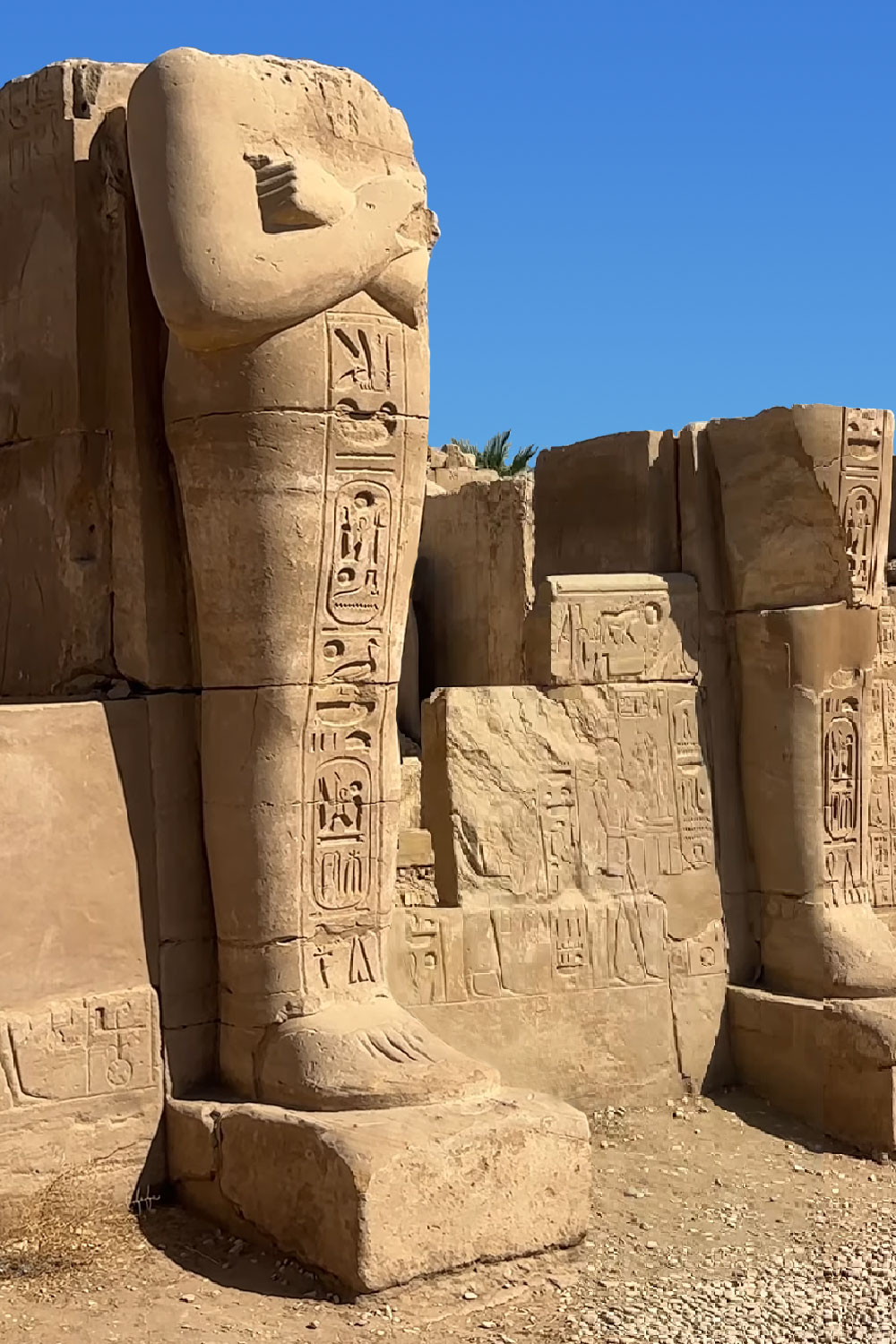 2.) inscribed with hieroglyphic cartouches and the ankh symbol of life near the base, a protective magical symbol, intended to immortalize the pharaoh,
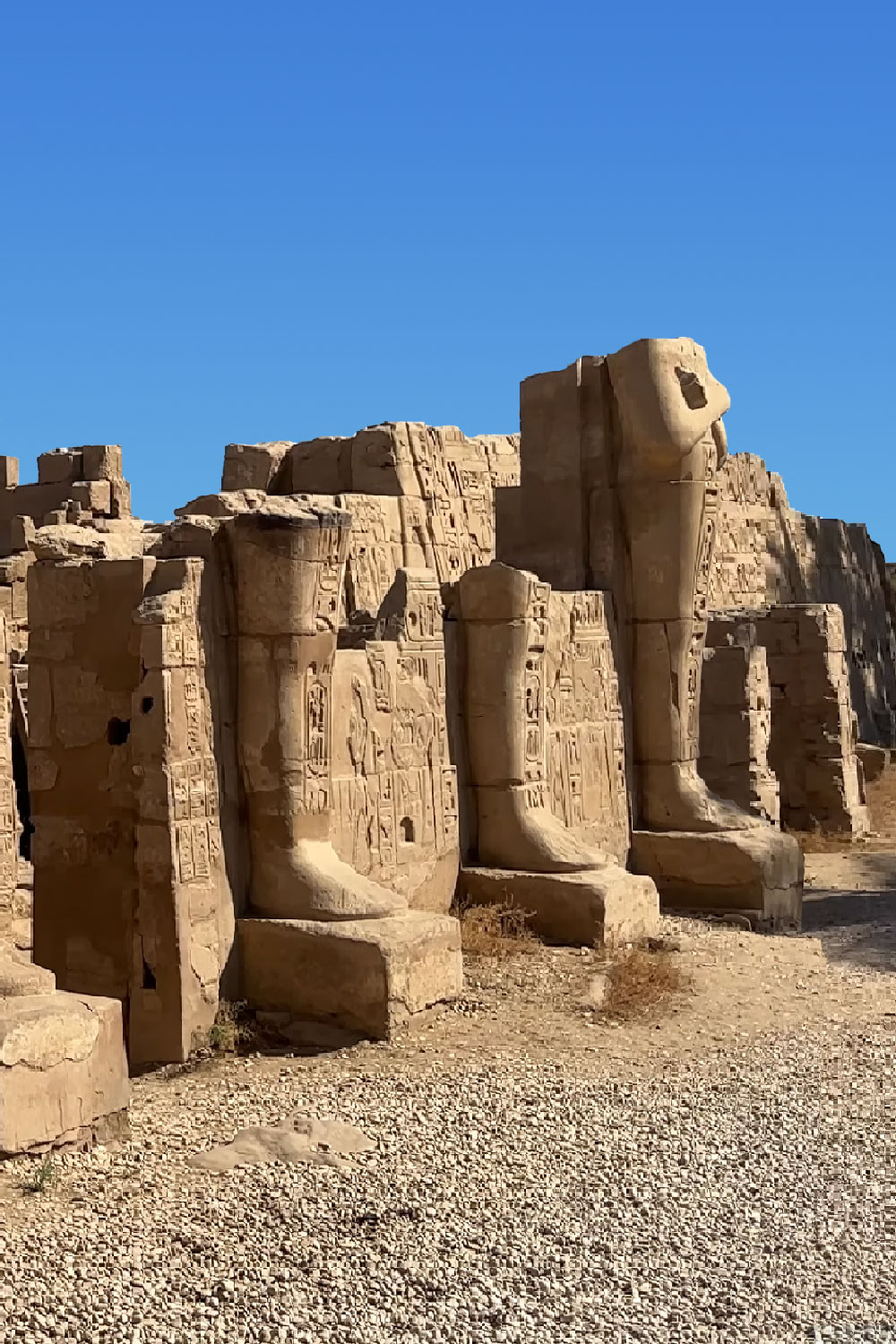 3.) carved sandstone, Wadjet Hall, 15th century BCE.
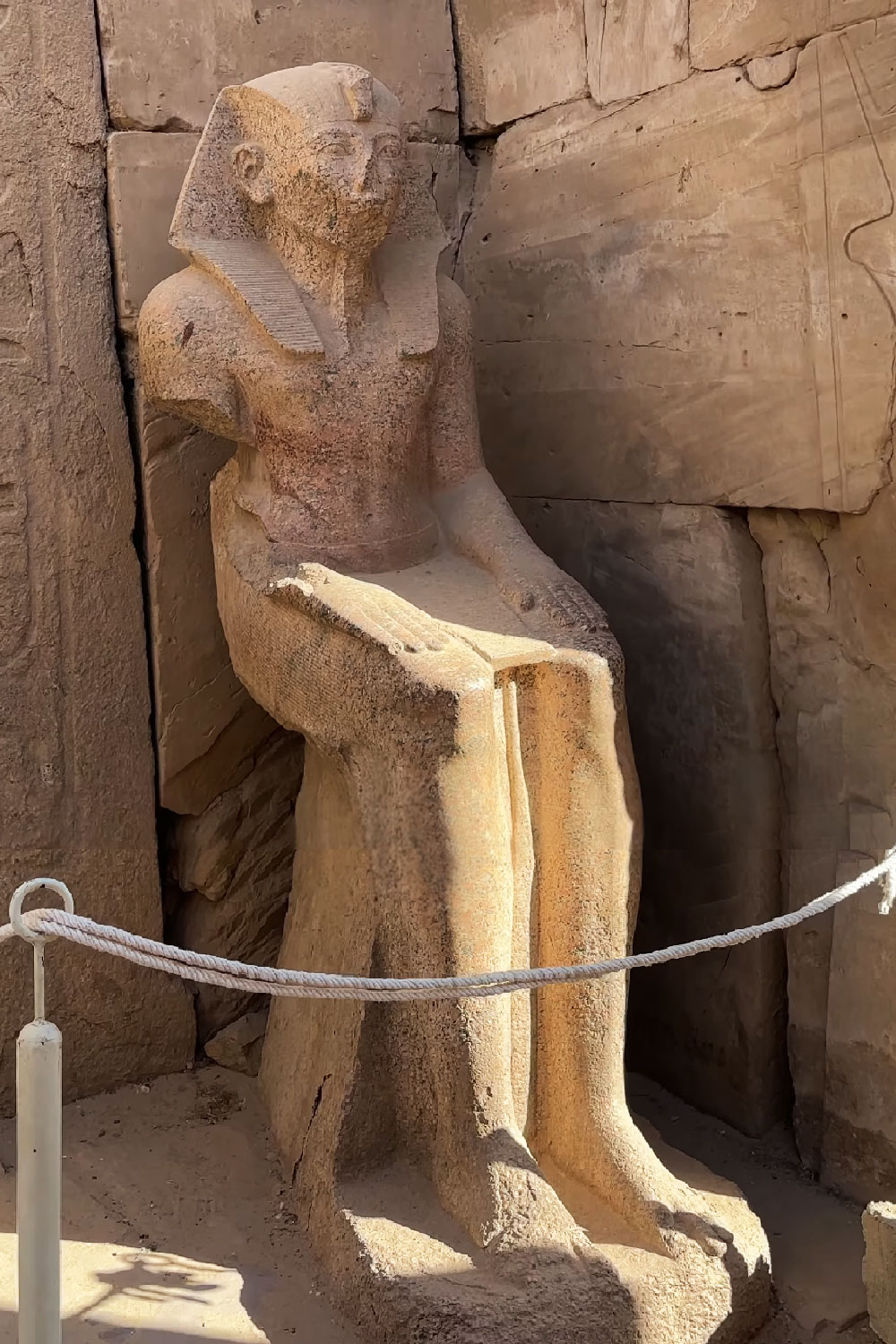
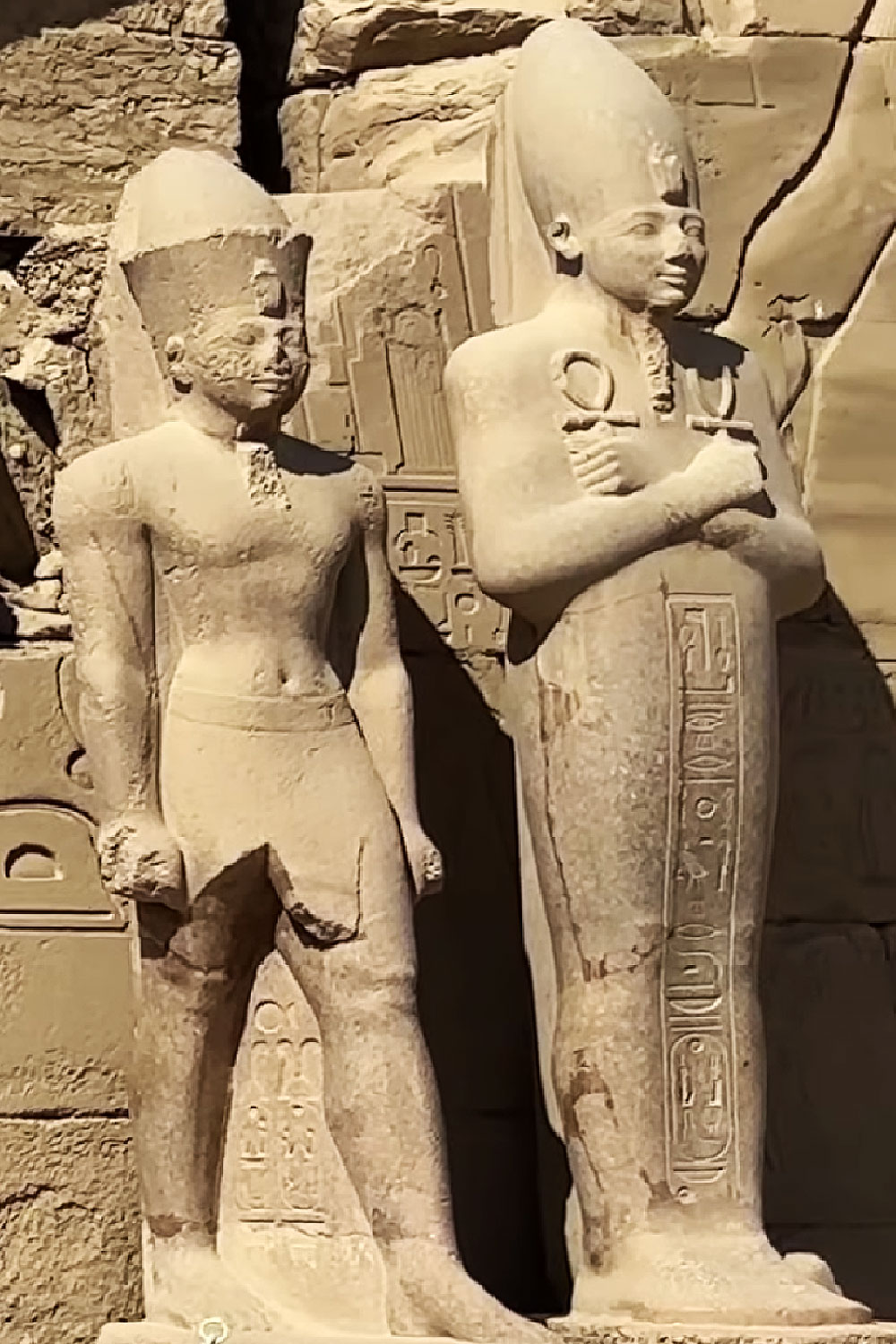
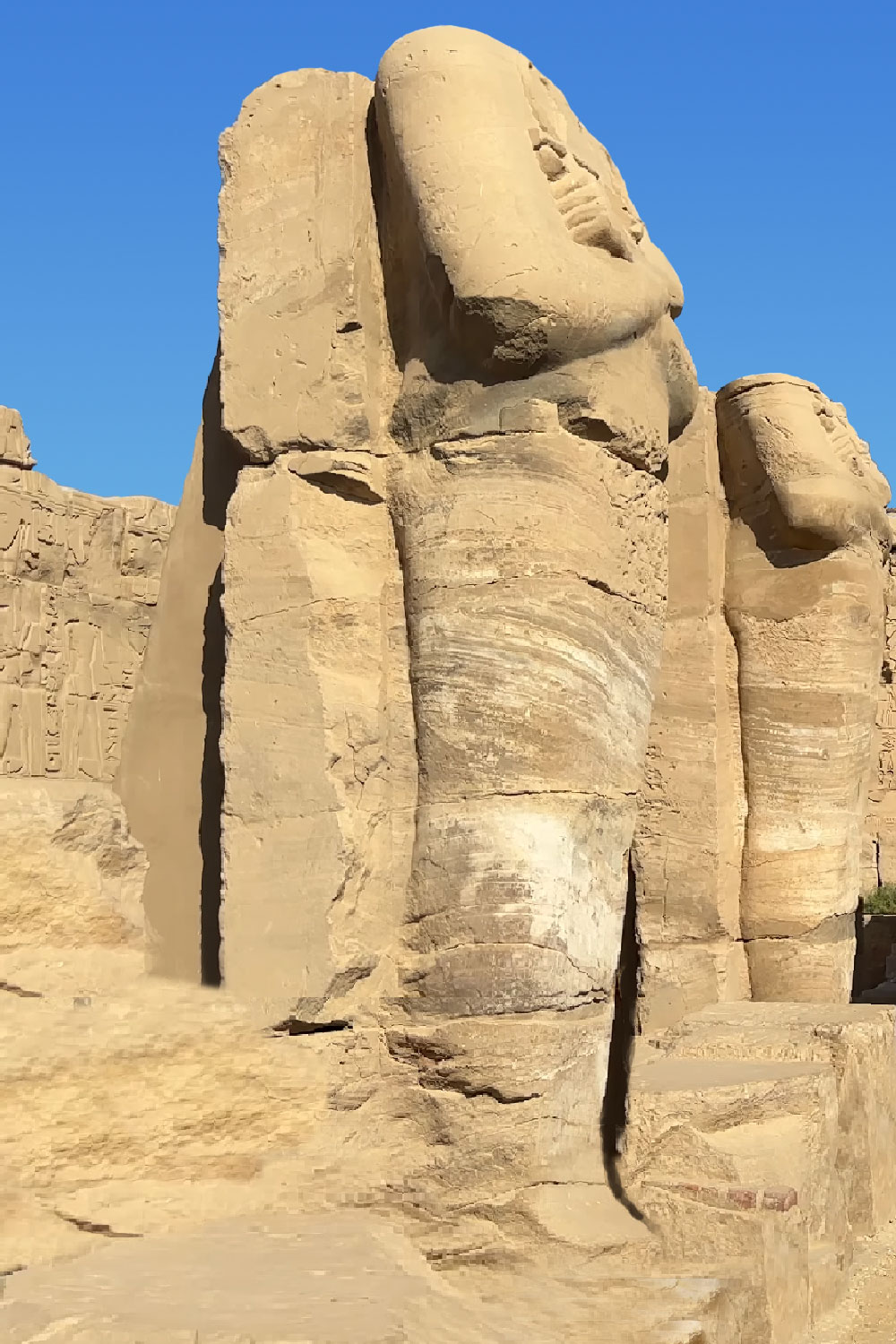 Thutmose I statue, depicts the pharaoh in the pose of Osiris, with arms crossed holding an ankh the symbol of life in each hand, carved sandstone, 1500 BCE, Wadjet Hall
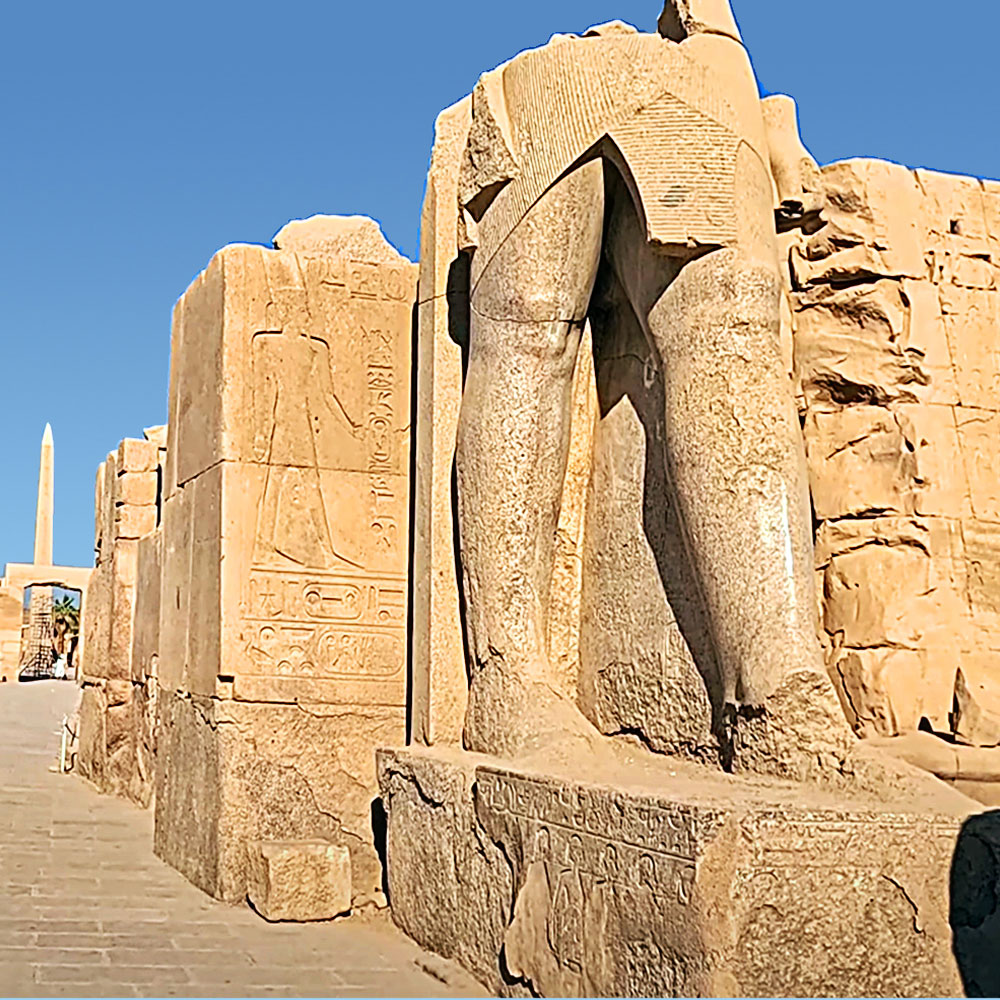
 Osiride statues of Pharaoh Ramesses II, a massive site dedicated to the Theban Triad, carved sandstone, Wadjet Hall, 1230 BCE,
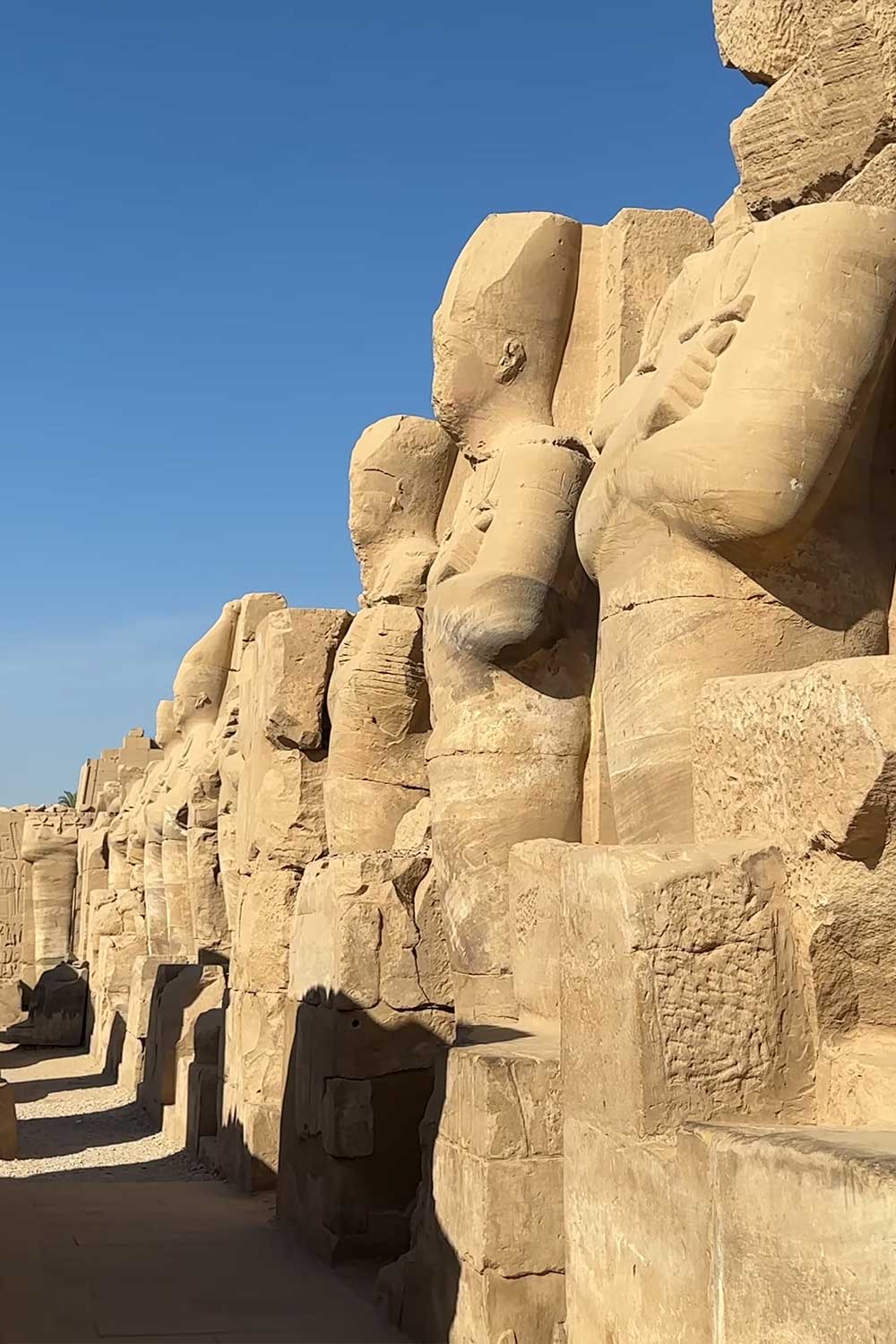 A row Headless Osiride identified as Ramses II with mummy-wrapped bodies and arms crossed over the chest holding an ankh—the symbol for "life"—in each hand, carved sandstone, Wadjet Hall, 13th century BC.
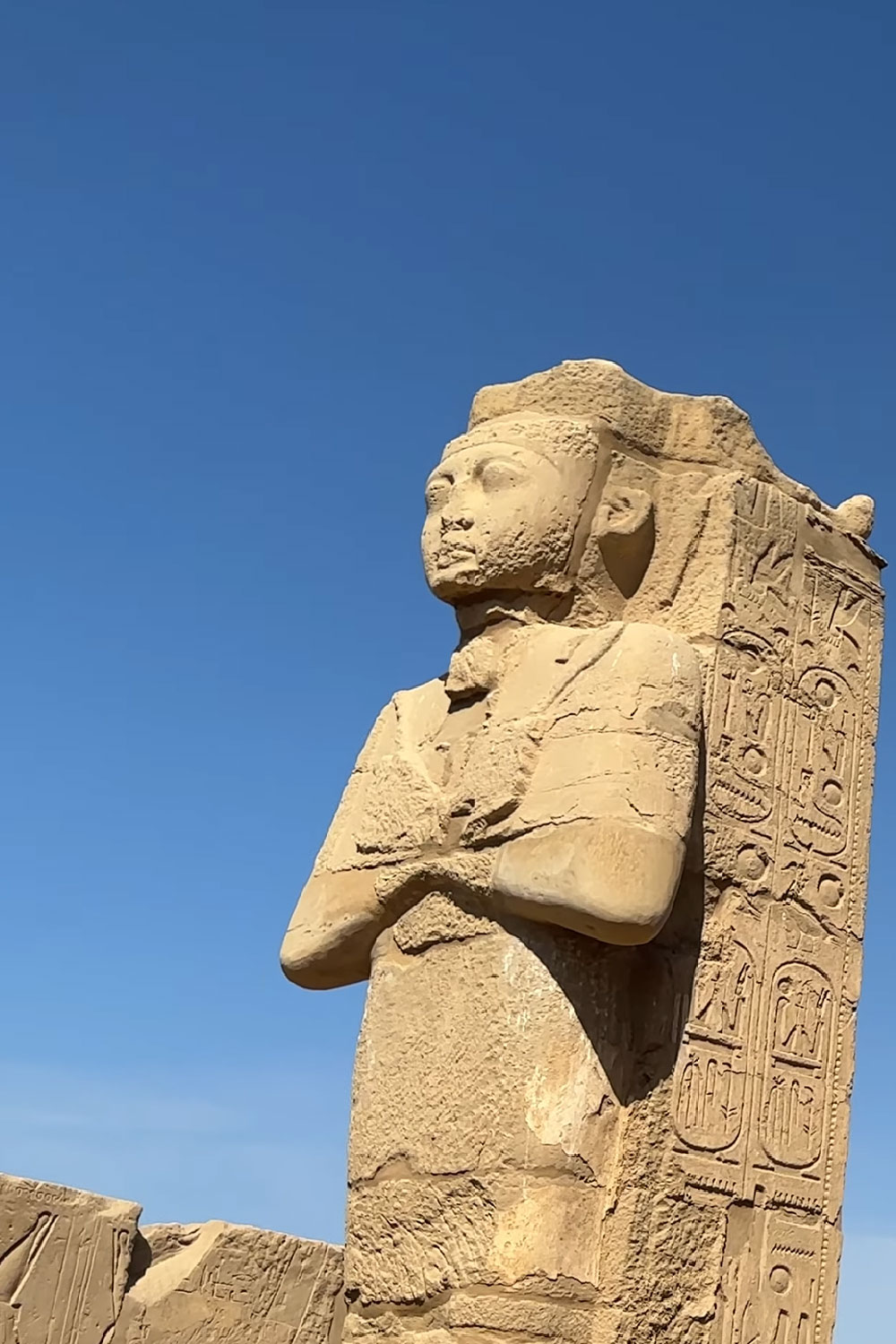 1.) Osiride statues of Pharaoh Ramesses III, stand in the courtyard of his dedicated bark station, which sits inside the First Court,
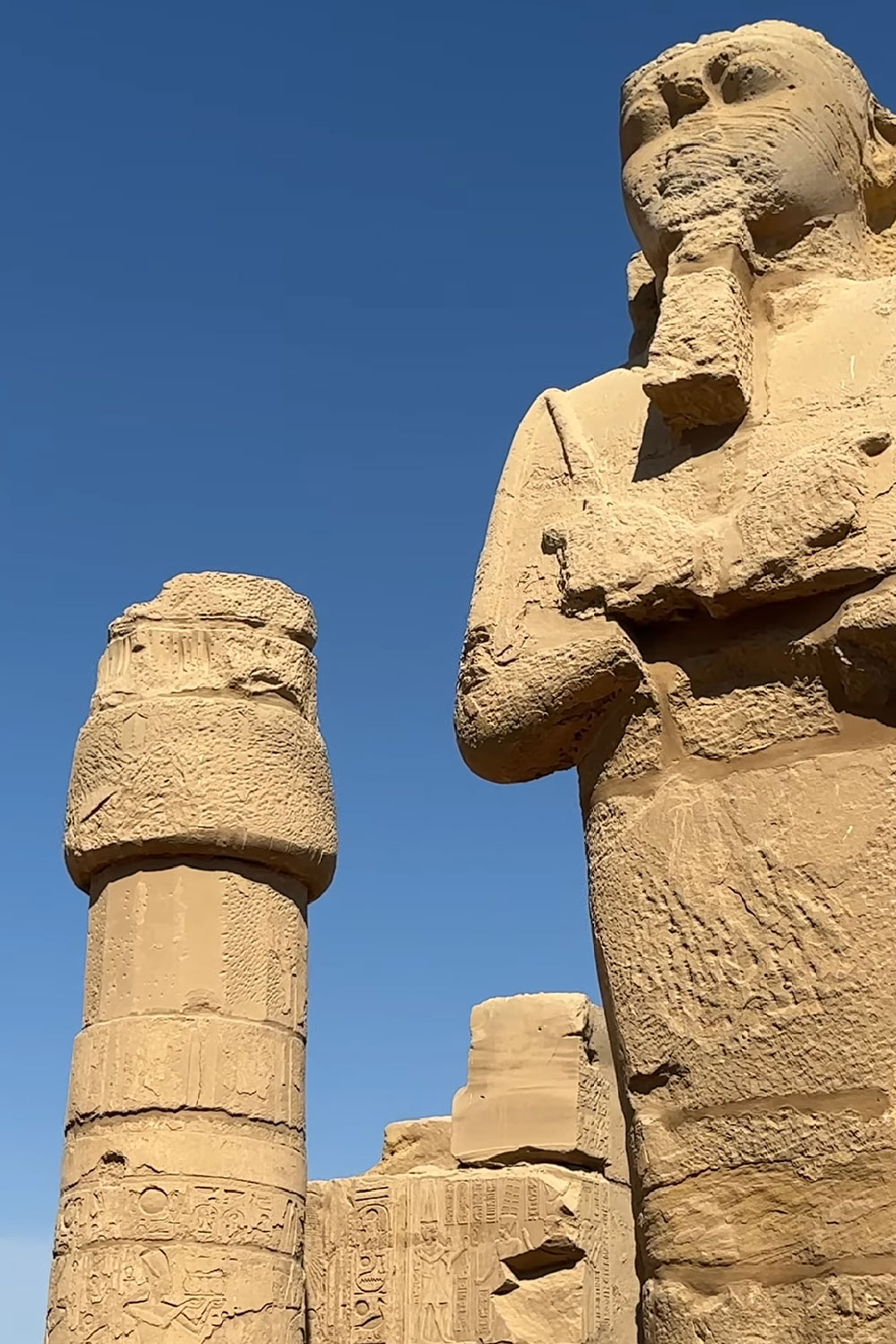 2.) sculpted with their arms crossed over their chest, this mimics the traditional burial pose of Osiris, the god of the underworld and afterlife,
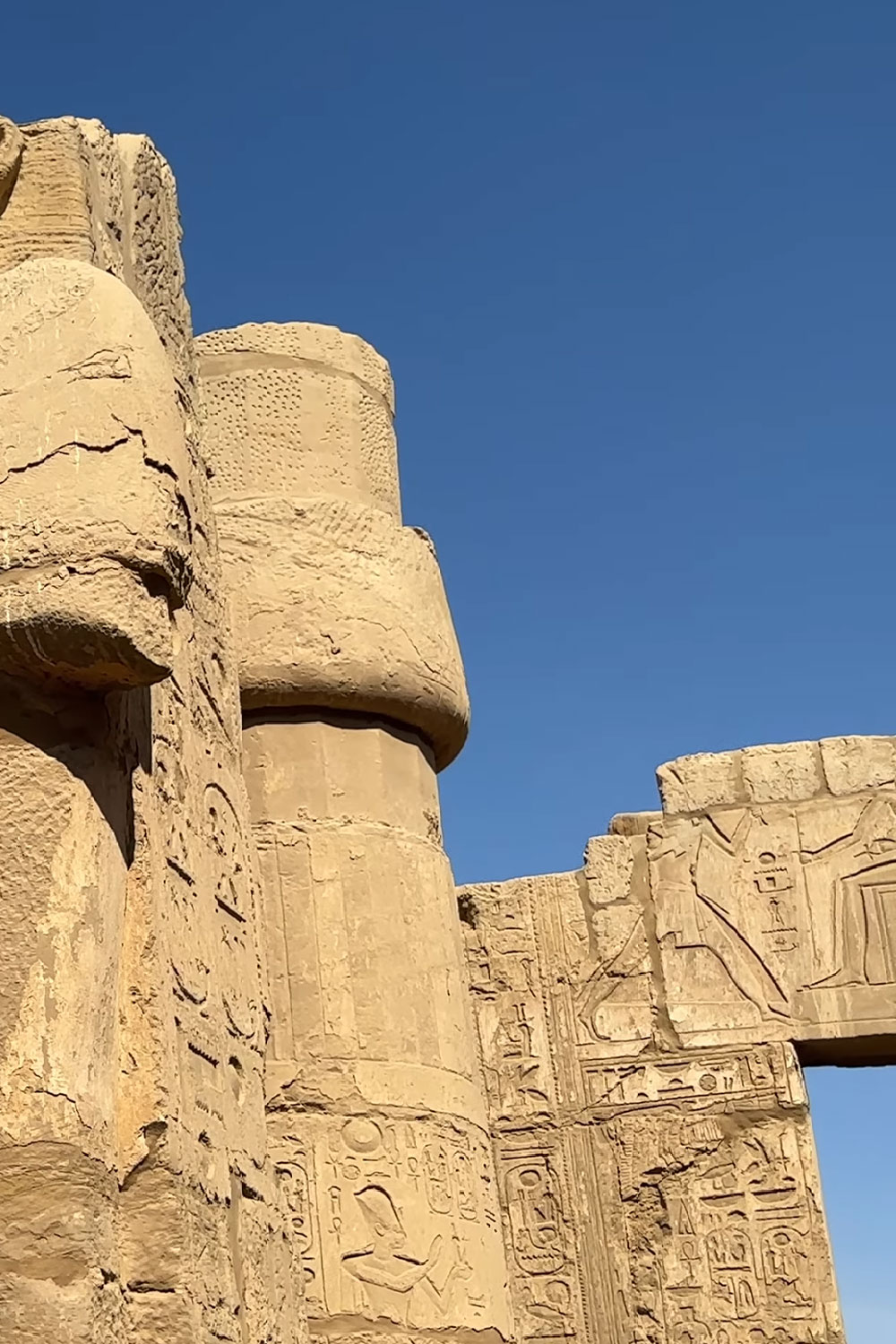 3.) they served as structural pillars supporting the courtyard roof while visually cementing the pharaoh's divine right to rule, 1180 BCE, Wadjet Hall
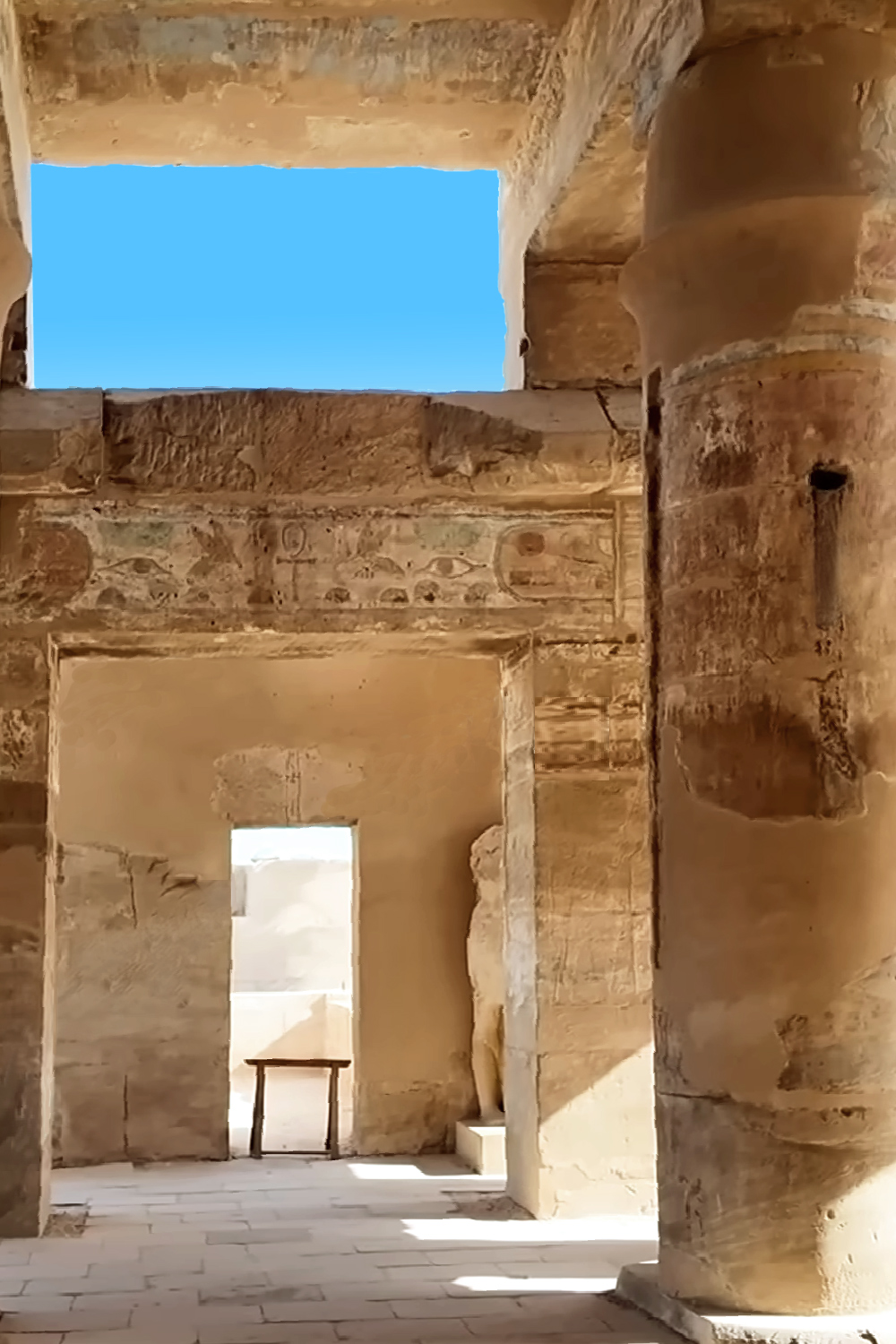
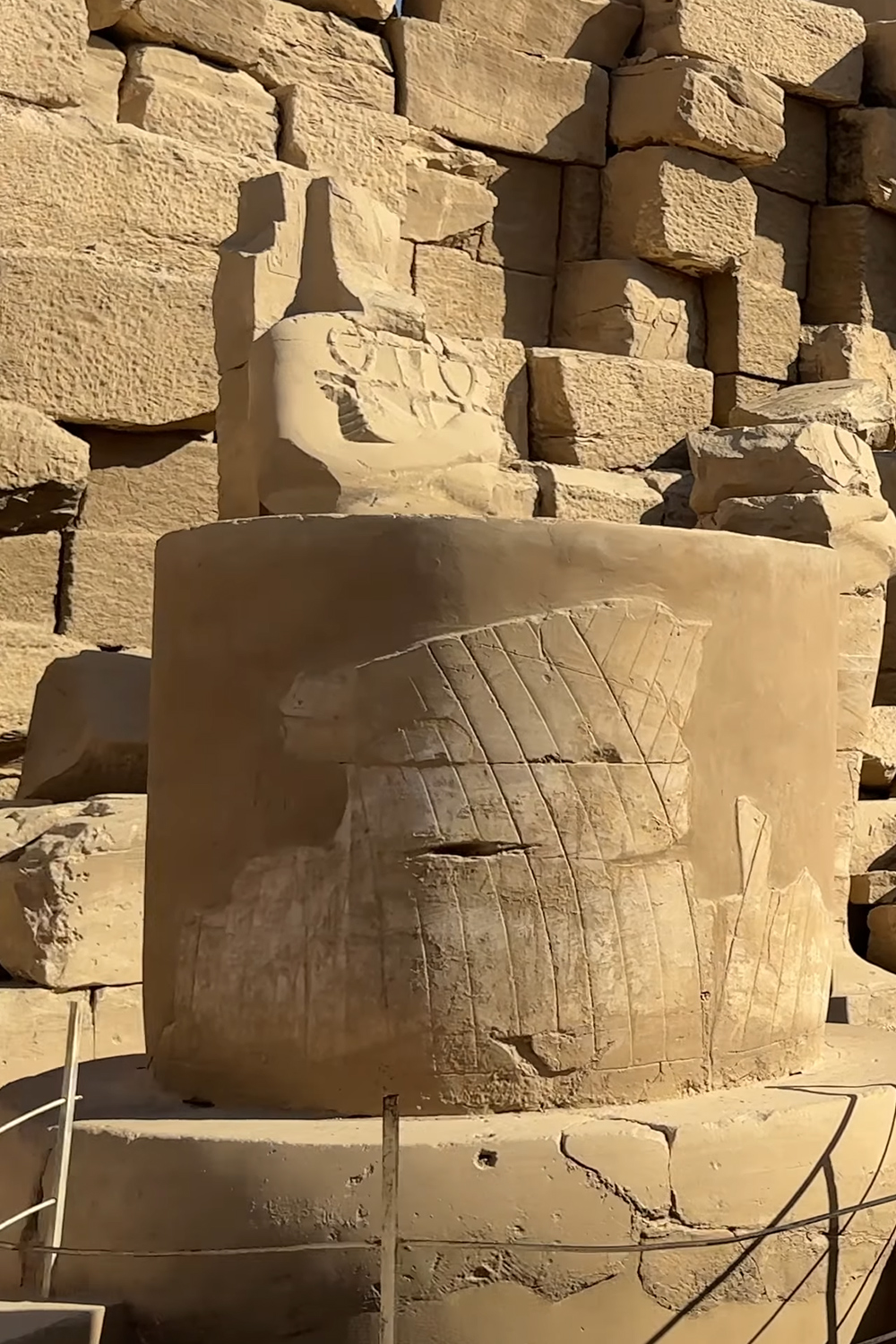 1.) Pharaoh Thutmose III built the Wadjet Hall with the 14 massive sandstone columns known as Wadj papyrus-form columns, their design honors the serpent goddess Wadjet (associated with the lush papyrus deltas of Lower Egypt), which gives the hall its name.
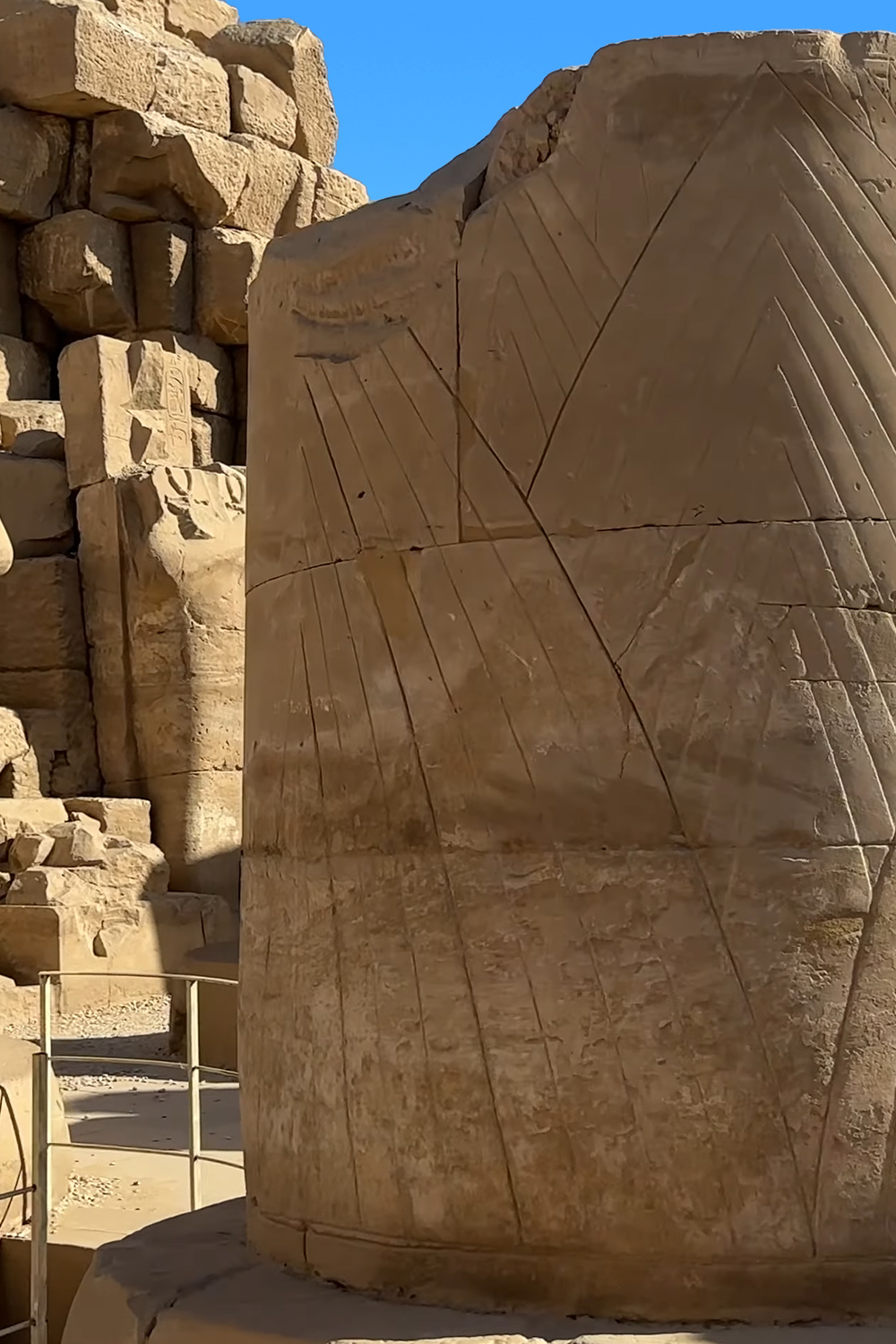 2.) large standing figures depict the pharaoh in the guise of Osiris, the god of the afterlife and rebirth, built originally by Thutmose I, these statues represent eternal pharaonic power
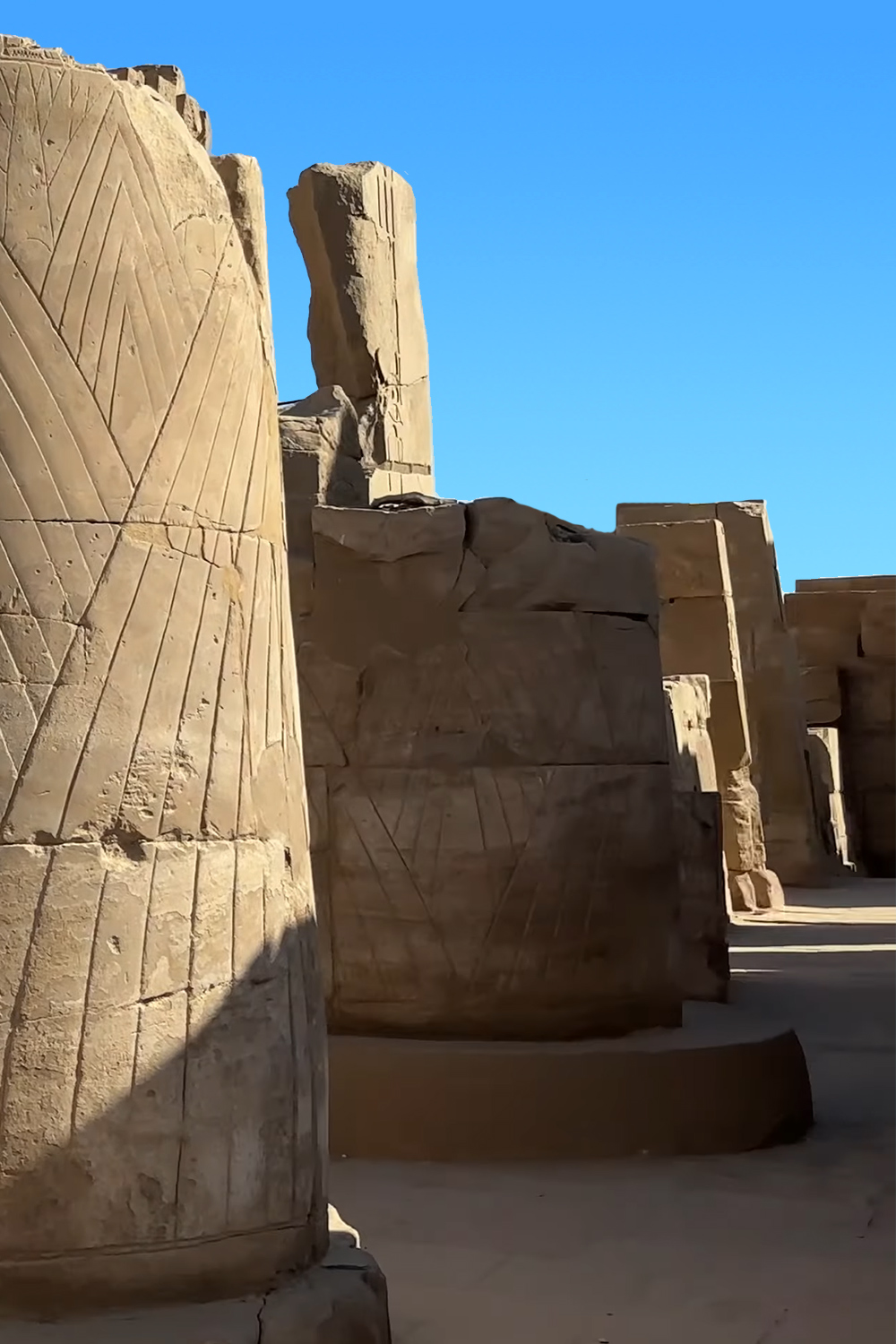 3.)
3.)
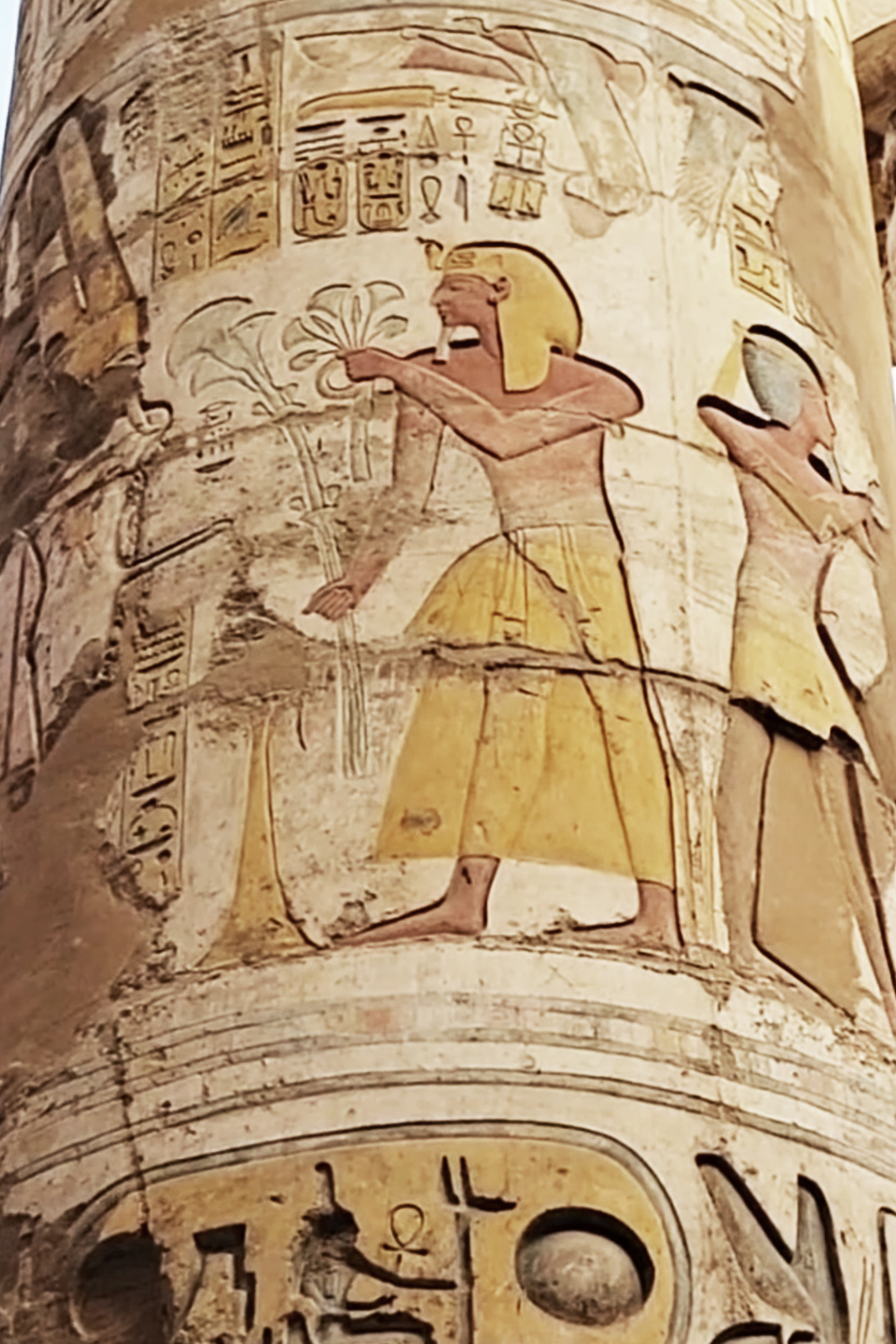
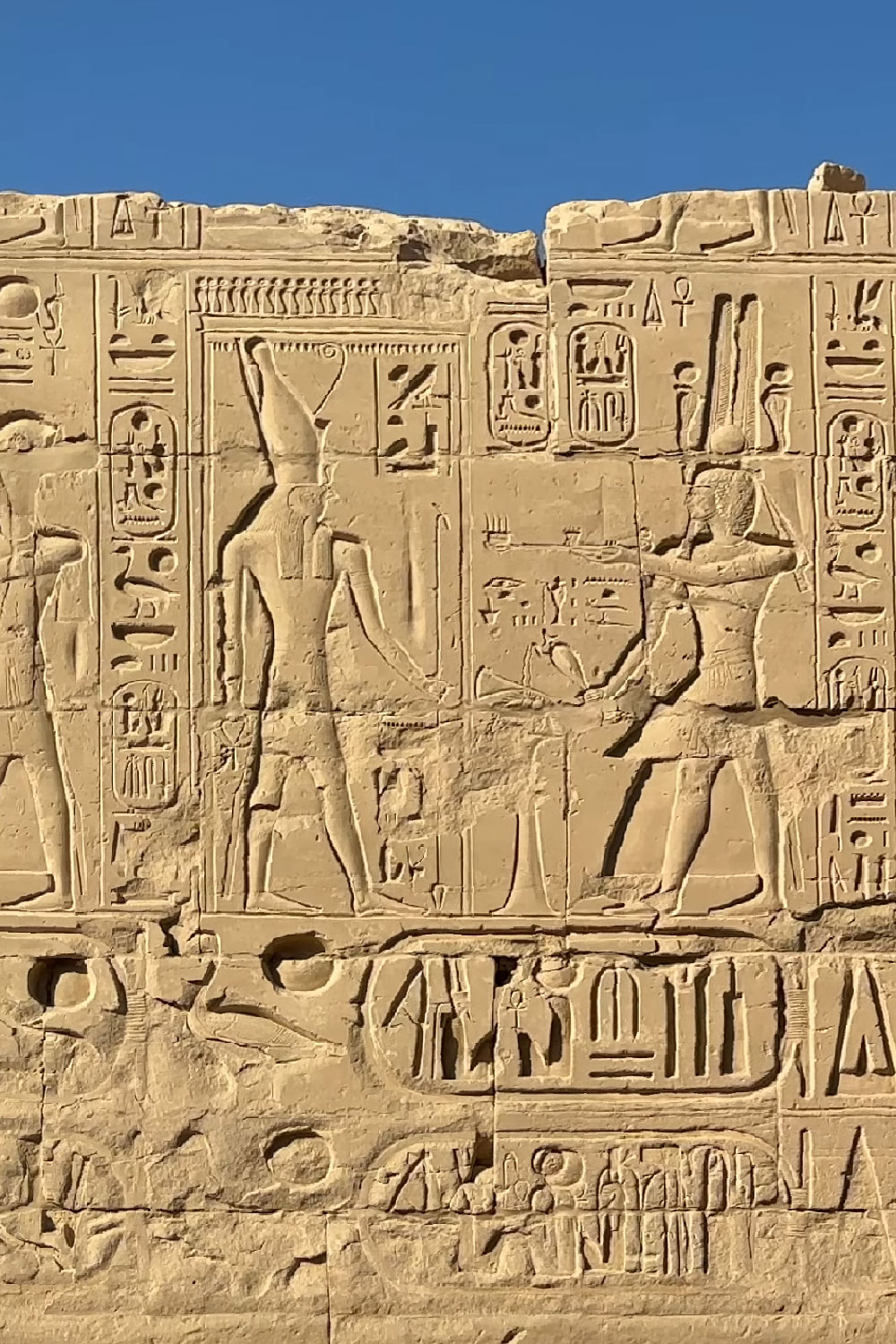 1.) Pharaoh Seti I, wearing a Atef, offering a massive, elaborate bouquet of lotus flowers and papyrus stalks to the chief deity, Amun-Ra (the king of the gods),
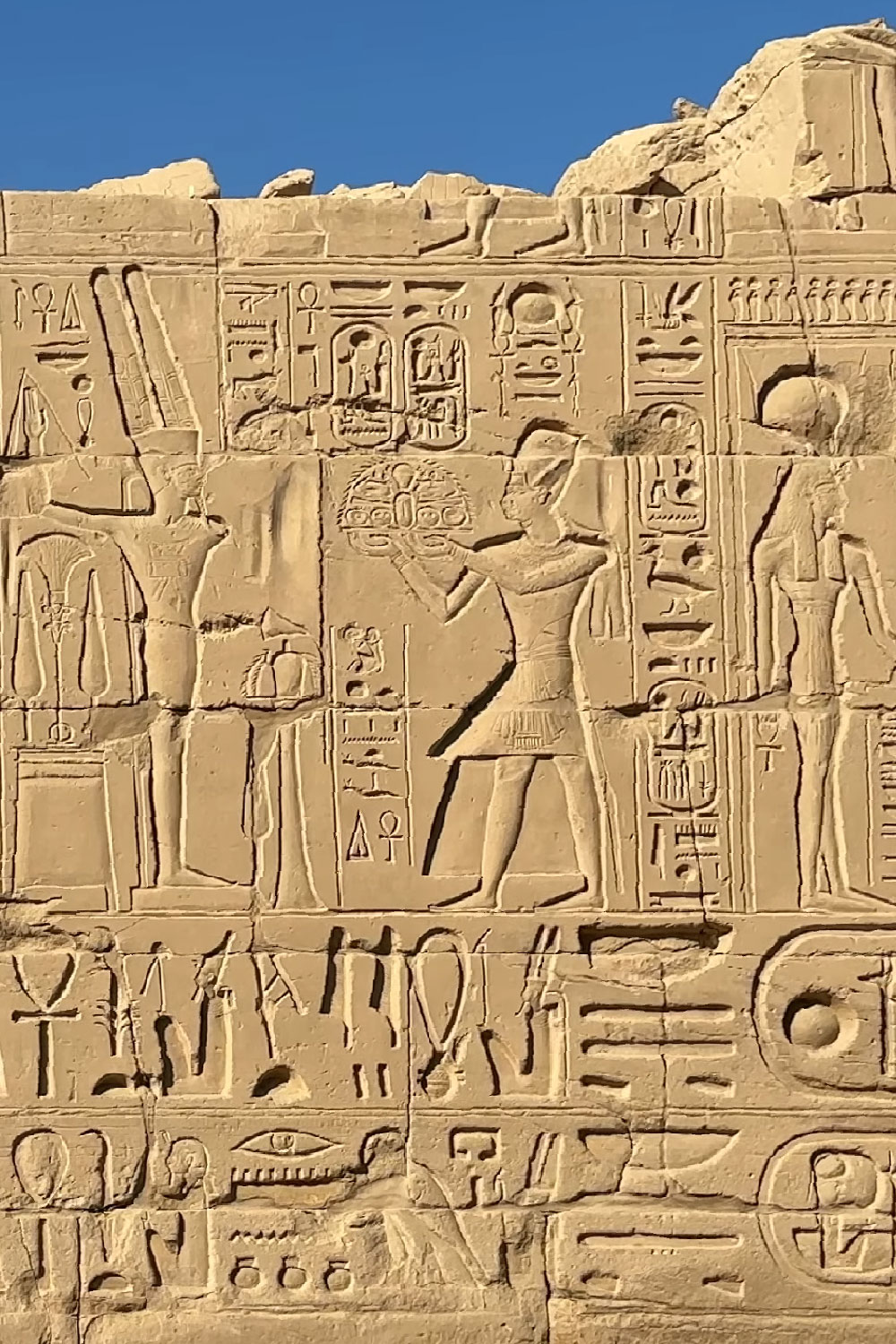 2.) The large oval rings at the bottom of the wall are cartouches. These contain Sety I’s formal coronation and birth names written in hieroglyphics,
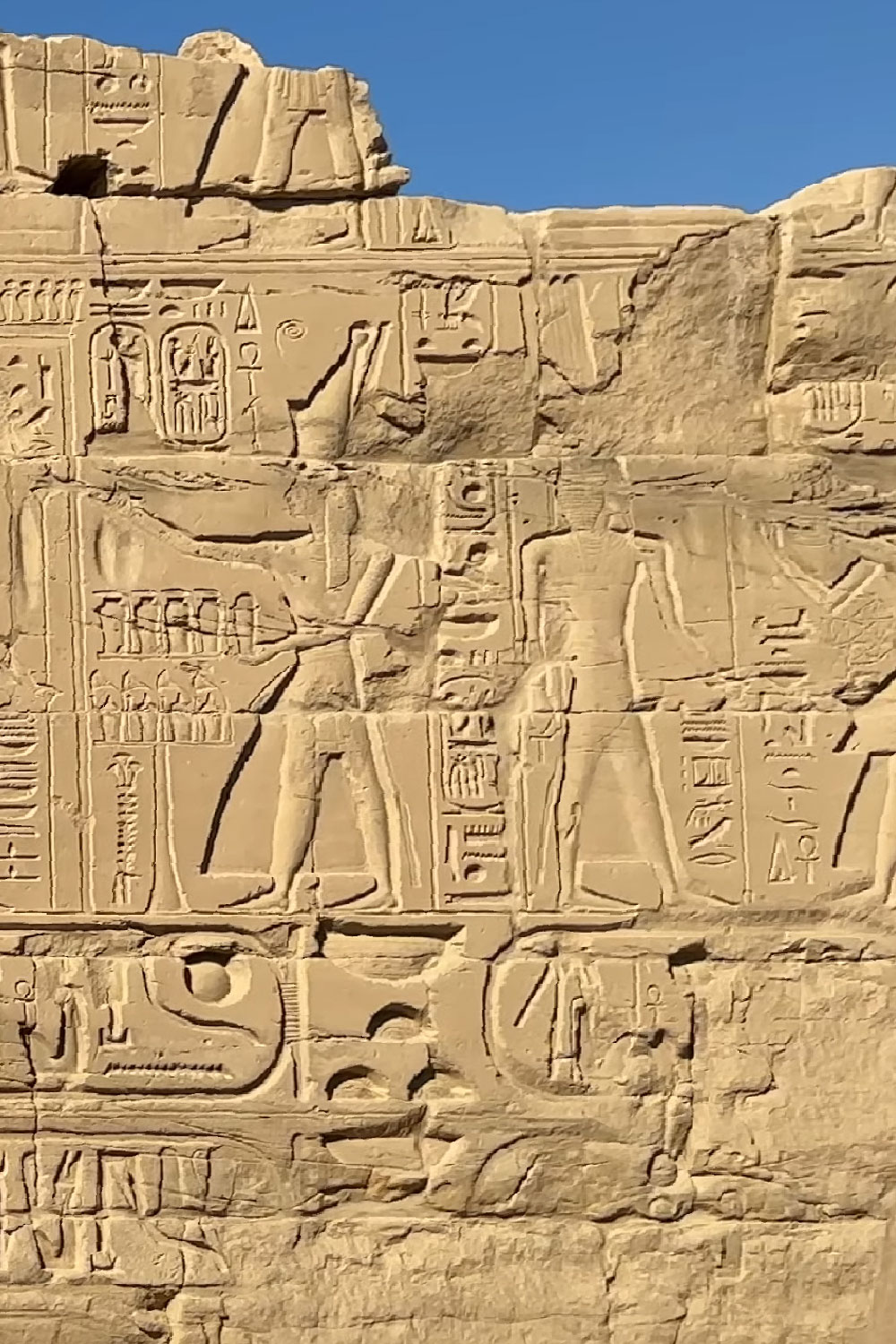 3.) functioning as an official royal signature to dedicate the temple's daily rituals to his eternal legacy
The Temple of Ptah
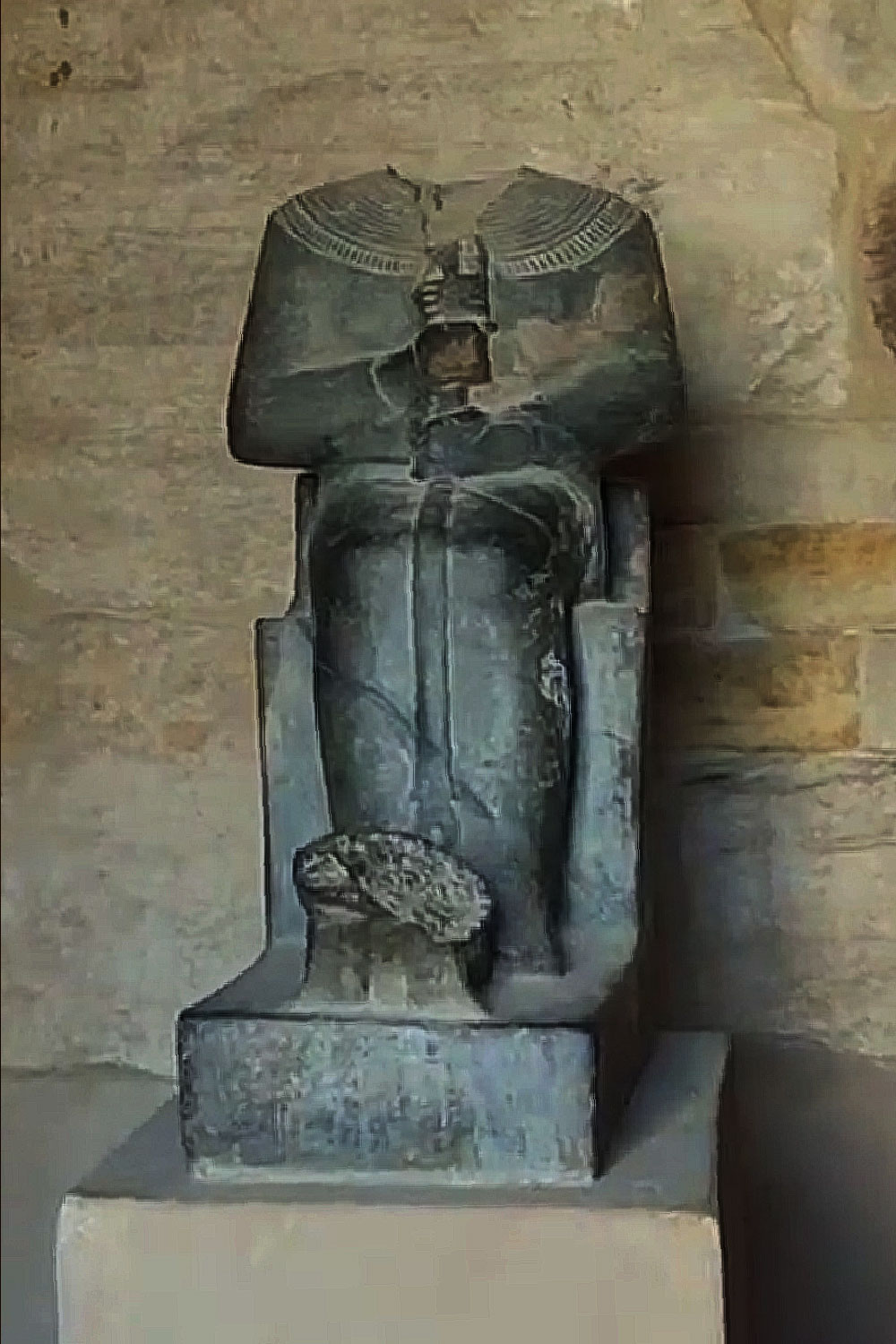
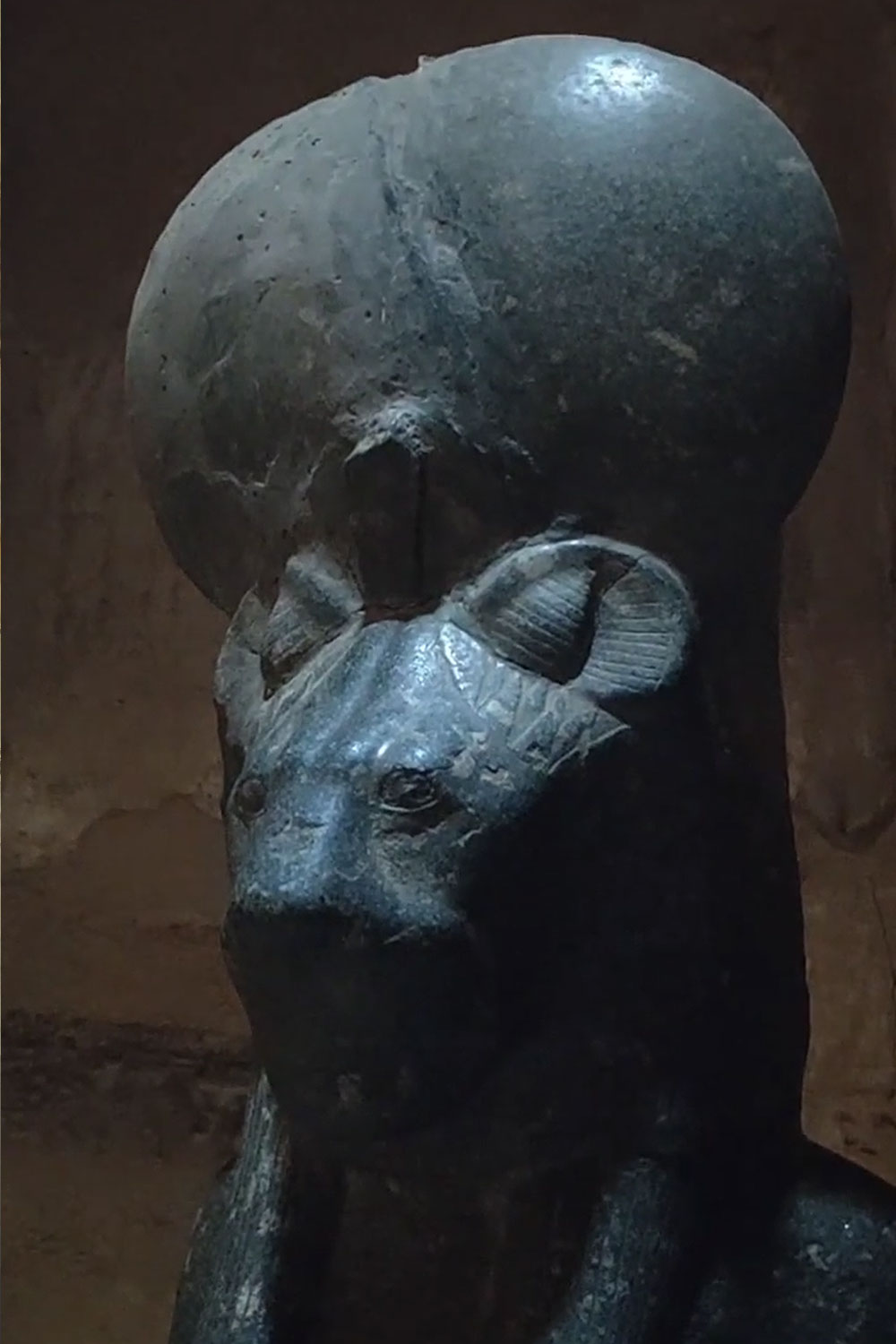
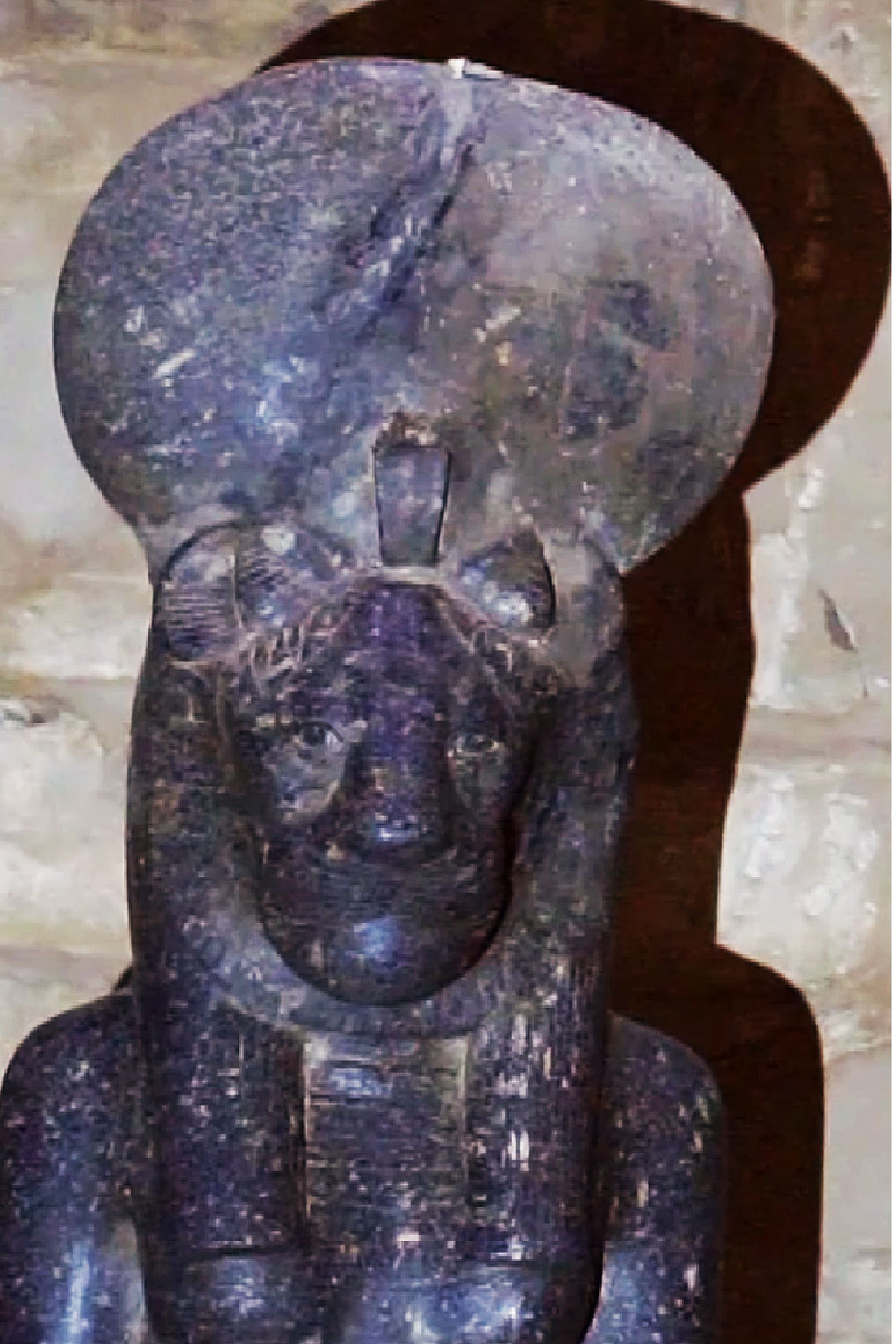
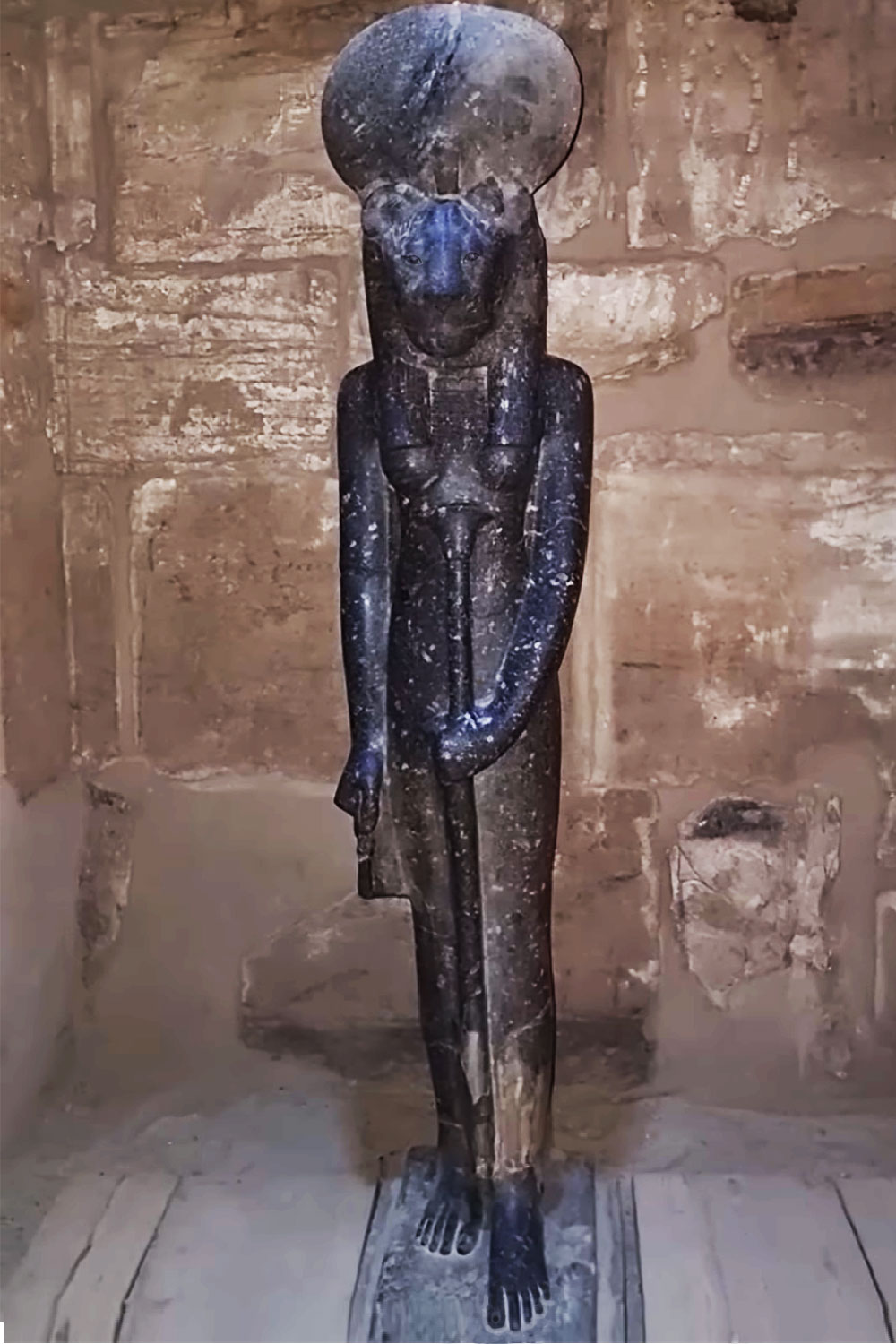
The Temple of Ptah stands along the northern edge of the Karnak complex and is dedicated to Ptah, the Memphite creator god. Originally built by Thutmose III and later
expanded by Shabaka and Ptolemaic rulers, the temple preserves a compact sequence of pylons, courts, and sanctuaries, including a shrine to Sekhmet. Its reliefs emphasize
Ptah’s role as craftsman‑god and divine architect, while its northern placement reflects the theological link between Thebes and Memphis within Egypt’s
sacred geography.
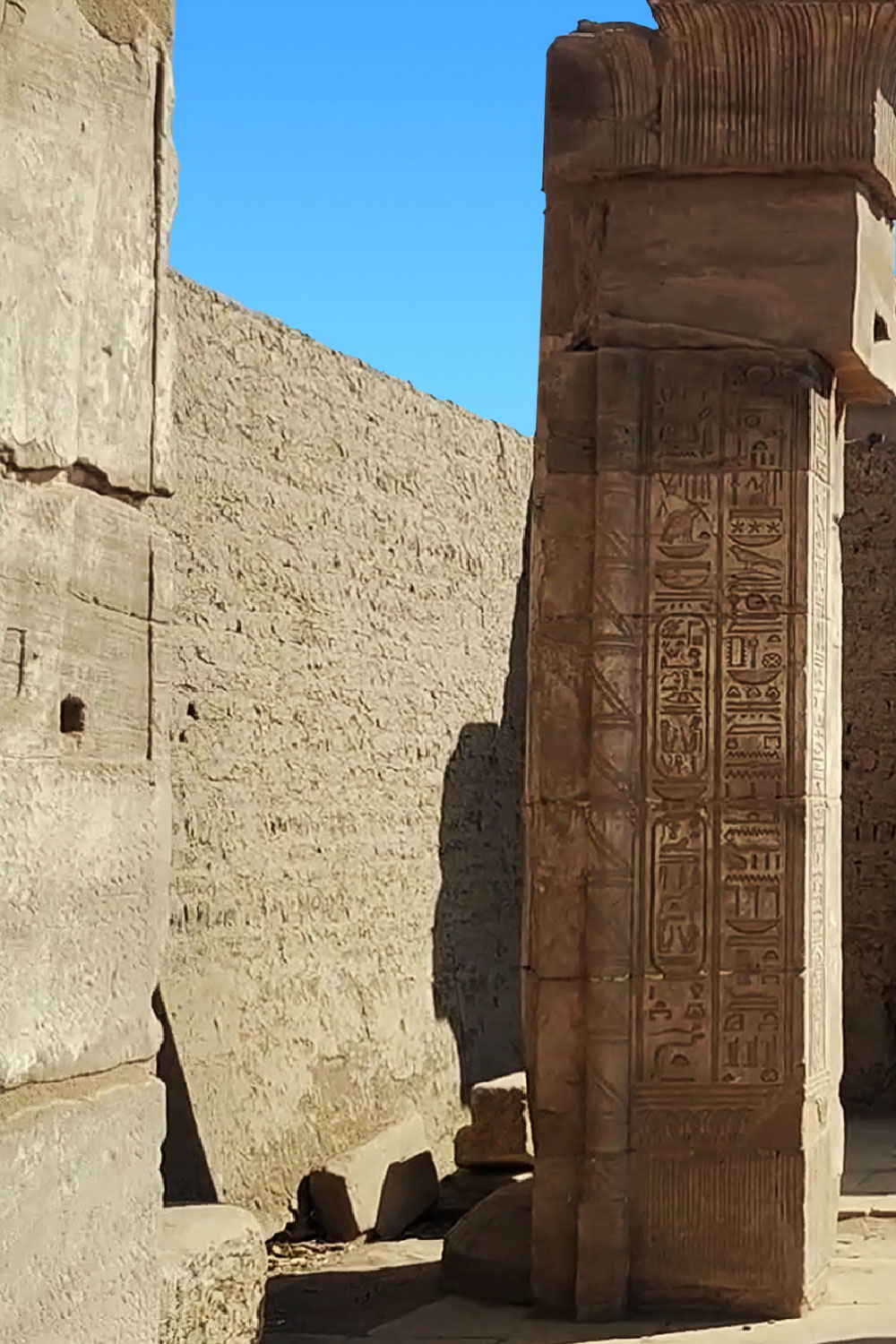 Entrance to the Temple of Ptah
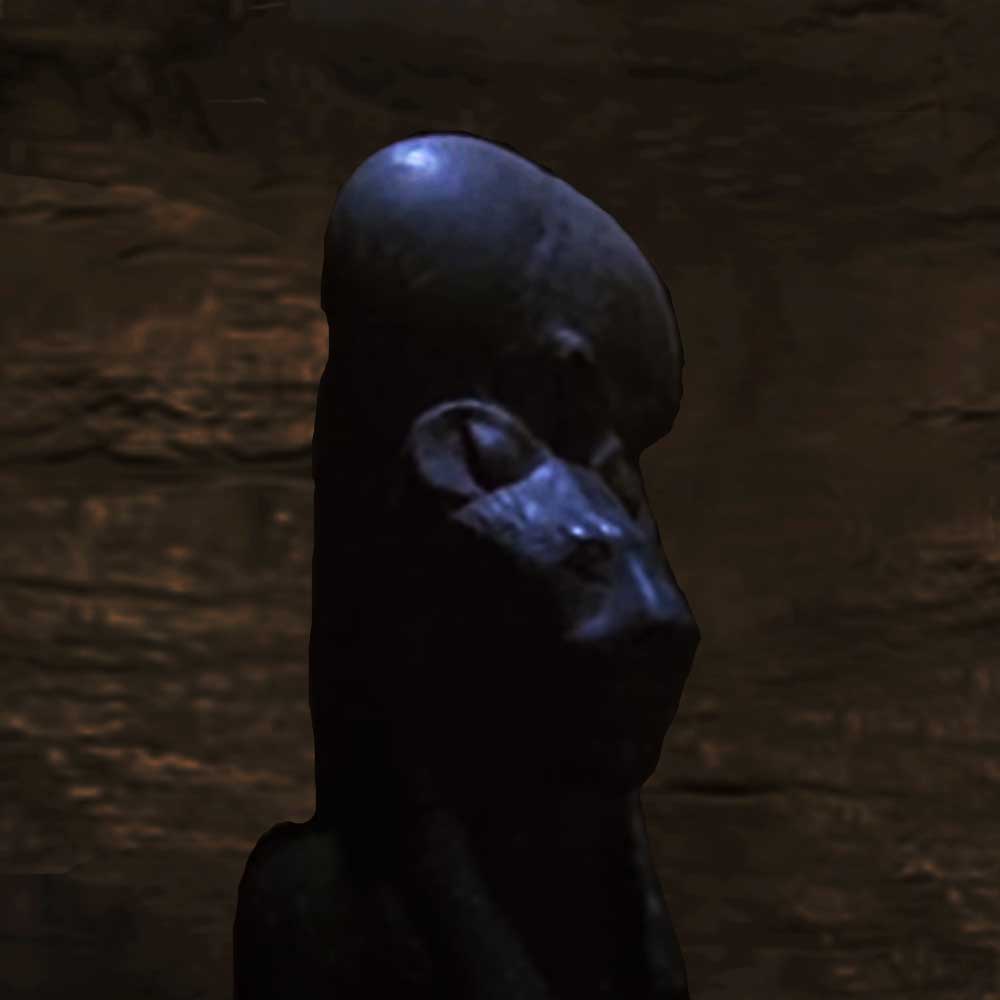 1.) Sekhmet, The Lioness Goddess of Ancient
Egypt
1.) Sekhmet, The Lioness Goddess of Ancient
Egypt
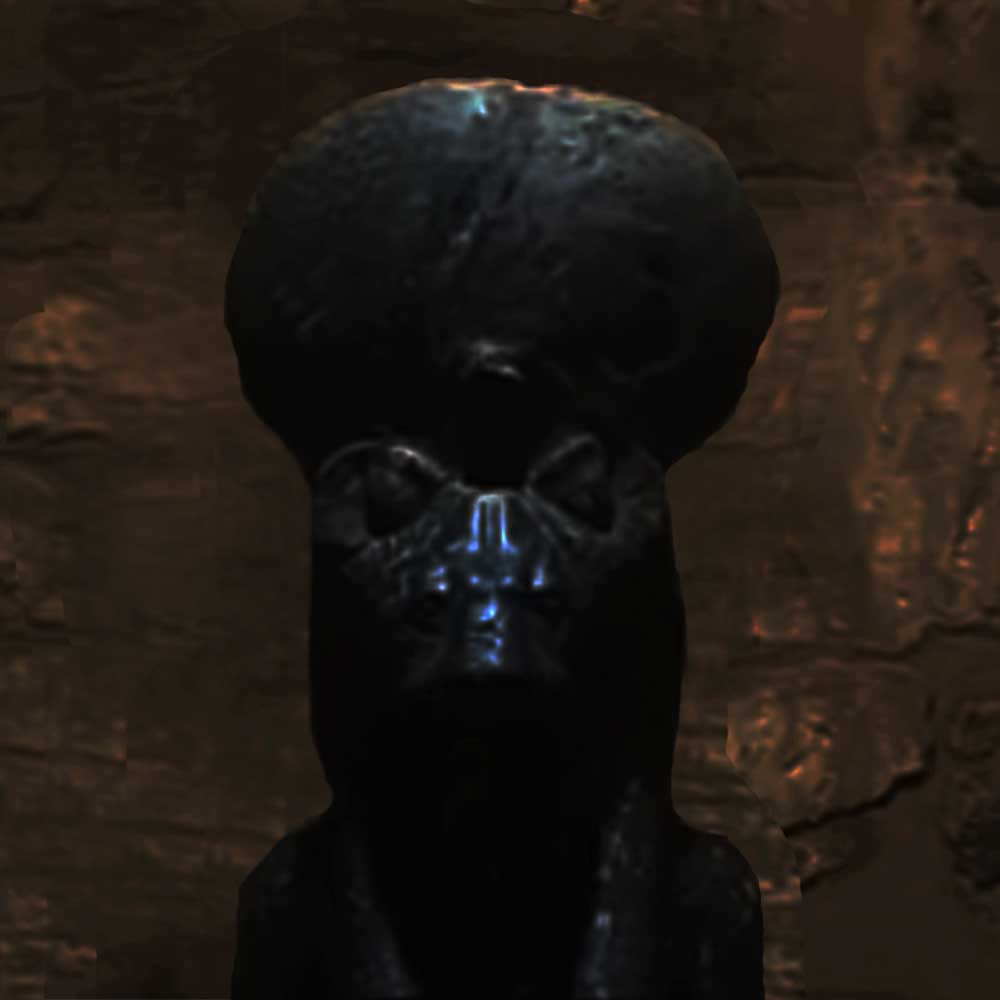 2.) her shrine is The Temple of Ptah in the
immense Karnak Temple
2.) her shrine is The Temple of Ptah in the
immense Karnak Temple
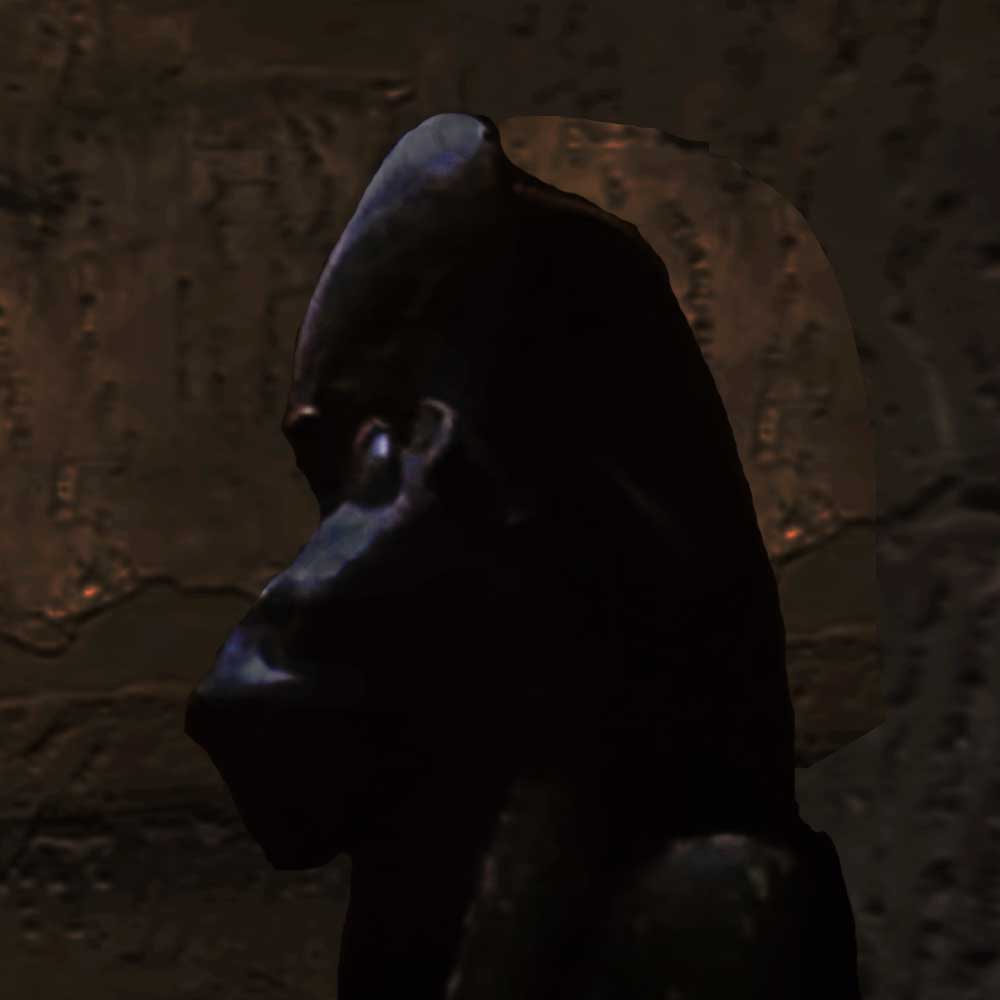 3.) she is the companion of Ptah, the god of
healing, 18th Dynasty, 1550/1549 BC. Karnak Temple
3.) she is the companion of Ptah, the god of
healing, 18th Dynasty, 1550/1549 BC. Karnak Temple
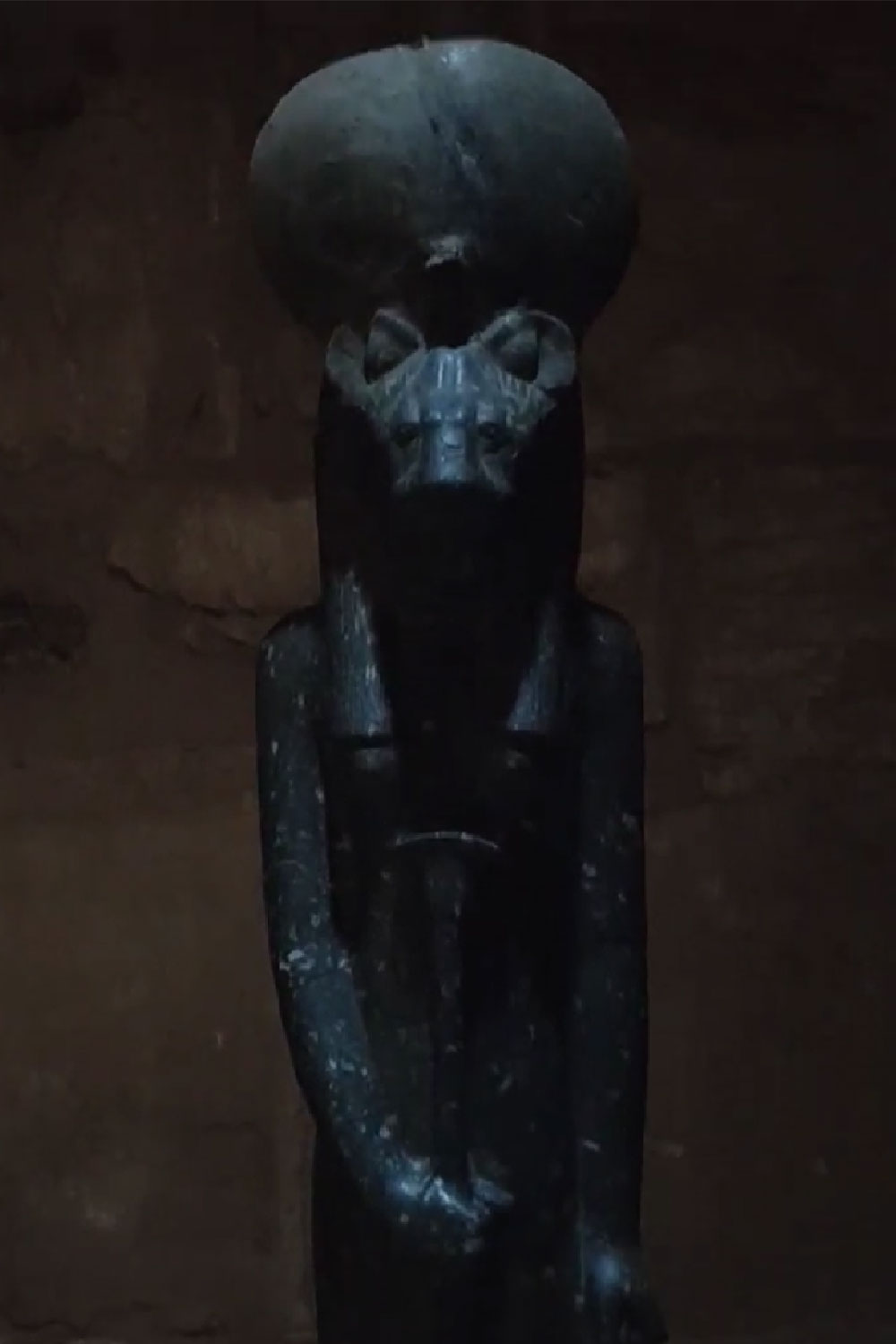 1.) Sekhmet, The Lioness Goddess of Ancient
Egypt
1.) Sekhmet, The Lioness Goddess of Ancient
Egypt
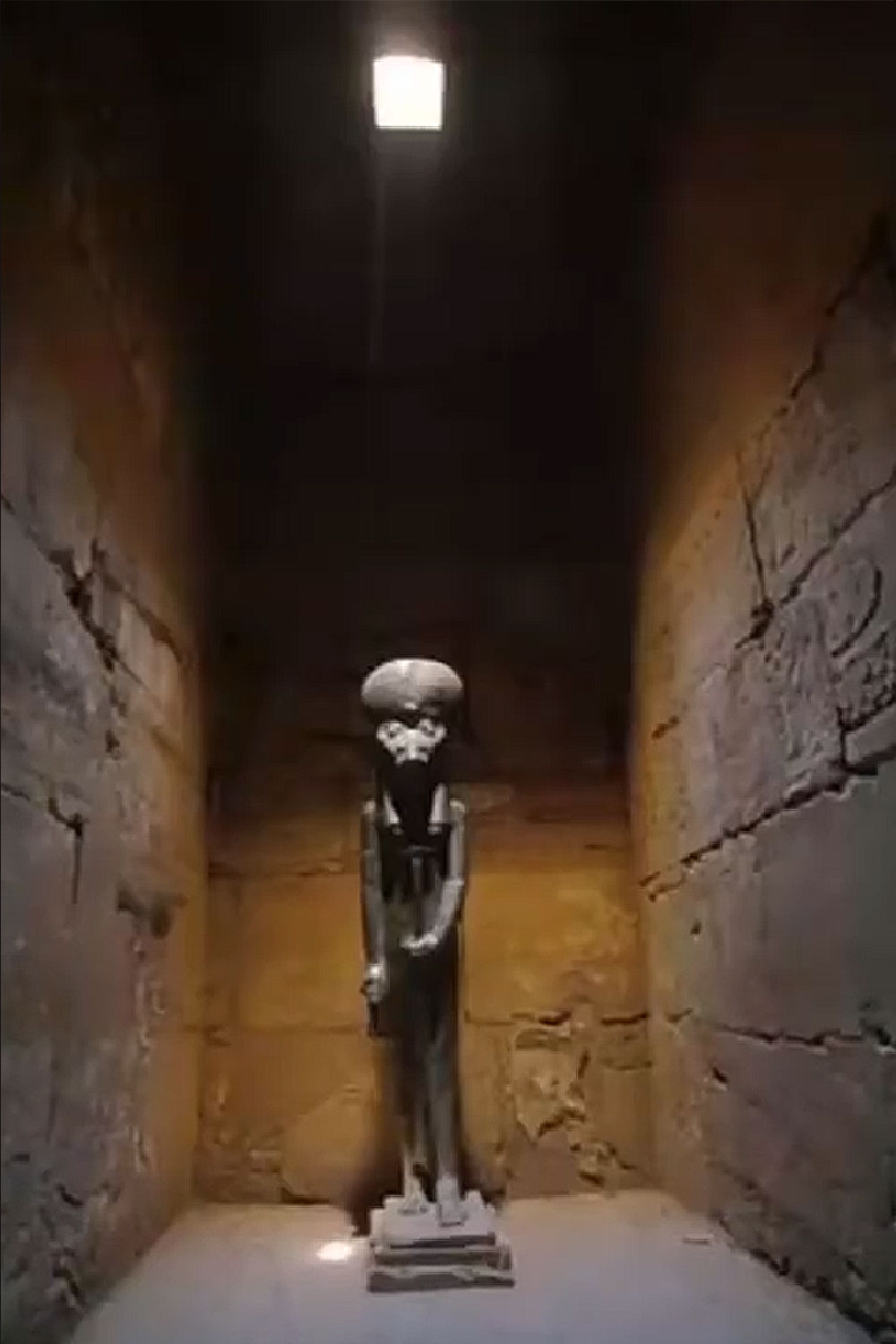 2.) her shrine is The Temple of Ptah in the
immense Karnak Temple
2.) her shrine is The Temple of Ptah in the
immense Karnak Temple
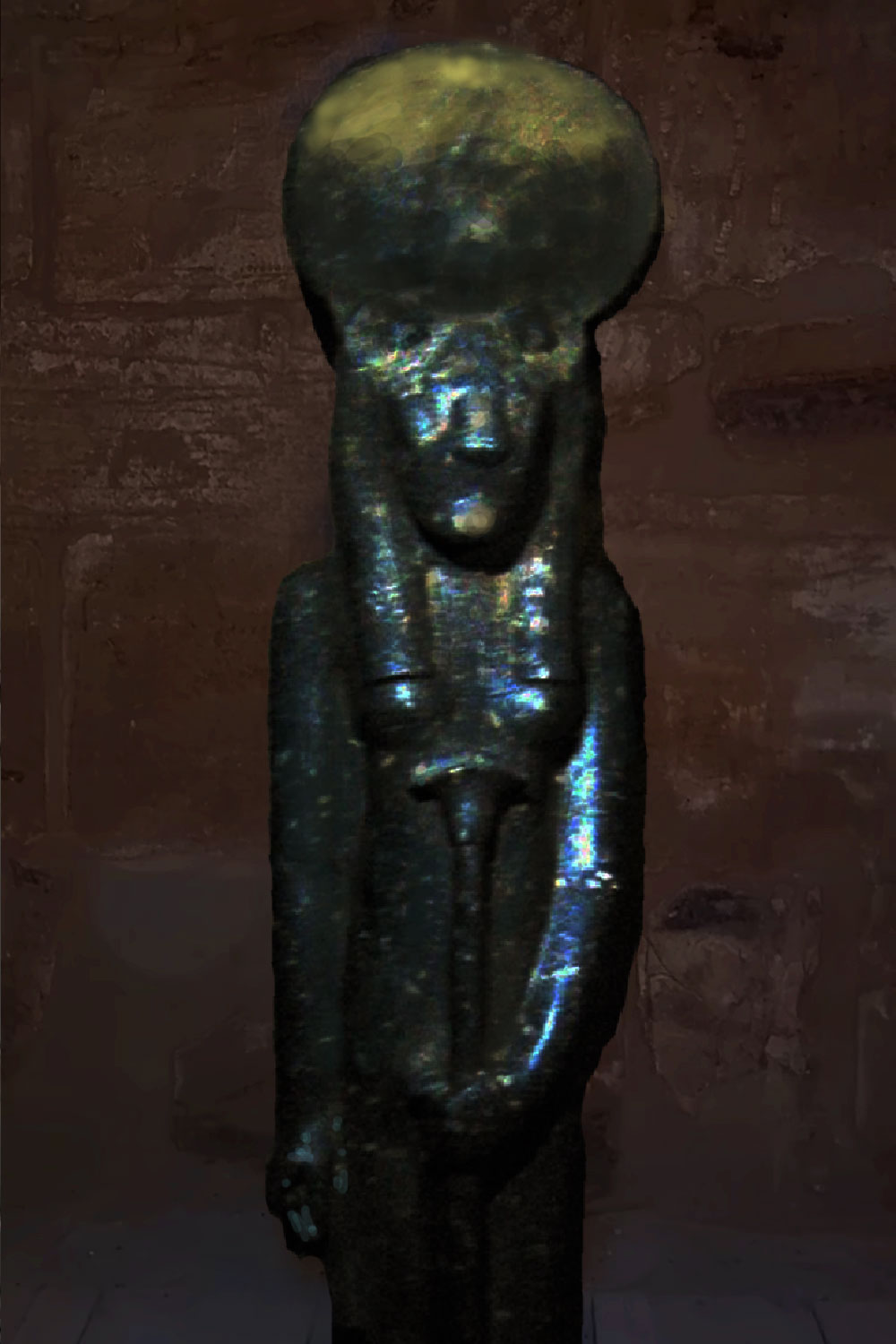 3.) she is the companion of Ptah, the god of
healing, 18th Dynasty, 1550/1549 BC. Karnak Temple
3.) she is the companion of Ptah, the god of
healing, 18th Dynasty, 1550/1549 BC. Karnak Temple
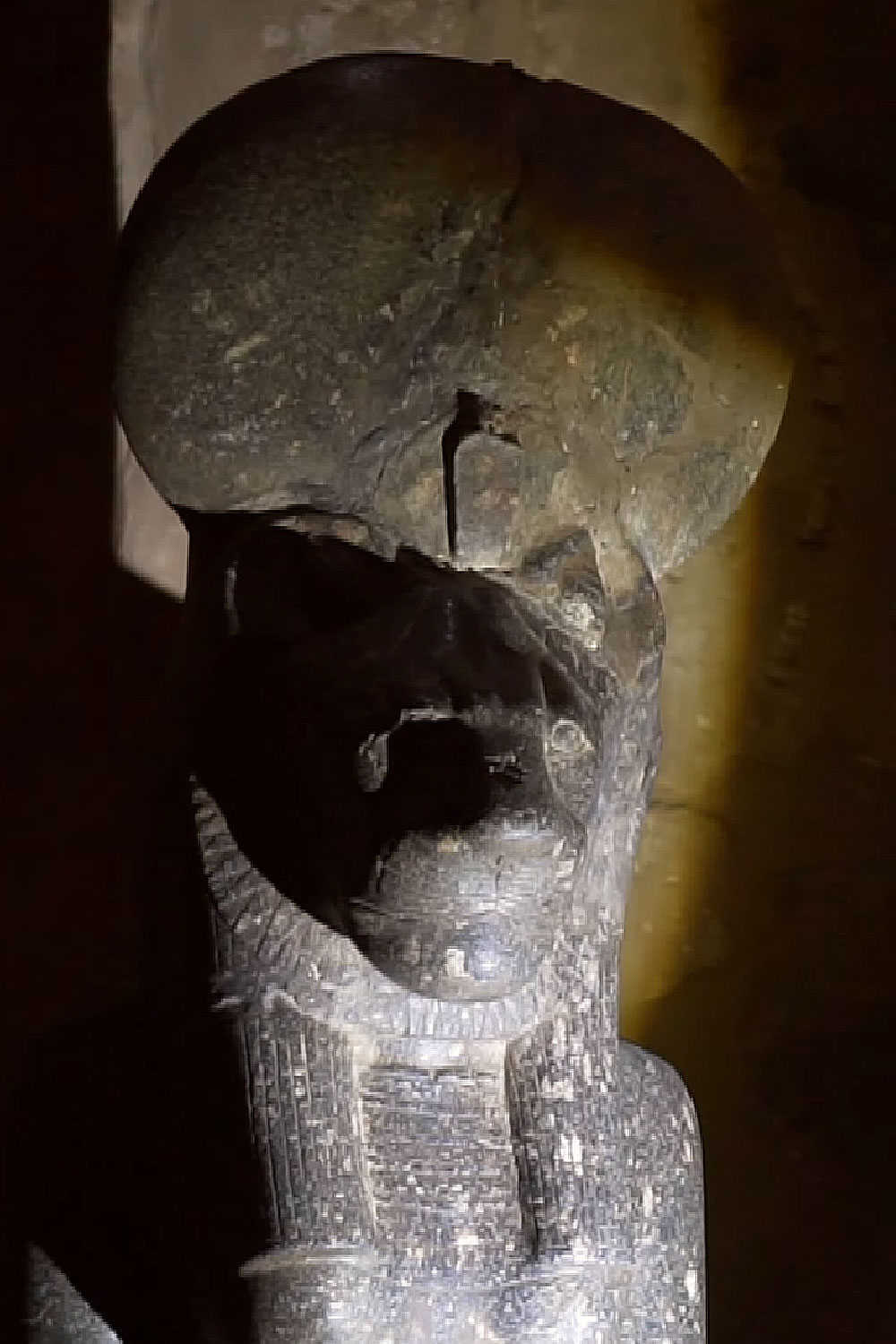 1.) Sekhmet, The Lioness Goddess of Ancient
Egypt
1.) Sekhmet, The Lioness Goddess of Ancient
Egypt
 2.) her shrine is The Temple of Ptah in the
immense Karnak Temple
2.) her shrine is The Temple of Ptah in the
immense Karnak Temple
 3.) she is the companion of Ptah, the god of
healing, 18th Dynasty, 1550/1549 BC. Karnak Temple
3.) she is the companion of Ptah, the god of
healing, 18th Dynasty, 1550/1549 BC. Karnak Temple
 1.) Sekhmet, The Lioness Goddess of Ancient
Egypt
1.) Sekhmet, The Lioness Goddess of Ancient
Egypt
 2.) her shrine is The Temple of Ptah in the
immense Karnak Temple
2.) her shrine is The Temple of Ptah in the
immense Karnak Temple
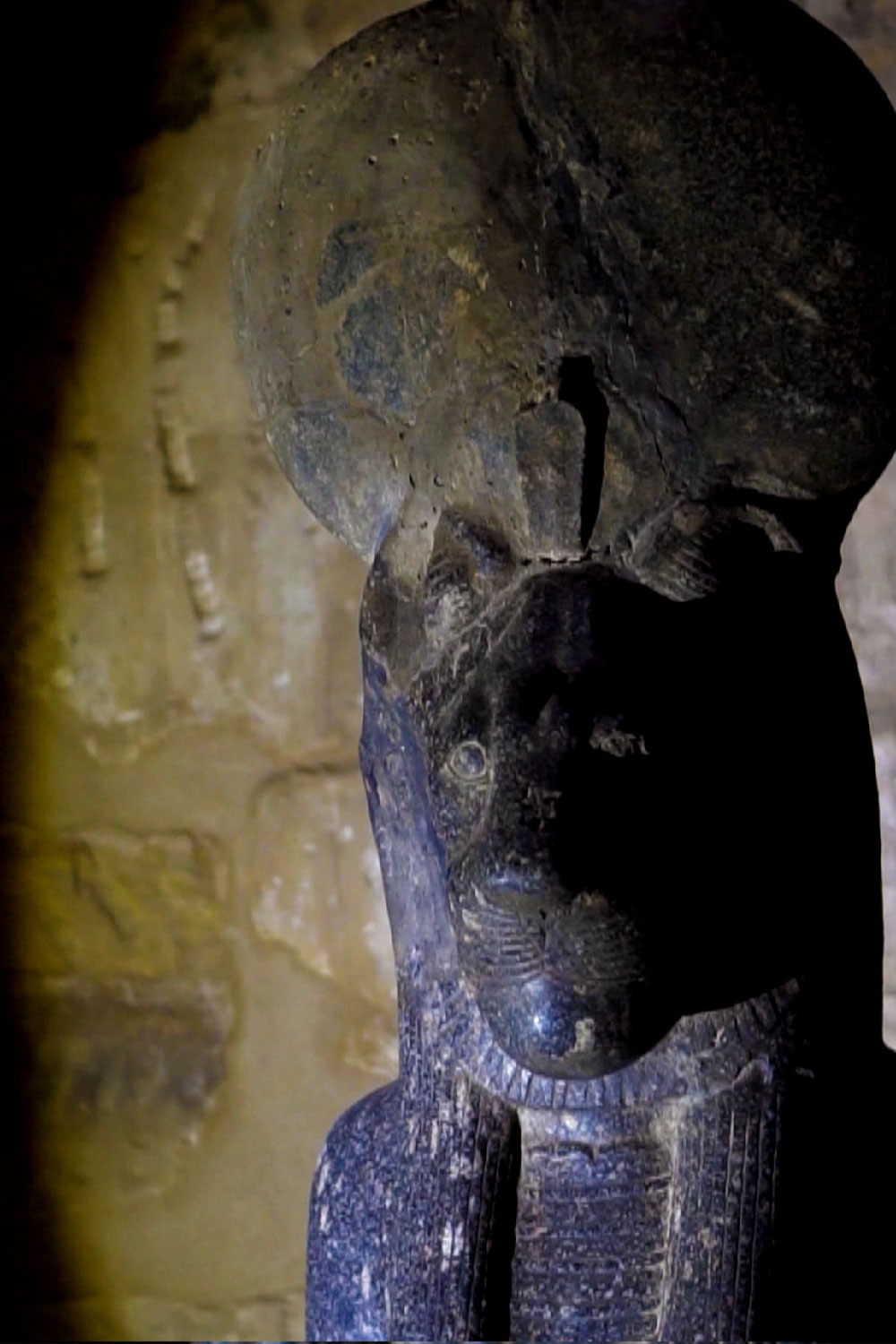 3.) she is the companion of Ptah, the god of
healing, 18th Dynasty, 1550/1549 BC. Karnak Temple
3.) she is the companion of Ptah, the god of
healing, 18th Dynasty, 1550/1549 BC. Karnak Temple
Temple of Mut
The Temple of Mut stands at the center of the southern precinct dedicated to the goddess Mut, consort of Amun and mother of Khonsu. Built primarily in the New Kingdom
and expanded in the Late Period, the temple faces the crescent‑shaped Isheru lake, around which its subsidiary shrines and processional routes were arranged. Its courts
and halls once held hundreds of granite Sekhmet statues, set up by Amenhotep III, underscoring Mut’s fierce protective aspect. As the ritual heart of the precinct,
the temple anchored festivals linking Mut to divine kingship and the theology of the Theban Triad.
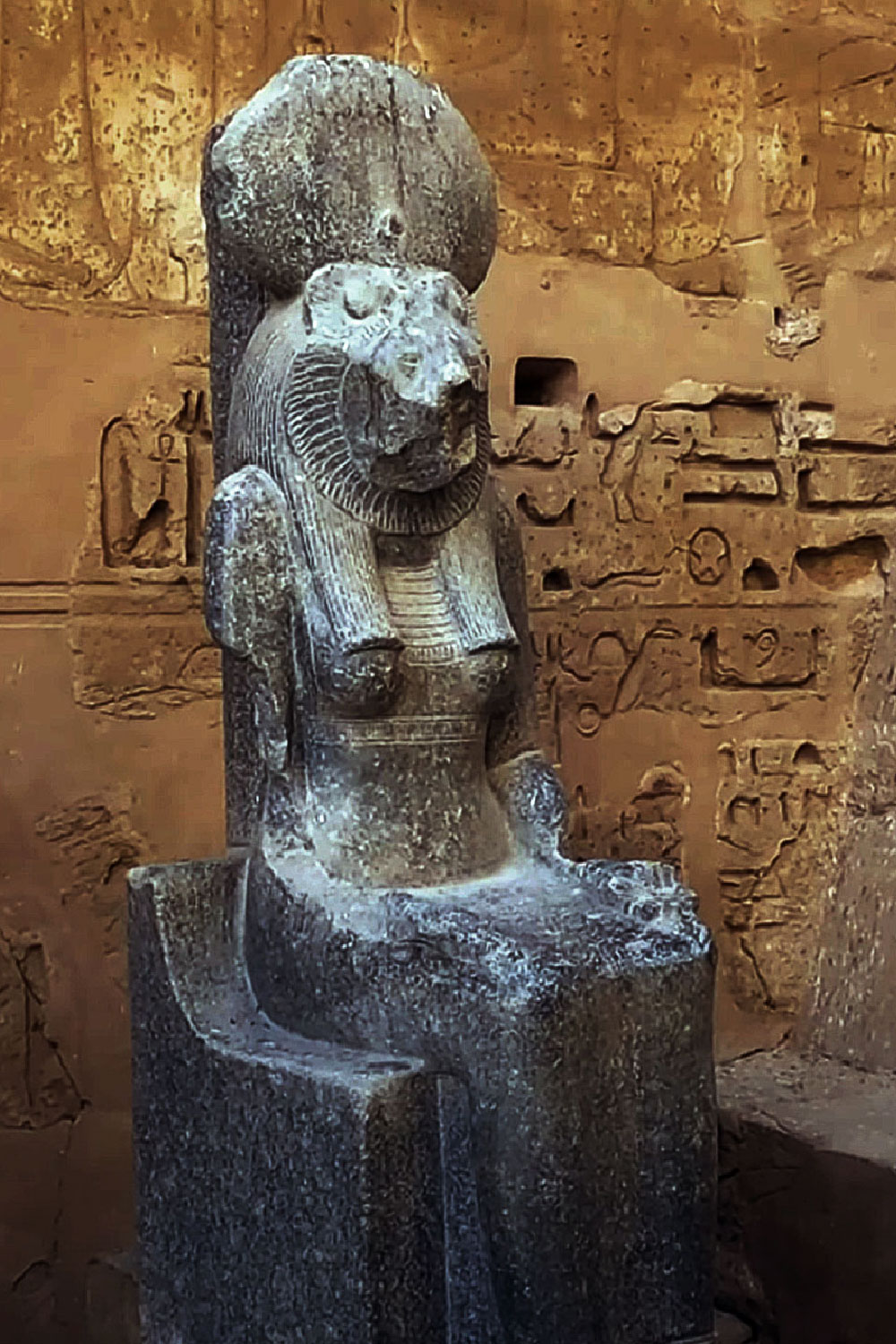 1.) Goddess Sekhmet, with the head of a lioness and a human body, symbolizing her fierce nature as a protector and warrior,
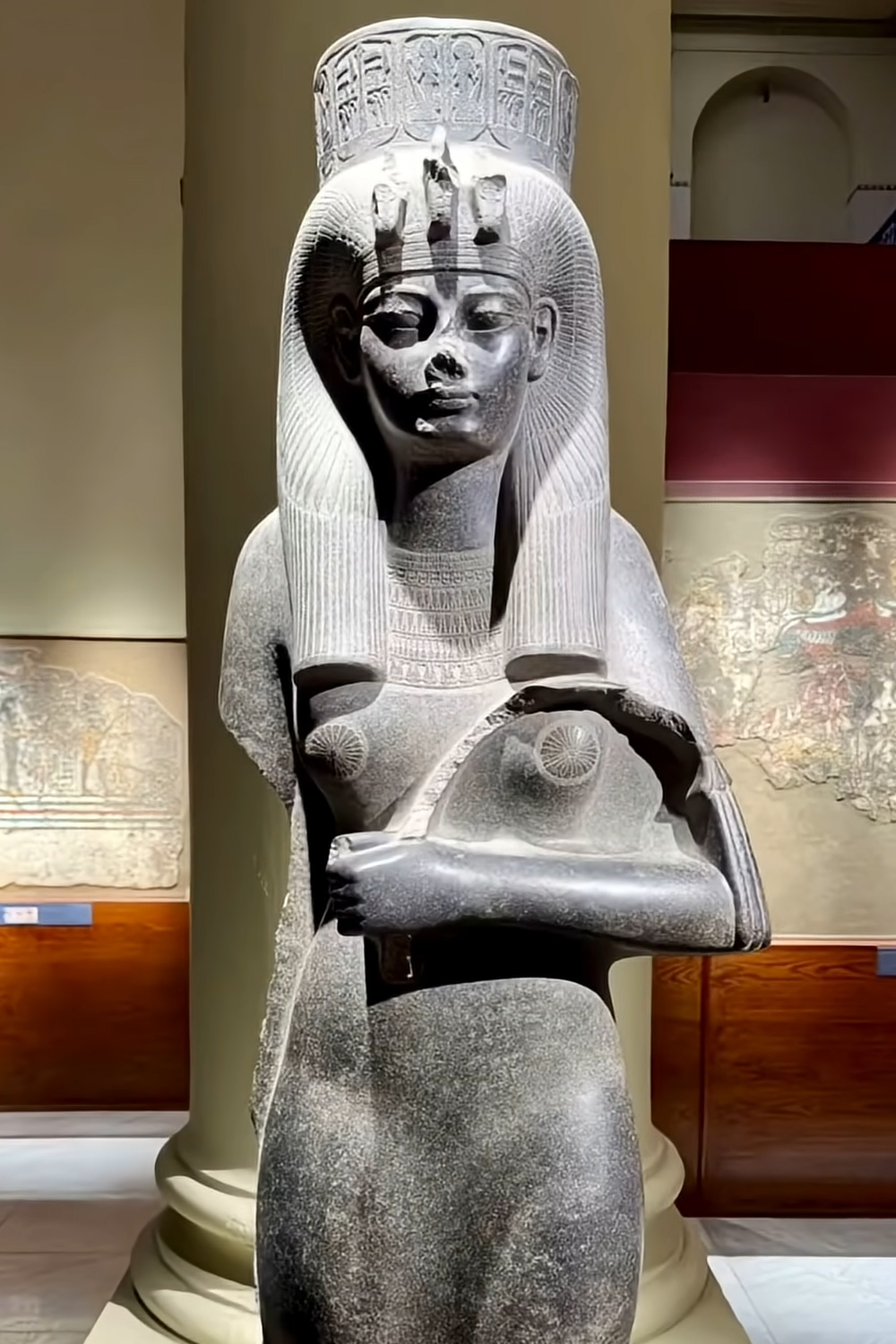
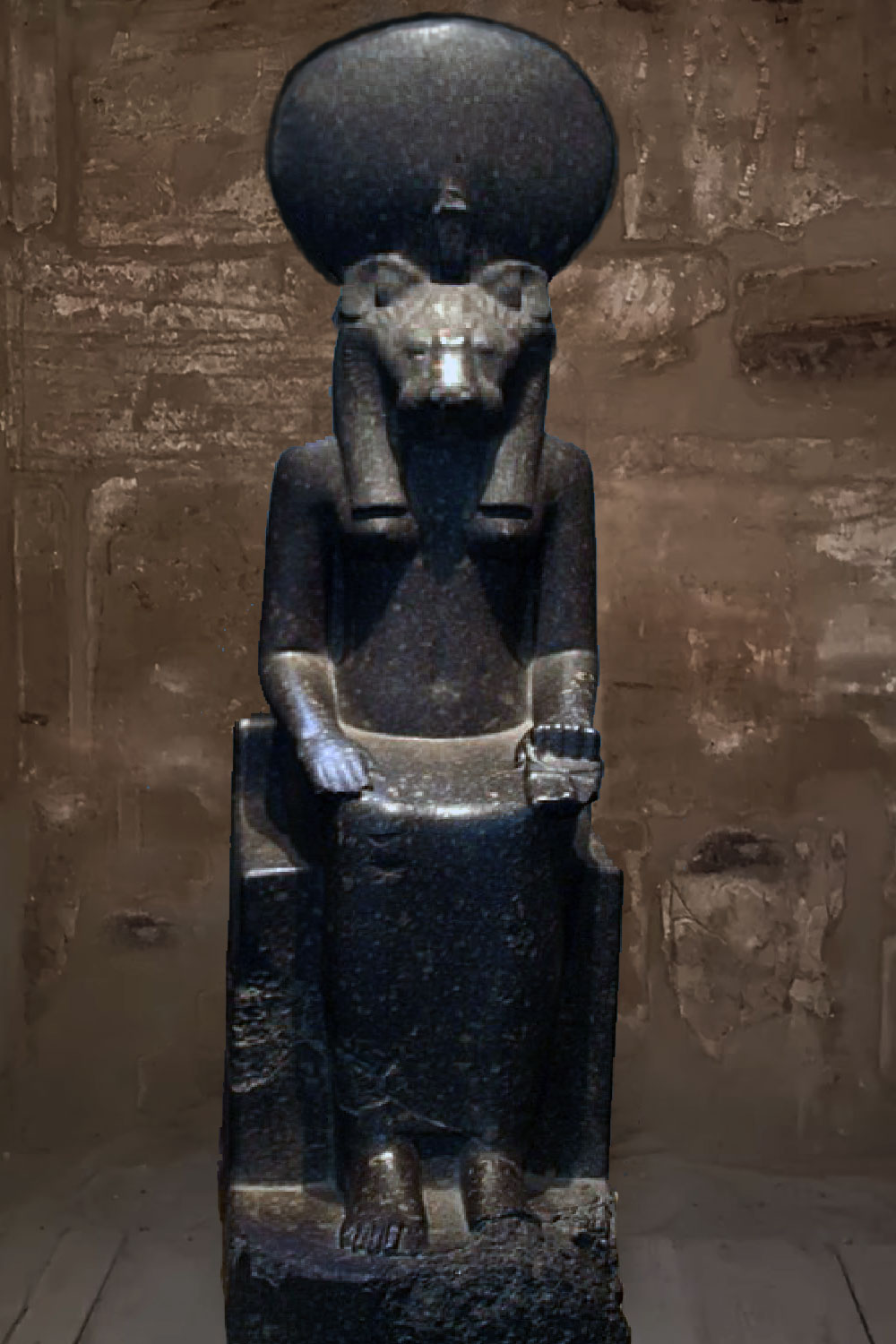 Lion-headed goddess Sekhmet, located at the Temple of Mut in Karnak, the warrior deity is often depicted as a human-bodied figure with a lioness head, embodying destruction and healing, created during the reign of Pharaoh Amenhotep III (18th Dynasty, 1391–1353 BC)
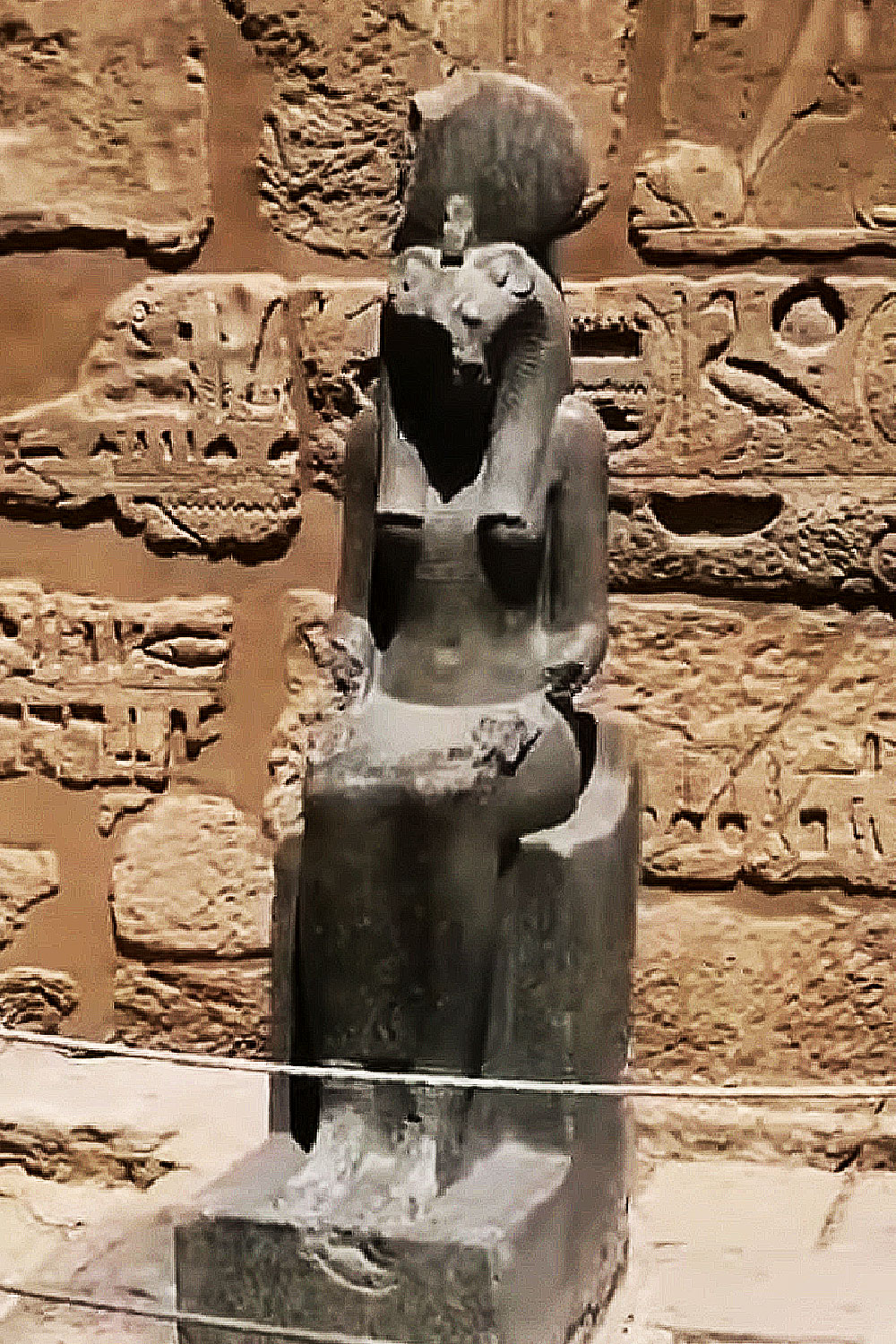 Goddess Sekhmet, the lion-headed goddess seated on a throne, wearing a wide collar necklace and holding an ankh symbol for life and healing, carved diorite, the Temple of Ptah, Karnak Temple
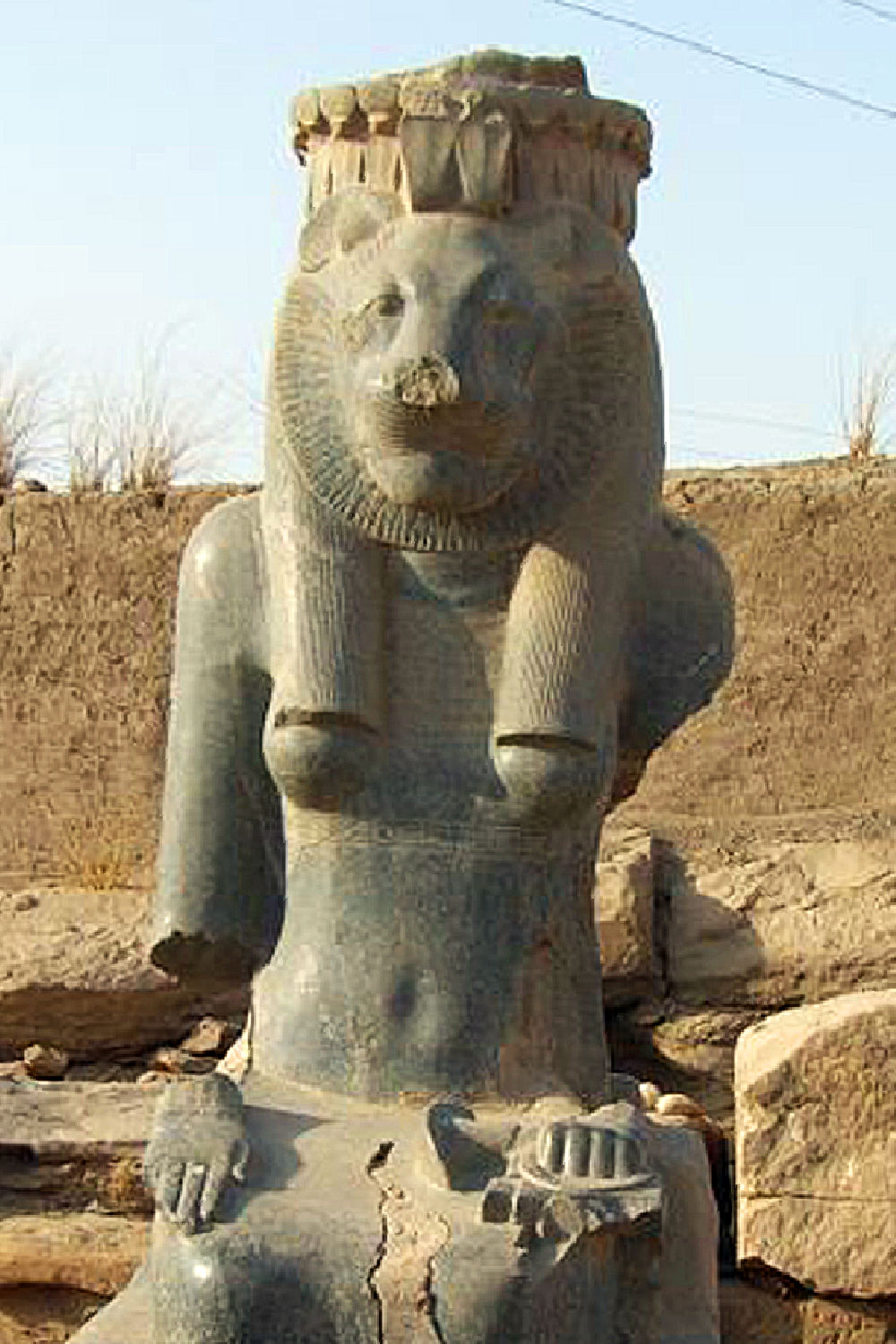 1.) Goddess Sekhmet, with the head of a lioness and a human body, symbolizing her fierce nature as a protector and warrior,
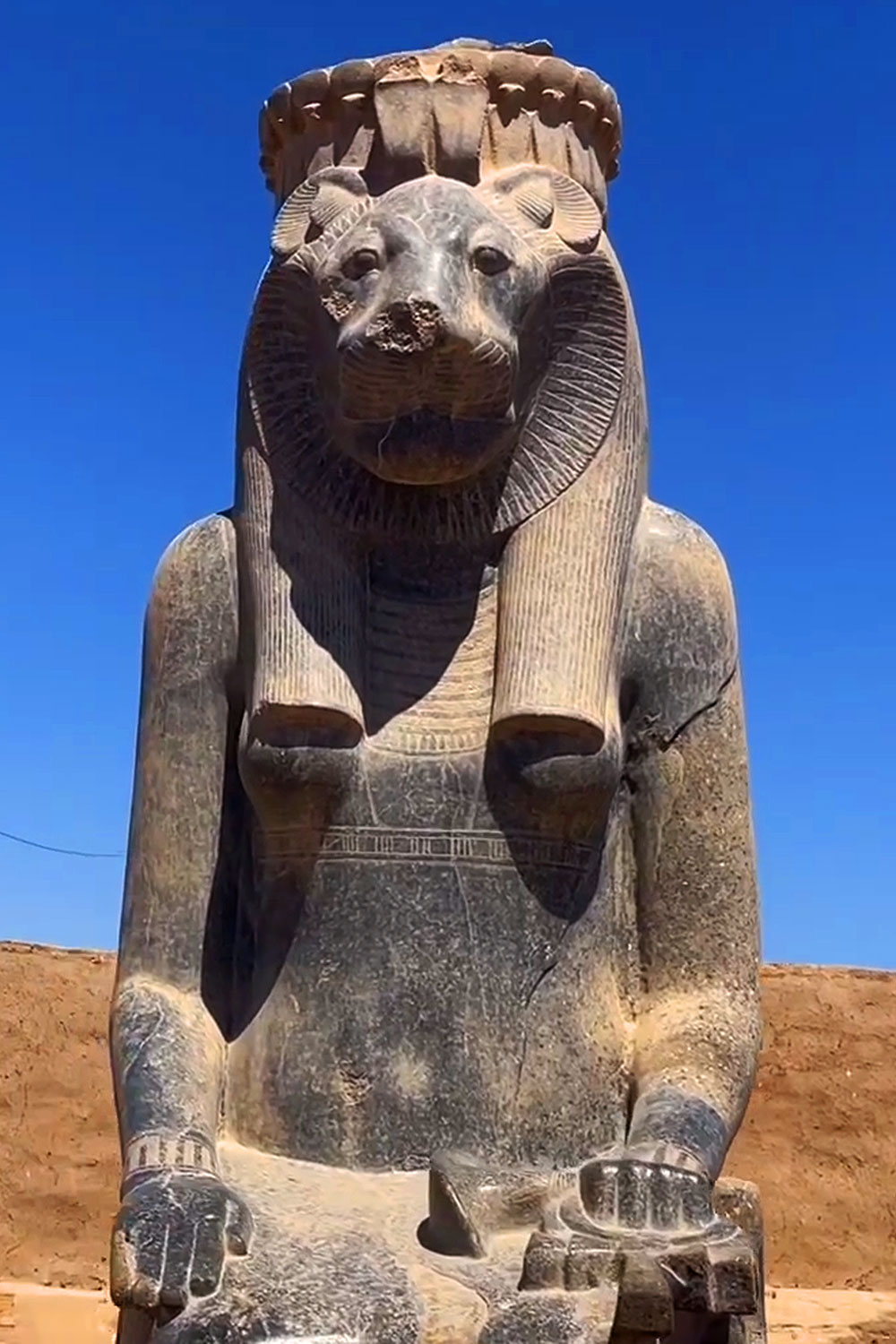 Lion-headed goddess Sekhmet, located at the Temple of Mut, the warrior deity is often depicted as a human-bodied figure with a lioness head, embodying destruction and healing, created during the reign of Pharaoh Amenhotep III (18th Dynasty, 1391–1353 BC)
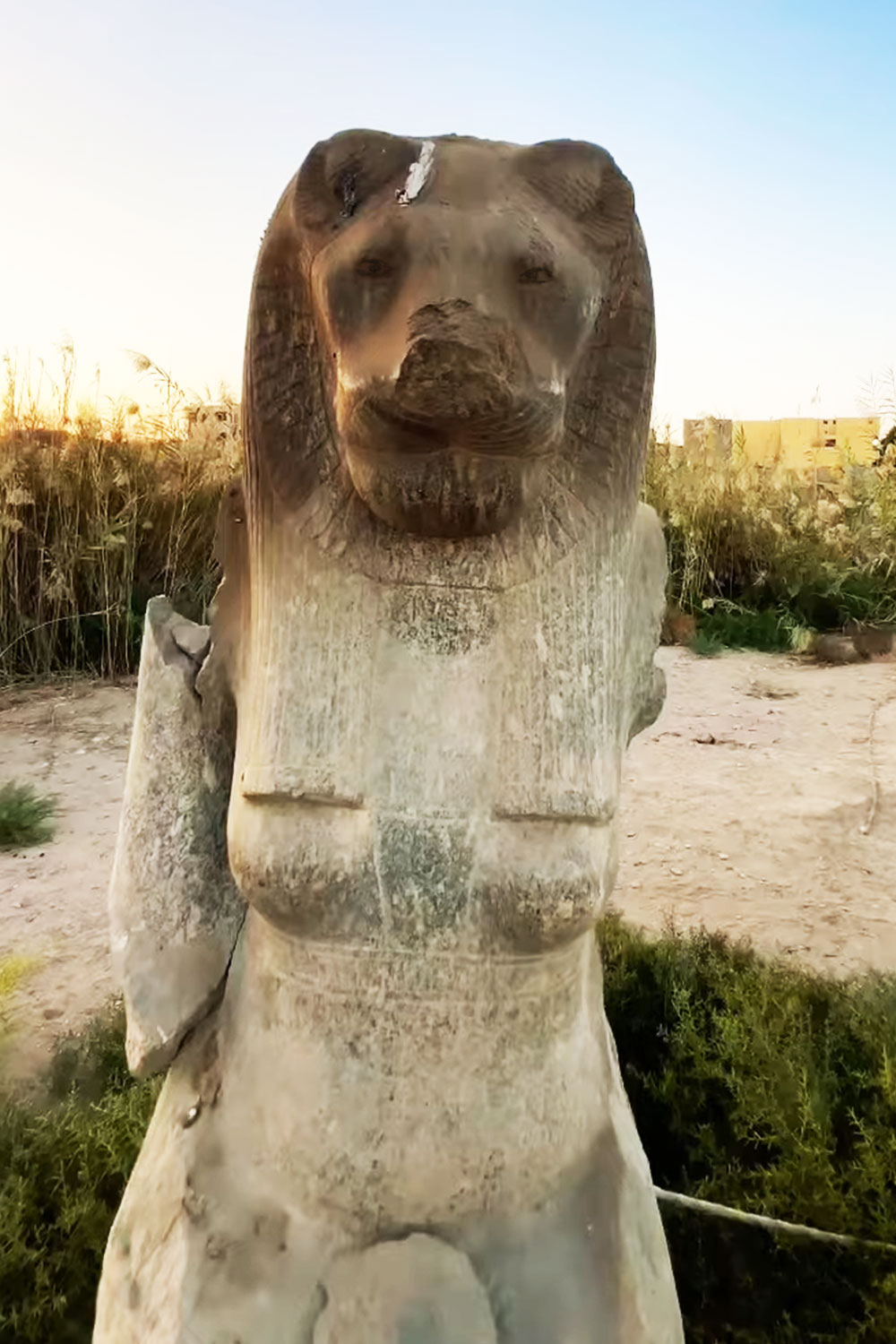 Goddess Sekhmet, the lion-headed goddess seated on a throne, wearing a wide collar necklace and holding an ankh symbol for life and healing, carved diorite, the Temple of Mut
The Precinct of Mut
The Precinct of Mut, located south of the main Karnak axis, is the sacred district dedicated to Mut, the mother goddess of the Theban Triad. Developed chiefly in the
New Kingdom and expanded in the Late Period, the precinct centers on Mut’s temple and its surrounding sacred lake, the Isheru, a crescent‑shaped basin unique in Egyptian
temple architecture. The area contains numerous subsidiary shrines, colossal statues—especially of Sekhmet—and extensive evidence of ritual activity tied to divine kingship
and Theban theology. As a counterpart to the Amun precinct, it forms a crucial component of Karnak’s broader religious landscape.
 1.) The colossal red granite Sacred Scarab Statue located by the Sacred Lake in The Precinct of Mut, originally dedicated by Pharaoh Amenhotep III during the 18th Dynasty
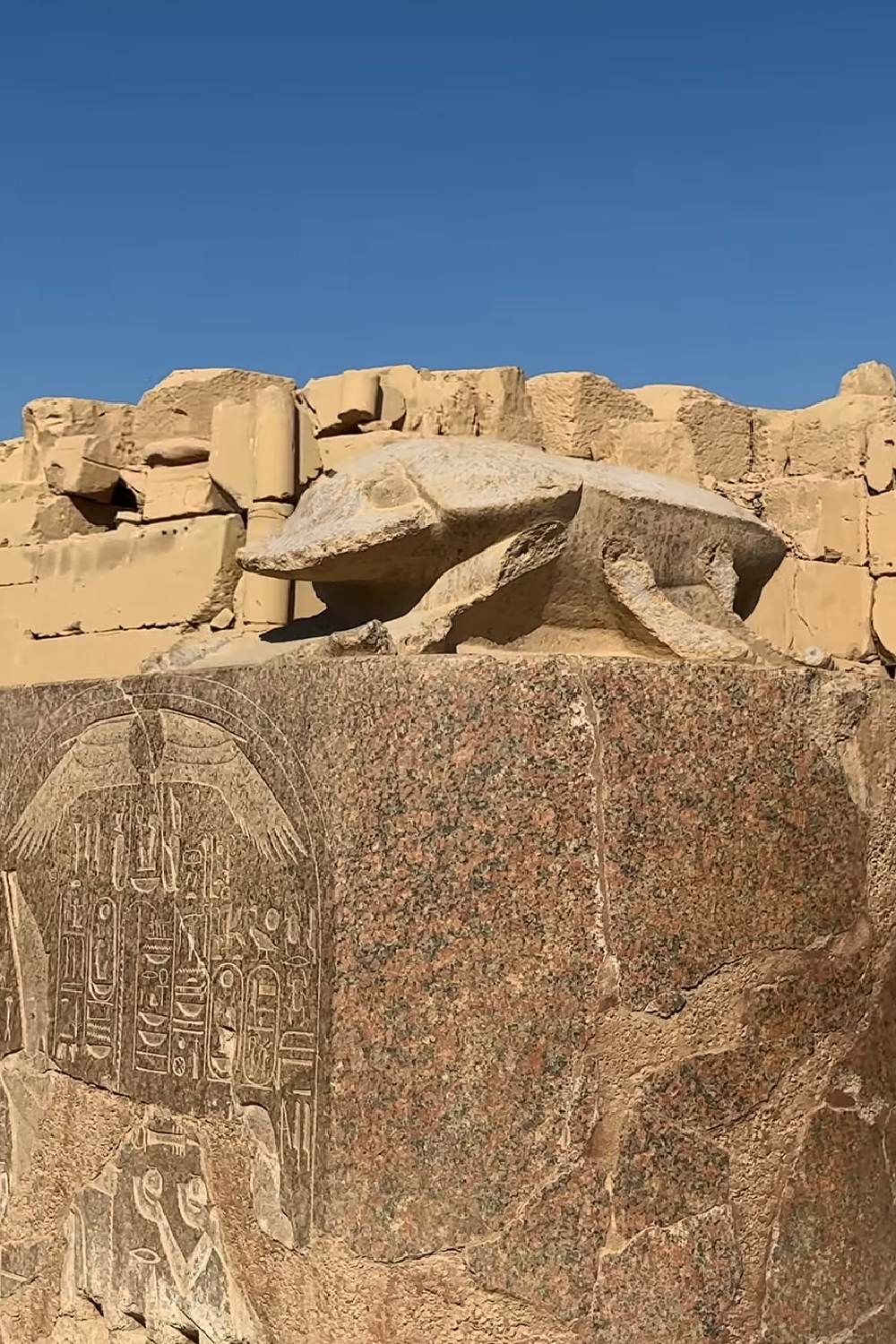 2.) Represents Khepri, the ancient Egyptian scarab-faced god of the rising sun, creation, and eternal rebirth.
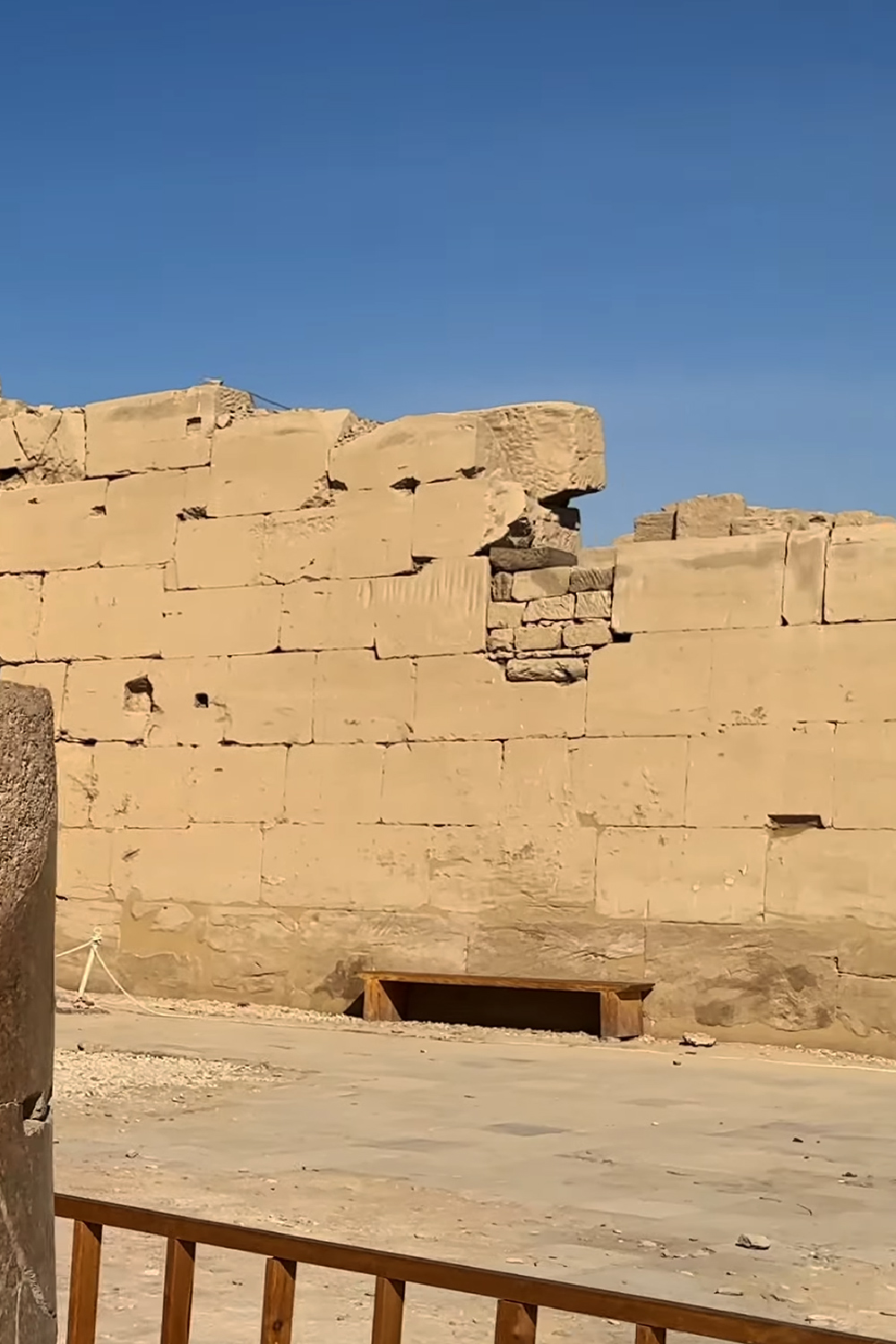 3.) The Tradition: Visitors famously walk counterclockwise around the pedestal (traditionally seven times) for good luck, fertility, and fulfilled wishes.
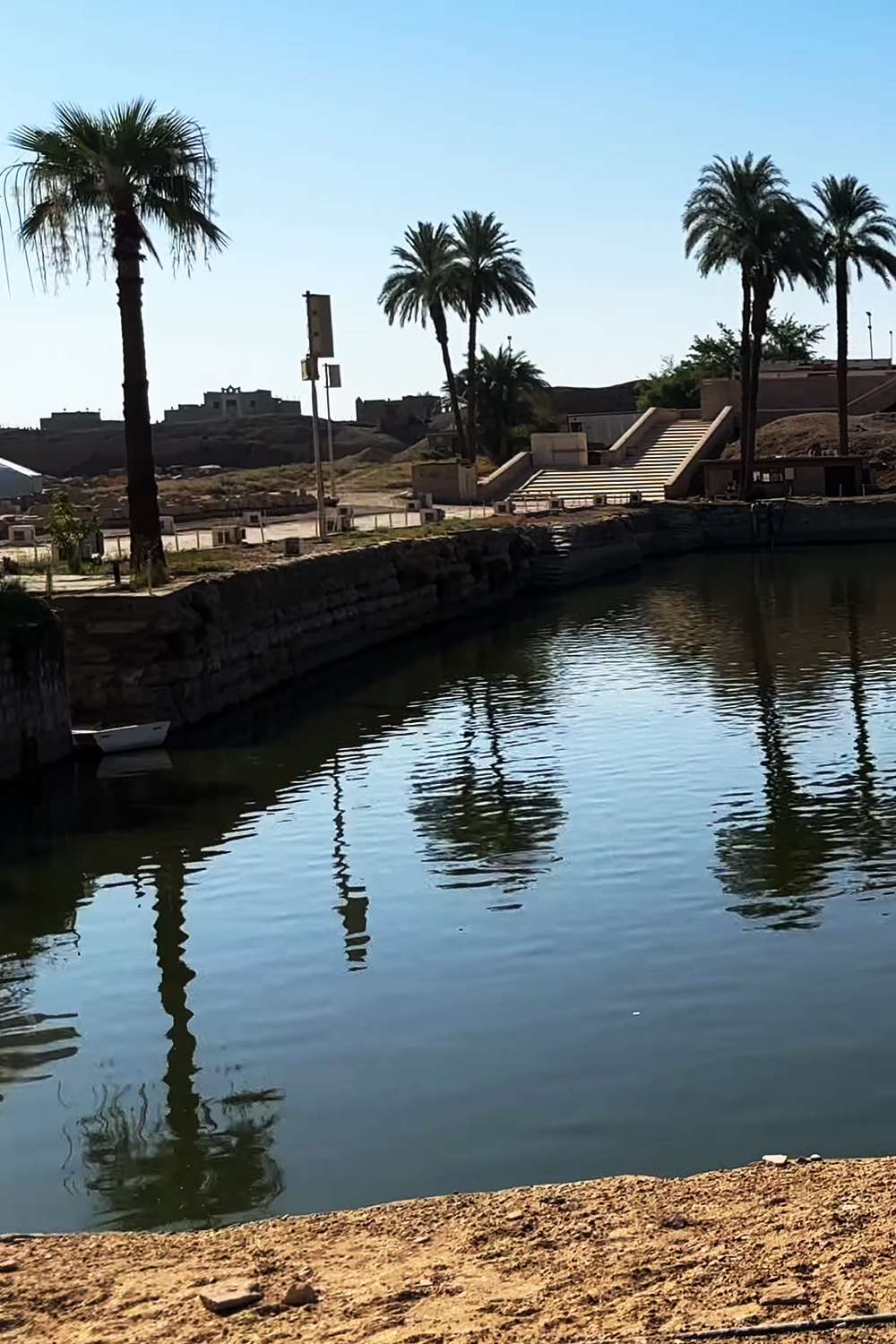 The Sacred Isheru Lake, in the Precinct of Mut, is the largest of its kind from ancient Egypt, measuring roughly 120 meters by 77 meters (393 feet by 252 feet), just next to the lake sits a massive granite statue of a scarab beetle, dedicated by Amenhotep III to Khepri (the god of the rising sun).
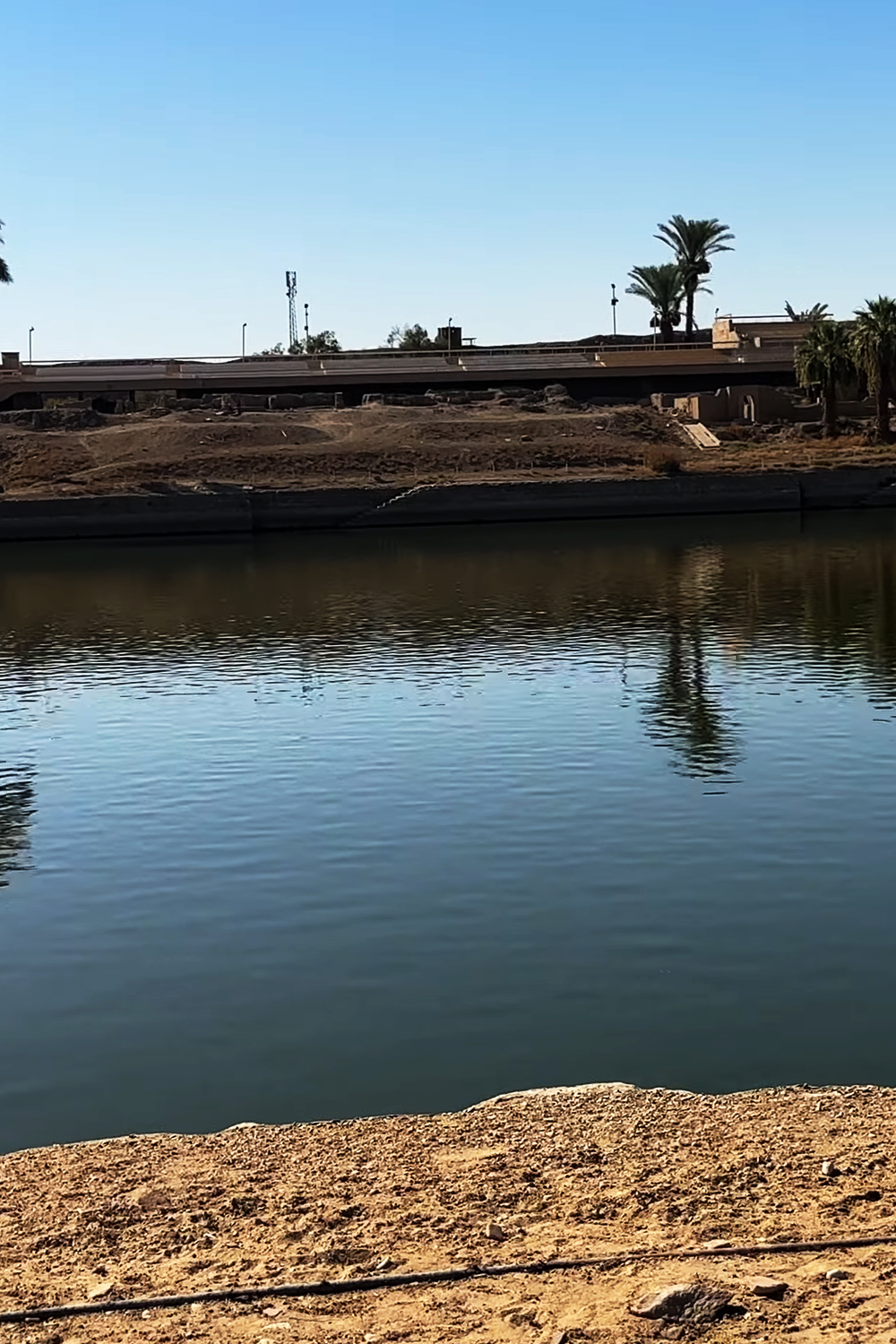 high priests of Amun-Re were required to wash in the holy waters four times a day—twice during the day and twice at night—to maintain ritual purity before entering the inner sanctuaries, during grand religious festivals, priests navigated divine statues across the lake
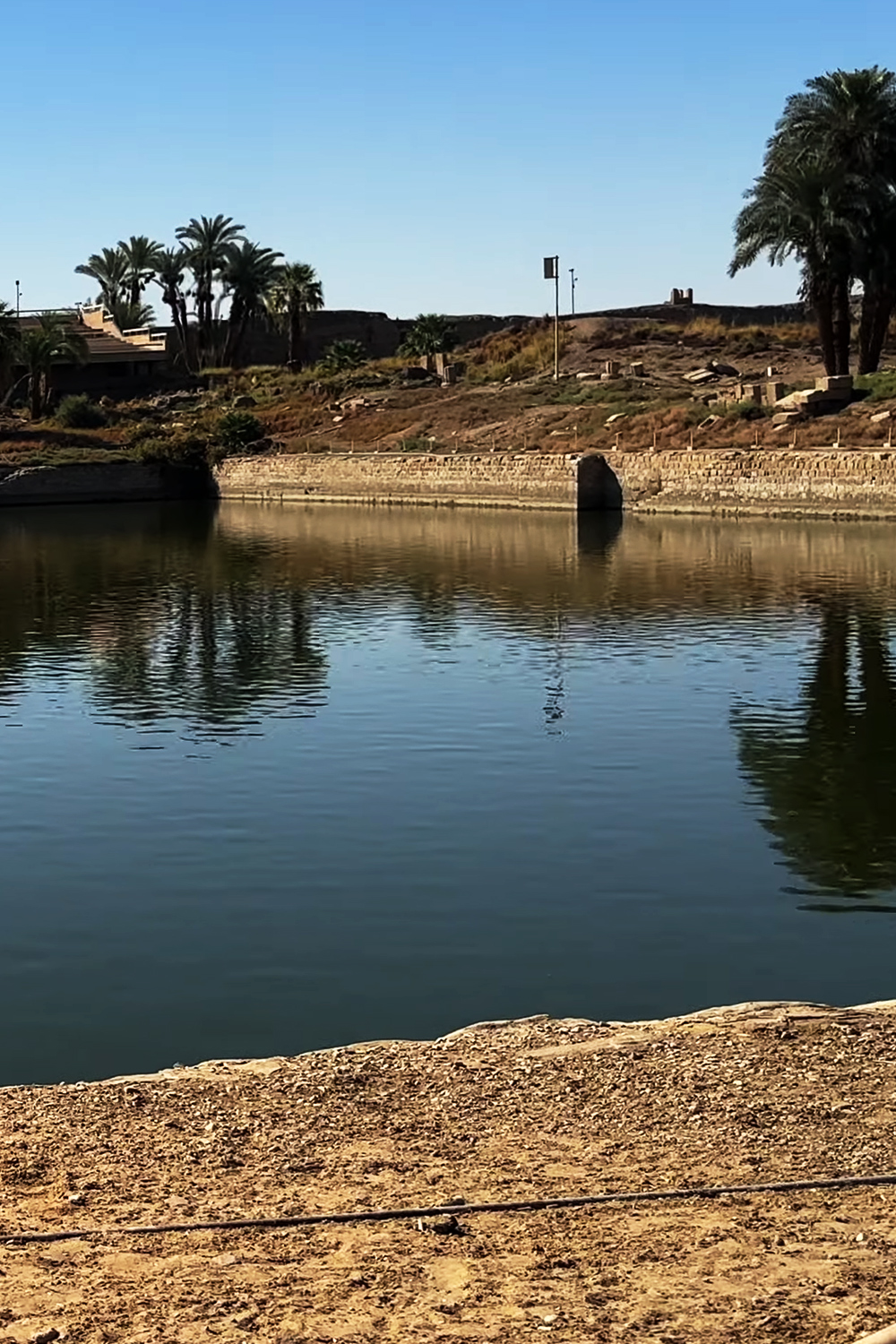 in elaborate ceremonial boats called sacred barques, the lake symbolized Nun, the primeval ocean of chaos from which the ancient Egyptians believed all life and creation originally emerged, the lake is dug down to the level of the local water table. Even today, it remains filled by the subterranean waters of the Nile.
Festival Hall of Thutmose III
The Festival Hall of Thutmose III, built within the Precinct of Amun‑Re at Karnak during the pharaoh’s prosperous New Kingdom reign (1479–1425 BC), commemorated his
Heb Sed jubilee—the ritual renewal of royal power. Measuring roughly 61 × 46 m and constructed of sandstone, the hall is an architectural masterpiece: its elevated central
nave and side aisles evoke an inverted papyrus bundle, while its columns imitate the tent poles of Thutmose III’s military campaign tents. The bas‑reliefs record scenes
of royal triumph and ritual performance, reinforcing the hall’s dual identity as both jubilee monument and symbolic evocation of the king’s far‑reaching campaigns.
Its alignment with the winter solstice underscores the astronomical and ritual precision characteristic of Karnak’s sacred architecture.
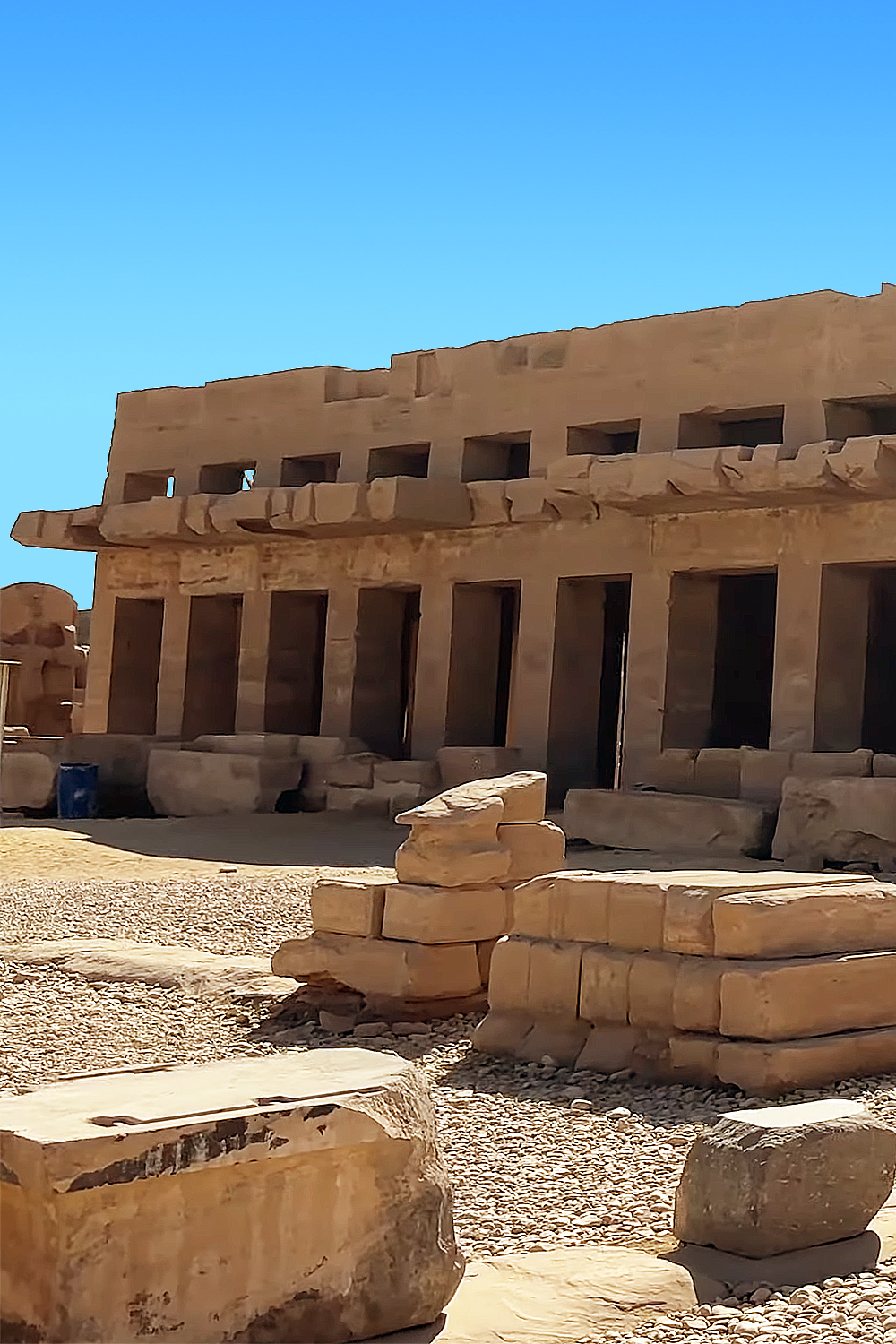 Festival Hall of Thutmose III (also known as the Akh-menu), this unique ancient shrine dates back to the 18th Dynasty (circa 1479–1425 BCE)
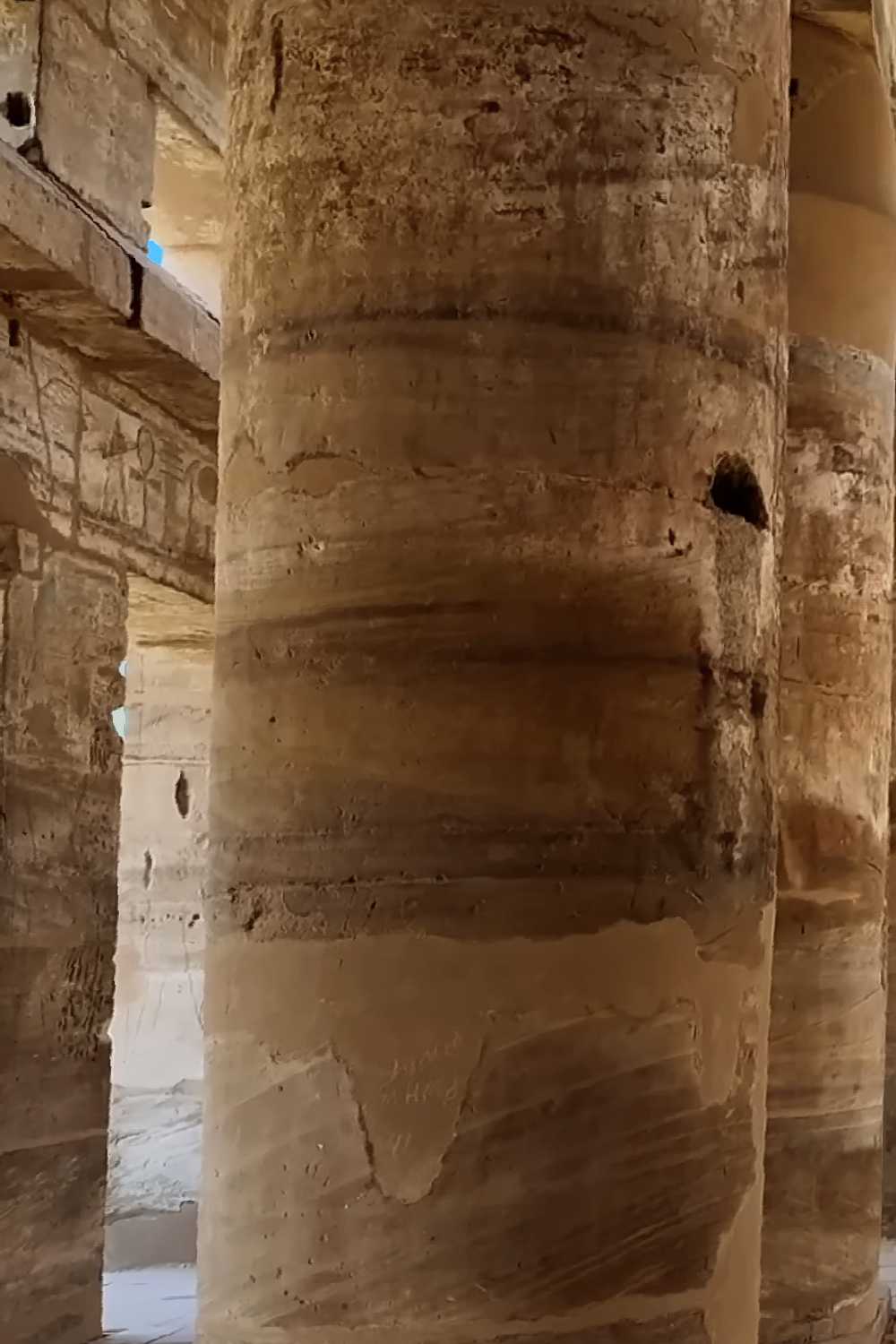 Unlike the traditional papyrus- or lotus-shaped columns found throughout most of ancient Egypt, the pillars shown here imitate the wooden poles used to prop up traditional military tents, a nod to Thutmose III’s legendary military campaigns
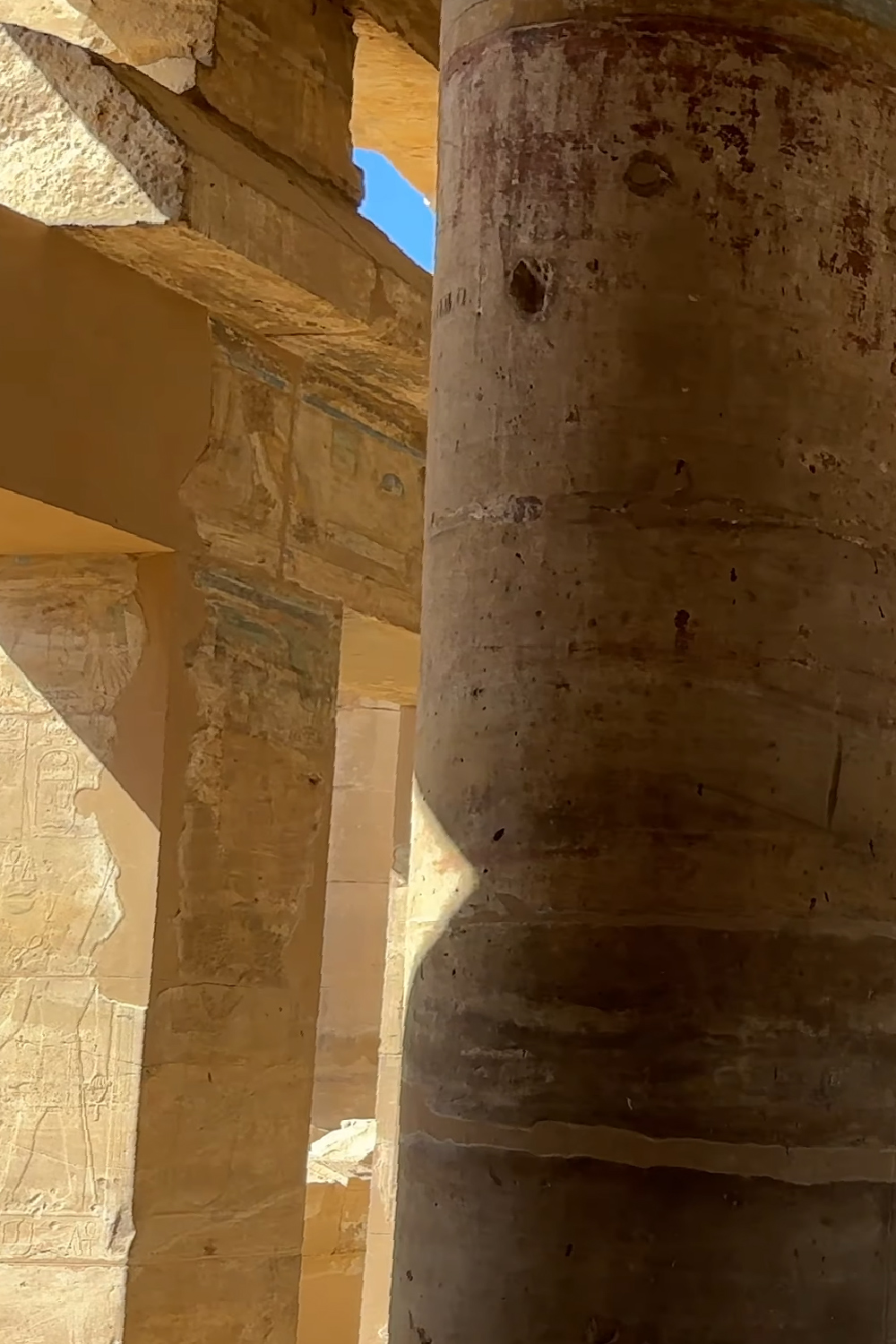 The ancient term Akh-menu translates roughly to "the most glorious of monuments" or "monument to the living spirit"
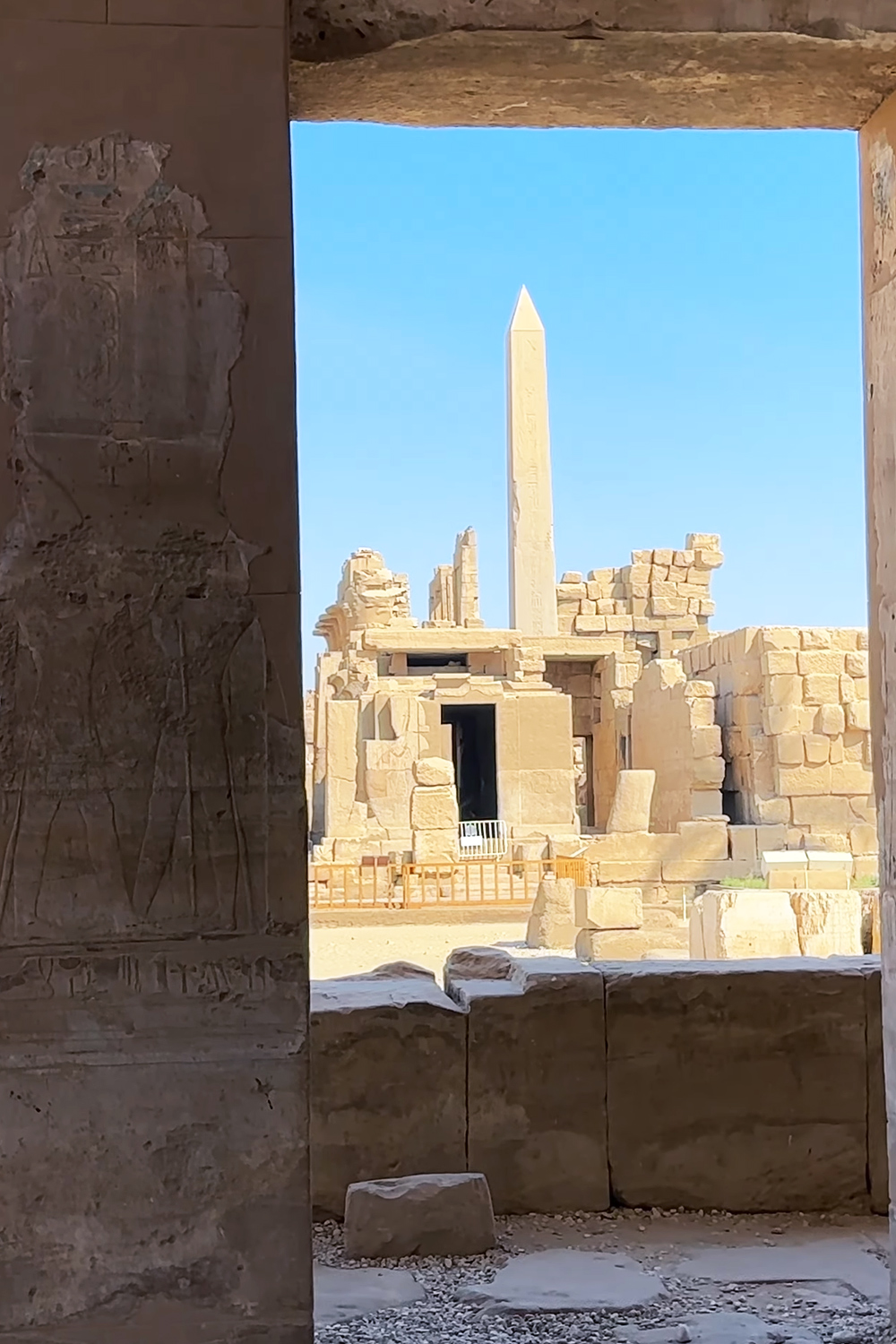
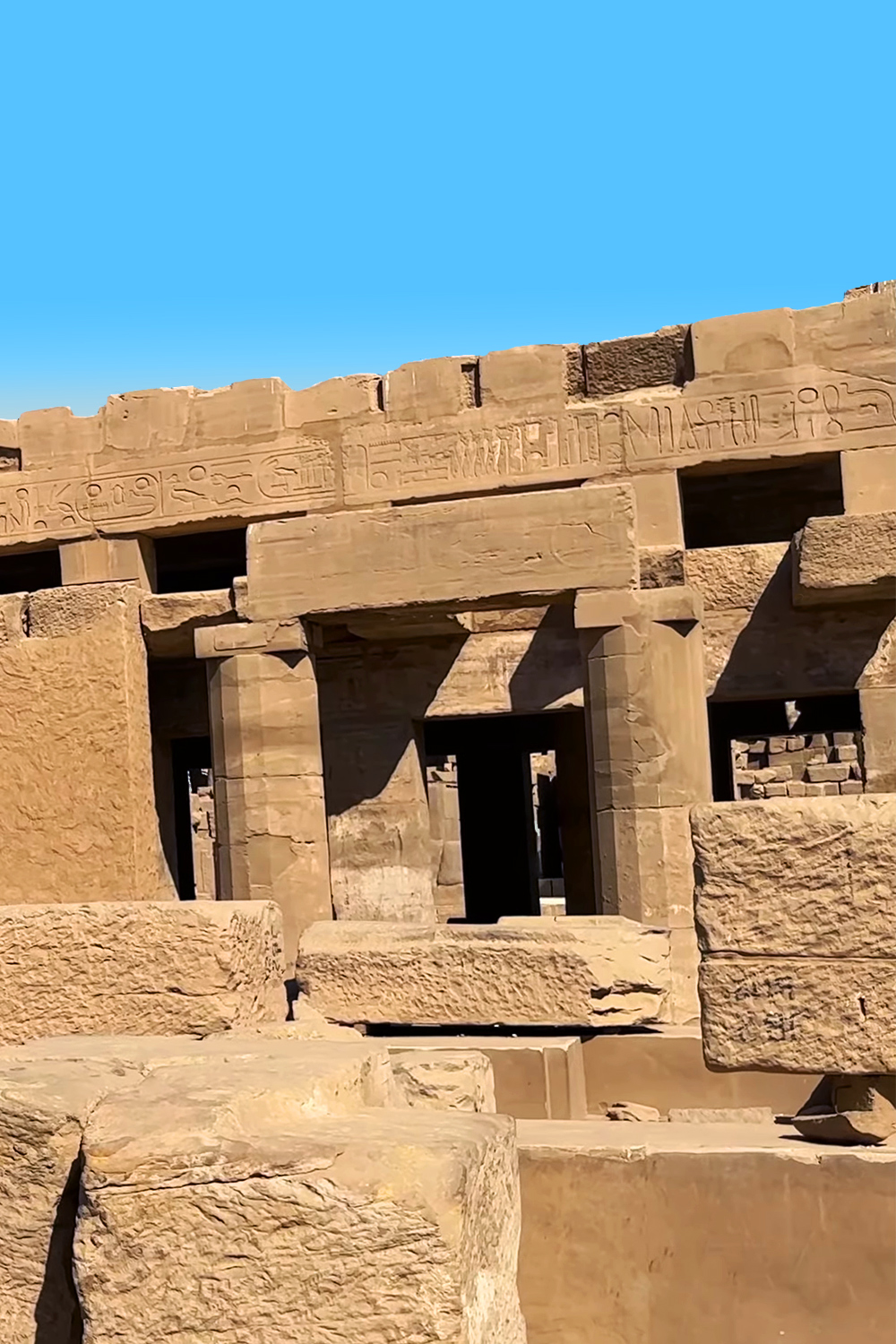
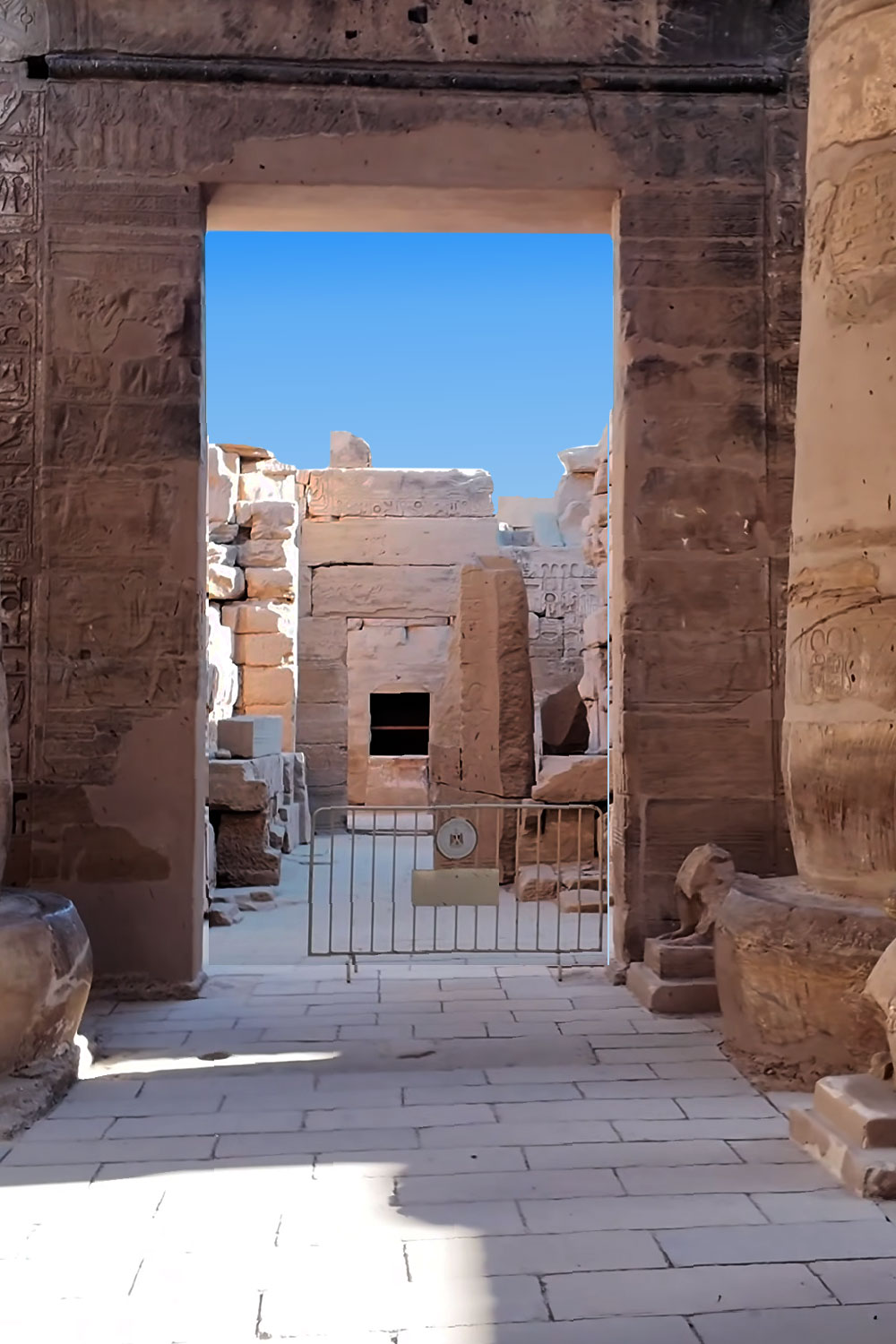
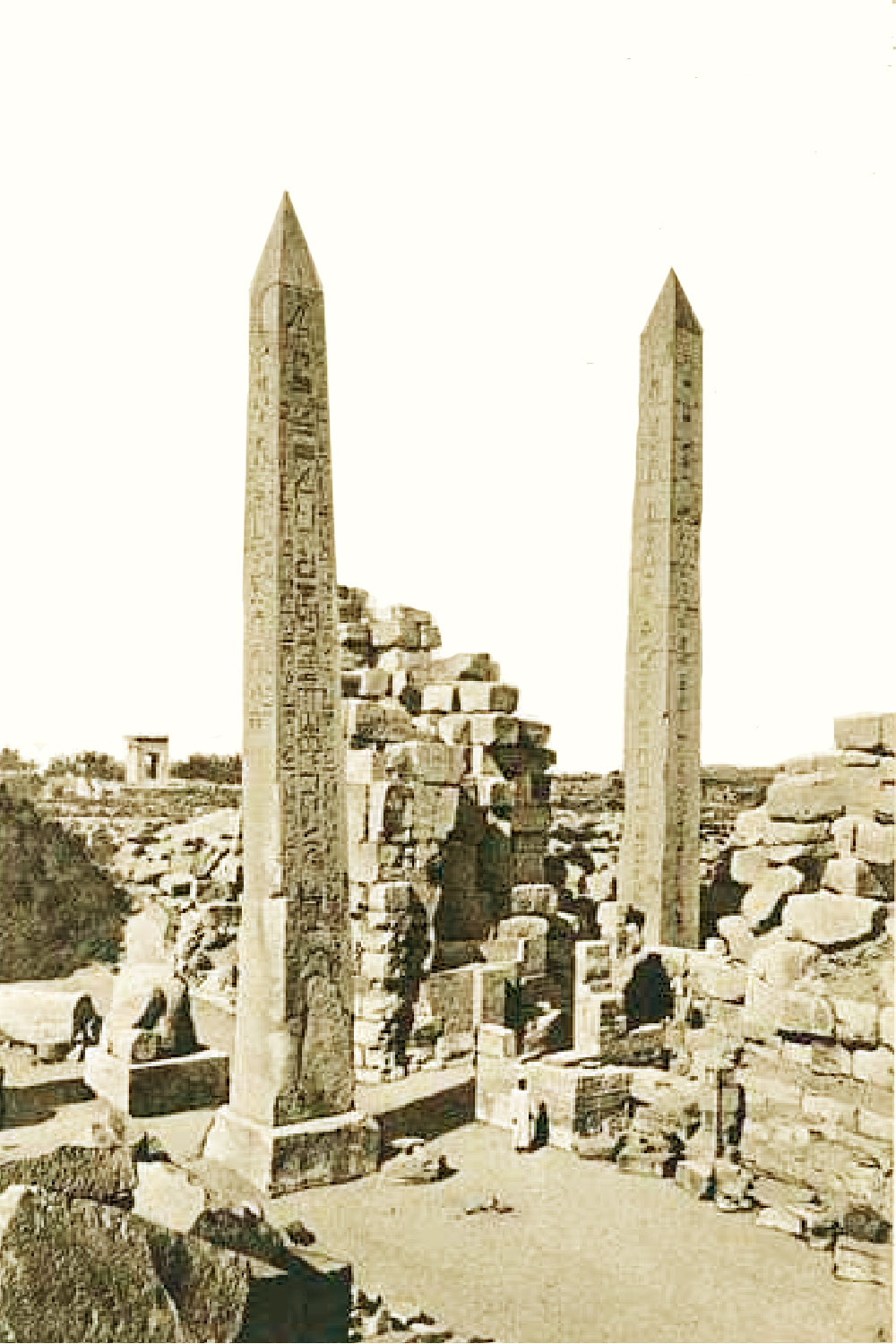
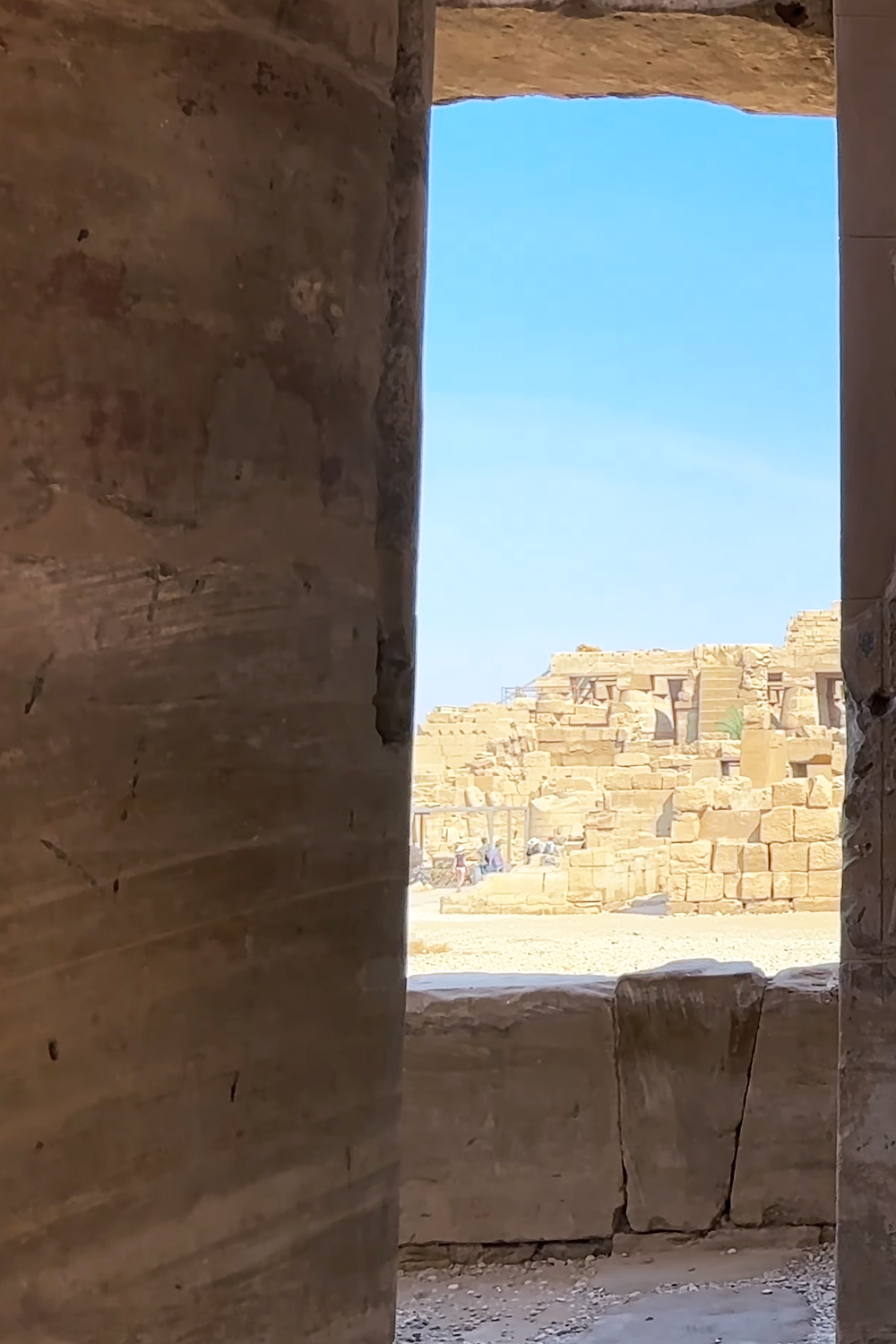 View through a sandstone doorway framing the towering Obelisk of Hatshepsut and ancient ruins of the Karnak Temple Complex
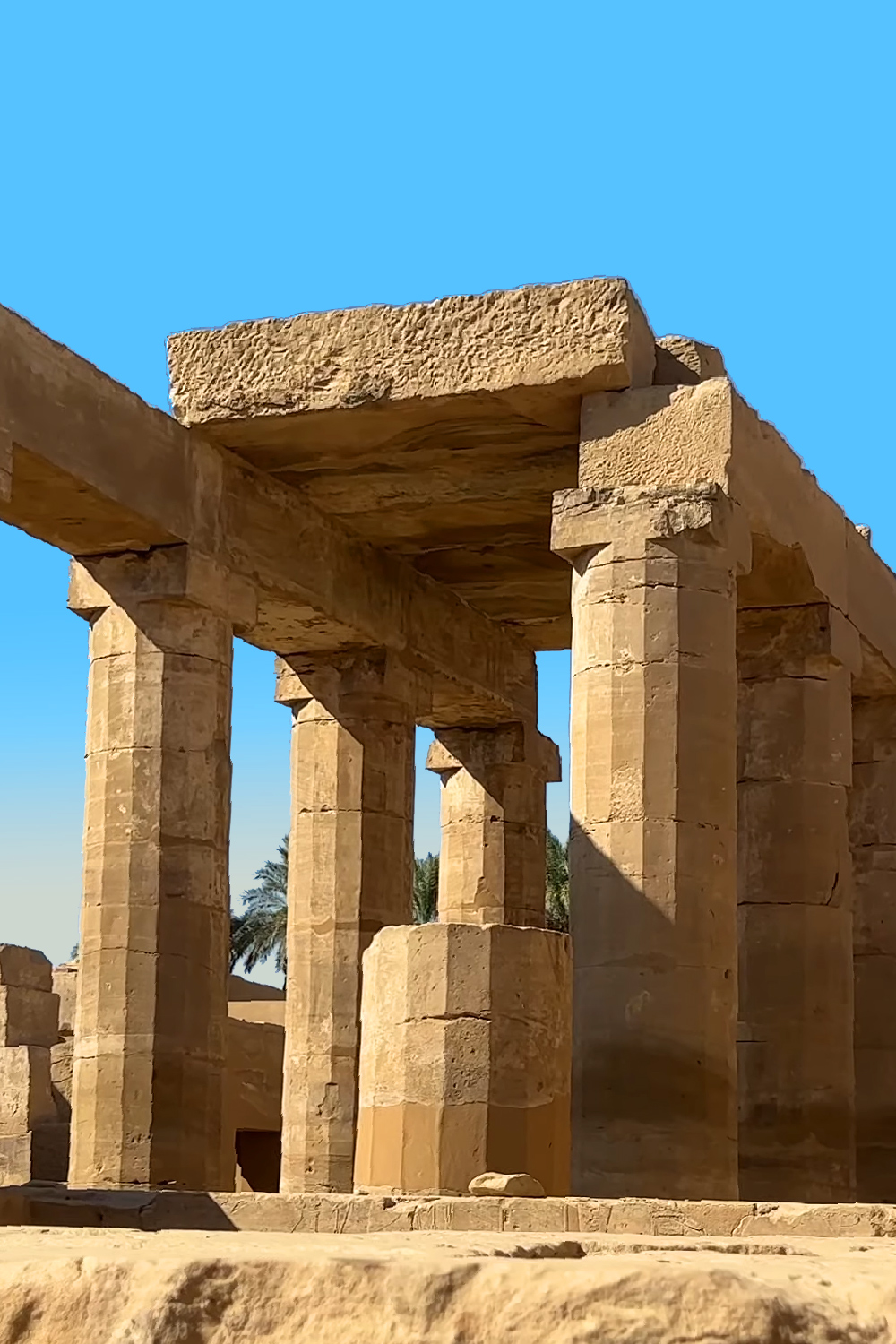
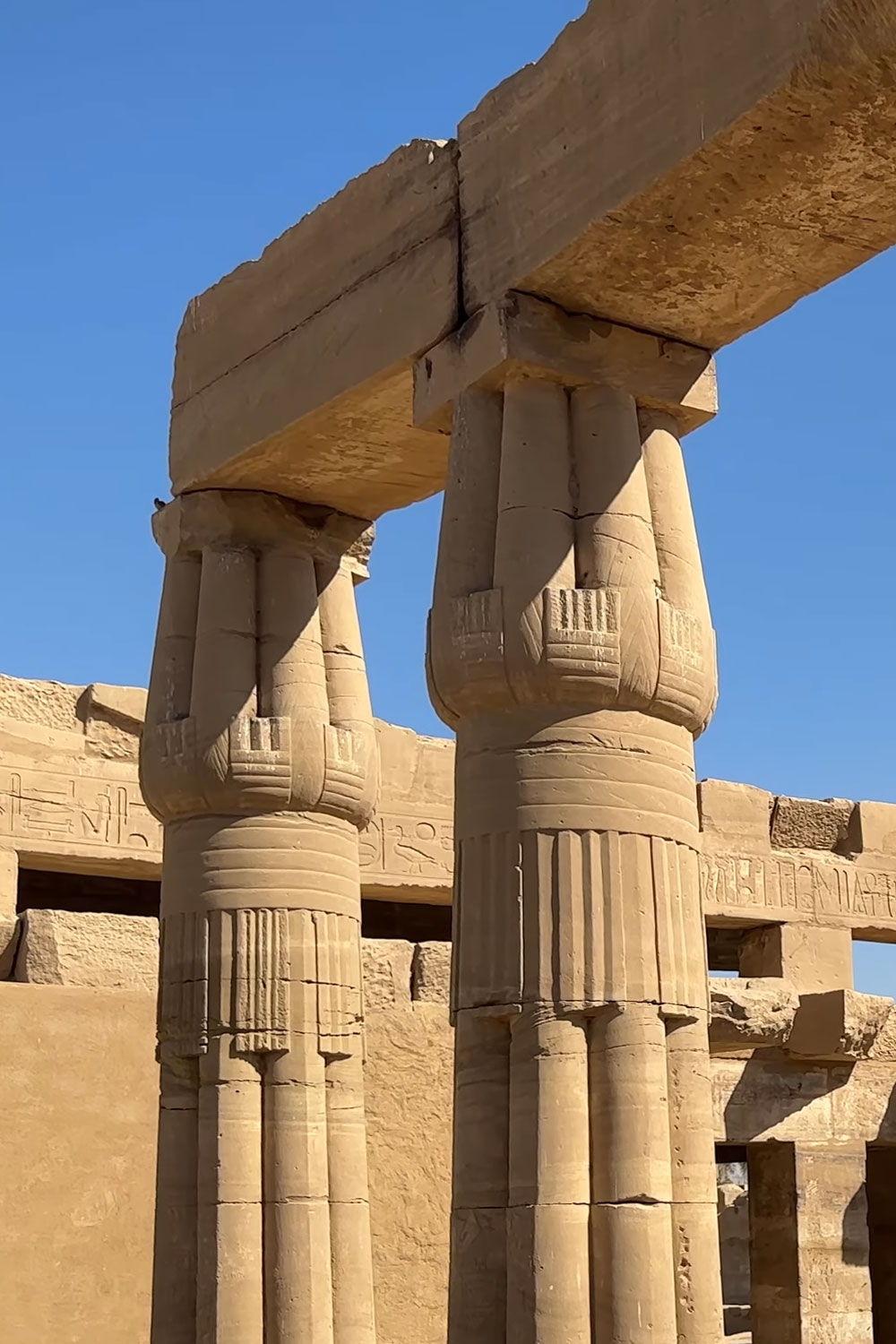
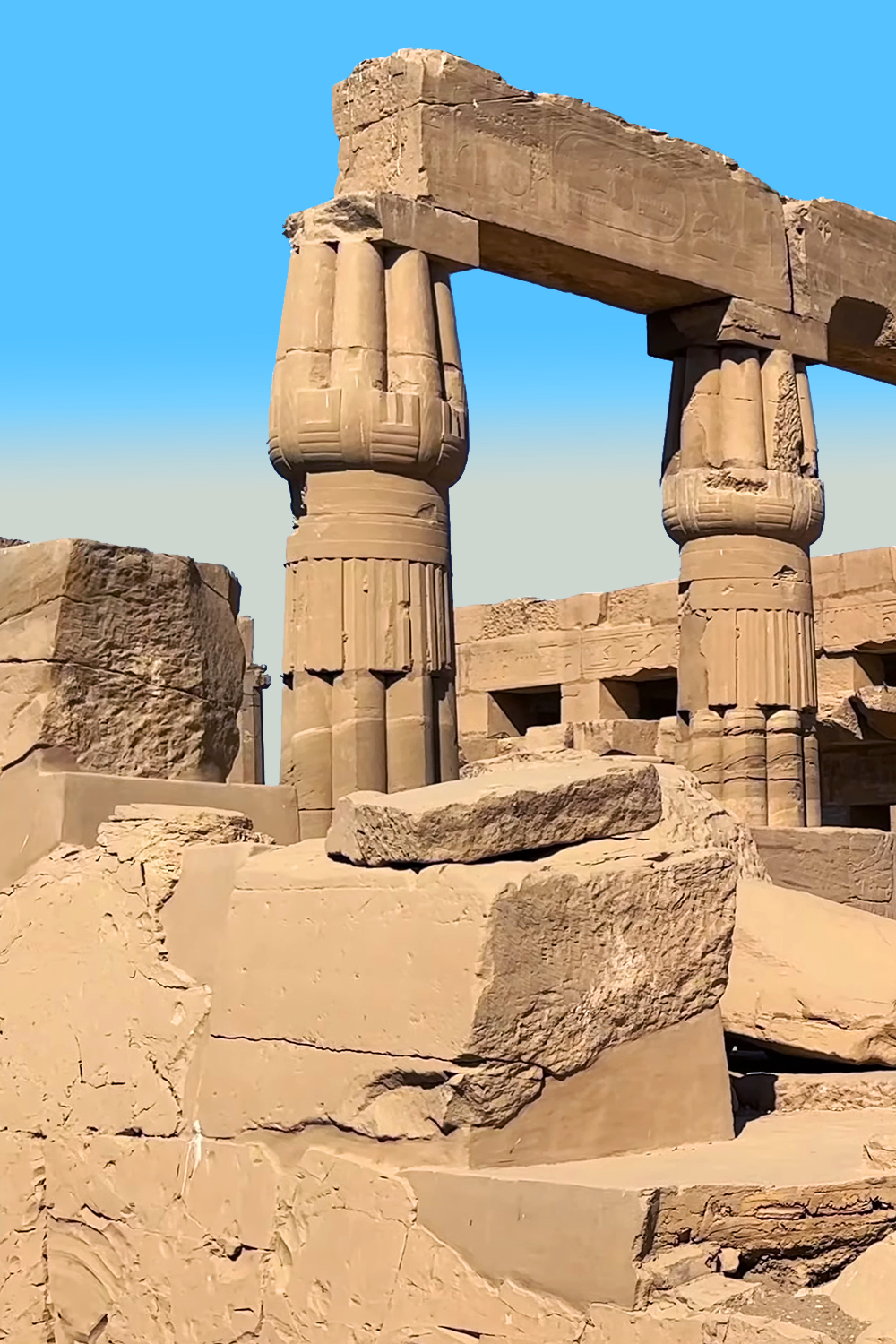 Four clustered papyrus-bud columns with heavy stone architraves, 18th Dynasty, Festival Hall of Thutmose III (also known as the Akh-menu)
Temple of Khonsu
Temple of Khonsu (20th Dynasty, 1189–1077 BCE) Built by Ramesses III and Ramesses IV, the temple honors the Theban Triad—Amun‑Re, Mut, and their lunar son Khonsu, whose name means “The Traveler,” a reference to the moon’s nightly journey. Forecourt of
Ramesses III (c. 1100 BCE) The forecourt follows the classic New Kingdom peristyle plan: an open courtyard framed on three sides by a massive portico of 28 columns, establishing the ceremonial
transition from bright exterior space into the temple’s darker interior. The monumental sandstone Gateway of Ptolemy III Euergetes, built in the 3rd century BCE, forms the grand Ptolemaic‑period entrance to the Temple of Khonsu.
Known as Bab el‑Adb, the gateway stands directly before the Ramesside temple façade, marking the later Hellenistic expansion of the precinct. Its massive proportions and crisp Ptolemaic reliefs
announce the continued ritual importance of Khonsu’s temple long after the New Kingdom.
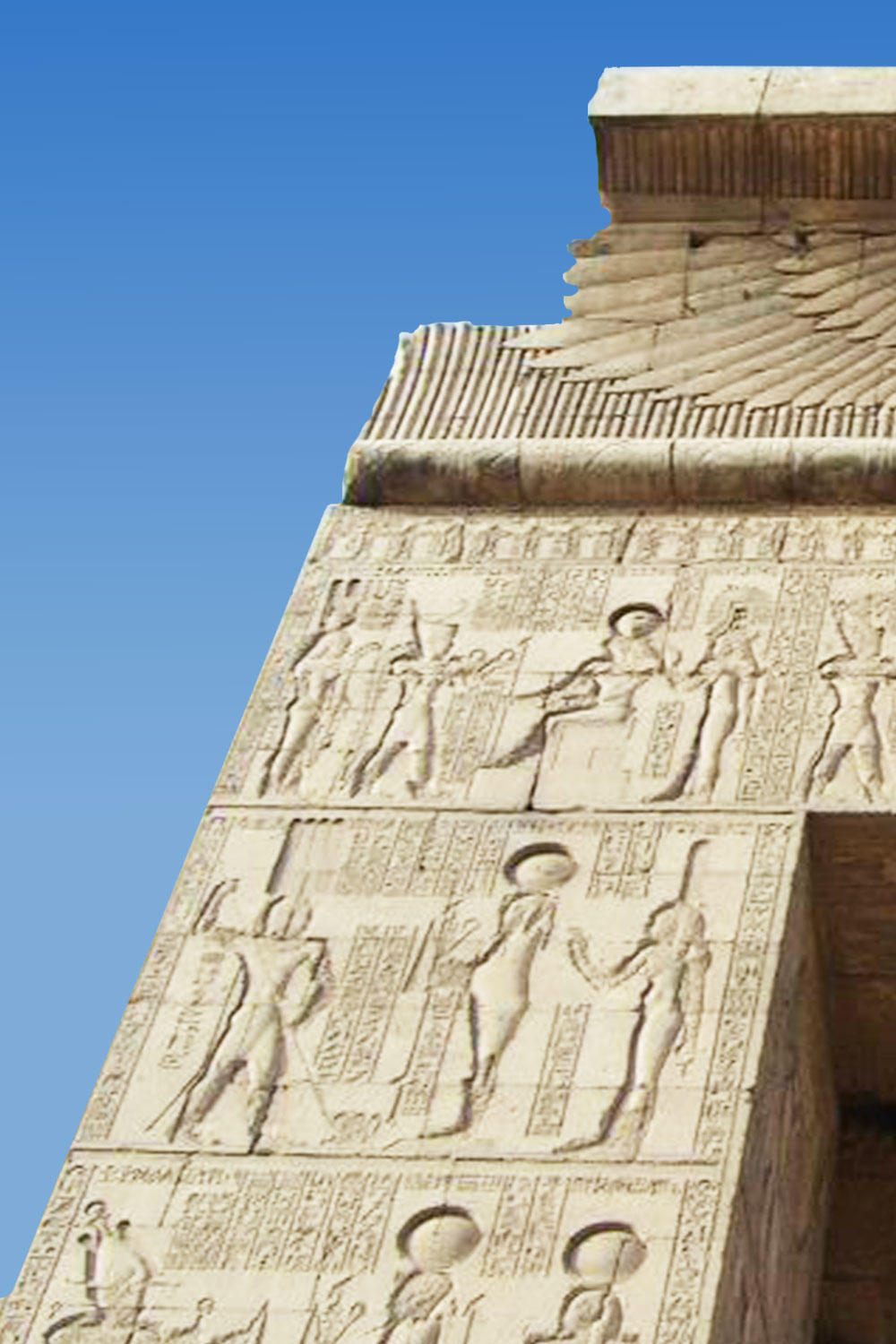 1.) The Grand Entrance Gateway of Ptolemy III Euergettes to the Temple of Khonsu, also known as Bab el-Adb, 3rd century BCE,
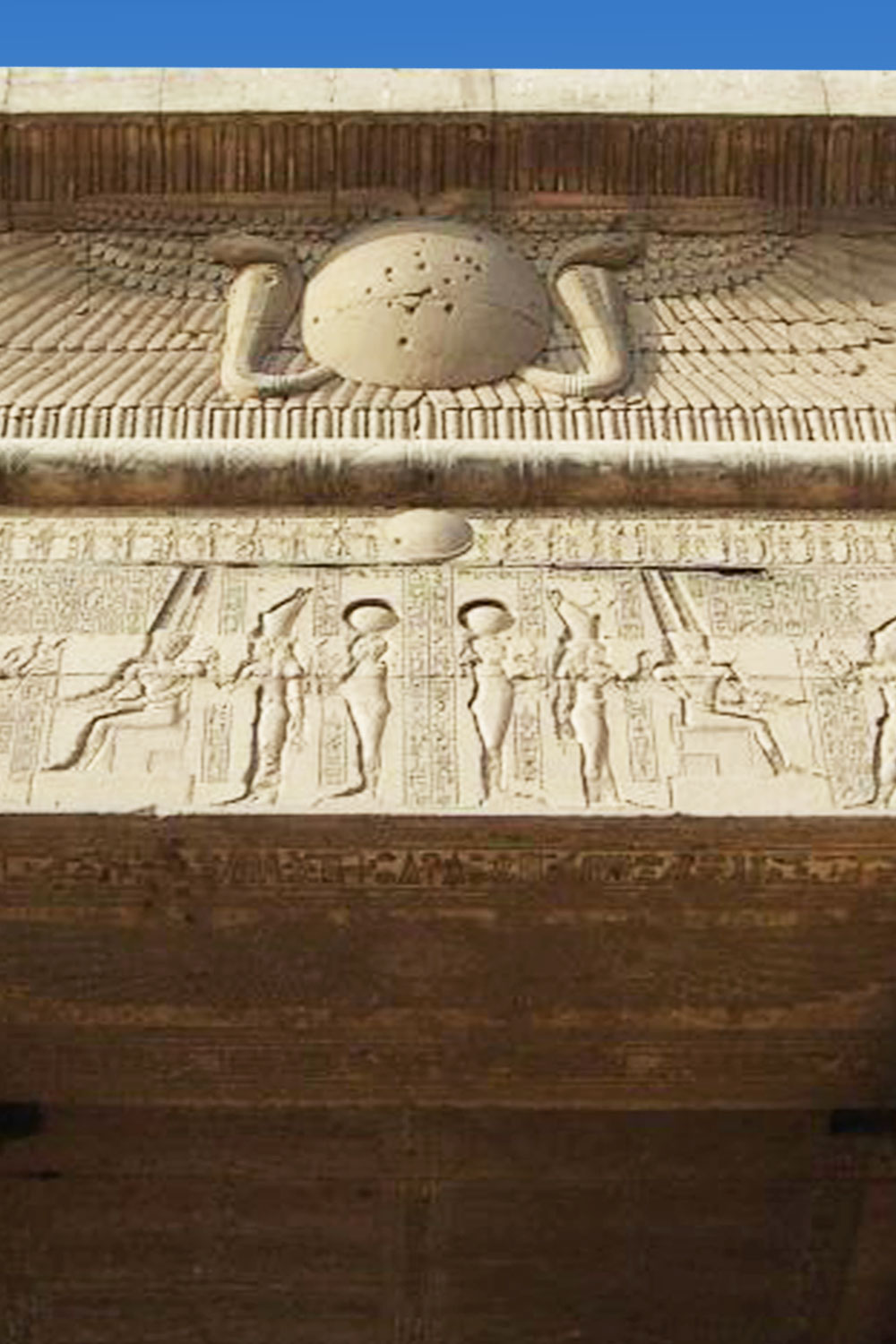 2.) Relief Carvings: The lintels and jambs depict Ptolemy III in classic pharaonic regalia presenting sacred offerings to Amun, Mut, and Khonsu.
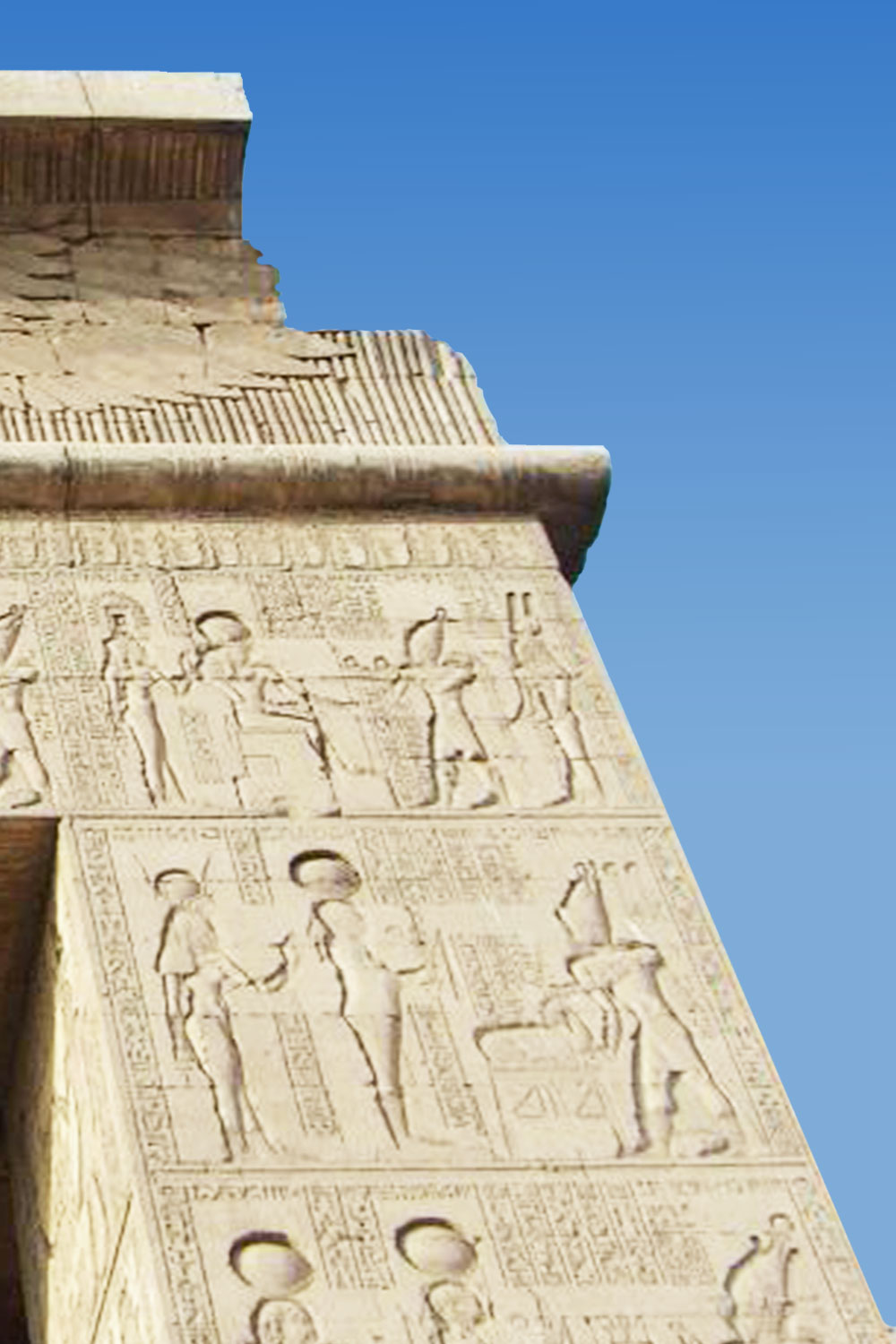 3.) The Winged Solar Disk: flanked by uraei (sacred cobras), acting as a powerful symbol of divine cosmic protection over the threshold.
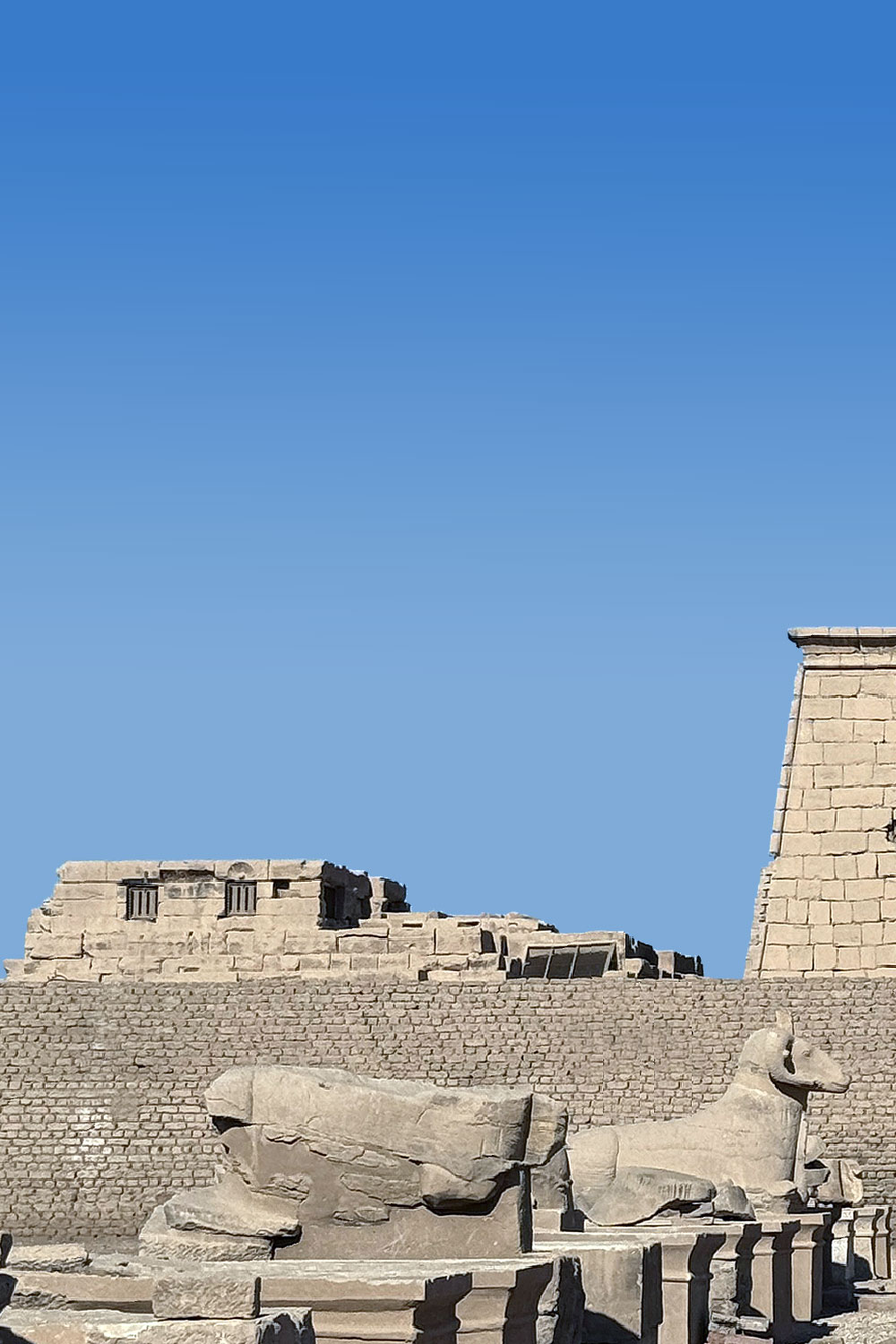 1.) Gateway of Ptolemy III Euergetes (Bab el‑Adb), The monumental sandstone gateway built by Ptolemy III Euergetes in the 3rd century BCE forms the grand Ptolemaic‑period entrance to the Temple of Khonsu.
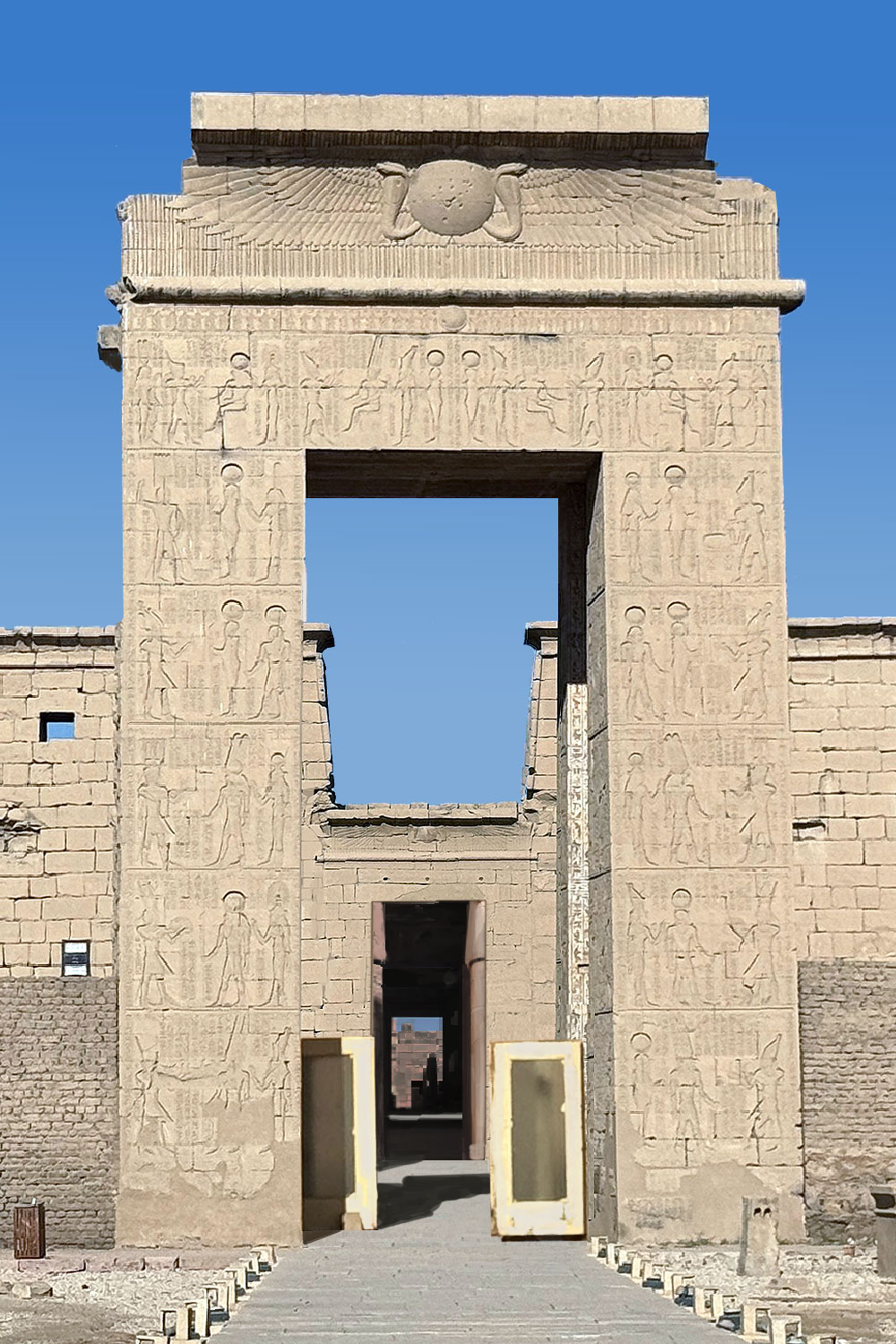 2.) Known as Bab el‑Adb, it stands directly before the Ramesside temple façade, announcing the Hellenistic expansion
 3.) of the precinct and marking Khonsu’s continued ritual importance long after the New Kingdom.
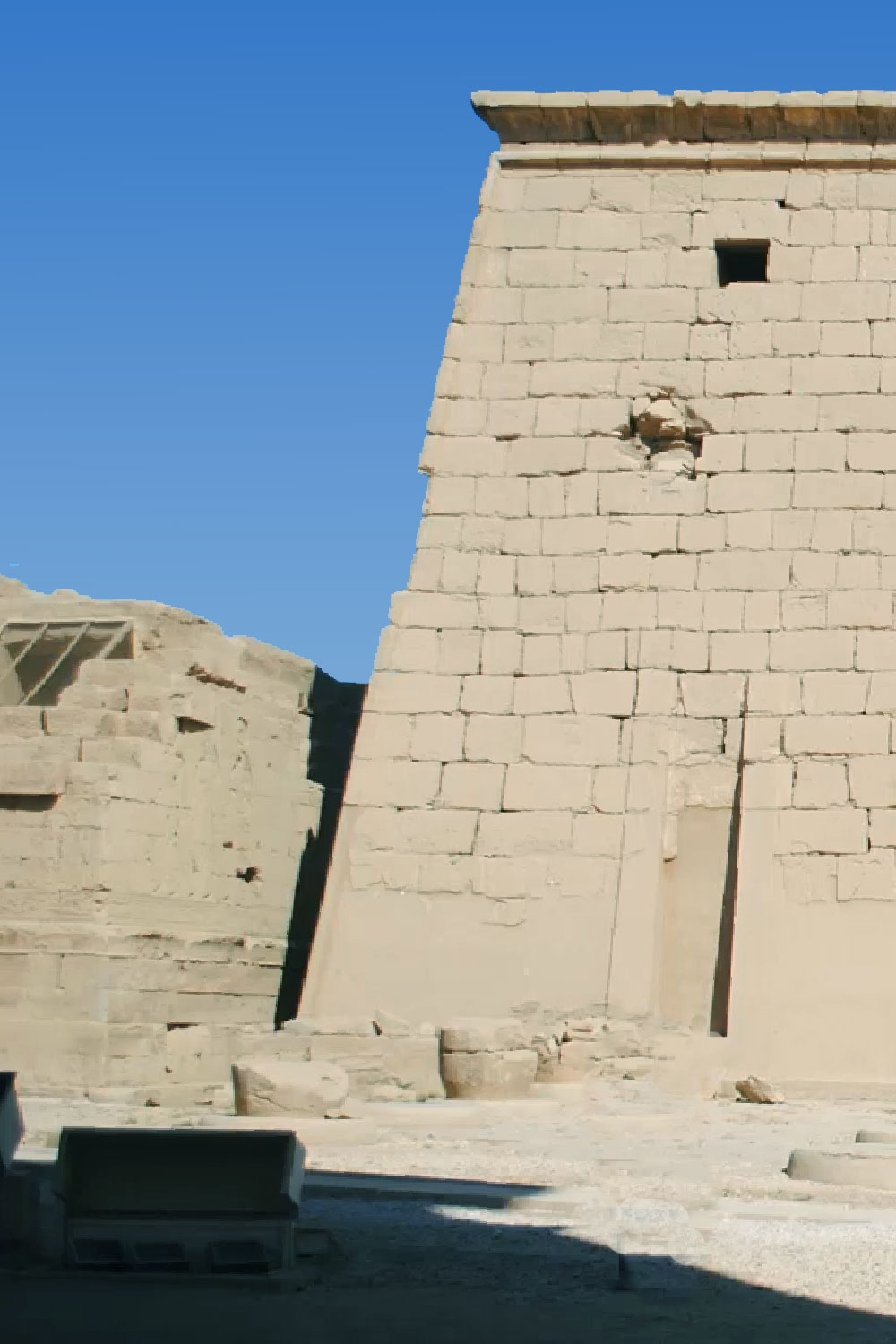 1.) The Temple of Khonsu pylon gateway, built in the 20th Dynasty of the New Kingdom (1189-1077 BCE), by Pharaohs Ramesses III and IV,
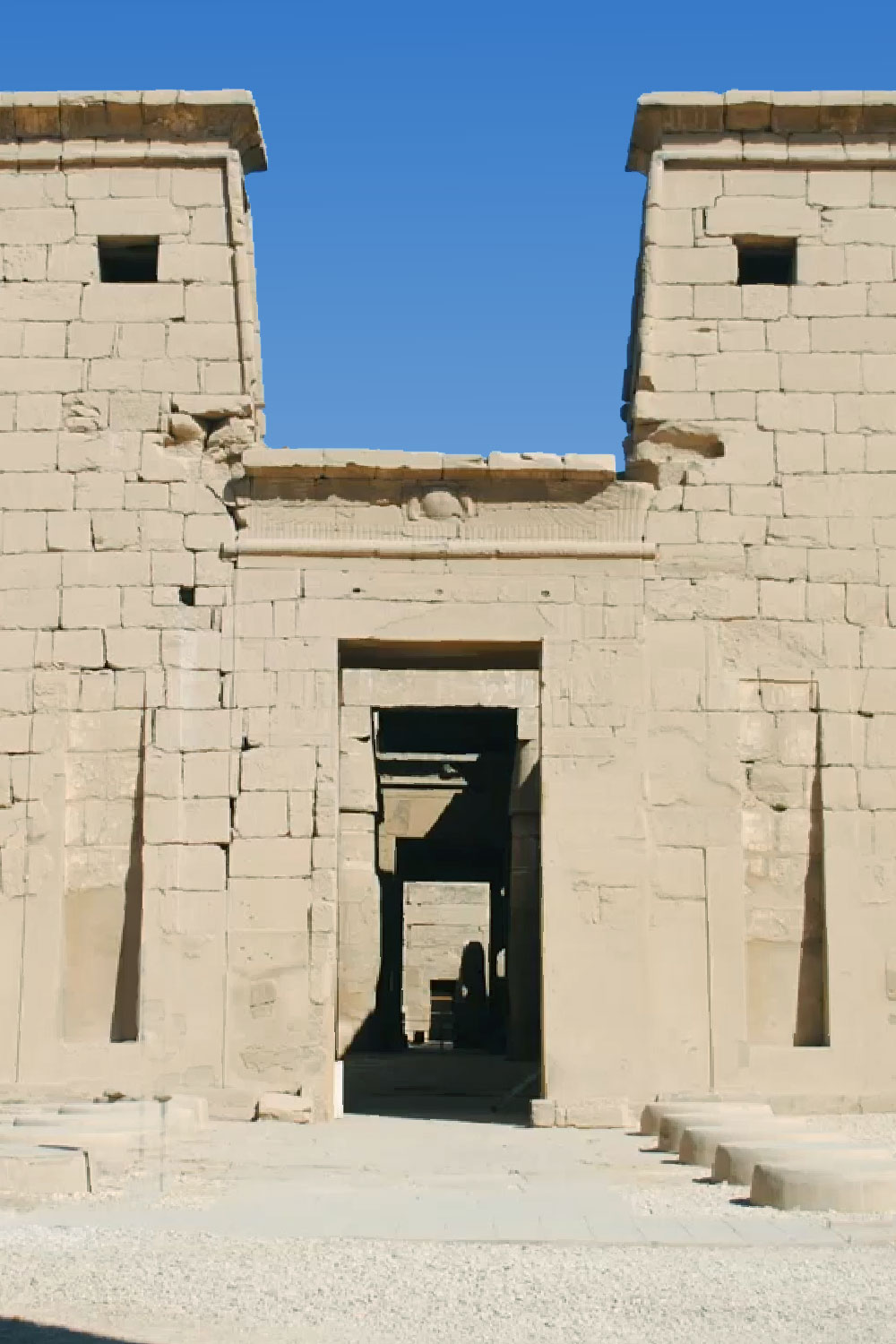 2.) dedicated to Khonsu, the moon god of healing and time, alongside his parents—
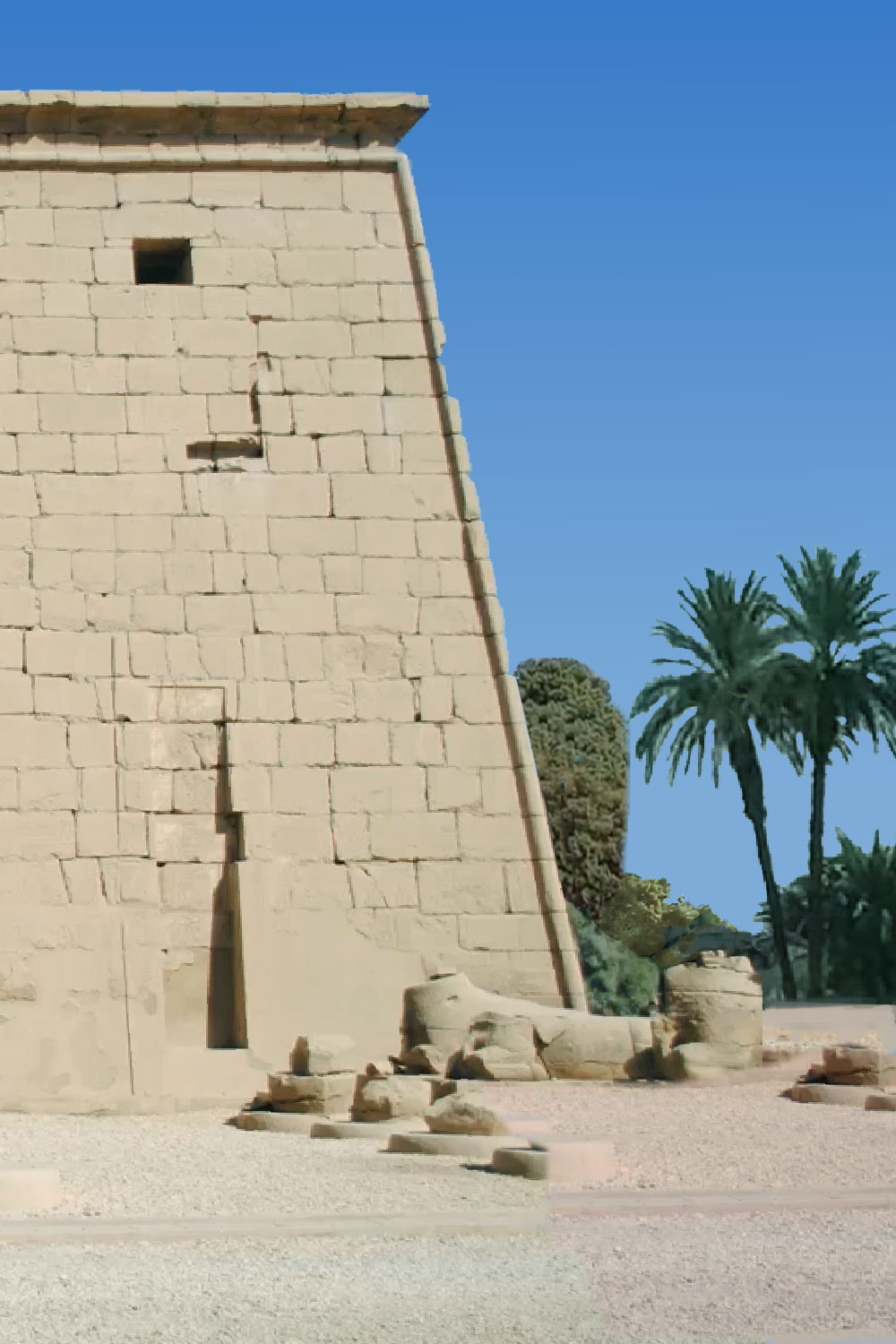 3.) Amun-Re (the king of gods) and Mut (the mother goddess)—they complete the Theban Triad.
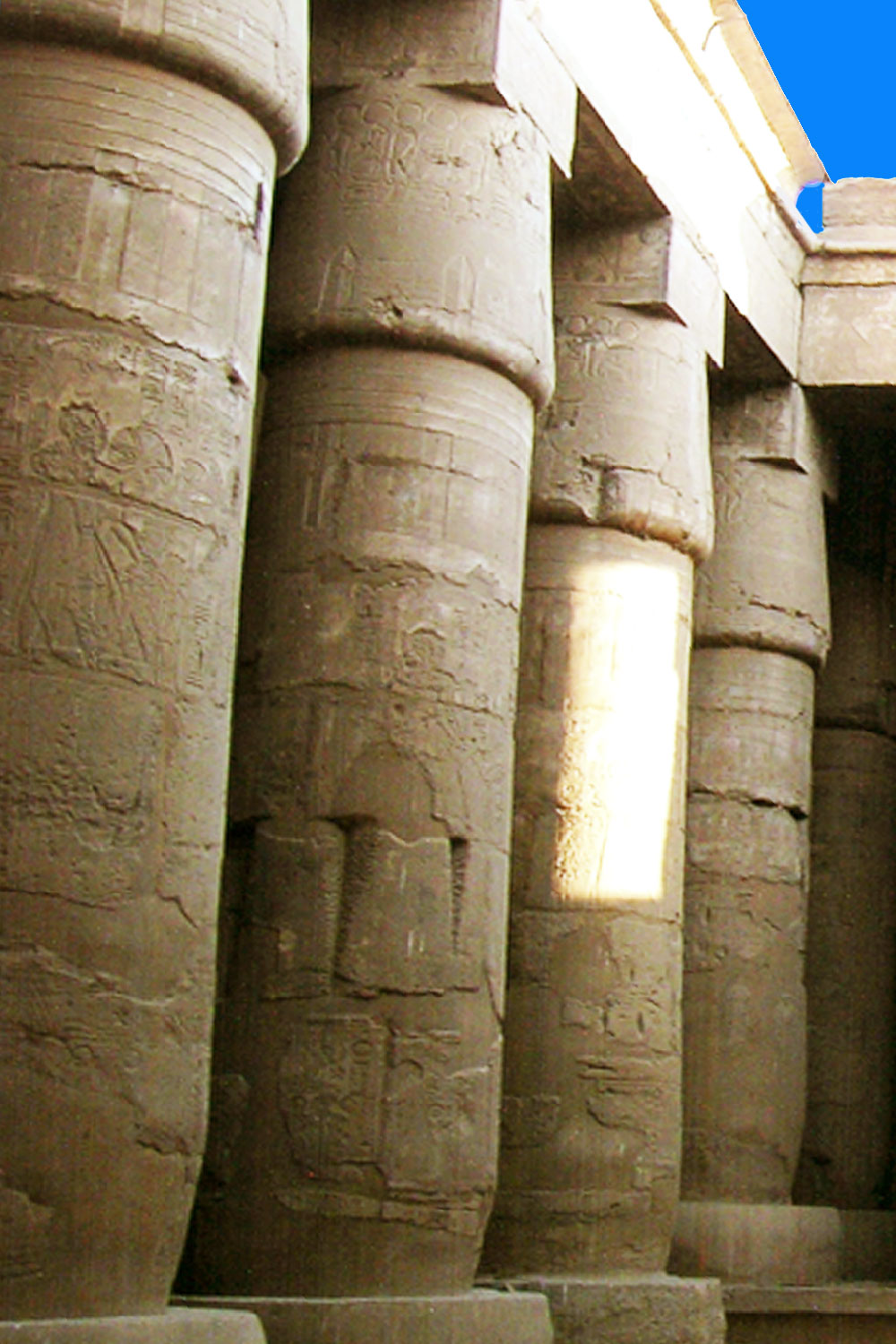 1.) The Forecourt at the Temple of Khonsu, founded by Pharaoh Ramesses III around 1100 BCE. The court exhibits the classic New Kingdom "peristyle" template,
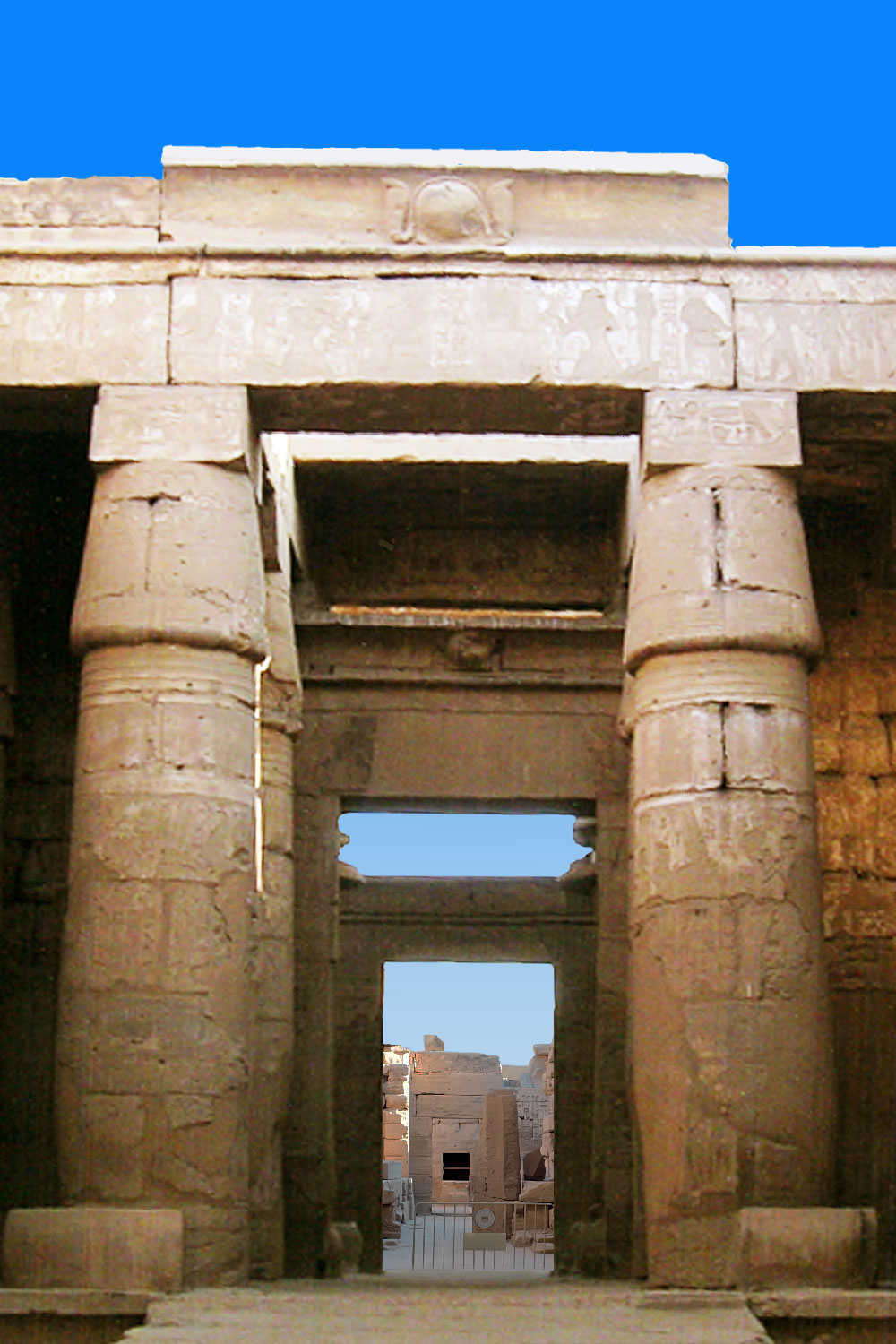 2.) the Colonnade: The open-air patio is bordered on three sides by a massive portico containing 28 columns,
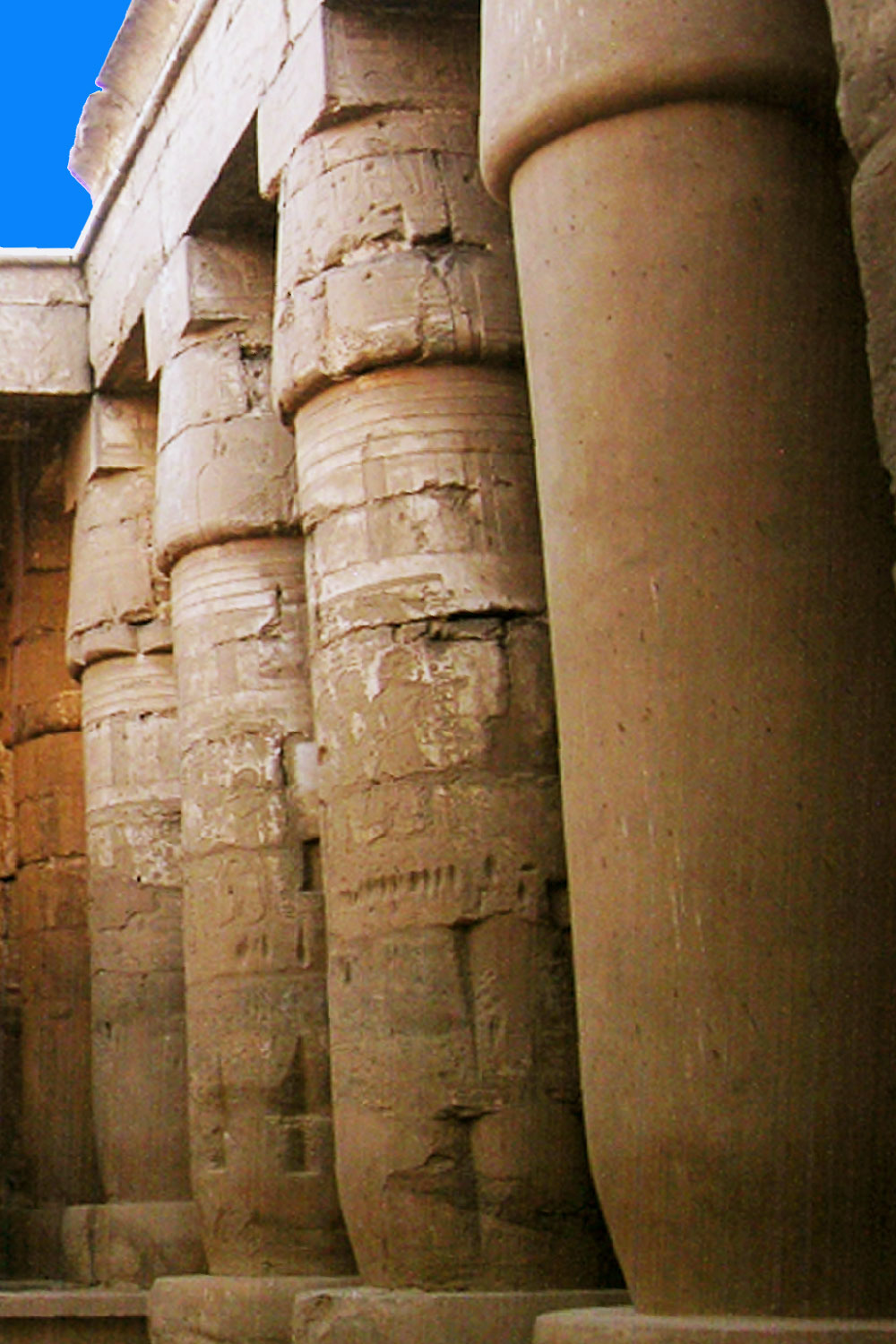 3.) The east and west sides feature double rows of columns (four per row), while the north side consists of a double row totaling twelve columns.
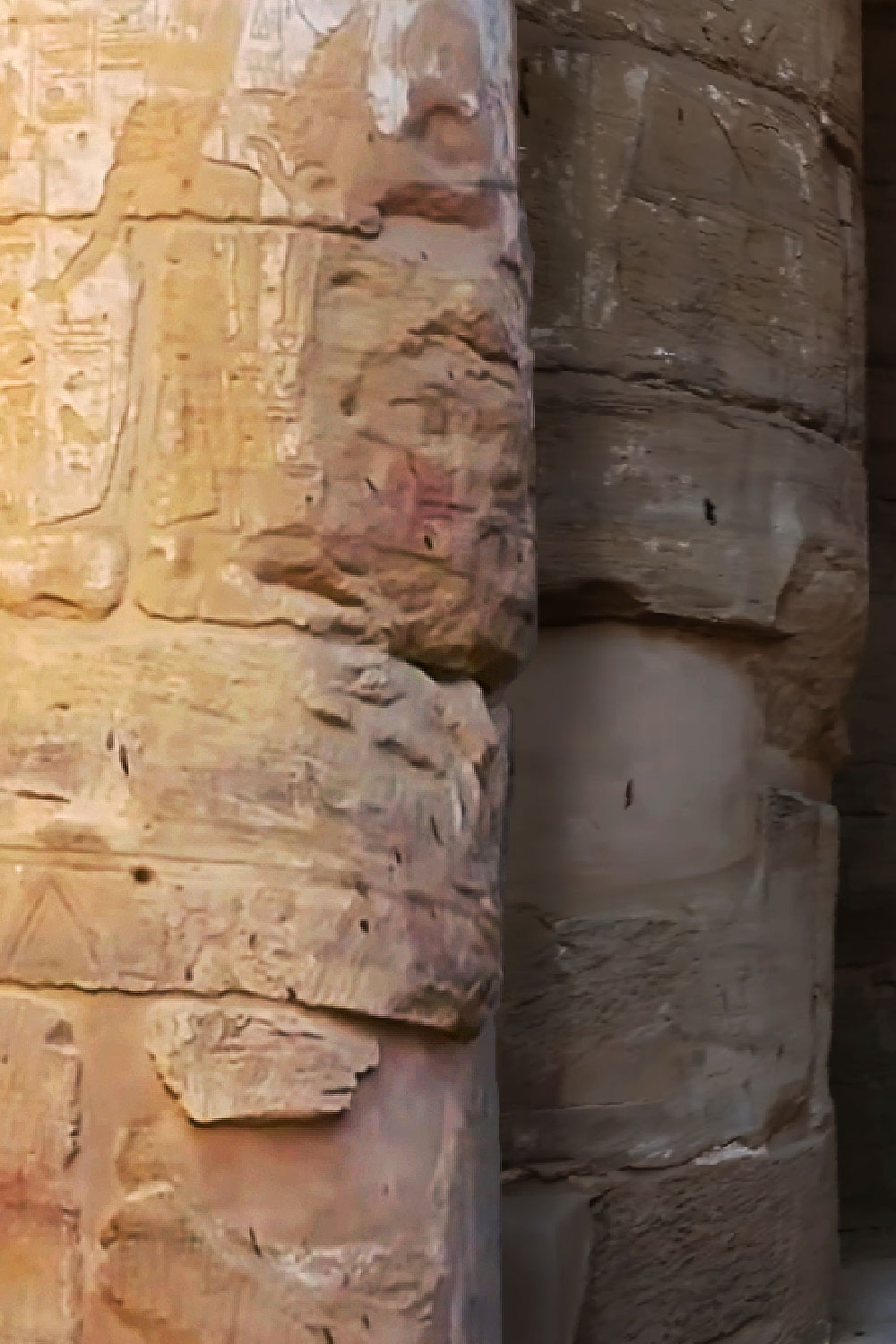 The Forecourt at the Temple of Khonsu, founded by Pharaoh Ramesses III around 1100 BCE. The court exhibits the classic New Kingdom "peristyle" template,
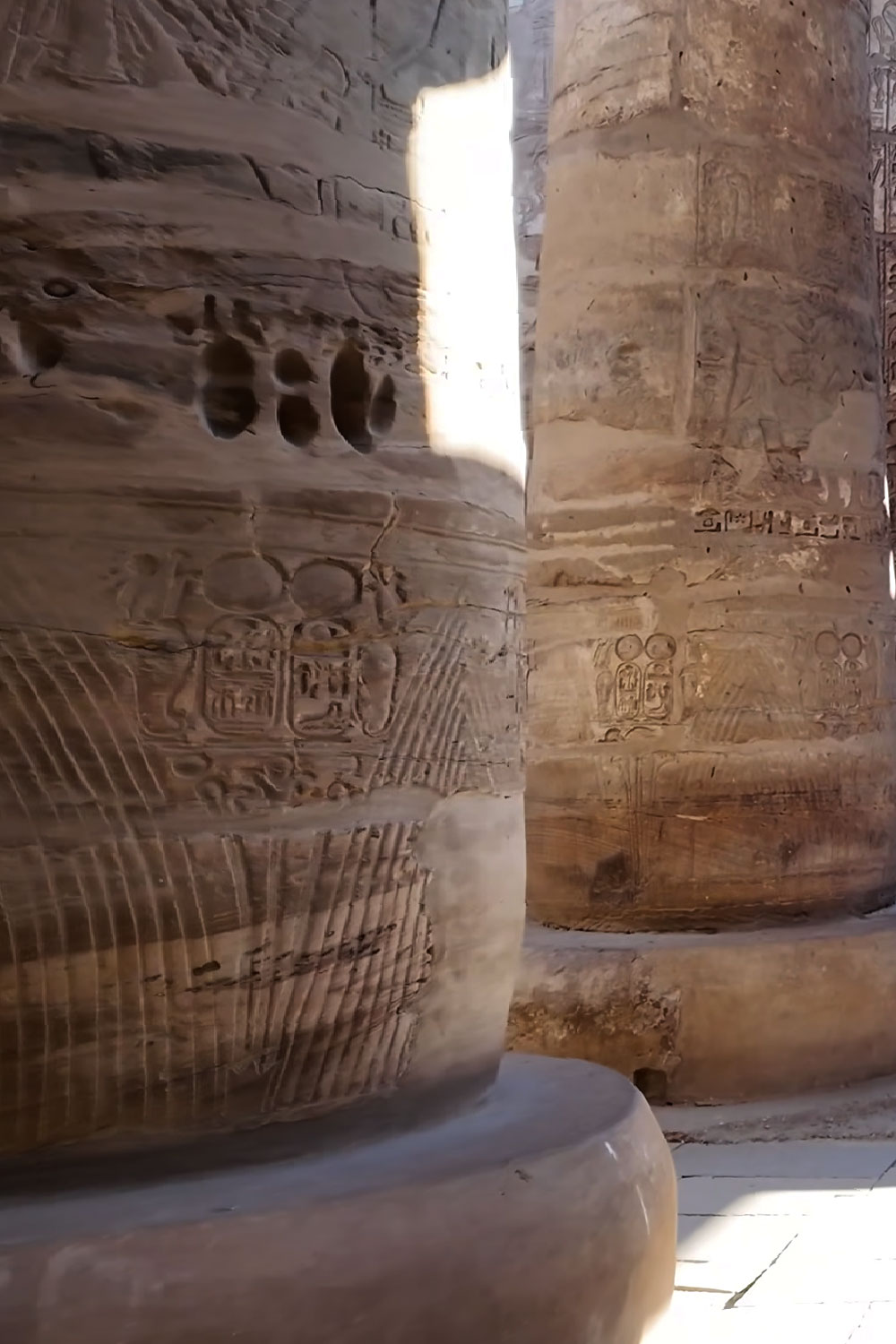 The Colonnade: The open-air patio is bordered on three sides by a massive portico containing 28 columns,
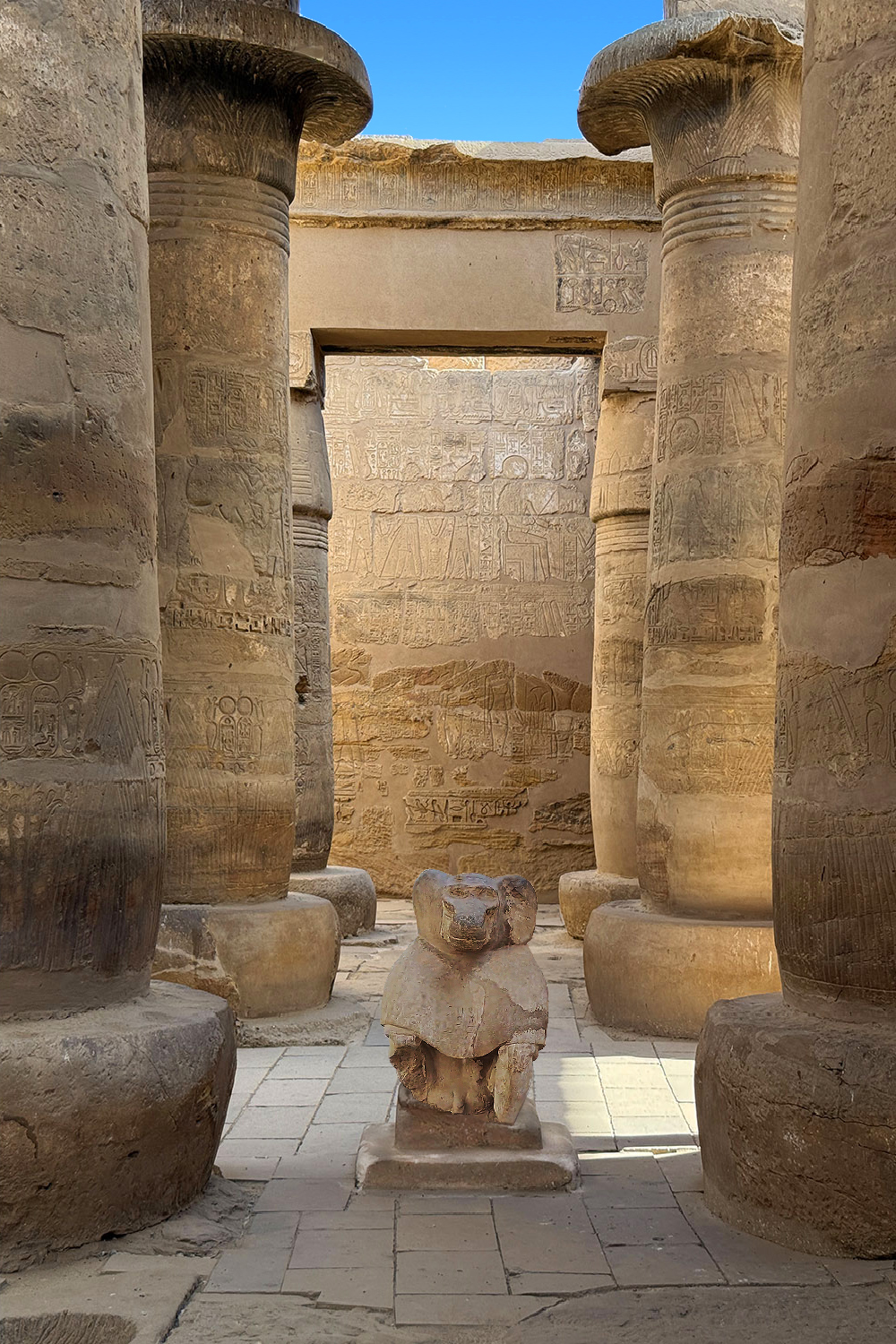 1.) Khonsu with a falcon head wearing a striated wig and a broad collar necklace, holding a long staff.
 2.) Stone statue of the ancient Egyptian god Thoth in his sacred baboon form,
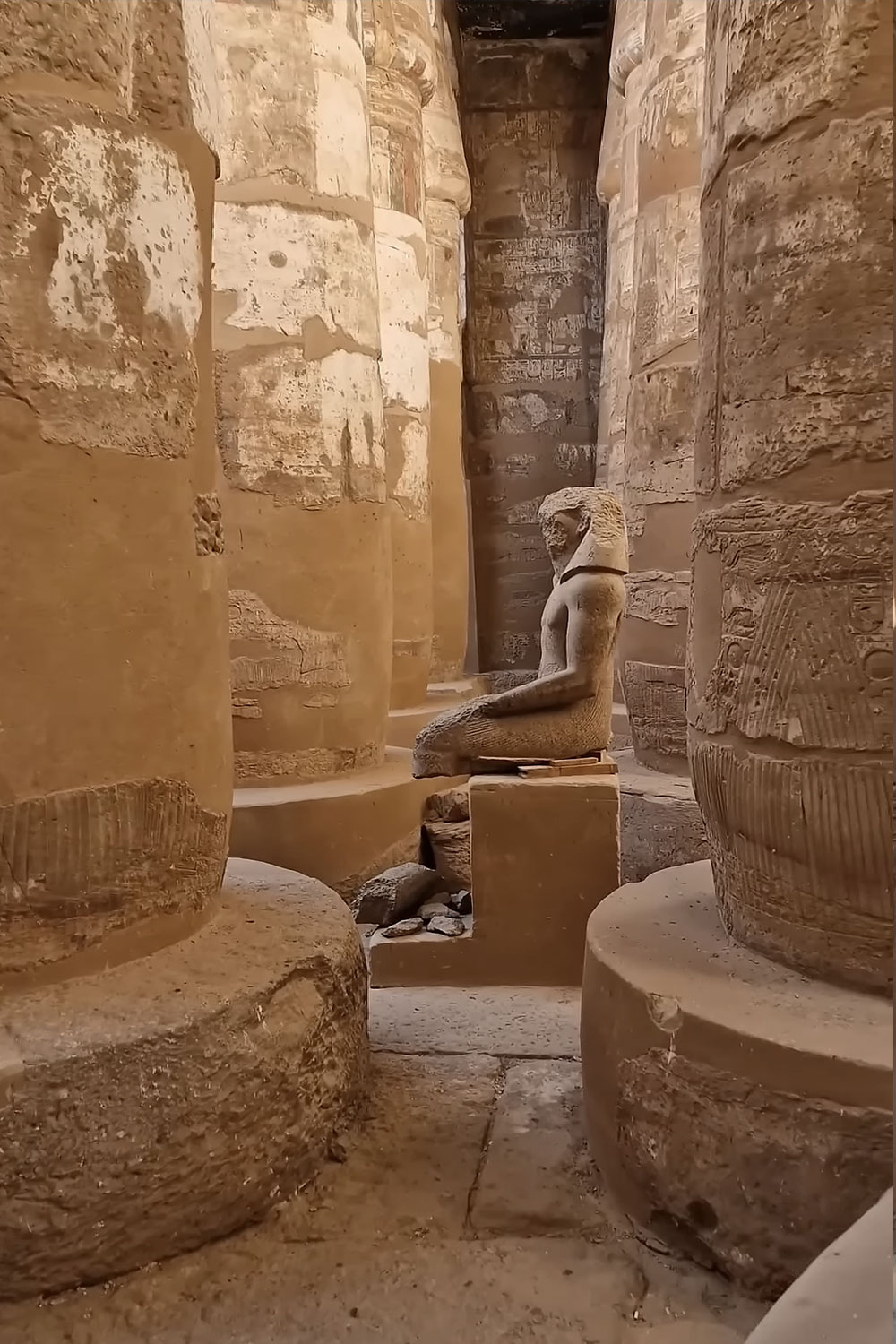
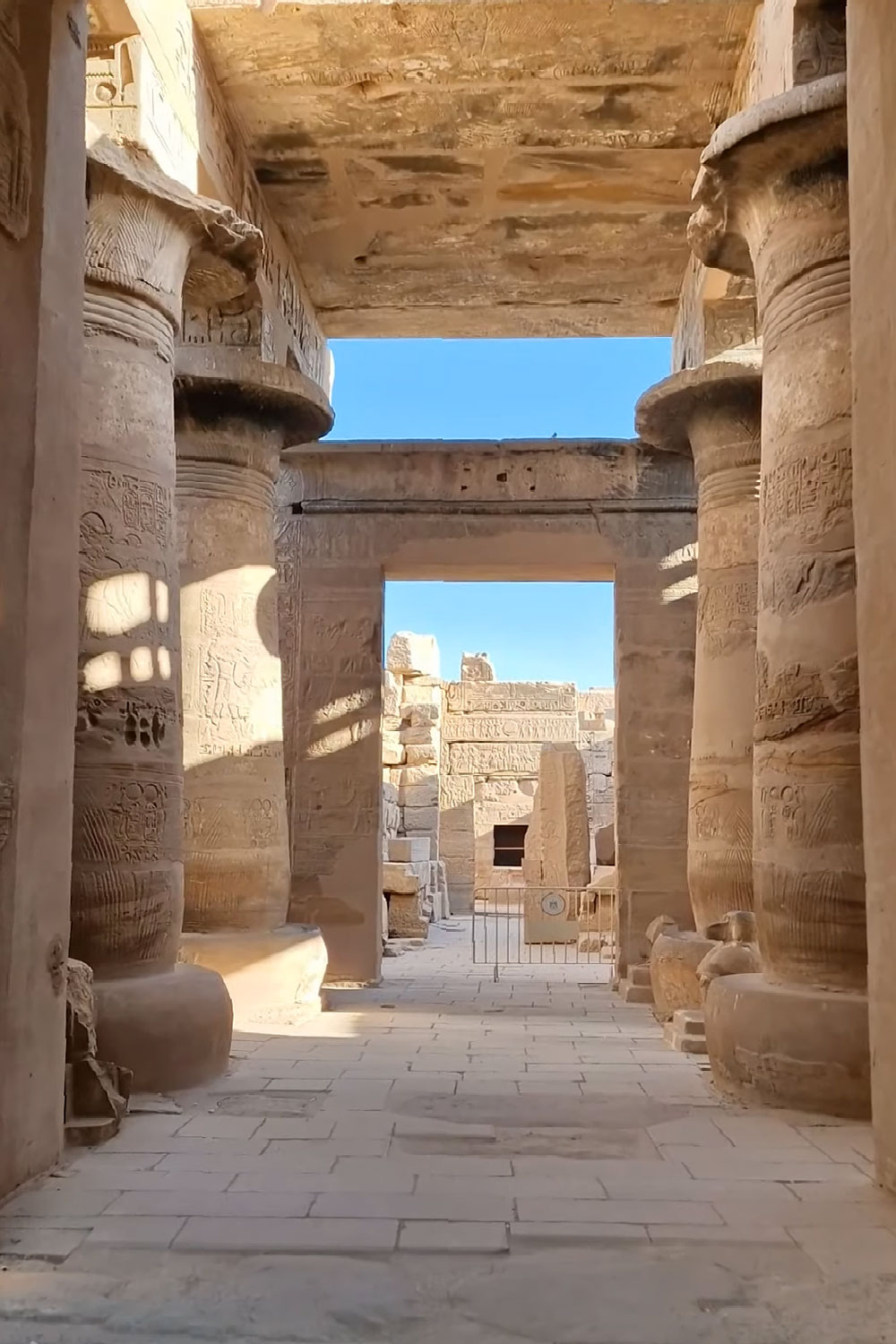 3.) The east and west sides feature double rows of columns (four per row), while the north side consists of a double row totaling twelve columns.
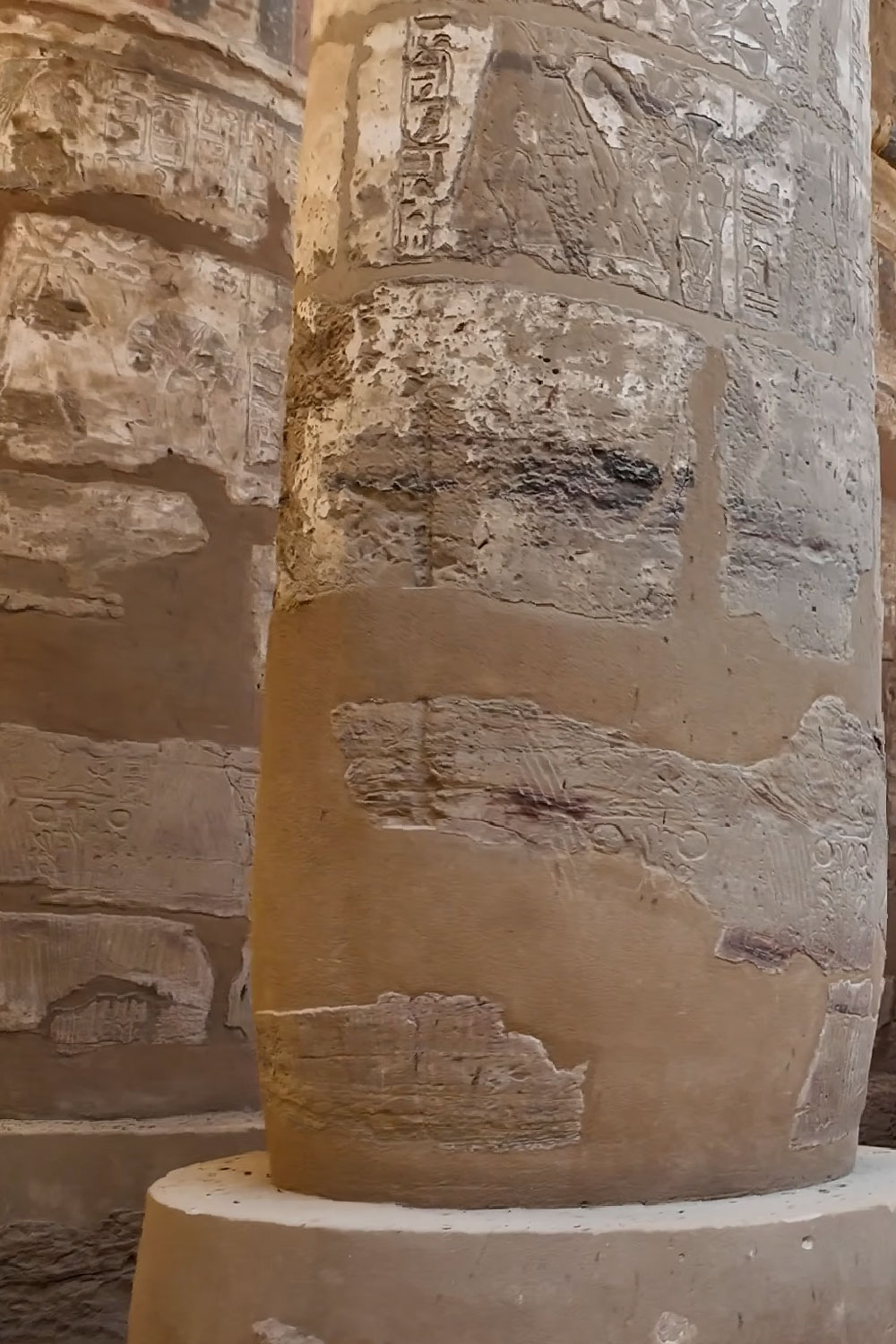 1.) The Forecourt at the Temple of Khonsu, founded by Pharaoh Ramesses III around 1100 BCE. The court exhibits the classic New Kingdom "peristyle" template, carving depicts a classic pharaonic human profile with an artificial ceremonial beard,
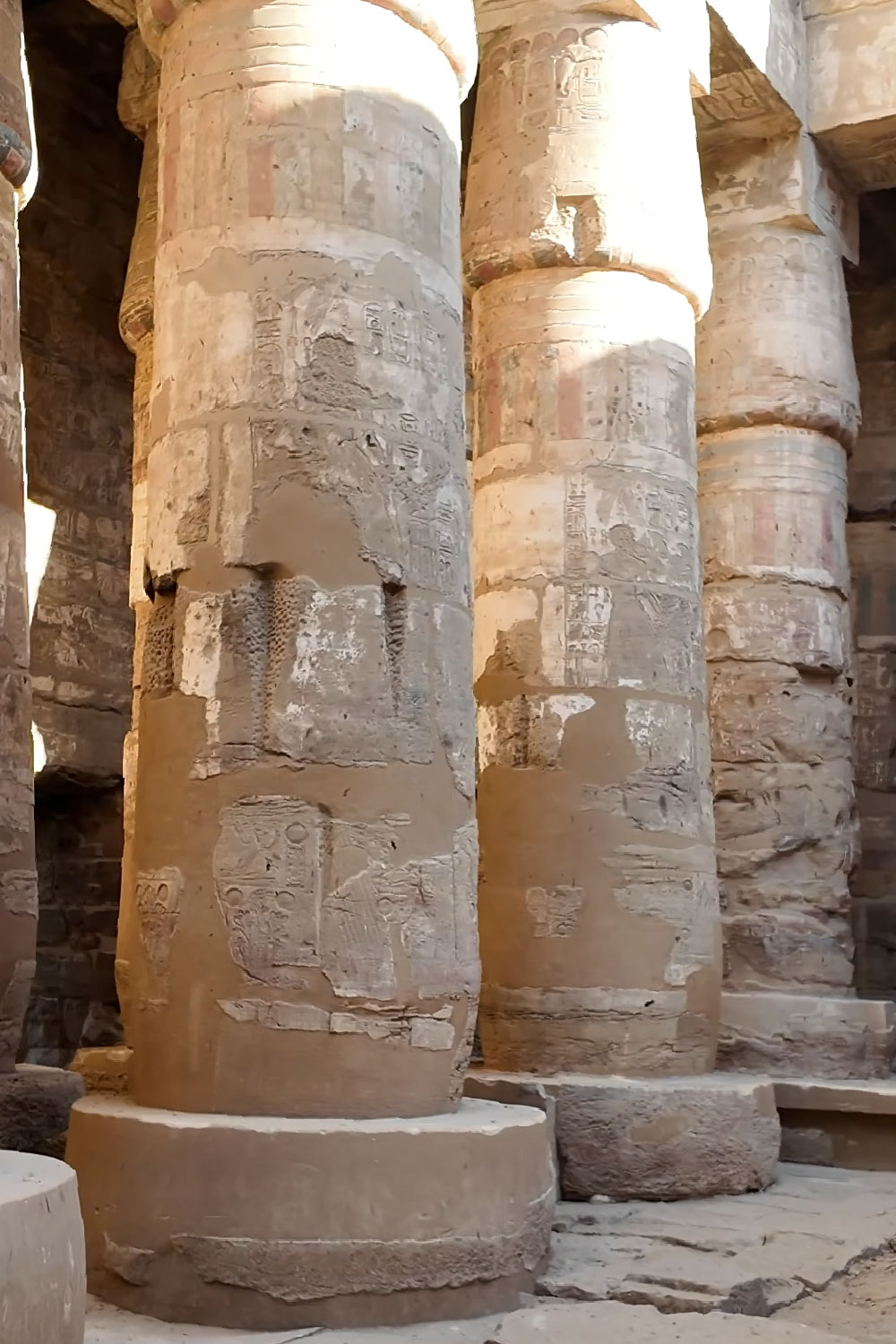 2.) the Colonnade: The open-air patio is bordered on three sides by a massive portico containing 28 columns,
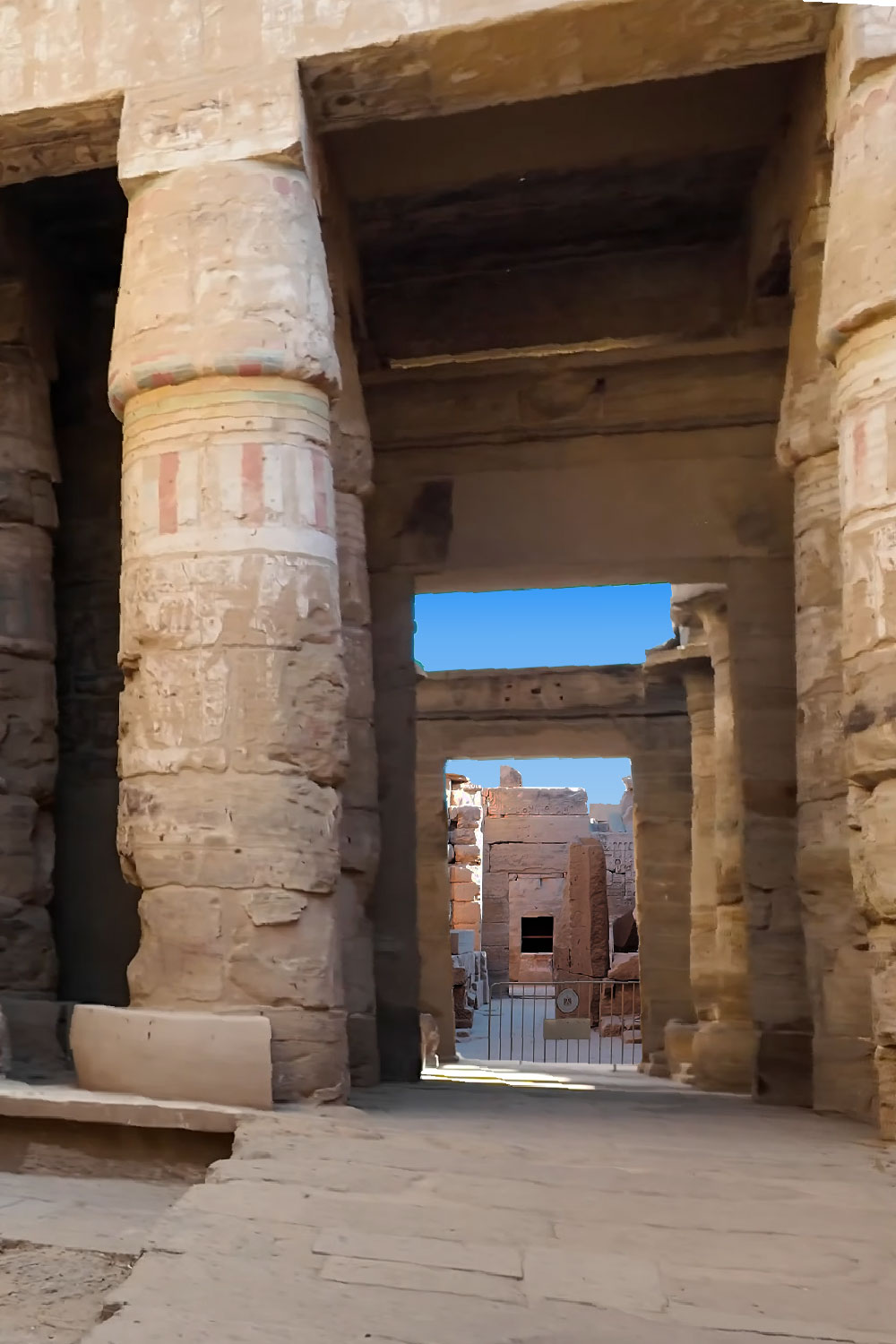 3.) The east and west sides feature double rows of columns (four per row), while the north side consists of a double row totaling twelve columns.
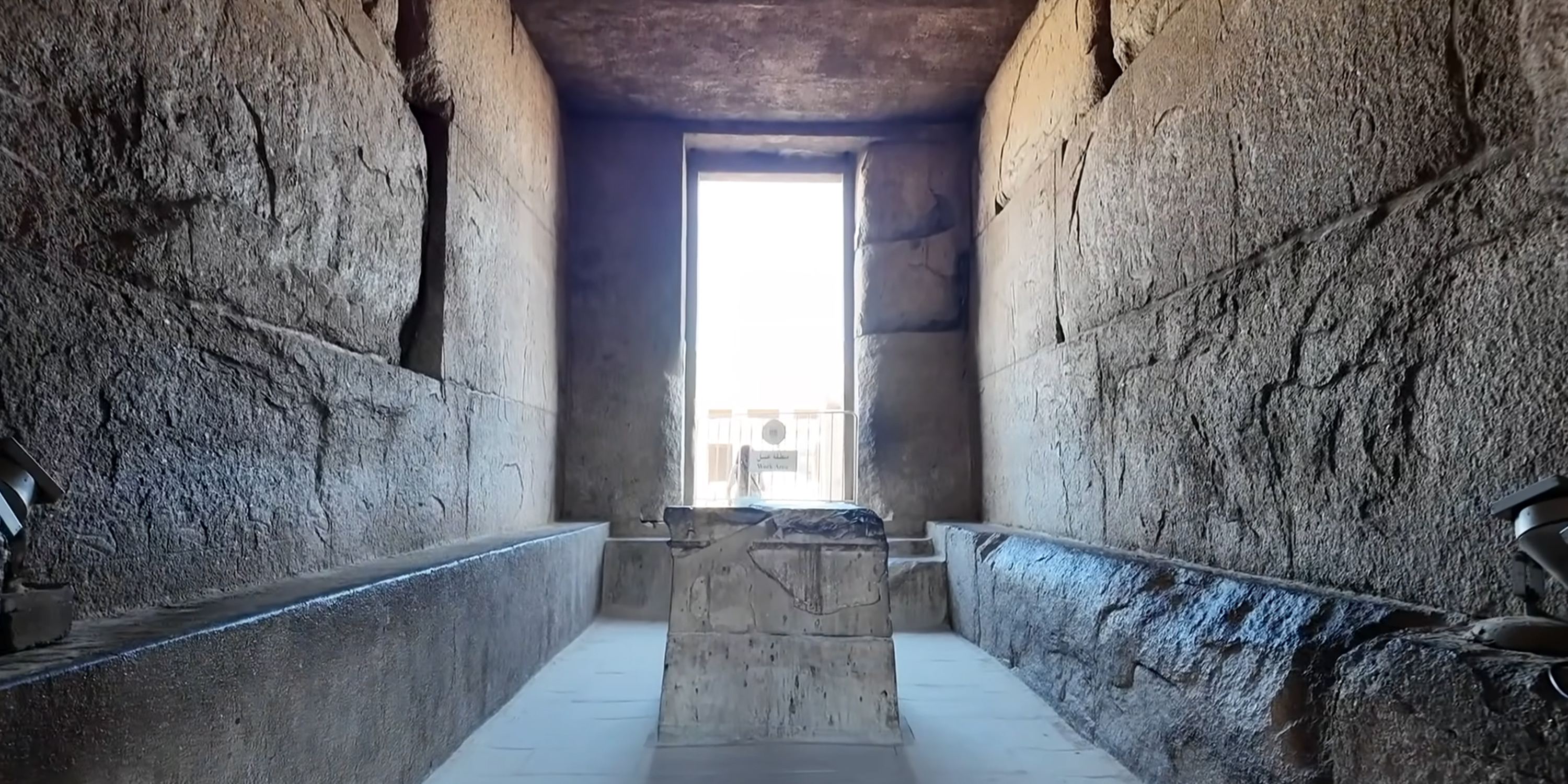
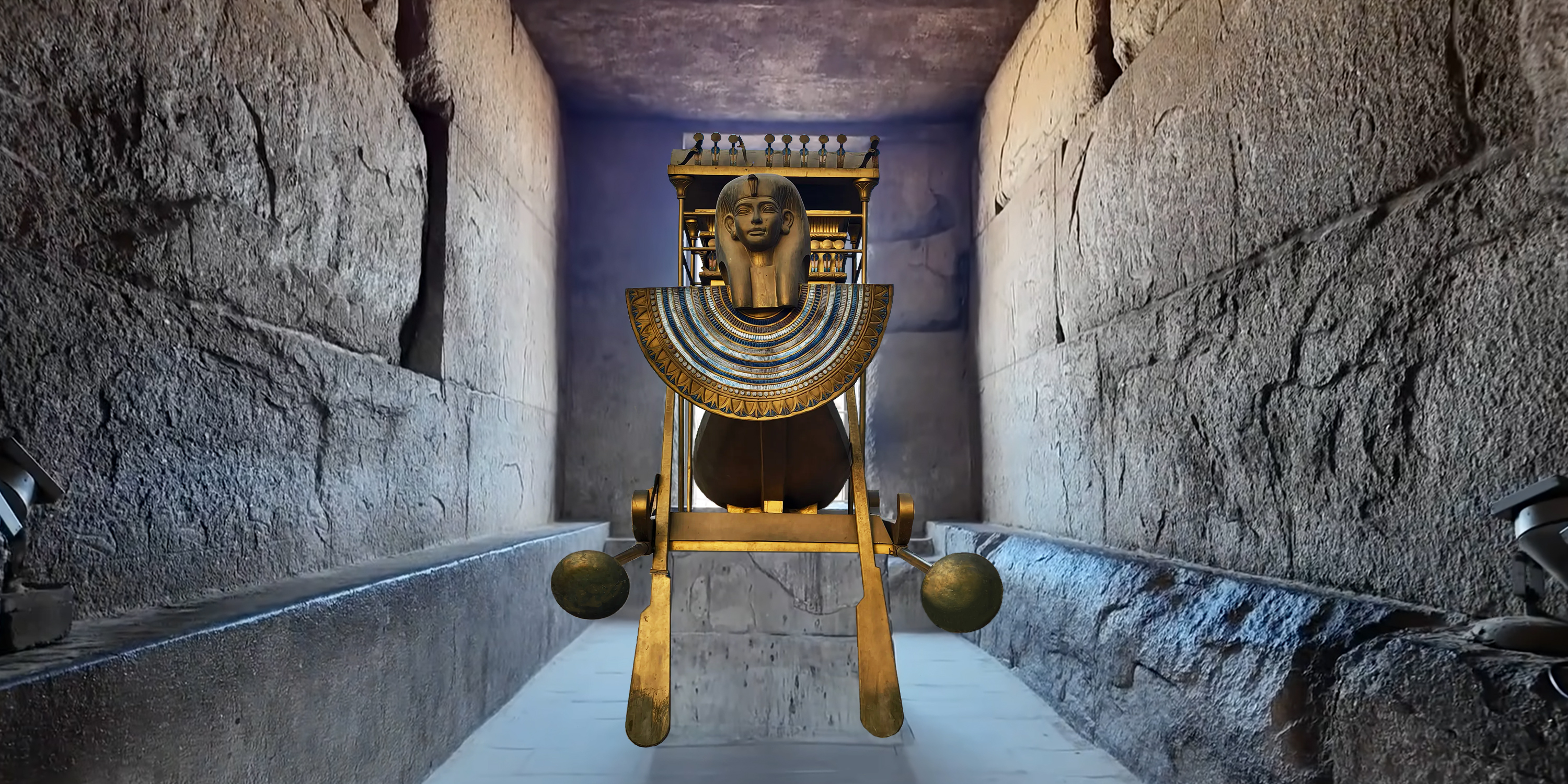
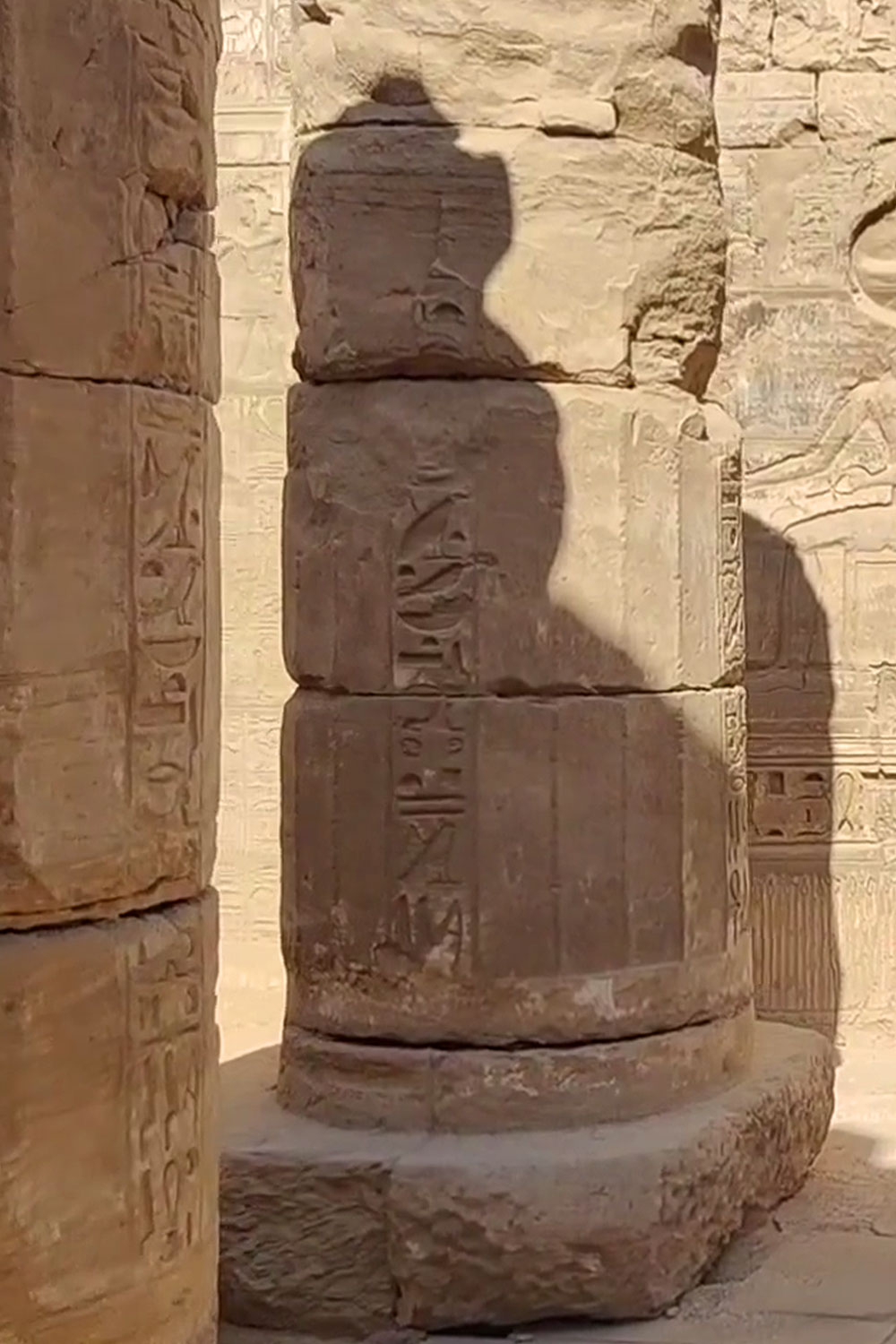 1.) Barque Shrine: The central stone pedestal altar used to rest the sacred boat of the god.
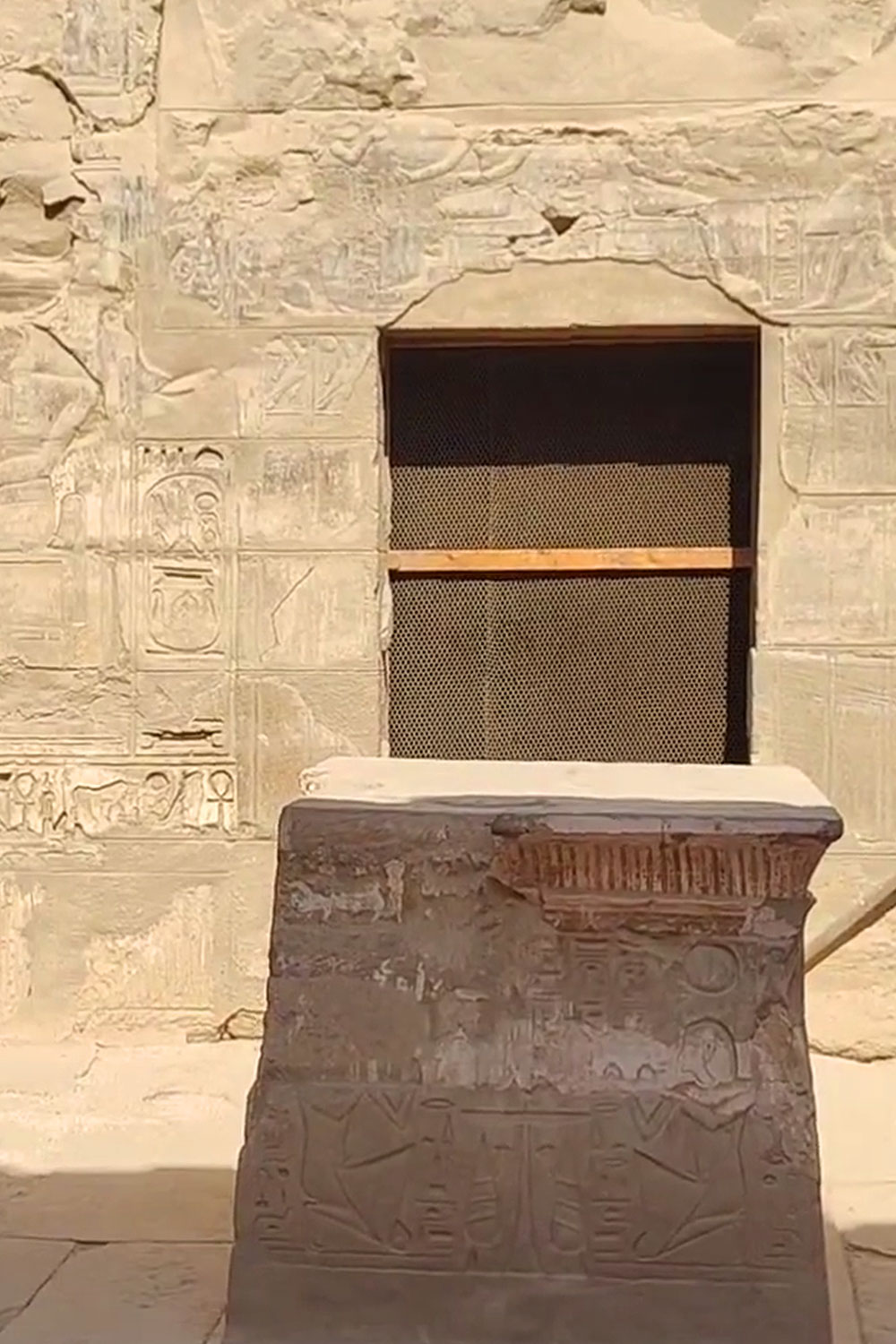 2.) Relief Carvings: The surrounding sandstone walls and columns feature deeply incised hieroglyphs and ritual scenes dating to the New Kingdom and later periods.
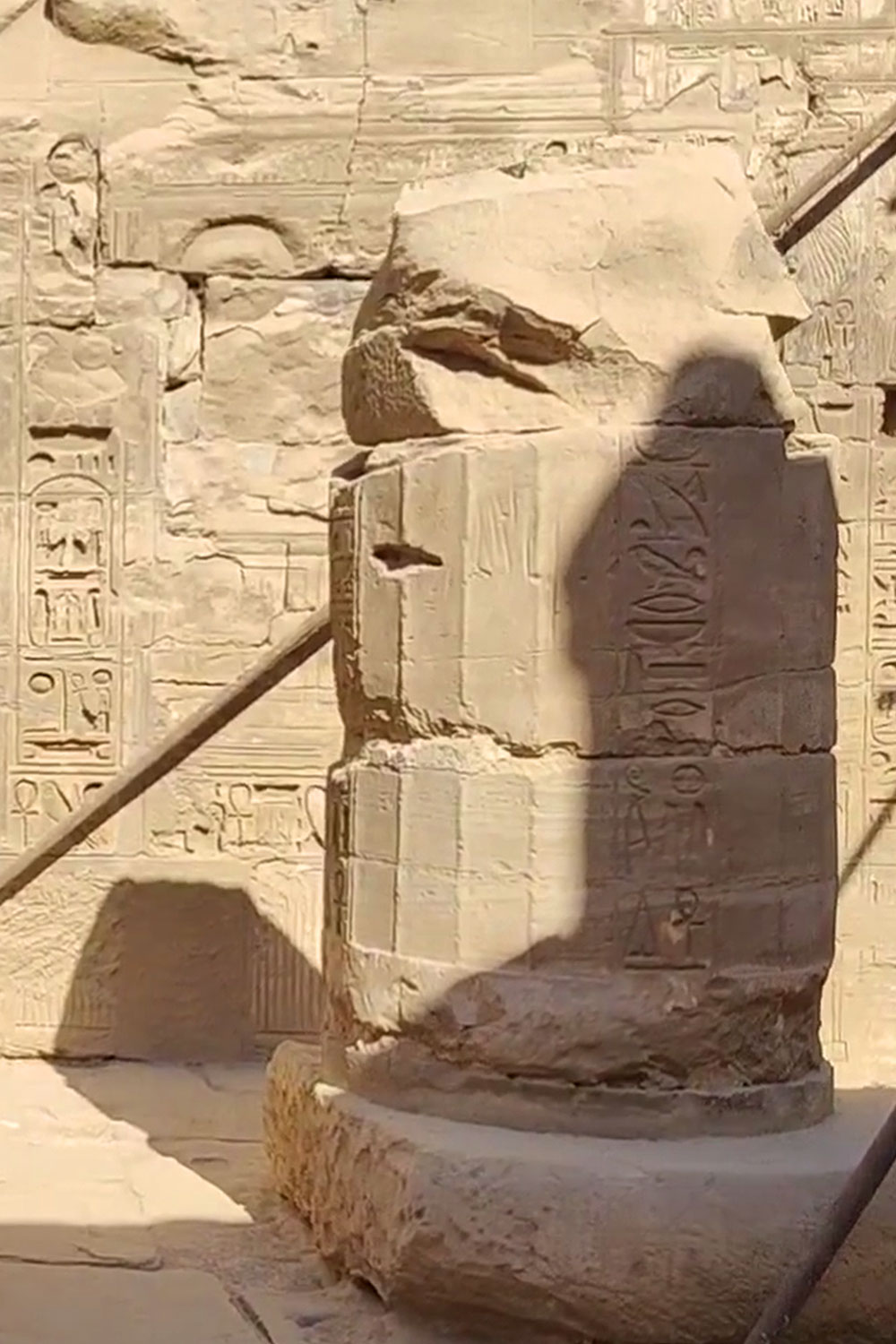 3.) Columns: Massive stone column fragments with characteristic ancient Egyptian architectural proportions stand on either side of the chamber.
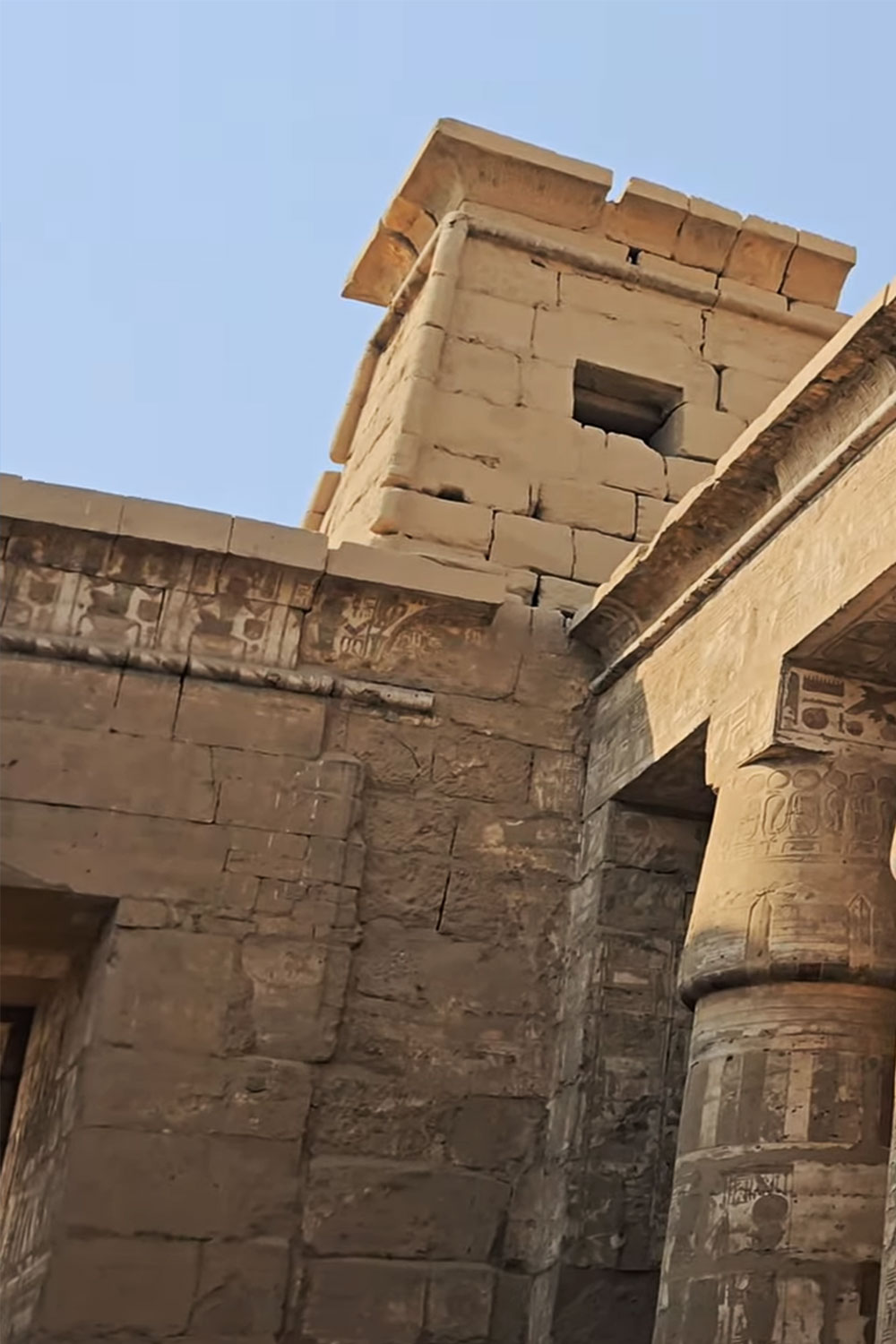 1.) The Forecourt at the Temple of Khonsu, founded by Pharaoh Ramesses III around 1100 BCE. The court exhibits the classic New Kingdom "peristyle" template, carving depicts a classic pharaonic human profile with an artificial ceremonial beard,
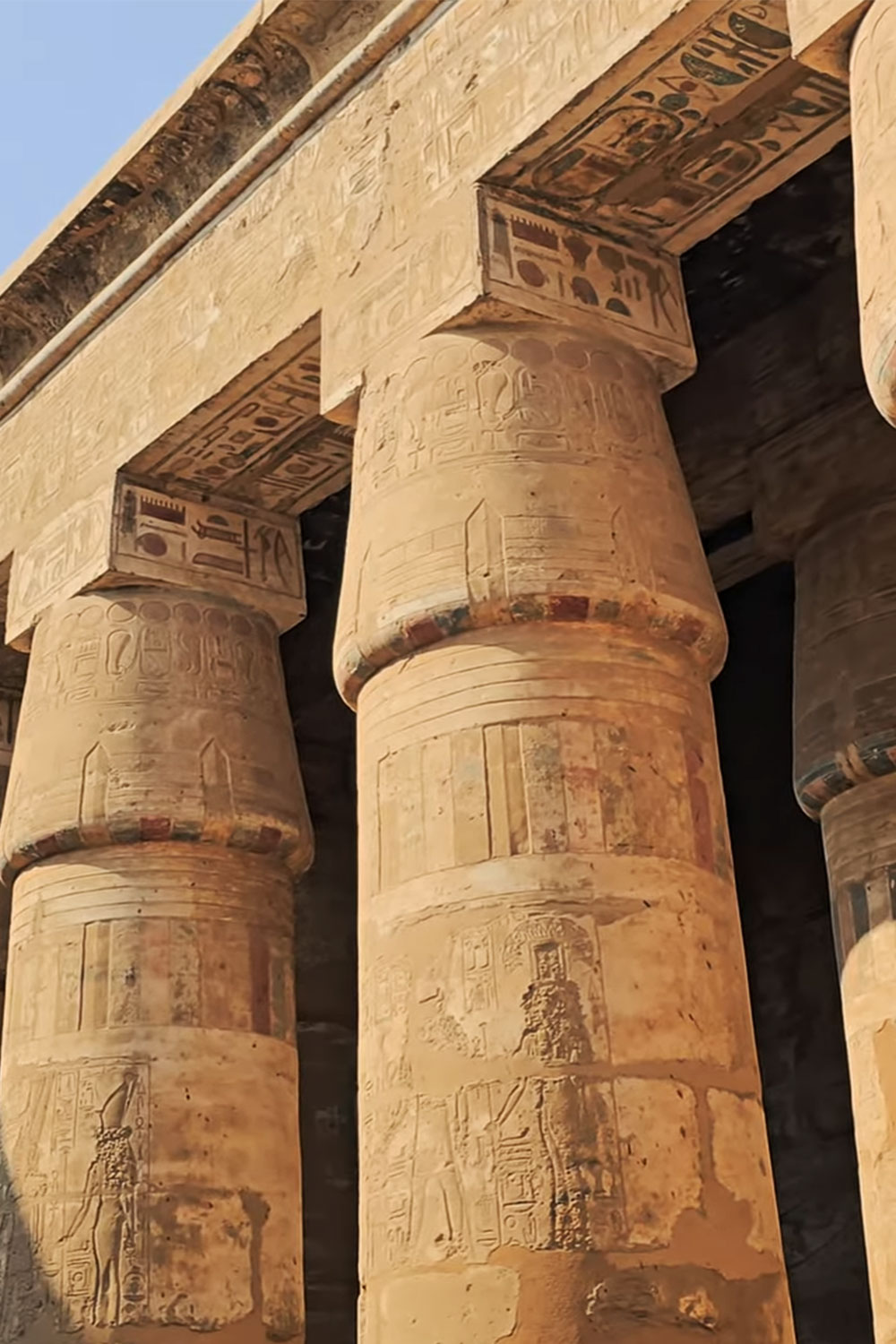 2.) the Colonnade: The open-air patio is bordered on three sides by a massive portico containing 28 columns,
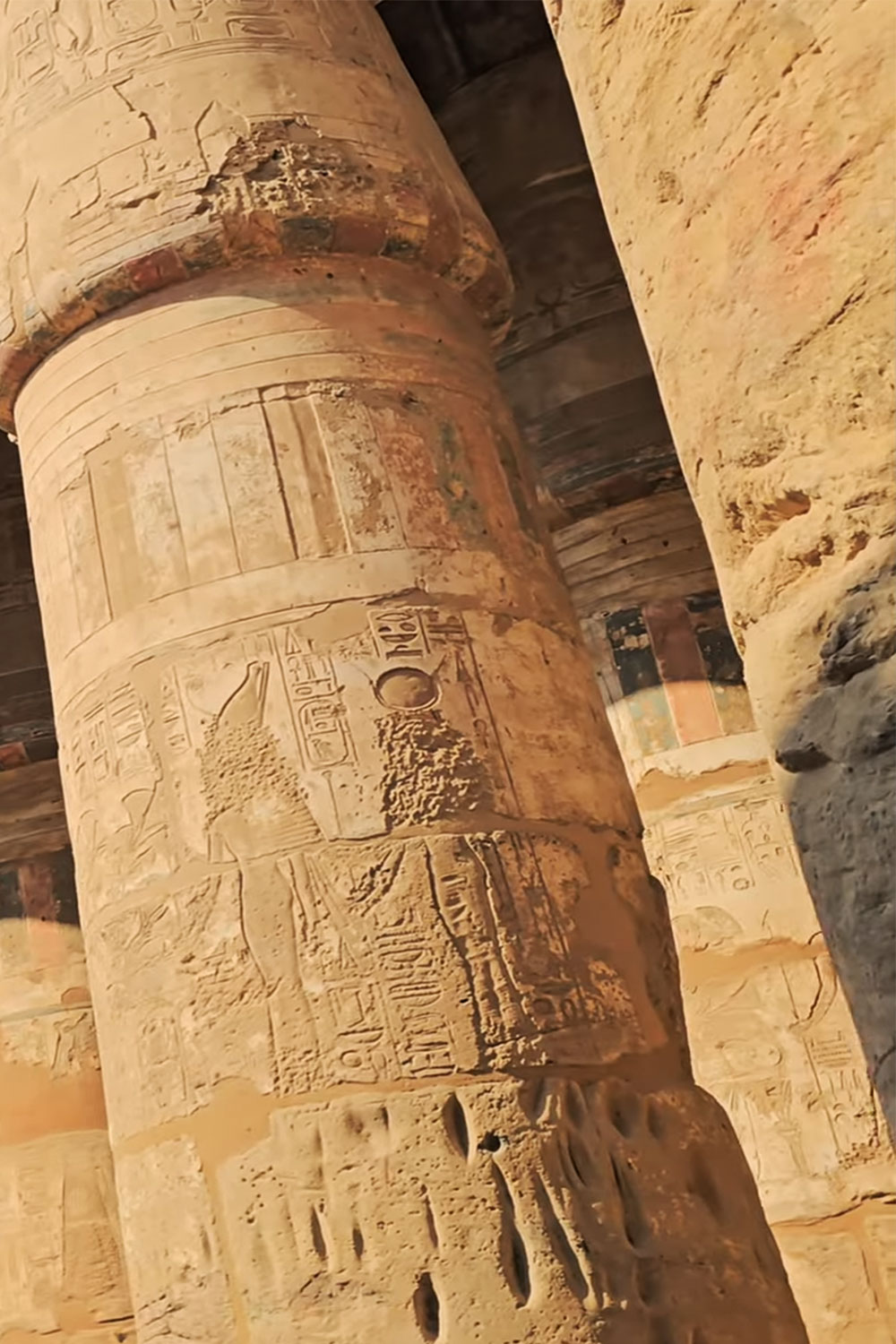 3.) The east and west sides feature double rows of columns (four per row), while the north side consists of a double row totaling twelve columns.
 1.) The Forecourt at the Temple of Khonsu, founded by Pharaoh Ramesses III around 1100 BCE. The court exhibits the classic New Kingdom "peristyle" template, carving depicts a classic pharaonic human profile with an artificial ceremonial beard,
 2.) the Colonnade: The open-air patio is bordered on three sides by a massive portico containing 28 columns,
 3.) The east and west sides feature double rows of columns (four per row), while the north side consists of a double row totaling twelve columns.
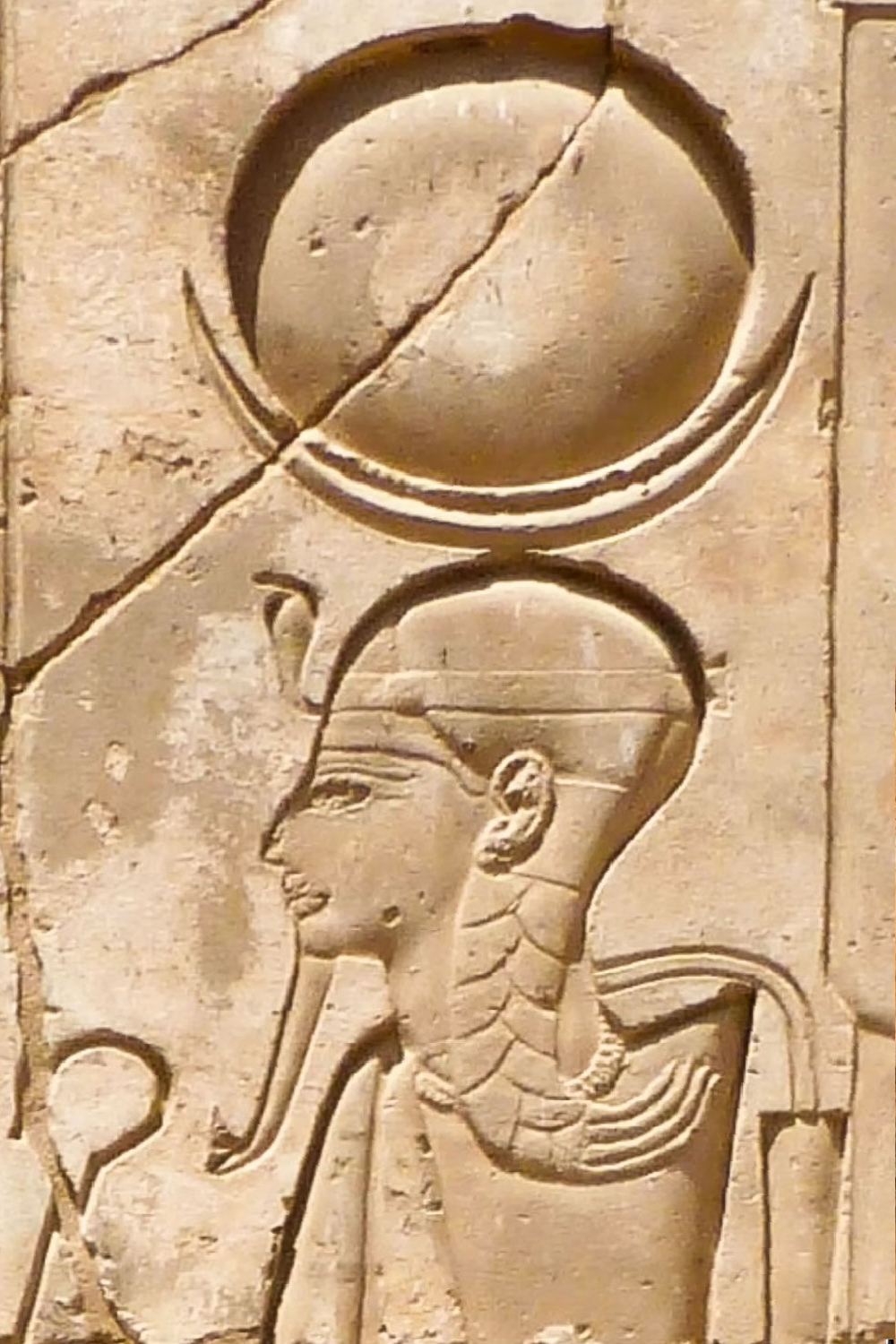 1.) Moon god Khonsu, as a youthful child wearing a lunar disk and the traditional sidelock of youth, lunar associations are cleanly defined by the celestial shapes resting on his head, his name literally translates to "The Traveler"
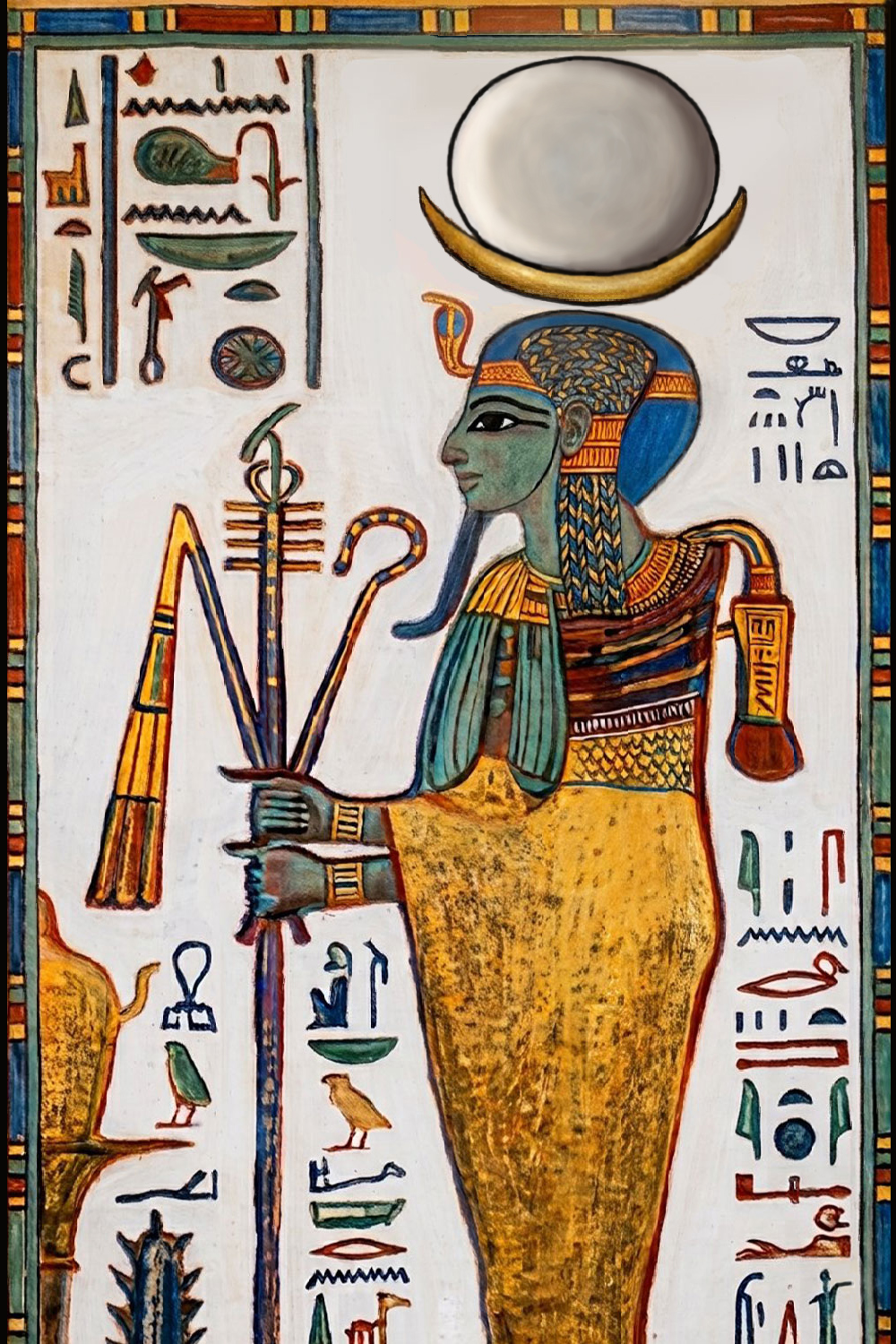 2.) AI restored & repainted relief, (c. 1150 BCE), of Khonsu, god of the moon, his crown is a golden crescent moon, he wears a blue and gold patterned wig with a cobra symbol, his skin is painted green, which symbolizes rebirth and renewal, and he has a curved braided beard, he holds a curved staff (crook) and a whip-like tool (flail), colorful columns of hieroglyphs frame both sides of the figure.
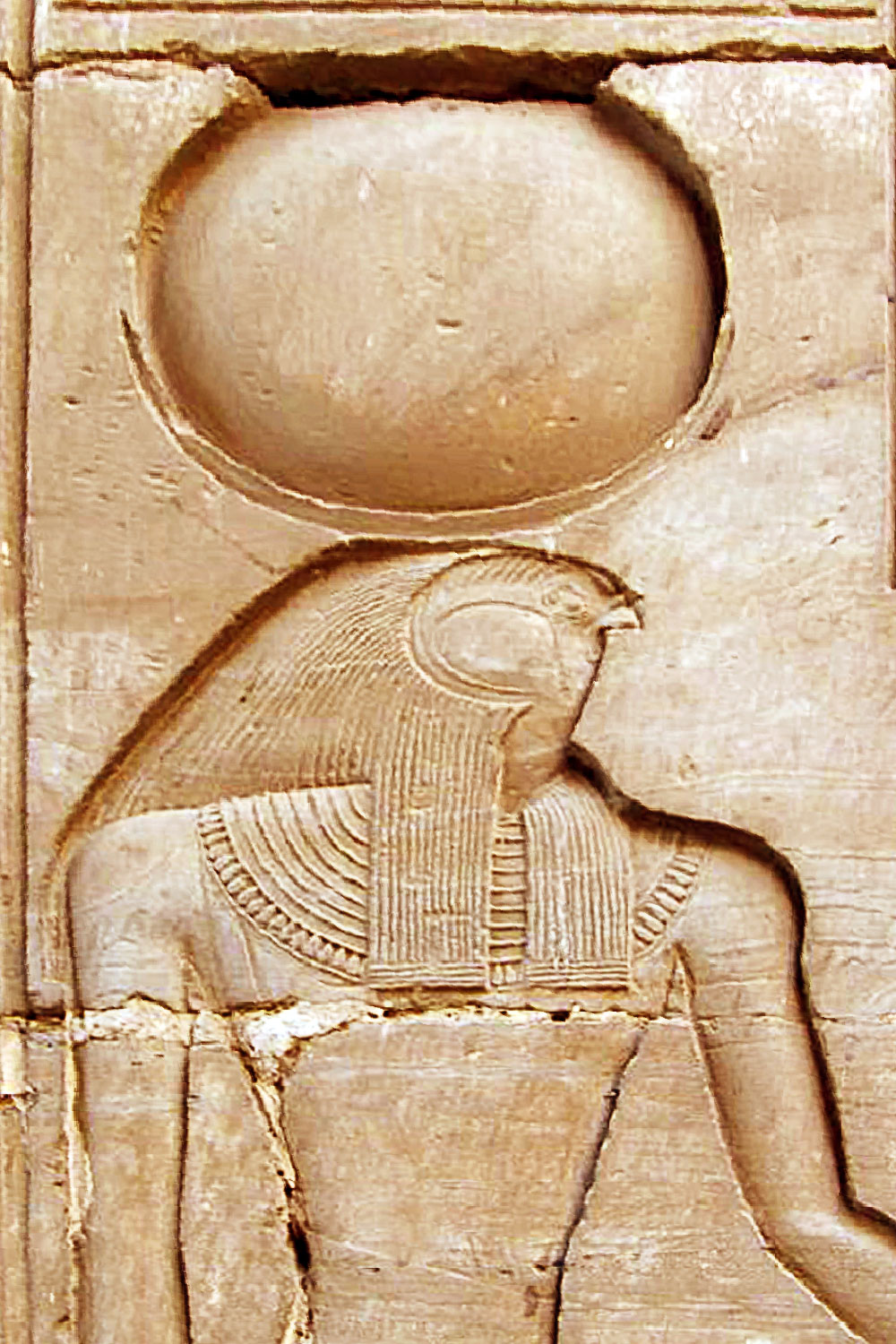 3.) Moon god Khonsu, wears a tight-fitting skullcap and a characteristic side-lock of hair, indicating youth, Above the head rests a full lunar disk cradled within a crescent moon,
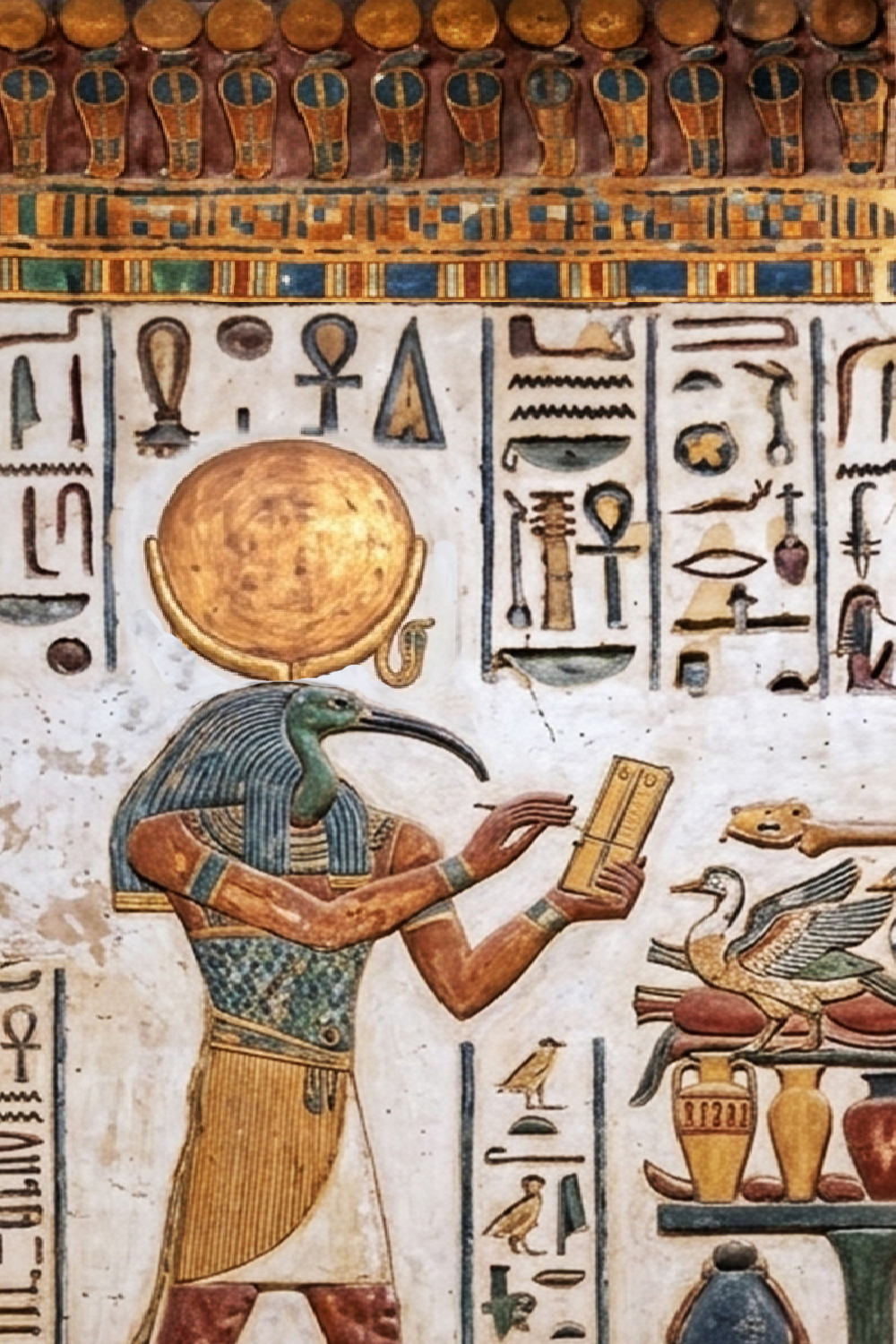
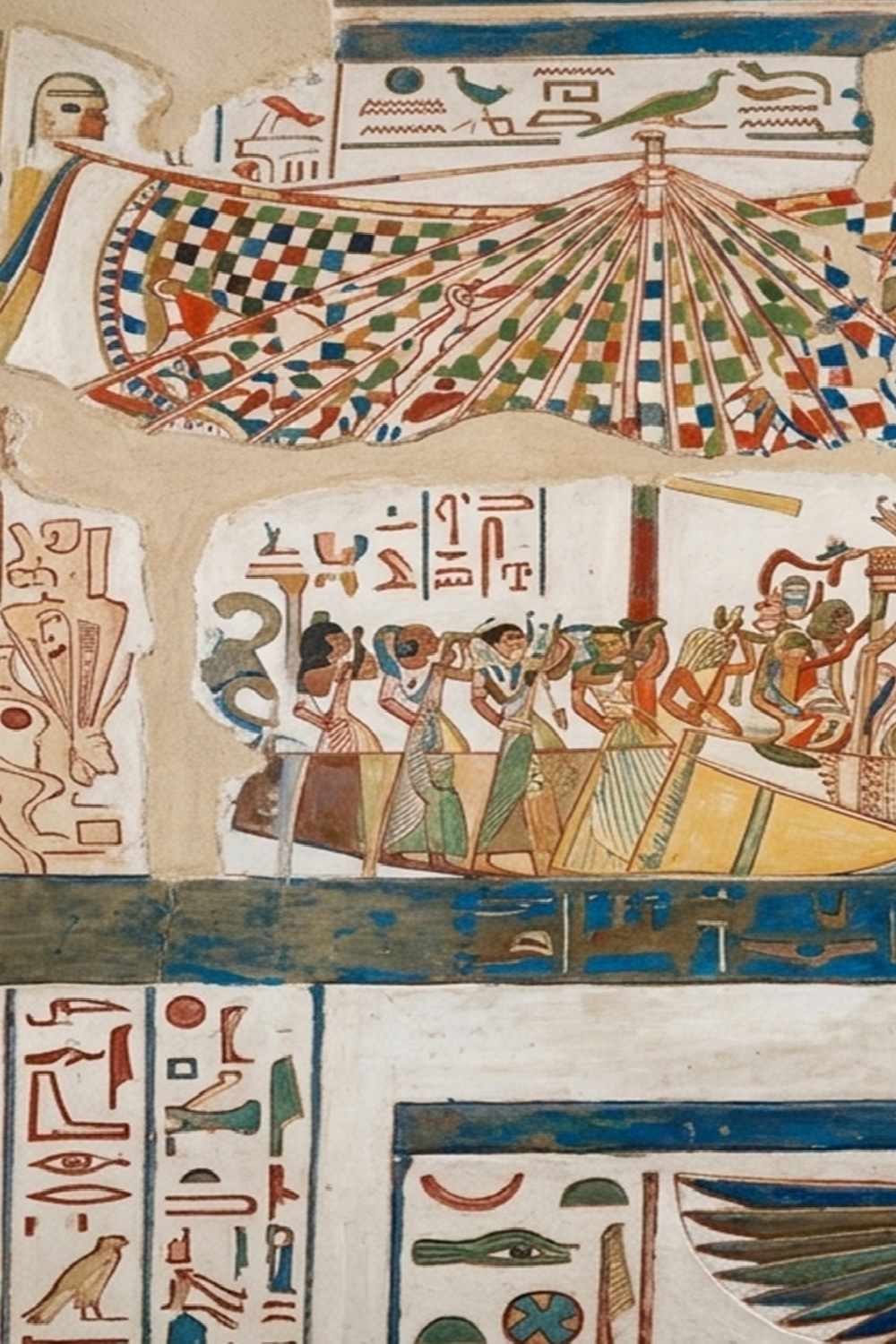 1.) AI restored & repainted relief, (c. 1150 BCE), To or Ta, who served as the First Prophet of Menkheperre (the deified King Thutmose III) during the reign of Ramesses II, a detailed river vessel moving along a canal,
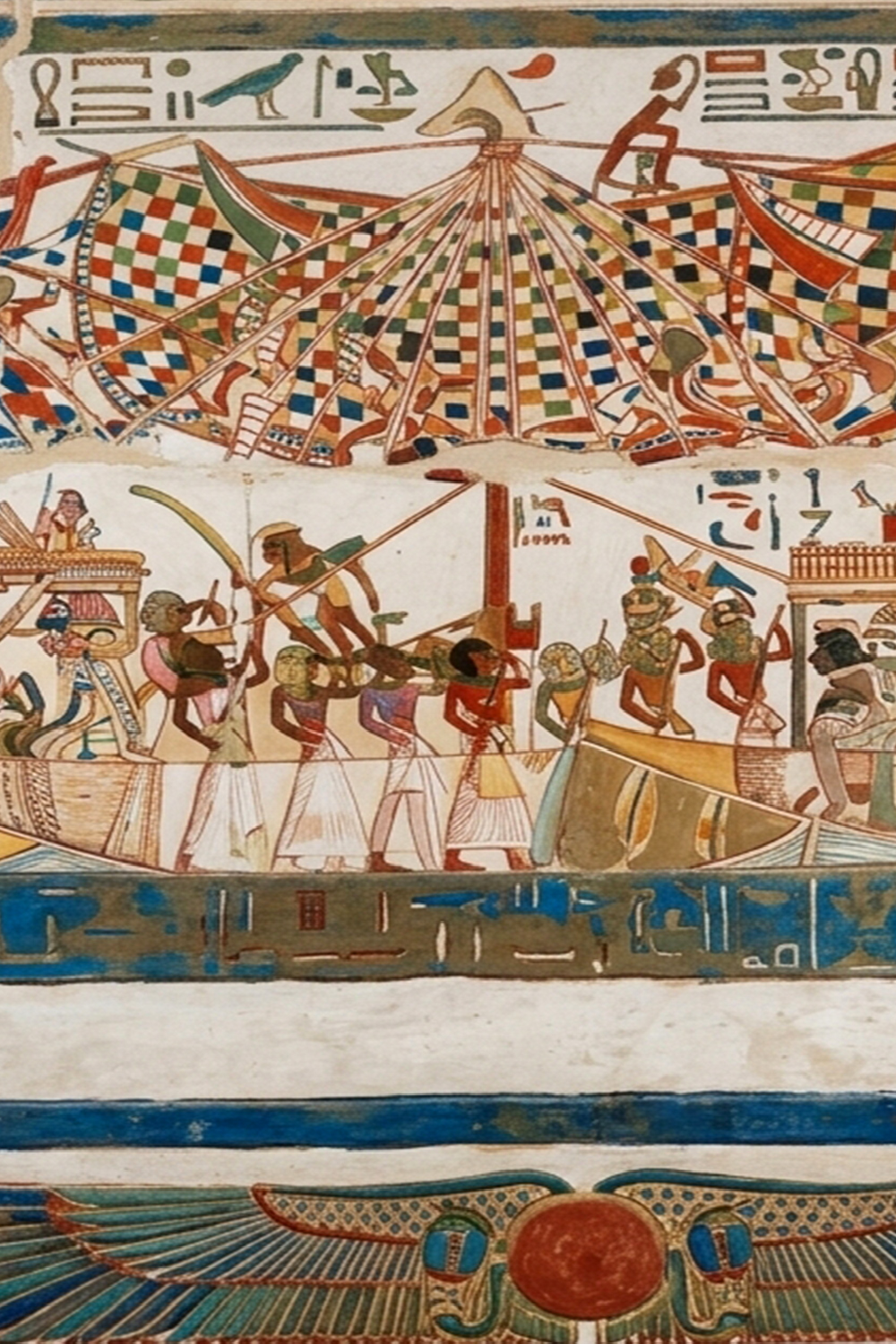 2.) in Ancient Egypt, watercraft sailed south (upstream) with their sails completely open to catch the prevailing northern winds, This towboat is towing the sacred, ceremonial barque of Thutmose III towards his mortuary temple
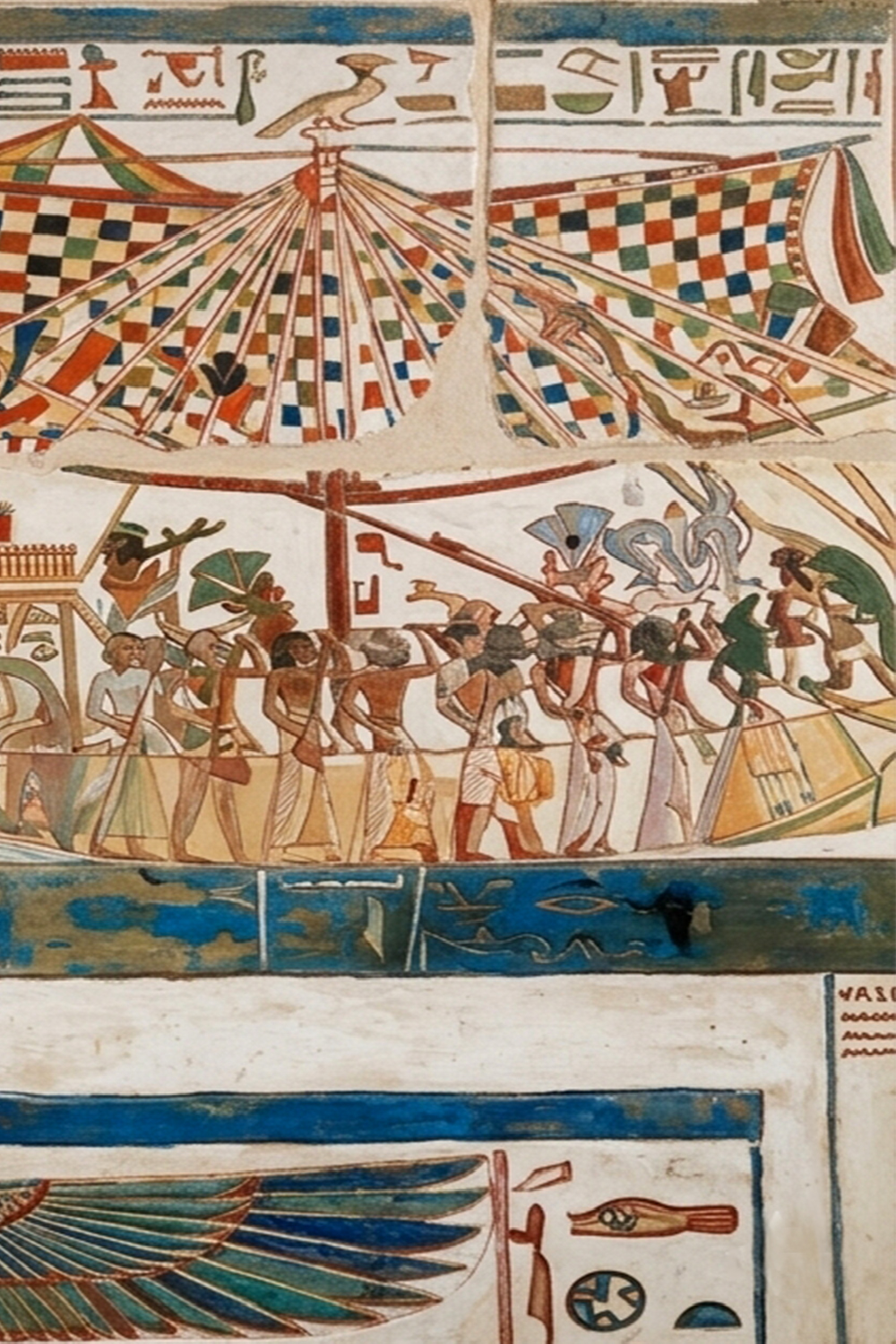 3.) during a religious festival celebrating the god Montu, this painting is highly celebrated by historians for its remarkable preservation, detailed rigging, and representation of New Kingdom maritime, 1279 BCE
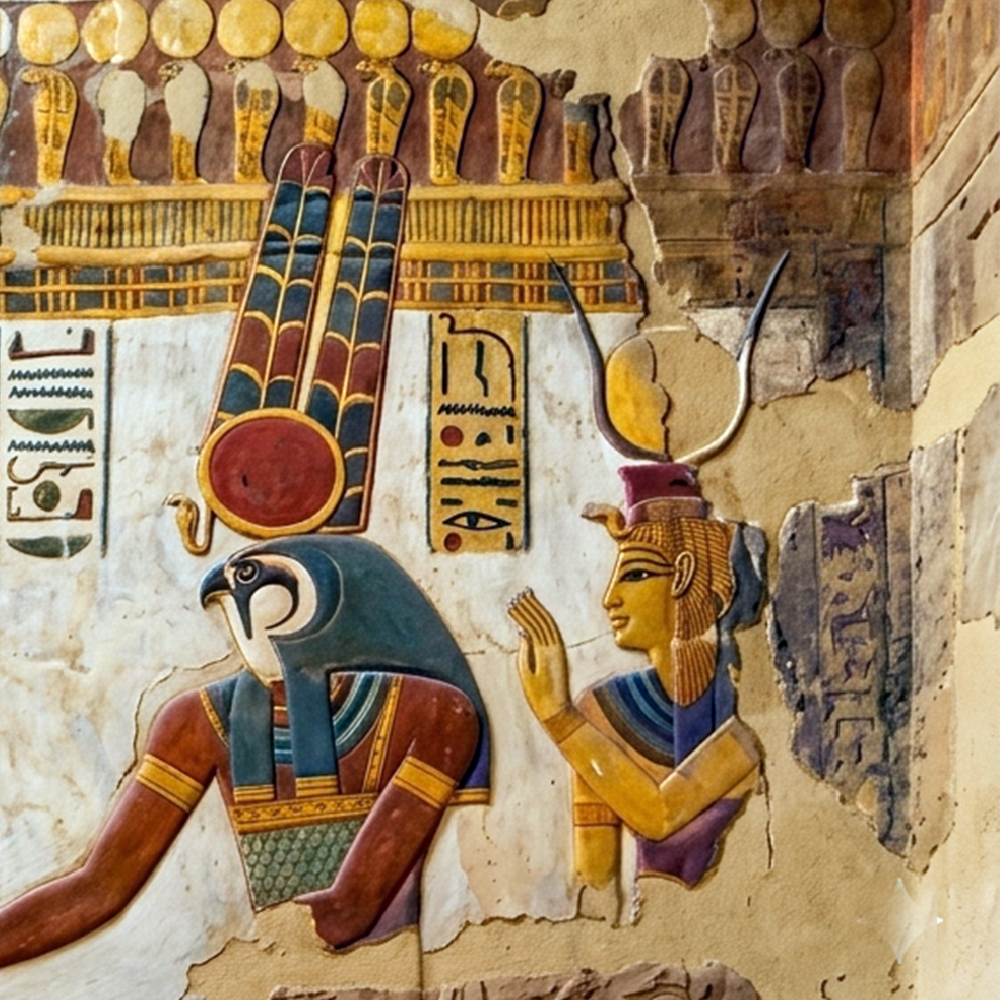
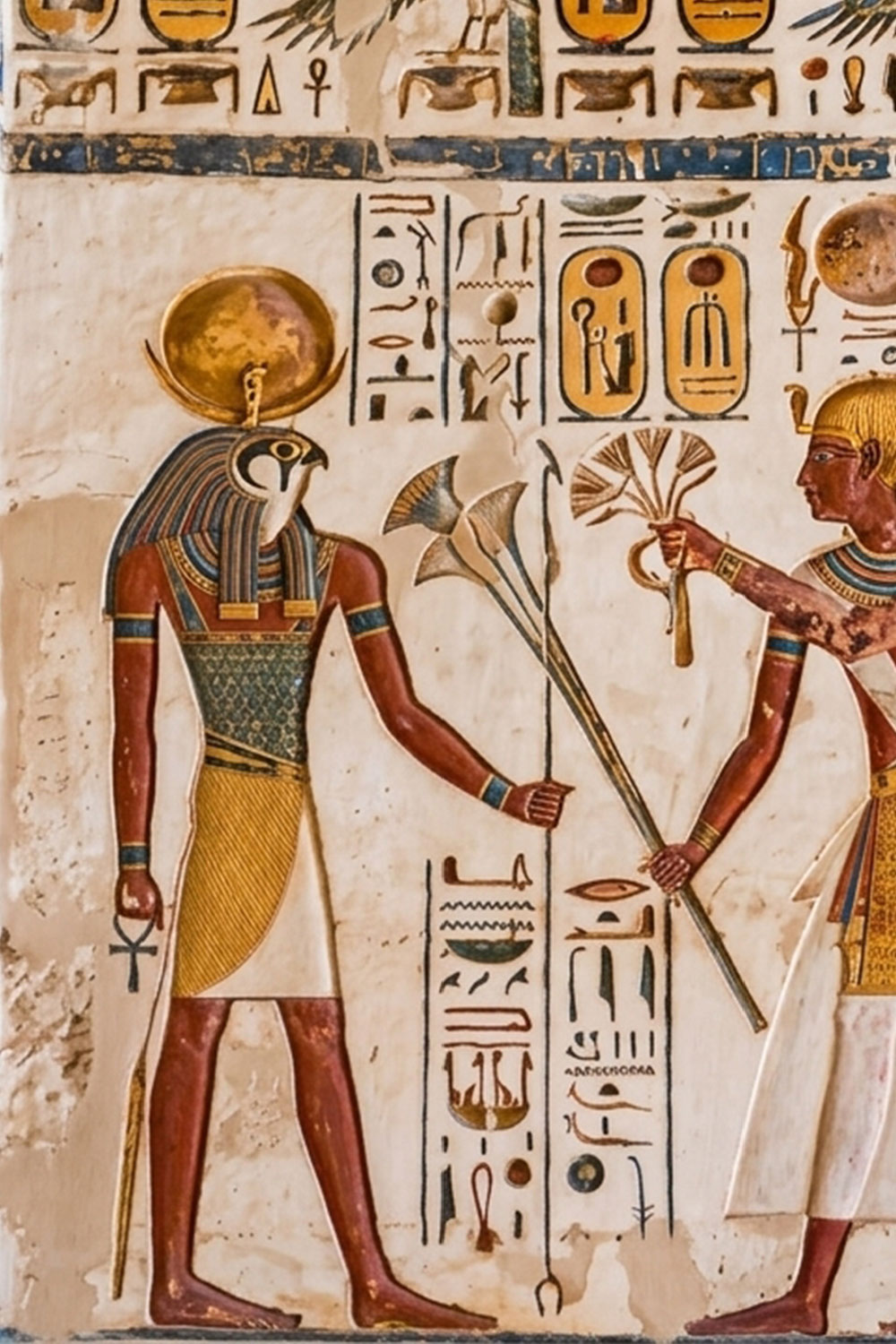 1.) AI restored & repainted relief, (c. 1150 BCE), Queen Nefertari (on the right) presenting an offering of papyrus thickets and symbols to the falcon-headed sun god, Ra-Horakhty
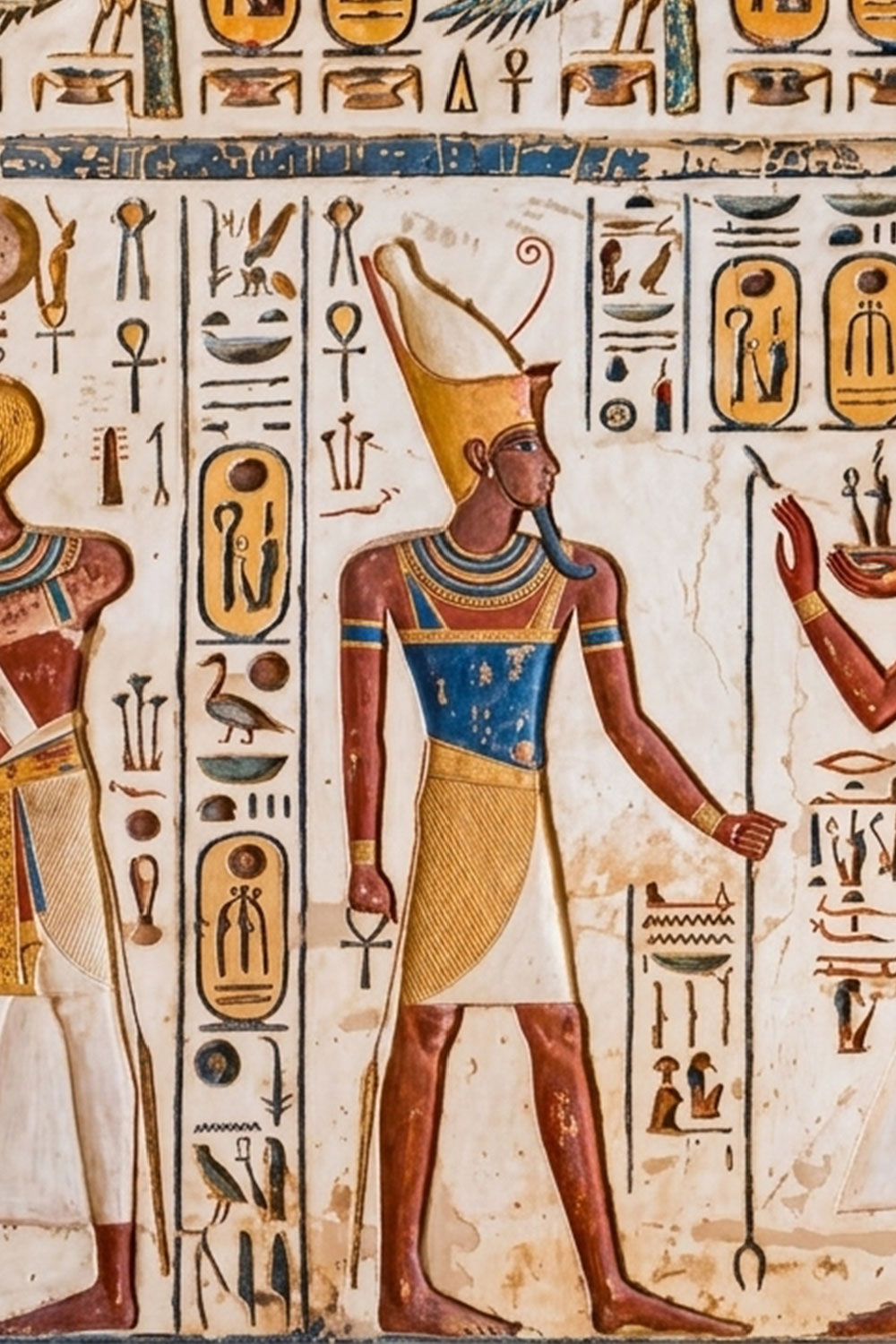 2.) Pharaoh Ramesses III (reigned c. 1185–1154 BC) interacts with deities, on the right side, the hand of Khonsu a lunar deity a protective god
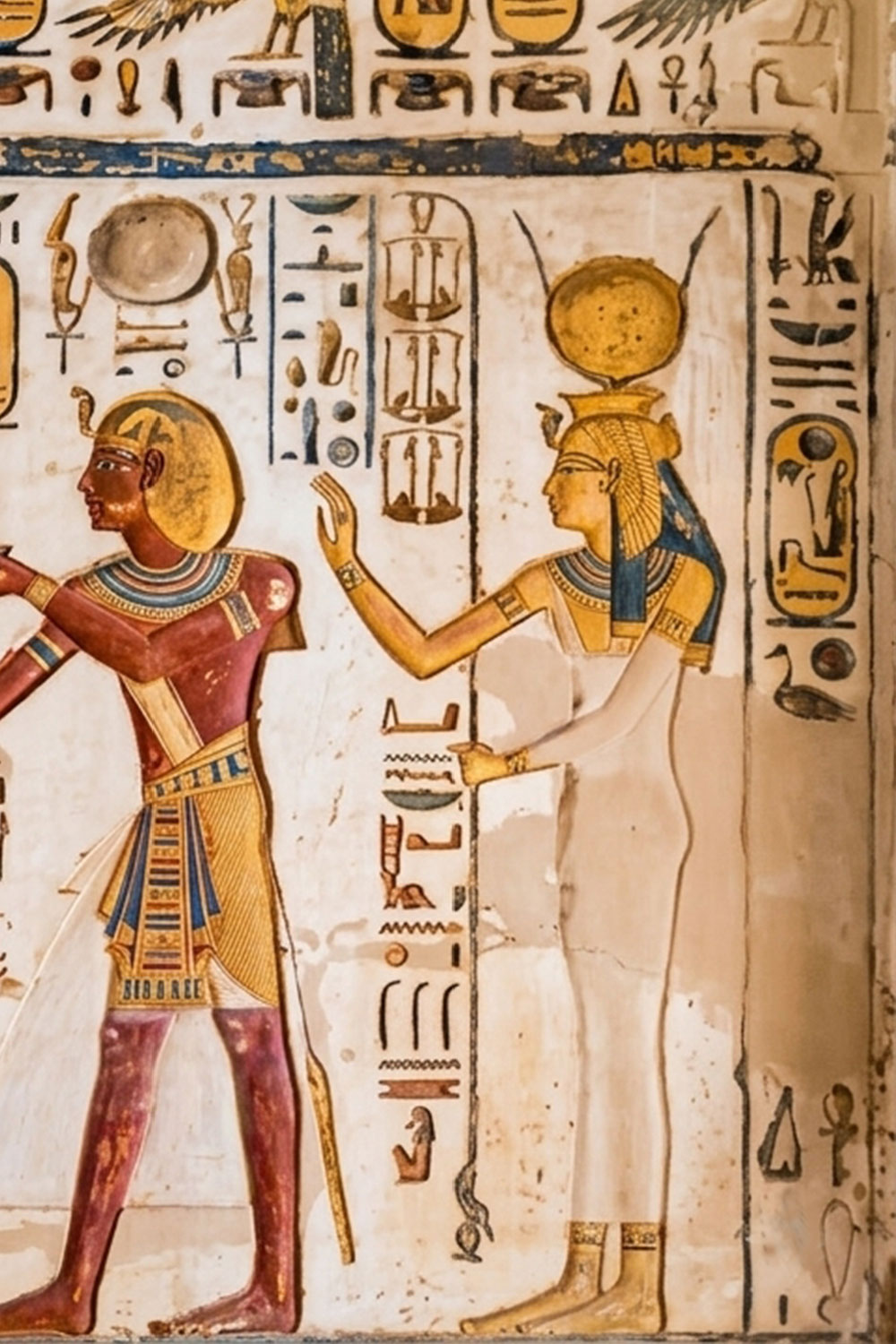 3.) Ramesses VI from the Twentieth Dynasty) raises his hands in adoration
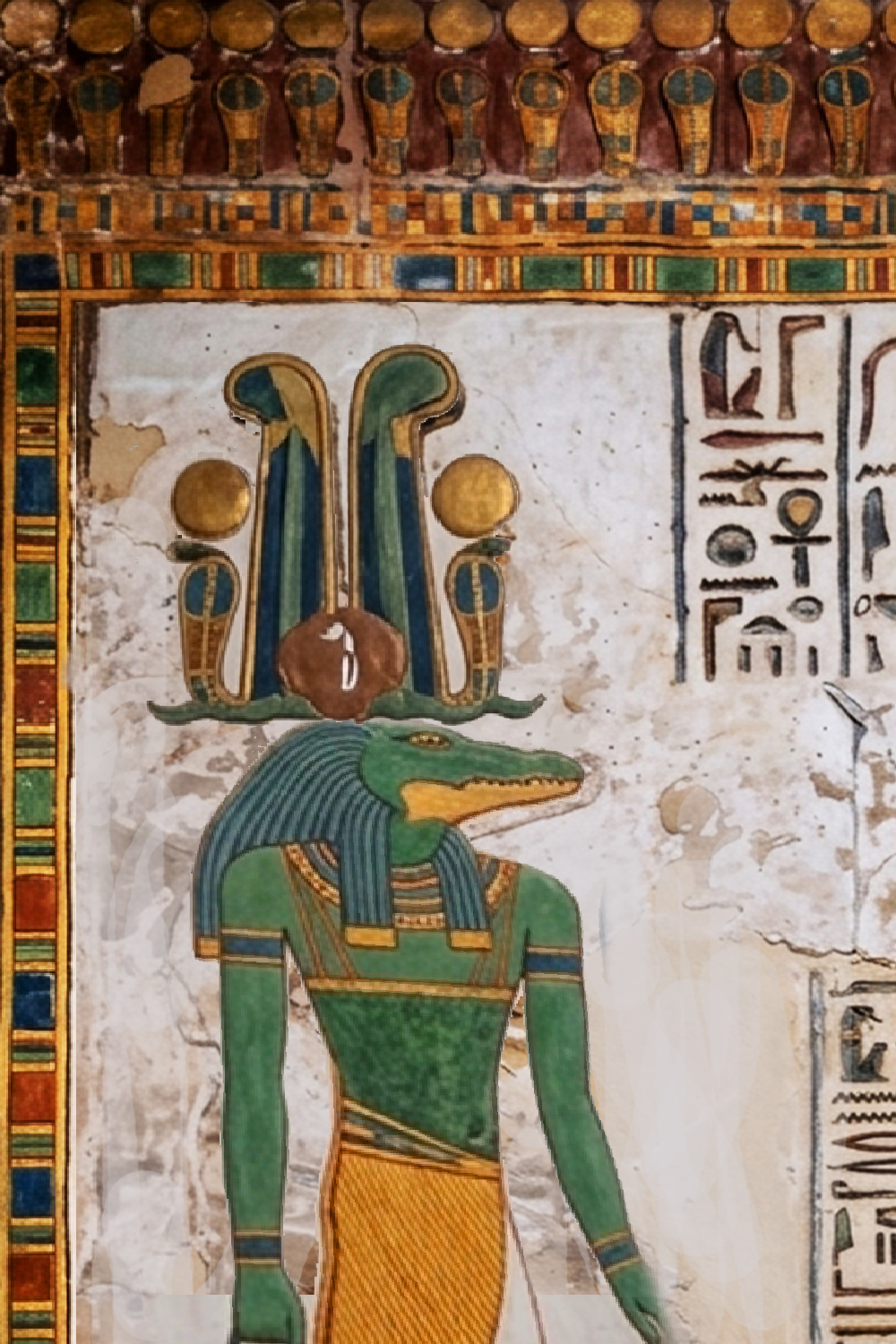 AI restored & repainted relief, (c. 1150 BCE), Sobek, the ancient Egyptian deity of the Nile, water, and military strength, Appearance: He features a green-colored body and a detailed crocodile head,
 wearing a striped tripartite wig and a complex crown made of twin plumes, horizontal ram horns, and a central sun disk
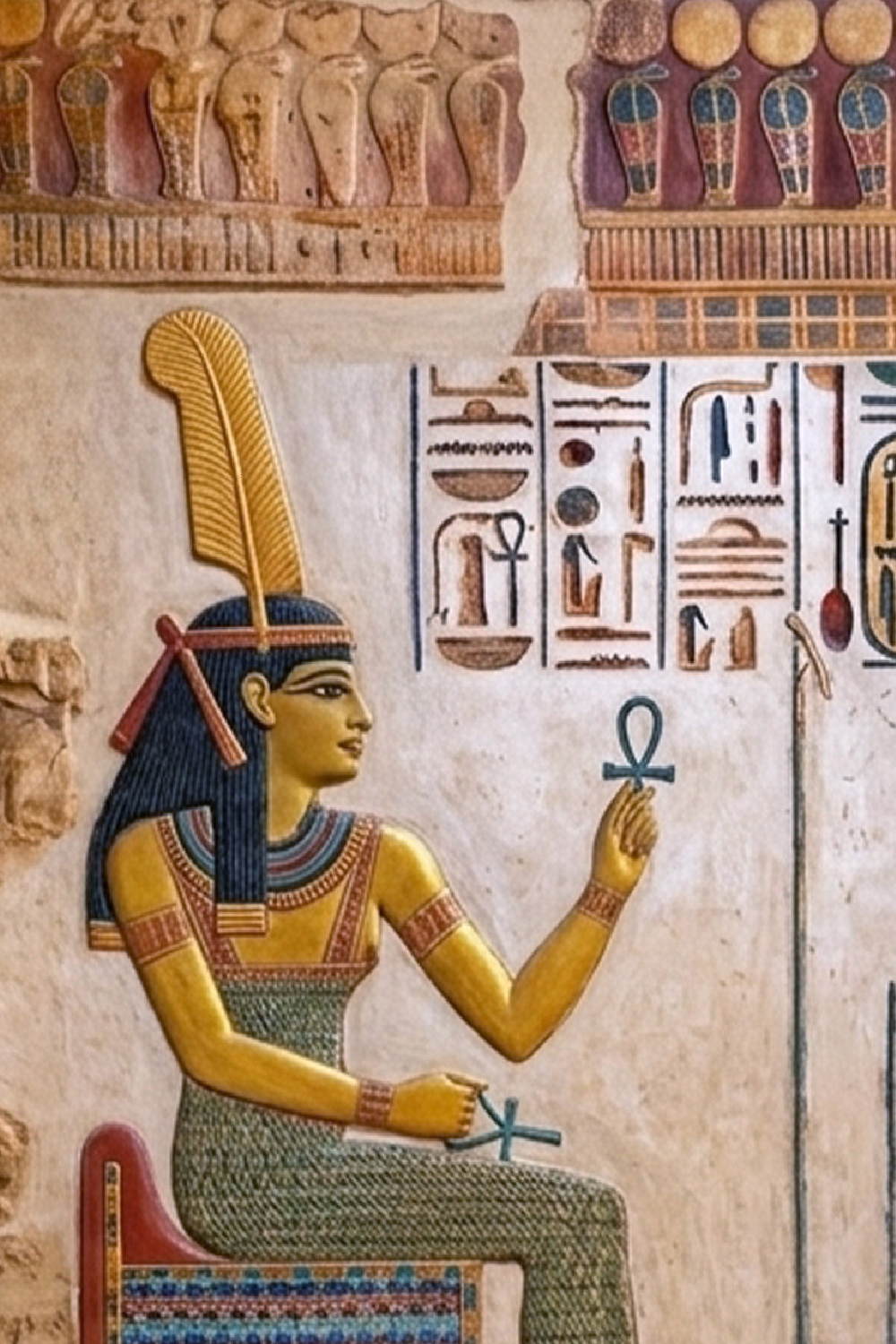
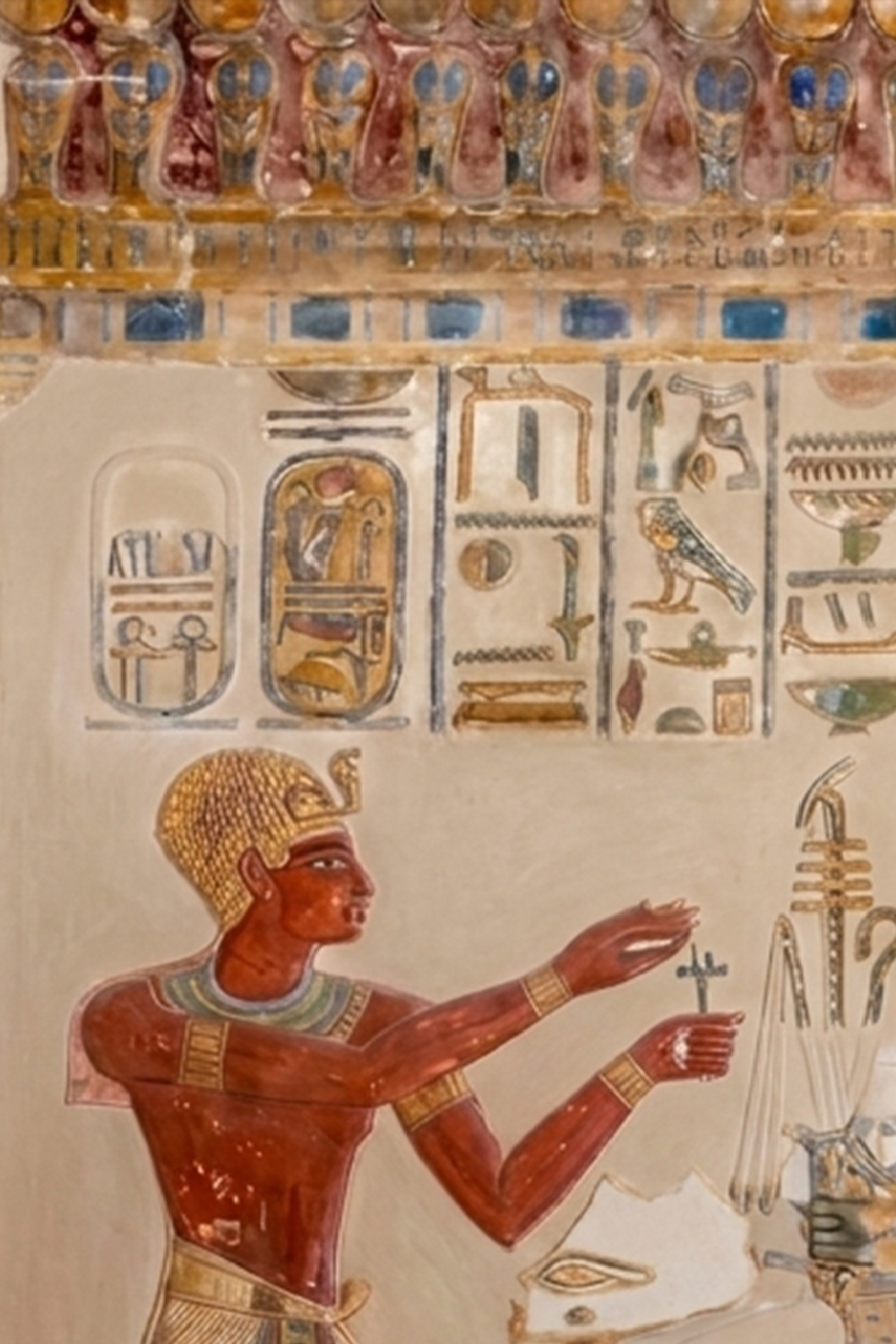 1.) AI painted relief, depicting Pharaoh Ramesses III (1185–1154 BCE), offering a sphinx-shaped ointment jar, to Ma'at,
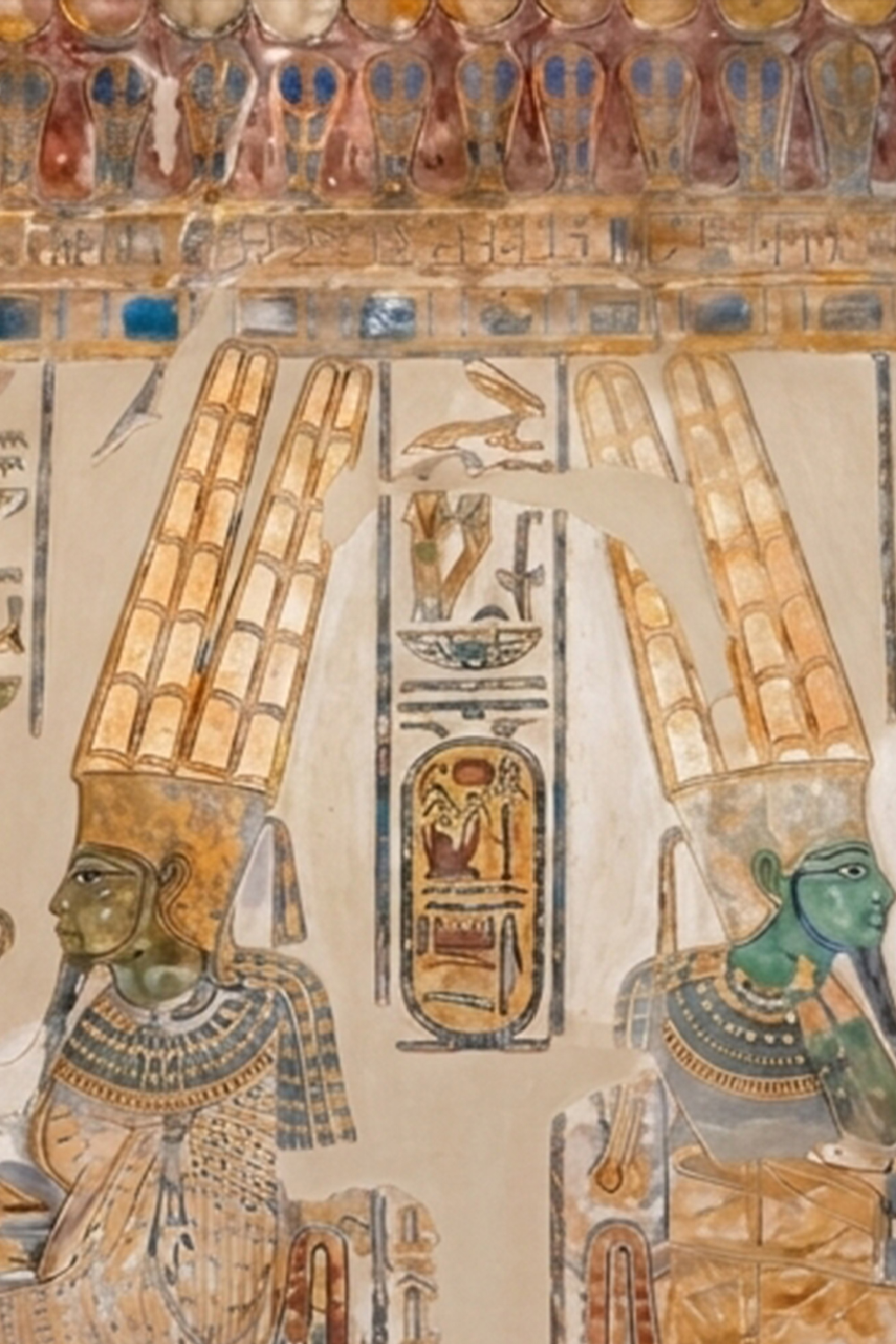 2.) by presenting these gifts, the king fulfilled his cosmic obligation to keep the gods satisfied,
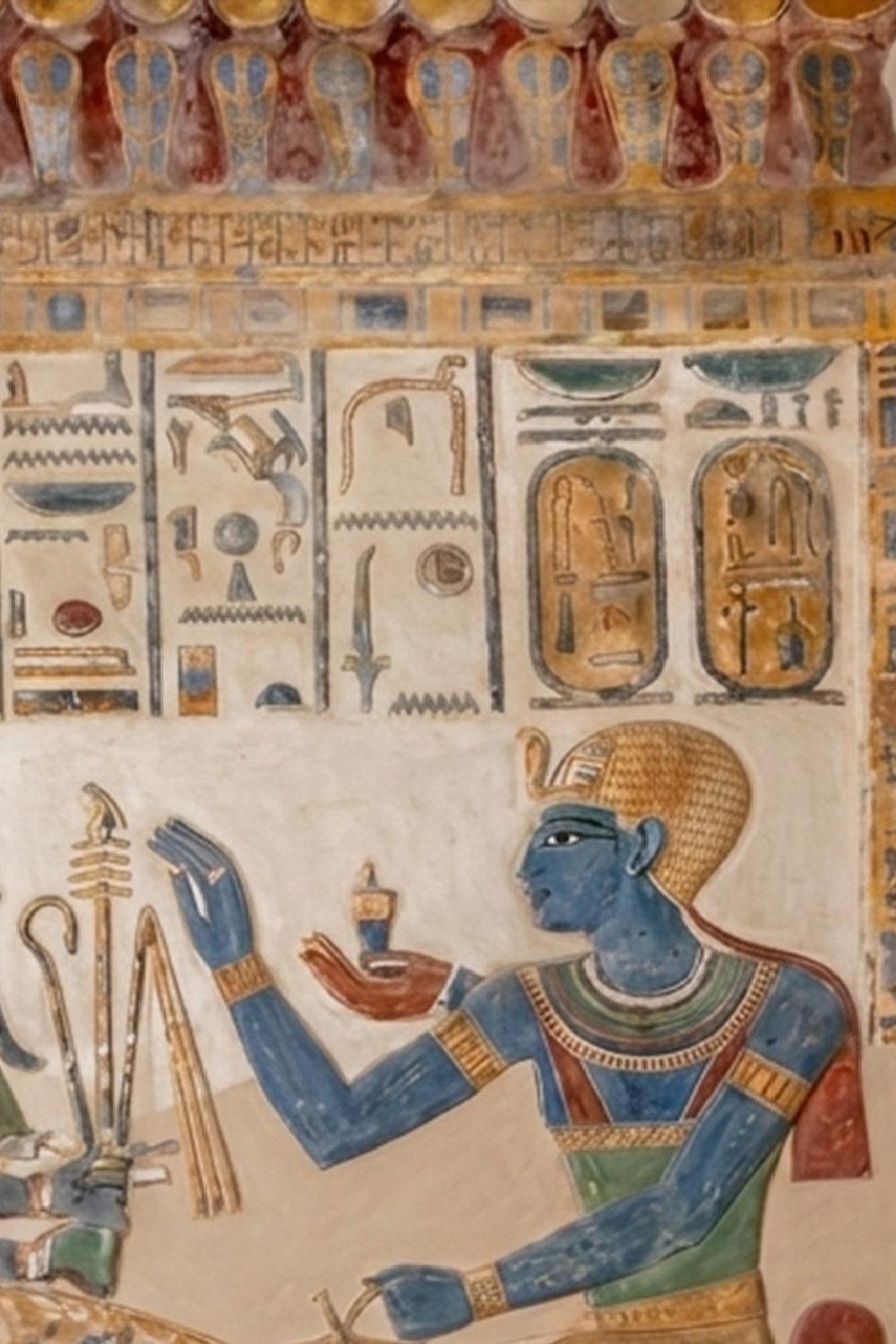 3.) ensuring they would grant Egypt prosperity, seasonal Nile floods, and victory over foreign enemies.
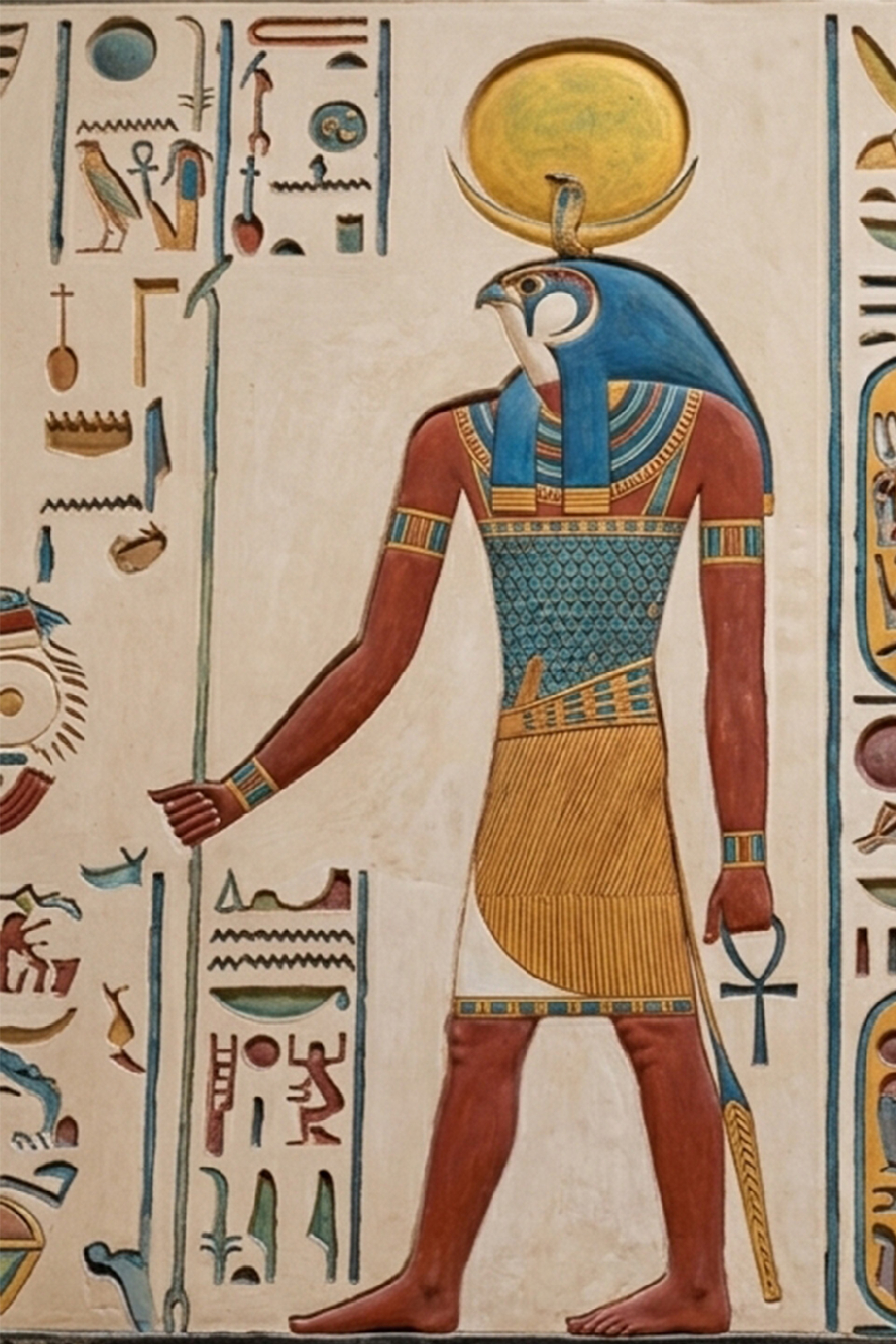 1.) AI restored & repainted relief, (c. 1150 BCE), Ramesses IV shown kneeling in reverence. He is presenting an elaborate, jeweled casket or offering chest adorned with protective wedjat (Eye of Horus) symbols. The pharaoh is making offerings to two representations of Khonsu,
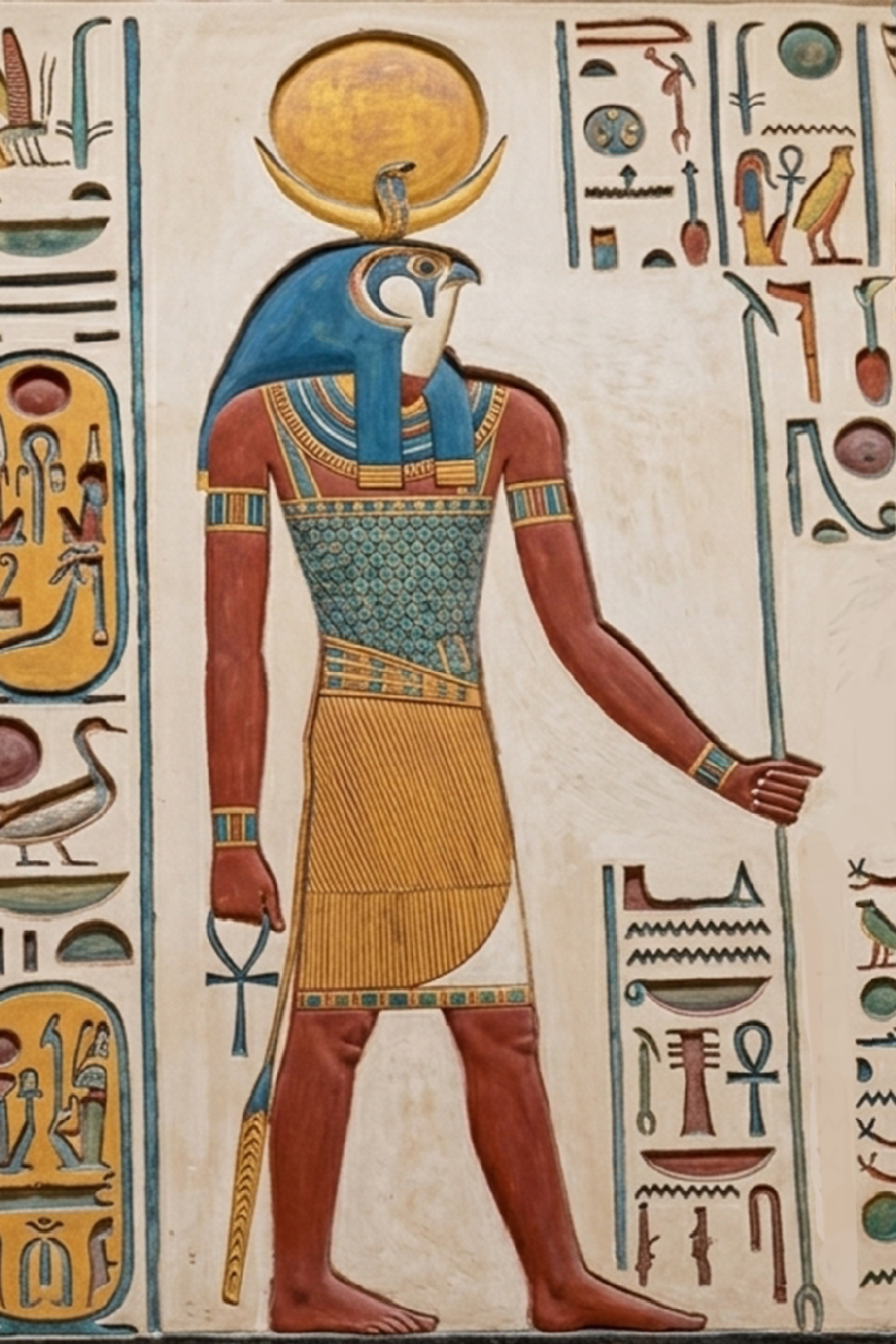 2.) he is represented twice here in his alternative falcon-headed form. Both figures of the god hold an ankh (the symbol of life) in one hand and a tall was-scepter (signifying power and dominion) in the other.
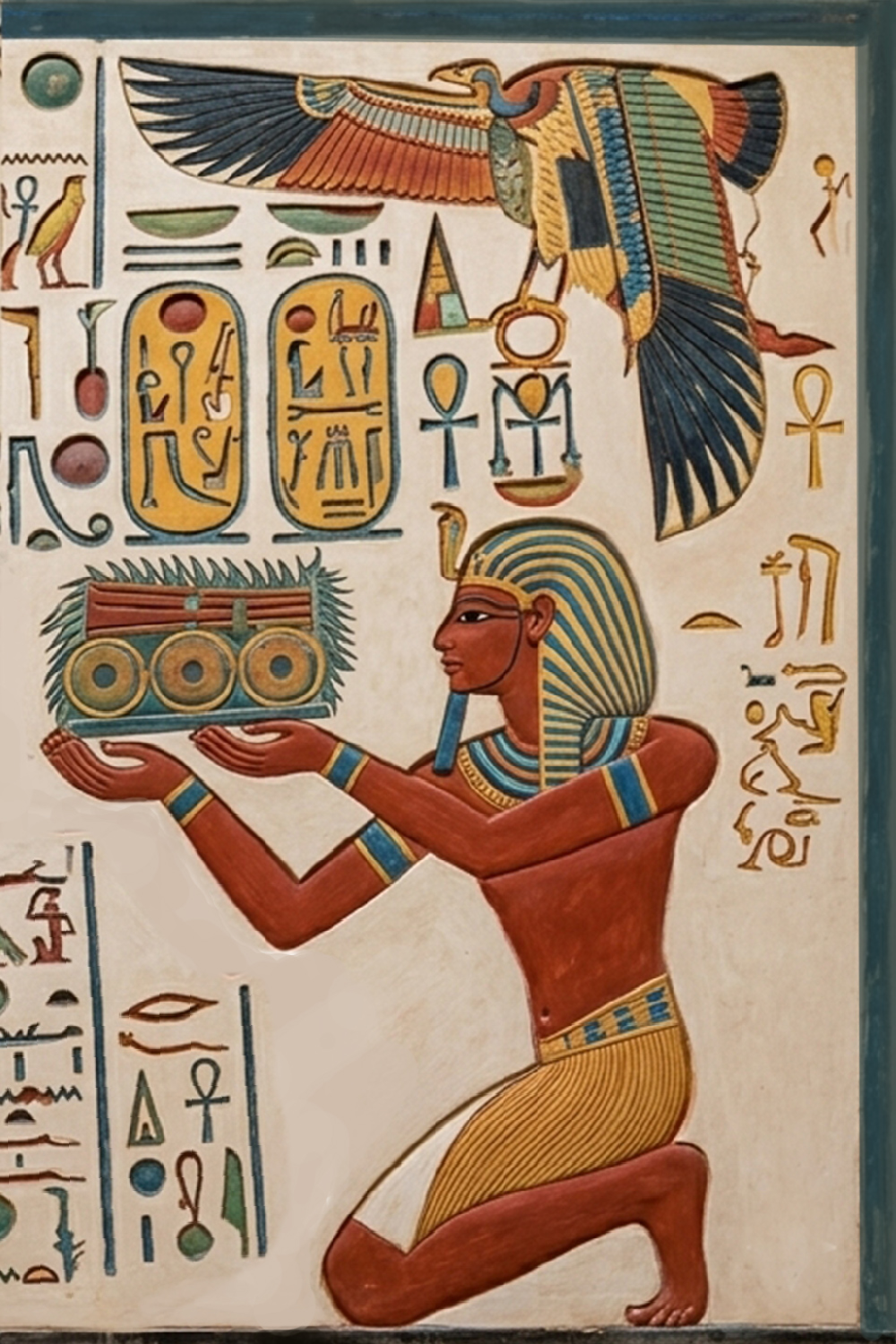 3.) Hovering protectively above the kneeling pharaoh is the vulture goddess Nekhbet, holding a shen ring (the symbol of eternal protection) in her talons.
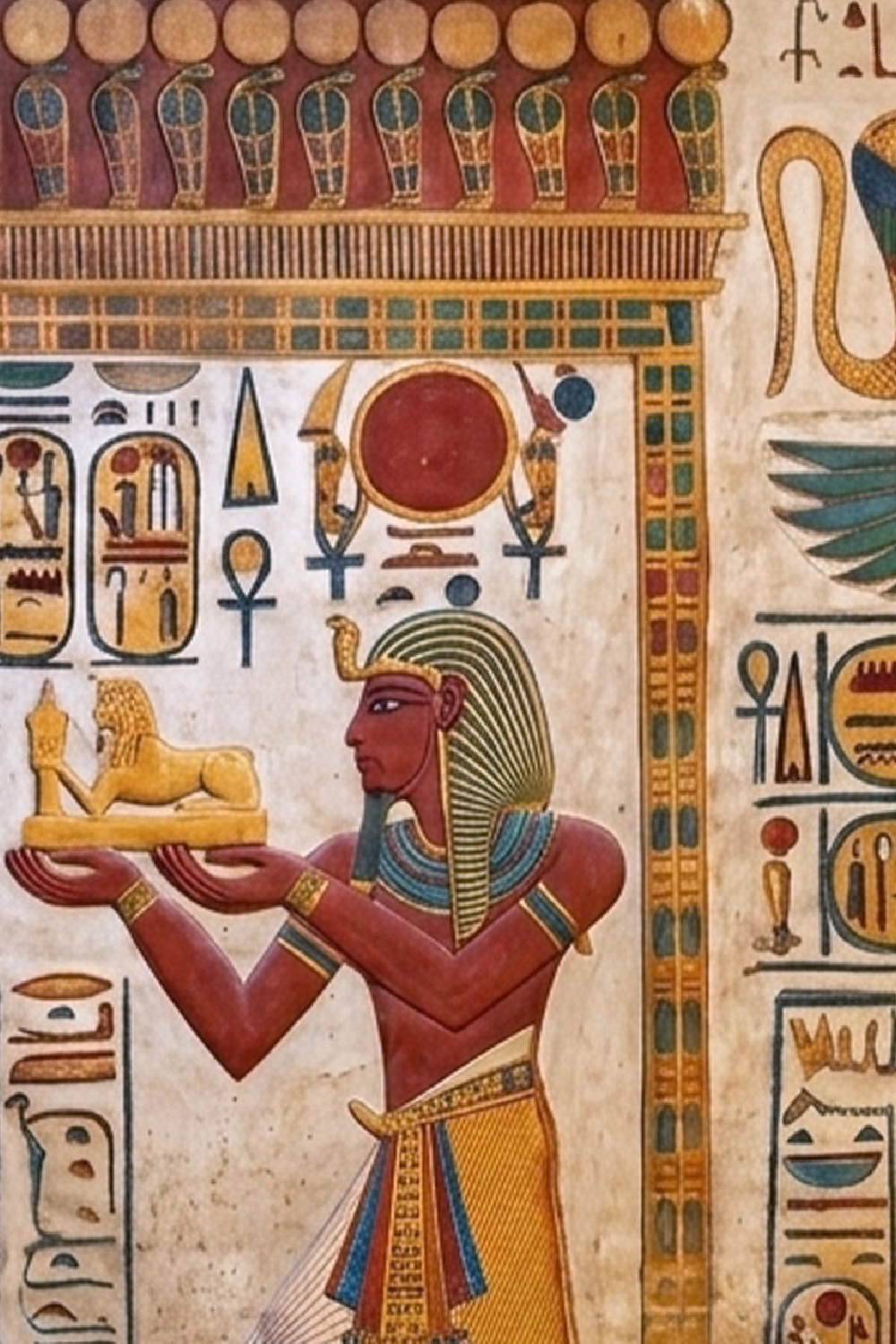
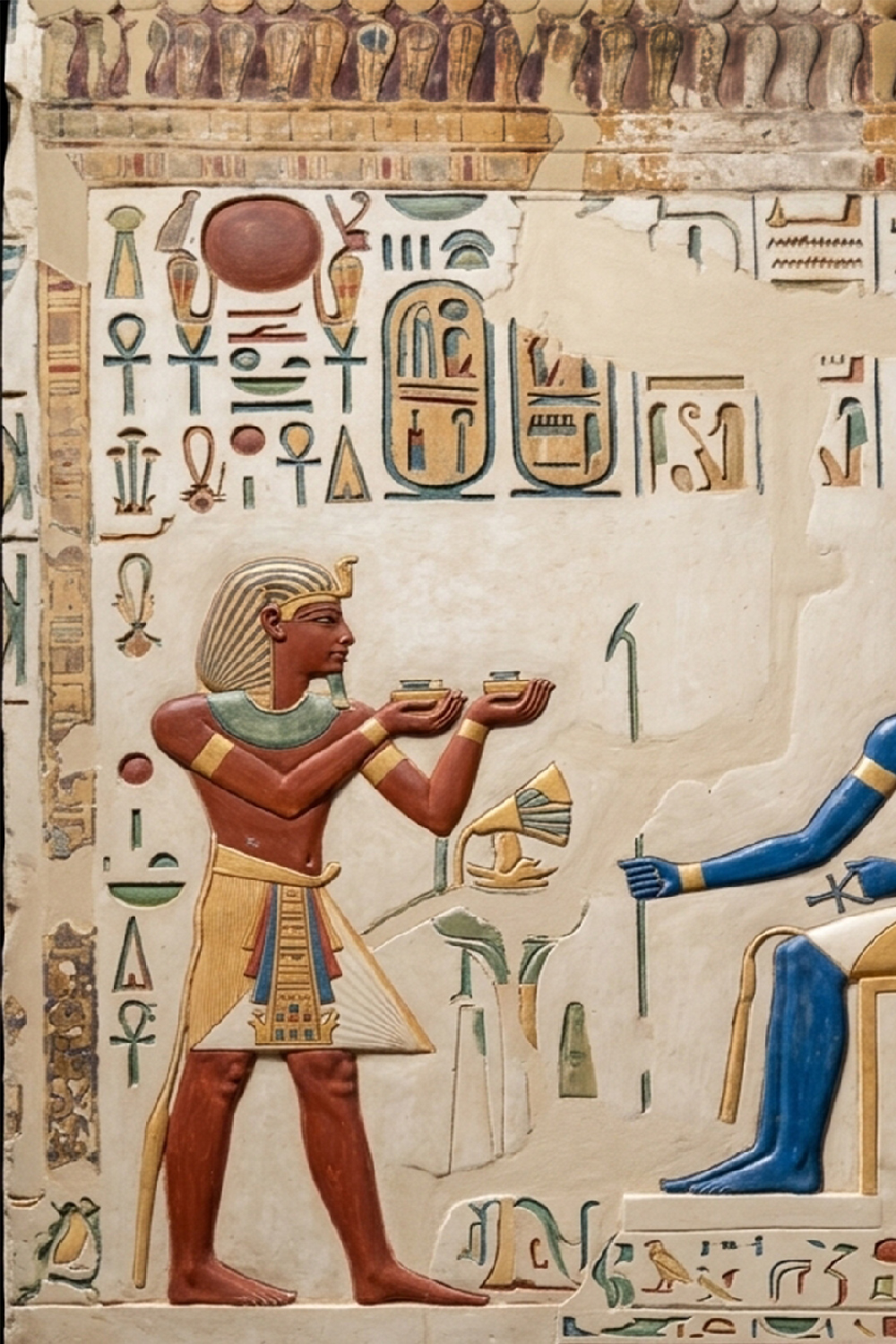 1.) AI restored & repainted relief, (c. 1150 BCE), depicting Pharaoh Ramesses III (1185–1154 BCE), offering a sphinx-shaped ointment jar, to Ma'at,
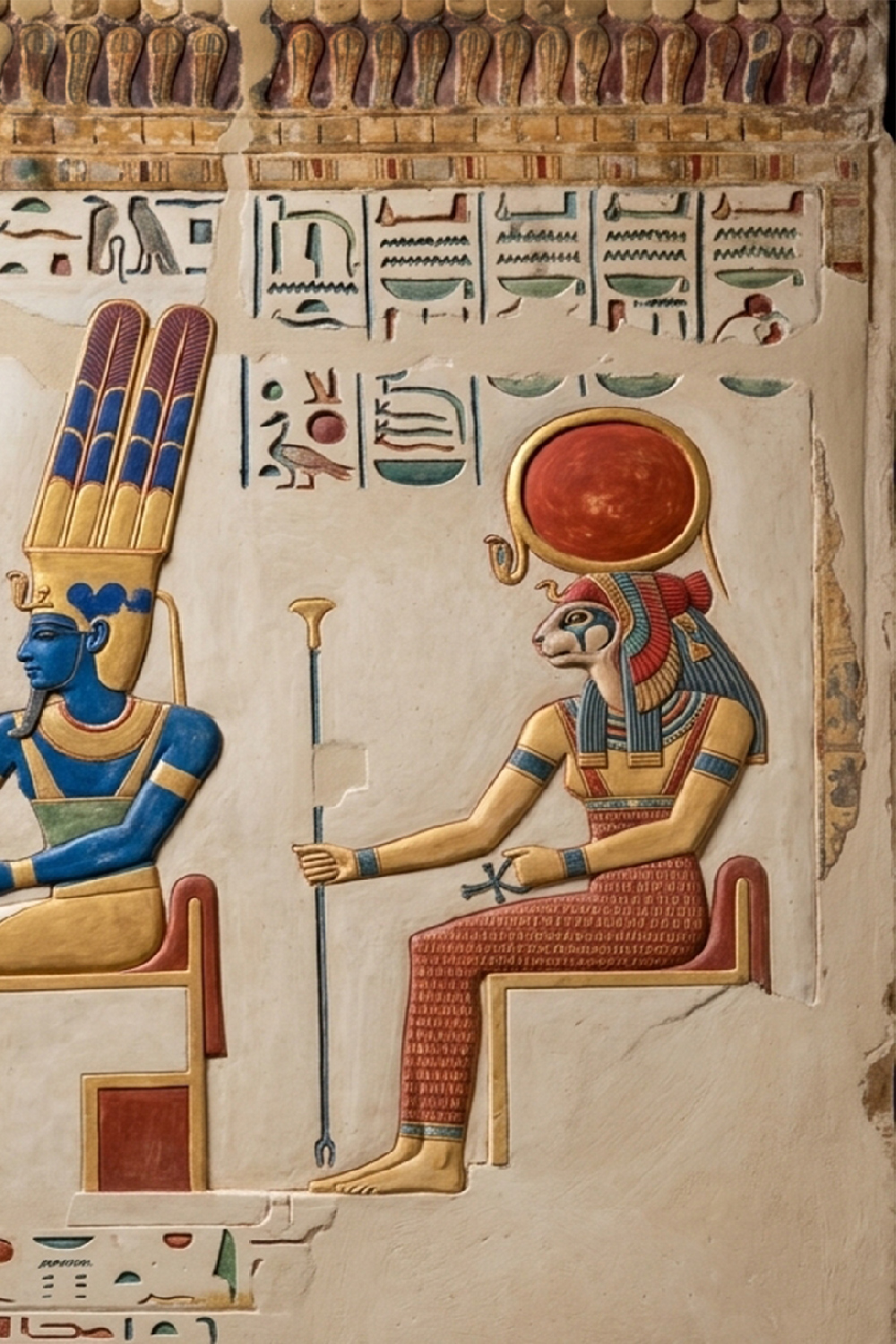 2.) by presenting these gifts, the king fulfilled his cosmic obligation to keep the gods satisfied,
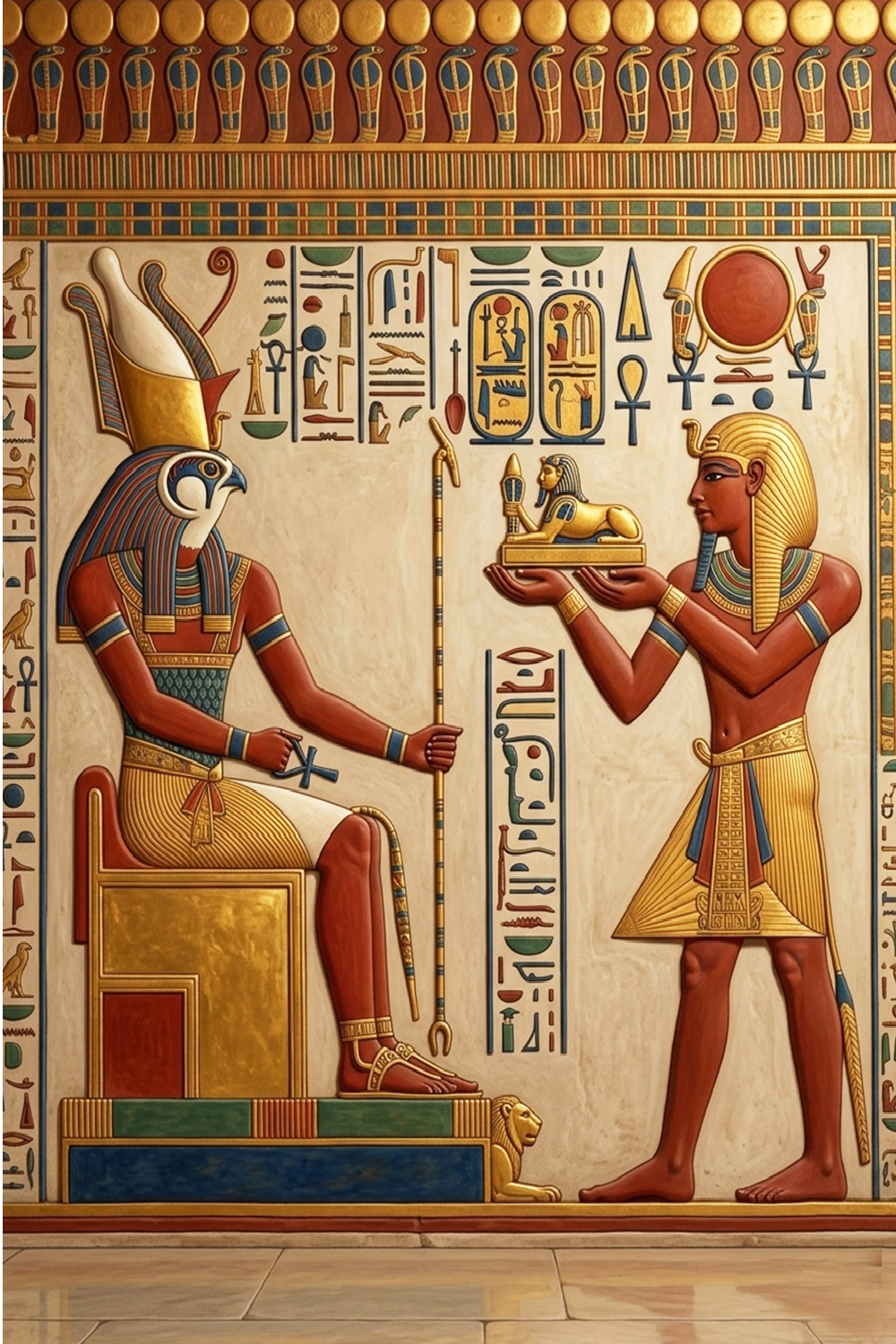 AI painted painted relief depicting a seated falcon-headed Horus, receiving an offering from a pharaoh who holds a small sphinx model.
 1.) AI restored & repainted relief, (c. 1150 BCE), depicting Pharaoh Ramesses III (1185–1154 BCE), offering a sphinx-shaped ointment jar, to Ma'at,
 2.) by presenting these gifts, the king fulfilled his cosmic obligation to keep the gods satisfied,
 3.) ensuring they would grant Egypt prosperity, seasonal Nile floods, and victory over foreign enemies.
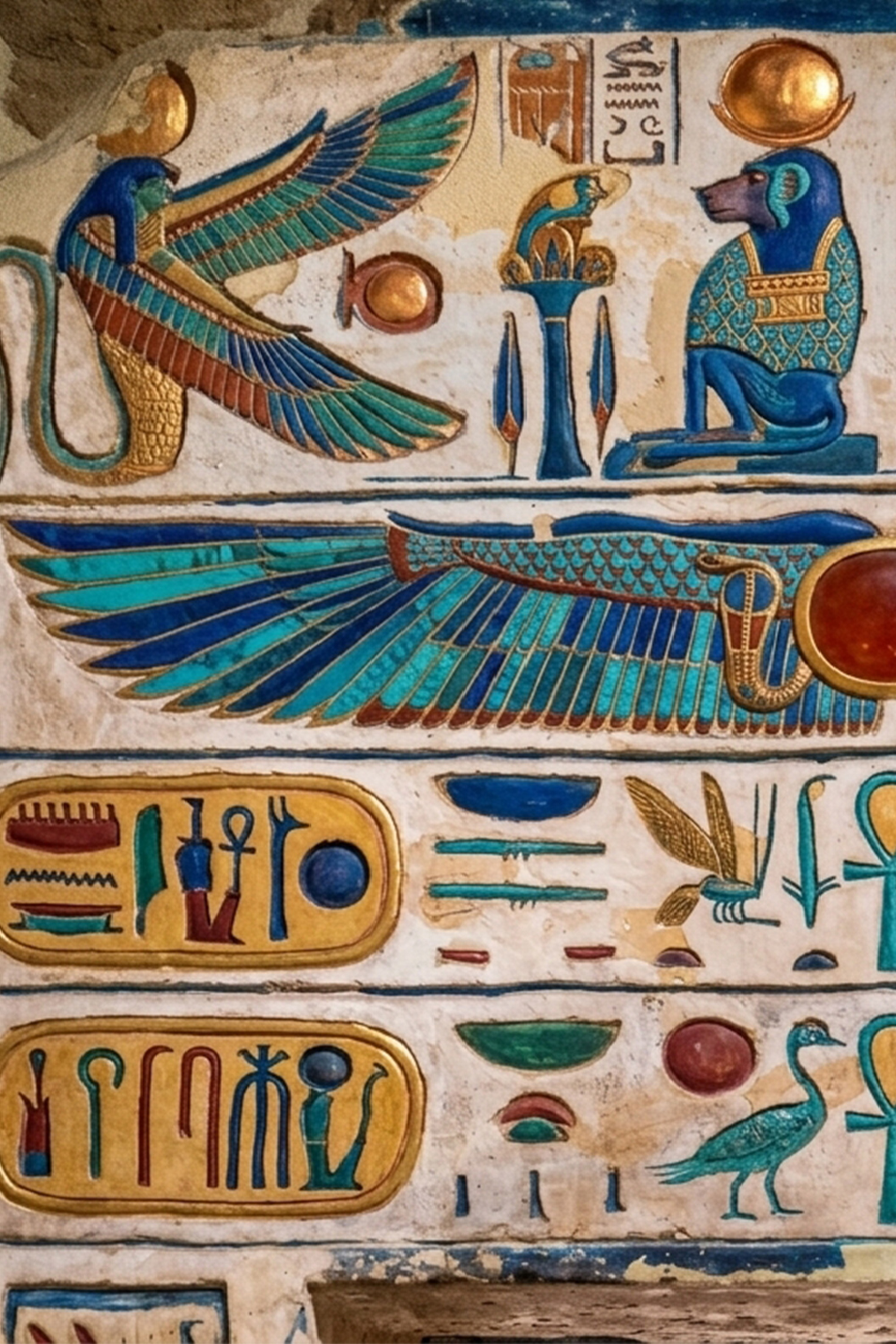
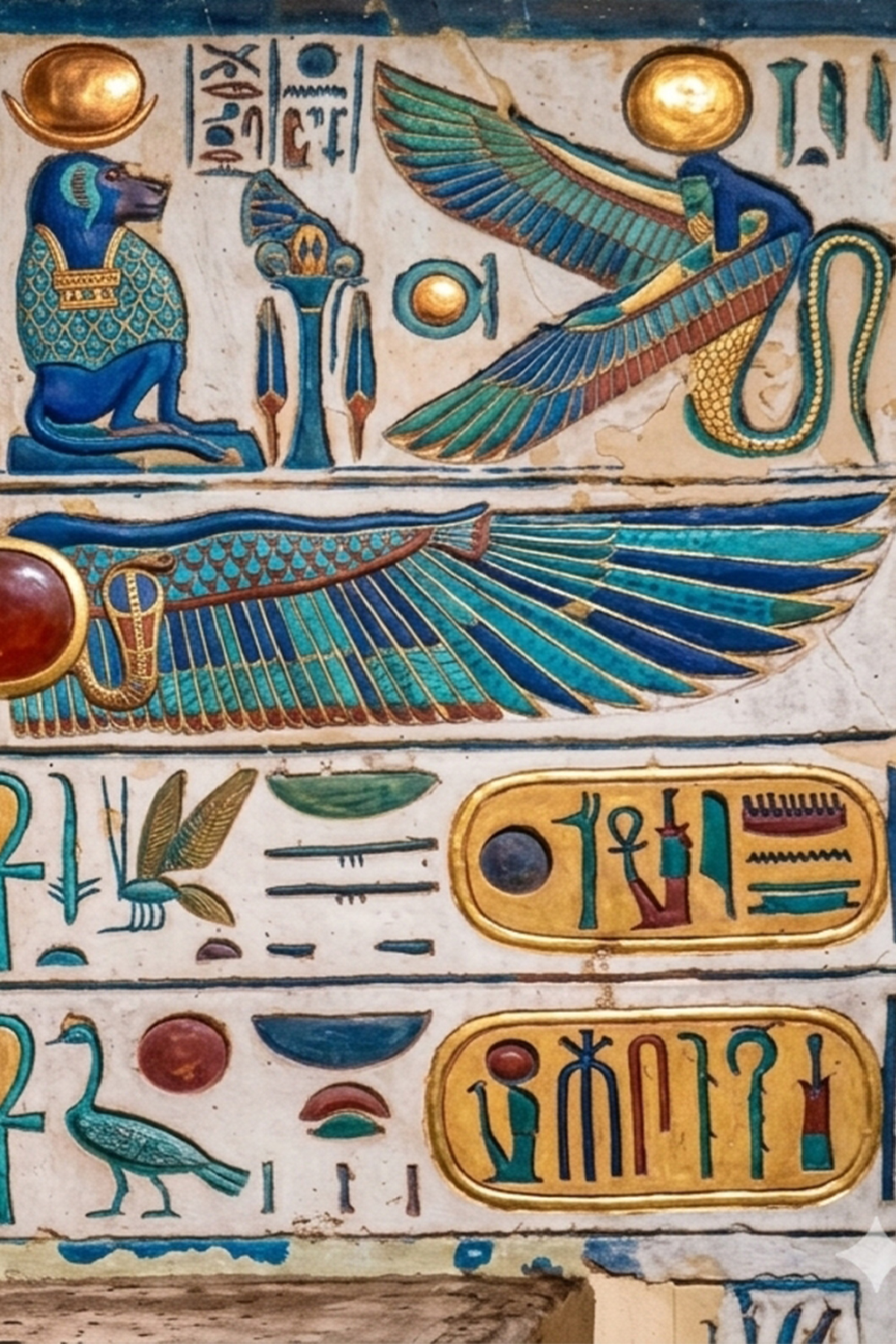
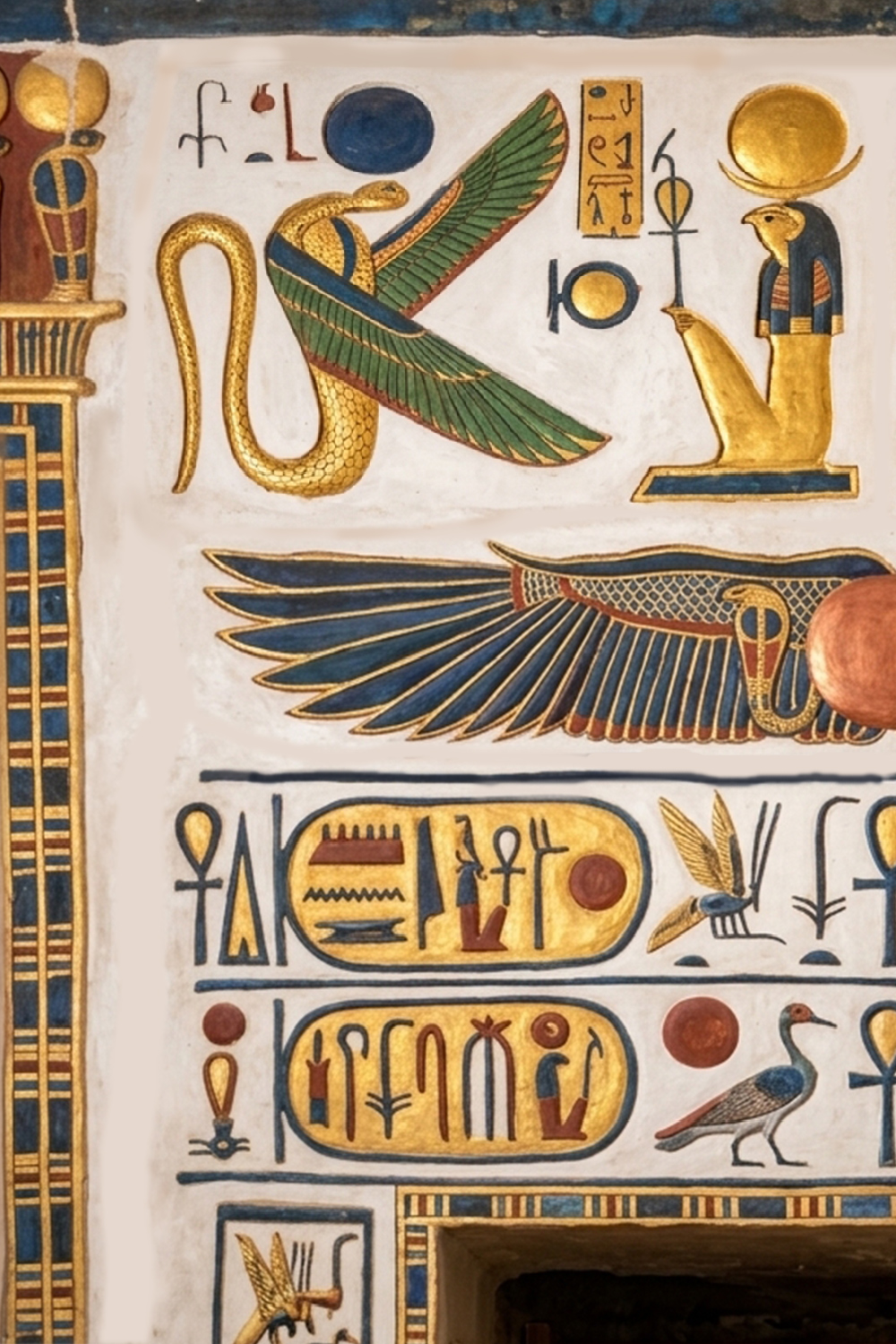 1.) AI restored & repainted relief, (c. 1150 BCE), at the top left, a striking golden winged cobra wearing a solar disk represents divine protection and royal authority, centered horizontally is a wide-span winged disk iconography, frequently associated with Horus of Behdet, representing the sky and cosmic order
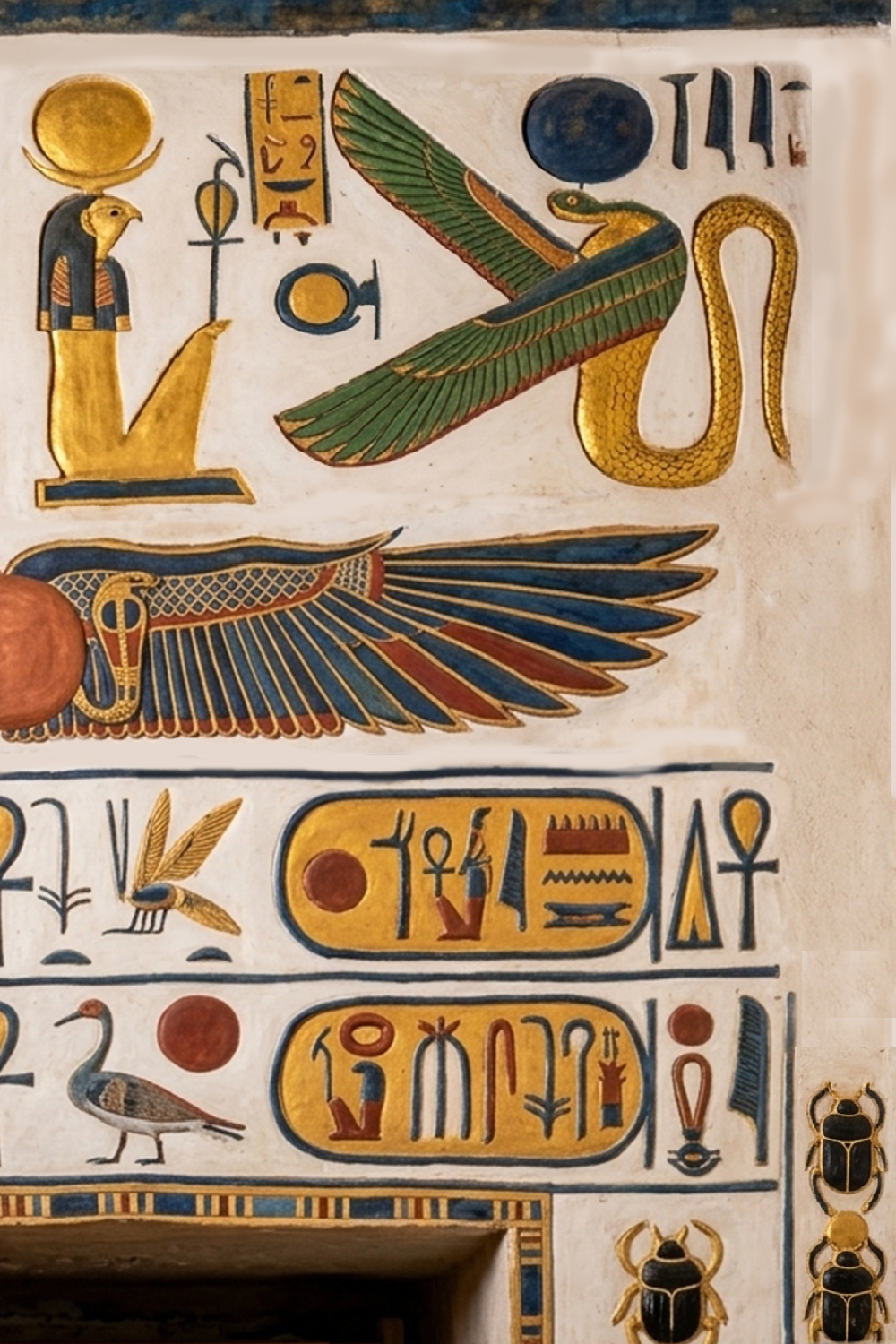 2.) In the lower sections, highly detailed carvings of Nile birds sit alongside iconic Ankh symbols (representing life) and other traditional offering glyphs, Construction (c. 1184–1153 BCE)
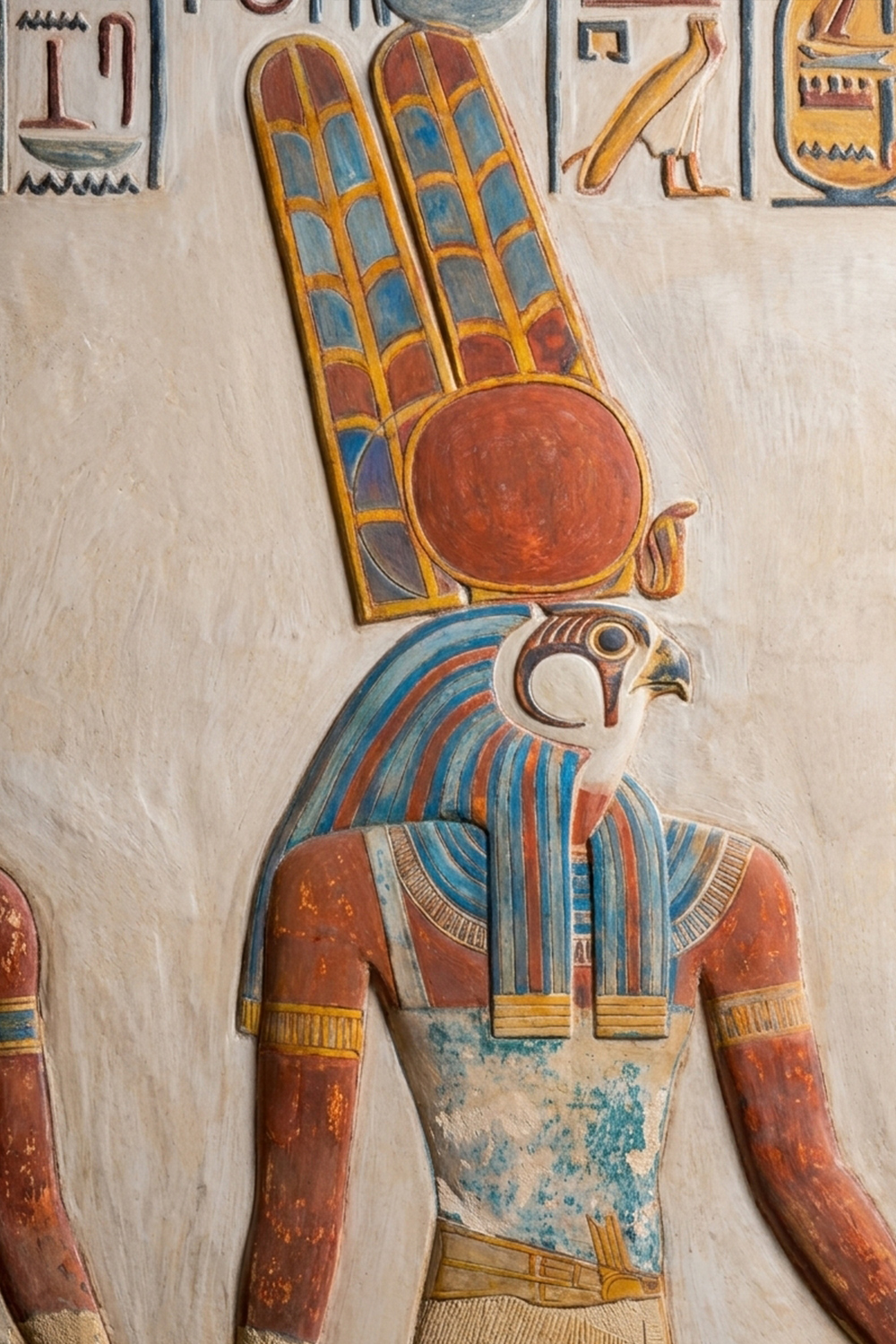
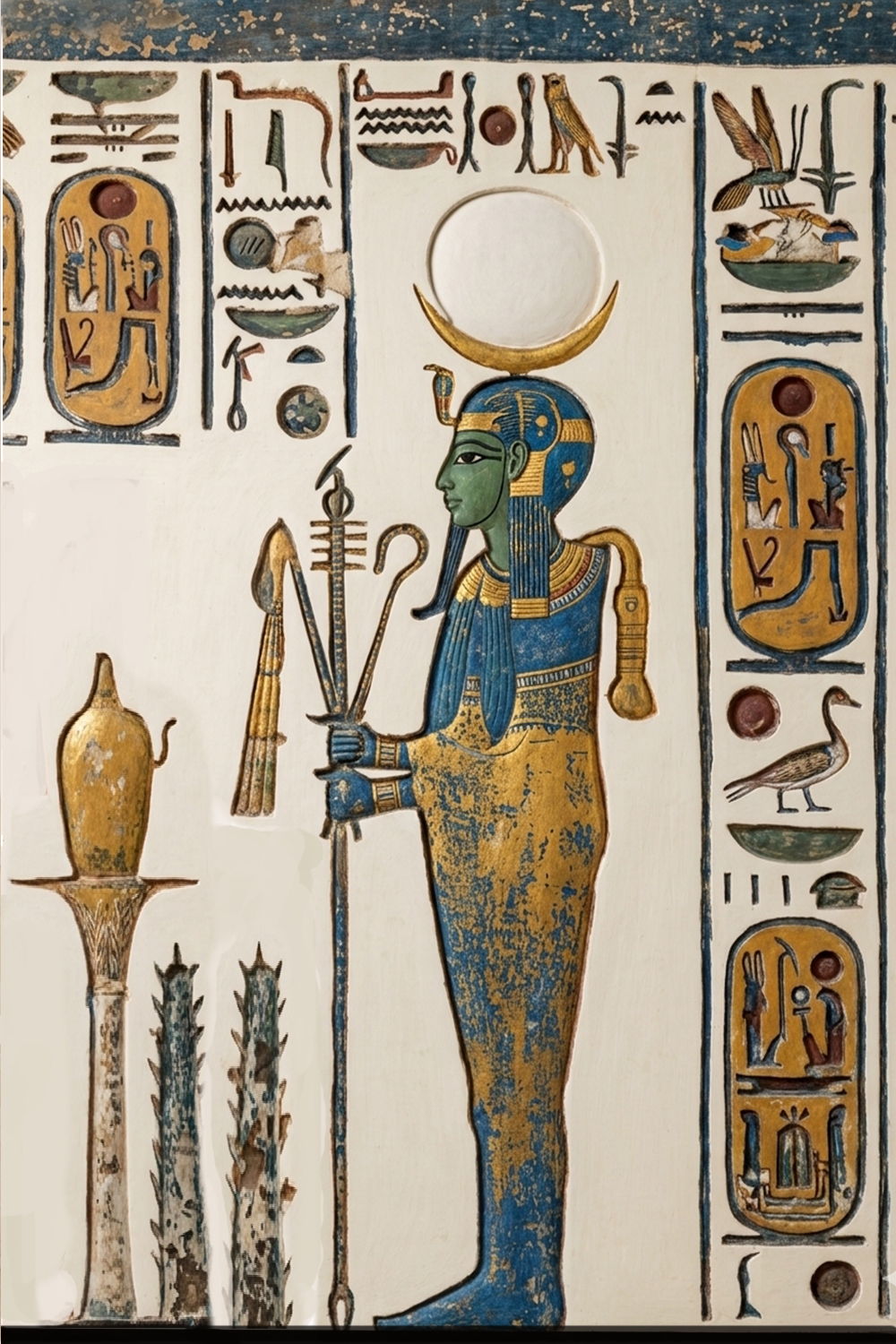 Moon god Khonsu, Green skin: Symbolizes rebirth, regeneration, and vegetation, Lunar headdress: Features a full moon disk resting inside a golden crescent moon atop his head. Scepter and symbols: He holds the combined was scepter, djed pillar (stability), and ankh (life).
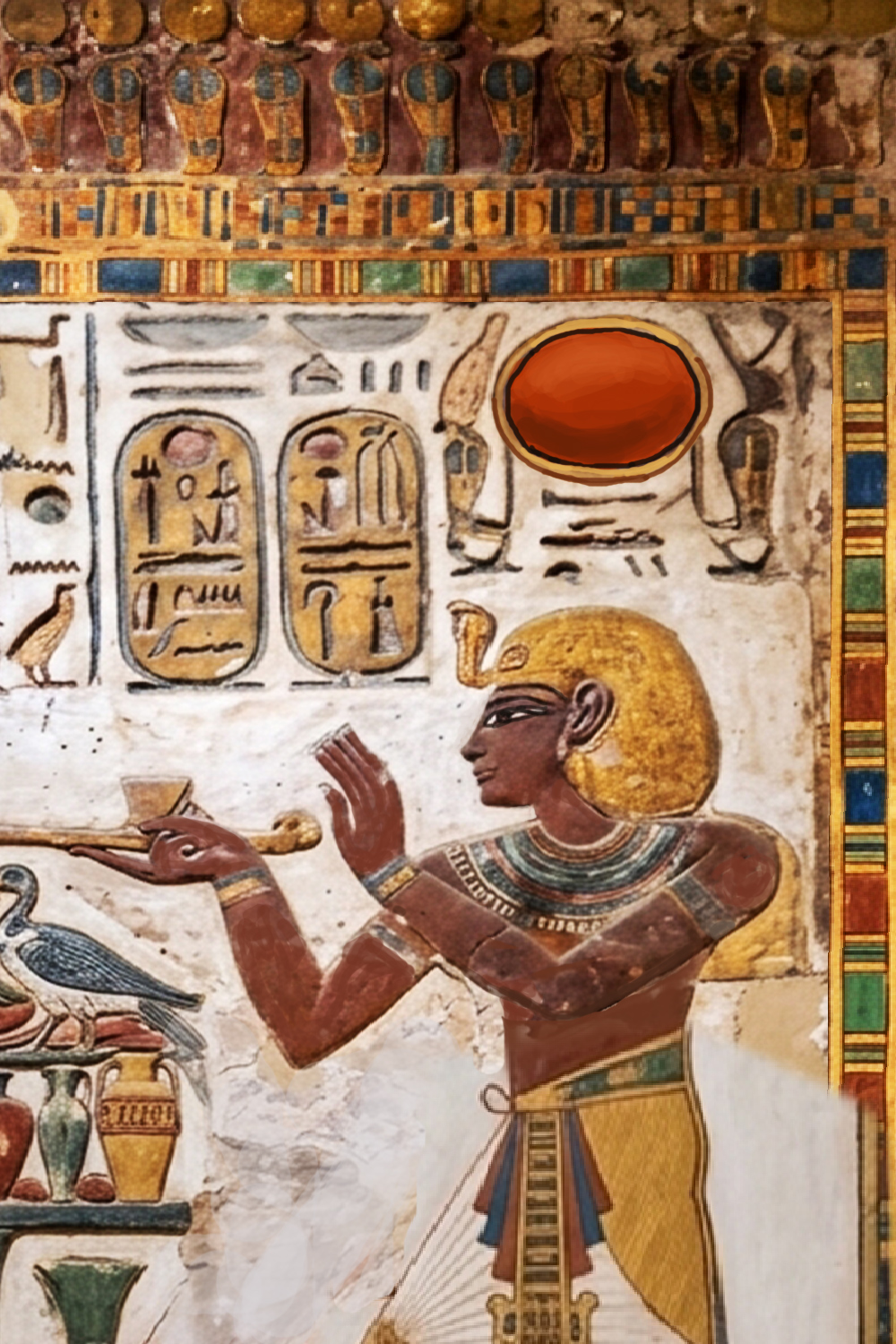
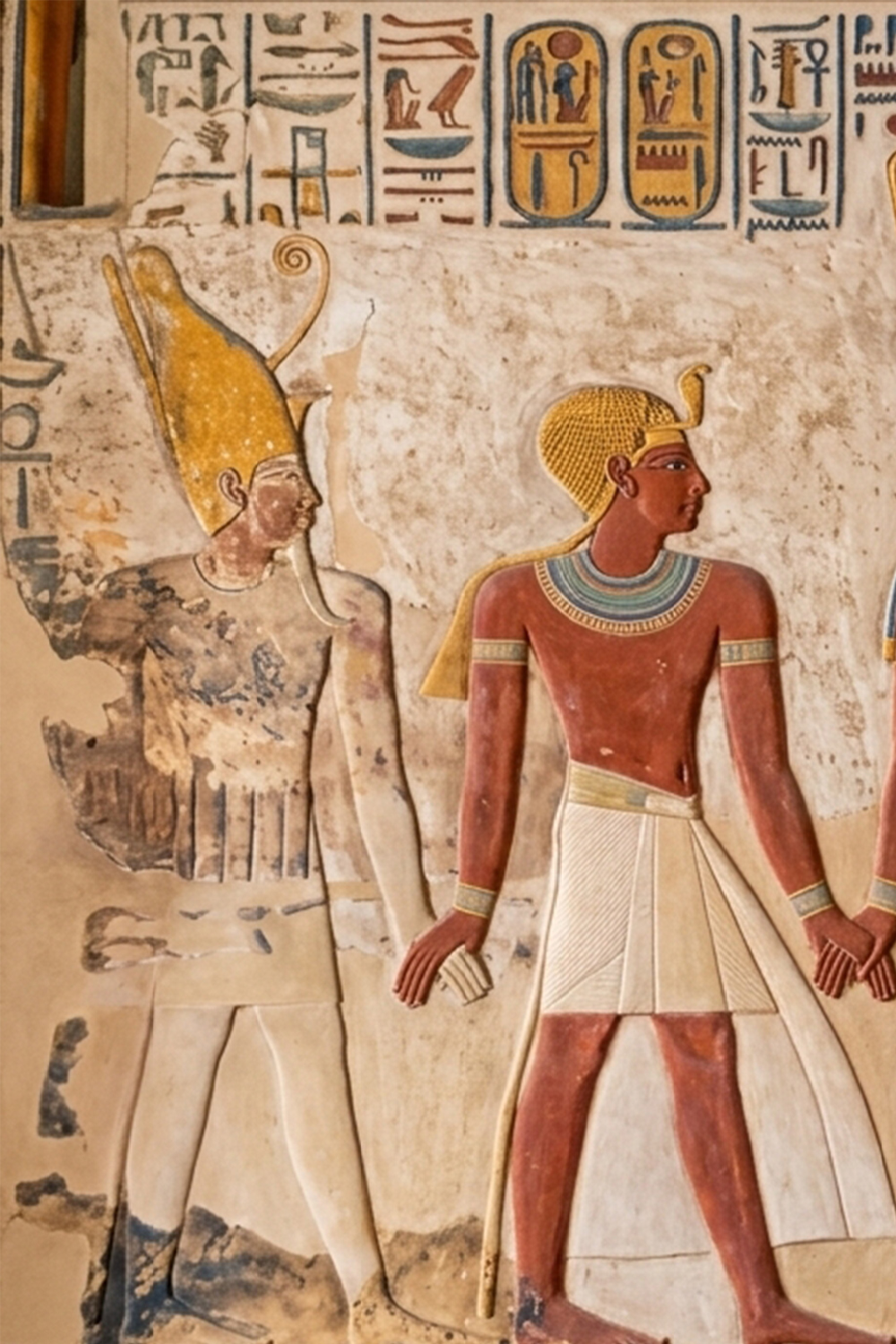 1.) AI restored & repainted relief, (c. 1150 BCE), the ruler is shown wearing a golden cap-like crown with a royal uraeus (cobra) on his brow, a broad decorative collar (wesekh), and a white pleated kilt, The pharaoh stands extending an offering table filled with ritual items,
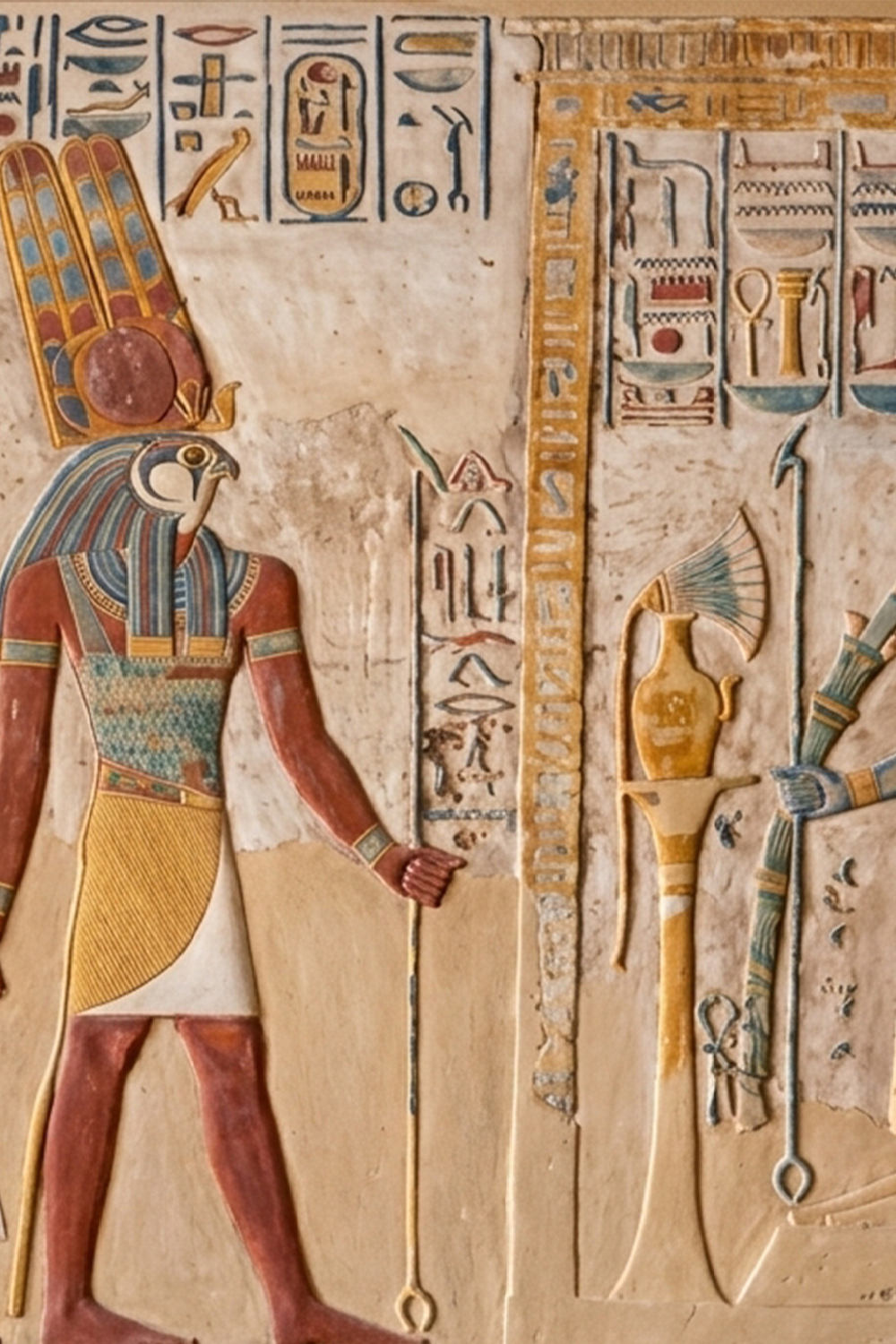 2.) Khonsu in his Horus falcon-headed form, wears a full lunar disc nested inside a crescent moon, atop the lunar disc are two tall vertical feathers, the god Amun-Ra, blue skin (seated) and his consort,
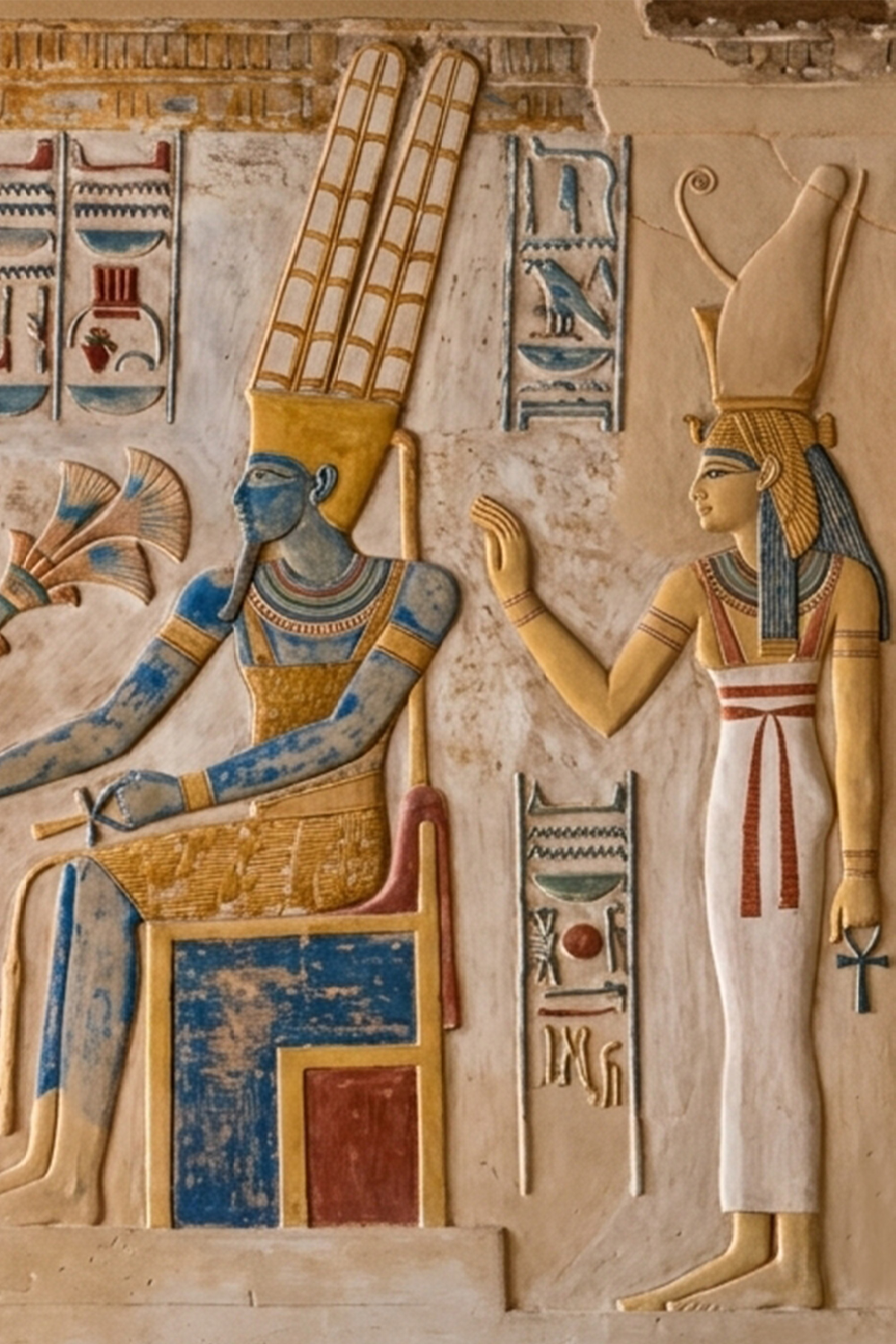 3.) the goddess Mut (standing), wearing her traditional double crown, offering a gesture of blessing and spiritual backing, 1160 BCE.
 1.) AI restored & repainted relief, (c. 1150 BCE), the ruler is shown wearing a golden cap-like crown with a royal uraeus (cobra) on his brow, a broad decorative collar (wesekh), and a white pleated kilt, The pharaoh stands extending an offering table filled with ritual items,
 2.) Khonsu in his Horus falcon-headed form, wears a full lunar disc nested inside a crescent moon, atop the lunar disc are two tall vertical feathers, the god Amun-Ra, blue skin (seated) and his consort,
 the goddess Mut (standing), wearing her traditional double crown, offering a gesture of blessing and spiritual backing, 1160 BCE.
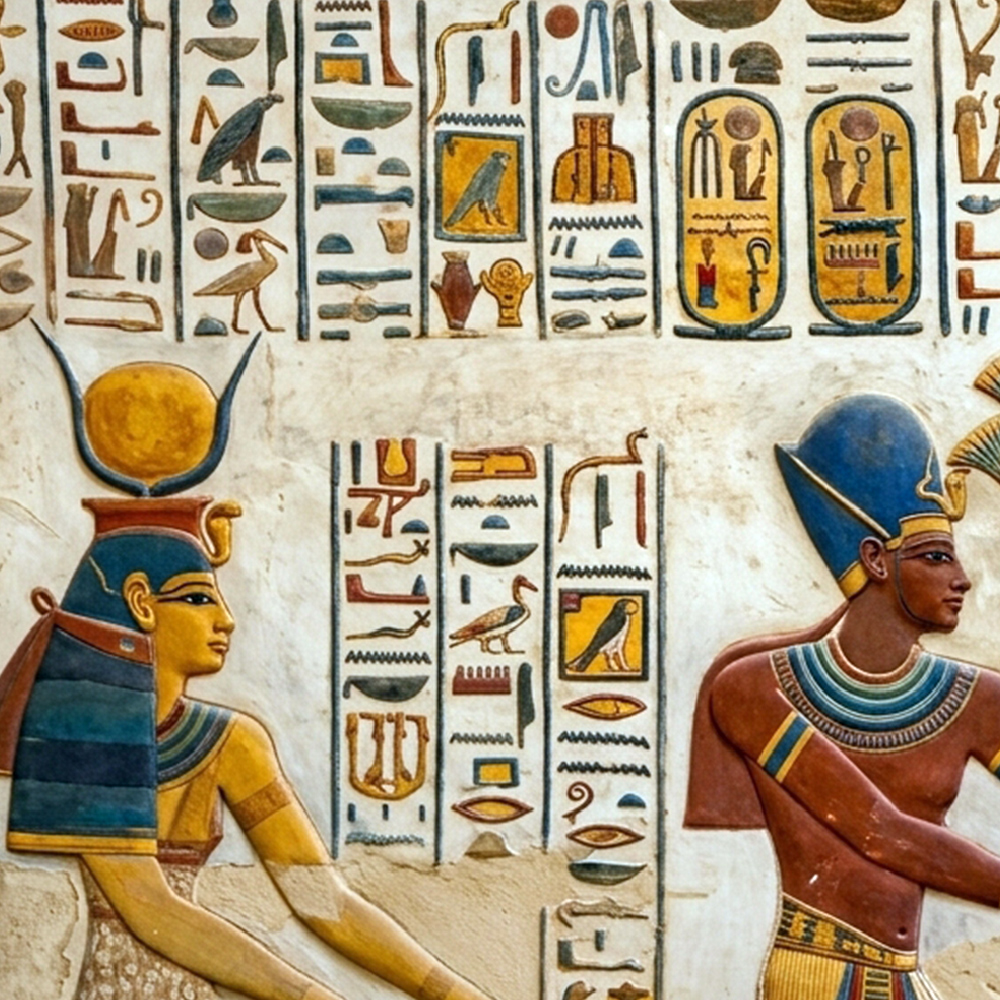 1.) AI restored & repainted relief, (c. 1150 BCE) Standing on the left wearing the blue crown (khepresh), Pharaoh Ramesses III is shown holding two giant lotus bouquets as an offering
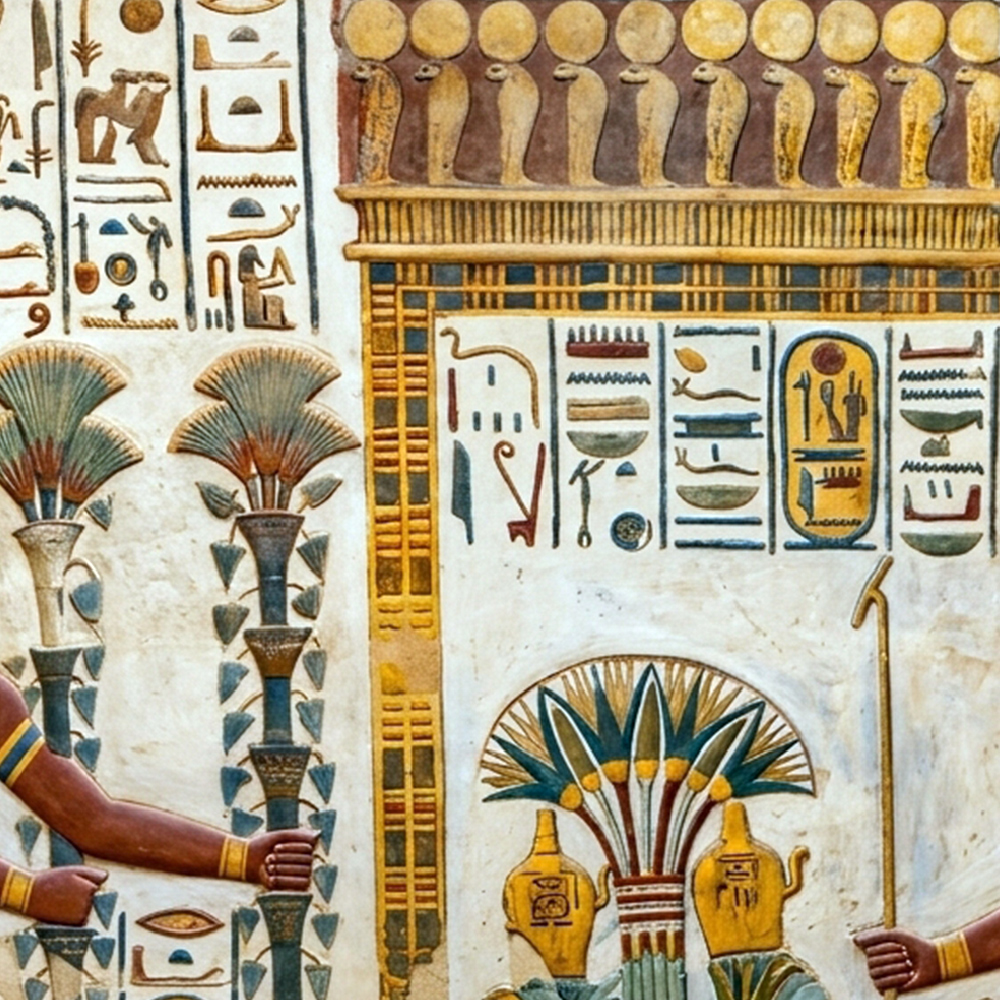 2.) On the right sits Khonsu depicted here in a non-typical form with a falcon head adorned by an elaborate double-plumed and sun-disk crown, behind him stands a protective goddess Rattaouy
 3.) The columns of hieroglyphs surrounding the figures outline royal titles, name cartouches, and traditional prayer formulas ensuring divine favor, eternal life, and stability for the king.
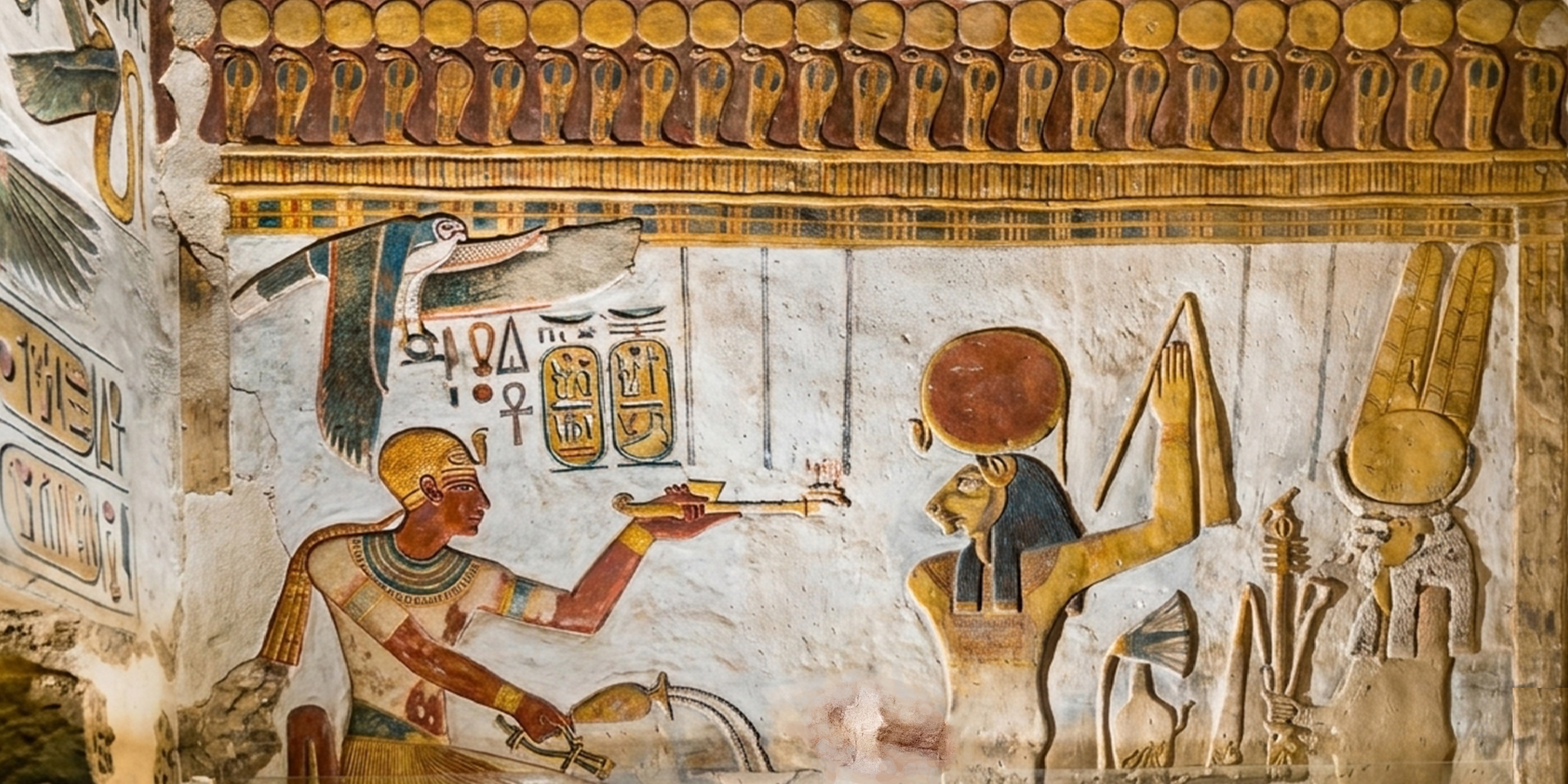 AI restored & repainted relief, (c. 1150 BCE), a wall relief from the Temple of Khonsu depicting Pharaoh Ramesses IV (1155-1149 BCE) presenting an offering of Maat (truth and justice) to a rare, ithyphallic lion-headed deity, while the falcon of Horus hovers overhead to grant divine protection and legitimacy.
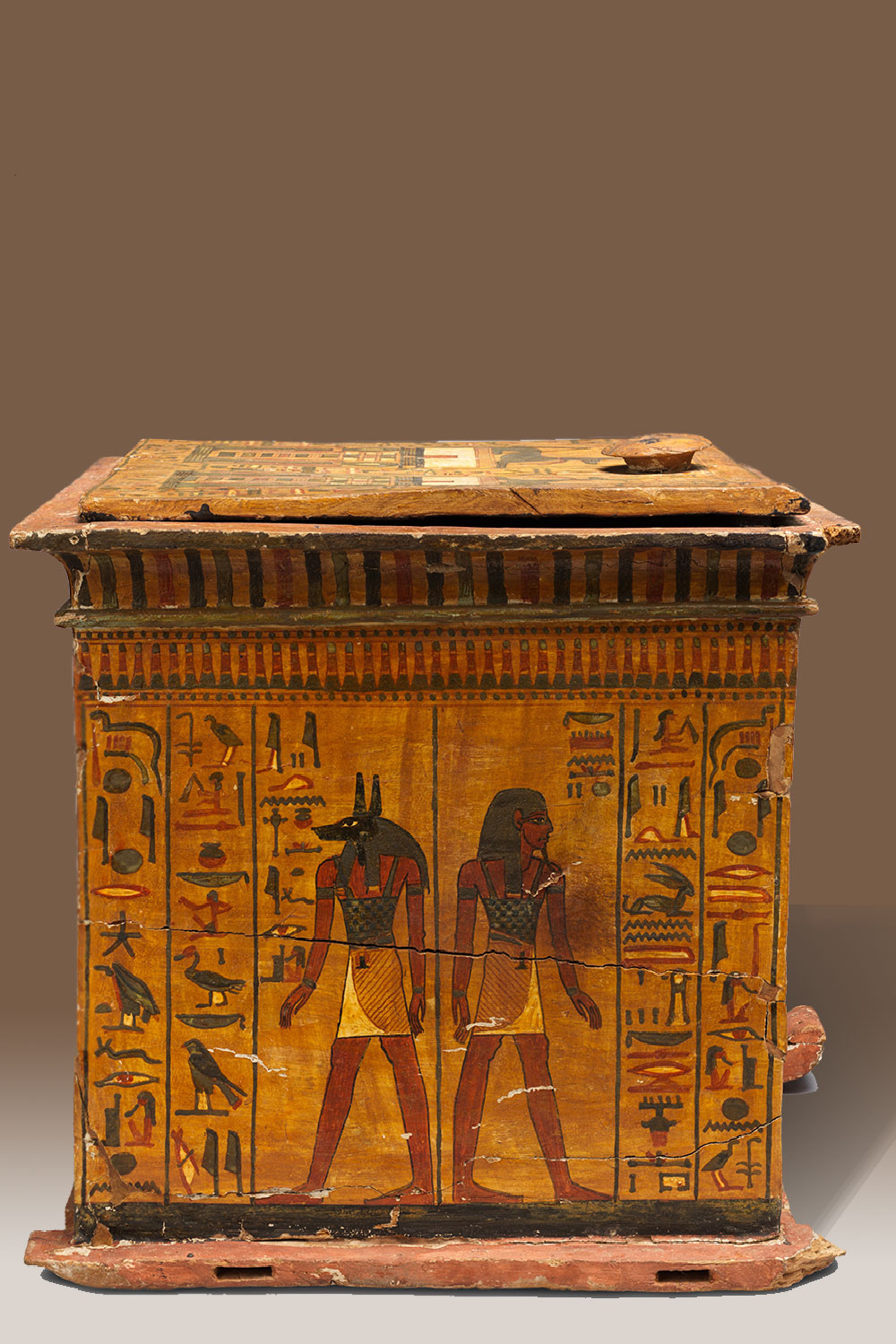 Canopic Chest of Khonsu, 1304–1237 BCE, Wood, gesso, paint, varnish, The MET, NYC, 🅮Public Domain
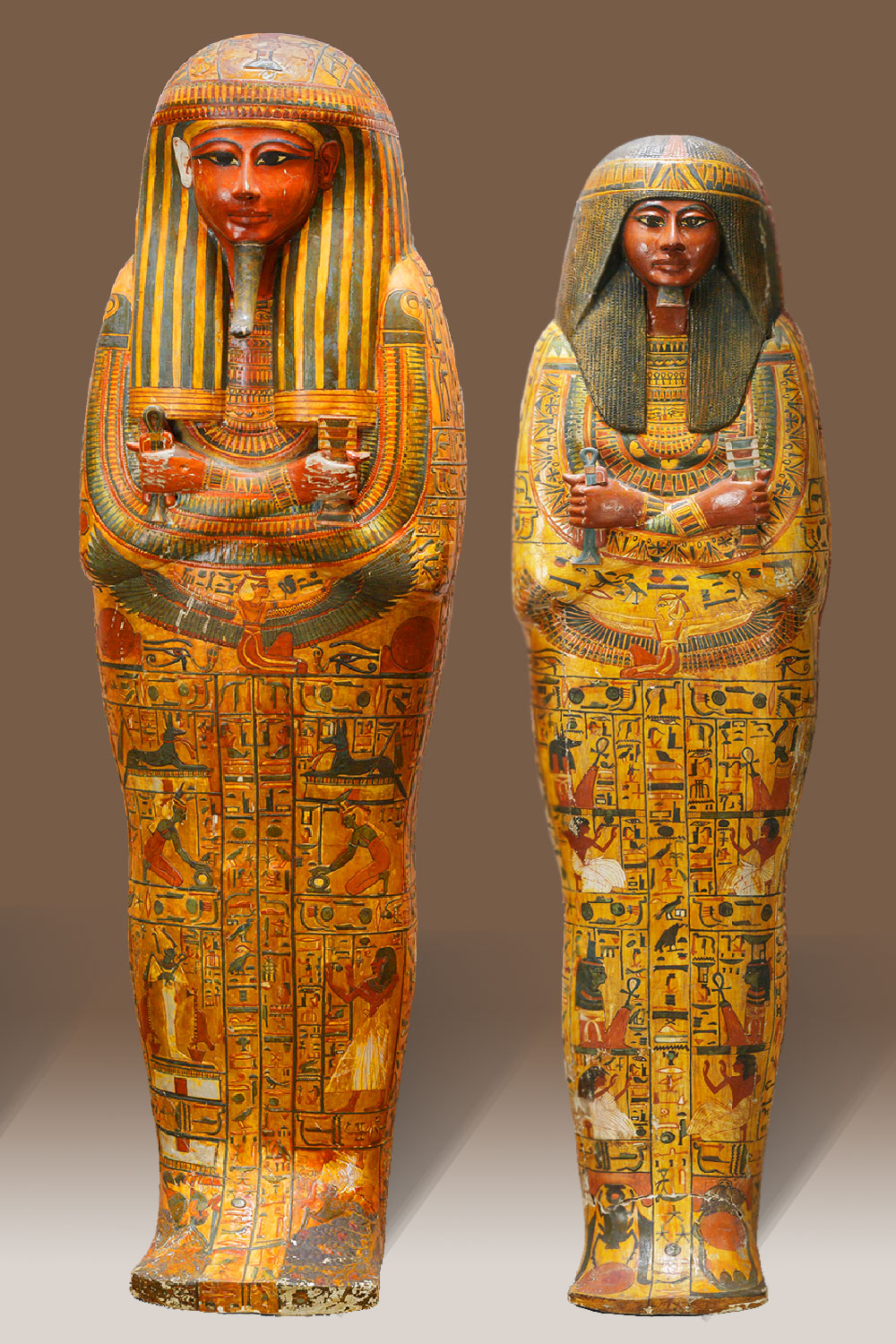 Khonsu's anthropoid coffins, 1290–1224 BCE, Wood, gesso, paint, varnish, The MET, NYC, 🅮Public Domain
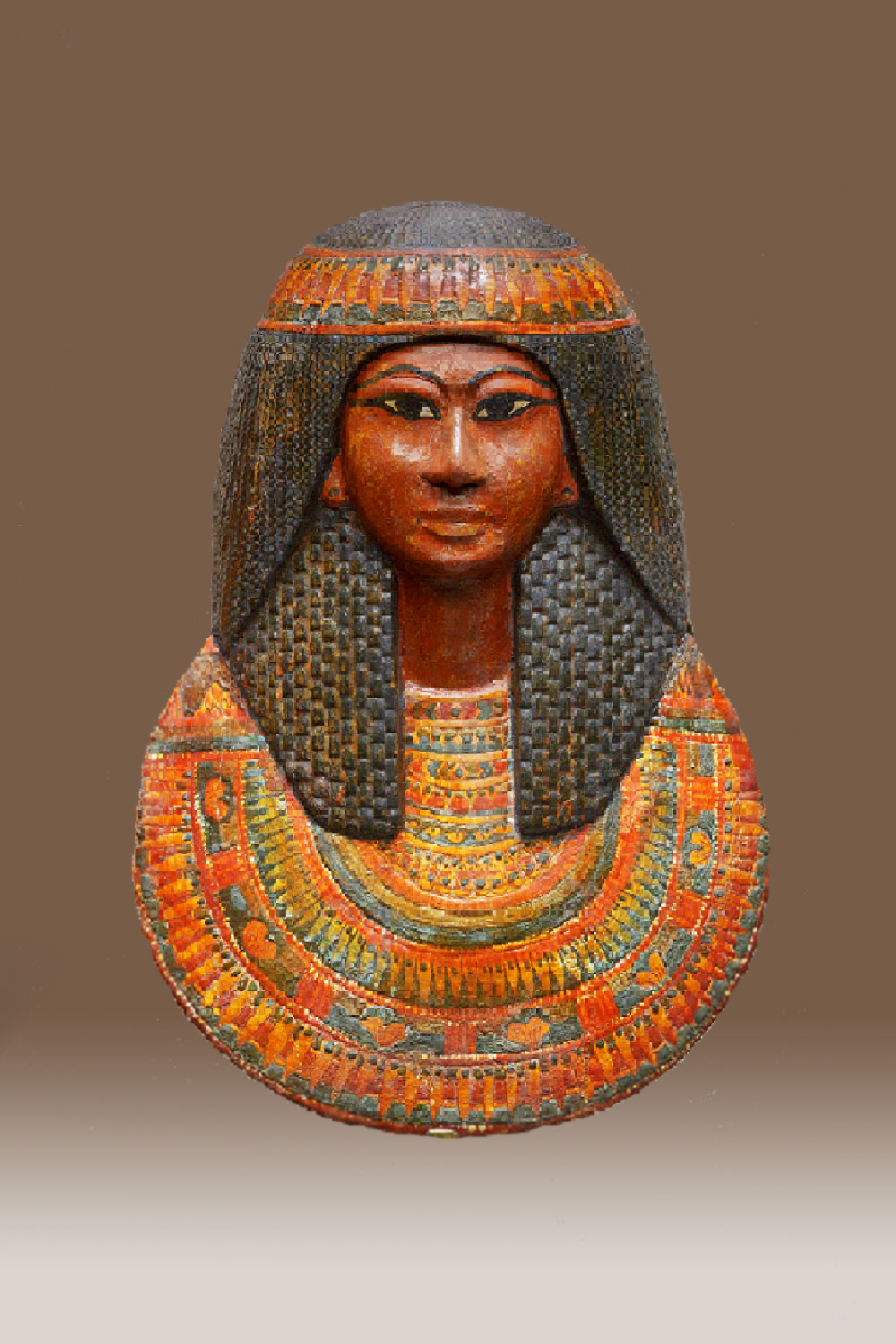 Mummy Mask of Khonsu, 1290–1224 BCE, Painted wood and cartonnage, The MET, NYC, 🅮Public Domain
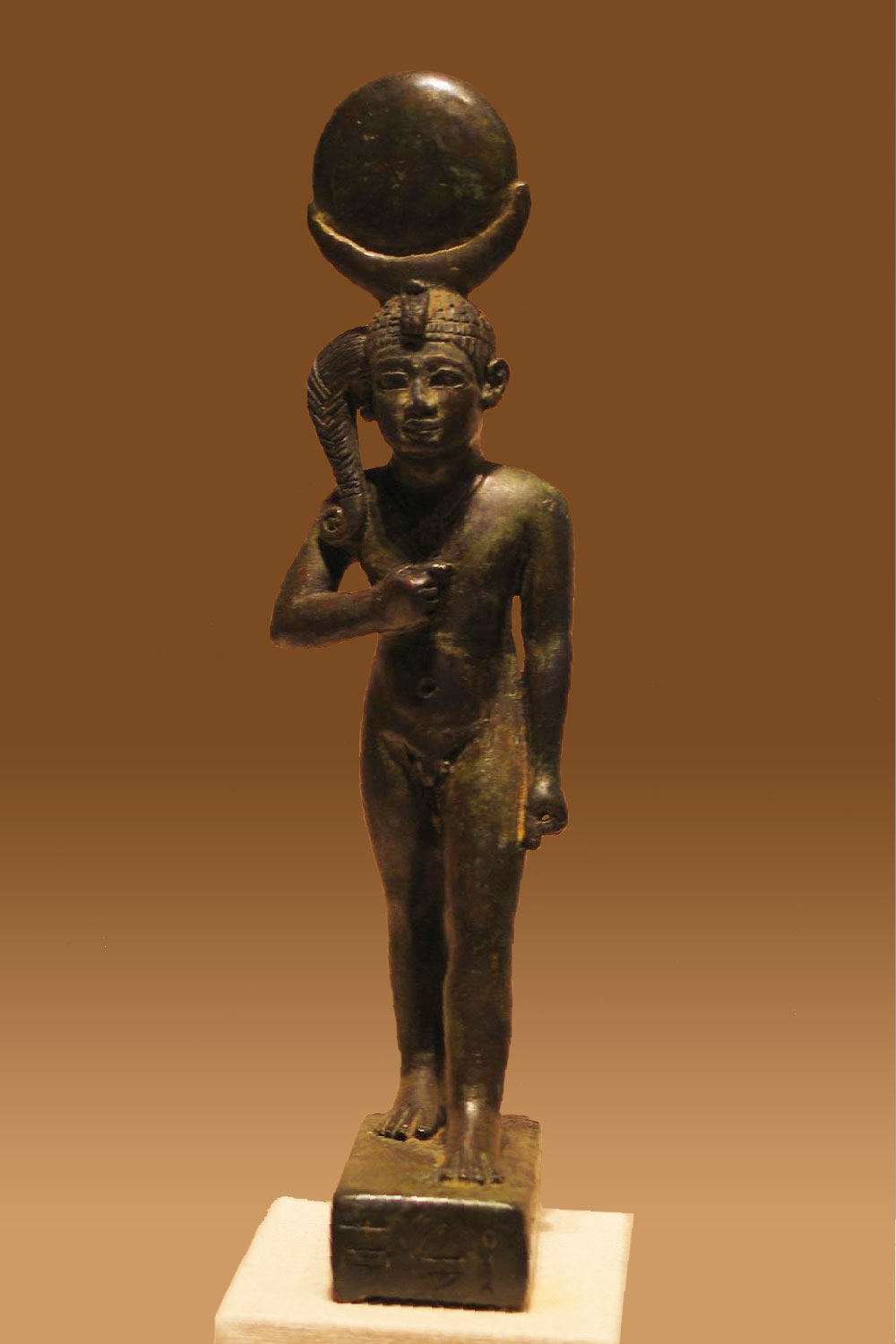 Figure of Khonsu the Child, 664–525 BCE or later, Dynasty 26, Bronze, Brooklyn Museum, NYC
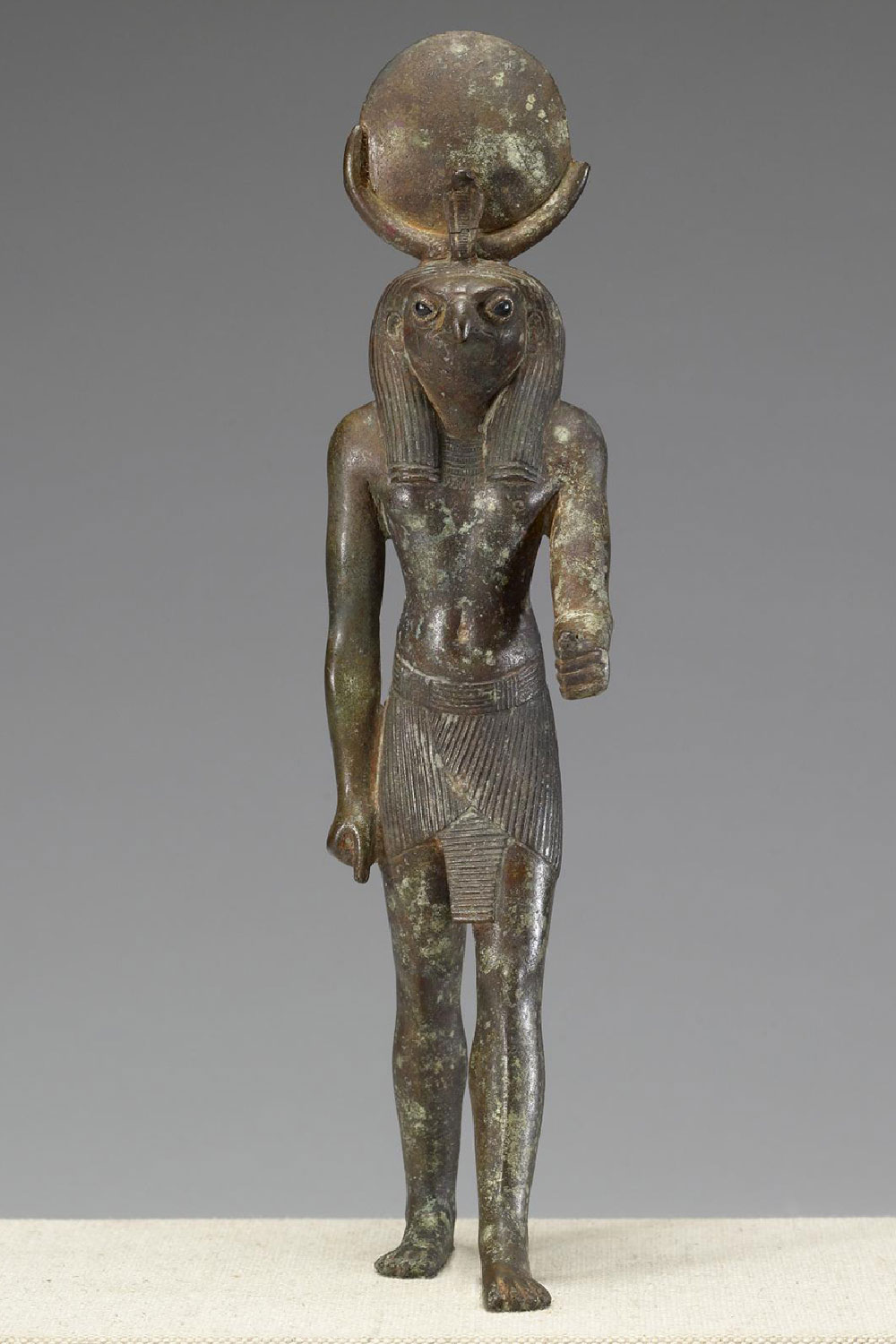 Statue of a Standing Khonsu, Egyptian (Artist), 664-525 BCE (Late Period), bronze with gold and glass inlay, Ancient Egypt and Nubia
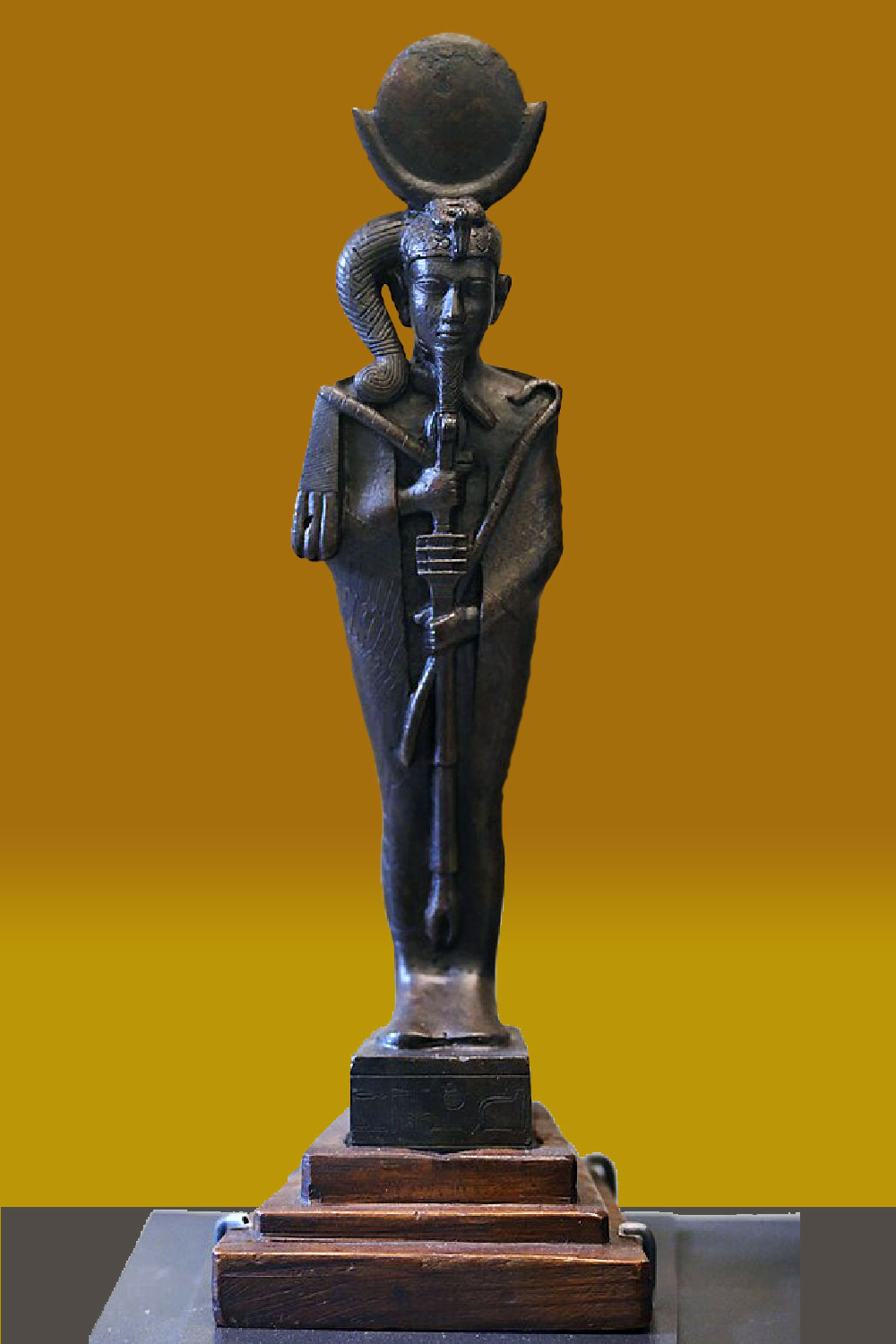 Khonsu-E 4109, Third Intermediate Period of Egypt (1069 BC–664 BC), bronze, copper alloy and engraving, Department of Egyptian Antiquities of the Louvre, Paris
Temple of Opet
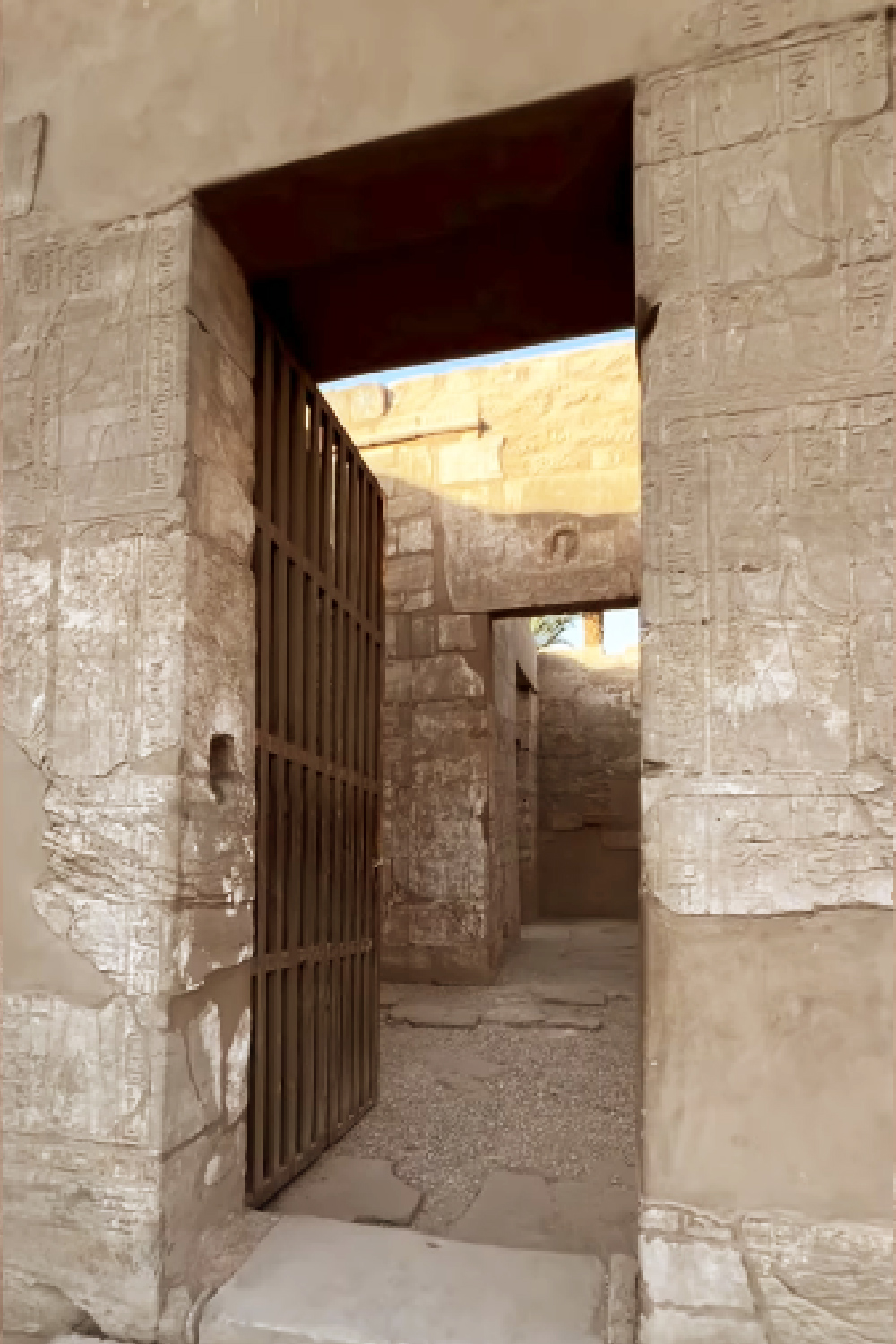
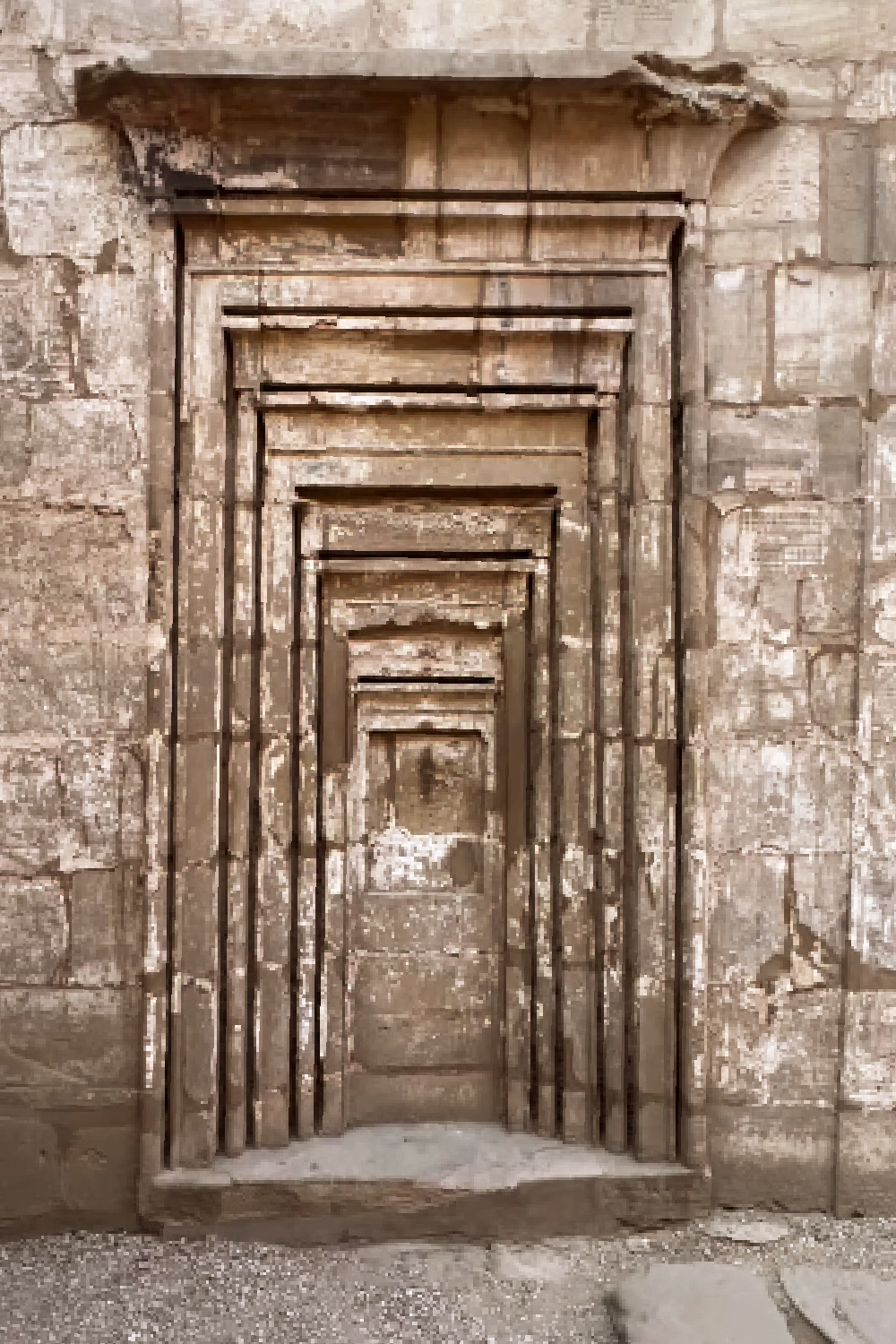
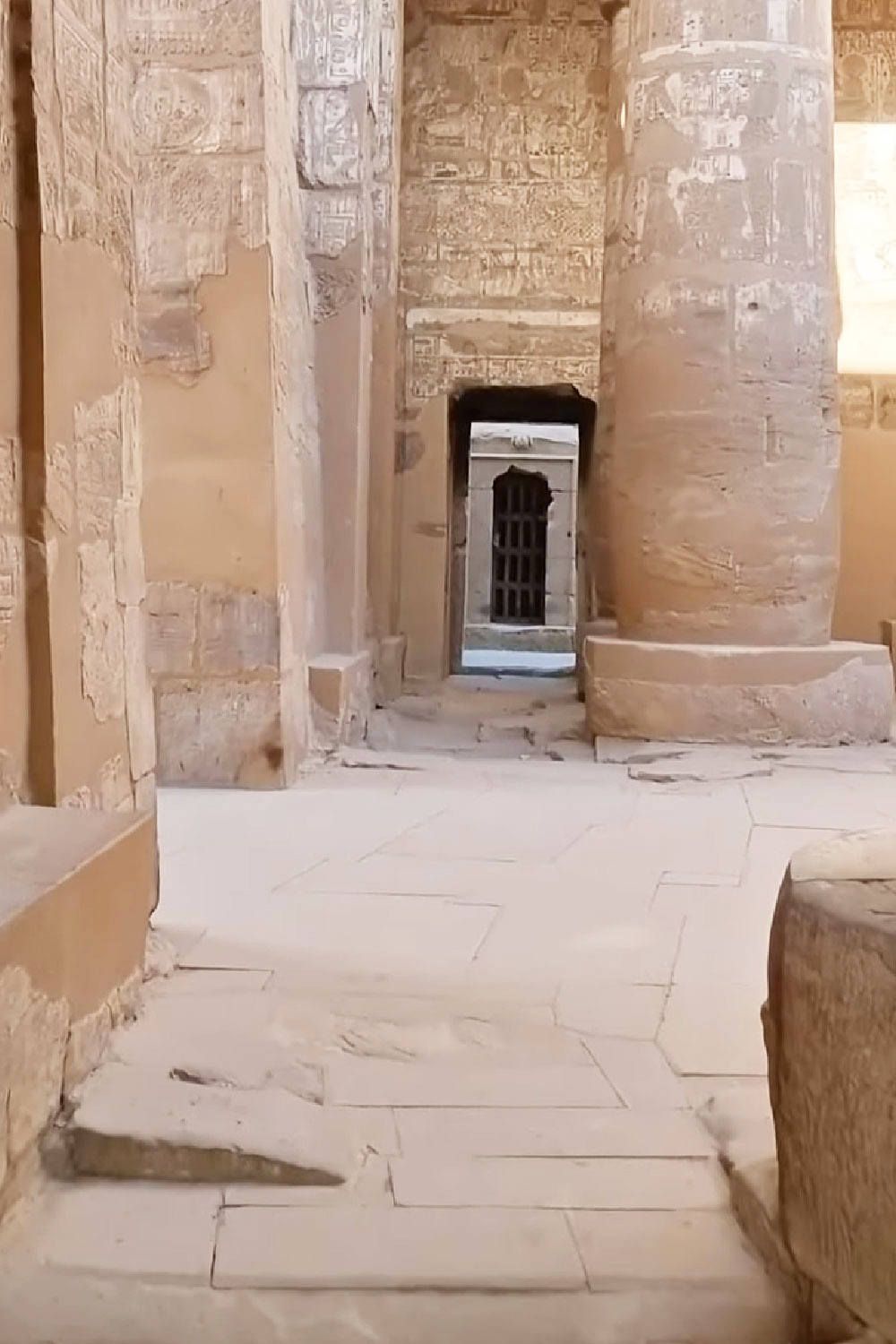 Passage way to a door in Khonsu Temple to connect to Opet Temple.
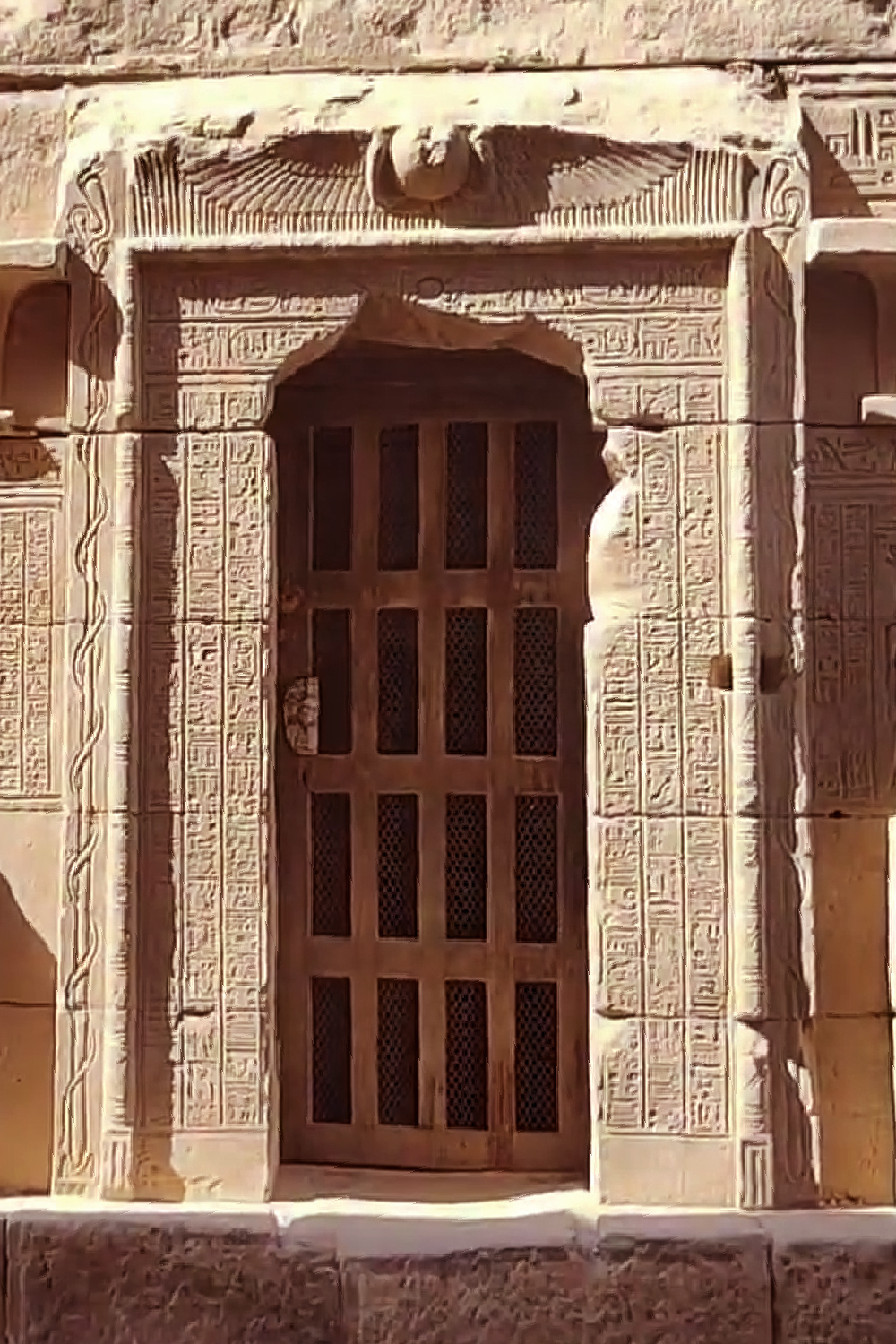 the door gateway connecting to the Temple of Opet,
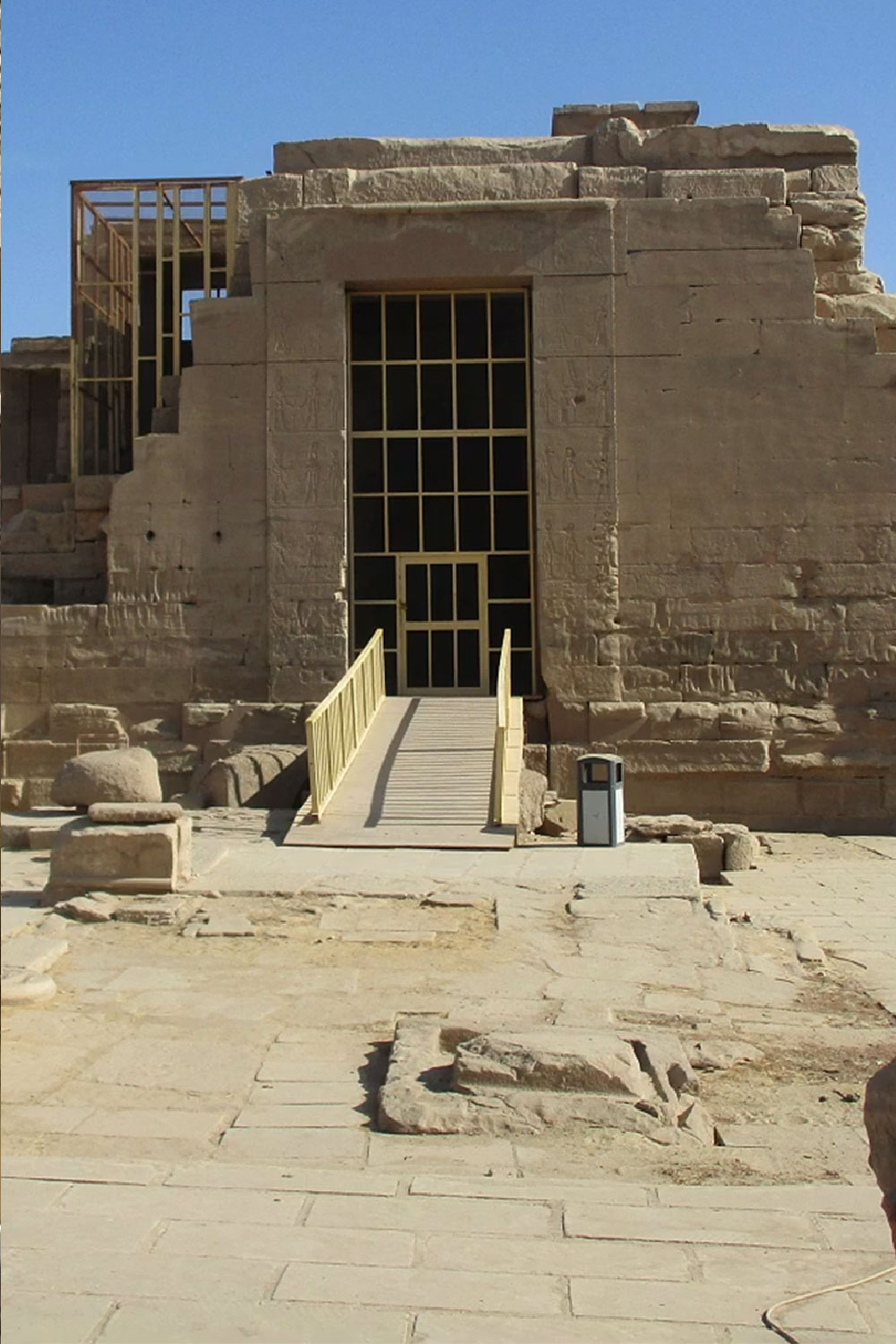 The Temple of Opet, built and decorated during the Ptolemaic Period (primarily under Ptolemy VIII Euergetes II
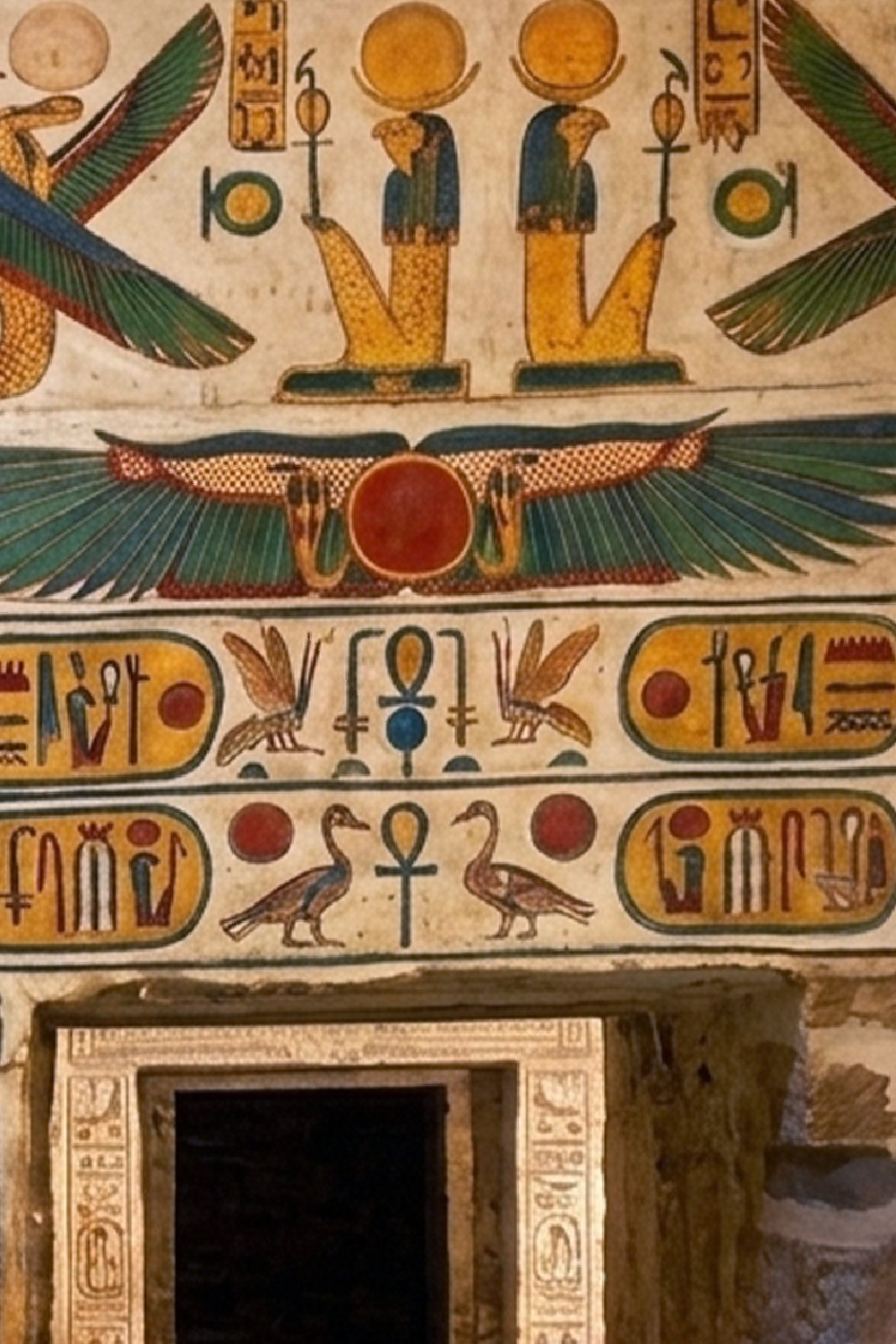
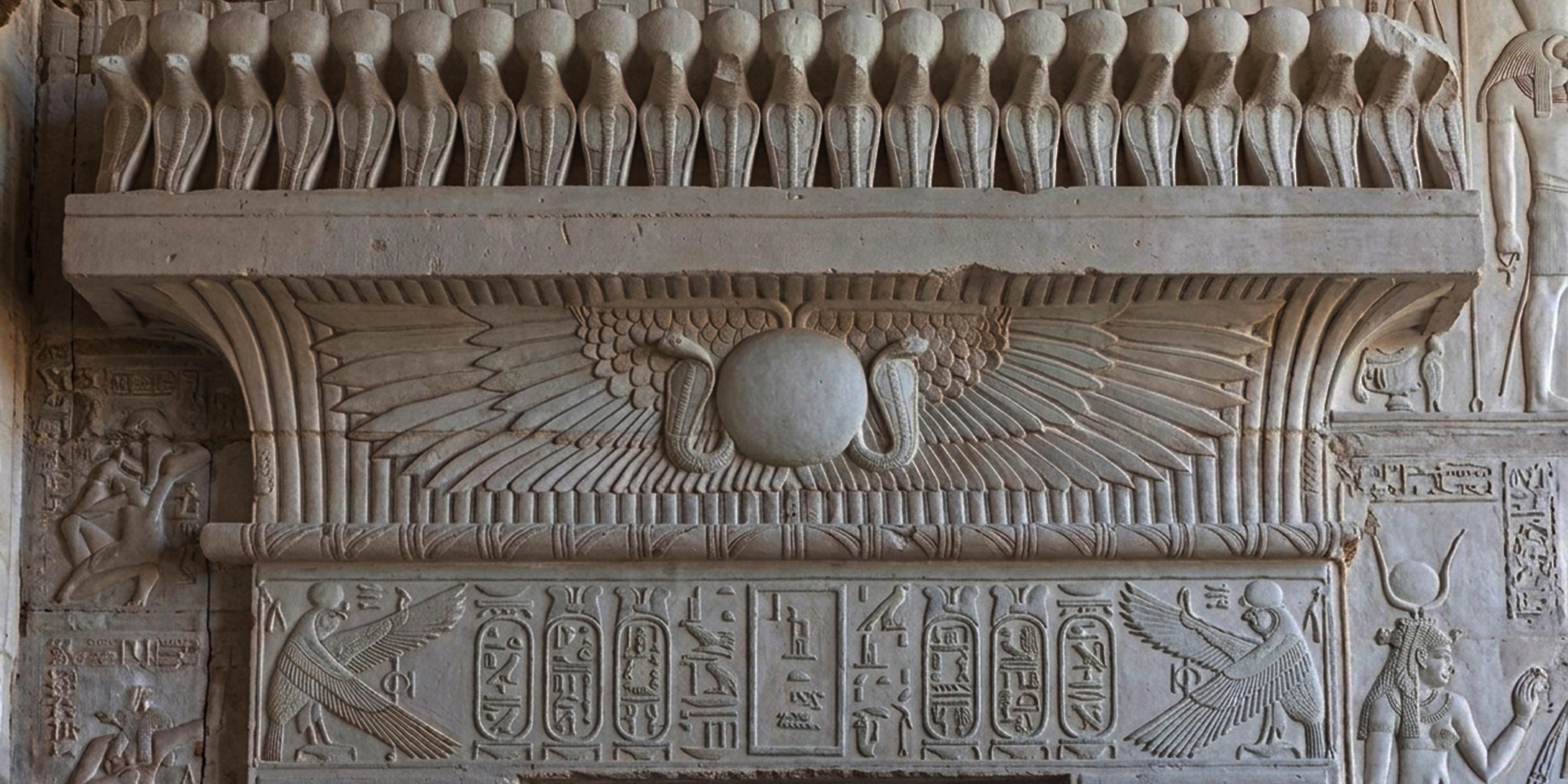 AI restored & repainted relief, (c. 1150 BCE), carved stone doorway, an elaborate, repeating line of stylized falcons topped with solar disks, representing protective divine presence. carved winged solar disk flanked on either side by rearing uraeus (sacred cobras) wearing the crowns of Upper and Lower Egypt.
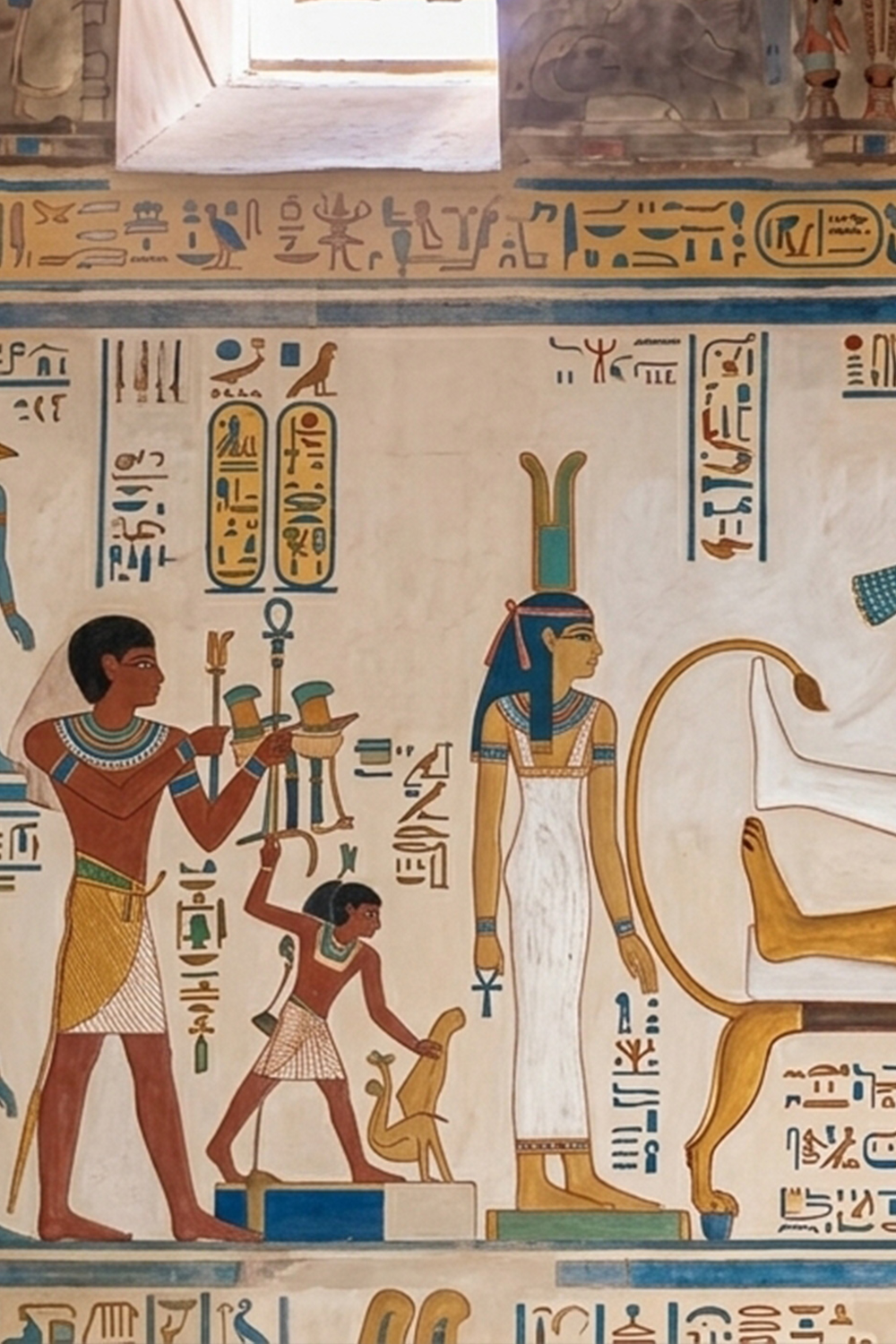 1.) AI restored & repainted relief, (c. 1150 BCE), the green-skinned figure lying upon a ritual bed shaped like a lion represents Osiris, the lord of the underworld and symbol of rebirth.
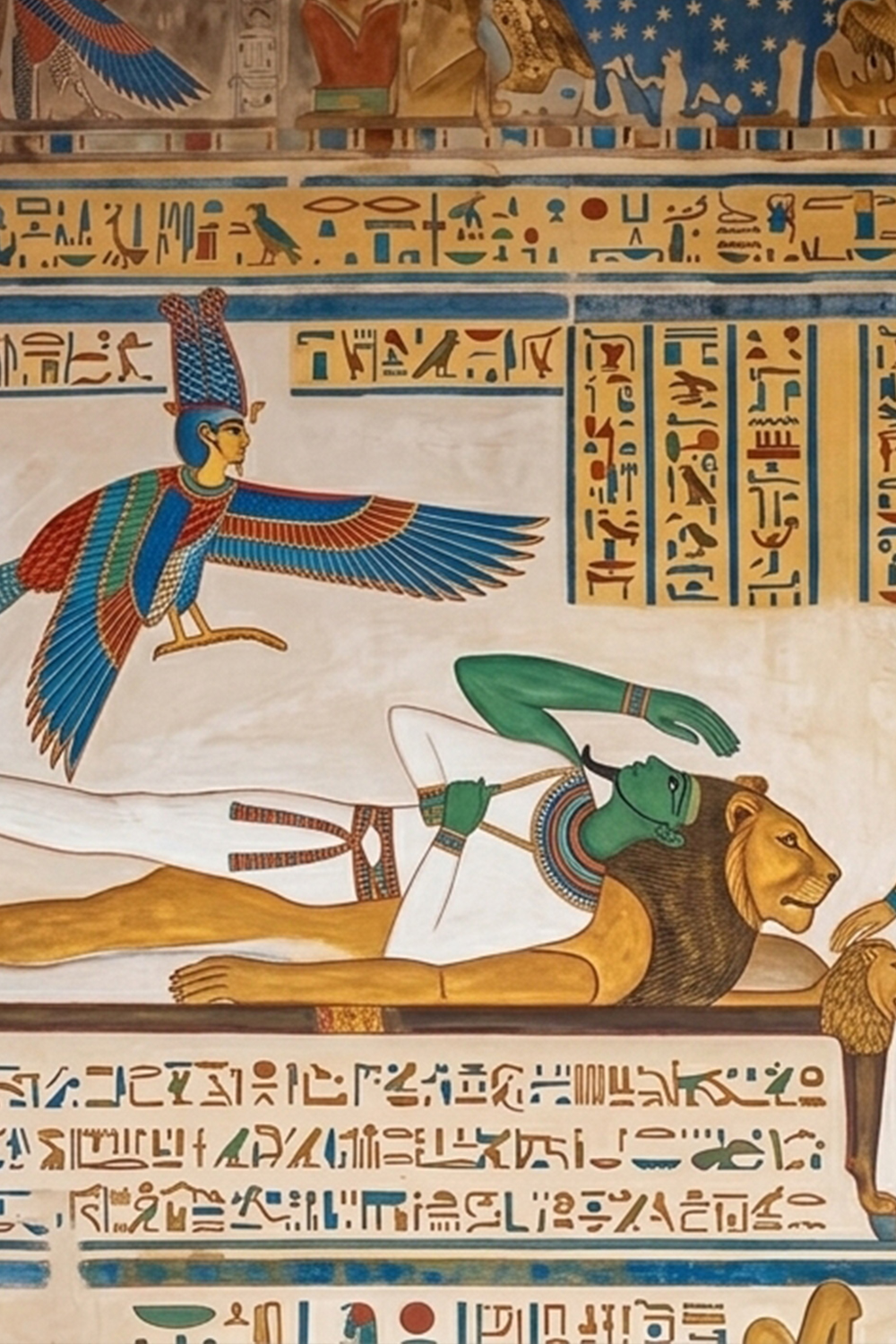 2.) Ithyphallic Ba bird, representing the soul of the supreme sun god, Amun-Re. The scene depicts a precise mythological moment where the solar energy of Amun-Re unites with the chthonic,
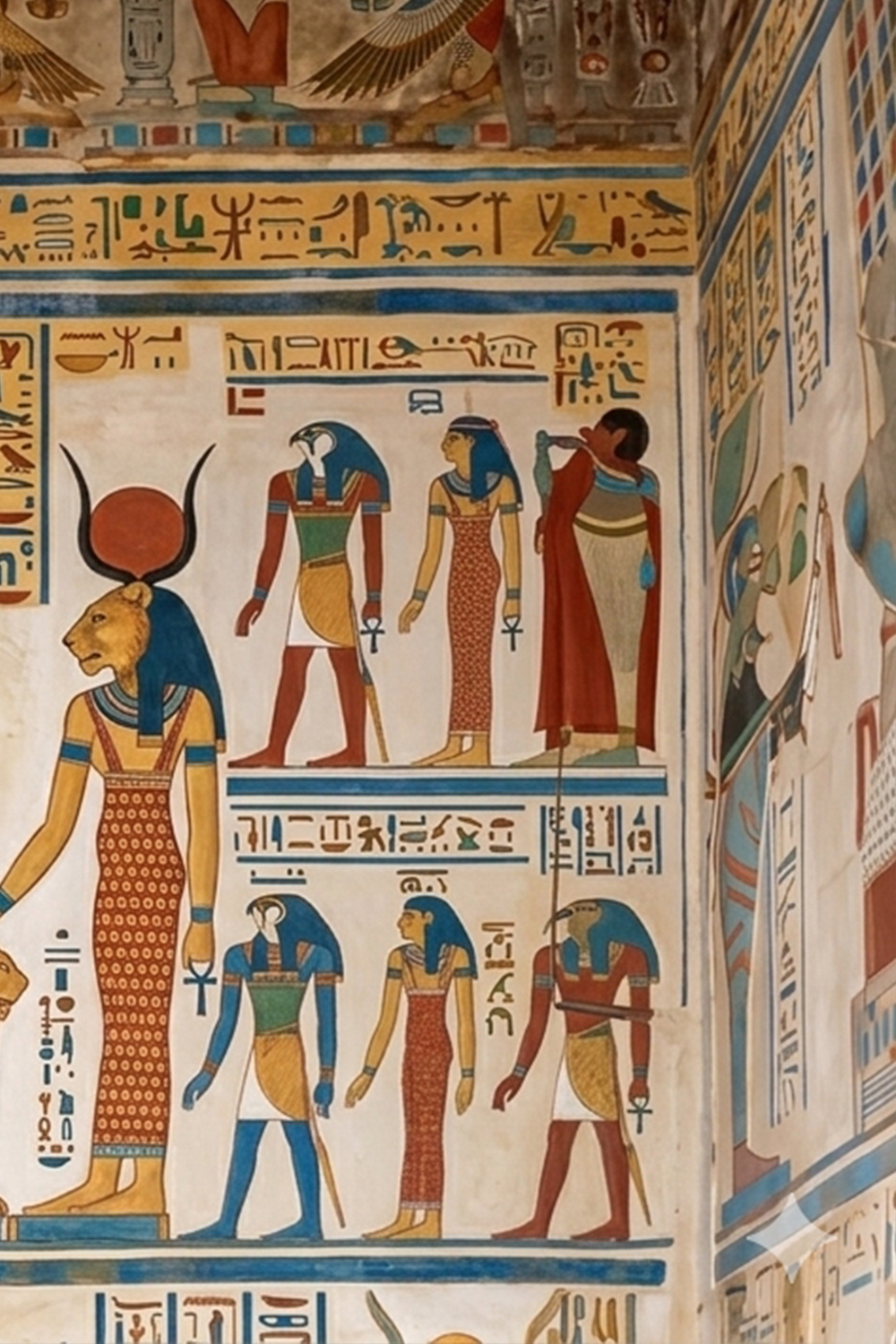 3.) underworld power of Osiris. This divine interaction infuses life back into the deceased god, waking him from the sleep of death and ensuring the continuous cycle of life and cosmic order.
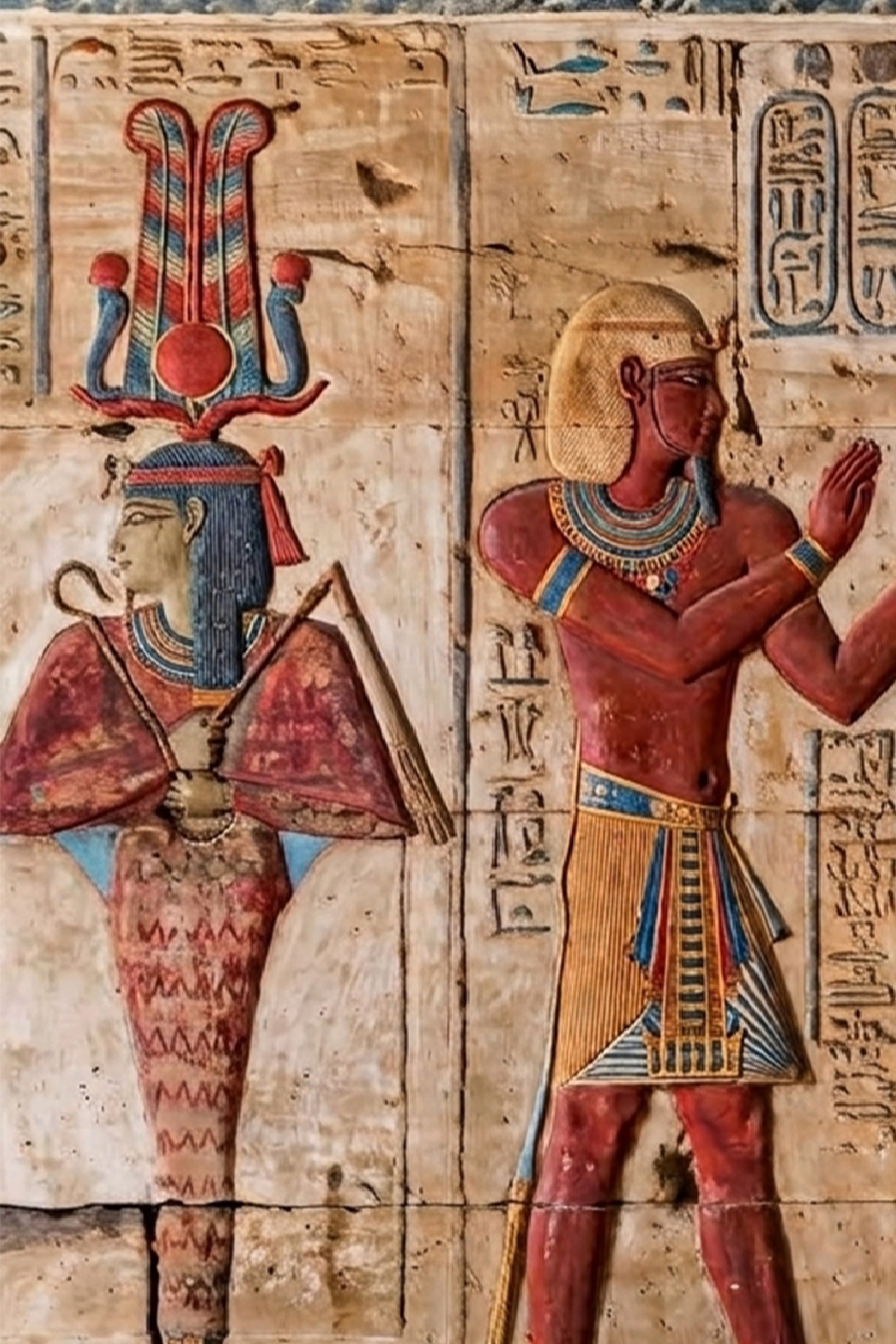 1.) AI restored & repainted relief, (c. 1150 BCE), standing on the left, adorned in a vibrant red collar and classic kilt, lifting his hands in a gesture of adoration or offering,
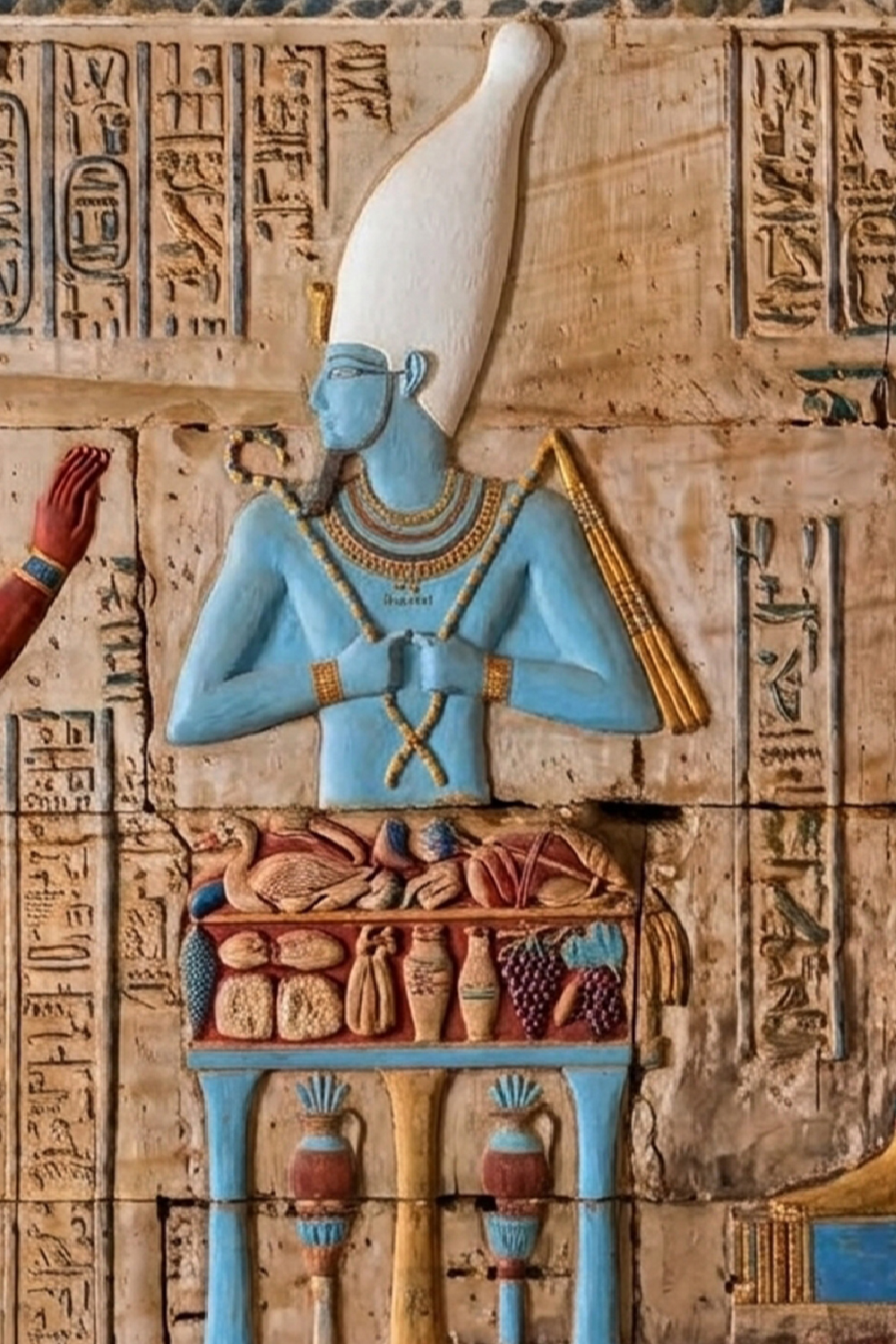 2.) deities standing in the center and far left, clothed in intricate, patterned shrouds, holding sacred staves (was-scepters) and symbols of life (ankhs),
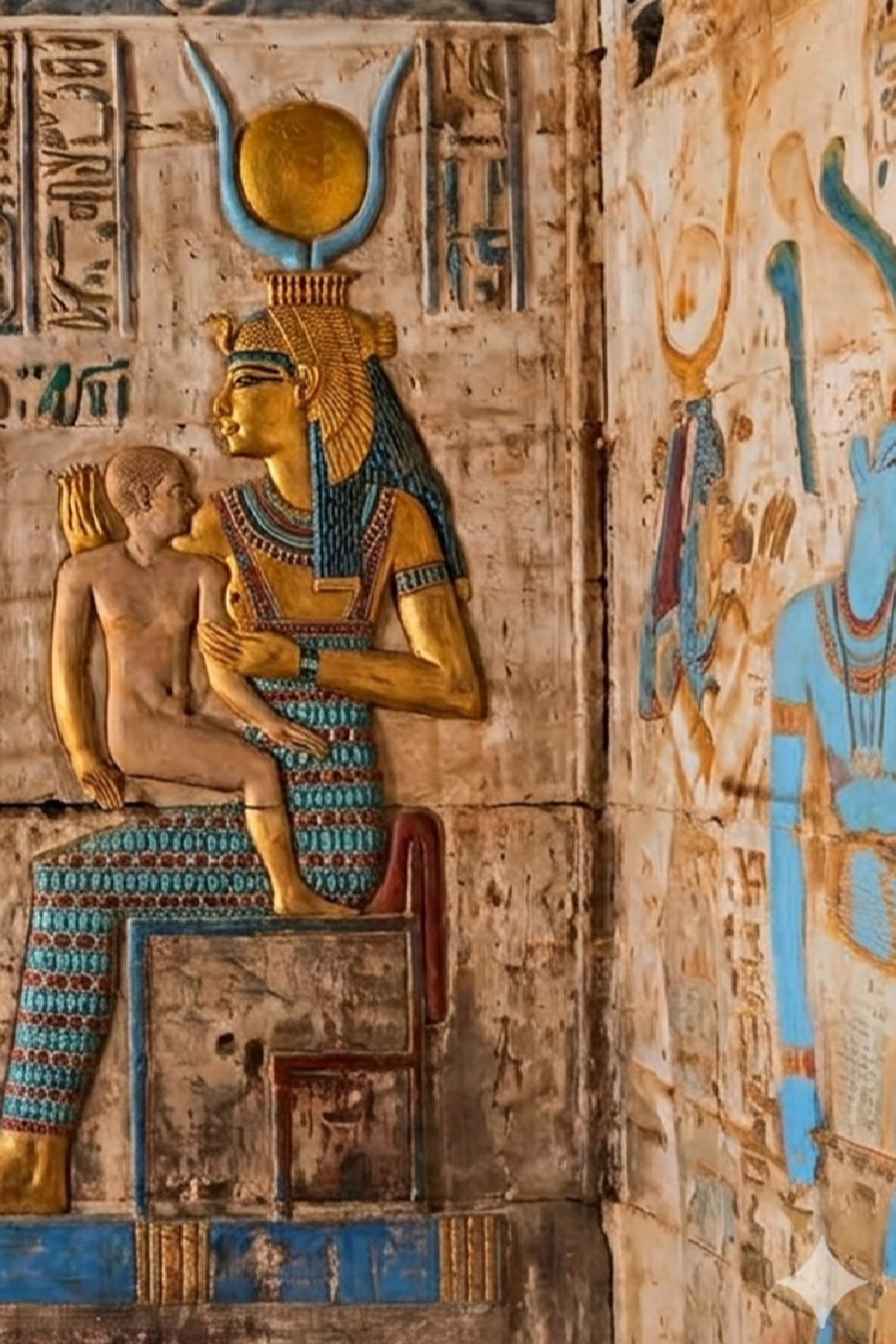 3.) on the right, wearing the solar disk enclosed by cow horns—representing Isis or the hippopotamus goddess Opet in her protective, motherly aspect—nursing a child deity.
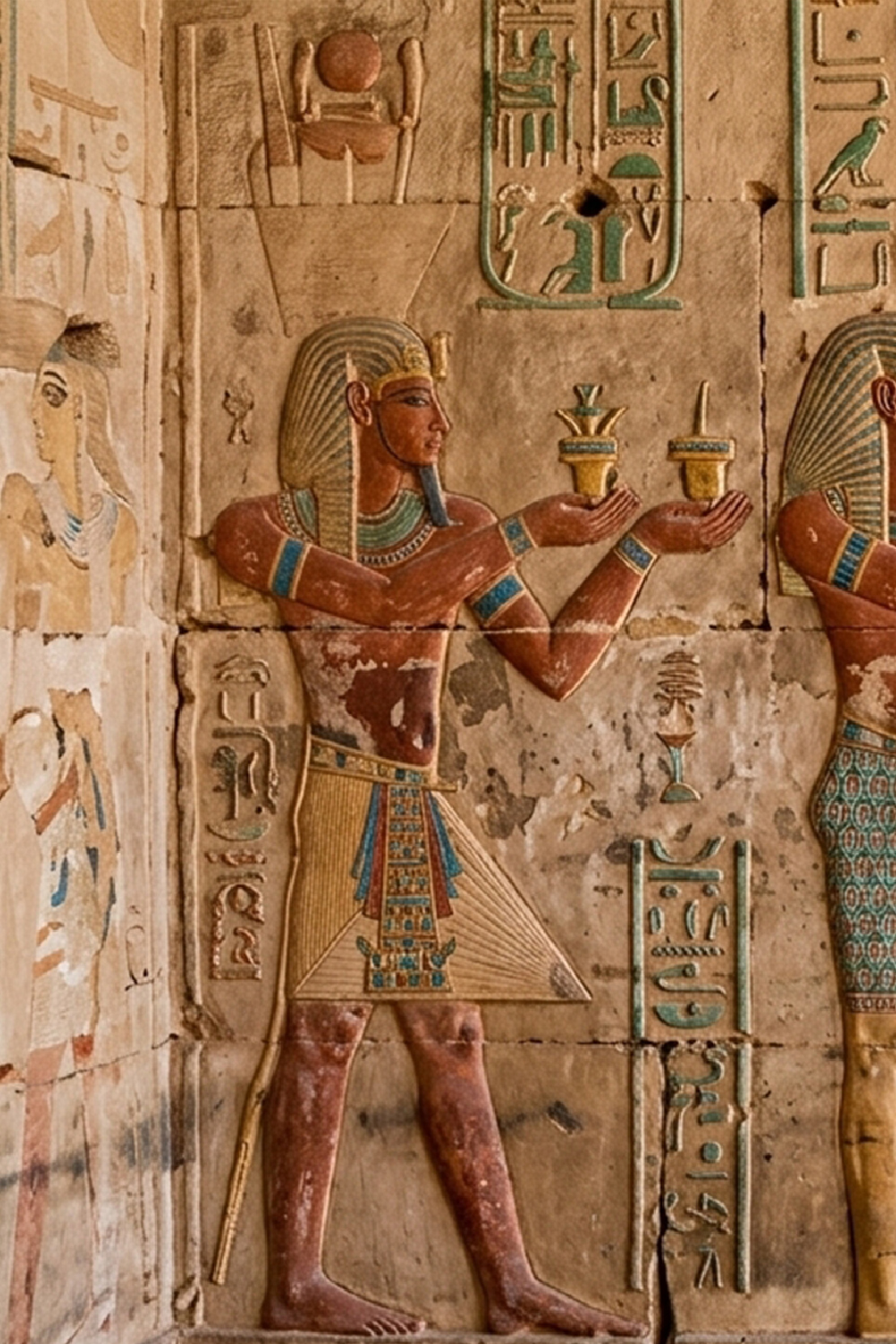
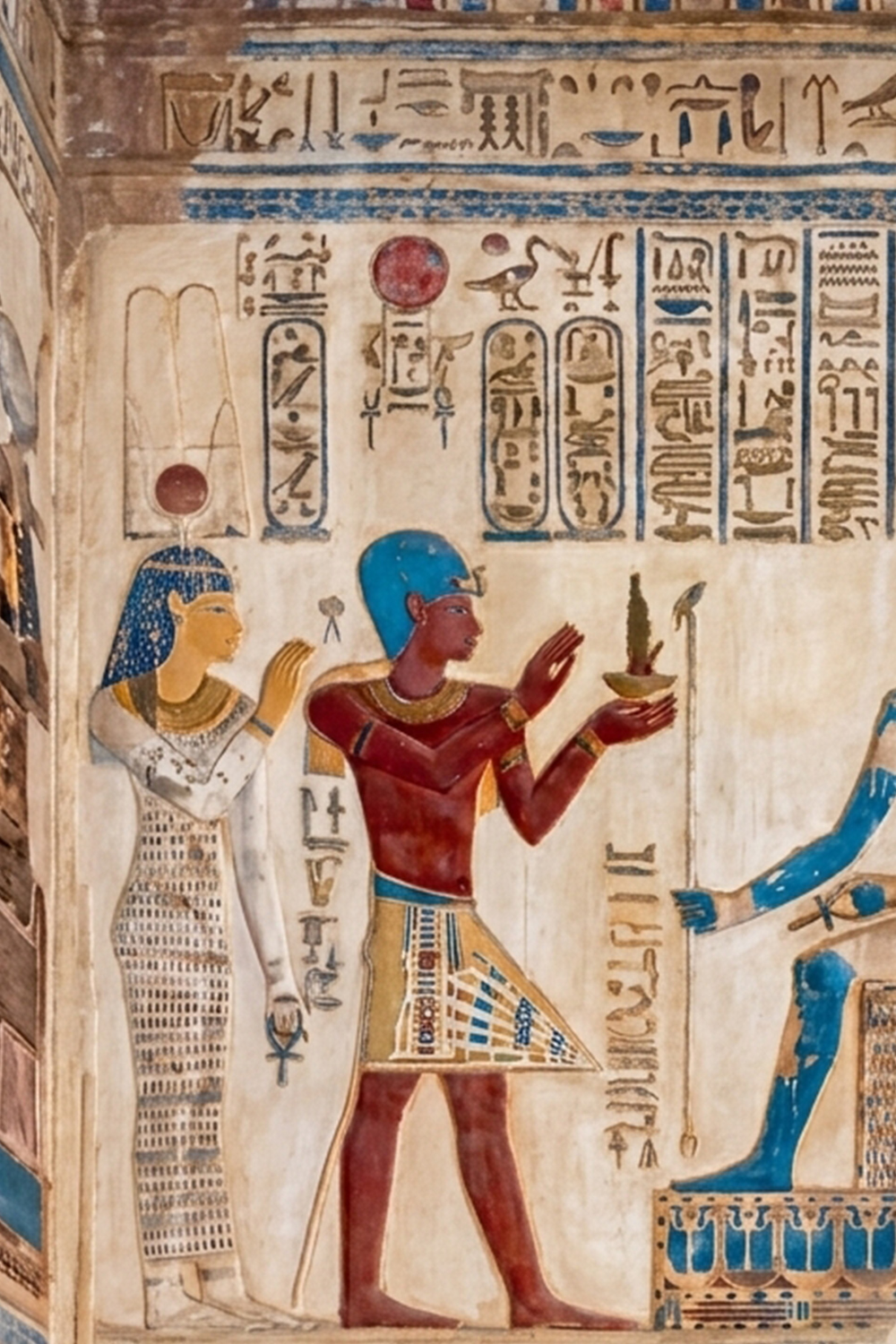 1.) AI restored & repainted relief, (c. 1150 BCE), of a ritual scene highlights Ptolemy VIII Euergetes II (Physcon) making ceremonial offerings
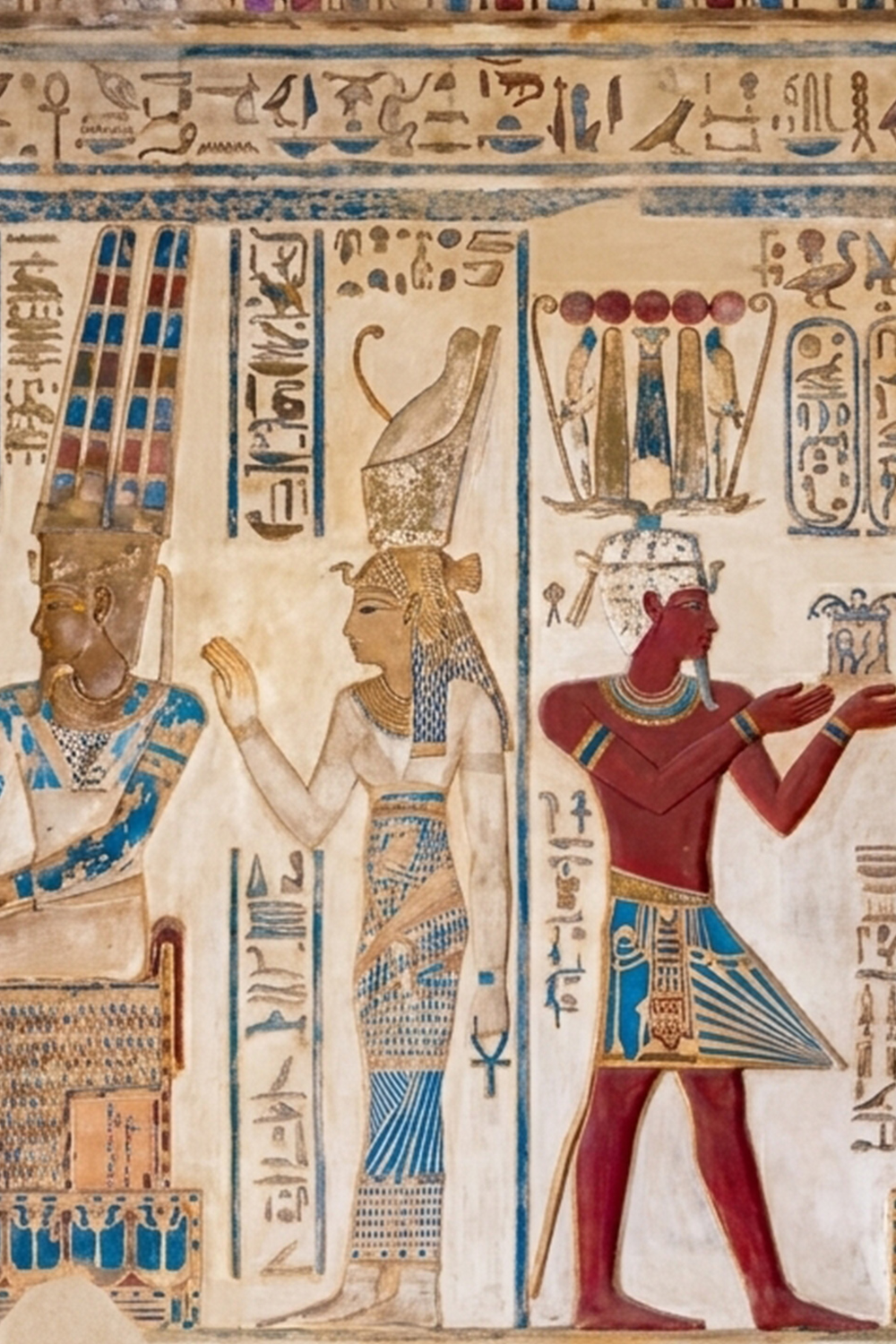 2.) to the enthroned supreme state god Amun-Ra (depicted wearing his characteristic twin-plume headdress) and attending protective goddesses
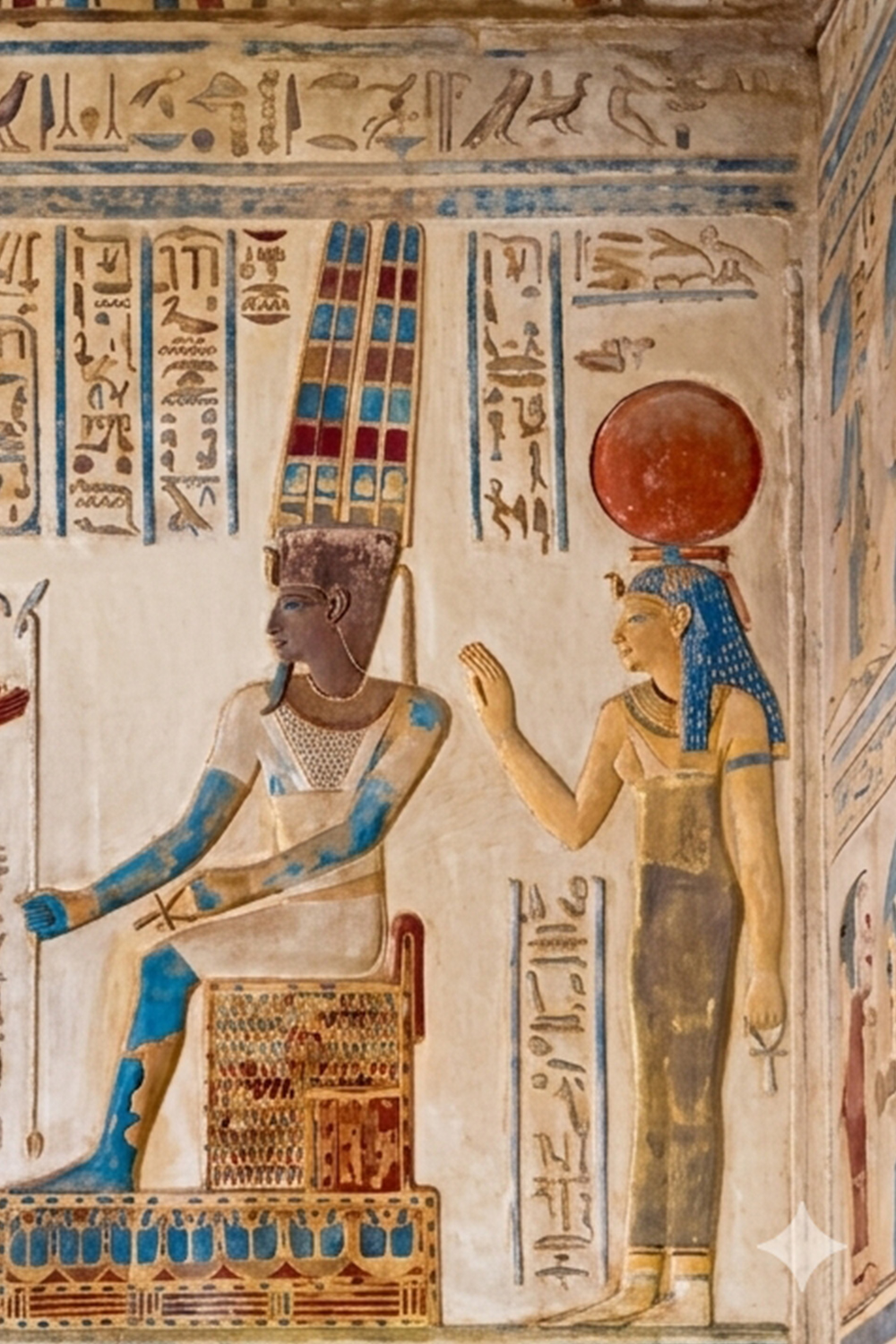 3.)
3.)
 1.) AI restored & repainted relief, (c. 1150 BCE), goddess Isis seated upon a throne, nursing her infant son, the god Horus.
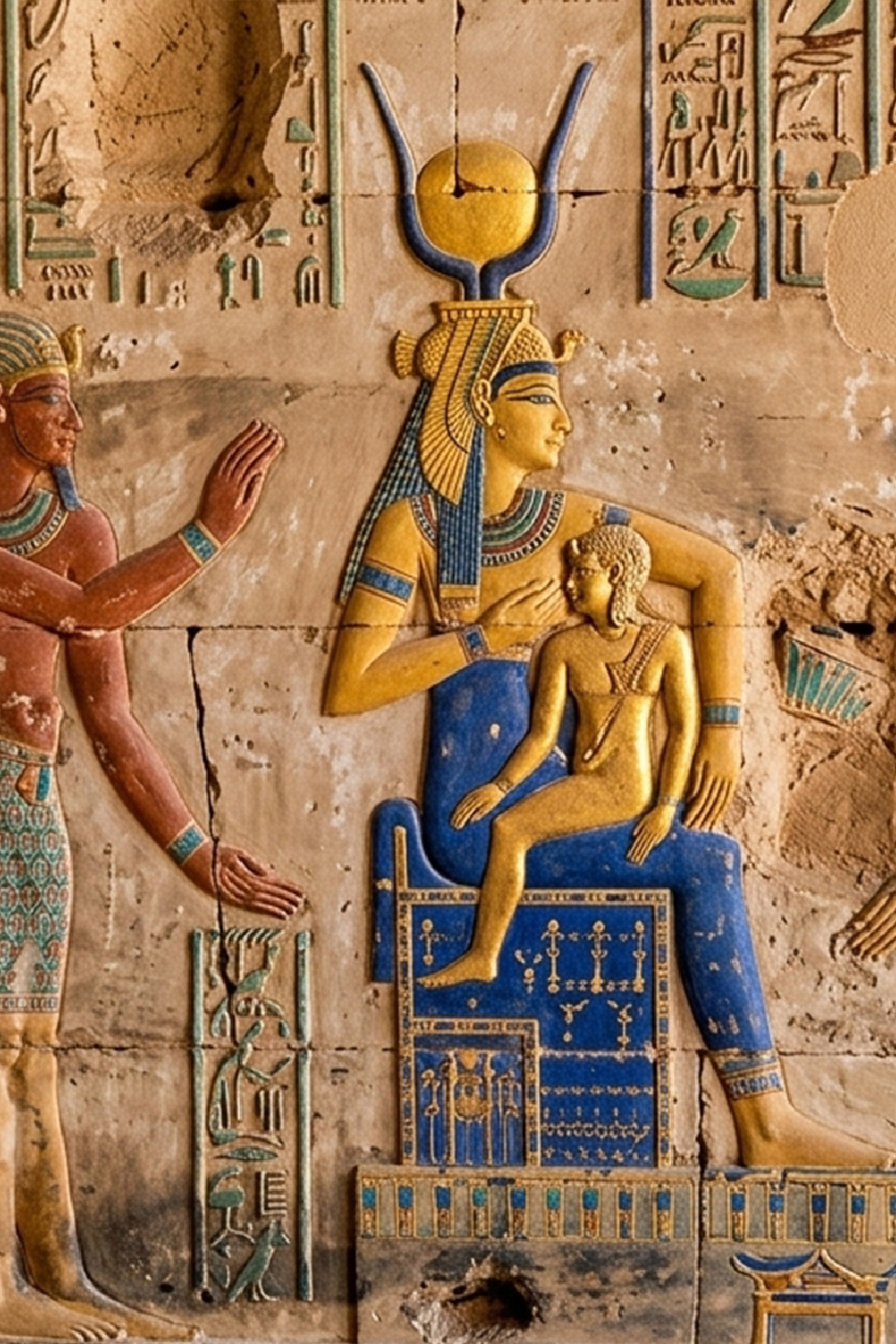 2.) Isis Lactans (Isis the nursing mother), this scene shows Isis as the ultimate devoted mother.
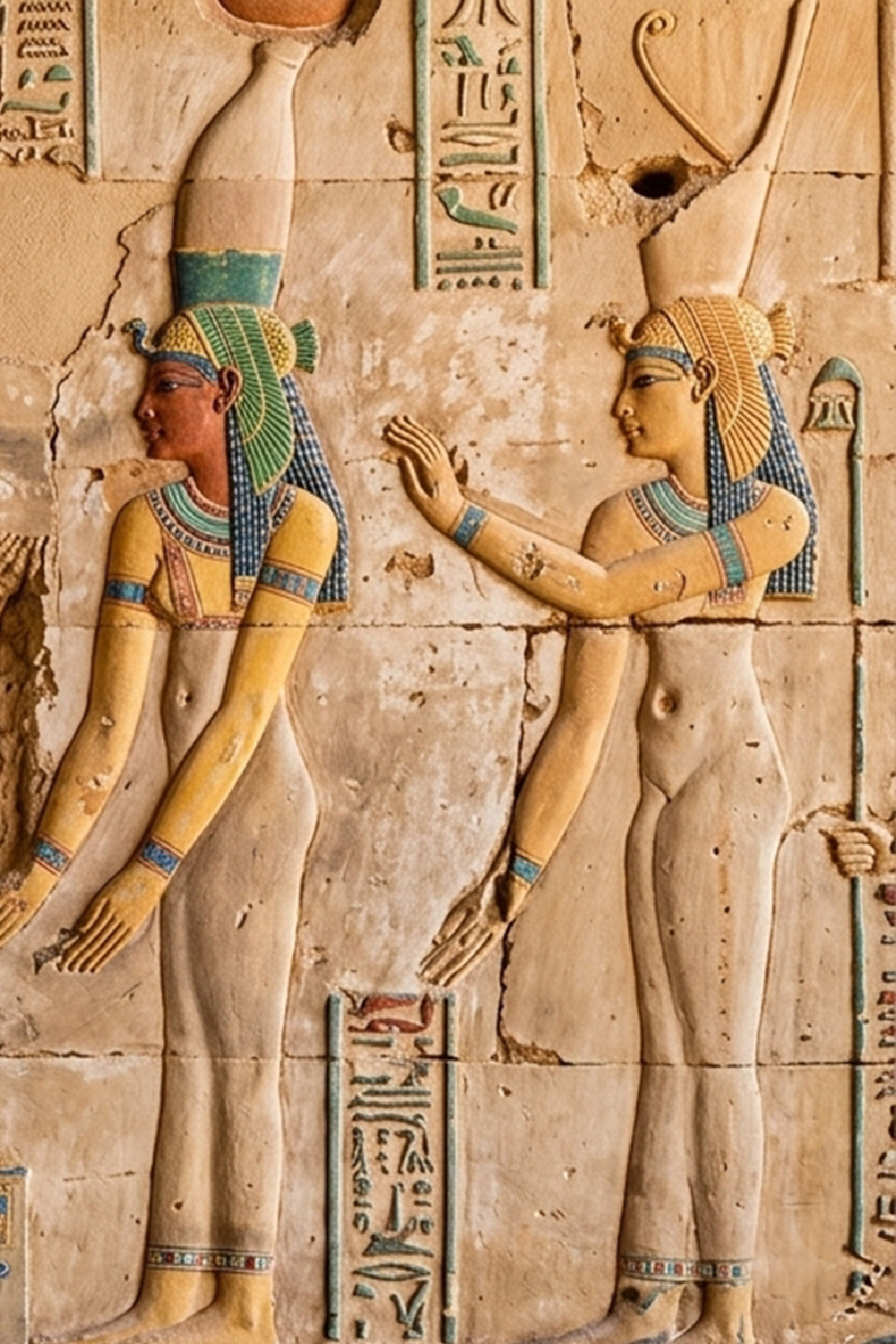 3.) this classic pose deeply influenced later art, including the traditional imagery of the Virgin Mary nursing the infant Jesus
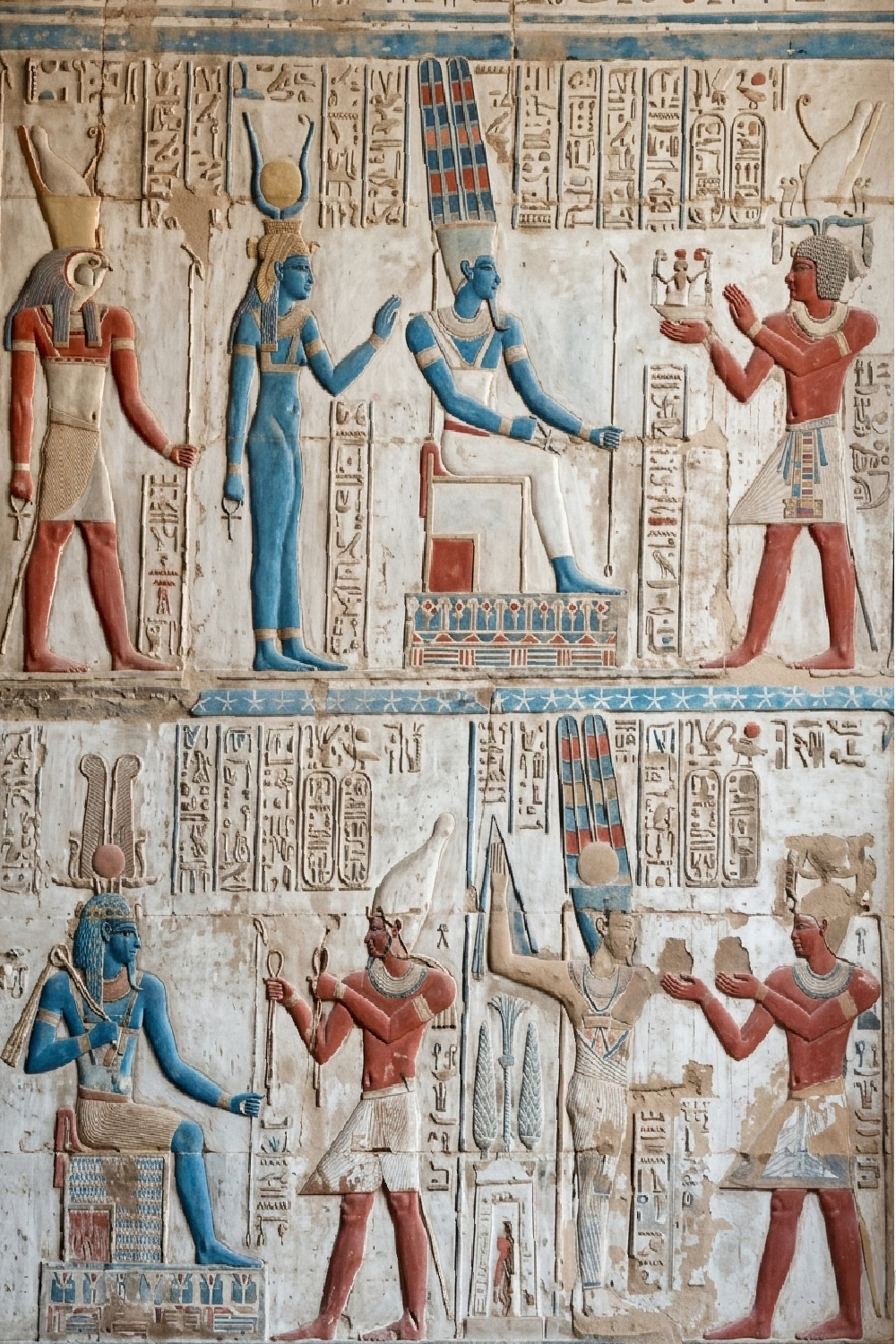 AI restored & repainted relief, (c. 1150 BCE), The Theban Triad,
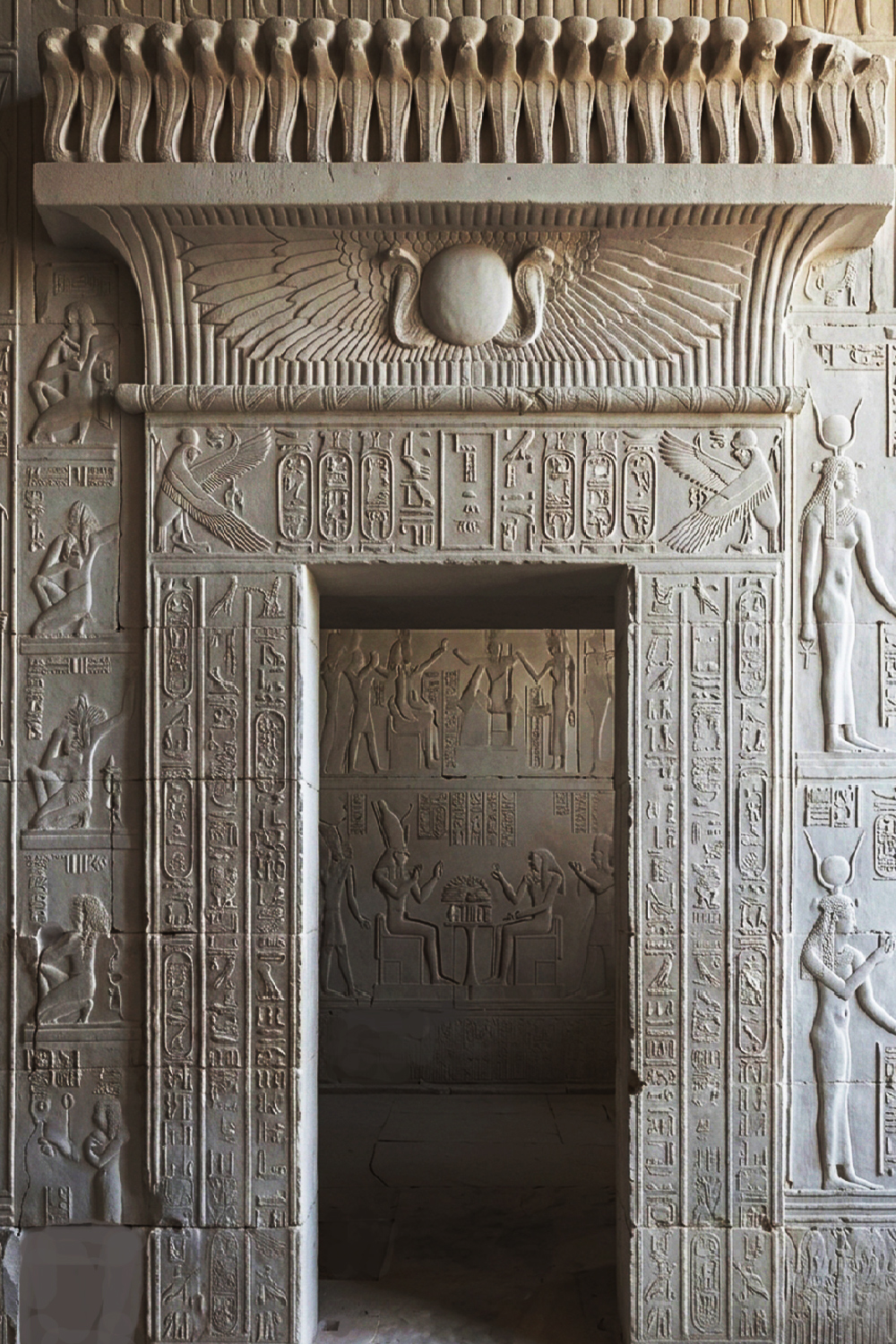 AI restored & repainted relief, (c. 1150 BCE), a cut stone doorway with a row of protective cobras along a lintel symbolized divine sovereignty and served to ward off evil from entering the sanctuary
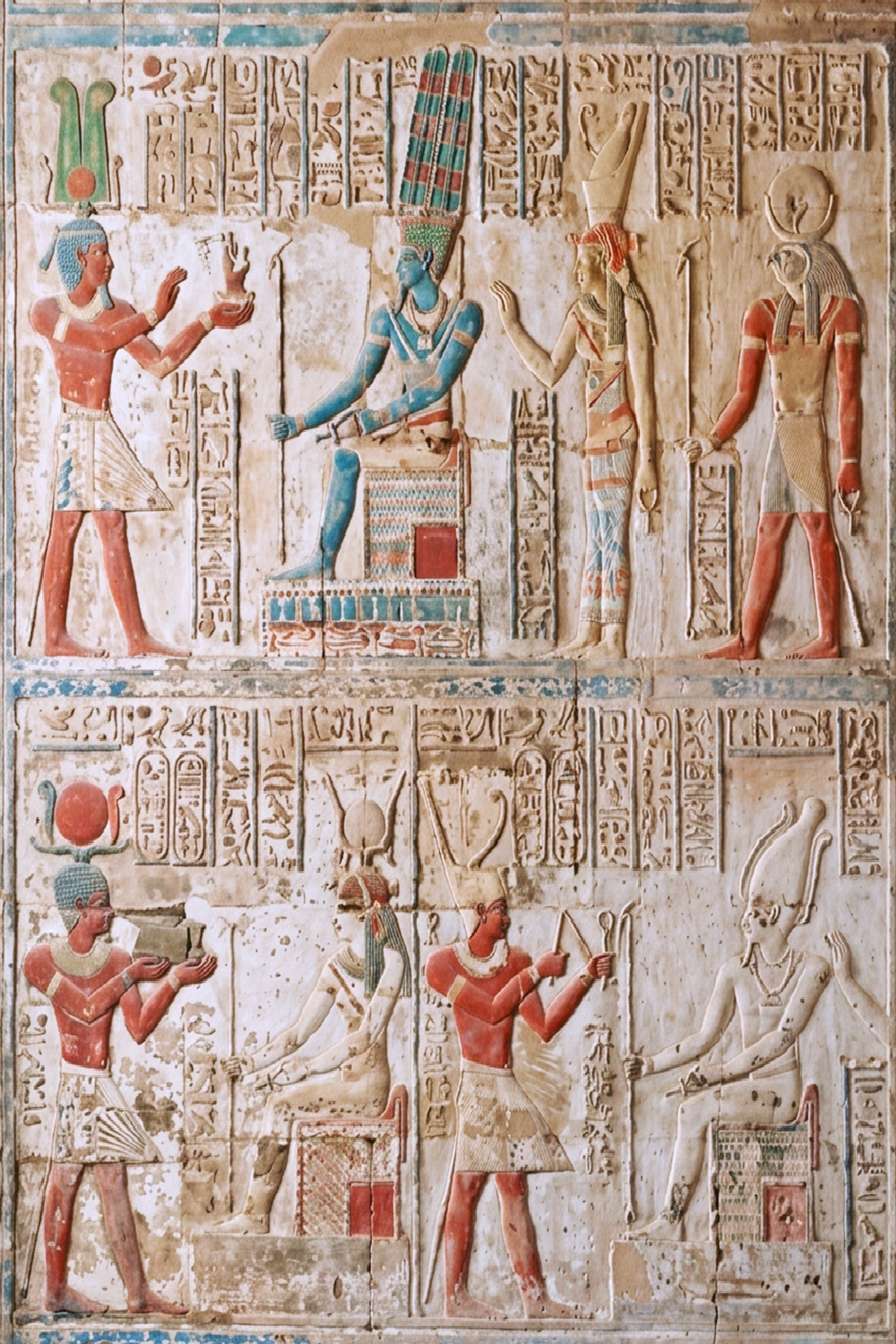 AI restored & repainted relief, (c. 1150 BCE), The Theban Triad,
The Theban Triad
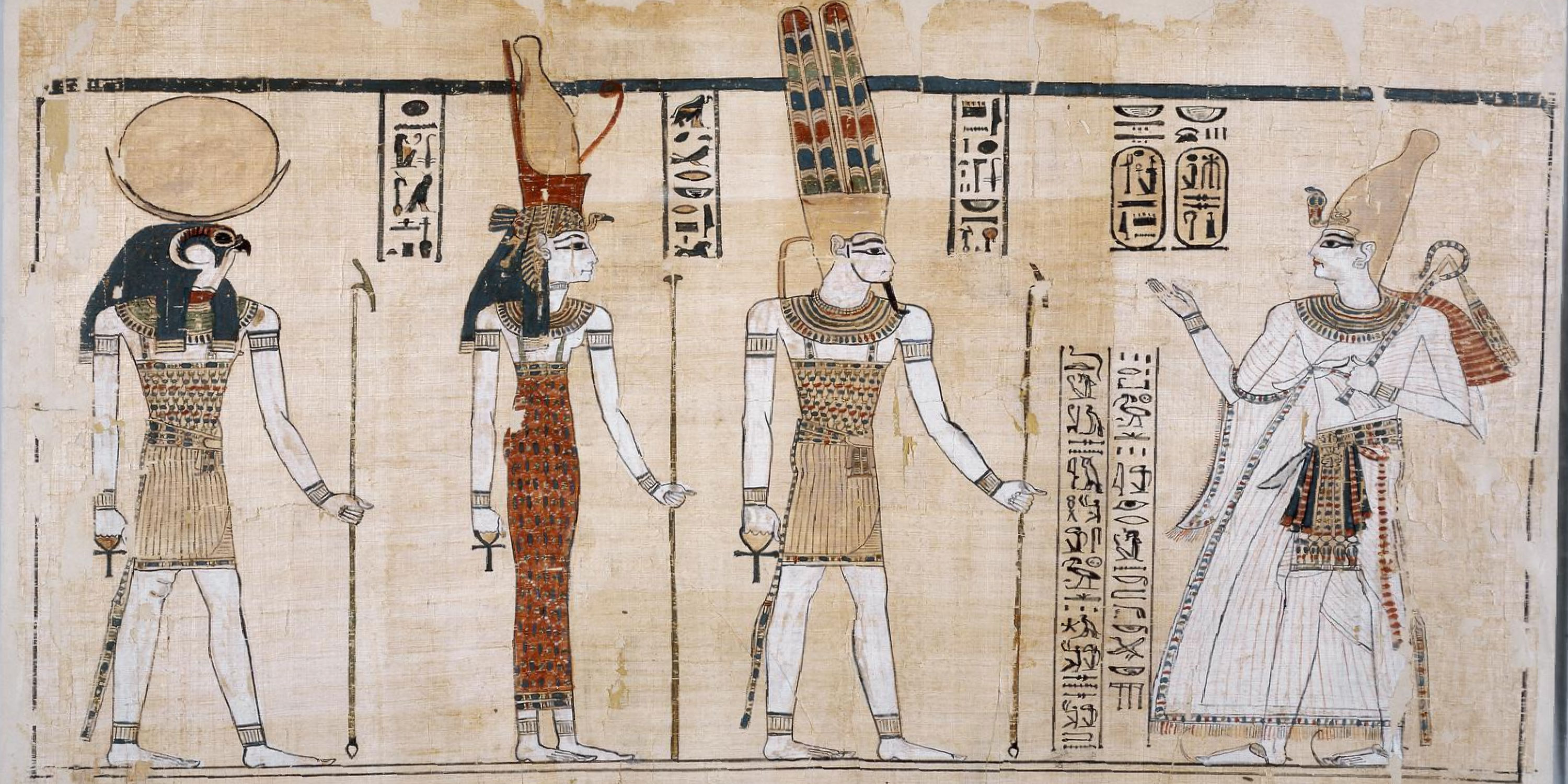
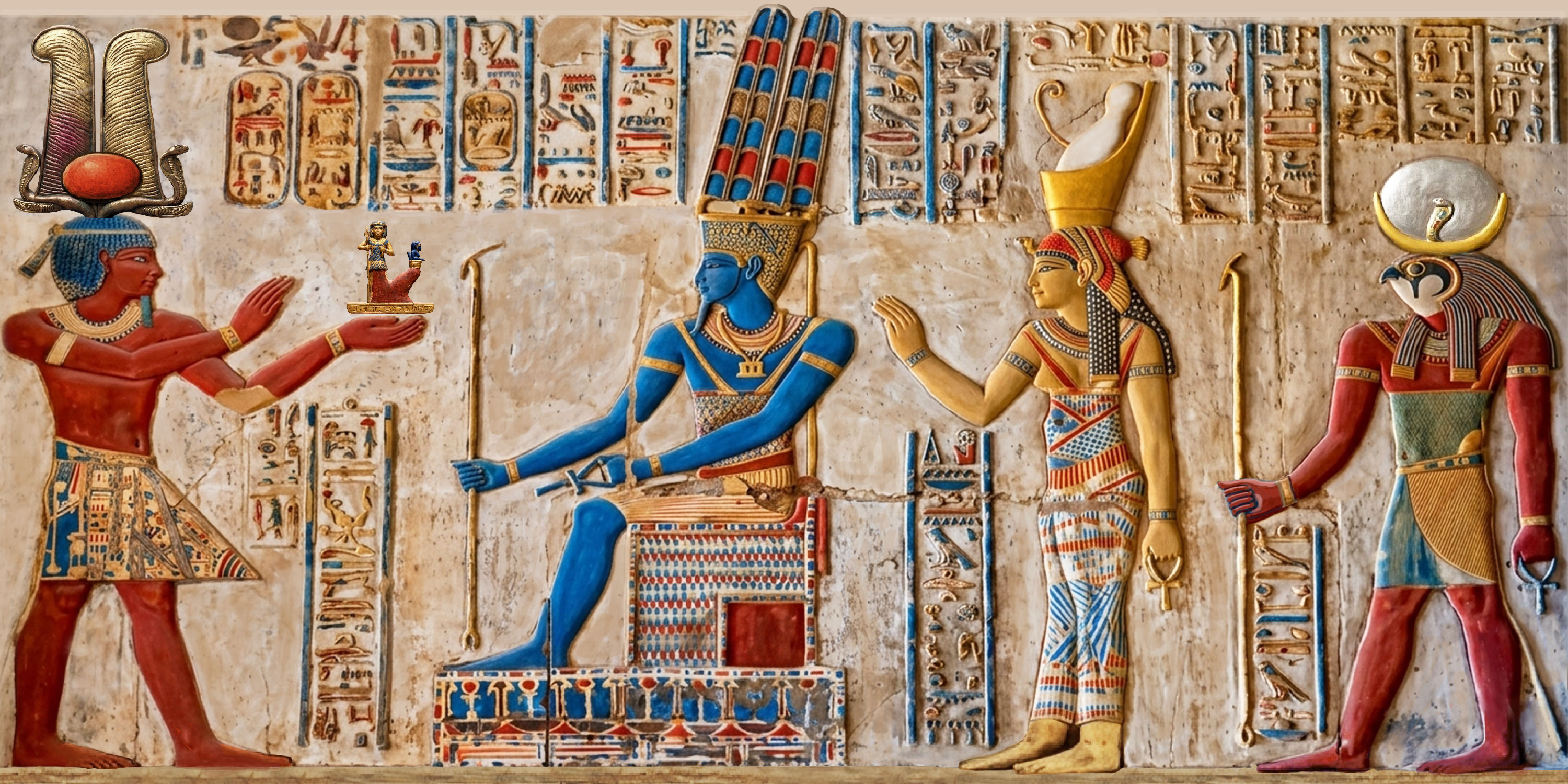 AI restored & repainted relief, (c. 1150 BCE), The Theban Triad, The Pharaoh Ramesses III (Far Left): extending his arms out to present a sacred offering to the gods, a statue of Ma'at the goddess of truth, justice, balance, and most importantly - order.
Amun-Ra (Left): The supreme king of the gods with blue skin—signifying his cosmic, primeval nature and connection to the sky and creation. He is enthroned, holding a staff, and wears his signature tall, twin-plumed feathered crown.
Mut (Center Right): Positioned behind her husband Amun-Ra, the mother goddess stands wearing a long, patterned sheath dress and the Double Crown of Upper and Lower Egypt superimposed over a vulture headdress. Khonsu (Far Right): The son of Amun and
Mut, is the moon god and is manifested in his falcon-headed form, crowned with a prominent crescent moon and full lunar disk on his head.
AI restored & repainted relief, (c. 1150 BCE), The Theban Triad, The Pharaoh Ramesses III (Far Left): extending his arms out to present a sacred offering to the gods, a statue of Ma'at the goddess of truth, justice, balance, and most importantly - order.
Amun-Ra (Left): The supreme king of the gods with blue skin—signifying his cosmic, primeval nature and connection to the sky and creation. He is enthroned, holding a staff, and wears his signature tall, twin-plumed feathered crown.
Mut (Center Right): Positioned behind her husband Amun-Ra, the mother goddess stands wearing a long, patterned sheath dress and the Double Crown of Upper and Lower Egypt superimposed over a vulture headdress. Khonsu (Far Right): The son of Amun and
Mut, is the moon god and is manifested in his falcon-headed form, crowned with a prominent crescent moon and full lunar disk on his head.
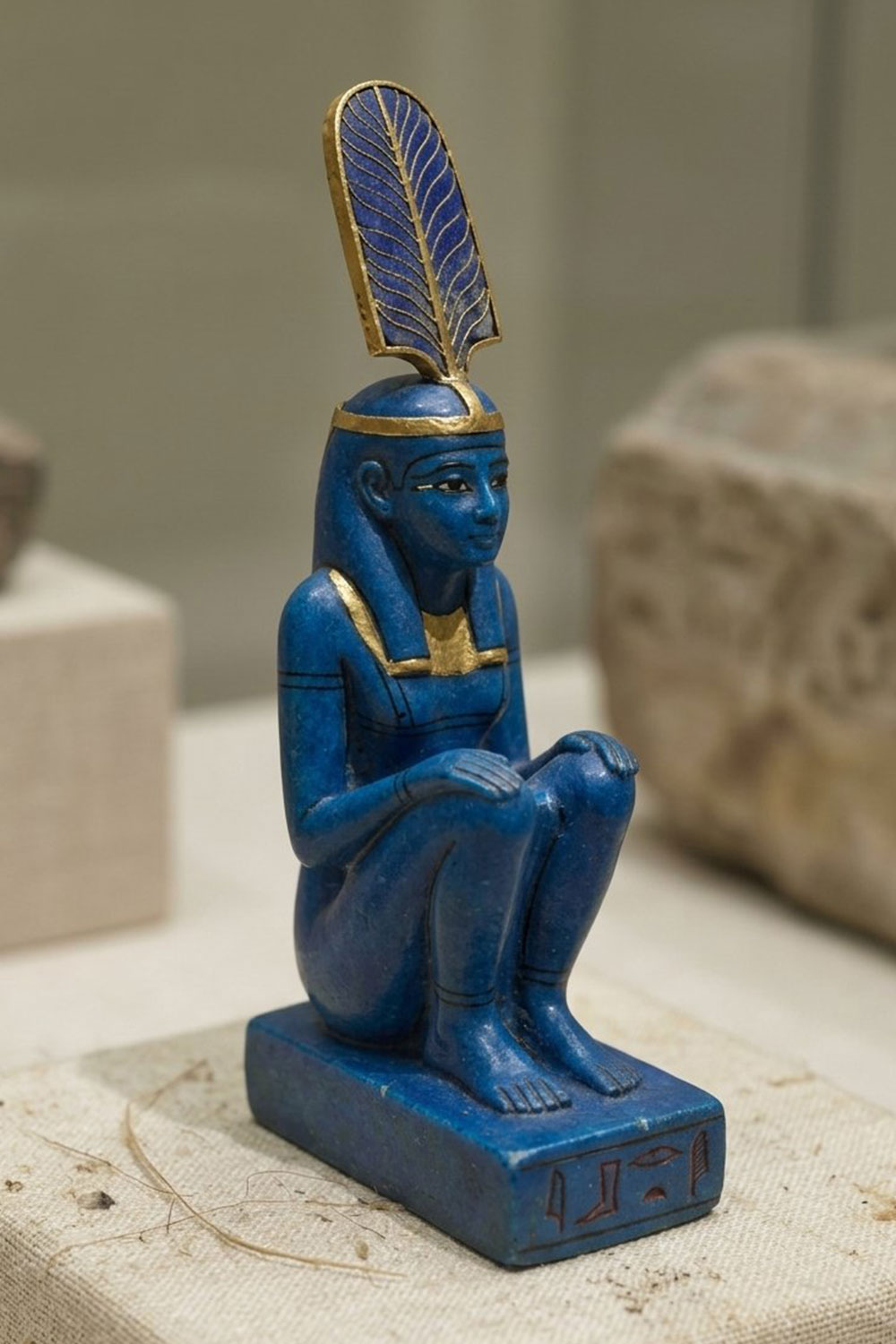 Carved lapis lazuli statuette of the goddess Ma'at, her feather was used as the counterweight against which a deceased person’s heart was judged in the Hall of Two Truths, 800–700 BCE, Egyptian Museum, Cairo
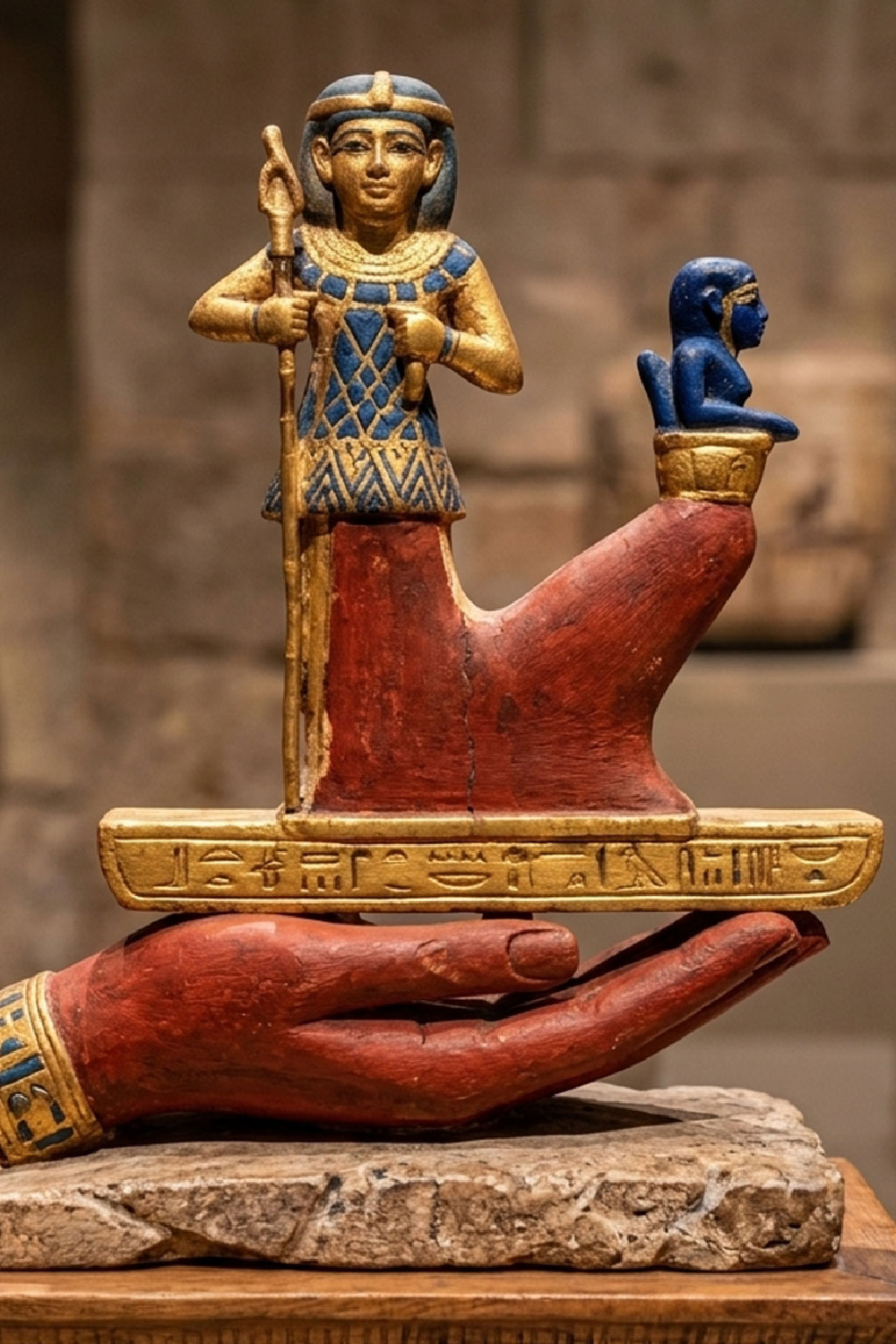 A contemporary reproduction of the Pharaoh Ramesses III, presenting a sacred offering to the gods of The Theban Triad, a statue of Ma'at the goddess of truth, standing inside a sacred solar bark that rests upon a divine hand, Mekohema Gallery, Cairo, Egypt
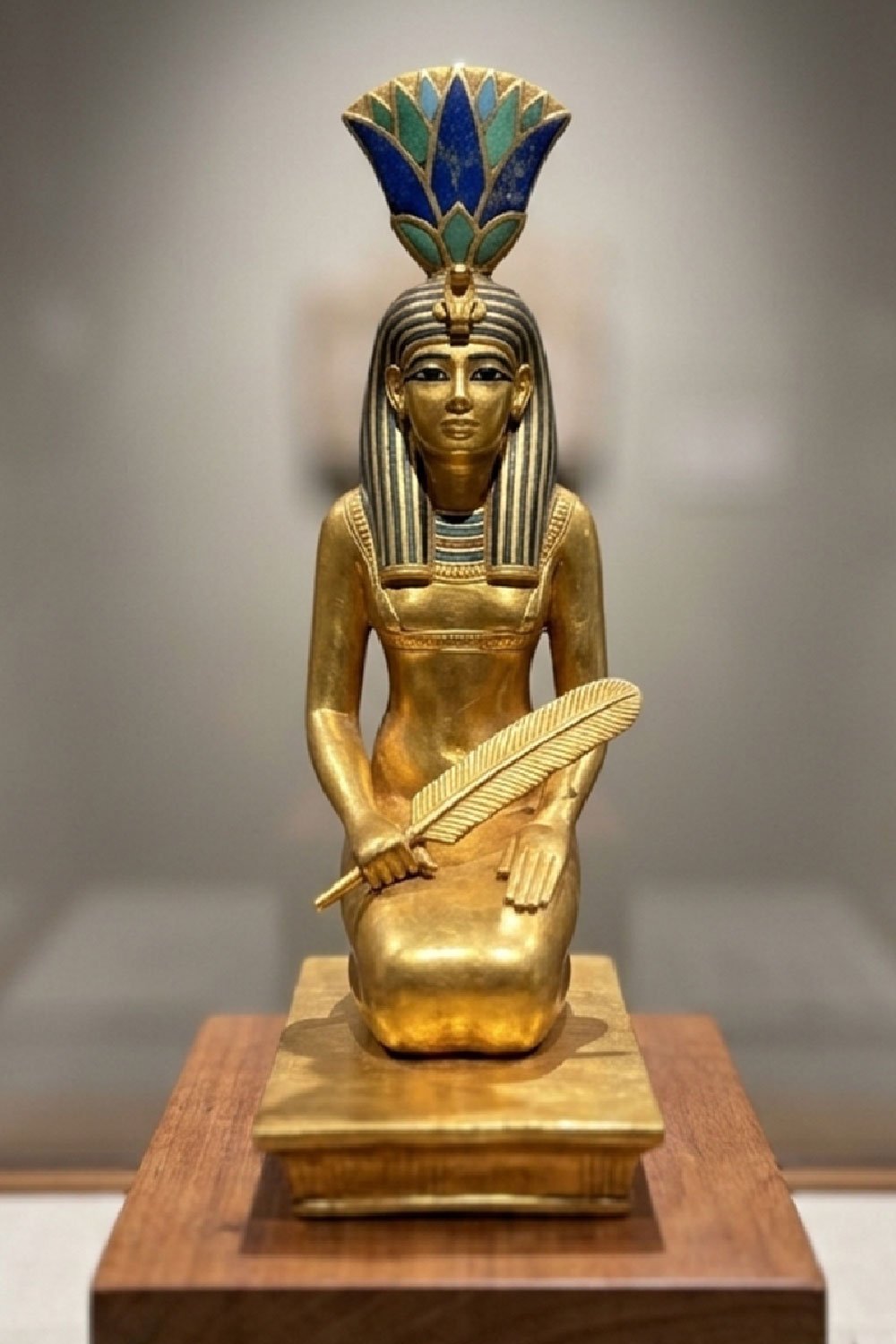 The Deity: Ma'at personified truth, balance, order, law, morality, and justice, her ostrich feather was used as the weight in the iconic "Weighing of the Heart" judgment ceremony in the afterlife. 18th Dynasty, 1390–1352 BCE, Egyptian Museum, Cairo
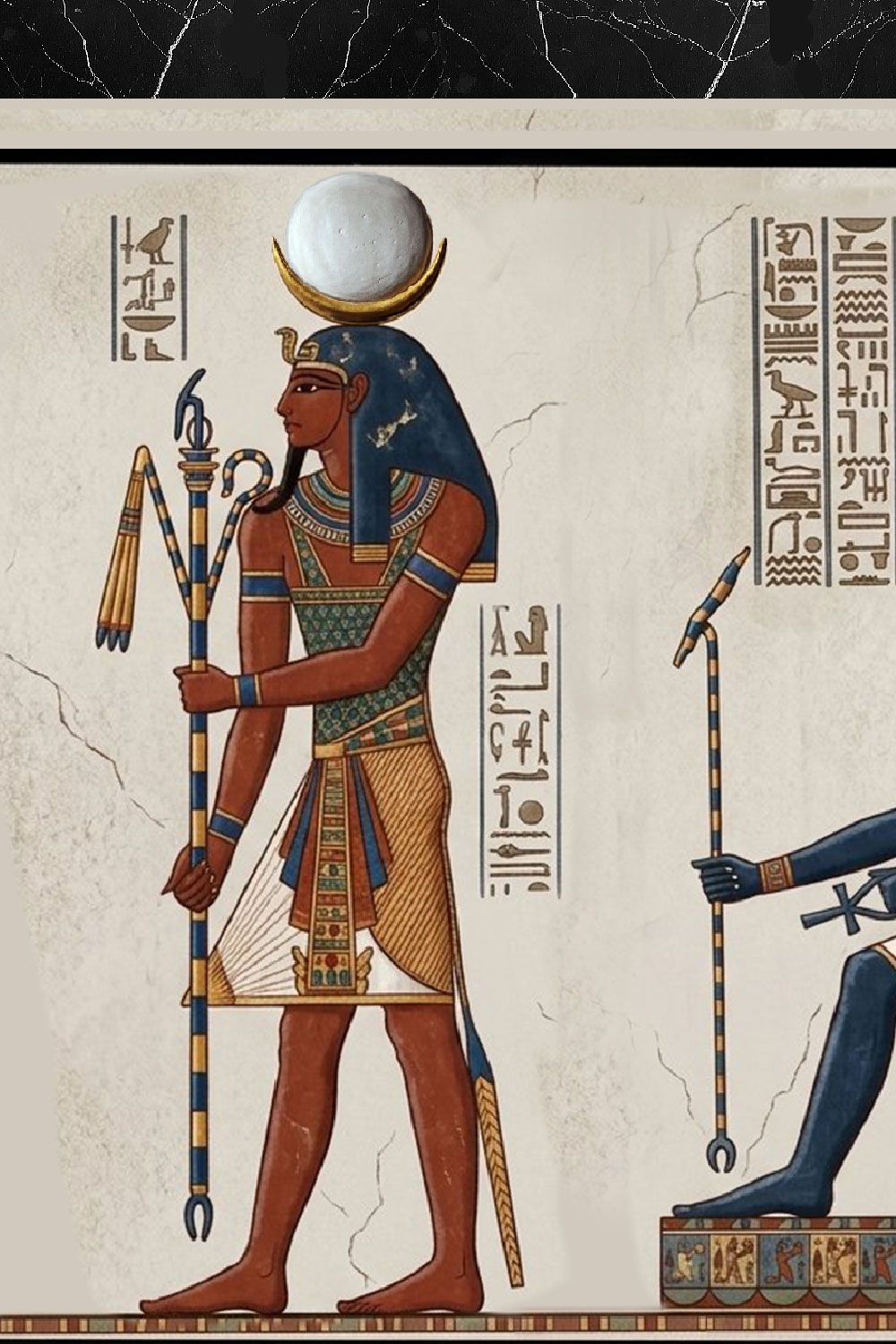 The Theban Triad, AI restored & repainted relief, (c. 1150 BCE), The Opet Temple, dated: 1180 BCE, Khonsu (left): The son of Amun and Mut, is the moon god and is manifested in his falcon-headed form, crowned with a prominent crescent moon and full lunar disk on his head.
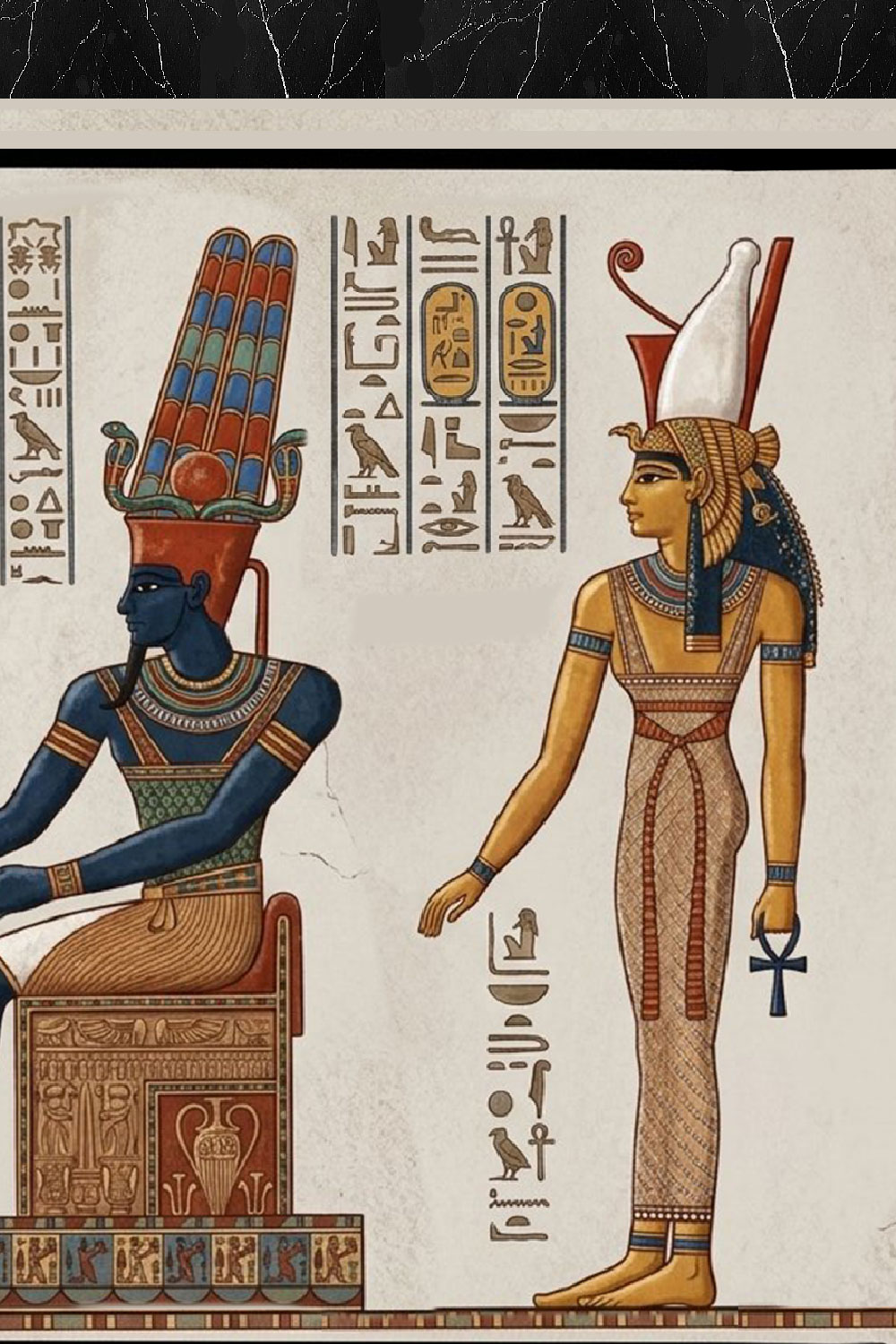 Amun-Ra (center): The supreme king of the gods with blue skin, Mut (Right): Positioned behind her husband Amun-Ra, the mother goddess,
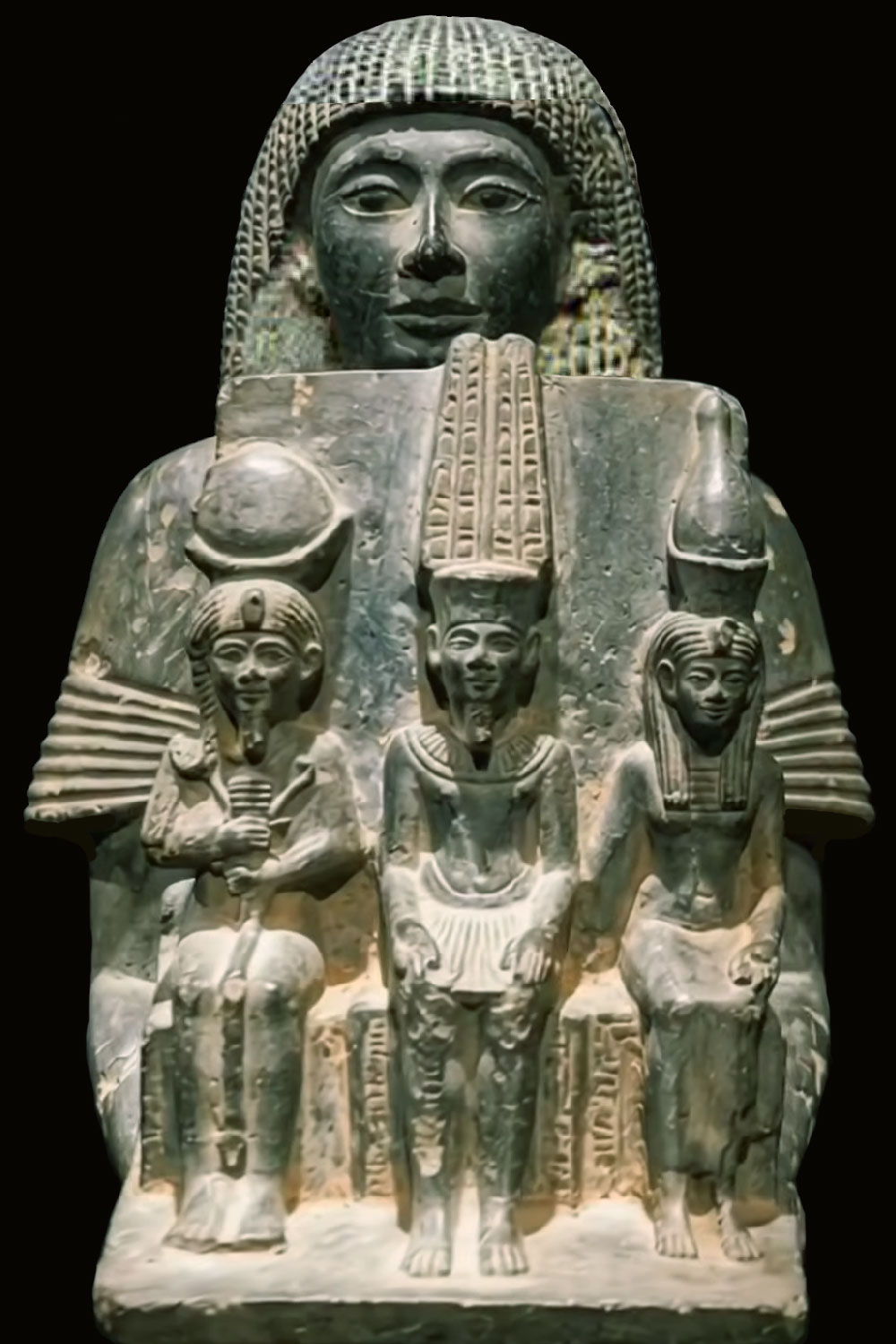 Ramessesnakht, the High Priest of Amun, presenting a small pedestal that holds the divine Theban Triad, 20th Dynasty (circa 1189–1077 BC) Material: Schist with a calcite base, Location: Egyptian Museum, Cairo (Inventory JE 37186) 🅮Public Domain
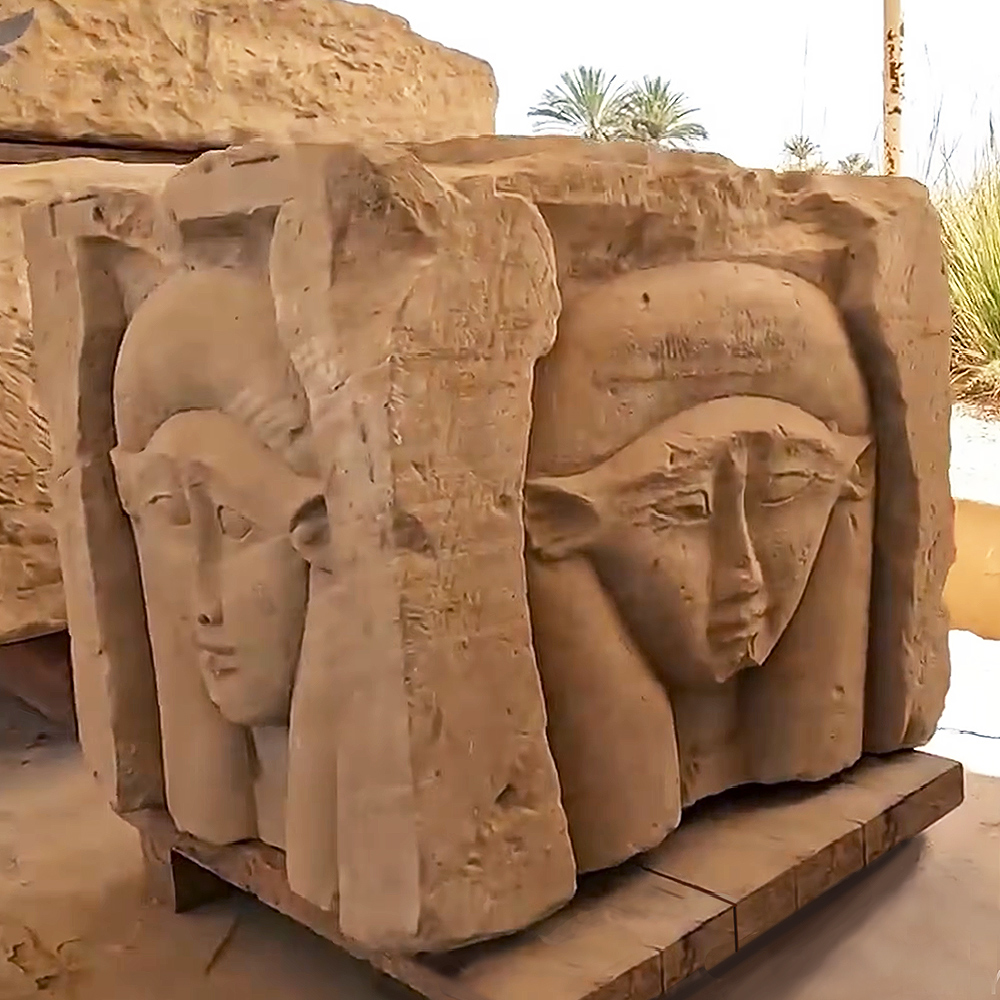
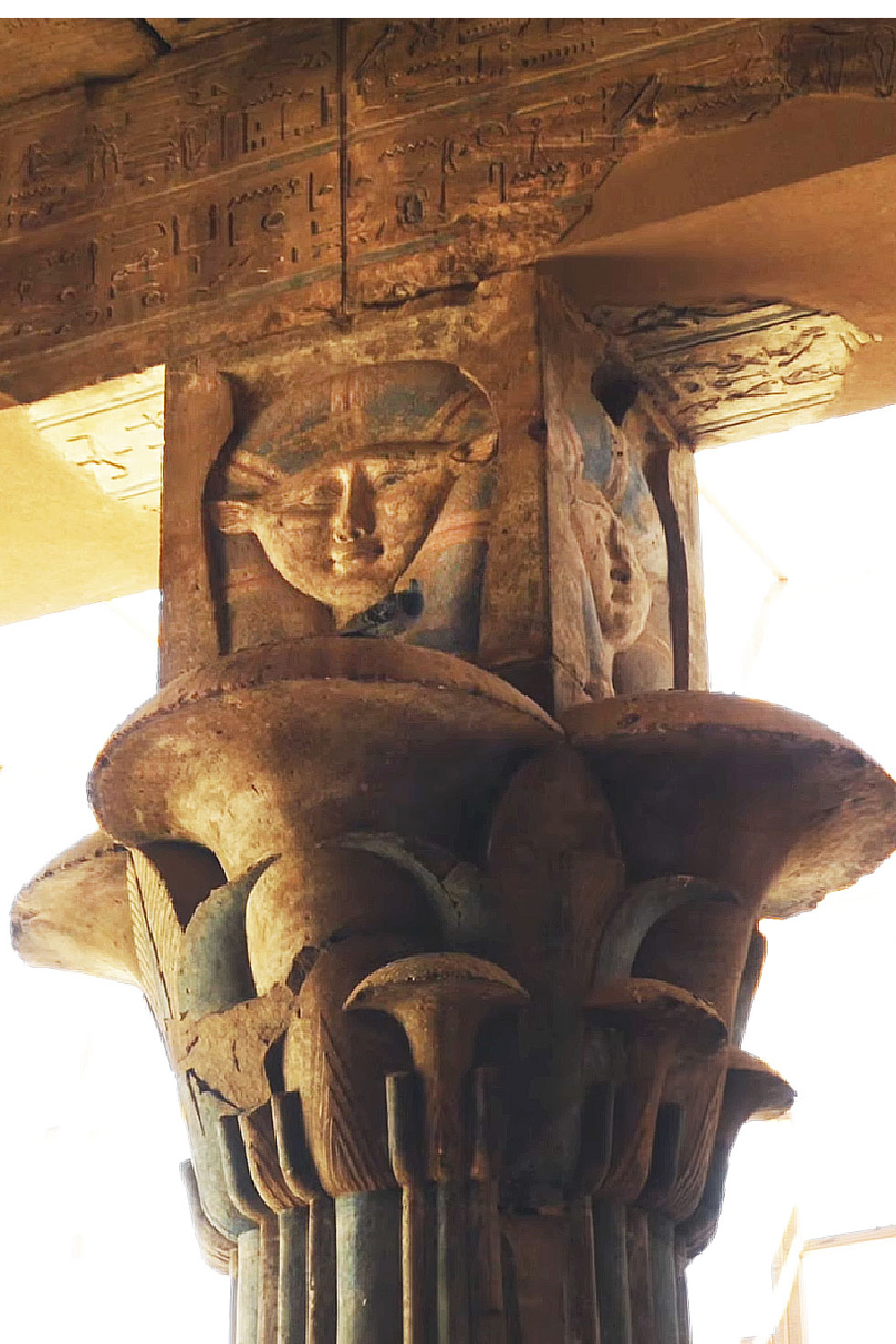 1.) Hathoric columns with a composite floral capital the upper block features carved faces of the goddess Hathor, recognizable by her cow ears and stylized wig.
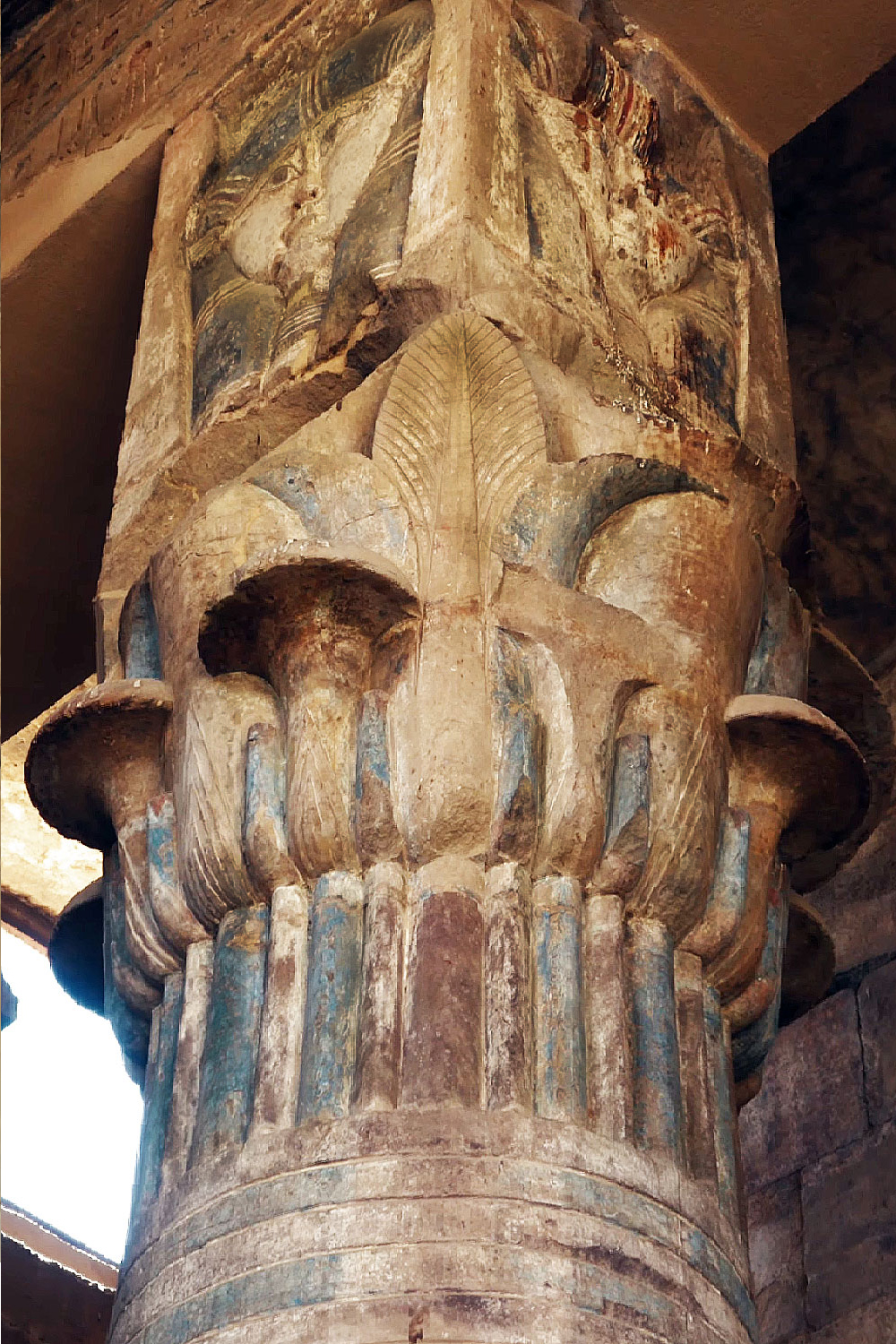 2.) Below the face of Hathor is an ornate capital styled with clustered lotus or papyrus-like bell shapes.
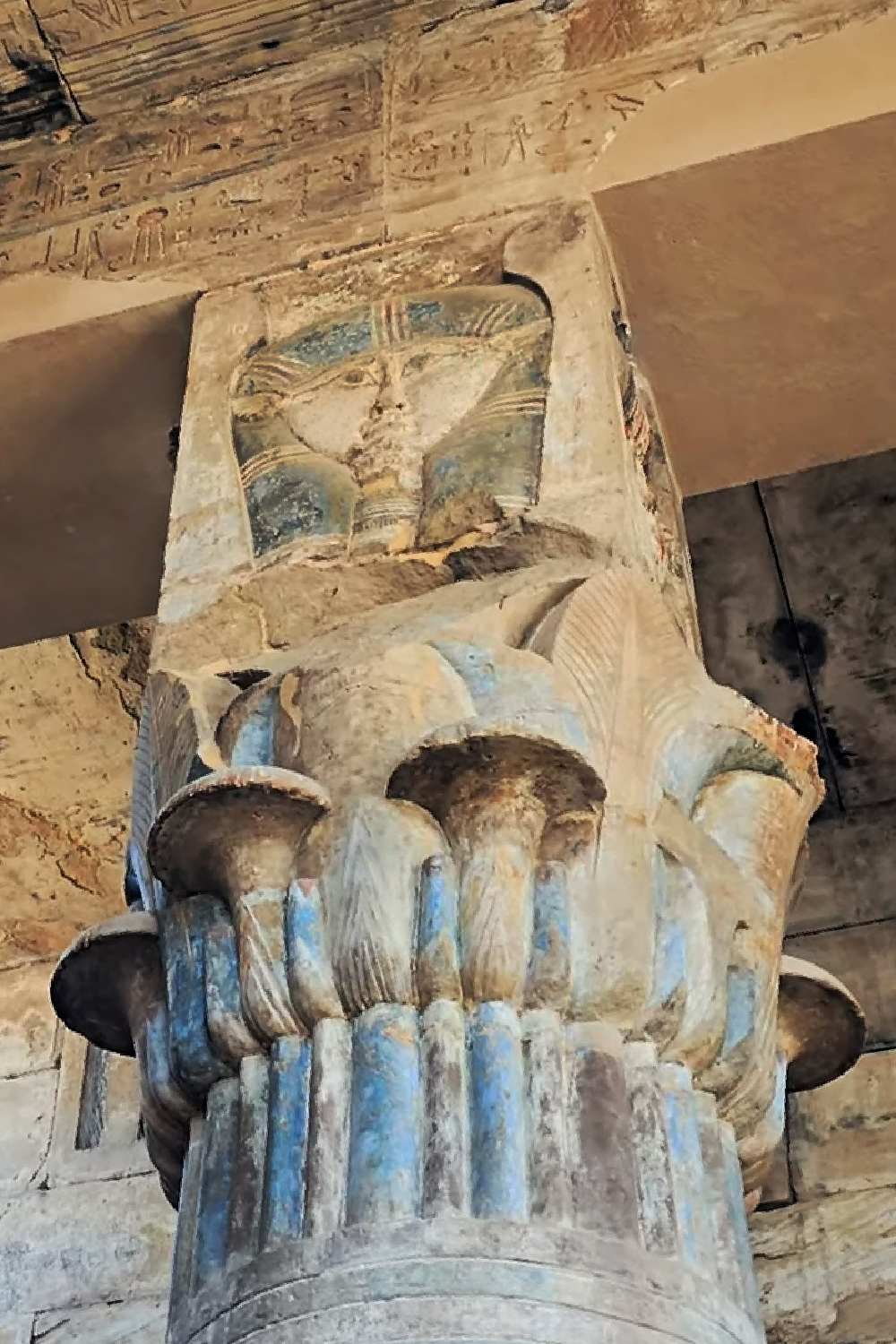 3.) The lower column imitates tightly bound plant stems or reeds tied together near the base of the capita
 Top
Top